Tether: Shorting USDT is groundless


Tether stated that hedge funds that shorted stablecoins after the Terra crash (LUNA thunder event) had a fundamental misunderstanding of both the cryptocurrency market and Tether.
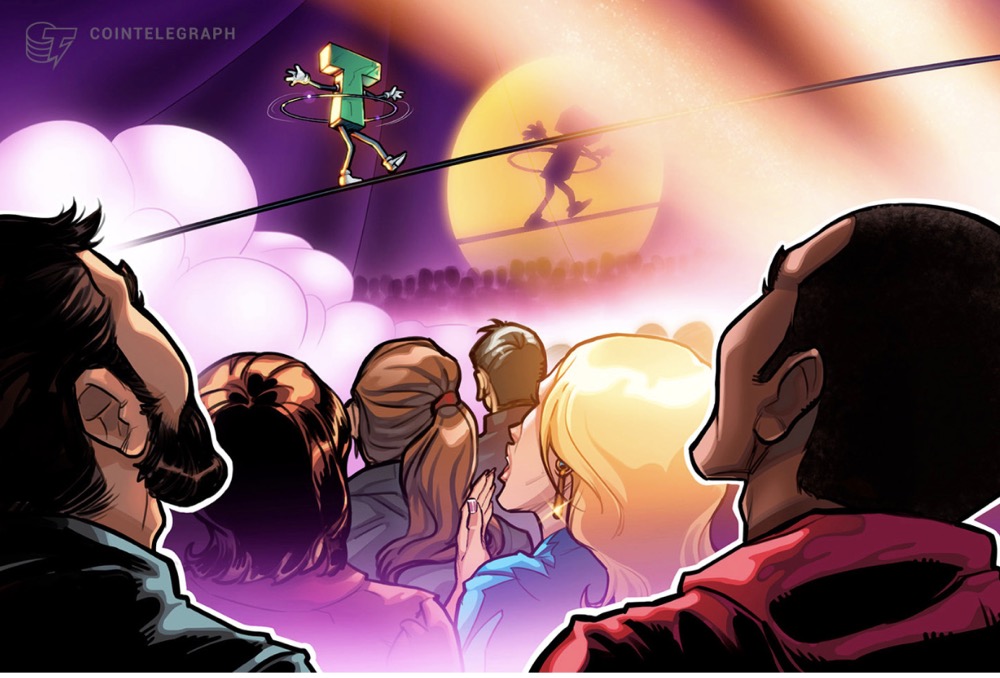
The issuer of Tether (USDT) says hedge funds that attempted to sell their stablecoin after the Earth collapsed in May (the LUNA event) were based on "incredibly ignorant" and "groundless" arguments.
In a blog post on Thursday, Tether pointed to a June 28 episode of The Wall Street Journal podcast, in which host Luke Vargas and guest Caitlin McCabe discussed the bearish cryptocurrency market and concerns about crypto assets. Tether's backing is the reason for short sellers' appetite for Tether.
Tether stated that hedge funds see the collapse of the earth as a reason to sell USDT, and "have a fundamental misunderstanding of both the cryptocurrency market and Tether":
“The simple fact that hedge funds see Earth crashing as a constructive argument for selling USDT represents an asymmetric knowledge gap between cryptocurrency market participants and entities in the traditional financial space.”
In early May, TerraUSD Classic (USTC) and the USD redemption rate slashed and dropped the price of the Terra Ecosystem Native Token (LUNA), now known as Luna Classic (LUNC), from over $60 to a fraction of a cent.
During that time, Tether's market capitalization has dropped 21% since May 11 from $85.3 billion, though it remains the largest stablecoin in the cryptocurrency market today with a market capitalization of $65.8 billion, according to CoinGecko.
In late June, Tether CTO Paolo Ardoino confirmed that USDT had been the subject of a “coordinated attack” by hedge funds looking to short the crypto asset.
He claimed that hedge funds are trying to create "billions of dollars" of pressure to "damage Tether's liquidity," with the aim of eventually buying back the token at a lower price.
In its recent blog post, Tether pointed out that several misunderstandings about its holdings were the basis for this short-selling operation-including Tether's large holdings of Chinese commercial paper or Evergrande debt, and USDT is"out of thin air"Created, or Tether has issued unsecured loans.
"In short, the basic thesis of this pitch is incredibly incomprehensible and completely false. And it’s further backed by the associated blind belief in near-conspiracy theories about Tether."
In another article the day before, Tether tried to reiterate the strength of its financial backing and its ability to honor redemptions, reiterated that it does not hold Chinese commercial paper, and has reduced the total amount of commercial paper it holds from 30 billion in the past year. The U.S. dollar fell to $3.7 billion, an 88% decrease.
The company further added that it will hold $300 million in commercial paper by the end of August and will hold no commercial paper in early November.
In the week that began with the UST fiasco, USDT briefly de-pegged from the U.S. dollar, reaching lows around $0.96, as investors either redeemed it directly or liquidated it into other tokens, such as rival U.S. dollar stablecoins (USDC). During this period, however, Tether continued to honor fiat redemptions of $1 per token.
Its latest financial disclosure on March 31 showed that 85.64% of Tether’s financial backing was in cash and cash equivalents, including commercial paper.