


Smrti Lab Market Analysis for the Second Quarter: Never Miss a Great Opportunity in a Crisis


Original title: "Never Let a Good Crisis Go to Waste: Smrti's Quarterly Letters - 2Q2022"
Original source: Smrti Lab
Original compilation: 0x711 & czgsws, BlockBeats
One of the most valuable lessons we have learned from our cryptocurrency adventure is the constant reassessment of the current situation, the constant rethinking of our current place in the megatrend. That's why we communicate quarterly with our investors and friends in real time to identify trends beneath the surface of market events and price action. Here are some highlights from Smrti Lab's Q2 2022 Newsletter:
first level title
TL;DR:
1. The market has capitulated, but the worst phase (and accumulation phase) is yet to come. accumulation stage
2. The relevance of Bitcoin and the encryption industry has decreased: Bitcoin adoption has become smaller, but more and more applications will adopt blockchain and encryption technology.
3. With the upcoming Ethereum merger, we will have a major shift in market dynamics before the end of 2022. The merger will make ETH the first digitally native deflationary production asset with a real yield. The proportion of ETH in the encrypted market (ETH.D) will replace the proportion of BTC in the encrypted market (BTC.D) and become a key indicator for observing the market.
4. We are unlikely to see exponential improvements in blockchain scalability within this year, but various new designs are being actively experimented with in the infrastructure space.
first level title
What is a "good crisis"?
secondary title
Crisis time for cryptocurrency 2022
"Grey Rhino" - risky back-to-back lending for all lenders. No one knows how many back-to-back loans are made through lenders. Most people think Genesis, Nexo, Celsis, Blockfi are too big to fail.
"Black Swan"-Three Arrows Capital went bankrupt and may have to repay $3 billion in debt.
The chain of panic selling and liquidation events began on May 8, 2022, when UST began to show signs of unanchoring, accompanied by the collapse of LUNA. A month later, Three Arrows' Su Zhu and Kyle Davies began considering asset sales and a bailout, the Wall Street Journal reported. Before UST unanchored, Three Arrows managed $3 billion in assets.
The domino effect caused by the bankruptcy of Three Arrows Capital affected many players at the poker table, and CeFi institutions including Celsius and Blockfi announced the suspension of withdrawals. When news broke about a large crypto fund default, the first thing everyone did was withdraw funds and crypto assets from their peers to test the solvency of all trading platforms and lending/OTC firms. Bankruptcies have resulted in Blockfi, Celsius, Maple Finance, Voyager Digital, and Finblox limiting or stopping withdrawals due to liquidity issues. The emergence of restrictions on withdrawals has further fueled fears that no counterparty is safe. So institutions dump crypto assets and stablecoins and withdraw cash from banks. This series of actions caused a drastic reduction in liquidity, and no one dared to stand up to be a hero after the sky fell.
On June 22, 2022, Voyager Digital announced that Voyager will take legal action against Three Arrows Capital if it defaults on more than $650 million in loans. In order to prevent the bear market from spreading, FTX increased the credit lines of Celsius, Blockfi and Voyager. However, even this will be difficult to recover, and many companies will still face bankruptcy by the end of 2022.
The SEC and MSA (Monetary Authority of Singapore) may formally investigate and prosecute Three Arrows Capital, Blockfi, Celsius, Rari Capital and the Algorithmic Stablecoin project. We look forward to stricter supervision of all trading platforms and CeFi service providers by the regulatory authorities. The litigation disputes and bankruptcy of large institutions will last for at least a year, and this also delays the legal process of the BTC spot ETF. We will see the public lose confidence in cryptocurrencies for at least 1 year. This is CeFi's Lehman Brothers and Bear Stearns moment. On June 29, 2022, FTX CEO SBF claimed that some smaller trading platforms were "too far gone," "insolvent," and unlikely to be "saved." Although he later clarified that this was an exaggeration of what he actually meant, we did see multiple small exchanges face closure and bankruptcy.
The crypto market crash of the past eight months is the combined effect of the external macroeconomic environment and the internal gray rhino. However, what doesn't kill you only makes you stronger. These are stress tests for the crypto industry, after all our vision is an efficient and permissionless marketplace.
author:
author:@0x992
The magnitude of recent market turmoil exceeds historical levels in many ways. As BTC hit a new low of $17,708, its RSI indicator also reached the lowest oversold zone in the history of BTC trading. The two-week period from June 19 to July 3 marked the first time BTC prices were below its 200-week moving average ($22,000) for 14 consecutive days. So the question circling many people's minds is: have we reached the bottom (on a yearly basis)?
Here are some on-chain and technical indicators summarized by Glassnode that can help confirm where we are currently in the historical cycle.
With a Mayer Multiple of 0.6 (corresponding to a bitcoin price of $23,380), this trades at 60% of the 200-day moving average, with only 3.4% of sessions trading near or below this level.
The realized price ($22,500) is the total cost basis of the token supply and usually provides resistance during bottom formation. Only 14% of the sessions closed below that price.
The 200-week moving average (corresponding to $22,390 for Bitcoin), which has historically provided support in the final capitulation phase of bear markets, is below this price indicator on only 1% of the sessions.
Equilibrium Price ($17,980), a metric that reflects the market price that matches the value paid in Bitcoin, minus the value that is ultimately realized. Only 3% of trading days closed below this indicator.
image description
(Data source: Glassnode)
image description
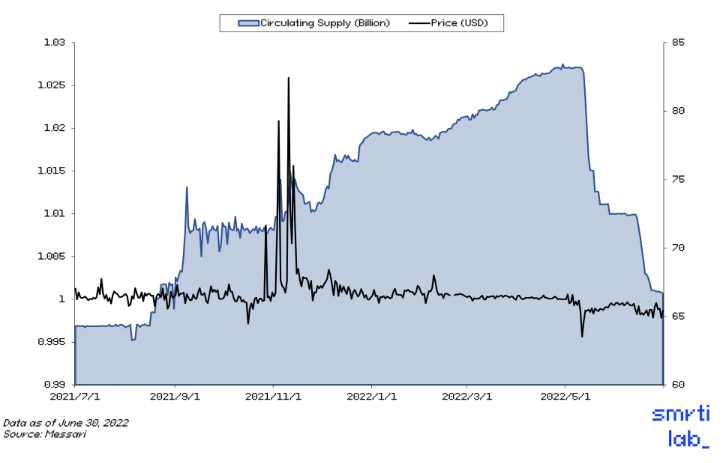
Figure 1: USDT supply shrinks
Over the past two years, the crypto industry has benefited from a pandemic-induced monetary policy slump. The overall stablecoin supply has grown nearly 50-fold from $2 billion in 2019, peaking at $99 billion in March 2022. Liquidity in the crypto market is shrinking as monetary policy tightens. The overall supply has dropped by 11% from the historical high, and the total supply of USDT has dropped by 20%, which is particularly obvious.
image description
Figure 2: Total TVL change across chains
The core component of encryption is that tokens of any value type can be issued without permission, including derivatives of these tokens. The well-known DeFi indicator Total Value Locked (TVL), which is often used to prove the economic vitality of DeFi protocols or smart contract platforms, is very misleading because nothing in cryptocurrency is "locked". Because we can "unlock liquidity" by issuing its derivative version while locking a Token. Liquidity becomes a self-defeating metric. As long as participants keep increasing systematic leverage, TVL can keep growing.
But there is no such thing as a perpetual motion machine, or a perpetual motion machine will stop working when it is subjected to an external impact. Monetary policy had to be tightened. Liquidity flight leads to deleveraging. Overleveraged players in a shrinking market do not match actual liquidity and are out.
first level title
Crypto Bear Muscle Memory
author:@0xbitbear
In my four years of trading cryptocurrencies (first a bear market, then into an early narrative progression, and finally taking profits), an important lesson I've learned is to identify the type of market you're in and then enhance your performance in that particular type of market. Trading muscle memory.
If statistics don’t determine a bottom, what’s really driving the ebb and flow of the crypto market? The crypto market is like any other market - it is a game of accumulation and distribution, with market dynamics governed by supply and demand.
image description
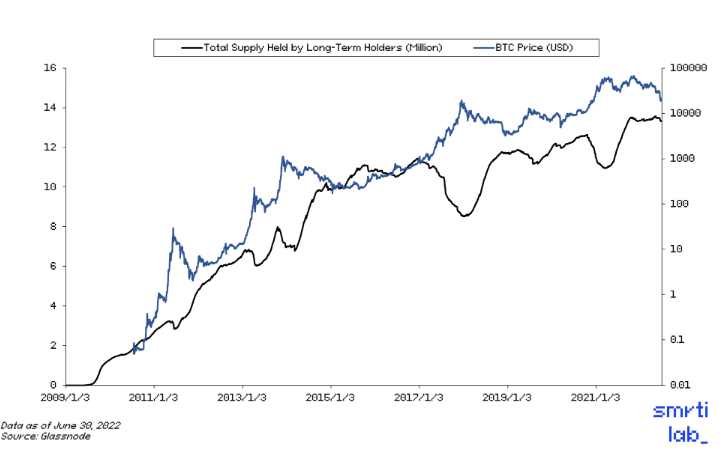
image description
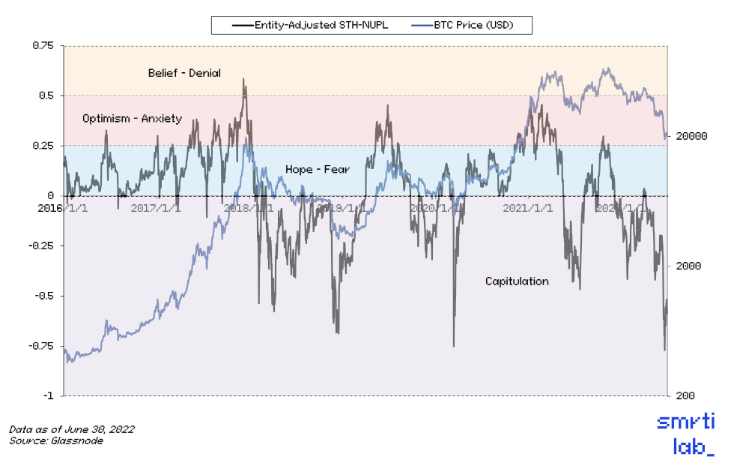
image description
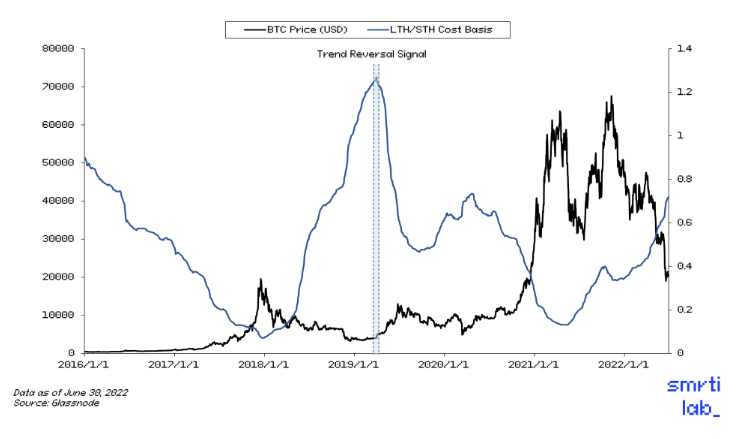
image description
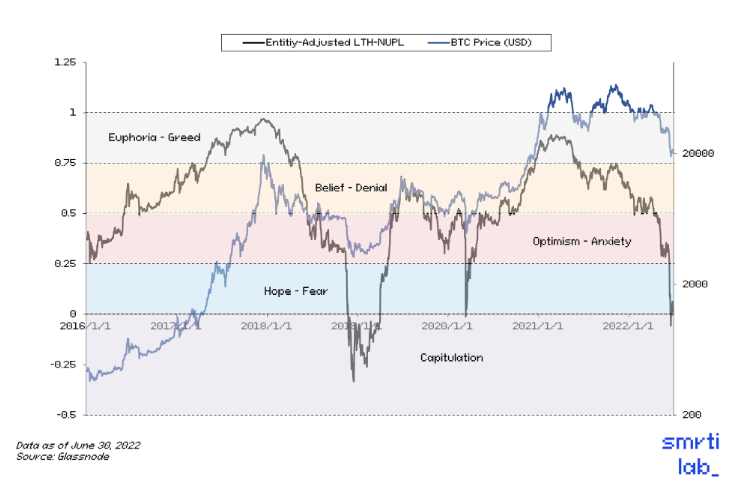
Figure 6: Difficult times for long-term holders too, but this may be just the beginning
first level title
Long-term trends in cryptocurrencies
secondary title0xbitbear,@0xfan,@0x992
Cyclicality and long-term nature of the encryption industry
secondary title
The Current State of Cryptocurrencies and Where We Are Going
What are we buying when we buy cryptocurrencies? Are cryptocurrencies too monotonous as an asset class?
Once considered the only holy grail among cryptoassets, Bitcoin is characterized by the community's obsession with BTC.D, an index that calculates the market share of BTC's market cap in the total crypto market cap. It is a "safe haven" in the encrypted asset class, and encrypted OGs choose to hoard BTC as a store of value during market downturns.
secondary title
Smrti Argument 1: The relevance of Bitcoin and the crypto industry has declined: Bitcoin adoption is smaller, but more and more applications will adopt blockchain and encryption technology.
Below are the top 10 protocols based on seven-day average transaction fees.
image description
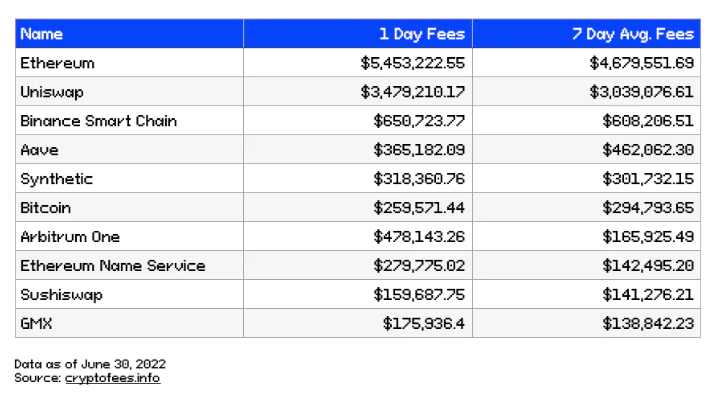
image description
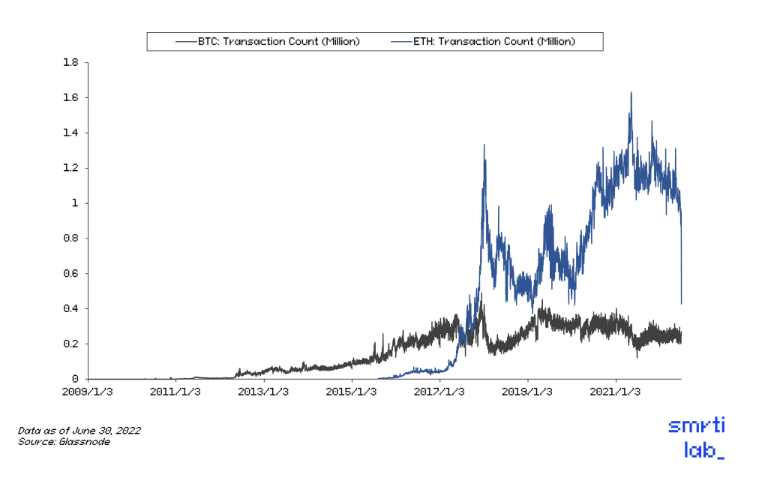
image description
Figure 8: Ethereum on-chain settlement value is catching up to Bitcoin
secondary title
Smrti Argument 2: The merger will make ETH the first digitally native deflationary asset with a real yield.
image description
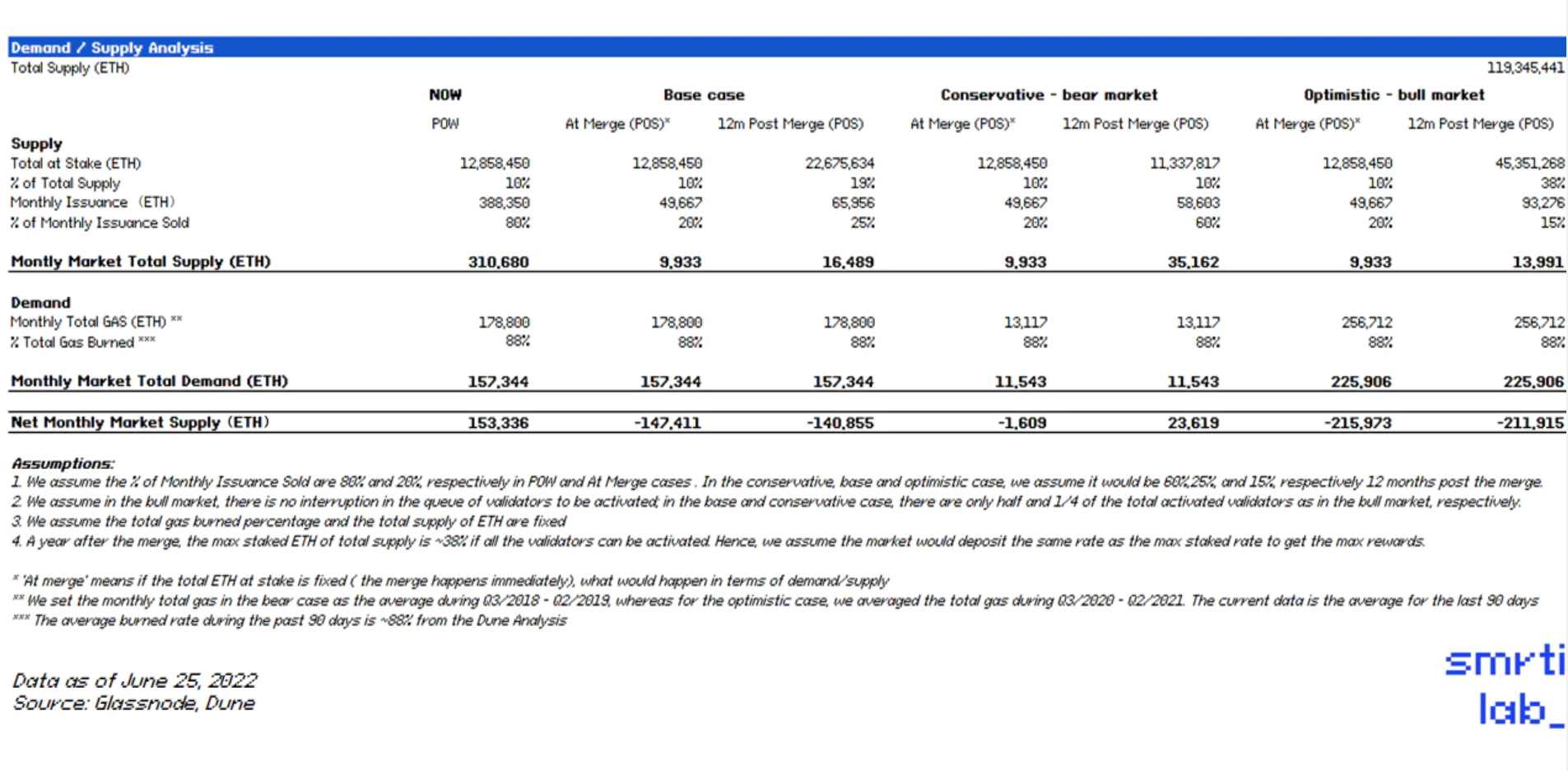
image description
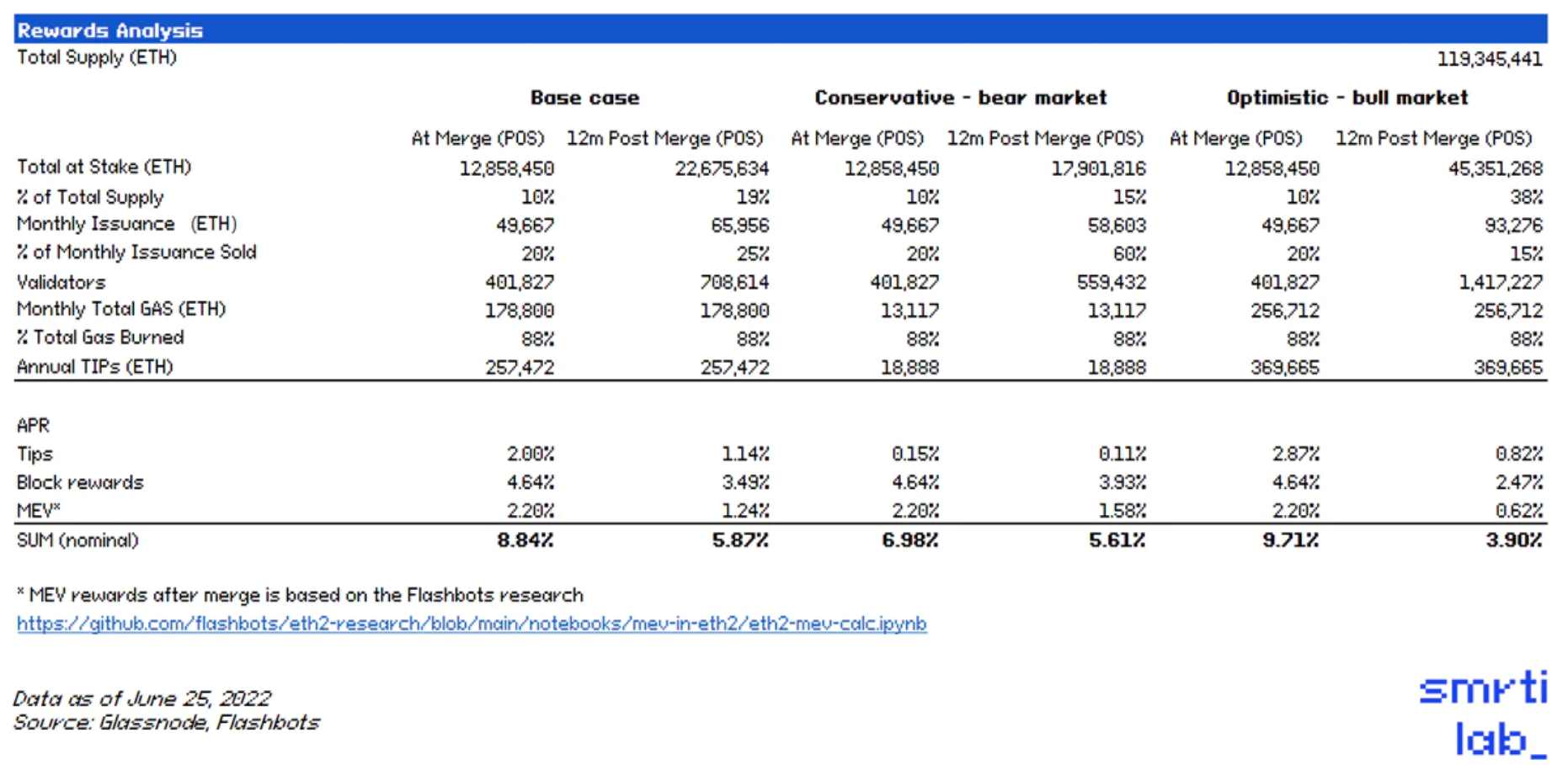
Table 3: Ethereum’s monetary policy and market dynamics after the merger
Taking the Base case as an example, if we enter into the merger with the current pledge rate:
Nominal pledge APR (considering deflation) is: 8.84%;
Change in monthly issuance: from 388,350 ETH to 49,667 ETH;
The amount of ETH burned per month: about 157,344 ETH;
Net Monthly Supply: -147,411 ETH.
This would reduce the combined Ethereum issuance by ~87.2%, making it a deflationary productive asset with a notional annual yield of ~8%. While the impact of the merger has been widely discussed, we believe that market movements have not fully reflected some of the fundamentals behind this change. Here's how we see the actual impact of the merger:
Unable to drive new adoption:The merger is just one part of Ethereum's long-term scaling plan. It will neither significantly increase TPS nor reduce transfer fees. The merger will bring Ethereum closer to its final form, but there is still a gap of 10x to 700x between Ethereum and the final form of other L1s. Regardless, transaction costs on the Ethereum mainnet will remain high. Therefore, the merger will not drive new adoption of Ethereum, although it will bring us closer to the final form of Ethereum.
Validator queues may increase the adoption of liquidity-collateralized derivatives:Unlike other POS chains, new validators on Ethereum must enter a queue before being activated and start earning rewards, the number of newly activated validators in a given period will be limited. We estimate that it will take at least 15 months for Ethereum to reach the same collateralization rate as Polkadot (~52%) and 18 months for BSC (~81%).
With months of queues ahead, it’s fair to say that liquid staking derivatives offer an appealing alternative to skip the queues and start earning rewards. Therefore, we can see that liquid equity tokens such as Lido's stETH are trading at a higher price than spot ETH, rather than today's discounted price.
EIP-4844 and EIP-4488 as mid-term solutions to reduce rollup fees and increase usage:
EIP-4844 (aka Proto-danksharding) is a proposal that aims to implement most of the logic and rules that Danksharding can use in the future. The main feature introduced by EIP-4844 is a new transaction type: blob-carrying transactions.
Blob data is designed for Rollup as an alternative to Rollup's current calldata solution for data storage. Compared with the current use of 2-10KB Rollups in calldata, it has achieved 100 times the capacity (very optimistic), and may reduce the Rollup cost by 99%. This provides a temporary reprieve in the scalability of Rollups, allowing them to scale up to 2 MB per socket after consolidation.
Another proposal, EIP-4488, also proposes a fast-implementation solution to reduce the gas cost of calldata and limit the total calldata in a block. EIP-4488 may reduce the average cost of calldata by 80%.
Although EIP-4488 is another attempt to reduce Roll-up gas costs, it is only a short-term solution and will not help future upgrades to full data sharding. In contrast, EIP-4844 creates a new transaction type that immediately reduces Rollup transaction fees and, once rolled out, will require no further data sharding work by the future execution layer.
Both EIP-4488 and EIP-4844 are still in draft stage. With all the development work currently focused on merging, we estimate that these two proposals will not materialize until 2023.
In summary, we have a major shift in market dynamics towards the end of 2022 with the upcoming Ethereum merger. While BTC miners need to sell BTC to cover operating costs, ETH will reduce inflation and move to POS with almost no operating costs.
secondary title
Smrti argument 3: We are unlikely to see significant improvements in L1 and L2 scalability by the end of 2022, but the infrastructure space is actively experimenting with various designs.
secondary title
Smrti Argument 4: More digital content and social interactions will be generated natively on-chain. The next generation of projects will be built on a more complete Web3 and Web2+ experience compared to the fragmented experience we have today.
We believe that the key to unlocking billions of users is not the existing state of cryptographic infrastructure, but we believe that new primitives need to be built that are critical to a more complete web3 and Web2+ experience. This is where we spend a lot of time tracking and talking to the teams that are developing these new primitives:
1. Infrastructure and tools will enable data (1) mobility between Web2 and Web3; (2) mobility within Web3. This includes, but is not limited to: standards and infrastructure for trustless credentials, authentication protocols, etc.
2. Innovation of Token standards and functions (ie: non-transferable reputation system);
3. A key solution for the identity system with ease of use, which can compete with hosted products;
4. Zero-knowledge enabled programmable privacy solutions;
Original link





