






Failed Algorithmic Stablecoin Projects: What's wrong with AMPL, ESD, and Terra?


The collapse of the Terra ecology is destined to be recorded in the history of the blockchain. The decentralized non-full mortgage algorithm stable currency represented behind it has also ushered in a turning point in history.
first level title
Unsecured dark age, the game between air and human nature
first level title
Ampleforth: Compatibility issues between amplified volatility and rebase tokens
mechanism
mechanism
As a rebase token, the number of tokens will change towards the target price every 24 hours:
When the price is within 5% of the target price (the current CPI-adjusted target price is $1.1), the number of tokens remains unchanged.
When the price is lower than the target price by more than 5%, the tokens owned by all token holders will continue to decrease until the target price is reached.
at present
at presentThe entire increase process of AMPL is controlled by a proposal presented and passed in February 2022, with a maximum daily change of 10% increase or 7.78% decrease. Appears when the market price is above $3 and $0 respectively.
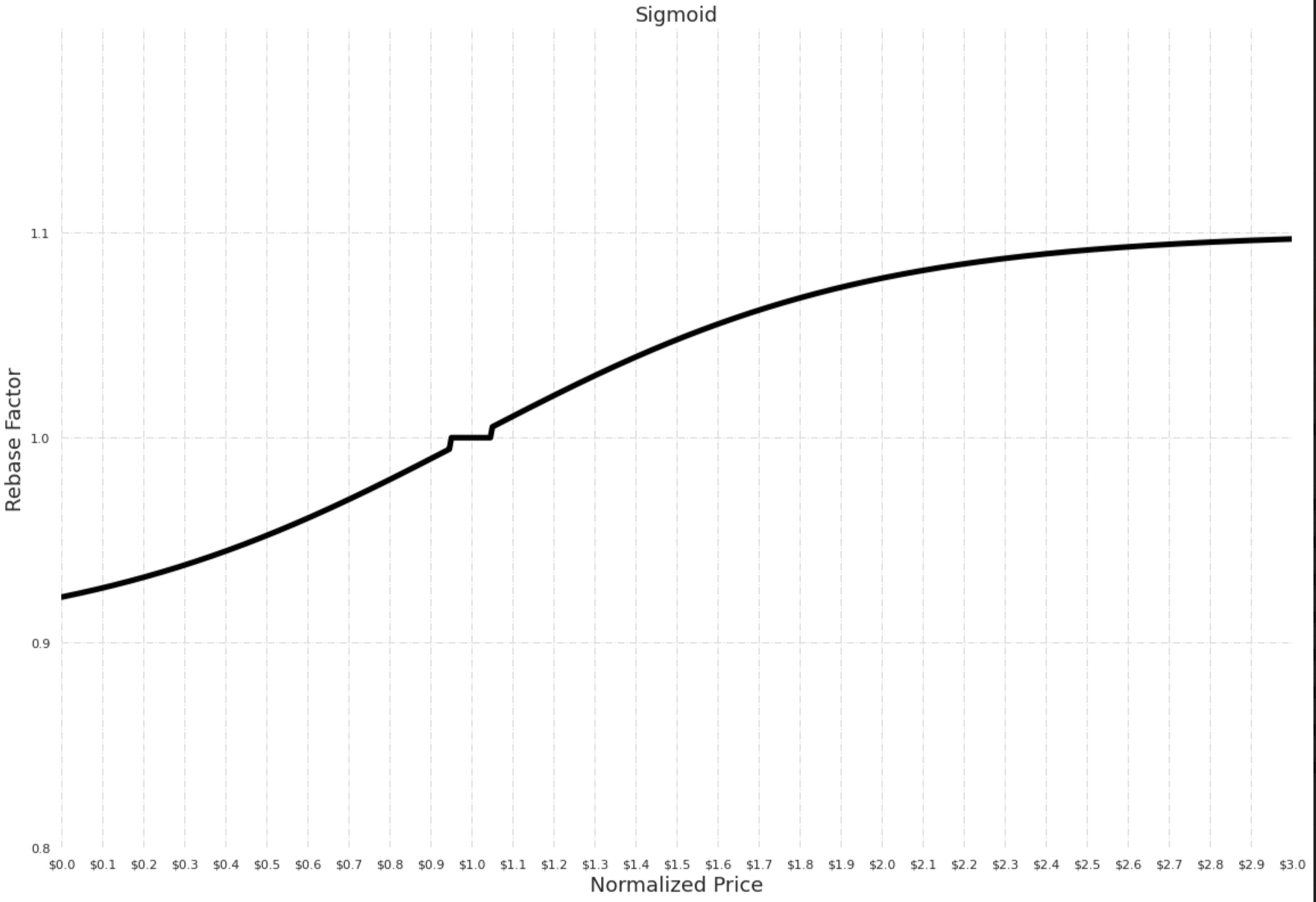
The volatility of AMPL mainly comes from the hysteresis of market adjustment and the amplified volatility brought about by rebase。
When the market changes drastically in a short period of time (such as a 50% drop in 24 hours), the Ampleforth protocol cannot directly absorb all fluctuations at the next rebase time point. Instead, there will be an adjustment period Δt. During the cycle, the number of AMPL tokens will continue to decrease, which is used to reduce the supply and increase the price.
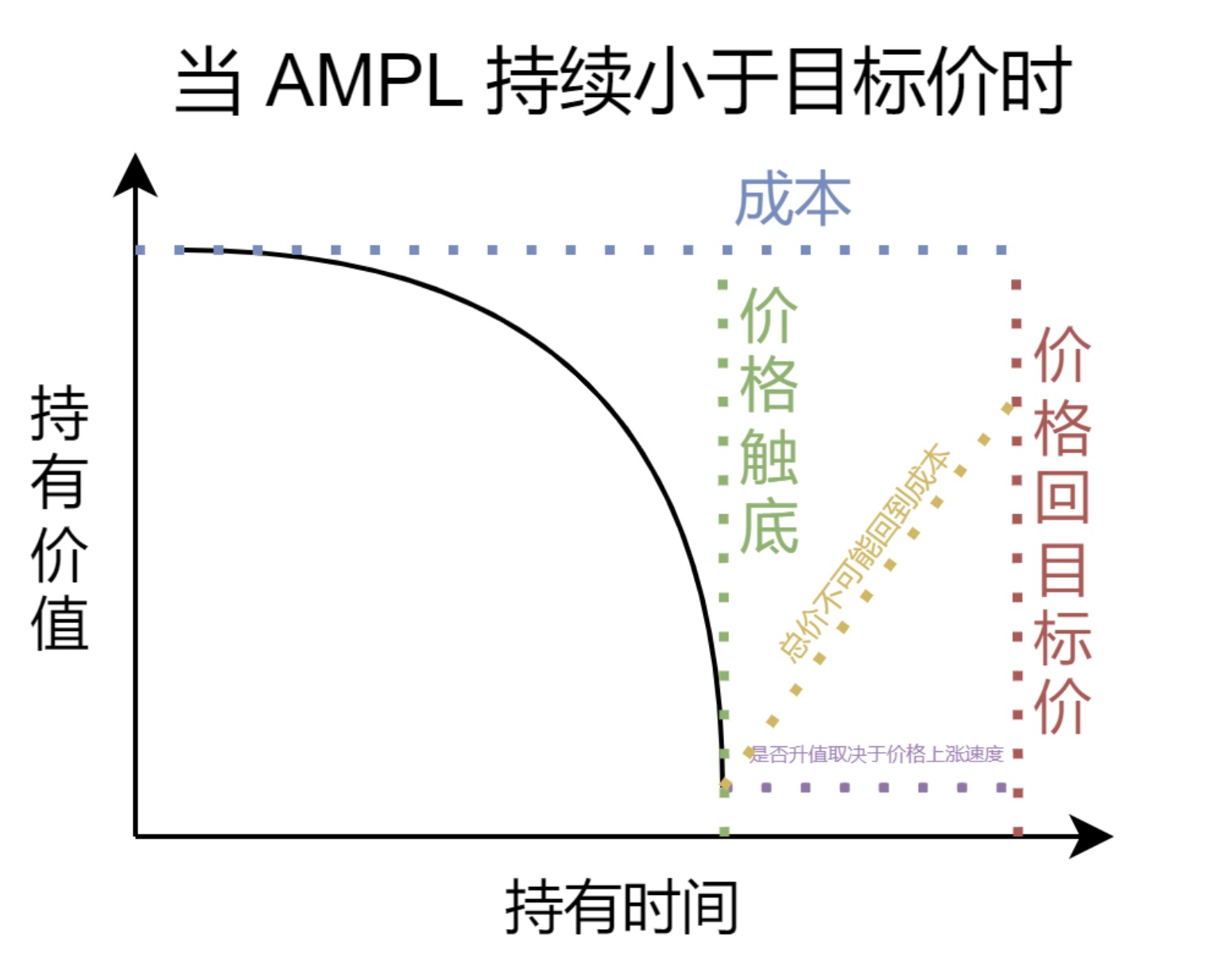
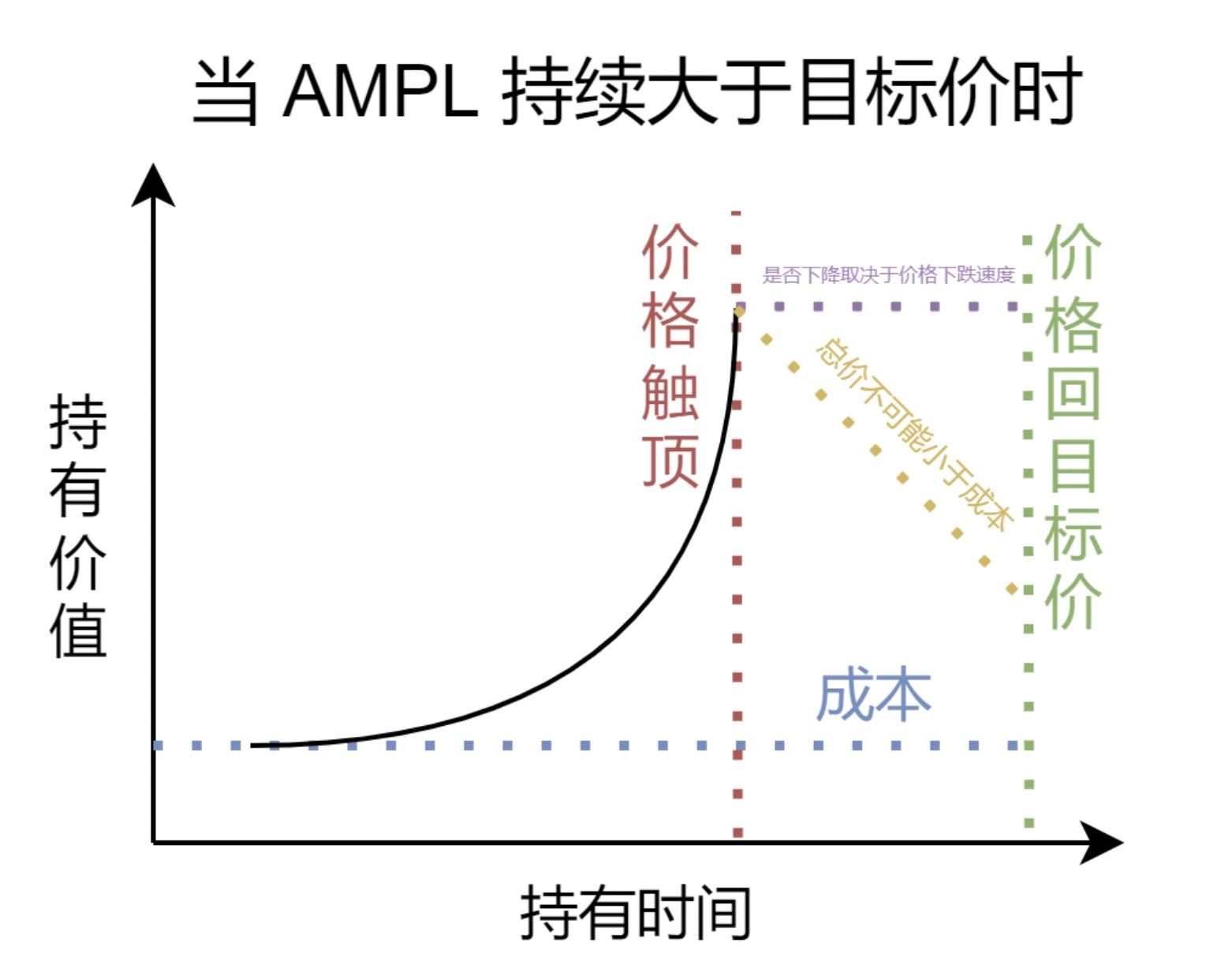
But in the process of its decline and rebase, the real holders actually bear a double loss pressure. On the one hand, a token that was originally worth $1.1 is now less than $1.1, and on the other hand, the original holding of 1 token will become less than 1 token after each rebase.
secondary title
the game
When the loss in the number of tokens caused by the decline occurs, the most efficient remedial behavior other than selling the tokens is to continue to buy AMPL tokens when the price is lower than the target price, in order to reduce the average price and expect that after the subsequent price rise profit. If you insist on implementing this strategy, as long as the token price is lower than the target price, you must continue to buy AMPL tokens until the average price is lower than the current price, so as to reduce losses by making profits. But buying is also risky, because if the token cannot rise to the target price of $1.1 for a long time, the token held will continue to shrink, resulting in continuous losses. Therefore, in this case, holders generally tend to sell as soon as possible to stop losses. The selling pressure will also keep the price lower until enough people form a consensus that "buying can be profitable", allowing the token price to bottom out and rebound.
secondary title
Incompatibility of Rebase and Defi
Summarize
Summarize
first level title
ESD: Losing consensus means losing everything
mechanism
mechanism
ESD has an oracle that uses Uniswap v2 as a source of quotes.
When the price is lower than $1, ESD holders can destroy the ESD they hold and obtain bonds of the same amount. Bonds have a validity period of 90 days (at the time of the original white paper).
During the life of the bond, if the price is higher than $1, the bondholders will redeem the bonds one by one in the order of redemption submissions. That is, the system will generate new ESD and meet the bond redemption requirements. If the bond is fully redeemed and the price is still above $1, then the new ESD will be divided equally among all ESD pledged in the DAO.
ESD shifted the selling pressure to the water, which doomed its token price to stay below $1 most of the time.
secondary title
the game
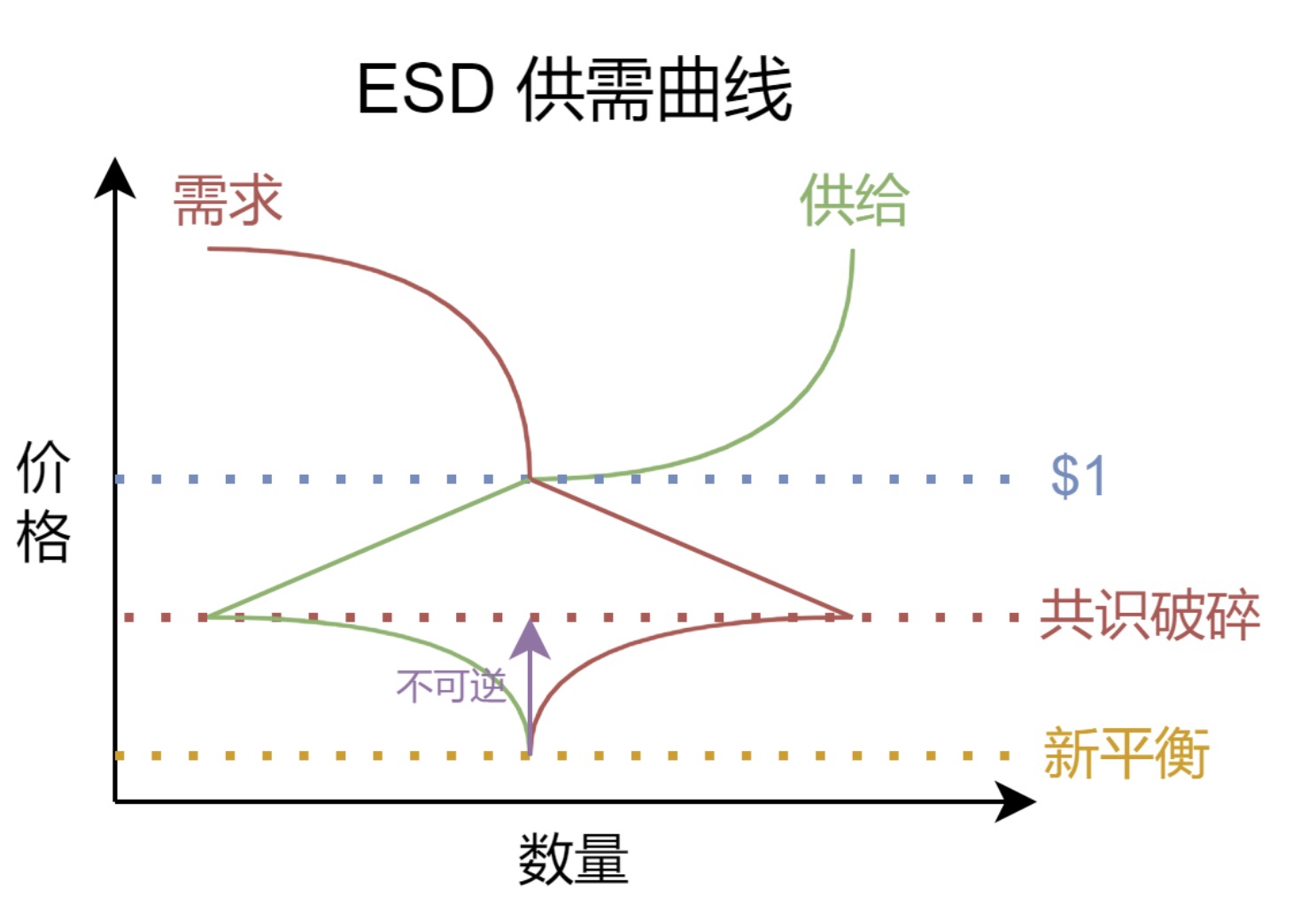
When the price is above $1:
On the supply side, ESD starts to inflate. At this time, the higher the price, the faster the supply will increase.
On the demand side, because of the potential effect of ESD inflation, when the price remains above $1, it means that dividends will be distributed to ESD pledgers, which will bring a considerable pledge demand in the early stage. But as the price gets higher and higher, speculators will gradually stop staking new tokens. At this time, the relative relationship between the supply has not been destroyed by the changes on both sides, and an equilibrium point of $1 is still maintained.
When the price is less than $1:
If it is slightly less than 1 dollar, the market will have more confidence in returning to 1 dollar and reaching more than 1 dollar. At this time, both holders and new speculators will tend to choose to buy bonds to obtain profits above 1 dollar s right.
But when the price gradually deviates from 1 dollar, the market's confidence in its return will gradually decrease, and the risk of buying bonds will increase, but at the same time, the potential benefits of bonds will also increase, so there will be more funds with high risk appetite admission.
The game between venture capital and holders is not without a lower limit. When prices are low enough, markets that don't see the possibility of a price recovery are greeted with panic selling. At this point, the consensus on a standard ESD price of $1 begins to fade. Venture capital will also become unwilling to pay for a bond that has no consensus and cannot be honored. So the supply and demand relationship at this time will develop in reverse until a new equilibrium point well below $1 is reached.
Summarize
Summarize
At first glance, there is no problem with the ESD mechanism. The disguised destruction mechanism attached to the bond can effectively raise the price below $1. But once its consensus is broken, unlike AMPL, which can deflate infinitely, ESD will have no remedial measures. Because at this time, no one is willing to buy bonds that cannot be redeemed but have a redemption period. So for ESD, losing the $1 consensus means losing everything.
Mortgage era, playing with human nature and greed
first level title
UST (Terra Money): A high-risk, high-yield stablecoin powered by the mainnet (L1) and mainnet tokens
mechanism
mechanism
UST is mortgaged by the Terra mainnet token Luna, and there is no cash reserve in the initial stage of the entire ecology.
When the price is higher than $1, arbitrageurs can burn the Luna minted UST purchased with $1 and sell at the current price higher than $1 and make a profit.
When the price is lower than $1, arbitrageurs can buy UST at a price lower than $1 and exchange it for Luna at a market price of $1 and sell Luna for a profit. The maximum amount of arbitrage in this method is 300 million US dollars per day, and the limit is reset every 36 blocks (later, it was raised to 1.2 billion US dollars per day through a proposal in the UST crash).
The extreme interest-bearing liability structure that UST failed to adjust in time gave it a fatal blow
In 2020, Do Kwon proposed a solution to the problem of the low asset pledge rate on the Terra chain. In the middle of 2020, Anchor, one of the most efficient protocols in the history of blockchain, will be launched. Afterwards, attracted by the interest rate of 20%, Anchor's lock-up volume (TVL) continued to rise. By January 2022 it will have reached almost$5 billion. And it climbed to a terrifying TVL of more than 14 billion in just four months. On the eve of Luna's crash (May 8), the total market value of UST was only more than 18 billion, while the lock-up volume of UST in Anchor was more than 14 billion.
At the same time, in the face of high returns, the seemingly harmless and stable UST has attracted many people to high leverage. Therefore, although the ultra-high interest-earning lock-up volume is very risky, the centralized liquidation of leverage is also one of the key elements of the crash.
At this time, it is no wonderA flurry of 85 million sell-offssecondary title
the game
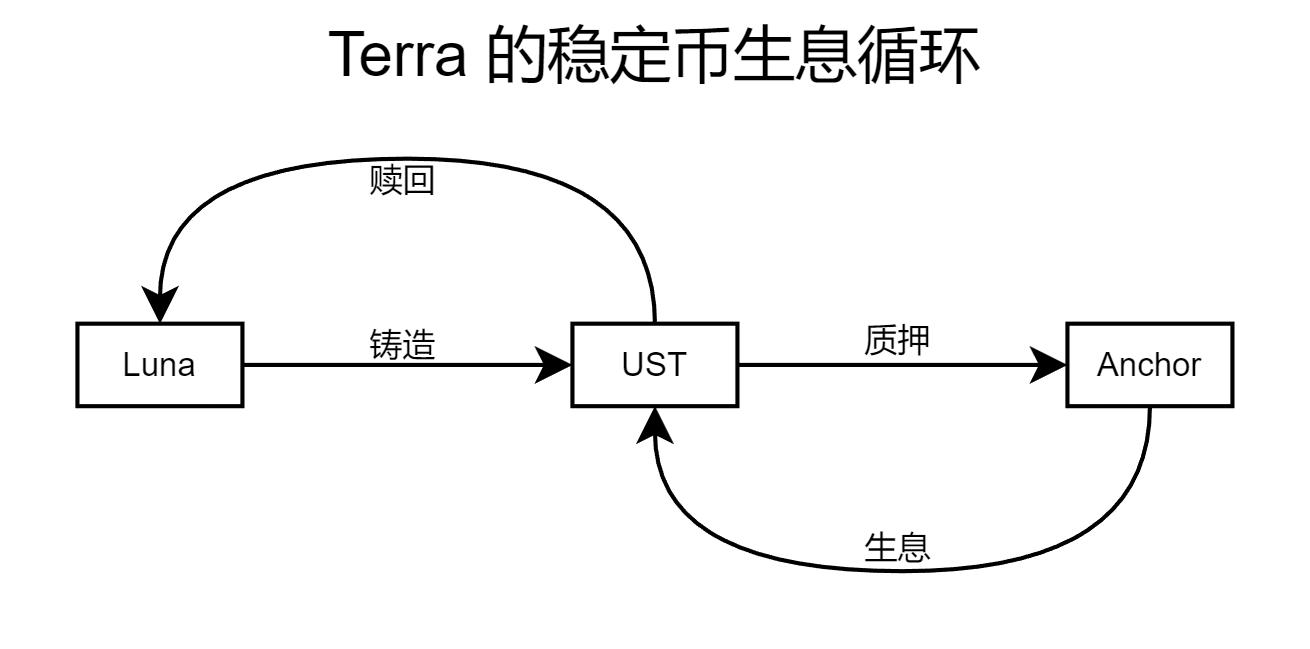
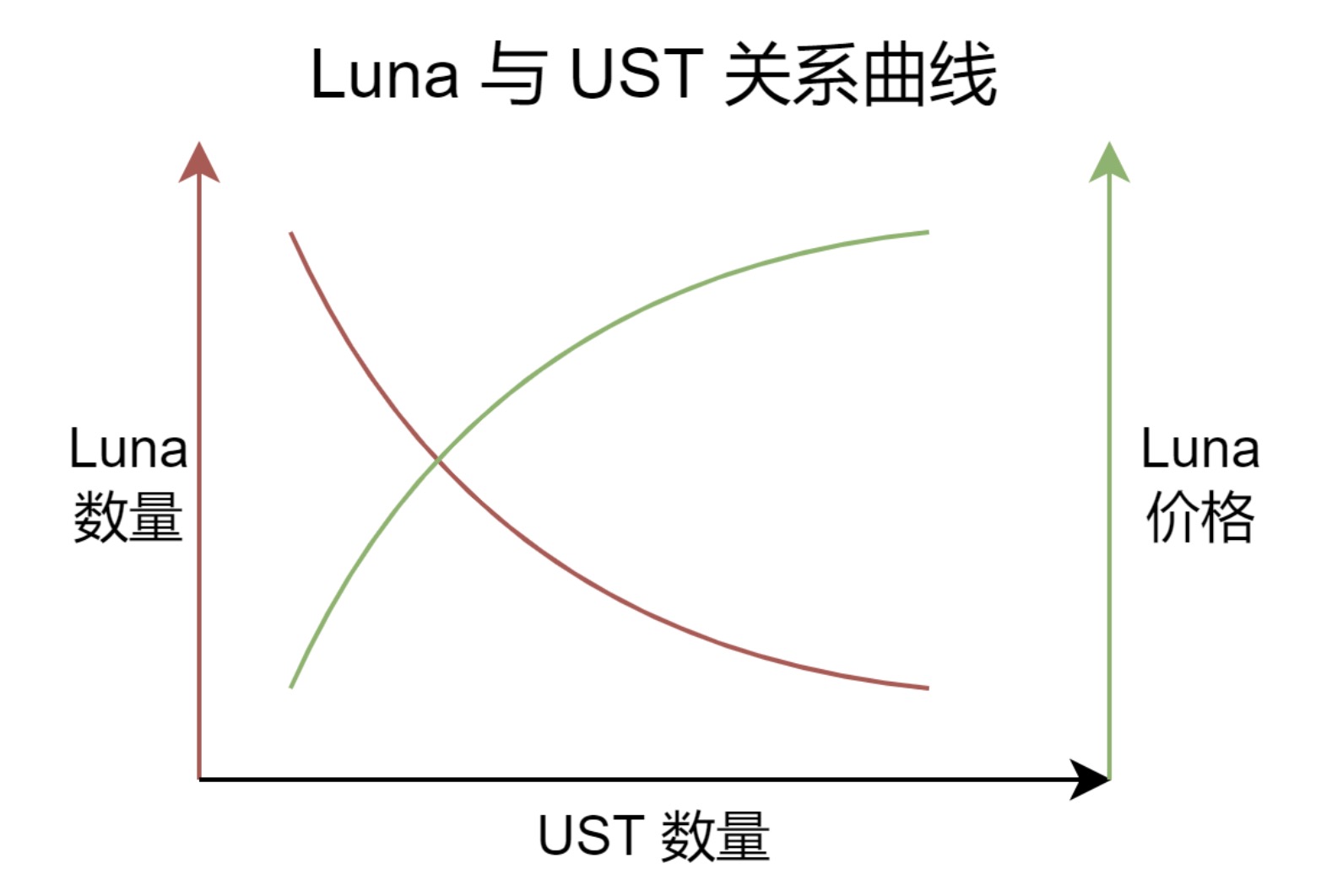
UST is a game with Luna, the main network token of Terra ecology. The value of Luna comes from its gas fee and POS mining mechanism for the entire ecosystem as a mainnet token. And UST will transfer the value generated by Luna and exist in the Terra ecology in the form of stable currency, and provide Terra with a better and more stable transfer platform for usage scenarios (compared to other main network tokens such as ETH with greater volatility) . In this process, the value purchased by Luna and UST holders is the same, that is, the ecological value of the Terra main network.
So at this time, if someone says that the main value of the Terra ecology is the UST interest-bearing pledge of Anchor, does this sound very much like a Ponzi scheme in which pure money makes money?
In addition, the ecological problems of Luna and UST are not limited to Anchor. In the process of generating UST, the total market value of Luna + UST should remain unchanged. Because UST will represent the market value burned by burning Luna and exist in the entire ecology. The act of minting UST should not be seen as a demand for Luna tokens, but just a formal conversion. People who want to buy Luna can also get Luna by purchasing UST and then changing it to Luna. But in fact, the market regards the casting of UST as a demand and consumption for Luna, which makes the market extremely overestimate the value of Luna. And what overvaluation brings is more UST minted by less Luna, creating a vicious circle that makes the false prosperity even worse.
In fact, as a main network ecology, Terra's UST construction is very delicate. But for the Terra ecology, on the one hand, Anchor’s high income quickly built a tens of billions of financial empire for it, and on the other hand, Anchor’s high income immersed the public in a high-value false prosperity and eventually led to its collapse. The market also lacks sufficient awareness of the valuation of this model of value swaps between mainnet tokens and stablecoins, which ultimately exacerbated the entire crash.
first level title
How to think about algorithmic stablecoins in the post-Terra era
Do we really need algorithmic stablecoins?
Terra's thunderstorm has made many people very disgusted with stablecoins that are not over- or fully-collateralized, thinking that it is a Ponzi scheme that produces air. However, some people think that Terra’s thunderstorm has nothing to do with algorithmic stablecoins, but is caused by the imperfection of the entire Terra Money ecosystem.
Vitalik on May 25, 2022 clearly favored the latter, and praised RAI's stabilization mechanism in the article. On the same day, he published two criteria he used to measure stablecoins in his blog.
Can Stablecoins Safely Clear All Users?
What happens when the stable currency mechanism is anchored to an index that rises by 20% per year?
Specific analysis canReference text。
The essence of the algorithmic stablecoin is a movement to decentralize minting rights. It will achieve what only the country can do in the past through the consensus of users and a series of algorithms on the Internet. Of course, the current path of algorithmic stablecoins is not satisfactory, especially the failure of Terra has made many people lose confidence, resulting in "since there are already centralized and compliant stablecoins such as USDC and over-collateralized stablecoin DAI", why? Still need an algorithmic stablecoin?
For these two types of stablecoins, the answer given by algorithmic stablecoins is actually very simple, because centralization will face the risk of regulatory bans, and over-collateralization will face capital efficiency problems. Now that a completely decentralized blockchain network has emerged, why is everyone required to obey centralized control? Since you can have a better capital utilization rate to earn higher returns with lower margin risks, why do you need to mortgage more margin assets? We cannot fall into a blind storm of criticism because of the failure of algorithmic stablecoin projects at the current stage. Algorithmic stablecoins, as a practice of the future form of stablecoins, still have their value and necessity.
Does every public chain need its own algorithmic stable currency?
After the success of the algorithmic stablecoin in the Terra ecosystem, public chains such as Waves, NEAR, and TRON have launched their own algorithmic stablecoins. Now that Luna has stepped down from the altar, one question is whether it is necessary for other public chains to launch their own.
Algorithmic stablecoins symbiotic with the native tokens of the public chain can provide a better and more stable economic model for the public chain itself. But at the same time, it needs to be cautious about macroeconomics to avoid repeating the mistakes of Terra. So far, there is no stable solution that has passed the test of time and can improve the ecology of a public chain token. Therefore, in the short term, smaller public chains will take a cautious attitude towards any algorithmic stablecoins that intersect with their own native tokens.
write at the end
write at the end
refer to
refer to
white paper:
Ampleforth:
https://www.allcryptowhitepapers.com/wp-content/uploads/2019/07/Ampleforth.pdf
ESD:
https://github.com/emptysetsquad/dollar/blob/master/døllar.pdf
Terra:
https://docs.terra.money/index.html
disclaimer
https://vitalik.ca/general/2022/05/25/stable.html#analysis
disclaimer
about Us
Copyright Notice
Without the authorization of DODO Research Institute, no one may use without authorization (including but not limited to copy, disseminate, display, mirror, upload, download, reprint, excerpt, etc.) or allow others to use the above intellectual property rights. If the work has been authorized to be used, it shall be used within the scope of authorization, and the source of the author shall be indicated. Otherwise, its legal responsibility will be investigated according to law.
about Us
More information
More information
Official Website: https://dodoex.io/
GitHub: https://github.com/DODOEX
Telegram: t.me/dodoex_official
Discord:https://discord.gg/tyKReUK
Twitter: https://twitter.com/DodoResearch
Notion: https://dodotopia.notion.site/Dr-DODO-is-Researching-6c18bbca8ea0465ab94a61ff5d2d7682
Mirror:https://mirror.xyz/0x70562F91075eea0f87728733b4bbe00F7e779788





