






In-depth analysis of Waves: the Ponzi game behind the narrative of "Russian Ethereum"?


Compilation of the original text: The Way of DeFi
Compilation of the original text: The Way of DeFi
Today, DeFi researcher 0 xHamZ published his views on Waves on his personal social media platform. In his view, Waves is currently running an unsustainable Ponzi game. The reasons given are as follows:
1. Waves borrows USDC and USDT stablecoins at an annualized interest rate of 35%, and then uses them to purchase its own Waves tokens, thereby boosting its currency price soaring.
2. By mortgaging Waves tokens, Waves can mint more USDN native stablecoins;
3. By mortgage USDN native stable currency, Waves can borrow more USDC and USDT stable currency from users;
4. In order to maintain the stability of the system, the market value of WAVES needs to continue to grow, so the key is to attract more people to deposit USDC and USDT stablecoins into its lending platform;
5. When it is unable to attract enough USDC and USDT stablecoin deposits, WAVES tokens will lose the source of buying, so they will fall into a negative cycle, and when the market value of WAVES is lower than USDN's outstanding debt, USDN will face the risk of breaking the anchor risk.
Here's his take:
WAVES is the largest Ponzi game in the crypto space.
It borrows USDC at an annualized interest rate of 35%, and then uses it to buy its own tokens, thereby boosting the price of its currency soaring.
In order to maintain the stability of the system, this requires the market value of WAVES to continue to grow.
The final outcome of WAVES is collapse, and USDN will experience unanchor.
WAVES is a layer 1 blockchain, and its current primary use is to mint USDN (the native stablecoin of the WAVES blockchain).
You can compare WAVE to LUNA/MKR, while USDN corresponds to UST/DAI.
The market capitalization of WAVES has grown 6x in the past two months, with the initial catalyst being the narrative surrounding the "Russian Ethereum" while outperforming ETH by a wide margin.
WAVES needs to expand its market cap so it can issue more USDN. The health of the ecosystem is defined as WAVES market cap/USDN. This ratio indicates how many USDN the system can issue. We have seen that the USDN supply decreases once the ratio reaches 2.5x, which is the minimum target.
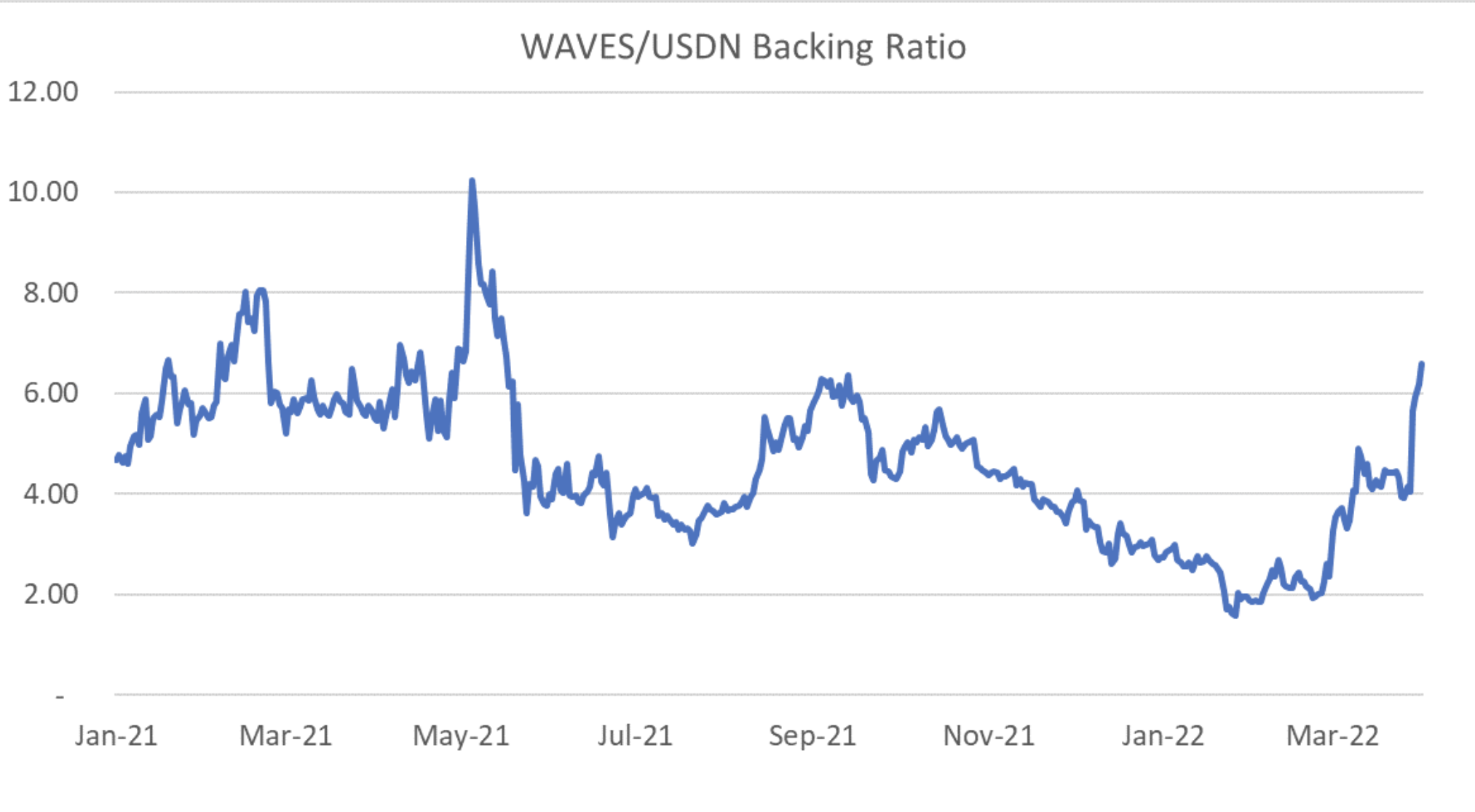
Due to the skyrocketing price, WAVES created more USDN issuance capacity. Assuming the target value is 2.5 times, WAVES can issue 1.38 billion more USDN.
The USDN yield at this target value will be 5.4%, while the USDC/USDT supply rate on AAVE is 3.5%.
We recently saw USDN being minted at the fastest rate ever.
In the past 4 weeks, USDN’s market capitalization has grown from $475 million to $875 million, an increase of 85%, while the market size of DAI has decreased during the same period.
Why would anyone want to hold USDN?
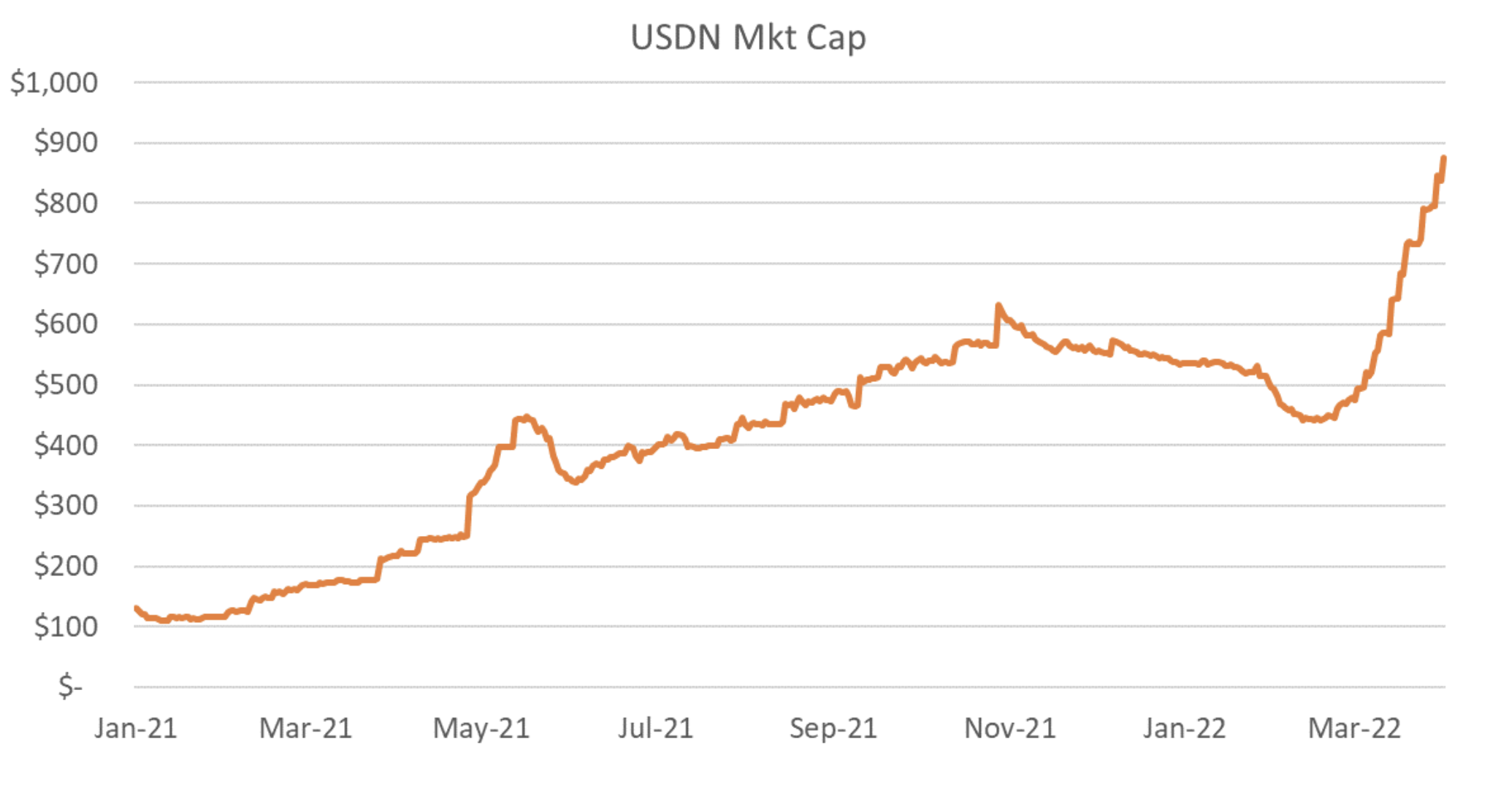
USDN powered by WAVES
WAVES has a native staking rate of 3.13%
USDN rate of return = WAVES original pledge rate (x) support multiple
The current yield of USDN is 3.31% * 6.60 x = 21.8%
And as more USDN is issued, this rate of return will decrease.
In order to keep the train on track, the market capitalization of WAVES needs to keep growing.
Once the support multiple starts to drop, the yield of USDN will drop.
When the support ratio is 6.6 times, USDN’s yield is 21.8%, and when the support ratio is reduced to 2.5 times, USDN’s yield drops to 5.4%.
When yields are low, there is a risk of capital flight.
Below, I'll walk you through how the WAVES team used leverage to deal with massive supply shortages.
Here is the process:
Deposit USDN on the Vires protocol;
Borrow USDC on the Vires protocol;
Transfer the borrowed USDC to Binance;
Use USDC to buy WAVES;
Convert WAVES to USDN;
restart;
You can track these behaviors through on-chain data.
Simply put, Vires is the AAVE equivalent on the WAVES public chain, which currently manages 70% of the total USDN (currently over 600 million USDN).
It also allows USDC/USDT lending business. The current USDC supply APY interest rate on the Vires platform is 30%, which currently exceeds any other yield protocol.
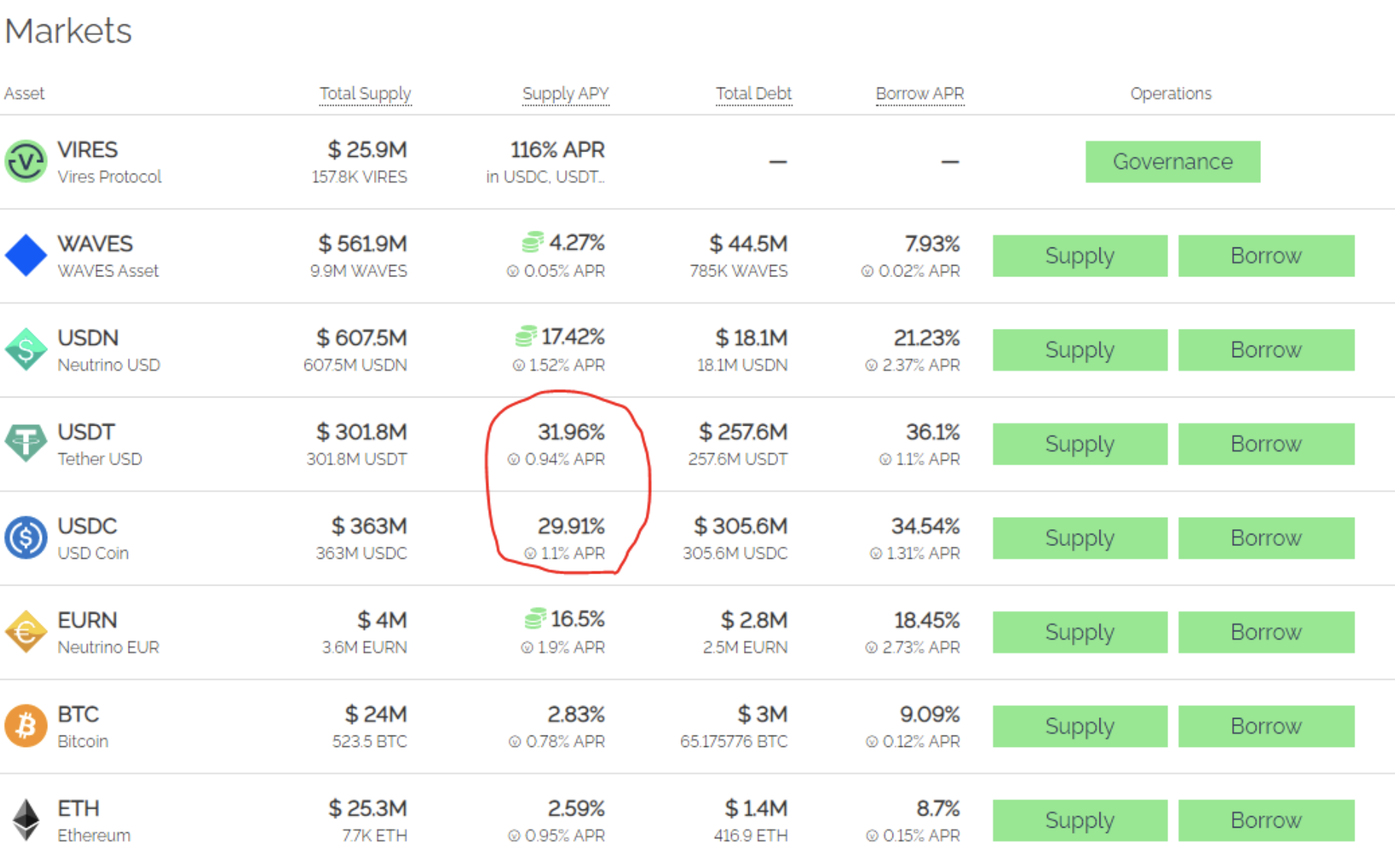
In the past two months, USDC/USDT borrowing on the Vires protocol has gone crazy, and the borrowing rate exceeds the interest rate of any other yield agreement on the chain.
So who is borrowing money? Why do you want to do this?
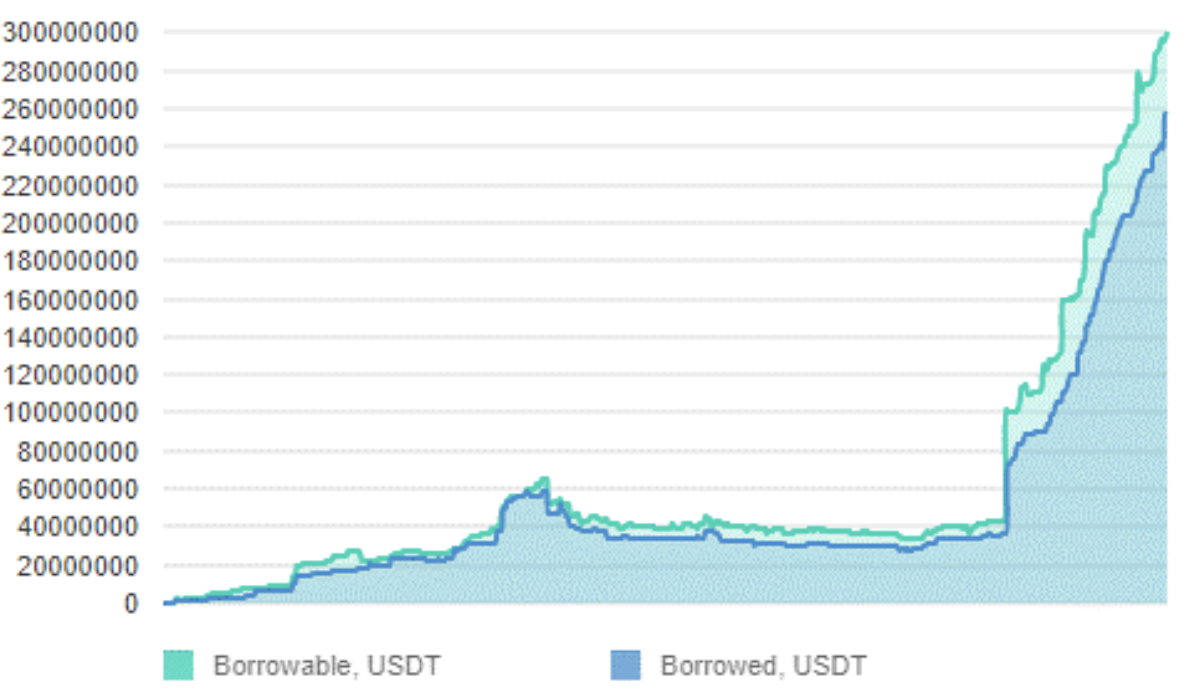
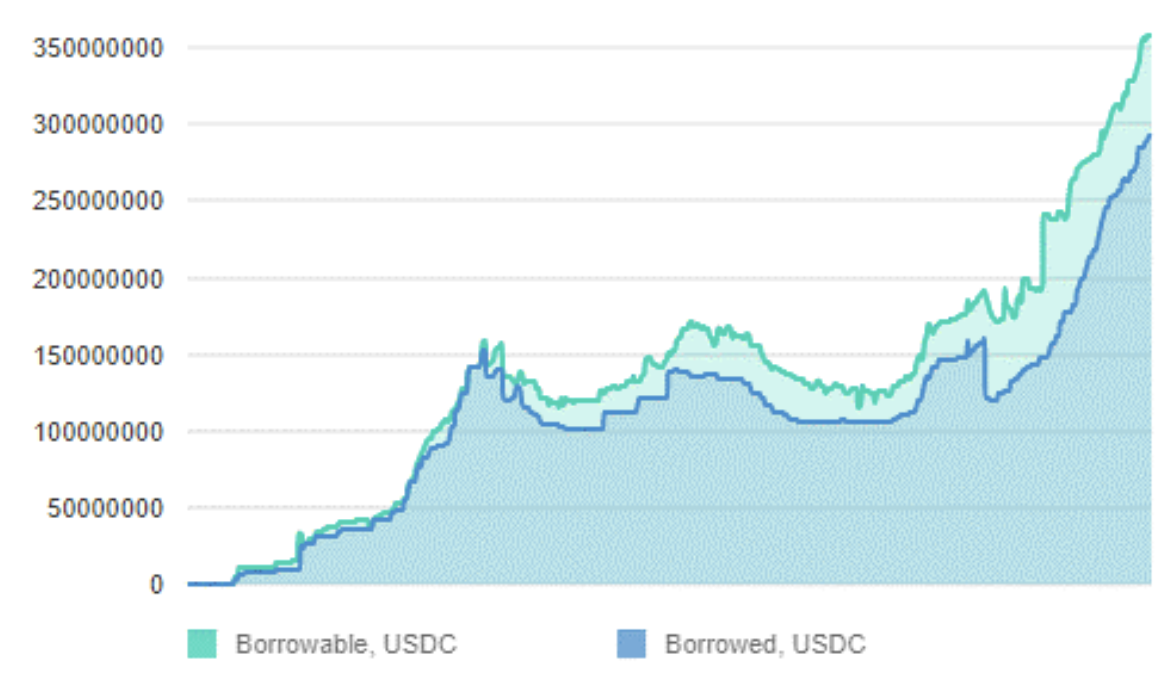
WAVES has been borrowing USDC and USDT by mortgaging USDN. WAVES sends these borrowed USDC and USDT to Binance, which is then used to buy WAVES. Then, they transfer the purchased WAVES to their wallets and use them to mint more USDN.
Then, they mortgage the minted USDN on Vires.Finance to borrow more USDC/USDT stablecoins.
Repeat the above process.
The problem is that WAVES has to entice users to deposit USDC and USDT to the VIRES protocol so they can borrow those stablecoins against newly minted USDN.
This naturally requires them to offer above-market interest rates to incentivize people to deposit USDC and USDT into the VIRES protocol.
WAVES tokens have a supply of 100 million, 85% of which are pledged, which makes the circulating WAVES only 16 million, plus some holders will not sell, etc., we can assume that there are 10.5 million WAVES tradable, When only 10.5% of tokens are available for trading, then the market becomes easy to manipulate.
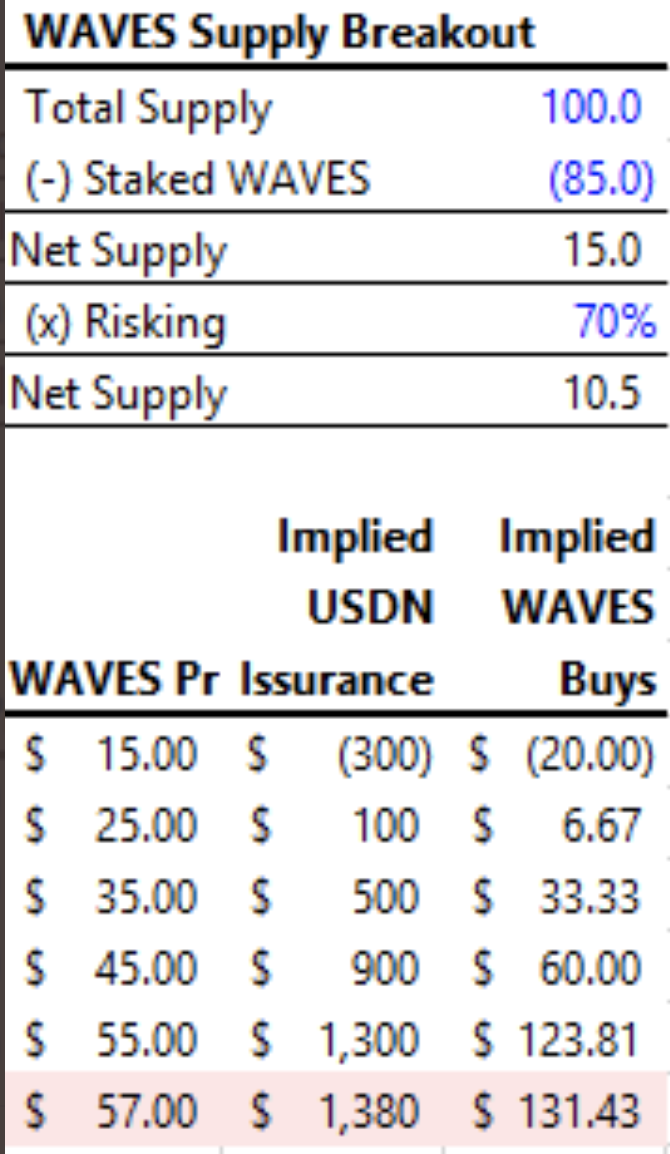
But for this scheme to work, you need to attract "puppets" to deposit their USDC into Vires.
Therefore, the market value of WAVES is limited by the USDC supply pool.
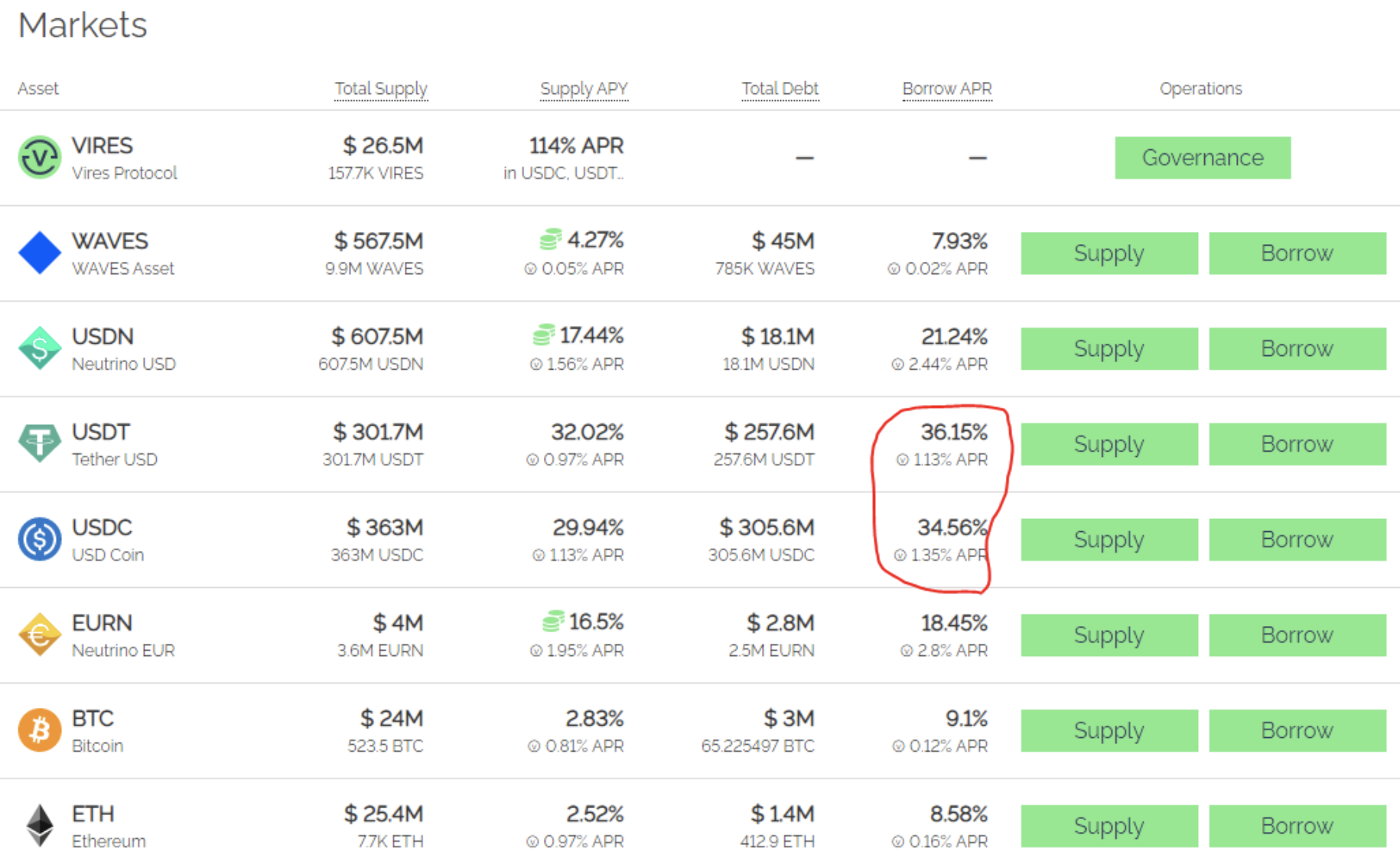
Once USDN reaches its target support multiple, the issuance of USDN will eventually stop.
And once the goal is reached, there are no more WAVES purchase plans.
The whole cycle dies fast.
If the price of WAVES drops enough, the market cap of WAVES could be lower than the outstanding USDN.
This means USDN becomes insolvent and depegged.
If the decoupling of USDN really happens, users who deposit USDC will face huge losses, which will be a disaster.
I call this scheme a Ponzi game because the whole scheme is financed by borrowed money.
The system itself has no organic activity.
You only have to look at the recent transaction counts on the Waves platform.
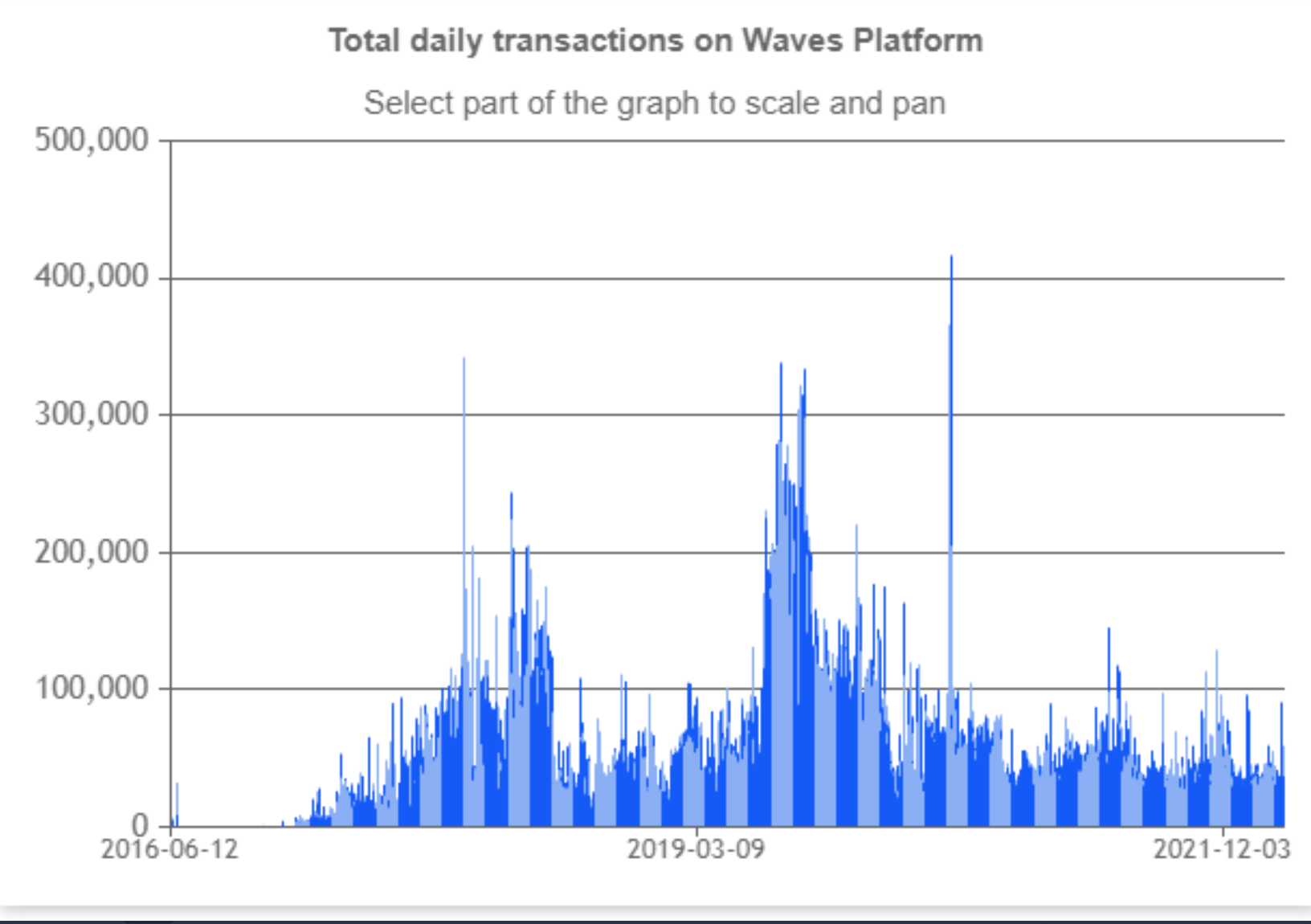
Every two days, from 10:00 PM to 12:00 PM Eastern Time, WAVES will issue USDN, borrow USDC, and then use it to buy WAVES.
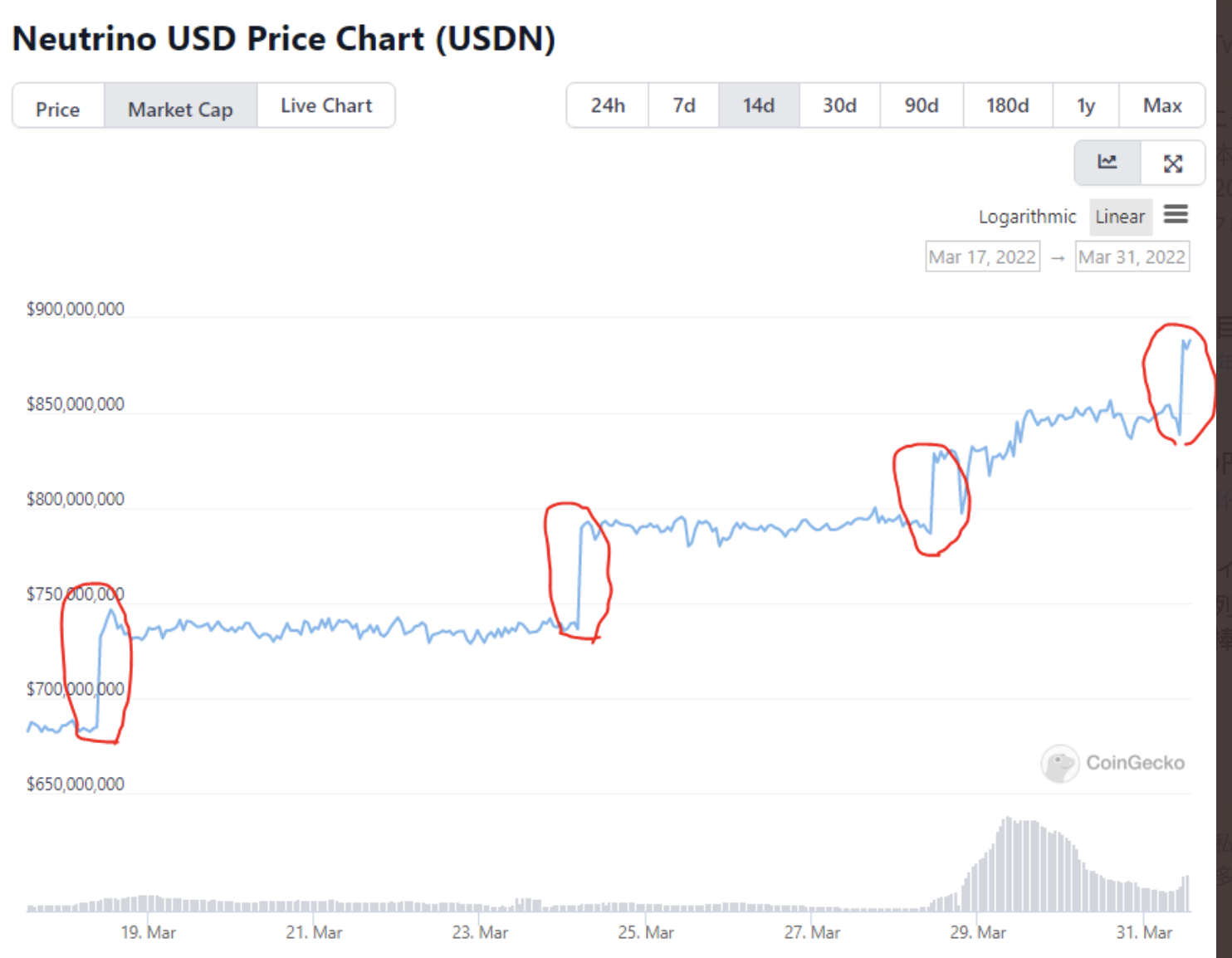
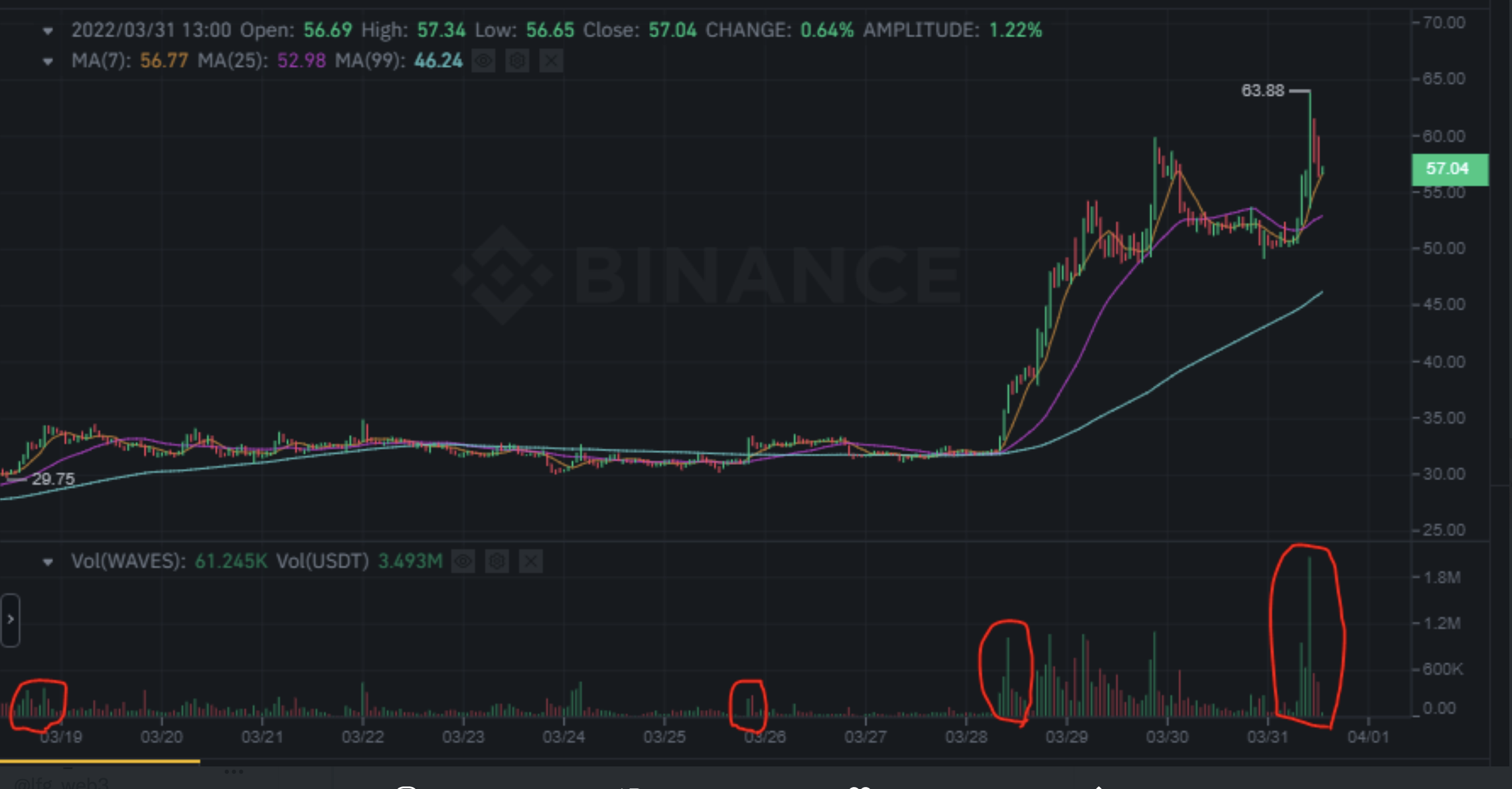
This high volume/price action is tempting day traders into momentum bullish mode.
The Korean exchange has always been the place with the largest trading volume of WAVES.
The Ponzi game continues.
The following is the data evidence on the chain:
1. Borrow USDC/USDT
https://wavesexplorer.com/tx/32 Ng2 T4 URX5 GsZszGwq5 nwFFtjB3 NtFotDEJPfeyzYV8
https://wavesexplorer.com/tx/5 A9 PKtnvf2 w6 WdEWTfuNE1 Waq6 J8 gwpEXGntAX7 ZTqjJ
2. Transfer USDC/USDT to Ethereum
https://etherscan.io/tx/0 xfff2 bf6 dd9 ad3 a222450 bf211 b6 e8 c30 ca5 cafe9361 da74 eeb5 a52 d6934 cb7 a4
3. Withdraw WAVES from Binance to the original WAVES wallet
https://wavesexplorer.com/tx/2 GxRVurxUjUogb3 aquzTbtNESdJkoucTYsKsy96 D9 vhH
4. Minting USDN
https://wavesexplorer.com/tx/8 soLgy8838 tJUncVWmARqe7 Hm3 rxsmTiZCQSZrvApxLH
5. Mortgage USDN
https://wavesexplorer.com/address/3 PJKKT7 gsWiPBJj11 gkF3 Xv7 gKt8 s2 WPdTr/tx





