Biden’s Executive Order on Digital Assets: A Historical Inflection Point for the Crypto Industry


Yesterday, the White House of the United States announced a new executive order on cryptocurrency regulation, titled "Executive Order on Ensuring the Responsible Development of Digital Assets" (hereinafter referred to as the Digital Asset Executive Order). In simple terms, the order directs the Treasury Department, the U.S. Securities and Exchange Commission (SEC), and other agencies to study the potential threats to consumers and market stability that digital assets pose, in essence, how the government plans to balance consumer protection while ensuring that the U.S. continues to be a crypto A broad strategy has been developed for the industry's "innovation zones".
first level title
President Biden’s Executive Order on Digital Assets is divided into 10 sections: Policy, Objectives, Coordination, Central Bank Digital Currency (CBDC), Consumer Protection, Financial Stability, Addressing Illegal Financial Practices Related to Digital Assets, International Cooperation, Definitions, and General Regulations .
secondary title
Cryptocurrencies need regulation
By acknowledging the enormous growth of the crypto market, the executive order takes a more optimistic tone, including two notable statistics:
- Cryptocurrency market capitalization grew from $14 billion to $3 trillion in five years
- 16% of US adults (40 million people) have invested in cryptocurrencies
In the second part, “Goals,” the order lays out six “musts” to act in the cryptocurrency space:1. American consumers, investors, and businesses must be protected.
Without proper safeguards in place, the unique and diverse characteristics of cryptocurrencies can pose significant financial risks to consumers, investors, and businesses. The United States should ensure that comprehensive safeguards are in place and promote the healthy development of the encryption market to protect consumers, investors, and businesses; maintaining privacy is also a priority, and preventing illegal surveillance that may contribute to human rights abuses.2. U.S. and global financial stability must be protected and systemic risk reduced.
The size of cryptocurrency trading platforms and service providers has grown rapidly, and some may not be subject to or comply with appropriate regulations and supervision. Cryptocurrency issuers, exchanges, trading platforms, and intermediaries should abide by the regulatory standards of traditional market infrastructure and financial companies, and comply with the same industry, same risks, and same rules.3. The illicit financial and national security risks posed by the misuse of cryptocurrencies must be mitigated.
Cryptocurrencies can pose significant illicit financial risks, including money laundering, cybercrime and ransomware, drugs, human trafficking, and terrorist financing, and can also be used as a tool to circumvent financial sanctions. The growth of the decentralized finance (DeFi) ecosystem, peer-to-peer payment activity, and private blockchains without controls to mitigate illicit finance may also pose additional market and national security risks in the future.
The United States must ensure appropriate controls and accountability over current and future cryptocurrency systems to promote high standards of market transparency, privacy, and security, including through regulatory, governance, and technological measures to combat illicit activity. When cryptocurrencies are misused or used in illicit ways, actions such as regulation, surveillance, enforcement, etc. can be taken to mitigate the risks.
4. U.S. leadership in the global financial system and technological and economic competitiveness must be strengthened, including through the responsible development of payment innovations and cryptocurrencies.5. The growth of safe and low-cost financial services must be facilitated.
There are still many Americans without bank accounts, and the cost of sending and paying money across borders is high. Ensure that the benefits of, and mitigate any differential impacts of, financial innovation are equitably shared by all Americans by encouraging greater and more cost-effective financial products and services.6. Technological advances in the development and use of cryptocurrencies must be supported and promoted responsibly.
Through these six goals, the United States hopes to maintain a global leadership in this field, promoting the growing development and adoption of cryptocurrencies and related innovations. Coordinated independent regulators to implement this order include the Board of Governors of the Federal Reserve System, the Bureau of Representatives of the Consumer Financial Protection Board (CFPB), the Federal Trade Commission (FTC), the Securities and Exchange Commission (SEC), the Commodity Futures Trading Commission (CFTC ), the Federal Deposit Insurance Corporation. While no immediate and effective action has yet been taken, agencies have 120 to 210 days to develop specific frameworks for each focus area.
secondary title
The urgency of CBDC research and development
In addition to cryptocurrencies, we can also see the Biden administration's interest in central bank digital currency (CBDC) through executive orders.
Pursuant to the executive order, the Treasury Department, along with the Secretaries of State, Attorney General, Secretary of Commerce, Secretary of Homeland Security, Director of the Office of Management and Budget, the Director of National Intelligence and other relevant agencies, will prepare a report on the future of money and payment systems within 180 days , including the conditions driving widespread adoption of cryptocurrencies and the implications of a CBDC for the U.S. financial system, modernization and transformation of the payments system, economic growth, financial inclusion, and national security.
first level title
Committed to Innovation + Protection + Fighting Abuse
In a press conference call ahead of the release, a senior White House administration official explained the rationale for the executive order:
“As we all know, the crypto market has exploded in recent years, reaching a market capitalization of $3 trillion last November. Without regulation, the explosive growth in the use of cryptocurrencies will pose risks to the population and the stability of the financial system and national security. A lack of adequate oversight may also provide opportunities for criminals and other malicious actors to use cryptocurrencies to launder money or circumvent legitimate sanctions. But at the same time, digital assets can also provide opportunities for U.S. innovation and competitiveness and promote financial inclusion. Ensuring the responsible development of the digital asset ecosystem is critical to U.S. national security, financial stability, economic competitiveness, and continued global leadership."
Not just to secure America's pivotal role in the global financial system, but also to mitigate risks to consumers.
“We need to wake up to the fact that some early forms of financial innovation ended up hurting American households while making a small fraction very rich. This highlights the need for strong consumer and investor protections. With With the growth of cryptocurrencies, investors are pouring in. According to a recent survey, about 16% of adult Americans (approximately 40 million people) have invested in, traded or used cryptocurrencies. But some asset prices are more volatile, often skyrocketing and plummeting , with real headwinds for investors. For example, Bitcoin started to gain popularity at $7,300, peaked at around $68,000, and then fell back to around $39,000.”
The reason for issuing the executive order on digital assets also includes cracking down on illicit actors, such as cybercriminals.
“The White House has demonstrated leadership in this area by coordinating departments and agencies to fight the rise and spread of ransomware due to the misuse of cryptocurrencies. Inadequate anti-money laundering networks and regulatory frameworks are the biggest loopholes criminals can exploit. Most current None of the crypto ecosystems were designed with key controls in mind, such as identity, sanctions screening, and reversibility of illicit transactions.”
“The first thing to say is that the U.S. government has long taken action, including under the leadership of law enforcement and the existing Treasury Department, to combat the use of cryptocurrencies to evade sanctions. This stance applies equally to the Russia-Ukraine crisis. Like it applies to any other country or regime or non-state actor trying to undermine the national security of the United States. I would say that especially in Russia, we do not think that the use of cryptocurrencies is our responsibility for the entire Russian economy, especially for its central A viable solution to a range of financial sanctions imposed by banks."
first level title
How will it affect the crypto industry?
Since last year, the encryption market has grown significantly, approaching a total market value of $3 trillion in November last year. But it still suffers from volatility, with the market nearly halving in size over the past few months. Due to the mostly hands-off approach of governments around the world, members of the crypto community generally agree that the future direction of cryptocurrencies remains uncertain.
However, the uncertain regulatory environment will only bring more challenges to the crypto market as the industry matures. Entrepreneurs, project founders, for example, cannot focus on growing their business, creating jobs and providing the best service to consumers. This is why the crypto industry has repeatedly called for an open dialogue with governments.
It can be said that the Digital Asset Executive Order and its promotion of global regulatory cooperation is a positive signal for the positive development of the entire industry, and it also provides regulatory clarity for the development of encryption companies in the United States. Prior to this, countries such as Singapore and Portugal were courting crypto businesses by offering tax breaks, clear regulations and other incentives.
Crypto is a transformative technology whose importance cannot be overstated, such as providing the unbanked with access to financial services as mentioned in the executive order. None of this would be possible without clear industry rules.
U.S. Treasury Secretary Janet L. Yellen said in a statement following the release of the executive order: “President Biden’s historic executive order calls for a coordinated and comprehensive approach to digital asset policy. , consumers and businesses. It will also address the risks associated with illicit finance, protect consumers and investors, and prevent threats to the financial system and the wider economy.”
Congressman Tom Emmer, who has always maintained a friendly attitude towards encryption, believes: "Encryption, tokenization, blockchain, NFT, smart contracts, and stable coins are powering a more viable economic structure with individual autonomy. As a country, A strategy to foster this innovation is necessary."
Some industry insiders expressed their views for the first time, and most of the top companies in the industry, including Circle, FTX.US and Coinbase, hope that this move will create more regulatory transparency for cryptocurrencies.
Jeremy Allaire, co-founder and CEO of Circle, a stablecoin USDC issuer, believes: "The White House executive order and digital asset strategy are a watershed moment for encryption, digital assets, and Web 3, similar to the general awakening of the government to the commercial Internet in 1996/1997." The U.S. seems to be accepting the reality that digital assets are one of the most important technologies and infrastructures of the 21st century. For those of us in the crypto community, IMHO, this executive order should be viewed Greatest opportunity to engage on issues that matter. We all know the door is open for policymakers, and this is now a national conversation in America."
Denelle Dixon, CEO of the Stellar Foundation, who attended a Congressional encryption hearing in December, said: "Today's White House executive order is an important milestone that guides the digital currency strategy in the United States. It recognizes the need for regulatory clarity." , so that the industry can continue to develop, grow, and meet our growing enthusiasm and drive for the industry. And, it also acknowledges that blockchain is here to stay. The direction of this order to create stronger cooperation within the government is what we have been We welcome this progress in our efforts.”
Mark Wetjen, director of policy and regulatory strategy at FTX, said his firm is "eager to continue working with [regulators] to shape a safe, innovative environment for our industry."
According to Faryar Shirzad, chief strategy officer at Coinbase: “We are at an inflection point. Digital assets are now widely adopted by millions and there is growing interest from government officials. They have become integral to the fabric of American life. In part. We applaud the White House for recognizing that this is a defining moment for American innovation on the world stage."
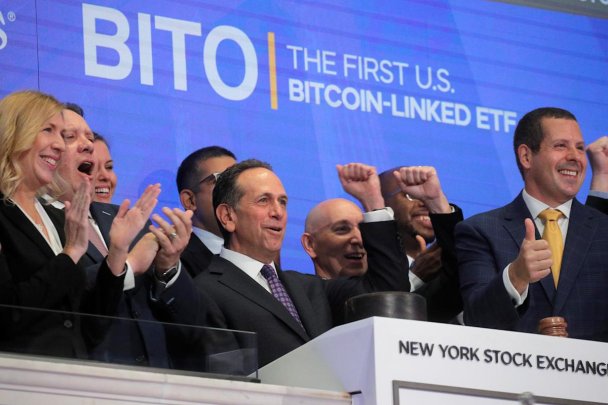
Over the years, the U.S. SEC has been refusing crypto industry participants to launch ETFs based on Bitcoin or other cryptocurrency spot for reasons such as price manipulation and volume trading. Currently, the only way to get access to Bitcoin through ETFs listed in the U.S. Funds that trade bitcoin futures on CME Group, such as the Proshares Bitcoin Futures ETF (trading as BITO). The release of the digital asset administrative order also made some people wonder whether the Bitcoin spot ETF will come out earlier?
Mikkel Morch, executive director of digital asset hedge fund ARK36, said that the "very strong acceptance" of the crypto market may even open the door for the SEC to approve a bitcoin spot ETF earlier than expected:
“It seems more likely that it will receive SEC approval in the near future. If that happens, we may also see another explosive growth in Bitcoin and the broader crypto market.”
risk warning:
risk warning:
According to the "Notice on Further Preventing and Dealing with the Risk of Hype in Virtual Currency Transactions" issued by the central bank and other departments, the content of this article is only for information sharing, and does not promote or endorse any operation and investment behavior. Participate in any illegal financial practice.