






Ether Capital CEO Interview: Why bet on ETH 2.0


This article comes fromBitcoinist, Odaily translator | Moni
This article comes from
Ether Capital is currently the listed company with the most pledged ETH, and is also a major participant in the Ethereum consensus layer (ie ETH 2.0), and is very optimistic about the iterative upgrade of the Ethereum Proof of Stake (PoS). Will more companies follow the example of Ether Capital and participate in the Ethereum ecosystem in the future? Will ETH Staking Drive the Next Wave of Crypto Adoption? And what will happen to the encryption industry trends after 2022?
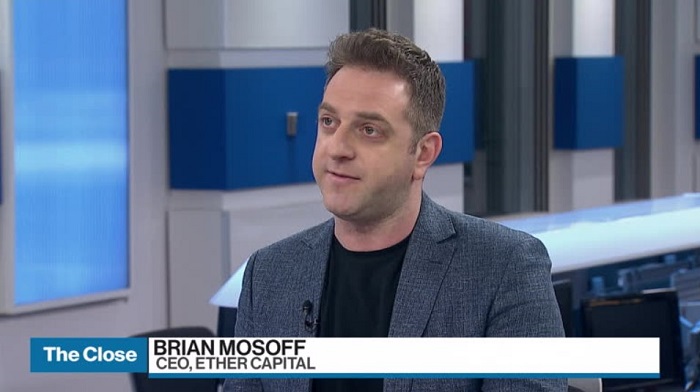
Regarding the above-mentioned questions, we had a conversation with Brian Mosoff, CEO of Ether Capital, let’s take a look at the specific content of this interview!
text
Q: The outbreak of the new crown epidemic seems to have become a watershed in the development of the world. In the post-epidemic era, people seem to have suddenly discovered that the demand for assets that can generate income has increased significantly. Why did Ether Capital decide to invest in Ethereum and put money into ETH 2.0? And what makes ETH look different?
Brian Mosoff: As far as you are concerned about the new crown epidemic, I completely agree that it marks an important turning point in the encryption industry. Before the outbreak of the epidemic, cryptocurrency was actually an immature asset class. The main players were some technology fans, and they did not receive the attention of regulators and traditional investors, and were even squeezed out by them. This algorithmic (software) idea of monetary policy only started to be taken seriously by a new group of investors as concerns about inflation and central bank policy began to emerge. Of course, the first asset to emerge in this space is Bitcoin—in terms of current brand influence and market capitalization, it is undoubtedly the boss. Unlike the bull market of 2017, more infrastructure and access points have been built. Maybe investors are not satisfied with the exchange and think that structured products cannot be obtained; maybe they still don’t trust institutions and think that institutions will not provide support, but one thing is for sure, that is, investors have unprecedented access to unprecedented Contacted digital assets.
It has to be said that Ethereum presents an excellent investment opportunity for investors. First of all, it is by far the most widely used blockchain in the world, and a lot of interesting activities are carried out on it, including decentralized finance (DeFi), NFT, Metaverse, etc. The amount of capital formation and attention received on Ethereum so far is indeed quite encouraging and hard to ignore. At Ether Capital, we continually remind investors that while we believe Bitcoin is a very important asset, portfolio exposure should not end there.
I believe things get really interesting when you really understand what a Proof of Stake (PoS) consensus mechanism is. It not only gives investors the opportunity to generate considerable income through assets, but also allows them to participate in the verification and security of these systems, but what excites me the most is actually ETH holders, users, and Coordinated consensus is achieved among validators.
In Proof-of-Work (PoW), the only ones who can secure the network are miners with expensive computing hardware and access to cheap electricity. However, mining activities are banned in some jurisdictions and are no longer the activities of everyday members of the community, which means that some Bitcoin mining teams may not be crypto enthusiasts, or even token holders, but Organizations or individuals who compete to approve transactions and use energy-intensive computing hardware to complete transactions. They mine for only one purpose, which is to make a profit. This type of network participant is not worthy of long-term dependence on native tokens, let alone network daily user.
In Proof of Stake (PoS), the commodities at risk are no longer electricity and computing power outside the network, but commodities inside the protocol (such as native tokens, which are ETH in the Ethereum blockchain), which means that blocks The chain network no longer needs computing power and electricity, which in turn can better coordinate token holders, users and validators. Not only that, but while there are still centralization issues, there is no doubt that Ethereum is a step in the right direction towards a more democratic process for validating the network.
The reason why we're so excited about ETH is specifically because of the growing adoption of ETH, we all know how Ethereum is different from Bitcoin, but when comparing Ethereum to other smart contract platforms, I want to point out to new investors The following points:
2. In 2015, the entry of Ethereum is also a concept of "from zero to one"-Ethereum has fundamentally changed the potential of the blockchain, and the community has united around Ethereum, which has also promoted Ethereum to become the number one in the encryption field. Two important assets.
Since then, we have seen many projects try to replicate the Ethereum smart contract platform, tweaking the initial design and introducing some optimizations, but in terms of development and support from the crypto community, Ethereum is the smart contract platform space. Fang still dominates. Of course, there are alternative solutions that are cheaper and faster, and we’ve seen a lot of exciting innovations in the Ethereum ecosystem.
Q: There are some critics of Proof of Stake (PoS) who believe that this consensus mechanism is more beneficial to those who hold a large amount of ETH, and it is difficult for those who hold a small amount of ETH to make a profit. What do you think about this situation? ? How will the shift from Proof-of-Work to Proof-of-Stake consensus benefit Ethereum, and the entire Ethereum ecosystem?
Brian Mosoff: As I said above, I don't think Ethereum's transition to a proof-of-stake consensus mechanism will necessarily solve the centralization of transaction verification. However, this would be an important step towards a more democratized system for Ethereum, as the network's demands on electricity consumption and computing hardware are drastically reduced. I believe that as the software continues to evolve, once the beacon chain is integrated, people should be more willing to stake themselves, or even stake ETH using home devices. A good example of this is Lido, services that help people pool their assets for validation outside of centralized exchanges, or decentralized independent “pools” if you prefer.
text
Q: Last year, Ether Capital became the one, and possibly the only, public company that invested $50 million in ETH pledges. Do you think there will be other companies adopting a similar investment strategy to yours in the future? Why should businesses allocate funds to ETH instead of traditional assets?
For institutions, staking ETH is a very difficult task. Some globally recognized custodians have not yet completed the escrow protocol upgrade, so they may not be able to handle ETH 2 well, and some custodians have not yet connected with staking service providers. work process. Frankly, we also struggled for a long time, and finally hired CTO Shayan Eskandari to be responsible for rebuilding internal multisig and creating a workflow aimed at staking large amounts of ETH in the most secure way, while also complying with listing Company compliance requirements. The whole process was very challenging and took a lot of time, but in the end we are the first public company in the world to hold a large amount of ETH, and we are very proud of the work we have done before.
On the other hand, we are witnessing the birth of digital bonds. In this new world, staking ETH is like operating a low-risk vault, which allows us to estimate at what level the relative rate of return can stabilize. I think the yield on staking ETH is about 4% during times of low network activity, but can reach 15% during times of high network activity. What needs to be remembered is that the yields of these assets are very attractive, often exceeding the traditional market yields. Investors also believe that ETH still has a lot of room to rise, but they also need to pay attention to risks and pay attention to whether the Ethereum network will have More infrastructure and access points involved.
text
Q: The merger of ETH 1 and ETH 2 is an important event that combines the execution layer and consensus layer of Ethereum, and aims to make ETH a "productive asset". What is the impact and potential of Merge for ETH and Ether Capital, especially for you as a company that is highly betting on this digital asset?
Brian Mosoff: I am very interested in the merger of ETH 1 and ETH 2, but I think many people may not understand how big an event this will be. In fact, the merger of ETH 1 and ETH 2 + Layer-2 solution will indeed make Layer-1 more worthwhile, but when the Merge happens, some people may be hesitant to pledge ETH because they are more concerned about Liquidity, will eventually choose to give up about 5% of the staking rewards. However, once the ETH 1 and ETH 2 merger goes live, we will see idle ETH locked up, just like Layer 1 smart contract platforms with 50% to 80% of tokens staked.
I feel that the current price of ETH does not fully reflect its actual value. The reason for this may be that people feel that there are several situations that may occur in the Merge event, including:
i) will never happen
ii) will continue to be delayed
iv) Do not understand the token economic model of the Ethereum world after the Merge occurred
The reality, however, is that the ETH 1 and ETH 2 merger will definitely happen - as to when, I'm not sure, but it's sure to be a big deal.
text
Brian Mosoff: We are absolutely optimistic about the future of DeFi, and we are also very concerned about everything that happens in related fields. Currently, we are focusing on staking more ETH as a core asset, Ether Capital is a "net accumulator". The capital market itself is an interesting thing - we are so ahead of our time, it is actually challenging to put the market value in perspective, or understand why we hold a lot of ETH. Of course, as a listed company, our approach is also very advanced, but we will continue to learn and transform. Since inception, we have indeed traded assets at a significant discount, which has posed quite a few challenges, but sometimes it also depends on the purpose of trading assets, such as we will raise funds through the sale of assets, and then better Build in-house technology.
Over the past few months, we have spent a considerable amount of time deciding whether to continue holding non-ETH assets or focus on ETH and collateral positions. Ultimately, we decided on the latter, as it would provide additional enterprise value for shareholders, and non-ETH assets are not necessarily valued by the market, anyway, they are only a small part of our portfolio, so we decided to focus on Focus on ETH assets.
text
Q: Finally, can you give us some thoughts on the vision of Web 3 and how Ethereum can become the core network of the next stage of the Internet? Do you think the multi-chain Web 3 ecosystem will have more room for development?
Brian Mosoff: Ethereum is currently shaping up to be the base layer of Web 3 with the most use cases, innovation, mind sharing, community, etc. But what will happen to Layer 1 in the future, I'm not sure. We see some alternative ecosystems emerging for Ethereum, but extending the same features and functionality of Ethereum is complicated because it is not as simple as just copying and pasting applications onto "some" protocol.
We’ve also seen some issues with protocol bridging, a multi-chain future is possible, but introduces additional complexity and challenges when removing third-party trust – the recent Wormhole exploit is a good example of this.





