


In-depth analysis of seven potential challengers of Ethereum: can they replace Ethereum?


first level title
Article translation: Block unicorn
Ethereum 2.0: Introduction
merge
beacon chain
merge
Shard chain
The Beacon Chain went live in December 2020 with the most notable goal of transforming the Ethereum network from a proof-of-work (PoW) consensus mechanism to a proof-of-stake (PoS) model. In its current form, the beacon chain operates independently of the Ethereum mainnet. Most importantly, it introduces staking in the Ethereum ecosystem. Currently, the options available for staking Ethereum include:
Run validator:This requires staking 32 ETH (Ethereum) to activate the validator software. As a validator, you are responsible for storing data, processing transactions, and adding new blocks to the blockchain. At Staking Rewards, we view this type of staking as "very difficult" when it comes to complexity.
Participate in the Staking pool:A relatively easy way to participate in ETH is to participate in the available staking pools. This neither requires a minimum of 32 ETH for staking nor technical expertise like running a validator, here is the list of stake pool services.
Fragmentation
Fragmentation
The future of Ethereum 2.0 is to integrate the Ethereum mainnet into a proof-of-stake system controlled and coordinated by the beacon chain (expected delivery: Q1/Q2 2022). After this, sharding will be introduced to improve the scalability and capacity of Ethereum (expected delivery time: 2022). Simply put, sharding is the process of splitting a database to spread the load. In the context of the Ethereum network, sharding will reduce network congestion and increase transactions per second (TPS) by creating new chains called "shards."
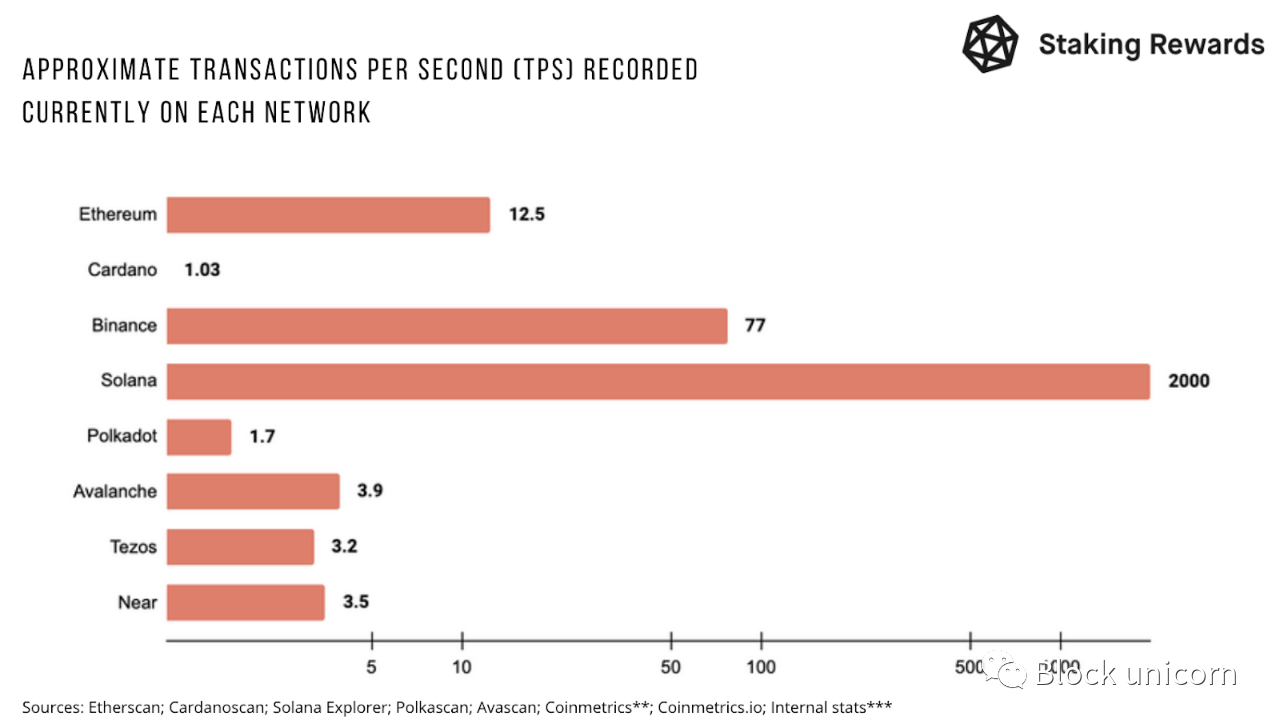
According to Ethereum founder Vitalik Buterin, once implemented, ETH 2.0 will increase network speed up to 100,000 transactions per second (TPS). To put that in perspective, Ethereum's current network speed is around 12.5 TPS (30 September 2021; source – Etherscan), which equates to nearly 1 million transactions per day. Imagine what 100,000 TPS can bring!
first level title
1. Cardano (ADA)
Founded by an ethereum co-founder, Cardano pip bills itself as a third-generation blockchain designed to solve scalability and other issues facing ethereum. Cardano is a proof-of-stake blockchain platform launched in 2017 by Charles Hoskinson.
How does Cardano stack up against Ethereum?
Cardano implements the so-called Ouroboros Proof-of-Stake protocol. Ouroboros first processes transaction blocks by dividing the chain into epochs. The epoch is then further divided into slots. Each slot elects a slot leader responsible for adding a block to the chain.
According to Coinmetrics, as of September 30, 2021, the TPS of Cardano (ADA) is 1.03, which is much lower than that of Ethereum. In order to maximize throughput, minimize latency, and reduce or zero cost, Cardano is currently working on implementing a Layer 2 scaling solution called Hydra. Hydra has the potential to scale Cardano to 2 million TPS.
MortgageADA
first level title
2. Binance Smart Chain (BSC/BNB)
The Binance Smart Chain (BSC) blockchain launched by Binance provides a mature environment for developing decentralized applications. It also has smart contract functionality and compatibility with the Ethereum Virtual Machine (EVM). In short, the EVM runs the execution and deployment of smart contracts on the Ethereum blockchain. Relatively young, the BSC was launched in September 2020. However, it has been successful in its attempts to topple Ethereum, covering ground in terms of speed and cost.
How does Binance Smart Chain compete with Ethereum?
BSC introduces the so-called Proof-of-Stake (PoSA) protocol. This requires network validators to hold a certain amount of BNB tokens to participate. In addition, by adopting a dual parachain system, Binance allows users to perform fast transfers on Binance Chain while using BSC's smart contract functions. One area of focus for BSC is centralization. BSC has 21 active validators, making it one of the most centralized platforms. To put that in perspective, ETH has 248,287 active validators.
BSC offers low cost and faster speed, and is attacking Ethereum's dominance in some areas. According to DeFi Prime, of the 242 DeFi projects listed on its platform, 41 of them are built on BSC (220 on Ethereum). According to the BSC scan, the BSC network currently handles 77 TPS (September 30, 2021), with more than 6 million transactions per day. The network recorded 13.1 million transactions on July 29, 2021 (source: BSCScan). In comparison, Ethereum recorded a record 1,716,600 transactions on May 9, 2021 (source: Etherscan).
Pledge BNB
first level title
Solana (SOL)
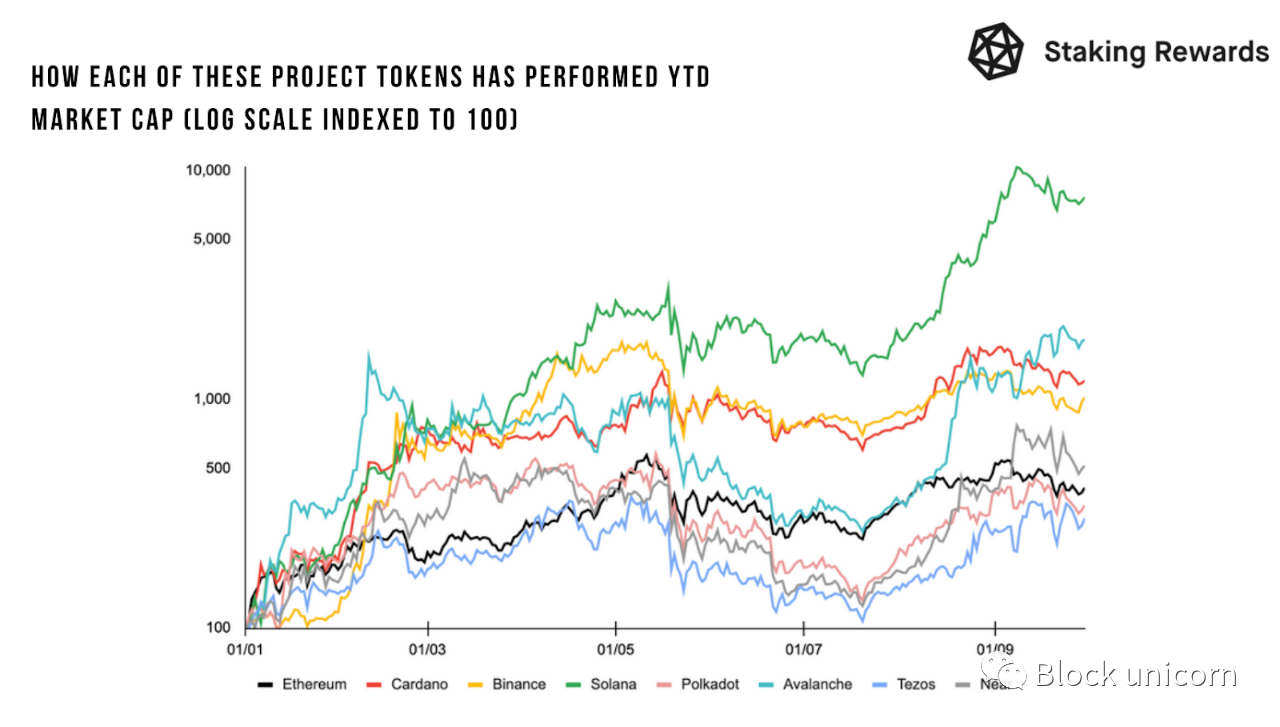
If you didn't hear of Solana last year, chances are you've heard of it this year (probably a lot). Priced at $1.54 per SOL as of December 31, 2020, it is currently trading at $136 and has a market cap of over $40 billion (as of September 30, 2021), making it the seventh largest crypto project. Solana is a blockchain platform for decentralized applications. An open source project maintained by the Geneva-based Solana Foundation and built by developers at San Francisco-based Solana Labs. Solana's co-founders are Anatoly Yakovenko and Greg Fitzgerald.
How will Solana respond to Ethereum?
Solana does not rely on sharding or layer 2 solutions to scale. Instead, the Solana network is made up of 8 key components, one key being a turbine. Inspired by BitTorrent, Turbine uses UDP (User Datagram Protocol) to transmit data, and when the leader (block producer) transmits data, it achieves a random path for each data packet through the network. The leader breaks down blocks into packets of up to 64KB and transmits each packet to a different validator. Validators retransmit packets to a set of peers, called neighbors.
As of September 30th, the Solana network is processing 2000 TPS (source: Solana explorer). The project claims to have a capacity of 50,000 TPS. Loopring, the Ethereum L2 network facing its TPS, has arrived. After Ethereum 2.0 goes online, Loopring's TPS can rise to 100,000 TPS.
Staking SOL
first level title
4. Polkadot (DOT)
Created by Ethereum’s other co-founder, Gavin Wood, Polka Dot seeks to solve Ethereum’s scalability and cost issues. Dubbed by many as an Ethereum killer, Polkadot has focused its attention on achieving interoperability, allowing blockchains to communicate with each other. The project promises economic and transaction scalability.
How Polkadot Can Compete With Ethereum?
At the core of the Polkadot infrastructure is the Polkadot Relay Chain, which is the main blockchain of the DOT ecosystem. The relay chain is responsible for the shared security, consensus and cross-chain interoperability of the network. The DOT network scales by processing transactions across multiple parallel blockchain shards called parachains (single dedicated blockchain). Interactions on parachains are processed in parallel, enabling high scalability.
Polkadot is currently processing about 1.70 transactions per second (data from September 30, 2021; source – Coinmetrics). While this is significantly lower than Ethereum, according to Gavin Wood, the DOT network can deliver over 1,000 TPS even without parachains. For parachains, Wood expects that capacity to reach 1,000,000 TPS. Progress on this front will certainly be closely watched.
Pledge DOT
first level title
5. Avalanche (AVAX)
A relatively young blockchain, Avalanche was launched more than a year ago, in September 2020, by the Ava Labs team in the United States. The core team behind Avax Labs includes Kevin Sekniqi, Maofan “Ted” Yin, and Emin Gün Sirer. Avalanche claims to be the fastest smart contract platform in the blockchain industry, as measured by time to completion, and it is trying to solve blockchain scalability, transaction fees, and interoperability issues.
How will Avalanche challenge Ethereum?
To solve the speed and scalability issues faced by blockchains, the Avalanche team chose to build the Avalanche network from three interoperable blockchains: X-Chain, C-Chain, and P-Chain. Each blockchain plays a different role. For example, X-Chain can create and exchange AVAX tokens and other digital assets. C-Chain allows developers to create smart contracts for DApps. P-Chain coordinates network validators, keeps track of active subnets, and allows new subnets to be created.
The Avalanche platform currently claims to have a processing capacity of over 4500 TPS. Currently, it records a TPS of 3.9.
Staking AVAX
first level title
6.Tezos(XTZ)
Originally designed in 2014, the Tezos mainnet went live in 2018. Tezos describes itself as an open-source, self-upgradable blockchain designed to support and run smart contracts. It was developed by Arthur Breitman and his wife Kathleen Breitman and is currently overseen by the Tezos Foundation.
How will Tezos respond to Ethereum?
The Tezos blockchain consists of two distinct parts, the network shell and the network protocol. The web shell handles transactions, manages operations, and modifies itself based on how users vote. The network protocol sends proposals to the shell for review. Tezos uses Liquidity Proof of Stake (LPoS), requiring users to stake tokens, a process known as “baking” XTZ. Validators on Tezos are called bakers.
Based on the average daily volume of 316,396 over the past 30 days (source: Tzstats). According to Coinmetrics, Tezos has a clock speed of 3.2 TPS.
Staking Tezos
first level title
7. Near Protocol (NEAR)
After being started as a machine learning project by Illia Polosukhin and Alexander Skidanov, NEAR became a blockchain development platform. Research program synthesis leads the team to explore programmable smart contract platforms and encrypted payments. The network finally launched in April 2020. Today, NEAR bills itself as an open-source platform that enables creators, communities, and marketplaces to advance a more open, connected, and consumer-empowered world.
What is NEAR's attitude towards Ethereum?
NEAR uses sharding to shard the network, and dynamically allocates calculations to increase the processing capacity of the network. Its innovations include a new take on sharding, called Nightshade, and a new consensus mechanism called Doomslug. Nightshade differs from commonly used sharding systems in that each shard produces a fraction of the next block, also called a "chunk".
Although NEAR is a newcomer, the number of transactions processed is rapidly increasing. According to Near Explorer, NEAR has recorded between 254,048 TPD and 351,993 TPD, with an average of 303,020 TPD, based on data from the past 15 days (as of September 30, 2021). This equates to approximately 3.50 TPS.
Staking (Pledge) NEAR
summarize
summarize
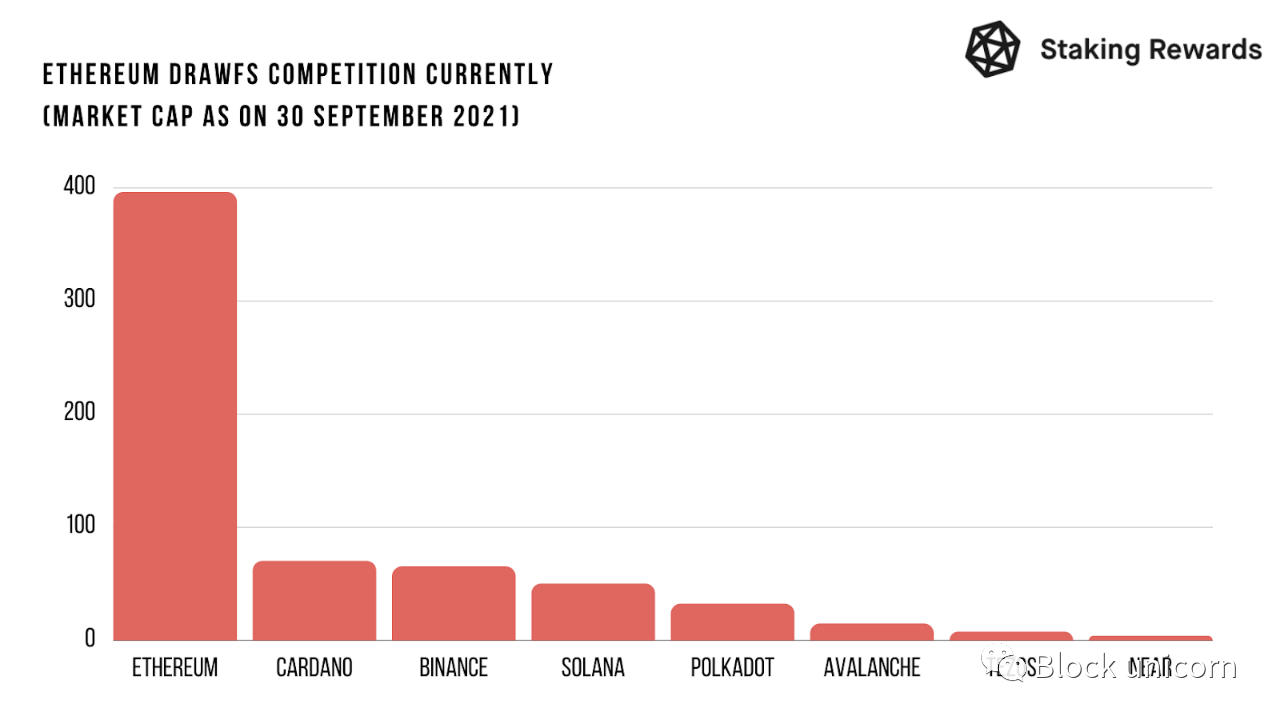
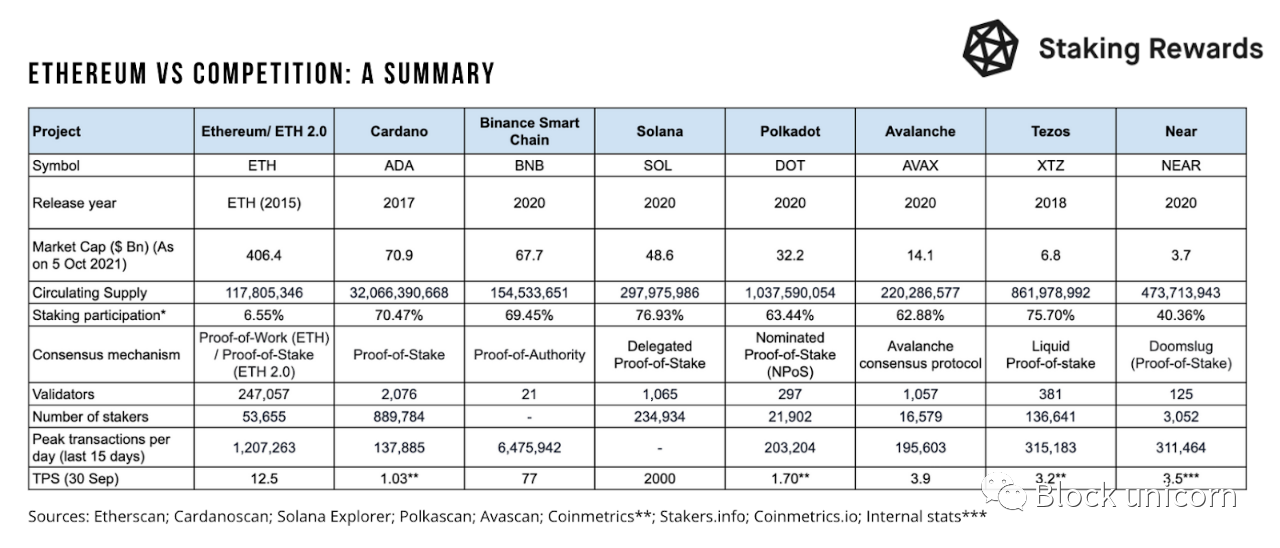
Clearly, the race to topple Ethereum is fierce, as the chart below shows. Projects such as BSC and Solana have surpassed Ethereum in terms of scalability. More importantly, however, the race to the top is set to heat up in the months and years to come. Many challengers are planning major upgrades to face ETH 2.0 head-on. It’s clear that every public chain is vying for the top spot, so there’s little room for complacency.
degree of decentralization
degree of decentralization
One way to assess how decentralized a blockchain is is by the number of validators. The graph below shows the number of validators for each of the seven challengers outlined:
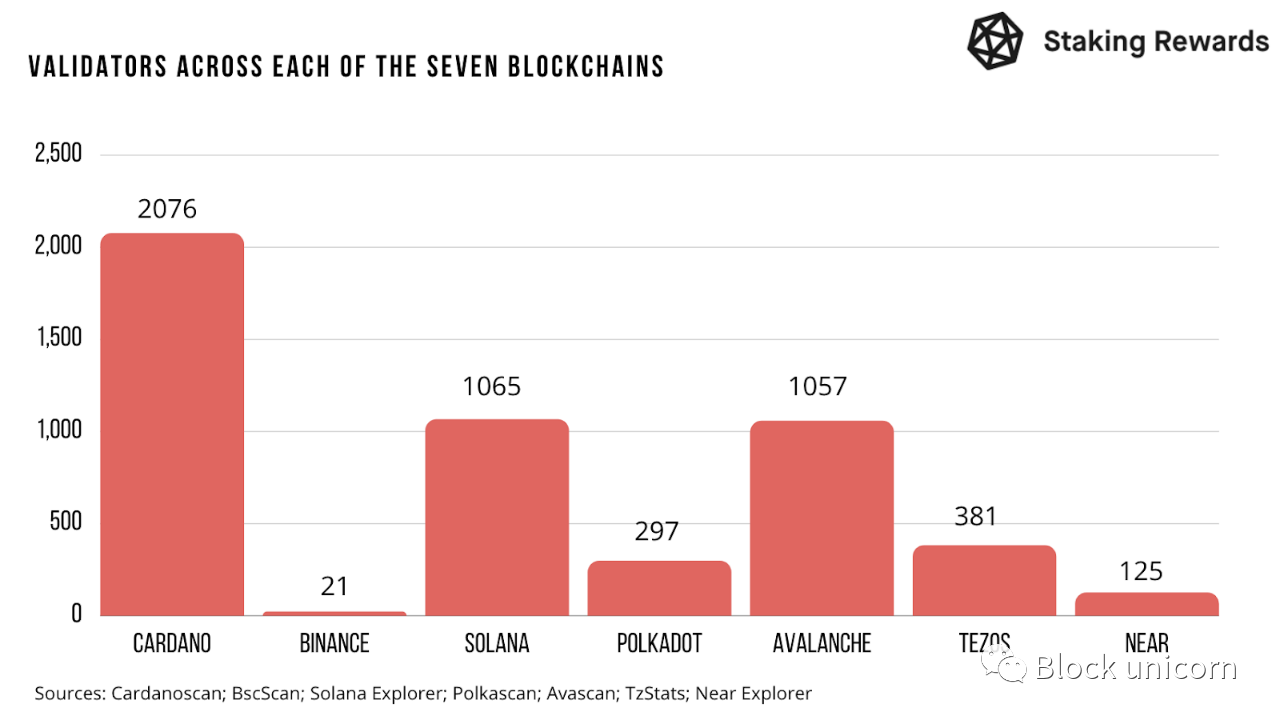
Among the selected projects, Cardano has 2076 validators, Solana has 1065 validators, and Avalanche has 1057 validators, clearly leading the rest in terms of the number of validators. The higher the number of validators, the more decentralized the network is.
Going a step further, it helps to know what is known as the Satoshi coefficient. It was first proposed by Balaji Srinivasan (chief CTO of Coinbase in 2019, Ph.D. in electrical engineering at Stanford University), that the Nakamoto coefficient is a quantitative indicator to measure the degree of decentralization of the system. It helps determine how many entities need to be destroyed to gain control of the system.The larger the value of this minimum Satoshi coefficient, the more decentralized the system.Of the three listed above, Cardano (ADA) has a Satoshi coefficient of 24 (source: ADApools.org), Solana has a Satoshi coefficient of 19 (source: Solana Beach), and Avalanche's Nakamoto The Satoshi coefficient is 26 (source: industry report).
first level title
developer interest
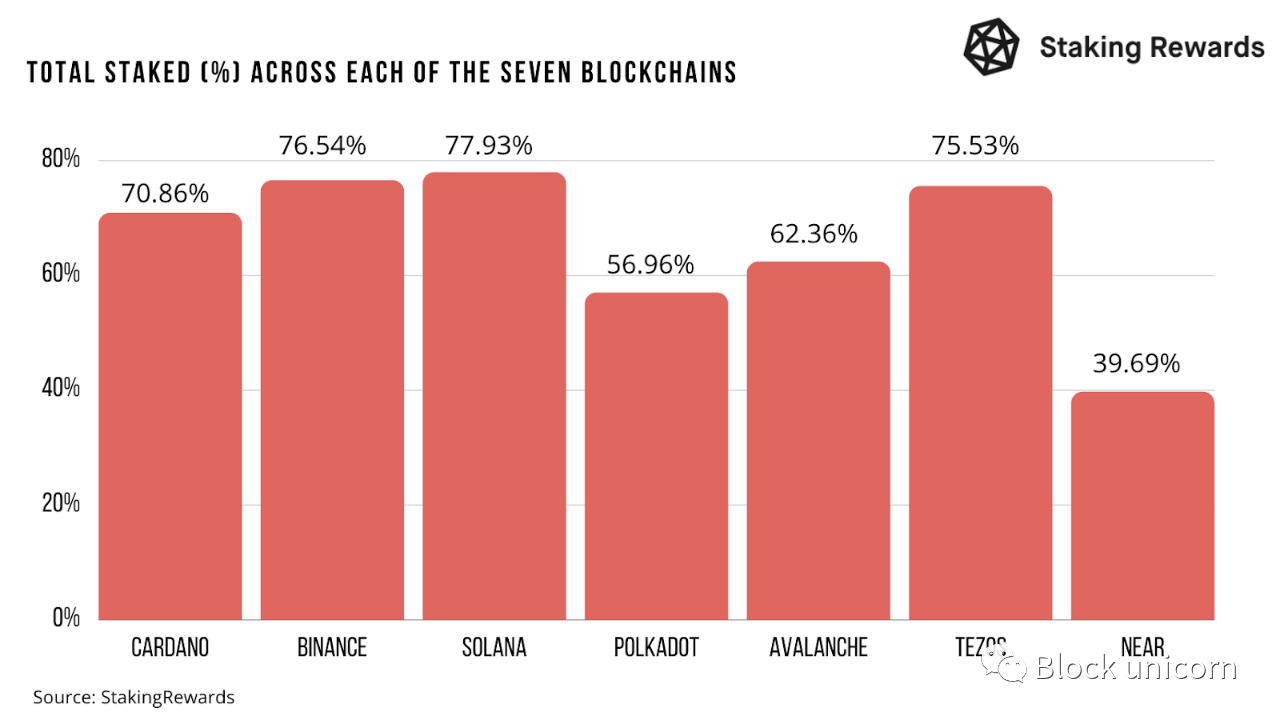
A recent report by Outlier Ventures came up with some interesting statistics (period considered: July 20-June 21) regarding developer interest in some of these blockchains. Here are some highlights:
Cardano ranks highest in average GitHub commits per month (CPM). It has an average CPM of 701. Ethereum came in second with an average CPM of 447. Solana, Avalanche, and Polkadot have CPMs of 247, 237, and 221, respectively.
In terms of its overall increase in blockchain submissions, Avalanche is the clear winner. Compared to the previous period, AVAX saw a 709.7% increase in total submissions over the last 12 months, from 1,553 submissions per year (CPY) to 12,575 CPY.
Ethereum exhibits a high number of monthly active developers, averaging 168 per month, and Cardano has 165 monthly active developers. Polkadot has an average of 68 active developers per month.
Expanding on this, when it comes to the fashion space in the blockchain, which of these platforms is getting a head start? think about itfirst level title。
Decentralized financial institutions
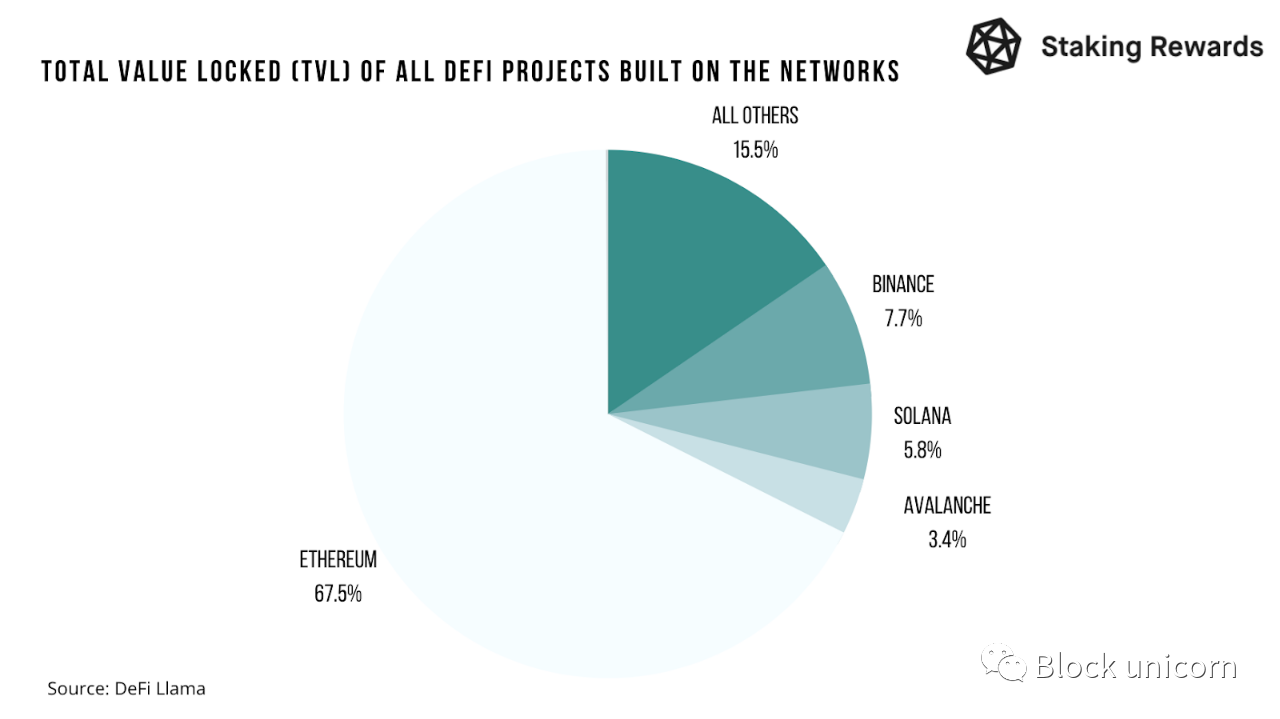
According to data aggregator DeFi Llama, more than $256 billion has been locked in DeFi protocols. Of these, nearly 67.5% involved DeFi projects built on Ethereum. However, it’s worth noting that Ethereum’s dominance has dropped from 97.6% at the beginning of the year. Judging by the projects included in this comparison, networks including Binance, Solana, and Avalanche have been eating into Ethereum's market share. From one perspective, Solana’s popularity among DeFi projects has grown substantially over the past few months. The total value locked (TVL) of all DeFi projects built on Solana is currently $1.49 billion (5.8% of the total share), compared to $592 million (0.50%) as of June 30, 2021. Avalanche has also been breaking into the dominance of Ethereum and Binance, and since 2021, TVL has increased by nearly 47 times.
NFT
game
game
first level title
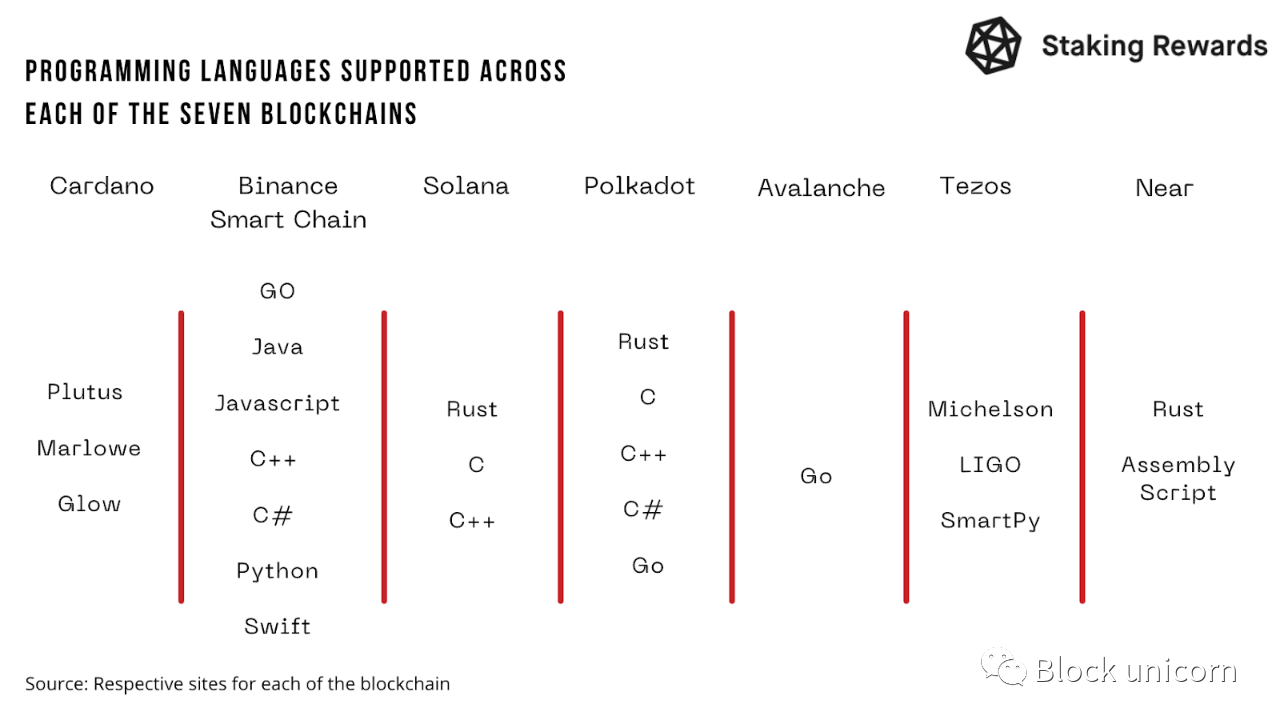
Supported programming languages
first level title
governance framework
first level title
Cardano(ADA)
Run an off-chain governance model.
Input Output Hong Kong (IOHK) and the Cardano Foundation develop and implement a protocol update.
The off-chain governance model will continue until the network reaches the age of Voltaire.
first level title
Binance Smart Chain BSC
Binance provides on-chain governance through Proof-of-Stake (PoSA) consensus.
BSC has system parameters to determine network behavior, including slashing amount, cross-chain transfer fees, etc. These parameters are defined by the BSC validator set using the proposal voting process on Binance Chain.
first level title
text
The Solana Foundation is a non-profit organization that owns Solana's intellectual property (IP) and works with Solana Labs to help set the direction of development.
Solana Labs will remain a core contributor to the protocol.
first level title
Polkadot(DOT)
Parity Technologies built the Polkadot protocol and Substrate framework, initially controlling most of the process.
In July 2020, control of the protocol was transferred to the network's proposed on-chain governance system.
first level title
text
Avalanche provides on-chain governance for key parameters of the network, allowing participants to vote on network changes and network upgrades.
first level title
Tezos(XTZ)
Tezos uses an on-chain governance system.
The governance mechanism enables bakers (validators) to vote on upgrade proposals.
Proposals will only be accepted with a supermajority (more than 80%).
first level title
Near Protocol (NEAR)
Open to community contributions, anyone can submit or comment on NEAR improvement proposals.
Governance discussions take place on the NEAR Forum.
first level title
Security Settings
The shift to ETH 2.0 has raised concerns in several areas, including network fragmentation, security breaches due to possible vulnerabilities in the code. For its part, ETH 2.0 was designed with a focus on security, which makes potential attacks extremely costly. ETH 2.0 requires at least 16,384 validators. Organizations including Least Authority and Quantstamp are conducting security audits of the ETH 2.0 code. The Ethereum Foundation has also established a security team to study possible network security issues.
While most of the blockchains listed here are less susceptible to vulnerabilities such as 51% attacks, given the wider adoption of the proof-of-stake model compared to proof-of-work, the focus remains on improving all Network security and security. Below are some of the unique security measures implemented in some of the blockchains considered here.
Polkadot: Polkadot builds a system through the relay chain, incentivizing different blockchains to pool resources and secure the entire system. This makes it more difficult for an attacker to control the consensus process.
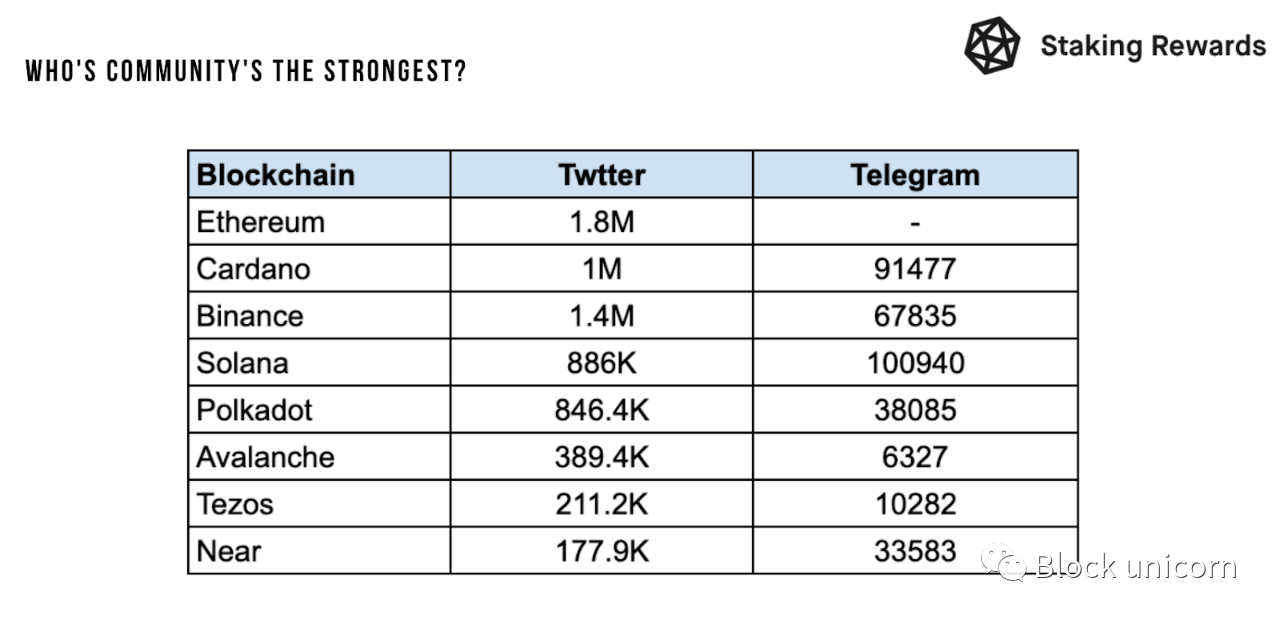
Community
Community
first level title
In summary
The network effects of Ethereum as a technology remain unmatched. Furthermore, given its pedigree, it enjoys far more than a degree of trust, safety and reliability. The future success of Ethereum depends heavily on layer 2 solutions. With the potential to move most transactions off-chain, these layer 2 solutions could be the key to solving some of the ethereum network's current woes, transaction processing speed and gas fees. While some of these layer 2 solutions, such as Matic (Polygon), have successfully proven their effectiveness, a large number of layer 2 solutions are still under development or testing. This is where the opportunity lies for other blockchains.
Clearly, Ethereum’s dominance has started to shrink, as reflected in TVL. From a dominance of over 97% in TVL (December 31, 2020), Ethereum has about 67% of TVL today.
As seen in the previous part of this series, blockchains including Solana and Binance Smart Chain have far surpassed Ethereum in terms of TPS and cost per transaction.
With an average of 702 commits per month (for the 12-month period ending June 2021), Cardano outpaced Ethereum at an average of 447 CPM. The DeFi space, including Solana and Avalanche, has been in the spotlight over the past few months, having moved into the dominance of Ethereum and Binance.
Over the past year, layer 1 platforms have emerged that threaten to overthrow Ethereum. Clearly, competition is cutthroat, and newer Tier 1 platforms must focus on retaining users. The lure of capital returns in the cryptocurrency market is so great that blockchain will have to demonstrate niche use cases, nimble footsteps, and keep up with emerging trends in the space.





