






Ethereum core developer Tim Beiko: Interpretation of the latest progress of ETH 2.0


Edit: Southwind
Edit: Southwind
Tim Beiko has been a builder, whether starting a t-shirt business in high school or organizing other Ethereum core developers during Ethereum's biggest overhaul since it went live in 2015, the transition to PoS. Tim has a business degree from a university in Quebec, Canada, and was introduced to Bitcoin while running a house painting business after his t-shirt business failed. Then he witnessed the explosion of The DAO incident in 2016, when he just entered Ethereum. However, he noticed that during the ICO (Initial Coin Offering) boom of 2017, people really wanted to use Ethereum - even if it wasn't very friendly and transaction costs could skyrocket - and decided to help make Ethereum's underlying The infrastructure is as robust as possible.
In this interview, Beiko provides an update on the plans for the current (PoW) version of Ethereum to move to the new version (PoS) (a process called "merging"). The current version of Ethereum is calledETH 1.0, and secured by a Proof-of-Work (PoW) consensus mechanism, the same one used by the Bitcoin blockchain; the new Ethereum version is calledETH 2.0, will switch to a proof-of-stake (PoS) system that relies on users (validators) staking ETH to secure and manage the blockchain. The base layer of Ethereum is called L1 (Layer 1). The current Ethereum L1 layer is slow and expensive, but very secure. To alleviate this problem, the Ethereum community has developed so-called L2 (Layer 2) protocols, which are faster and cheaper than L1, and have the same security as Ethereum L1.
This article is for the co-founder of DeCentialMatthew Leisingrecent interviewTim Beikorecord of content. The following is the main content of this interview:
Matt Leising:First off, I think a lot of you would like to know the latest on what you guys are doing now that you are coordinating the developers working on ETH 2.0 in the Ethereum community. This is a daunting task in itself, can you give us an update on the progress?
Tim Beiko:certainly. At the beginning of October this year, we have completedBecame a specification for the transition from Ethereum to PoS, so we brought everyone from the ETH 1.0 and ETH 2.0 teams together and spent a week prototyping this transition. We start with PoW and transition to PoS. This gives us good confidence that the overall specification works and the overall approach is sound. But obviously, we found all these little edge cases in the meantime and fine-tuned it so that it could go into production.
What we're doing in November is trying to build these short-term testnets. This is the way to check that everything is ok, and then remove them. We hope that before the (Christmas) holidays we will haveA testnet that lasts a bit longer, so that application tools, infrastructure, and other things can consume it, and see how it works.
One of the things going on in parallel with this is that we've started reaching out to the (Ethereum) community, trying to explain to them what the PoS change means to them, trying to get people to understand the implications and applications and things like that , ensuring that we don't catch anyone off guard when the relevant code is ready.
Matt Leising:OK The transition from ETH 1.0 to ETH 2.0 that is currently underway is called "the Merge". Do you know when the merger will happen?
Tim Beiko: Next year for sure.Actually, if we have a testnet by the end of the year, there might be some little tweaks we'd like to make,I'm looking forward to around February next year when we'll be done with the code.
If we finish the code next February, you can expect it to be merged a few months later.It could be next April, or it could be May.in my opinion,
Matt Leising:in my opinion,The merger is the biggest change to Ethereum since it went live in 2015. Do you think so too?
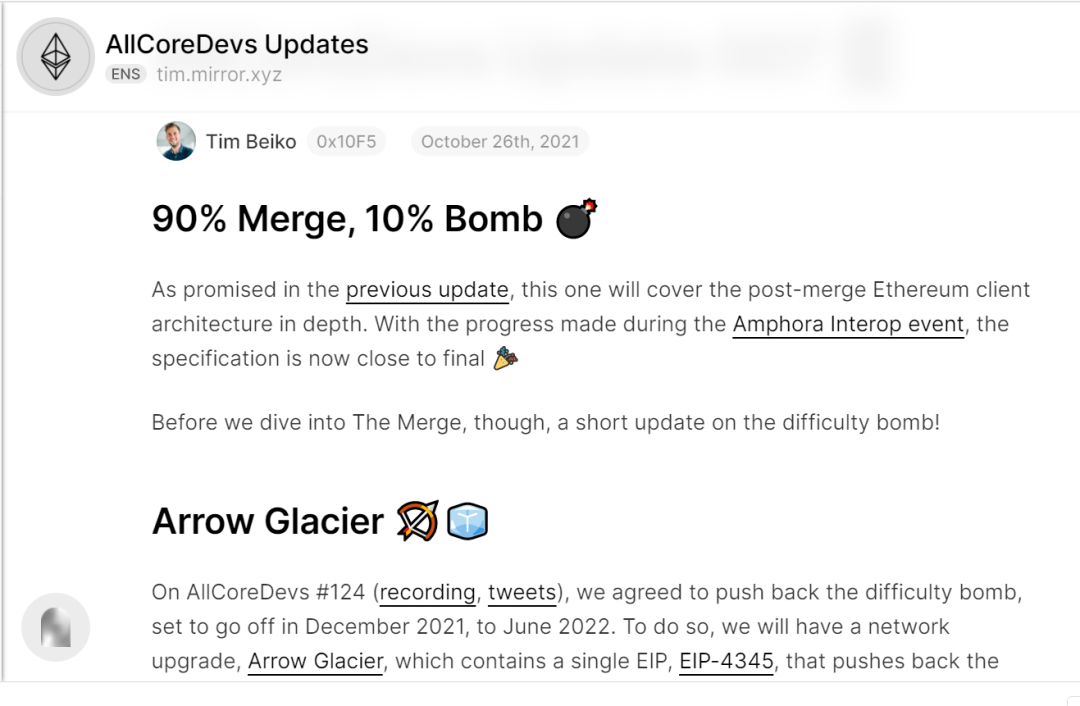
Tim Beiko:Yes, totally agree. You can follow the work of Ethereum core developers by following this link:
https://hackmd.io/@timbeiko/acd/https%3A%2F%2Ftim.mirror.xyz%2FsR23jU02we6zXRgsF_oTUkttL83S3vyn05vJWnnp-Lc
Matt Leising:Right now, the ETH 1.0 chain is running every minute of the day, and you guys are trying to switch it to another chain.
Tim Beiko:I think it's very interesting. Not only is the ethereum network running in real time, but there are hundreds of billions of assets on it, or possibly trillions if you count all the tokens built on ethereum. There is also a very large set of validators. These validators outnumber other PoS systems by an order of magnitude or two. So since the (PoS Beacon Chain) system is live and we want to get as many people involved as possible, it's not going to be easy, and since we need to coordinate between more people, that obviously makes things slow down.
Matt Leising:Taking a step back, how did you become responsible for coordinating this massive change in Ethereum? You grew up in Canada, can you tell us a little bit about growing up and what life was like when you were a kid?
Tim Beiko:first level title
punk rock t-shirt boys
Matt Leising:What is written on the T-shirts you sell? What kind of T-shirt is it?
Tim Beiko:I used to be a huge fan of punk rock, so it was a T-shirt brand—we'd sponsor bands and stuff like that.
Matt Leising:Can you name a few bands?
Tim Beiko:They are small local bands. I don't think any of them exist today.
Matt Leising:So you don't sell Iron Maiden T-shirts?
Tim Beiko:No, it's a pity it didn't make it that big.
Matt Leising:When you were growing up, what were your parents doing?
Tim Beiko:My mother is a doctor, a general practitioner. My dad was and still is an engineer and used to work for a fiber optic sales company. He didn't like it much, he always liked building houses, so then he quit his job and now he's building houses.
Matt Leising:So you realize that the inventory type business is not going to be very large. It's really hard. Did you also like playing computer games when you were a child? Electronic games?
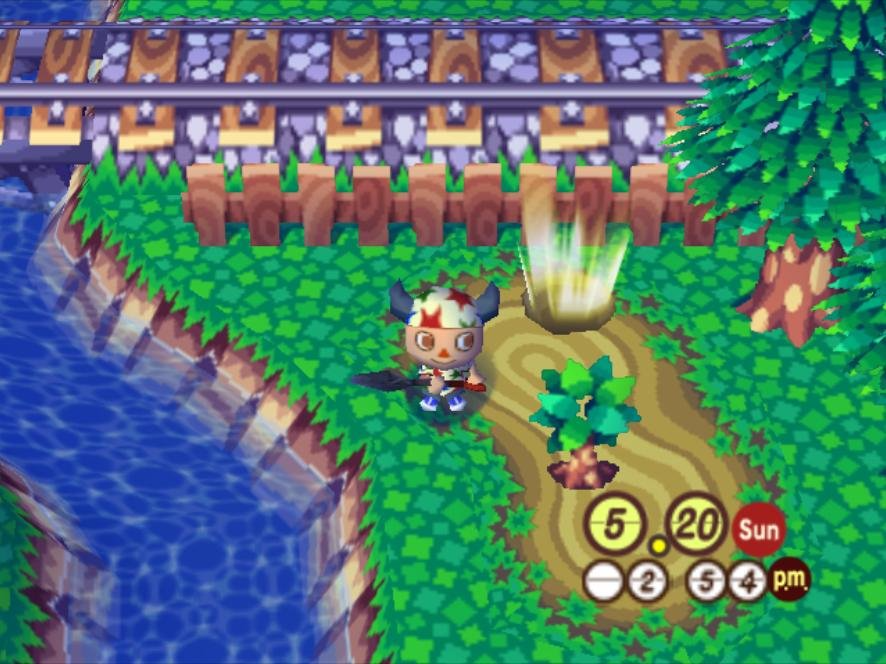
Tim Beiko:I like online games very much. I'm in the top 100 in this game called AdventureQuest or BattleOn. I'm also high on Neopets. When I was a kid, I got up at 5:00 in the morning and went to play computer games. I will also try to hack into it. I remember when Animal Crossing came to the GameCube (Nintendo's 4th generation home console), you could change the date on the GameCube to speed things up. So I'll go plant some crops, then close the game, go into the settings, move the date forward by a week, and I'll be able to harvest the crops.
Matt Leising:It's very interesting. Was there anything you were attracted to at school? Were you a good student?
Tim Beiko:I'm okay. I was able to brush the line. I wasn't drawn to anything in particular. I love doing business and working on projects.
Matt Leising:How old were you when you started the T-shirt business?
Tim Beiko:About 15 or 16 years old.
Matt Leising:How many years later did you start getting into house painting?
Tim Beiko:Yes, I was 17, because I remember 18 is the legal age in Quebec, and if you're under 18, a lot of things are troublesome.
Matt Leising:You were thinking about going to college, weren't you? Or what is your plan?
Tim Beiko:Yes, Quebec (province) is weird, basically one year less high school and one year less university than the rest of Canada and the US. You have two years to go to an independent school, which is great if you want to be a nurse or vocational training or something. But for people who want to go to college, it's a weird kind of transition, where the environment is like college, but you're actually in high school, and it's not as rigorous as college. There was a massive student strike in Quebec at the time and our school was closed for 6 to 9 months. At that time, I basically dropped out of offline schools and registered online to complete my studies. But it's cool because there's no super high demands, and it's so much better to be able to do your homework online.
Matt Leising:Do you have a secondary education in computer science?
Tim Beiko:first level title
From Iraqi Dinar to Bitcoin
Matt Leising:Have you been exposed to cryptocurrencies before? Or did you learn about cryptocurrencies through this course?
Tim Beiko:It was actually a painter who had previously worked for me who introduced me to cryptocurrencies. It's his summer job, and he's always keen on some weird projects. The US apparently invaded Iraq (2003 invasion) and the Iraqi currency was subject to currency sanctions. So he would buy Iraqi Dinar (the currency unit in Iraq) in bulk on E-bay and stash them under his mattress. He would buy them and keep them in the hope that one day they would appreciate in value when the US left Iraq. He always had these weird plans, and another thing that felt equally weird at the time was Bitcoin.
So he's the one who told me about Bitcoin. I bought one bitcoin when he told me, it must have been in 2014, and it was worth about $1,000. I just bought bitcoin and forgot about it.
I was in touch with that guy for two years, and he would bring up crypto, but when I was talking to him, I wouldn't think about crypto. He mentioned Ethereum to me very early on. I don’t know if it was before or after Ethereum went live.
I didn't pay much attention to Ethereum at the time, it gave me the feeling that it was too complicated. Then when I heard about Ethereum again, it was during The DAO project. At that time, The DAO was in the fundraising period, and there had been no attacks. I bought ETH before The DAO was hacked because I wanted to contribute to The DAO.
For a long time after The DAO attack, it felt like the project had failed. In a way, you know, my ETH is worth so little it's not even worth selling them. so i am not
Matt Leising:So you are not a "diamond hand", but feel that it is too much trouble.
Tim Beiko:Yes. So I was still kind of following Ethereum, but very loosely, until around the end of 2017, I started seeing some projects based on Ethereum. The projects I remember are Golem and Melonport, and a few others. Now there are projects using Ethereum, and I've been following it closely since then.
Matt Leising:Prices are clearly hitting new highs too, right?
Tim Beiko:This was before that. I probably bought it around $20 and it went back up to around $20 in March 2017 and I remember thinking, I finally have nothing to lose.
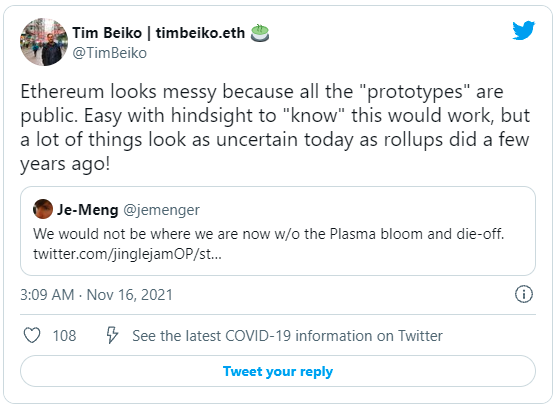
I was studying CS (Computer Science) at the time, I was concentrating on AI, and at the time still thought AI was a safer career path than cryptocurrency. At that moment, people still felt that Ethereum might simply disappear. Right? There seems to be no guarantee that this thing will always be there.
Matt Leising:I totally agree. And it hit a record high of $1,400 in 2018, but then had a huge crash. It dropped to about $100 a long time after that.
Tim Beiko:In fact, I was more involved then. In the summer of 2017, there were a lot of ICOs (initial coin offerings), and I thought that even if most of the ICOs didn't work, a large percentage of them were scams, but this shows that there is a huge demand for Ethereum. Right?
Using Ethereum at the time was a horrible experience. When there are these ICOs, the transaction pool will be congested for days. Gas prices skyrocketed, and people thought it was bad because the fees were so high and completely unpredictable. This is what I realized at the time, and then I really wanted to work on the Ethereum protocol itself.
Matt Leising: So you wanted to work on the Ethereum system and make sure the infrastructure was robust.
first level title
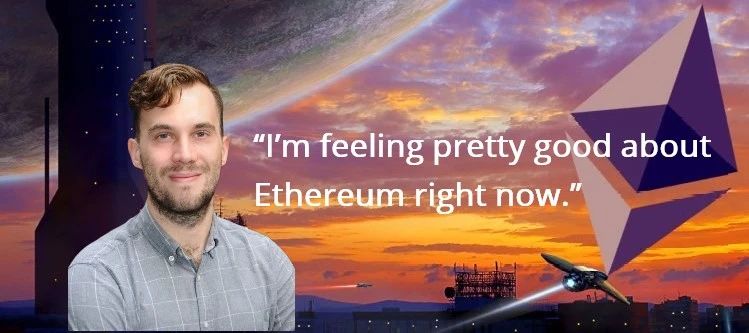
"I feel good about Ethereum now"
Tim Beiko:Ultimately, ConsenSys was looking for a Product Manager for their protocol team. So it felt like this was a good fit for me. I like being a product manager, responsible for very technical things, but I don't like being an engineer or researcher myself.
Matt Leising:So, given your profile over the years, from 2018 to 2019 at ConsenSys to now, how do you compare the Ethereum technology from a few years ago to now in terms of evolution and innovation and so on?
Tim Beiko:I'll talk about the protocol layer first, and then the application. As far as the protocol layer goes, I think the mania of 2017 took everyone by surprise. We spent a lot of time in 2018 and 2019 remediating it, getting things to work, and making the client run more reliably. We didn't start thinking about big new features until late 2019 and into 2020.
Especially with ETH 1.0, there was this idea of, "Oh, ETH 2.0 is going to solve all our problems, we don't need to do these radical things." ) period, we realized that even if ETH 2.0 arrives and delivers everything, it will still be a few years away, so we may need to do some pretty important things to keep Ethereum sustainable.
Many of the things we planned to do then are still going on today. EIP-1559 is one of the things we've done. Another big thing is statelessness. Since the state of Ethereum is growing infinitely, this makes it harder for nodes to run. The third thing is to deal with historical data. The fact that current Ethereum nodes have to keep all data forever is clearly putting a lot of strain on the network, and given that this data is never going to change, there are better ways to handle it.
Matt Leising:What are your biggest concerns about Ethereum right now?
Tim Beiko:I feel pretty good about Ethereum right now. Again, my point is for the Ethereum protocol layer. The big question we face is how to transition to PoS. I'm pretty confident about it. I think we're on the right track when it comes to handling state growth. While not something that will happen tomorrow, many smart people are working on it.
If anything needs to be accelerated, I think better tools and migrations around L2. I think the fees on the current ethereum network are high, but for people like me, that's not part of our job, because it's not a problem of the protocol itself, it's a problem of network supply and demand. But I really want to make sure we push as much as we can into the L2s network and give people a smooth experience when they use L2s.
Matt Leising:Have you heard of ConstitutionDAO lately?
Tim Beiko:Yes, I heard that.
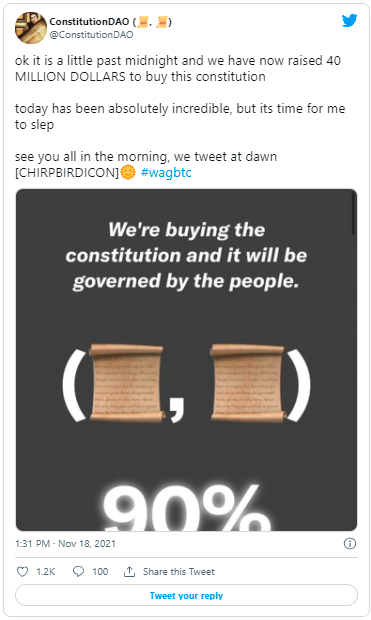
Matt Leising:I was thinking of joining, I was going to give them $20 in ETH, but the gas fee is as high as 85 no. I had to give up.
Tim Beiko:Yes, I have actually made several transfers and the Gas cost was higher than the actual amount transferred. Indeed, this is bad.
Matt Leising:Don't you worry about that? Do you think L2s and ETH 2.0 will greatly alleviate this situation?
Tim Beiko:Will do. I mean, L2s is already running now. I used Optimism and Arbitrum this past weekend, and it only took a few dollars to transfer money in both networks. Importantly, at the Ethereum protocol layer, we continue to work on implementing sharding. I'm less worried about the viability of this technology, and more concerned about its deployment and adoption, and making sure people use it in a more appropriate way. For example, if someone wants to use Ethereum L1, they can use it freely, but we should make it clear that if the amount you send is not as high as $100,000, then you should use L2. We should make it easy for applications to be deployed on all L2s networks and make sure it becomes a first-class citizen.
Matt Leising:marvelous. Where do you expect Ethereum to be in a year?
Tim Beiko:I would be very excited if we moved to PoS by then. If the transaction volume on L2 is to be higher than Ethereum L1, ideally 10 times or even 100 times higher, or not necessarily transfer value, but also usage, because I think Ethereum L1 will probably still be large value The main place of transfer. If by the end of 2022 the majority of transaction usage is L2 and we've moved to PoS, I couldn't be happier.
Matt Leising:Okay, Tim, that's great. Thank you so much for taking the time to share your backstory with us.
Tim Beiko:Thank you for having me.





