






One article to understand the decentralized Ethereum pledge service protocol Rocket Pool: How to pledge ETH through Rocket Pool?


Note: The author of the original text is William M. Peaster, and the following is the compilation of the full text.

Rocket Pool is a highly anticipated decentralized Ethereum staking service protocol. The protocol allows anyone to stake virtually any amount of ETH, helping to secure Ethereum's move to a PoS chain.
Thus, Bankless demonstrates how to stake (and unstake) your ETH through the project’s flagship tokenized liquidity service.
Skills: Intermediate
Skills: Intermediate
Time Required: 1 hour of research
ROI: Current annual rate of return for pool staking is ~5%+
1
What is ETH Staking?
The self-expanding era of Ethereum is coming to an end. During this period, the network relied on a proof-of-work (PoW) consensus mechanism. This gives miners the ability to use specialized hardware to secure Ethereum for the opportunity to earn ETH block rewards and transaction fees.
Ethereum Roadmap
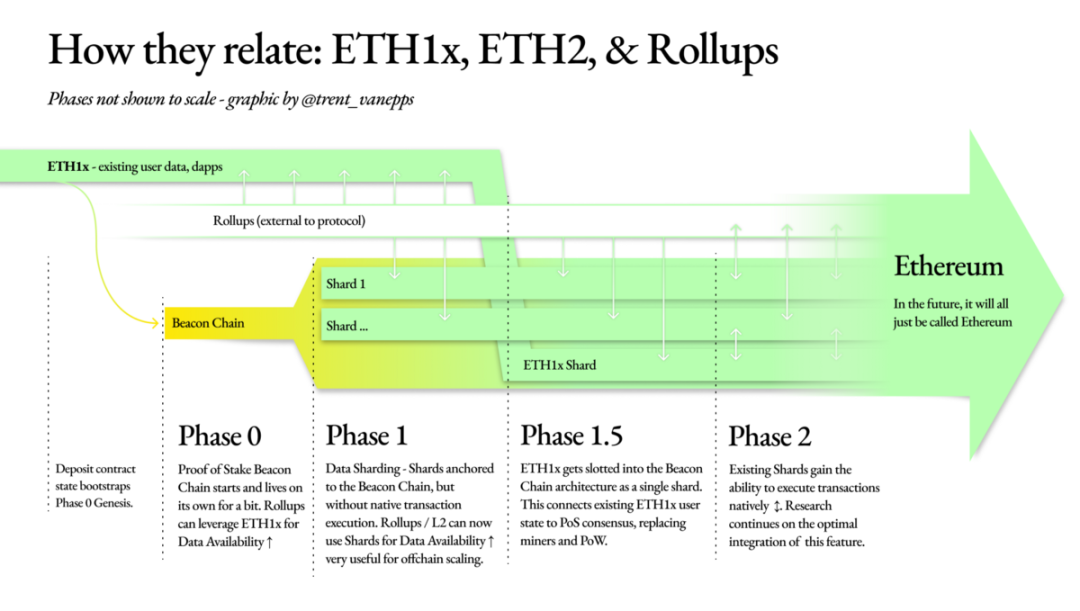
Ethereum Roadmap
In Ethereum's PoS system, the blockchain is managed by validators rather than miners. For Ethereum, a validator is a user who has locked (staked) 32 ETH in order to run a node and secure the Ethereum blockchain.
Simply put, network security does not depend on energy, but on capital. So while mining requires a lot of hardware to operate, staking virtualizes the process of securing the blockchain, reducing Ethereum’s energy requirements exponentially.
Additionally (as Ethereum creator Vitalik Buterin has previously pointed out), PoS provides better security guarantees than PoW. Some of these guarantees include:
The same cost, more secure than PoW (that is, the attack cost of PoS is higher)
Easier to recover from an attack than PoW (i.e. slashing destroys the attacker’s staked ETH, and the cost of the attack rises rapidly)
Better prospects for decentralization than PoW (i.e. some services allow users to stake any amount of ETH by pooling funds).
Better censorship resistance than PoW (i.e. staking can be done privately via VPN)
2
Why pledge ETH?
Ethereum hasn’t fully transitioned from PoW yet, but the PoS migration officially began when the community launched the Beacon Chain, the beating heart of the Ethereum 2.0 blockchain, in December 2020.
This is where ETH stakers "lock up" their ETH.
merge"merge"The operation of Ethereum will be completely transferred to the 2.0 PoS chain. Until this transition occurs, all ETH will continue to be locked on the Beacon Chain.
To overcome this inconvenience, many users who ran their own Eth2 nodes in the early days did so as activists in a long-term alliance with Ethereum. Additionally, the prospect of real yield on Eth2 staking is compelling. According to the model created by Ethereum researcher Justin Drake, the APR of ETH pledge can eventually reach 25%, or even more.
Not bad, right?
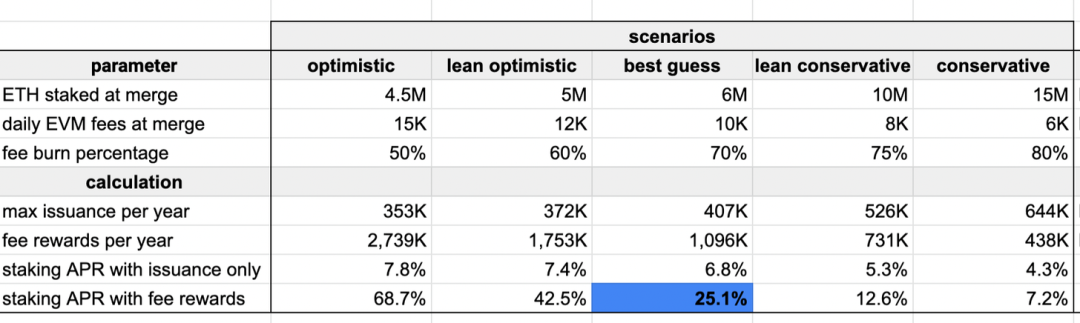
In addition, the income method of Eth2 staking is also very convincing.
For example, Eth2 validators are assigned their validation work, so they can count on a steady income if their operations are successful. This is in stark contrast to Eth1 PoW, where there is no guarantee that you will win the race to the next block. All you have to do is be honest and keep your validators online.
In addition, ASIC mining machines can quickly depreciate and become obsolete; while 1 ETH is always 1 ETH, it is impossible for Eth2 verification to become obsolete.
3
Rocket Pool Introduction
Not everyone can afford the minimum 32 ETH required to become an Eth2 validator. At this point, it's actually quite expensive, over $150,000 at the time of this writing, and very few people have the technical knowledge or the willpower to run an Eth2 node.
That's where a project like Rocket Pool comes in, and it could really shine.
In short, Rocket Pool is a decentralized staking-as-a-service (DSaaS) protocol. While the project admitted in its teens to be"as decentralized as possible", but its mission is to finally provide a fully decentralized and trustless Eth2 staking infrastructure to anyone who needs it.
In this way, Rocket Pool caters to users who want to stake and run their own Eth2 nodes with their one-stop software, as well as those who want to easily stake more than 0.01ETH (the project's minimum) without having to bother with managing an Eth2 node user.
Now that we have a new appreciation for the basics of Eth2 staking and Rocket Pool, here are the two main services of the protocol: node operations and staking tokenization.
node operation
Rocket Pool node operators must deposit at least 16 ETH for each validator they are interested in, plus insurance for the project’s RPL tokens worth at least 1.6 ETH; of course they can also stake multiples of 16 ETH.
The protocol's system combines 16 ETH from a node operator with 16 ETH from a staking pool (where anyone can stake any amount over 0.01ETH) to create a new Eth2 validator. Rocket Pool refers to validators created in this way as mini-pools, but for the beacon chain it is the same as any other validator.
Being a node operator is an advanced responsibility, as it involves configuring and maintaining one or more validators indefinitely, and requires familiarity with how to use the command line. So we won't focus on how to become an operator here, but for anyone interested in digging deeper, check out these great resources.
Node Quick Start Guide
Run a Rocket Pool node
Pledge Tokenization
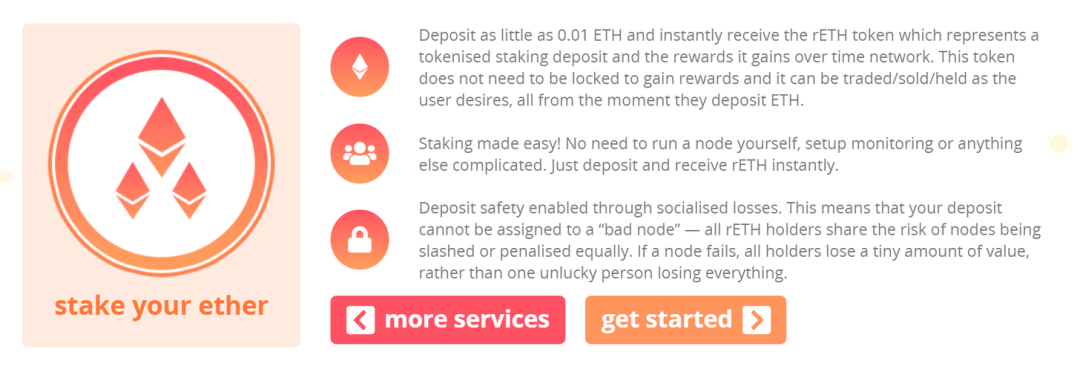
Rocket Pool’s tokenized staking service has broad appeal as it lowers the Eth2 staking threshold to >0.01 ETH.
Deposits to the protocol’s staking pool form the flip side of the aforementioned mini-pool, the Rocket Pool’s validators.
All depositors receive rETH, Rocket Pool’s liquid collateral token representing their underlying collateral position. As Rocket Pool earnings continue to accumulate, the value of rETH against ETH continues to grow, resulting in a dynamic exchange rate between assets.
An important advantage of rETH now is that it provides Ethereum users with the opportunity to stake Eth2, but in a liquid way, that is, without having to wait until 2023 to obtain ETH deposited to the beacon chain.
Here's the best part. You can have your cake and eat it. Through Rocket Pool, you can earn Eth2 staking rewards, and at the same time get liquid rETH, which you can use around DeFi, such as lending or providing liquidity.
Given that DeFi is still new, there is still some work to be done on the integration front, but we can only imagine this happening gradually as the protocol scales.
4
How to Stake on Rocket Pool
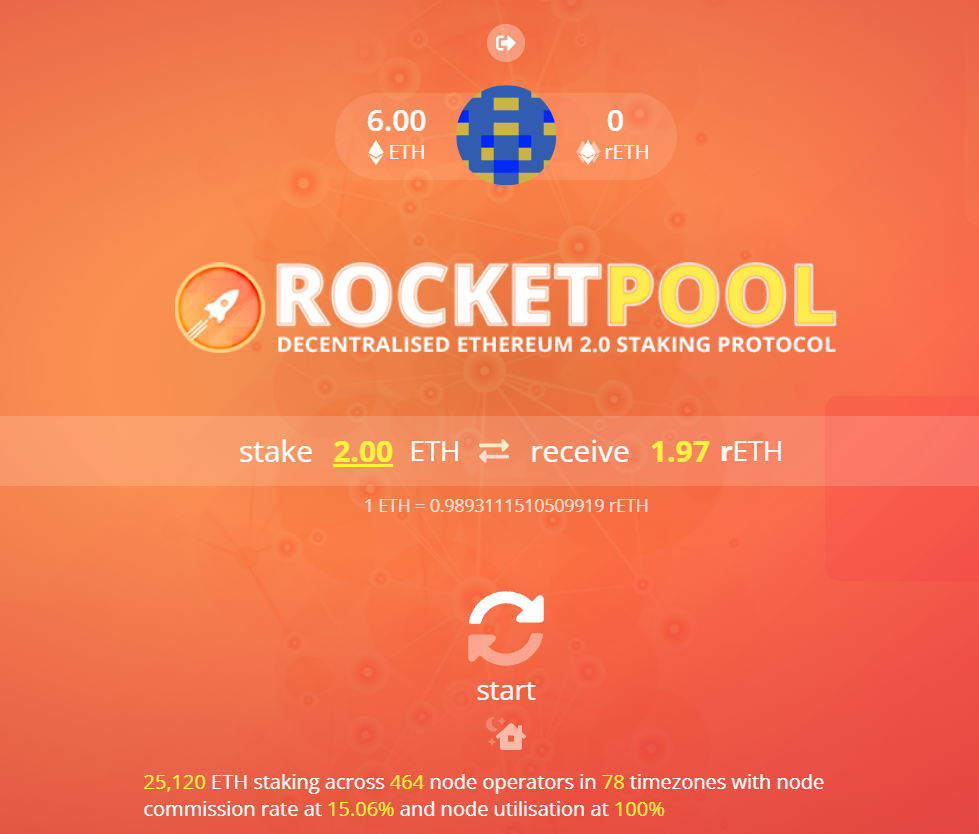
Starting on November 8th, anyone can stake real ETH through Rocket Pool's decentralized staking service and contribute to securing Eth2.
Here are the steps to participate in staking:
After entering stake.rocketpool.net first, connect your Ethereum wallet. The protocol currently supports Metamask and WalletConnect.
Enter the amount of ETH you want to stake to see how much rETH you will receive.
start"start"key. Your wallet will prompt you to complete the deposit transaction. You can configure the gas fee if you like, and click "Confirm".
Once the transaction is confirmed, you can access the new rETH balance in your wallet at any time. Remember: the ETH-rETH exchange rate is dynamic, so you will usually receive slightly less rETH than you staked.
If you want to unstake your ETH, simply go back to the stake.rocketpool.net interface and press the double arrow button in the center of the page. A screen will then pop up allowing you to enter how much rETH you want to exchange back for ETH. Make subsequent transactions and voilà!
5
Notes
Keep in mind that Rocket Pool’s mainnet launch will happen in four phases, so you won’t necessarily be able to join right from the start. It just depends on availability at the time.
Below is a diagram illustrating deposit limits at these stages:
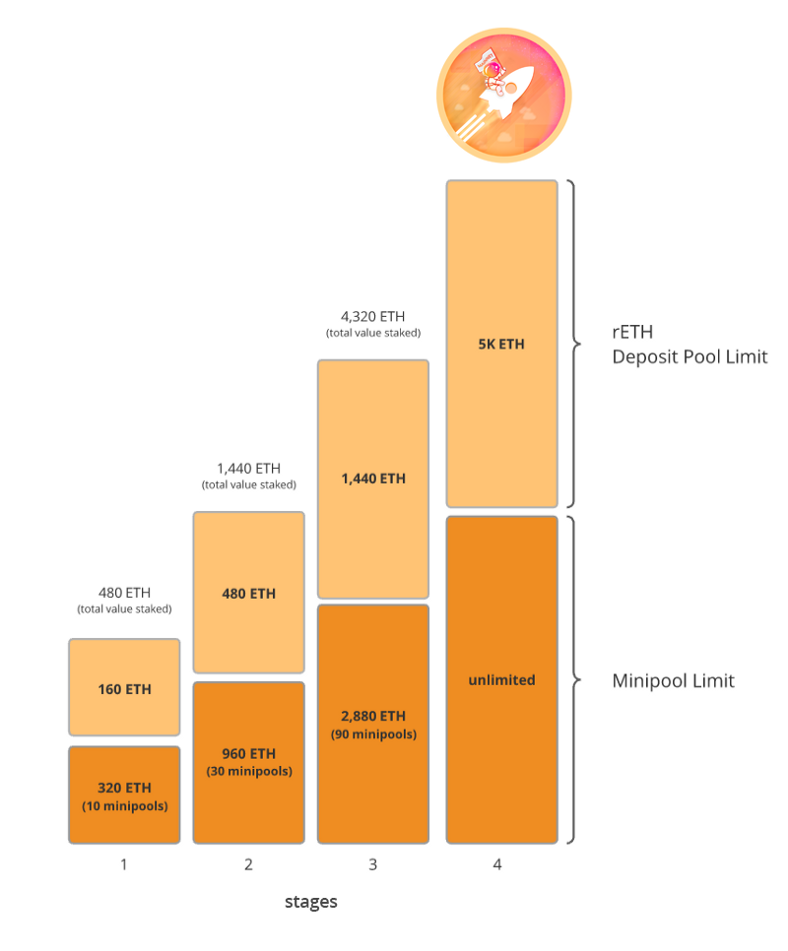
There is no set timeline for these phases, so be sure to keep an eye on Rocket Pool's official communication channels to stay updated on their progress.
The first stage has already hit the threshold, so you'll have to wait until the next stage on November 9, 2021 at 00:00 UTC to get in on the action. If you want to keep up to date on the next phase of the release, please go to the Discord discussion area and follow the announcement channel.
Also, it should be noted that you can unstake rETH through Rocket Pool only when the project’s staking pool has sufficient liquidity. Before the merger, there were some cases where the liquidity in the pool could be seriously insufficient.
in conclusion
6
in conclusion
Decentralized staking protocols are an important infrastructure of Ethereum. In an article on democratization earlier this year, my colleague David Hoffman put it this way:
“Rocket Pool is a math-driven protocol designed to service any and all requests no matter what. Coinbase is a trust-driven company and it will never be able to provide better decentralization on Ethereum than Uniswap or Rocket Pool. The stronger guarantees provided by the application."
For many people, Coinbase's product will work just fine. For others, decentralized services like Rocket Pool provide a means for users to earn ETH block rewards and ensure decentralization of the Ethereum network, if Ethereum fans see this, That's a win-win.
So, with Rocket Pool launching its mainnet, what's next for the project?
This article comes from Tao of Yuan Universe, reproduced with authorization.
This article comes from Tao of Yuan Universe, reproduced with authorization.





