


The founder of Real Vision talks to Vitalik: Discussing the application scenarios of NFT and the challenges faced by Web3.0


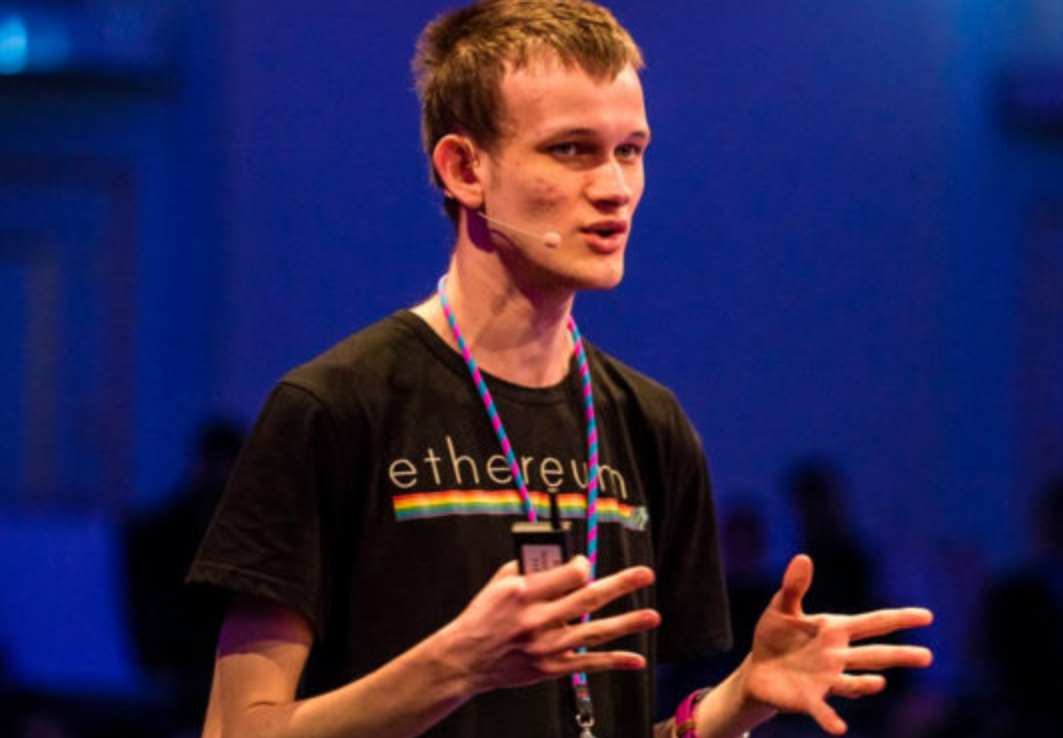
At the Singapore Fintech Festival held on November 8, Raoul Pal, CEO of Real Vision and former Goldman Sachs executive, had an in-depth dialogue with Ethereum founder Vitalik Buterin, covering DeFi, NFT, DAO and many other topics, and detailed It discusses topics such as the application scenarios of NFT and the challenges faced by Web3.0, which is worth reading.
Share | Raoul Pal, Vitalik Buterin
Compile | Lynch
Raoul:Just on this day, the price of Ethereum hit a record high, and the value of the entire crypto market also hit a record high. Can you imagine when you first came up with the idea of building Ethereum up to now, you have created over $500 billion in value in the concept of smart contracts in the Ethereum ecosystem.
Vitalik:To be honest, when I built Ethereum, I didn't have this kind of thinking. I just expected that we would finish it in a few months and go back to college. So, I absolutely did not expect Ethereum to develop into what it is now, or the size and attention of the crypto space to reach such a high level.
Raoul:What you are really contributing with smart contracts is unlocking the layer of value.It created everything we saw last year - DeFi, NFT explosion, now everyone is moving towards web 3.0, which is creating a whole new ecosystem. How do you see the development of the DeFi ecosystem?
Vitalik:First, I think the DeFi ecosystem is maturing. In fact, these projects still exist, and apparently many of them get hacked from time to time. But if you just focus on the core projects, like those that have been around for a few years like Uniswap, they just continue to be stable, continue to do what people want them to do, continue to grow, provide whatever functionality people have been expecting.
I think the trust in these platforms and being able to rely on them will only continue to increase.So, I think the trend that we will see in the next few years is basically more continuous adoption, such as more types of users using DeFi, NFT space.
I think the future is not just financial or non-financial, but a hybrid financial. These projects are not just about money, but could benefit greatly from plugging directly into this massive layer of value created by Ethereum and the larger crypto ecosystem.
Just like DeFi components are plugged into various places,Ethereum doesn't have a killer app, it has a killer ecosystem where the value comes from all these different parts that are able to talk to each other.
As more and more applications continue to attract new users, I think we will see all of these basic building blocks continue to thrive and stabilize themselves, ultimately allowing people to see more and more of what parts of the DeFi space really exist , and which parts of the DeFi space will continue to exist. I think they're all here to stay, and I think we're going to see a lot of value slowly and steadily emerge from them.
Raoul:Yes, I think a lot of people make the mistake of thinking that DeFi is just a part of the financial system that disintermediates banks. But what is actually happening is that DeFi is building a brand new parallel financial system and economic system, which is the entire ecosystem, not just finance.
The layer of value in the NFT space is fascinating. We have some leading projects where people gather around these communities. But it feels that the development direction of NFT is not very clear now, such as the development of NFT intellectual property or NFT insurance. In what direction do you think it will develop?
Vitalik:NFTs are a very large category, like literally non-fungible tokens, where each individual unit represents something different. An NFT can be a piece of art, a domain name can be an NFT, and so can an item in a video game.
The different types of NFTs we see,Some NFTs represent purely encrypted things, so their value basically only comes from people in the crypto space who are willing to pay attention to them.There are also NFTs that represent real-world assets that have some kind of legal effect. Intellectual property is an example, as is real estate. Just like stablecoins, we have algorithmic stablecoins that are purely cryptocurrency-based, and then we also have institutional-backed stablecoins like USDC.
The same is true for NFTs, whose value comes entirely from the changes happening in the encryption field. The value of the NFTs we will have may be linked to existing legal property rights we already own, but may not be practically used or as efficient at present.
Raoul:Now all the elements of composability also allow for a market to be built around NFTs, so this is where we start to see the lending market develop around some artwork and other bits and pieces, and you can see the combination of all these elements start to add up to each other at an unbelievable rate .
Vitalik:Exactly, I think it's really interesting to have a lot of different combinations. For example, to give a few examples, one is the concept of partial ownership. NFT can be combined with real estate or DAO. If NFTs are already being used for real estate ownership, the condominium association could be a DAO.
Instead of managing it with boring paper-and-pen processes like in the 20th century, we use on-chain contracts and voting governance to manage it. There are many different ways to wire each of these components, and most interesting applications end up connecting different pieces together.
Raoul:Yes, I think real estate tokenization is very interesting, and a lot of the real estate that is doing well is expensive and most people can't participate in it. When you tokenize it, anyone can participate, anyone can put 5% of their savings into $100 million worth of real estate assets. This is a remarkable change, and once this starts to happen, the liquidity of the real estate market will be changed forever.
Vitalik:Yes, I think the irreplaceability of real estate is actually the root of a lot of problems. Like in today's cities, you're either a homeowner, in which case you're only over-exposed to one asset, or you're a renter, in which case you're subject to this negative impact on assets.
So, people need to have options in between those two extremes, like fractional ownership, some kind of system where ownership builds up over time in order to facilitate their own development. I think there's a lot of cool stuff going on.
Raoul:The other thing you mentioned came up very quickly, everyone was trying to figure out what a DAO was and what form it was going to take. There's a lot of experimentation going on, and it feels like it's sometimes difficult to have such broad ownership of a project because there's no specific leader. We're trying to figure out how this all works, how do you see the DAO evolving?
Vitalik:DAOs and smart contracts are like Lego blocks for governance, allowing people to easily create new and different structures. Unlike today, if you want to create an organization, you have to pay huge fees to lawyers and wait a long time for it to happen. The DAO organization lowers the cost for people to do these things.
I think we can easily see this organization become less standardized, there will be many more different kinds of tailor-made DAO organizations, or even ones that only exist for a few months for a very specific purpose organization, even with little money in it.I didn't see one dominant scene, I just saw it open the floodgates to a thousand different ones.
Raoul:Yeah, one of the really interesting things that I'm seeing is that the fund management industry is now revolving around DAOs. The cost of building these things is so low that it's wreaking havoc on this very traditional money management business.
Vitalik:Absolutely.
Raoul:So how do you think about the other thing, it feels like what we're building all points to Web 3.0. Now everyone has their own definition, just like everyone has their own definition of the metaverse. What is your definition of Web 3.0? How far along are we in this process?
Vitalik:I think Web 3.0 is obviously a very big term and I think there are a lot of different things that get different people excited,Things like creating decentralized forms of social media, potentially more open and transparent governance, creating better integration between internet applications and financial layers, or increasing the ability to own assets.
I mean Web 3 is definitely a very big umbrella term that covers a lot of things. I think they are all right, everyone knows that there is a technological revolution happening. I think not only the blockchain, but zero-knowledge proofs are also very important.
These changes will address many of the previous issues, such as trust issues, allowing for more collaboration without a central point of trust. A lot of people have different points of view, and I think it's great that they have their own way of realizing their dreams and points of view.
Raoul:I still think one key element that's missing in all of this is the wallet experience, another thing I think is the zero-knowledge proof identity layer that I think is needed for the internet that many of us share. A lot of people's perception of Web 3.0 is that we own our data, and it's okay to sell our data if we want to. How close are we to the availability of digital identities and wallets that aren't that hard to set up?
Vitalik:I think the biggest usability challenge in practice is proper transaction fees, as layer 2 protocols are the solution to that. In the Ethereum space, we have Optimism, Arbitrum, and Polygon, a growing number of zero-knowledge family members.
These developments are continuing, which I think is great, and once it does, the biggest real usability problem facing users today is largely solved.
I think another really big problem is,Most people aren't well prepared to manage their existing cryptocurrency wallets fully autonomously, making sure they don't lose all those digital assets.
In the real world, if people make a mistake, they can go and talk to a banker, they can go to a court, or the police or anyone else, and they'll figure it out. Solutions are also being explored in the crypto space today, where people are working hard to solve the problem and reduce the chances of funds being lost and stolen, making people feel safer when dealing with these assets.
For example, through multi-signature wallets, social recovery wallets, or hybrid institutional forms of custody, institutions can help as a backup without actually having full control of the assets. Therefore, there is a lot of important work going on in these areas as well. I think all of these issues will slowly start to be resolved over the next few years, so I'm really excited about that.
Raoul:The revolution you and I are talking about seems to be the fastest technology adoption in human history. itis growing at twice the rate of Internet adoption.As we just talked about, there's so much going on, I mean the whole space is deeply exploding, not just in terms of the number of different protocols, but in terms of all the use cases.
Also, because the crypto space tends to be anti-establishment, the government space and the crypto space will collide. Whether it’s the establishment of a central bank digital currency or a new financial system, it’s going to have to talk to each other and create a new set of rules to make sure we all work. It's good for everyone, but it's hard in some countries because we're still using the 1934 law, which makes it tricky, and we need to address a situation where we have to build an open Rules so we can adapt and change because it evolves so fast.
Vitalik:I think the crypto space is a big space, and I think there are a lot of people with a lot of different visions. I think there is room for all of these visions in this space.
I think from another possible perspective, it's about creating a fairer way for people to interact with existing institutions. Incumbents have fewer opportunities to exercise control, but at the same time they can still provide important services.
New institutions can break into the market and influence existing institutions in ways that provide services more easily. Existing institutions have a great deal of control over the interface. Yet the crypto world will not allow anyone to control access to the same degree as it is all about creating open infrastructure.





