


Interview with Vitalik Buterin: Thoughts on Cryptocurrency and Blockchain


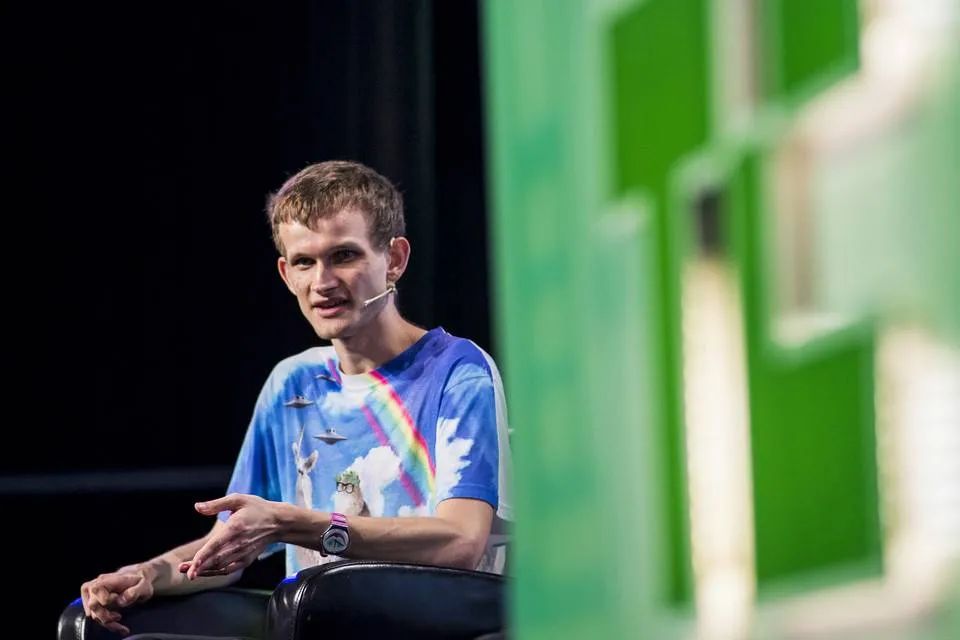
Interviewee: Vitalik Buterin, founder of Ethereum
Written by: Chu Zhang, Zhang Jieping, Suji Yan
Source: Initium Media
Vitalik Buterin is the founder of Ethereum. He founded Ethereum at the age of 19 and became a billionaire in his 20s. If Satoshi Nakamoto is the creator of the blockchain, then Buterin started the blockchain 2.0. He is known as "V God" and is the spiritual leader of the cryptocurrency circle.
Buterin was born in Russia in 1994 and immigrated to Canada with his father when he was six years old. In the 1990s, when Buterin was born, the Internet began to spread, and the optimism brought about by technological leaps pervaded the world. Many people believe that the Internet will make the world more open, efficient, and equal, information disclosure will become easier, and those in power will be held accountable more easily.
But while technology has brought great advances, it has also brought serious problems. Personal data is held by large companies and governments. Electronic surveillance is everywhere and all the time. Social media has ostensibly enhanced communication, but globally it has exacerbated opposing views.
Bitcoin, and the underlying blockchain technology, represent another possibility of the Internet in many people's minds: decentralization and anonymity. At the age of 17, Buterin came into contact with the nascent Bitcoin. After graduating from high school, he entered the University of Waterloo in Canada, but dropped out after 8 months and devoted himself to the field of Bitcoin, traveling around the world, visiting Bitcoin developer communities in various countries, and at the same time looking for the possibility of wider application of blockchain .
At the end of 2013, the 19-year-old Buterin published the "Ethereum" white paper. Ethereum not only brings a new cryptocurrency - Ether, but also based on a general-purpose code language that can be used to create a variety of applications. Ethereum claims to be a "world computer" that will never go offline. Its vision is to return the control of data to its owners and return the creation rights to its authors.
Six years after ethereum's public launch, ether is the second-largest cryptocurrency in the world by market capitalization after bitcoin. Around Ethereum, a very large and rapidly developing ecosystem has been formed. Practical applications have already begun in decentralized finance (DeFi), social media, publishing, and social organizations.
Is it possible to return the ownership of data to individuals while ensuring the efficiency of mission execution? Is it possible for such a structure to solve some major problems in the current Internet? Can Ethereum take on such a task? What will the next generation Internet look like? What will decentralization bring? What kind of world can be built with cryptocurrency and blockchain? With these questions, we interviewed Buterin, the founder of Ethereum, in Singapore.
Buterin has a clear worldview. The decentralization, resistance to censorship, and quadratic voting he advocated involve democratic practices, Internet structures, businesses, and nonprofit organizations. His view of the world allows him to know what community he should be in, what to connect with, what to enable and what to avoid, and his influence goes far beyond the cryptocurrency circle.
In Buterin's own words, "My life is about being a bridge to everything." He is certainly a leader in the Ethereum community. The Ethereum Foundation funds up to tens of millions of dollars each year, and some projects have gone beyond the field of cryptocurrency. He has 2.3 million followers on Twitter. He participates in the production of "Radical Markets" theory, and often participates in discussions on public policy, think tanks and other opinion leaders.
Buterin believes that there are two different forces in the field of technology. One technological force will make the strong stronger and resources will be more concentrated in the head, while the other technological force may allow us to continue to maintain freedom, the freedom of anonymity, freedom of thought and expression.
He mentioned Peter Thiel (Peter Thiel, a famous investor and entrepreneur in Silicon Valley) thesis, "artificial intelligence is communism; encryption technology is liberalism." A technology, but people who live digitally should have the freedom of choice.
first level title
WEB 3 wave
End: People in the 1990s believed that the Internet would gradually move the world toward an open society. But none of this happened. Big Tech emphasizes centralization, and the centralized government has created an efficient censorship system. They have won users and closed the Internet. Do you think the wave of Web3, blockchain and cryptocurrency we are talking about now will bring different results? China is also building its own national version of the cryptocurrency, the digital renminbi, whose widespread use will greatly increase the state’s means of surveillance. Will Web3 make people more autonomous, or will centralized power be stronger?
Buterin:I agree that 15 years ago people were overly optimistic that the Internet could bring about social progress, but I also don't think the Internet has completely failed. The Internet has advanced society in many ways. Because of the Internet, there are many things that people can do now that they couldn't do 15 years ago. Even cryptocurrencies themselves were made possible because of the internet. With the Internet, it is possible for a person to participate in international exchanges without physically leaving a place, without sacrificing the physical social and living environment. Of course, I admit that the Internet has actually made centralized electronic surveillance ubiquitous and more efficient.
I think there are two different forces in technology. Peter Thiel said: "Encryption technology is liberalism; artificial intelligence is communism (Crypto is libertarian, AI is communist)." Artificial intelligence is very powerful and can provide many valuable good things, but its essence is big data, big For the government, data will be centralized and controlled in the hands of a country or a company, making the strong stronger. And encryption has some inherent properties that make coercion more difficult. This can be seen from some things that have already happened. For example, on the blockchain, the development of public chains mostly exceeds expectations, while private chains and alliance chains mostly perform poorly and are lower than expected. I think there are very deep reasons for this.
Some companies want to join several other companies to build an alliance chain, but in the end they just can't do it. Maybe they can get a few partners to join at first, but once they need to enter the next stage, the disadvantage of the alliance chain comes out, and it is not easy for new partners to join. Although the alliance chain is easy to get the first few participants, early participants often want to keep control, which will become the resistance for more people to join.
As for the public chain, it has done a good job of resisting centralized control, and its development often exceeds people's expectations. You know, I don't like Proof of Work in principle, but the Bitcoin ecology that adopts this method is still extremely dynamic. I believe the same will be true for projects using Proof of Stake (Proof of Stake).
image description
first level title
Ethereum and decentralized applications
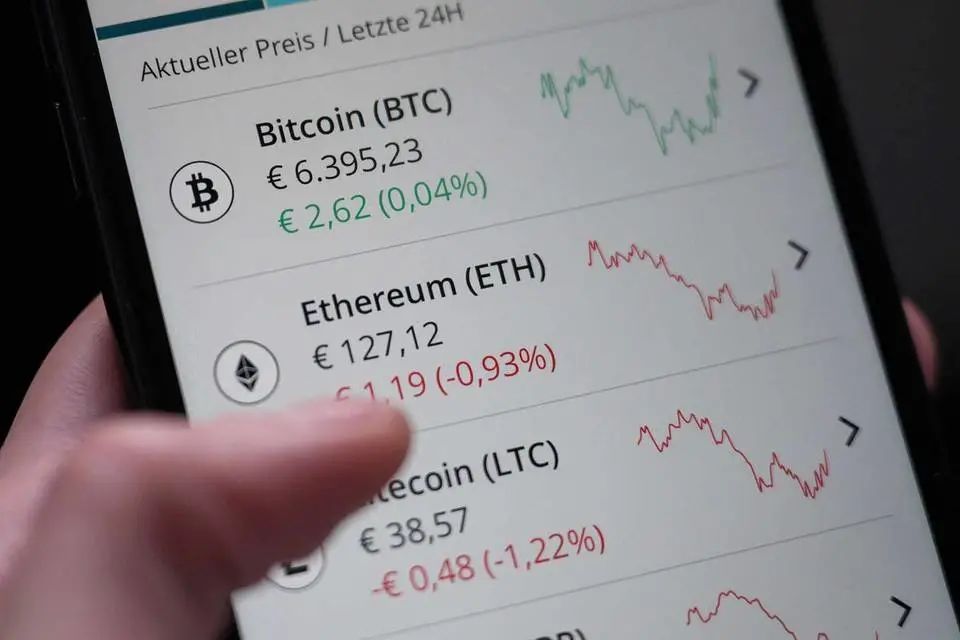
End: It has been six years since the public release of Ethereum. Recently, the price of Ethereum has been well over $3,000 per coin. If measured by the price of ether, ethereum has been a huge success. But the original intention of Ethereum is not just the currency price. When Ethereum was released, you emphasized that the vision of Ethereum is to decentralize and resist censorship. But outside of "DeFi" (decentralized finance), what progress has Ethereum made in these two areas?
Buterin:"DeFi" (Decentralized Finance) is indeed the most successful application of the Ethereum network so far. there are many reasons. First of all, doing things in the DeFi field, because there are actual economic benefits, the motivation is much greater. Second, traditional financial services are extremely inefficient compared to other uses of the Internet. For example, I am currently in Singapore, and if I send an email to a recipient in Guatemala, the email arrives within seconds.
Although, it is possible that the NSA will also receive a copy within seconds, but at least the recipient's email will arrive in seconds. In the case of financial services, especially when it comes to international financial operations, it may take days or even weeks for a sum of money to be sent from Singapore to Guatemala. In this case, it is only natural that cryptocurrencies are first used in financial business.
Although so far, the benefits of Ethereum in centralized finance are the most obvious. But I absolutely believe that countless other people will benefit from Ethereum's censorship-resistant, decentralized features in other areas as well. There are already some good examples of blockchains being used to defend against censorship. For example, in the #MeToo movement in China, some movement participants published and stored some content on the blockchain. Although there are very few examples, I think this is an interesting start.
But the challenge is that because the efficiency of Internet applications outside of finance is not low, the use of blockchain technology in those fields requires much higher standards. But I believe we are on the way.
End: Dapp (decentralized application) is an important development direction of Ethereum. If you were asked to choose a Dapp and devote all your time to it, what direction would you choose?
Buterin:This is a good question. "If you clone Buterin and let him enter the Ethereum ecosystem in 2021, what Dapp will he choose?" I think I should choose social media. If social media is done well, there will be a large number of real users. Unlike some blockchain applications, everyone was very excited at the beginning, but once it was launched, no one used it, gained more than 30 users, and then disappeared without a trace.
Duan: Yes, decentralized social media should be one of the most anticipated Dapps. The current web2-based social media in the market has serious problems, such as algorithm bias, polarization effects, and government censorship. I'm actually curious. Decentralized social media is technically mature and the benefits are obvious. Why hasn't it become popular yet?
Buterin:There are already some decentralized social media such as Steemit, Hive, Status. These applications all have some grades in the past year. These important applications are not "ghost domains", and indeed many people are using them. A very interesting point is that many of these centralized social media are trying to combine social media and cryptocurrency elements together, like a big club, they have separate tokens and various reward systems. very interesting. For creators, there is an opportunity to provide better incentives for creation, while being able to publish content that people really like.
For example, Status is a very interesting decentralized social media. It does not have a centralized server, and all data is placed in a distributed network. It is more decentralized than Signal. Signal also has a server, while Status has no server at all, and everything is only realized end-to-end. It also has a built-in encrypted electronic wallet identity. So you don't even need to register an ID specifically for Status, you can register an ID on Ethereum, and then you can use Status.
More and more people are using it. There are quite a lot of Chinese-speaking communities inside, many people go in to chat, and many people like to argue, such as discussing whether the Communist Party is good or bad. Of course, it's still a relatively early project, and the user interface isn't perfect, but its existence may represent a big step forward.
While people outside of the cryptocurrency world may not know much about these decentralized social media, this interesting space is already taking shape and growing.
Of course, if you want to be a real competitor with Twitter and Facebook, you need to provide users with more value besides being uncensored, because users don’t like being censored. There are many other needs. Personally, for example, the reason I also want a Twitter alternative has nothing to do with censorship.
My biggest complaint with Twitter is that the discussions on it are often of low quality. Countless people promote their own projects under my twitter, send all kinds of things that are not worth discussing, like too much spam, making it more difficult to find useful emails, and preventing us from having effective conversations. I believe that many people have the same experience, maybe it's just that the situation I encountered is worse.
 An engineer mines the Ethereum and Zilliqa cryptocurrencies in Cluj-Napoca, Romania, January 22, 2021. Photo: Akos Stiller/Bloomberg via Getty Images
Duan: What are your expectations and views on big platforms like Facebook and Twitter? What role will these big platforms play in the development of cryptocurrencies and the Metaverse?
Buterin:I think Facebook's biggest mistake is that they think that they can occupy the entire ecology by entering a new ecology. They go into crypto and say, “Hey, we’re Facebook. Facebook is so big, we’re not going to play by the rules of the ecosystem, we’re going to make the rules so you can follow the rules that we set.” That’s the approach. Totally unworkable in the cryptocurrency space.
Although Facebook is also working hard to find partners, attracting many large companies, forming alliances, and trying its best to reduce everyone's worries about Facebook's desire to control, it is still difficult to change the outside world's views on Libra (Libra currency): "This It’s not trustworthy, no matter what you say, it’s Zuckerbergcoin.”
It also has little support outside of the cryptosphere. Regulators have even less trust in what Facebook wants to do. Not only the anti-money laundering department is watching them, but also the antitrust and competition department. So, now, they have made a big adjustment in direction, and the project is still there, but it is smaller and less meaningful than what they originally wanted to do. What will Facebook do in the Metaverse? Maybe they will want to control the ecology less, maybe they will behave better. We can wait and see.
As for Twitter, I really like their Bluesky (Blue Sky Project). This is an interesting decentralized social media project backed by Twitter. The vision is good, but I'm particularly concerned about whether they can structurally separate the user interface layer from the user data layer without trying to control the entire structure.
I'm also particularly concerned about whether they will allow user migration. If users are transferable, the same user can communicate with different audiences through different social networks at the same time, instead of dealing with different audiences with the same content on the same social platform and in the same social bubble . This is a very interesting and ambitious plan. I'm definitely for Twitter to give it a try. The question, of course, is how far these goals can become a reality. Regardless of the outcome, this decentralized vision is already great.
Duan: Let's talk about NFT. NFT is probably one of the hottest issues in the blockchain space right now. The attention to NFT has also gone out of the chain circle or currency circle. Artists, movie stars, singers, and news media are all trying. Duan also recently released its own NFT project. How do you see the future of NFT? Will it have a long lasting impact?
Buterin:The development of NFT is beyond my expectation. Someone asked me my opinion on NFT four years ago, and I said at the time that the prospect of NFT was not that good. It now appears that I was wrong.
The development of NFT is absolutely fascinating. NFT is one of the few applications of cryptocurrency that can attract people who are completely different from those who care about De-Fi. De-Fi tends to attract people who care about money or finance. They either want to make money or care about freedom in the financial field. But NFTs attract quite a different crowd—artists, cultural people. I even saw a group of artists from Ethiopia start producing and distributing NFTs. And this diversity is in turn conducive to the development of the Ethereum ecosystem.
You know, cryptocurrencies are very effective in reducing the "middleman", and this is also reflected in the development of NFT. To do NFT, you don’t need to build processors and websites yourself, just like developing other distributed services, you can use the existing online market based on smart contracts, and then focus on core things, such as Create NFTs yourself, sell NFTs.
Many people have made full use of this advantage, creating works of art, making NFTs, and selling them at a very good price through OpenSea or other markets. It is amazing that NFT can have such an open model, attract so many people from different backgrounds, and achieve rapid success.
first level title
decentralized governance
End: Decentralized applications (Dapp) want to get rid of the control of users by a single platform, and decentralized governance wants to get rid of the control of an ecosystem by a single company. How to decentralize collaborators and participants within a community, a group of companies, or even an institution, set rules, and decentralize governance. This is a problem dealt with by DAO (decentralized autonomous organizations). What do you think of the development of DAOs on Ethereum?
Buterin:The subtlety of DAO is that it is not purely financial, nor is it purely non-financial. The foundation of DAO's existence is Smart Contracts. A few years ago, it was just empty theory, but today, there are many projects successfully organized through DAO.
What's interesting about DAOs is that it makes it easier for the community to feel like they really own the project, that they're a part of it, and it makes it easier for everyone to contribute to the community from the first day they join.
In my opinion, this is critical to the success of a blockchain project. One of the very exciting things about Bitcoin and Ethereum is that you can get some cryptocurrency at the beginning, then bind it to your computer and continue to "mine" to get Bitcoin. It's a system that has been open to all from the start, and has strong community engagement, allowing the community to grow with the project.
For a DAO project, to do a good job of decentralization, not only requires structural decentralization, but also needs to design how to initiate and which communities to base on. Pre-design is important. As complex as DAO, it can also be very safe, but you need to spend a lot of time to become an expert in this field and learn the ability to do things to the extreme. Many well-run projects started out as DAOs.
Allocate funds through DAO and establish a reasonable management structure. In contrast, some blockchain projects claim to be the terminator of Ethereum, but their distribution methods are very centralized. They gave 45% of the coins to two or three venture capital companies. In the end, they did not do anything. well done.
image description
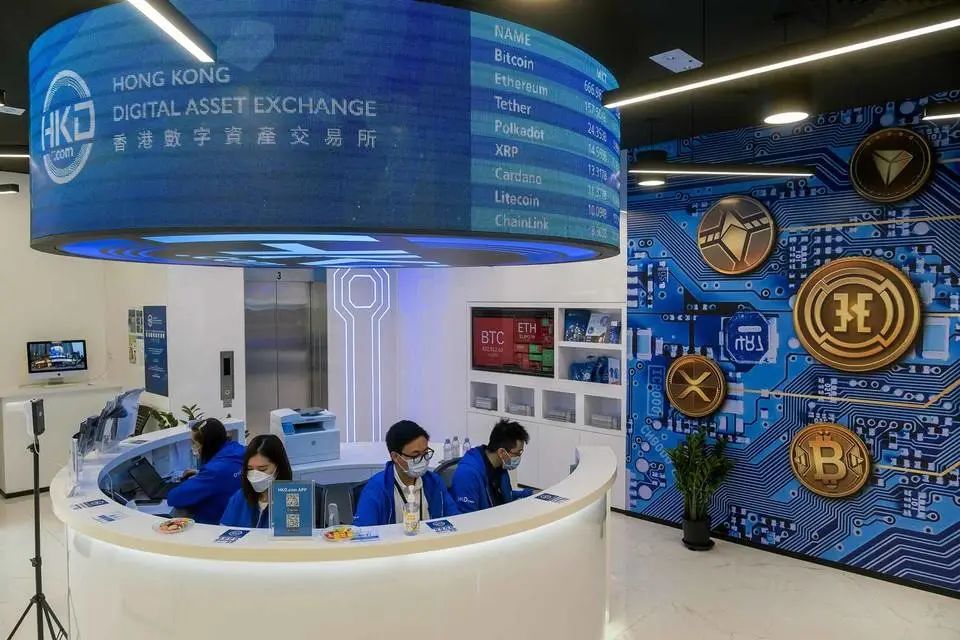
Hong Kong, June 24, 2021, Hong Kong Digital Asset Exchange. Photo: Paul Yeung/Bloomberg via Getty Images
Duan: In terms of practice, which DAOs do you think are more successful?
Buterin:The largest DAO should be Uniswap. Uniswap already has more funds than the Ethereum Foundation. It has a fairly complex internal governance mechanism with many people participating. It offers many grants for a wide variety of projects. I think Uniswap is by far the most interesting DAO.
Another interesting project is Gitcoin. They have also recently changed to a DAO governance method and began to use quadratic funding. It's done well now, and while it's still too early to say it's been successful, it's already a very meaningful attempt.
There are also some projects whose goals have gone beyond the cryptocurrency field. For example, there is a project called VitaDAO, which focuses on the extension of human life span. You can understand it as a group of people who care about this topic, hope to promote this goal through DAO, and allow people who want to make money to invest in it. It issued a currency called VitaDao Token, which now has a market value of 20 million US dollars, and has begun to sponsor research in this field.
Duan: Have you considered, maybe one day also transforming the Ethereum Foundation into a DAO?
Buterin:did think about it. In my opinion, the Ethereum Foundation can be further decentralized in two ways. One way, as you said, is to turn the entire Ethereum Foundation into a DAO. Another way is to make the role of the Ethereum Foundation itself in the Ethereum ecosystem unimportant. We are trying in both directions.
For example, one of the major changes in the Ethereum Foundation in recent years is that from 2015 until now, most of our funds have been used to fund external projects. Every year, we spend more money on external funding than ourselves Money spent on internal operations. Such an approach, even in the field of cryptocurrencies, is unusual. In this way, we can expand the community and connect more teams.
The way funding is decided is also decentralized. Today, if you have some projects that are really beneficial to the ecology of Ethereum and need financial support, even if you have personal grievances with a certain leadership of the foundation, as long as you can prove that the project is helpful to the ecology, you can still get Foundation support. Operating the Ethereum Foundation in such a decentralized way was not the case three years ago.
The Ethereum Foundation even provides funding to other DAOs, enabling those DAOs to fund others.
Many important things in the Ethereum community are done by small independent teams that focus on doing their own things and are spread all over the world. For example, Prismatic labs in the United States provides very important basic technical work on the construction of Ethereum 2.0. Sigma Prime, headquartered in Australia, has made great contributions to the security and speed of the Ethernet network.
There are some teams like this in Europe and Asia. We help these independent companies grow and pay them accordingly, while we avoid becoming centralized, large-scale institutions ourselves. So, although the Ethereum Foundation is not yet a DAO, there is still leadership, a board of directors and a foundation at the top, and there are legal entities in Switzerland and Singapore, but we are very decentralized overall.
first level title
The Crypto Community and Buterin's Worldview
Duan: You wrote an interesting foreword to the book Radical Markets. The two authors of this book, one is a professor of law at the University of Chicago, and the other is the youngest professor of economics in the history of the University of Chicago. Why did they think it would be most appropriate for someone in the cryptocurrency field to write a foreword to a book devoted to public policy? Apparently they think that the ideas of the people you represent are very important in restructuring social institutions for the future. What do you think is the contribution of the cryptocurrency community in terms of public policy?
Buterin:Yes, there is a very interesting connection between the cryptocurrency community and advocates of radical market theory—or, more broadly, communities of practice concerned with upholding the values of freedom and implementing democracy in the 21st century. On the one hand, the cryptocurrency community is very interested in how to uphold the value of freedom and implement democracy in the 21st century. Many of those involved in radical market experiments are also interested in cryptocurrencies. There are certainly differences of opinion between the two communities, and there are differences in some values.
For example, if you follow Glen Weyl (an author of Radical Markets) on Twitter, he'll sometimes say that he doesn't approve of certain things about blockchain, and he doesn't consider himself part of the chain. But at the same time, advocates of radical market theory also understand that the blockchain community is a strong, well-resourced community, and really has the knowledge and technology to experiment with better voting, better governance, better market solutions that can be put into practice. For example, Gitcoin is an Ethereum project that uses Quadratic Voting to do multi-million dollar transactions.
Of course, radical market theories are also doing their own social experiments. In different government environments, including municipal government, local government. For example, as far as I know, in the Taiwan President Cup hackathon, the square voting method was tried.
There is a deep bond between these two communities, with many shared interests and shared values. I hope that I will continue to be a part of both communities, and also be a bridge and a link between the two communities. There is a lot that both communities can continue to work together to make each other stronger.
Especially when the cryptocurrency community becomes more complex and starts to do more than just finance, there will be more space for many new ideas to be tried, and for advocates of radical market theory to practice here Some ideas, see how they will work if they are placed in the cryptocurrency community, and whether they are feasible.
For example, Zero-Knowledge Proof (Zero-Knowledge Proof), which was originally just a theory, appeared in academic papers, but it is precisely because of the existence and development of Ethereum and cryptocurrency, including the enthusiasm and money of the community, that Zero-Knowledge Proof has become Something very powerful and practically applicable. It will eventually be used in many places. For example, in various public domains, where both verification and privacy are required, you can use zero-knowledge proofs, such as voting.
I have always believed that technology and social progress can complement each other and will play a more positive role in the future.
Duan: The quadratic voting method you have been talking about is very interesting. It essentially uses a more quantitative approach to improve the efficiency of democratic decision-making. Do you think the quadratic voting method will be used more widely? Will some countries officially adopt this voting method?
Buterin:The easiest way to get these new approaches adopted is not to try to change structures that have existed for a long time, but to try to apply these new approaches to new things that have only recently existed, or are even in the process of being created.
Some DAOs will first start using Quadratic Voting. We talked about Gitcoin earlier, and its appropriation uses the quadratic voting method. I'm also considering some new directions. For example, funding for journalism. News is a public good. If it relies entirely on the market, it will easily be undersupplied, and there will be situations where news is unduly influenced by commercial interests. However, if it relies entirely on government funding, there will be problems.
Especially when there is a regime change and a bad party takes over the government, it can have a negative impact on journalism. Quadratic Funding could be an interesting solution to handling the funding of journalism, while trying to avoid market failure or government failure.
image description
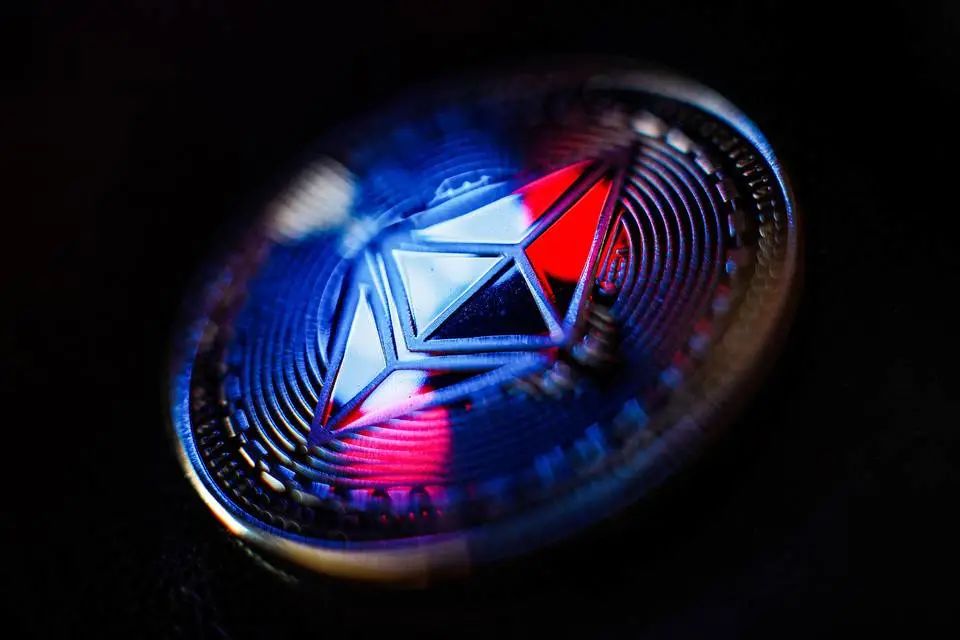
Ethereum, London, UK, April 25, 2018. Photo: Jack Taylor/Getty Images
End: Through Bitcoin, Ethereum and other cryptocurrencies, as well as the organization of DAO, not only can you establish your own country in cyberspace, but theoretically, it is also possible to create a country in the real world. In fact, some people are doing such experiments. Some people are trying it on a small scale at the summer camp, and some people are discussing whether it is possible to try it in a micro-state, a radical country governed by cryptocurrency and blockchain. What are your thoughts on this topic?
Buterin:I think there are two ways that the cryptocurrency space can become more and more like a country.
One possibility is that the entire cryptocurrency community still stays in the virtual world, but the concepts, systems, and methods emerging in the field of cryptocurrency are popular and will become mainstream in some countries one day. In this process, although the spatial links are still in the virtual world, these links have become strong enough that people in the community feel more and more like living in the same country.
The cryptocurrency space can provide the social environment that more and more people need in the real market, and provide more and more services that people need or care about. Although physically, the cryptocurrency community is still in the virtual world, its influence is growing in real life.
If you are in a cryptocurrency community and you want to call that community home, you can choose to work for a cryptocurrency company. Of course, you still need your own offline network outside of work, and these networks are often rooted in the real world-the laws and policies of certain countries may be particularly unfriendly to cryptocurrencies.
So, there is indeed a trend that people who want to devote themselves to the cryptocurrency field full-time, if the country they are in is too difficult to do cryptocurrency things, they may choose to move directly to another country. Singapore is becoming the center of a cryptocurrency community, and many people who used to do cryptocurrency in China have moved here. The same goes for Switzerland, where the Ethereum Foundation is based.
Another way is really to build a country governed by cryptocurrency and blockchain. There is a word called "reverse discrete" (reverse diaspora). Diaspora (diaspora) refers to a group of people who originally lived in one country, but they all dispersed and emigrated around the world. Reverse diaspora refers to the diaspora who emigrated to various places and returned to their original country.
If you use this word to describe the encryption community, it turns out that everyone is scattered on the Internet and keeps connected with each other, but the community continues to grow, and finally the number reaches a critical point. People in the community will choose to go to one place together. If a lot of people go to that place, maybe a real world cryptocurrency city or even country will emerge there? Maybe one day there will be enough growth in the cryptocurrency space and enough people to make this choice? This is an interesting trend.
Duan: If there was a country governed by cryptocurrency and blockchain, would you move there?
Buterin:I don't know where I'm going to move. My current situation is actually a constant migration. Before COVID, the pace of my international travel was quite frantic. Between 2014 and 2019, I basically flew internationally every six days on average, attending conferences around the world.
Of course, during COVID, it's not possible for me to travel so much. Eventually COVID will pass and I should and won't be traveling that extreme anymore. But even if I make some adjustments, I still need to see people in the community from time to time, and traveling to different worlds has also benefited me a lot. So, no matter what, I am unlikely to choose to settle in the same place for a long time.
So, if there is some super awesome crypto country one day, I will live there "some of the time", but not "all of the time".
Duan: Tell me about the growth experience that shaped your worldview. There are different types of leaders in technology. For example, Mark Zuckerberg, who was obviously incredibly bright and extremely successful at a very young age. But unlike you, Zuckerberg seems to enjoy building a sprawling empire. He started Facebook, bought Instagram, bought WhatsApp, then Oculus. And you seem to be more advocating decentralization, don't like censorship, and like to let small companies manage themselves. Let's not comment on whether one kind of governance is better than another, but what I want to understand is, why do you become you? Who were the people, or a particular book, that had the most influence on your growth?
Buterin:The most influential thing in my growth is not a certain person, or a certain book. The biggest influences on me are some of the communities that I look up to. For example, in the early years, I had a lot of contacts with the rationalist community, which is a community that advocates rationalism and altruism. They like to use science, data to demonstrate their point of view.
For example, they will tell you that if you donate to some organizations that serve public health in Africa, with the money of a business class ticket, you can save a life, and with $3,000, you can save hundreds of people from malaria. Behind what they choose to do, there are clear values: to care about others, their health, needs and wellbeing, whether they are from your country or on the same team as you. This community has had a huge impact on me.
image description
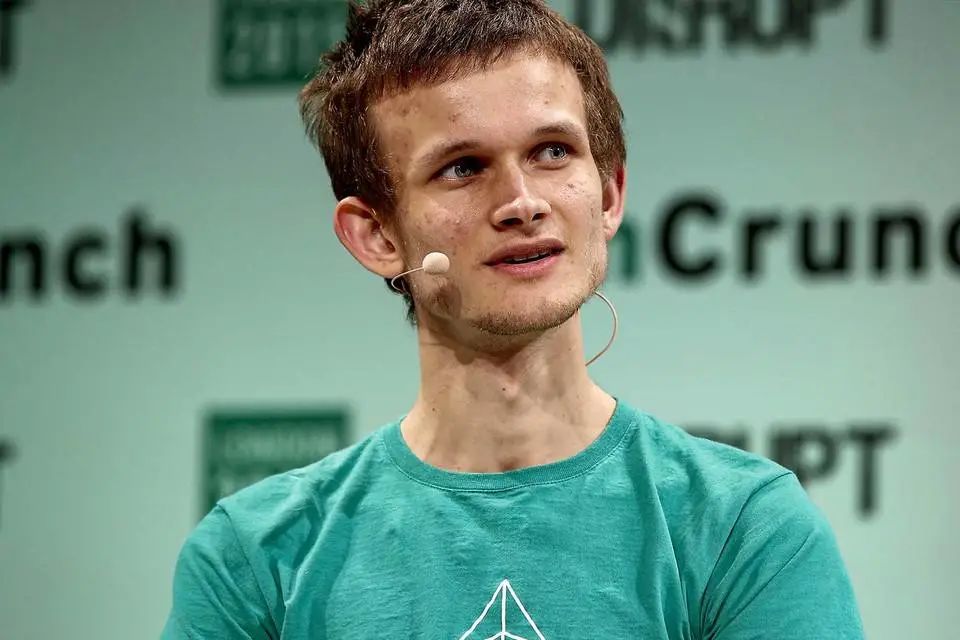
Ethereum founder Vitalik Buterin gives a speech in London, England, December 8, 2015. Photo: John Phillips/Getty Images
Duan: Did you have any "negative models" in your growth process—the kind of people you don't want to be?
Buterin:This question is a bit interesting. I used to hear stories all the time when I was a kid: Some people are very rich, but they spend it all on private jets, helicopters, luxury sports cars, or other stupid things, and they end up with nothing. I remember thinking, "Wow, this is so stupid."
The example after growing up is something that has happened in the field of cryptocurrency. If you go to Bitcointalk.org in 2013, you will find a lot of people discussing different things and arguing about different points of view, such as whether Bitcoin is a payment system or a store of value? There are also people who debate whether capitalism is better or socialism is better. You know, there are people with different opinions on both sides.
However, starting around 2014, there has been a serious split in the cryptocurrency field. There are some Bitcoin fundamentalists who are completely unwilling to listen to different opinions. Anyone who disagrees with them is his enemy, and will use particularly extreme methods to fight. They may also be my "negative typical". Because of these people, I prefer open hearts, rational dialogue, and peaceful communication. I like the inclusiveness of DAO, and I like to use this model to build a community and attract like-minded people.
As I said before, the rationalist and altruistic communities taught me in my early years why I should give to charity, especially to charities in poor and underdeveloped countries. This community also attaches great importance to peaceful, rational communication, careful thinking about things, and try not to be too ideological and dogmatic. I originally believed in these values, and then saw the behavior of some fundamentalists in the Bitcoin community, which made me farther away from extremism and made me who I am today.
Duan: You immigrated to Canada from Russia with your father when you were six years old. Now, you travel all over the world. In terms of self-identity, do you consider yourself a "Canadian", or do you consider yourself a "citizen of the world" who happens to hold a Canadian passport? What do you think of "patriotism" and "world citizenship"?
Buterin:I'm definitely more and more identifying myself as a citizen of the world. Over the past six years, I have traveled to different parts of the world, reaching out to the cryptocurrency community everywhere. I have spent a lot of time in the United States, in Switzerland and other countries in Europe, in China, Taiwan, and Singapore. In all the countries I've been to, there are some things that I strongly agree with, but there are also some things that I either don't agree with, or I have a feeling of "I'm not sure if this thing is right or wrong, but it's definitely not me".
Over time, through these comparisons and references, I have become more and more sure that in terms of self-identity, I don't need to be locked with only one country, I am a citizen of the world.
Even in online communities, I am mobile. Of course I am a member of the Ethereum community, and I also communicate with members of the radical market theory, and in the rationalist community (rationalist community), I also cherish the opportunity and various schools of economics family communication.
I sometimes feel like my life is about being a bridge to everything. That's not what I expected of myself 10 years ago. But this change is very interesting.
Duan: One of the key words we are discussing today is community. Almost every topic will return to the community. What kind of community do you most identify with? What features does it have?
Buterin:A good community must first be open. Don't restrict too much, don't give orders to others all the time, outsiders and new people can easily enter the community, and can participate in the discussion and construction of the community with those who came first. Be kind, and have kindness toward the outside world.
Be interdisciplinary. This is a prominent feature in the Ethereum community. We have a lot of mathematicians in our community, a lot of cryptographers, but it's not just math and cryptography. People in the community can't just communicate with the people in their own bubbles. In the end, we still try to do something for the world.
Pay attention to cooperation. Don't over-compete. Instead of focusing on finding other people's faults, focus on finding out what everyone is good at and making things happen.
The community I like should have some of the above qualities.
Duan: Such a community is indeed ideal. Another question is how to maintain an ideal community? Can a good community last 20 or 30 years? Or, is this still necessary?
Buterin:That's a good question. But another question that might be asked first is, what exactly is that "thing" that persists for so long?
For example, in the United States, Republicans sometimes say that Lincoln was the Republican Party, and we the Republican Party freed the slaves, while your Democrats supported slavery back then. But is the Republican Party 150 years ago and the Republican Party 150 years from now the same group? With the same name, it is not necessarily the same "thing", right? Even if the apparent history of an institution is uninterrupted, it does not mean that the group is essentially continuous.
Sometimes, the nationality continues, but the concept changes fundamentally. Germany is a good example. Germany has a long history of militarism and a very dark period of Nazi rule, but Germany is completely different now. Today's Germans probably have no interest in maintaining a normal army. The German nation is still there, but its values have fundamentally changed.
So, when it comes to community continuity, you have to ask yourself, what is it that you really want to preserve? Maybe the best we can do is just create something that will last 20 or 40 years, but the next generation needs to have something new of their own. Culture, organizational structure, and community, responding to pressure or incentives, change and continuum.
I hope that Ethereum can continue, and the Ethereum community can exist for a long time without becoming unrecognizable to me.
It's always difficult to predict the future in 30 years, 60 years, but if you create an ecosystem, and the nature of the ecosystem is to cooperate to succeed, then I believe that a culture that emphasizes collaboration will make this ecosystem sustainable in the long run .





