


U.S. Treasury Department to Tighten Cryptocurrency Regulations, Crack Down on Stablecoin Industry


By Eric Lipton, Ephrat Livni & Jeanna Smiale
Edit: Southwind
Edit: Southwind
Concerned about the potential for bank runs in the digital age, The Treasury Department is developing a regulatory framework for the fast-growing industry.The U.S. Treasury Department has said it will release a report this fall advising how to mitigate the risks posed by the booming stablecoin industry.
While U.S. regulators have largely stayed on the sidelines for years, regulators are racing to address the potential risks cryptocurrencies pose to consumers and financial markets as they evolve into a highly volatile but widely accepted innovation.
Companies alike, both new and established, are looking for ways to profit from the vast wealth created in the cryptocurrency space into the traditional financial system by offering bank-like services such as interest-bearing accounts and lending. . That fueled concerns from regulators.
Now, the U.S. Treasury Department and other agencies are taking urgent action to increase regulation of the cryptocurrency space. Their initial goal is a method called"Stablecoin"fast-growing products.
Stablecoins are issued by a number of different companies and act as a bridge between the cryptocurrency market and the traditional economy, but currently these stablecoin issuers are only lightly regulated.
The value of stablecoins is often pegged one-to-one to the U.S. dollar, gold or other stable assets. The idea is that stablecoins make it easier for people who hold other highly volatile cryptocurrencies to transact, such as buying goods or services, or earn interest on their holdings.
The use of stablecoins is rapidly increasing, and regulators are increasingly concerned that stablecoins are not actually stable and could lead to bank runs in the digital age.image description
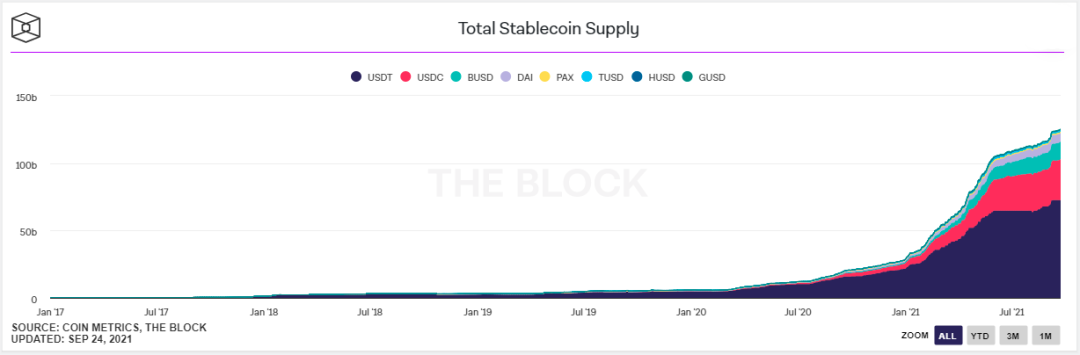
Above: As of writing, the total circulating market cap of USD stablecoins exceeds $125 billion. Source: The Block
"It is important that agencies act quickly to ensure that there is an appropriate U.S. regulatory framework in place,"U.S. Undersecretary of the Treasury Nellie Liang, who helped lead the effort, said in a statement.
The Biden administration’s push to put pressure on stablecoins could be at the forefront of a broader debate about the government’s role in regulating cryptocurrencies.The topic of the government's role in regulating cryptocurrencies has drawn increasing attention in Washington.
On Tuesday, Michael Hsu, acting director of the U.S. Office of the Comptroller of the Currency (OCC), said that cryptocurrencies and DeFi (decentralized finance) may be evolving into threats to the financial system, just like more than a dozen Some derivatives (such as credit default swaps, CDS) almost collapsed the financial system years ago. Like the infamous credit default swap (CDS), cryptocurrencies were designed by mathematical geniuses, he said. “Cryptocurrency/DeFi today is following a path similar to CDS in the early 2000s,” he said.
Largely considered a speculative vehicle, cryptocurrencies are increasingly starting to transform the banking and financial industries and sparking debate over whether governments should issue their own digital currencies to augment or eventually replace traditional currencies .
Currently, stablecoins account for an increasing share of global cryptocurrency transactions, whileimage descriptionAs shown below:
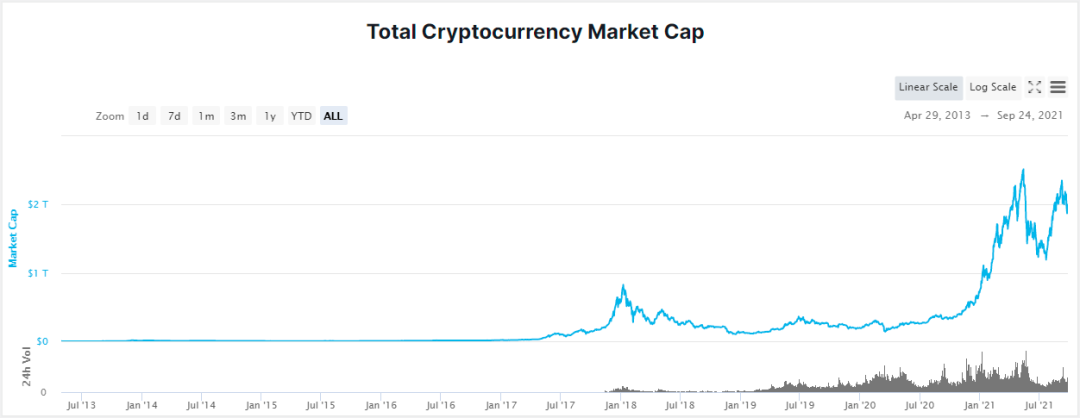
image description
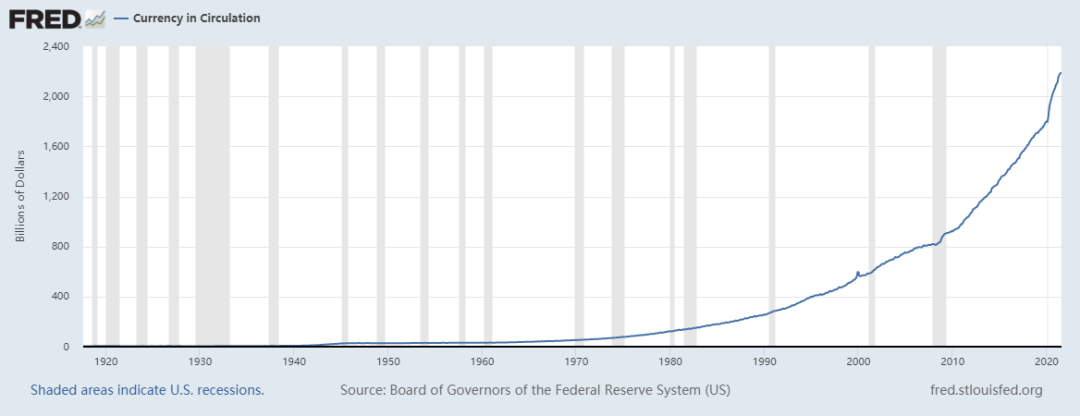
Above: As of August 26, 2021, the total number of U.S. dollars in circulation is approximately $2 trillion. Source: Federal Reserve Economic Database (FRED)
The regulatory efforts have sparked a wave of lobbying from cryptocurrency project executives. They have held a series of virtual and in-person meetings with banking and financial regulators in recent weeks, seeking to craft new rules while largely acknowledging that some form of federal regulation is now inevitable.
Regulators are concerned about whether stablecoin issuers hold enough liquid assets to support the value of the stablecoins they issue.
For example, stablecoin issuers such as USDT and USDC, in addition to using safer and easier-to-redeem cash and short-term government bonds as stablecoins to support their issuance, according to recently disclosed information, these issuers will alsounsecured debt(unsecured debt) etc. as support,These assets are riskier and more difficult to turn into cash quickly, especially in times of financial turmoil.This "commercial paper" is intertwined with other assets in its financial system.
U.S. Treasury officials also want reassurance thatEnsuring that stablecoin issuing companies have the technical capacity to handle large spikes in transaction volume, so that if a large number of customers try to cash out, they don't cause a chain reaction and cause trouble.
image description
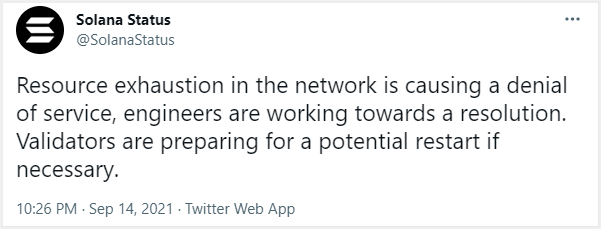
Above: On Sept. 14, Solana’s official tweet stated that the network was experiencing service outages due to “exhaustion of network resources.”
U.S. federal officials have said in recent interviews that they are considering using the broad powers of the Dodd-Frank law enacted after the 2008 financial crisis to launch a review and possibly announceStablecoins are 'systemically important', which could subject stablecoins to strict federal regulation.
Jeremy D. Allaire, CEO of payments and digital currency company Circle (the issuer of the stablecoin USDC), said: "When the risks to society increase, regulators will really start to care more. Naturally, regulators want to find ways to address those risks.”
so far this year,The circulation of USDC has increased by approximately 750%, USDC worth about $20 billion is currently in circulation. At current growth rates, that number is expected to exceed $200 billion by the end of 2023, Allaire said.
A possible first step for the U.S. Treasury Department is to release a report with recommendations this fall.In interviews, industry executives, lobbyists and regulators gave an outline of what they expected the proposals would cover,The recommendations will serve as a template for potential regulations drafted in the coming year.
They said the new rules could requireThe reserve assets backing stablecoins always need to be liquid enough to meet redemption demands, and the software systems that process these transactions need to be robust enough to avoid crashing or severely slowing down in the face of large-scale transactions.
they predicted,There will also be requirements for the process of minting new stable coins, protection of privacy and data security, and consumer protection measures. In addition, the U.S. Treasury Department is also preparing to implement regulations aimed at preventing cryptocurrencies from being used for illegal activities such as money laundering and tax evasion.
In fact, U.S. regulators have taken some steps to crack down on the industry.
The most popular stablecoins in the world areUSDT, issued by Tether in Hong Kong. Currently, USDT accounts for more than 50% of the global stablecoin supply. New York state regulators opened a fraud investigation into Tether in 2019, which was settled this year in an agreement toimage description

Above: The world’s most popular stablecoin is Hong Kong-based Tether (USDT)
At the same time, Circle has also announced,image description
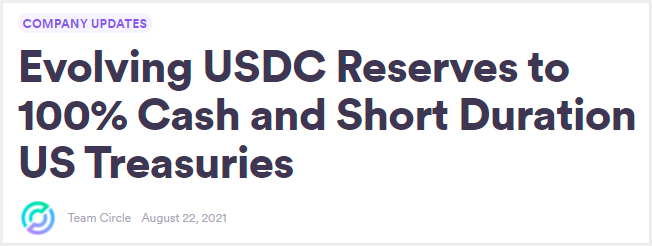
Above: Circle stated through its official blog on August 22 that 100% of USDC’s reserve assets will be converted into cash and short-term U.S. Treasury bonds. Source: https://www.circle.com/blog/evolving-usdc-reserves-to-100-cash-and-short-duration-us-treasuries
These new regulatory rules will create winners and losers, with some industry players accepting the new rules better than others, while others may have to change their business models to accommodate the new rules.
For example, stablecoin issuer Paxos supports moves to regulate stablecoins. But it opposes the use of powers under the 2010 Dodd-Frank Act that would have allowed aFinancial Stability Oversight Committee(Financial Stability Oversight Council) entities recently declaredStablecoin activity or company is 'systemically important', effectively expanding its influence on stablecoins. It is worth noting that the committee is composed of the Secretary of the Treasury, the Chairman of the Federal Reserve, and 13 other top federal and state financial regulators and financial experts.
image description
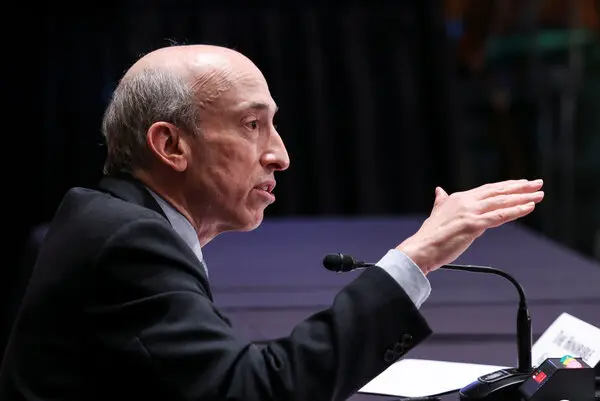
Above: SEC (Securities and Exchange Commission) Chairman Gary Gensler said that in July, nearly three-quarters of transactions on all cryptocurrency exchanges took place between stablecoins and some other token.
Another option is to create some kind ofnew type of banking license, to address many regulatory issues.
The SEC can also use its authority to require issuers of stablecoins whose reserve assets are backed by securities such as commercial paper, bonds, or money market fundsRegister its stablecoin as a security, a move that requires companies to provide more information disclosure to investors.
as the chairman of the SECGary GenslerAs noted, the agency did exactly that with the mutual fund industry in 2016, namely requiring more modernized and improved reporting and disclosure by registered investment firms and strengthening regulatory compliance, including for mutual funds and exchange-traded funds (ETFs). Liquidity risk management of open-end funds. At the time, a large fund that relied on risky debt collapsed and had to halt client withdrawals. Similar action is needed for cryptocurrencies, Gensler told the Senate Banking Committee.
"Frankly, the current situation is more like the 'buyer beware' that existed before the securities laws," Gensler said.wild west or old world。”
At the same time, forPrevent impending new regulations from stifling the growth of the cryptocurrency industryIndustry executives have been making their case to cabinet secretaries, Fed governors, key White House staffers, leaders of the House and Senate financial services committees and financial regulators.
Additionally, cryptocurrency businesses and organizations are increasingly hiring lobbyists and former regulators to work for them.
Companies and industry groups that have recently met with U.S. Treasury officials include top stablecoin issuers such as Tether, Circle and Paxos, as well as exchanges such as Coinbase and Gemini, as well as old and new financial services like BlockFi, Mastercard and the Blockchain Association. company.
Industry executives argued at these meetings that,The entire cryptocurrency industry relies in part on stablecoins, and cryptocurrencies will help expand banking and payment services to billions of people around the world who currently do not have access to the financial system.
Stablecoins are an integral part of this vision, they said. In the Central American country of El Salvador, the most recentAdoption of Bitcoin as Fiat CurrencyPreviously, this was the picture that U.S. crypto executives painted for El Salvador officials and crypto enthusiasts around the world.
Industry executives say the U.S. will push innovation overseas if regulators pass tough new regulations that severely limit the development of cryptocurrencies, jeopardizing the dollar’s dominance and killing the promise of digital finance.





