


Interoperability Arguments and REN


Article translation: Block unicorn
Article translation: Block unicorn
summarize
summarize
3 main factors behind an investment thesis:
1. Due to the combination of UI/UX, unique ecosystem and yield opportunities, and the trade-offs around MEV/centralization, TVL is increasingly moving to other L1 and ETH L2, and choosing to stay there, through interoperable Blockchain enabling composability will be a huge focus. REN has recently flown under the radar as an OG solution due to the emergence of many competing bridges and a limited token set to date, but enabling host-to-host in the coming weeks will allow seamless transfer of all ERC-20/BEP- 20/ARC-20 tokens - mainly stablecoins using RenBridge to emerging blockchains (especially important for Solana). This can be an important driver of transaction volume and TVL, also from ETH L1<>Decentralized instant bridge for various L2 acquisitions.
2. The market currently only appreciates REN-wrapped tokens to manually move liquidity across blockchains, but future transaction volumes may be driven by dapps built on top of Ren (ZeroDao as an example) bypassing the use of internal transactions to necessarily mint tokens Coins need to be on RenVM.
Market opportunities
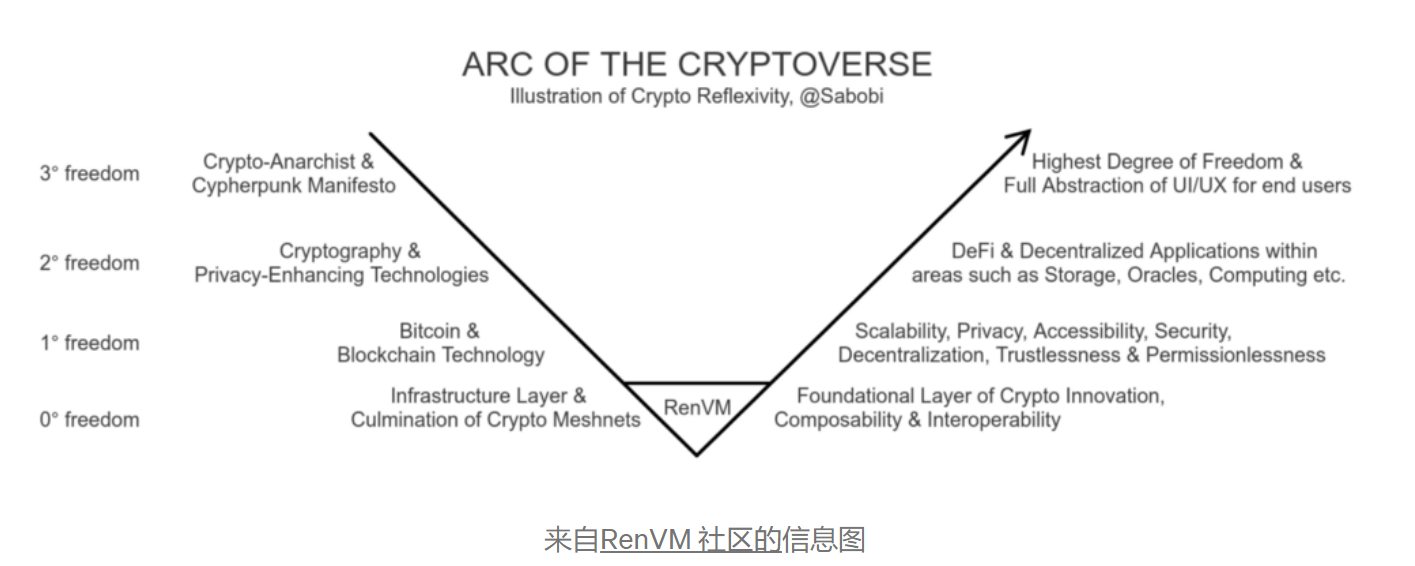
Market opportunities
image description
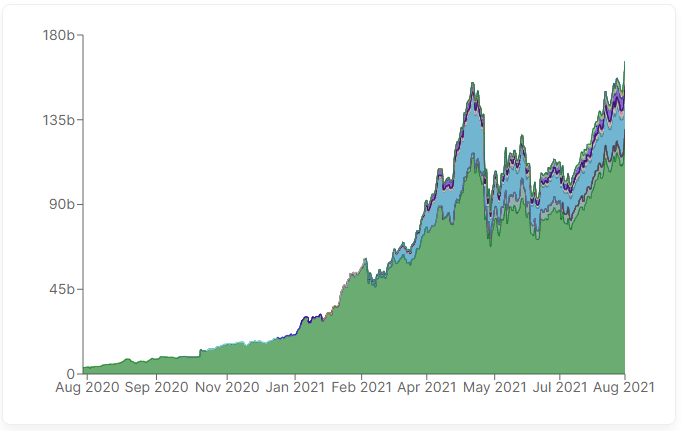
image description
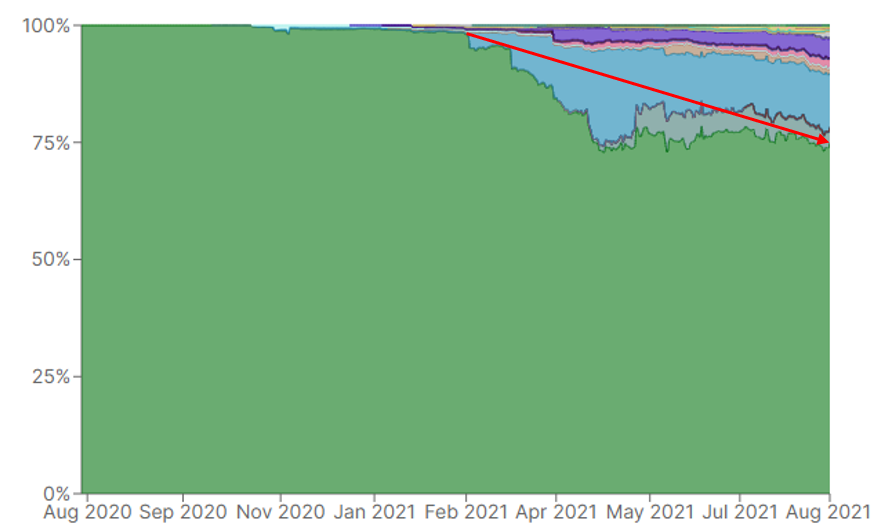
<75% TVL now on ETH; almost 100% TVL by 2020, source: DefiLlama
Earlier this year, the DeFi community felt that it was a long way off that dapps would actually be able to sustain themselves on chains other than ETH. But in the past six months, in addition to TVL, we have 80+ listings on BSC, 60+ listings on Polygon, and 20+ listings on "new" chains like Solana, Avalanche, and Fantom. In fact, there are now more dapps listed on alt-L1 than on ETH.
image description
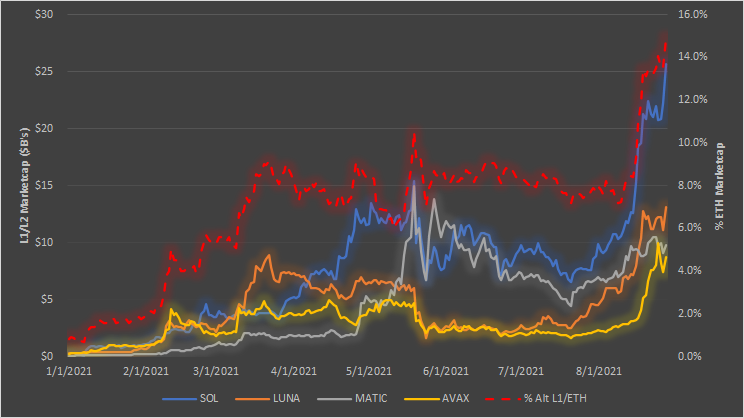
Alt-L1 performance until the end of August
Between TVL, users, and dapps, either scaling across chains, or choosing to bypass ETH directly, it should now be clear that block space is a premium, and multiple blockchains will exist for different purposes, with different functions, and attract different user.
$200B worth of cross-chain TVL is waiting to be used in the most efficient and smooth way possible with RenVM. These numbers are also non-Bitcoin holders who want to participate in DeFi (i.e. from people minting renBTC or wrapping into wBTC).
Ren protocol overview
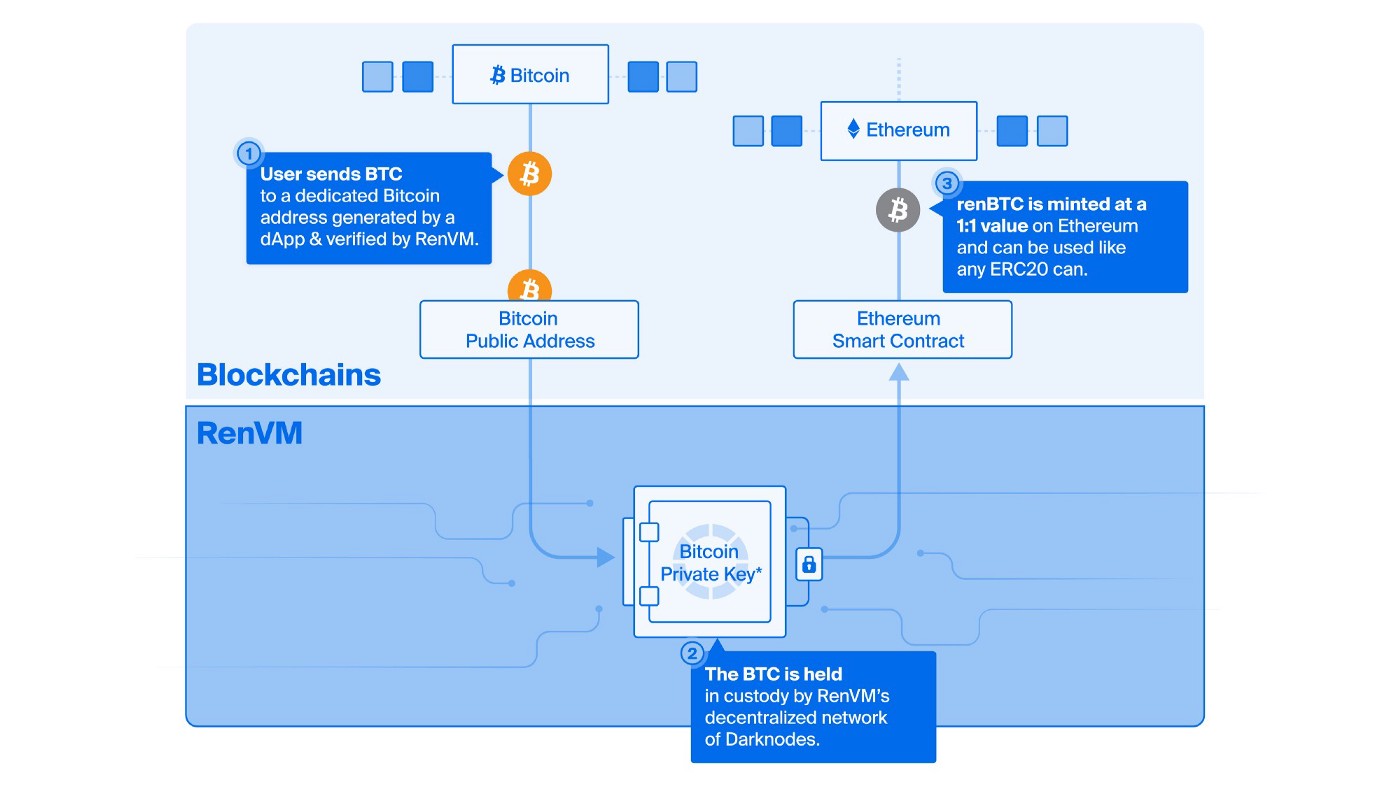
Ren's core technology revolves around RenVM, a decentralized cryptoasset custodian that runs on an independent blockchain maintained by Darknodes. Similar to other blockchains, RenVM then uses this internal ledger to allow any application to use the asset, permissionless transfer across chains.
Function
Function
Through the blockchain blitz that ended in June, RenVM allows users to wrap their native BTC, BCH, DBG, DOGE, FIL, LUNA, and ZEC to participate in DeFi on 7 blockchains: BSC, Fantom, Polygon, Avalanche, Ethereum, Solana, and Arbitrum.
Expected to be mainnet-to-mainnet by the end of September, sending ETH (and ERC-20), BNB (BEP-20) and SOL (SPL) will also be possible, arguably the biggest catalyst for the interoperability space and potentially speeding up many Development of other cross-chain protocols.
While REN is primarily known for renBTC and these existing wrapped tokens, mainnet-to-mainnet will provide users with more options for interacting with RenVM: a transaction that RenVM can make is to transfer BTC to ETH, using it to exchange incoming FTM and get a loan on Aave on Fantom and send the loan amount to Polygon for rewards. This will all happen in one transaction - RenVM can perform multiple operations on multiple networks at once. Imagine being able to respond to events on other chains in real time using any asset from any supported network (market making, arbitrage, etc.) and the volume of transactions that can be made through it.
"These new use cases will guide the design and implementation of a general-purpose "application layer" on top of RenVM that can be used to build new exotic applications that leverage decentralized and autonomous private keys for more Asset transfer. On-chain.” — August Development Update
Current usage metrics
RenVM launched its latest mainnet in May 2020 and has processed $6.8B in transaction volume so far, with a current TVL of over $1B.
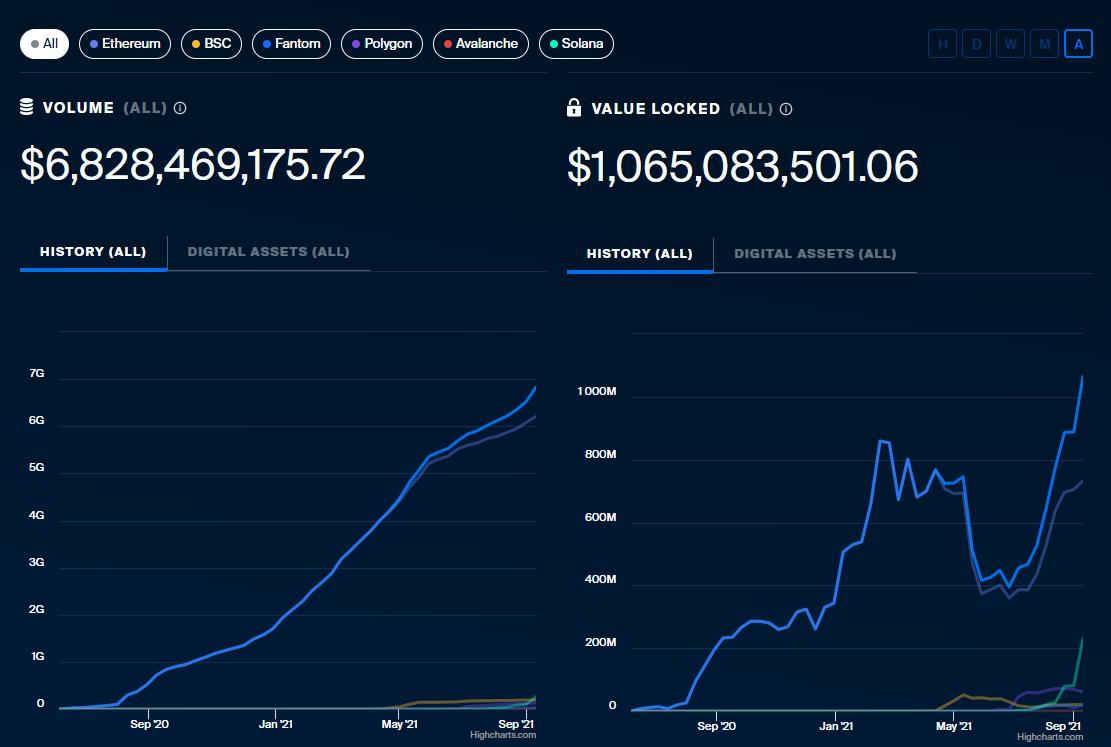
mainnet.renproject.io Dashboard
The majority of volume (>98%) and TVL (>95%) comes from BTC - so far, that's all RenVM has to offer with renBTC.
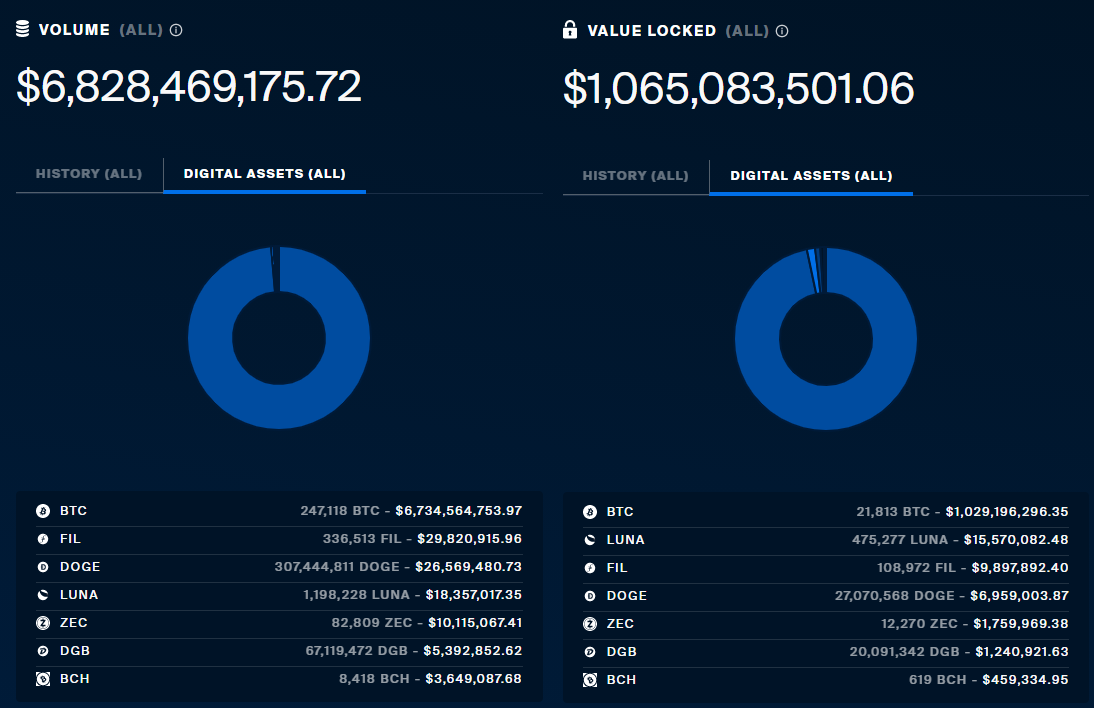
With the launch of mainnet to mainnet on the testnet, and the increasing popularity of SOL (REN was acquired by Alameda in February, the existing Wormhole bridge is only from ETH<>SOL, not considering the UI atm), could have a significant impact on the strengths of these numbers. In fact, the stated motivation for this acquisition was to generate more transaction volume on Solana and bring greater interoperability to the chain.
In fact, the amount of RenVM SOL has tripled in the past 5 days, and there is now more new TVL locked into RenVM on SOL than on ETH this month.
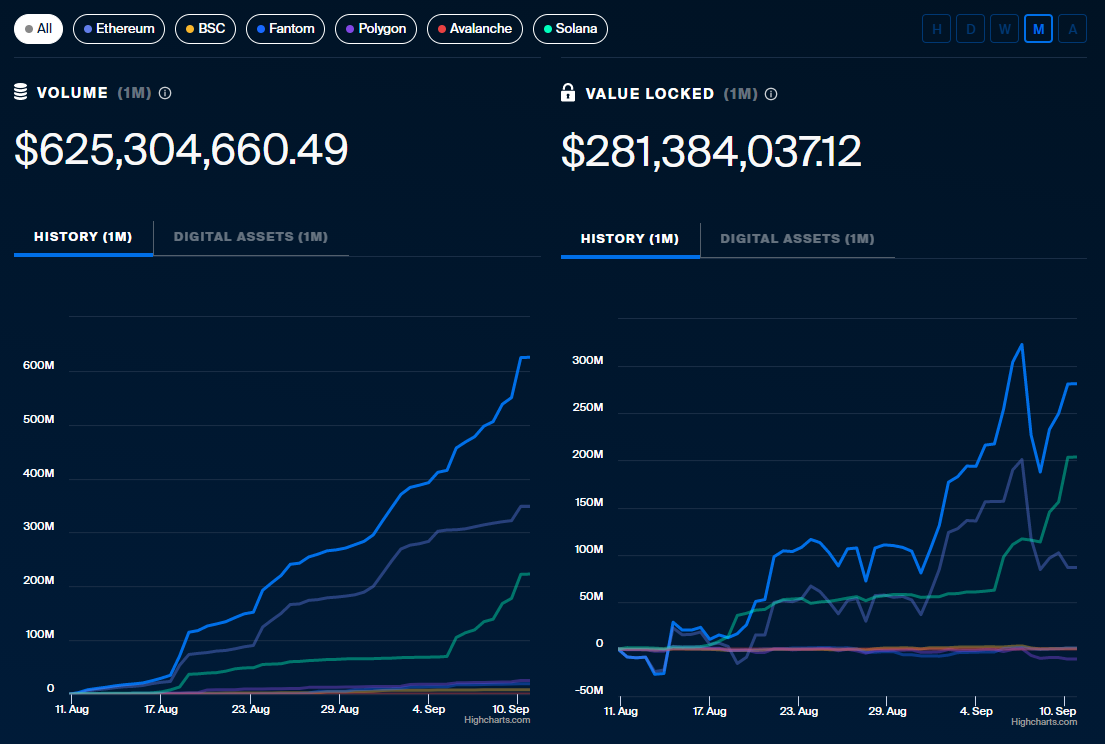
Volume and TVL over the past month
Token Economics and Valuation
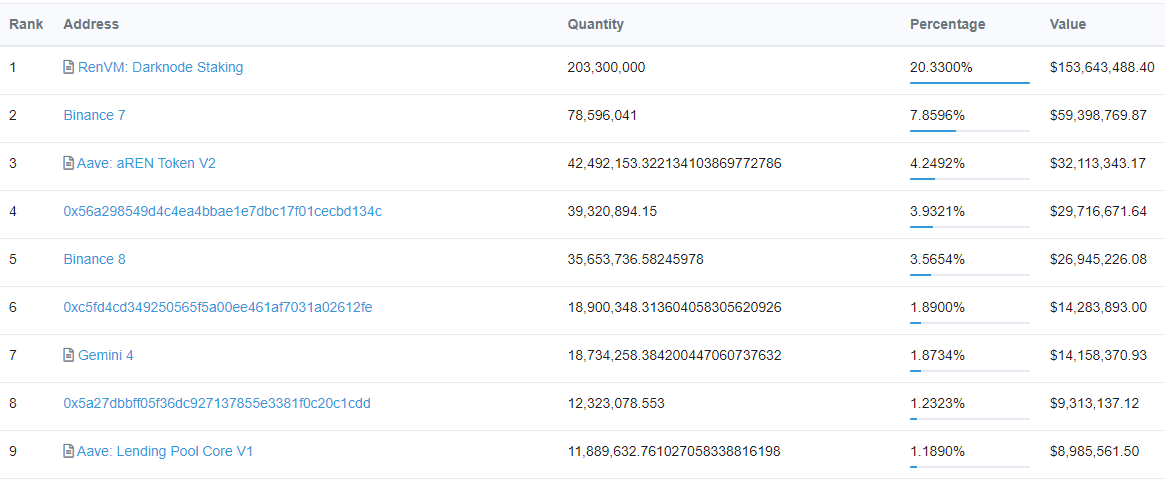
1B fixed token supply, 20% of which is collateralized by 2,000 darknodes (100k REN tokens become darknodes).
The network effect flywheel here is pretty simple: darknodes get 15 bps of all transaction volume - the more traffic it generates, the more darknodes charge in fees (since REN doesn't cause inflation), thus increasing interest in REN The demand token for . The appreciation of REN price helps the security of the network, because you have to accumulate enough REN to control 1/3 of the dark nodes. Activity in the Solana ecosystem and the ability to bridge stables will be the first host-to-host use case, but this is only the beginning of increasing demand around the RenVM use case.
The dynamic fee of 15 bps (computer transfer rate) + network congestion is seen as a fee for tokens transferred across chains (like BTC/WBTC) rather than inflating the REN token and creating additional sell pressure. A revenue model targeting steady state darknode APY of ~10% (in line with what operators say) would look like this - assuming only REN price demand comes from darknodes, year-end fair value based on these vs. TVL and REN volume of 1.40 Dollar.
Above this price, some darknodes can choose to sell their REN instead of continuing to run their nodes (reducing the number of darknodes, thus increasing APY for others afterwards), below this number, they can accumulate more REN in a cheap way. More REN decides to run more nodes. It is worth noting that the current APY is about 7%, and the number of dark nodes is still increasing, which means that most of the dark nodes have decided to hold their REN for future price appreciation.
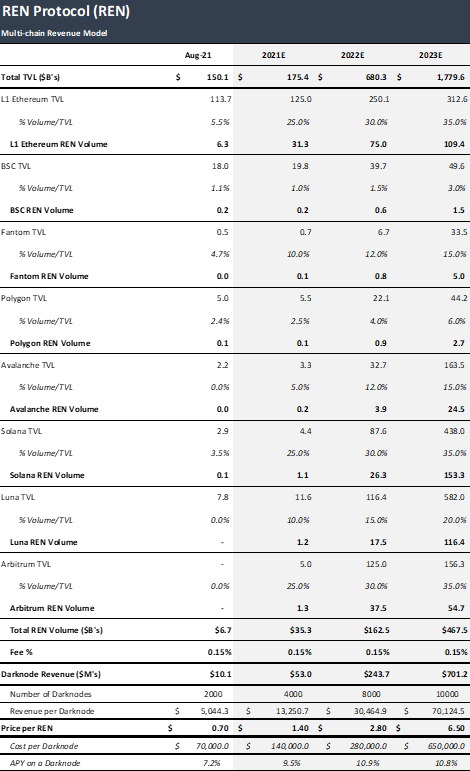 (Valuation forecast as of 8/31/21)
system components
Dark Node:These nodes maintain the stability of the RenVM network. Anyone can run a darknode by acquiring and bonding 100,000 REN tokens, which have the ability to whittle down malicious darknodes to varying levels depending on the severity of malfeasance. There are currently about 2,000 active darknodes, but they run semi-decentralized, with a core network called Greycode, which is capped at 10,000 nodes (100k tokens/node, 1B tokens).
Darknodes secure the network by combining a Tendermint-based BFT consensus algorithm with something called RZL MPC, a custom protocol derived from Secure Multi-Party Computation (sMPC) to better handle offline nodes in shards.
fragments:competitors
competitors
These can be grouped into three categories: 1) direct tokenized representation competitors, 2) bridges, and 3) other interoperability solutions.
Direct Tokenized Competitors
While over 1% of BTC supply is on ETH, the majority is currently in wBTC and hBTC (both centralized custodians). It’s worth mentioning that REN is currently transitioning to full decentralization, as Greycore currently maintains control over darknodes and is governed. This shift should happen in early 2022.
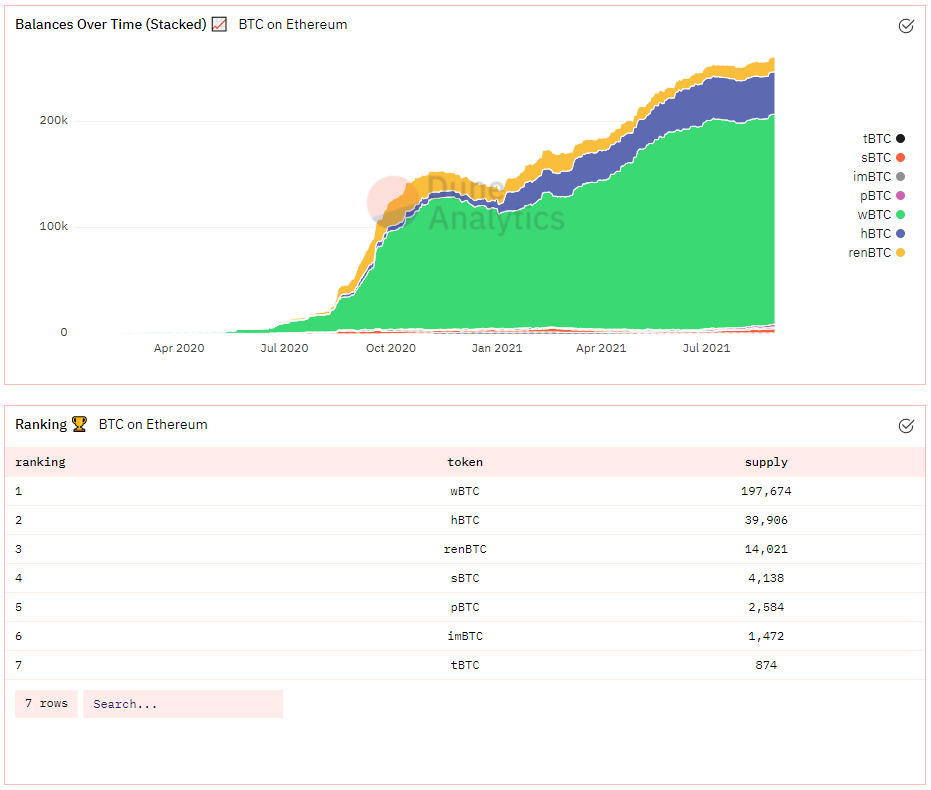
Besides wBTC, tBTC is the most decentralized application of wrapped BTC, but requires overcollateralization and exposes users to liquidation. Market volatility can break the peg, and there isn't much support from the community due to the lack of minting incentives. ren and pTokens are the only ones that allow fast, low-cost transactions from native tokens to pegged tokens, limited to transaction finalization (wBTC can take up to 24 hours).
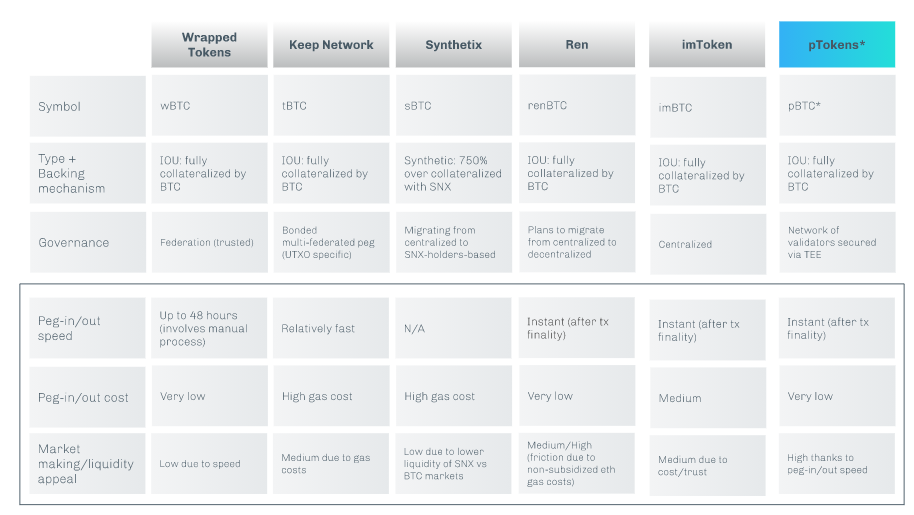
An overview of the tokenization space courtesy of pNetwork
Even though people can hand over their cryptocurrencies to third parties, Ren is a programmable and decentralized custodian (post-Greycore transition) that allows you to transfer value across chains and pass logic through normal smart contracts, not just minting and combustion. RenVM will be able to perform complex user-defined operations post-mainnet to mainnet, allowing the creation of a whole new ecosystem of primitives - the ability to execute transactions from FTM on ETH via RenVM, without even requiring an ETH address. For example: in In an arbitrage transaction, if FTM on Fantom is at a premium to FTM on Ethereum, I can sell FTM to USDT on Fantom DEX, use renUSDT to transfer USDT to ETH, then sell it at a lower price than I did, and then transfer That FTM moves back to Fantom, netting the profit directly on my FTM address.
bridge
There are many projects here to investigate, and I recommend anyone check out this great overview here. I'm going to put a lot of emphasis on this image:
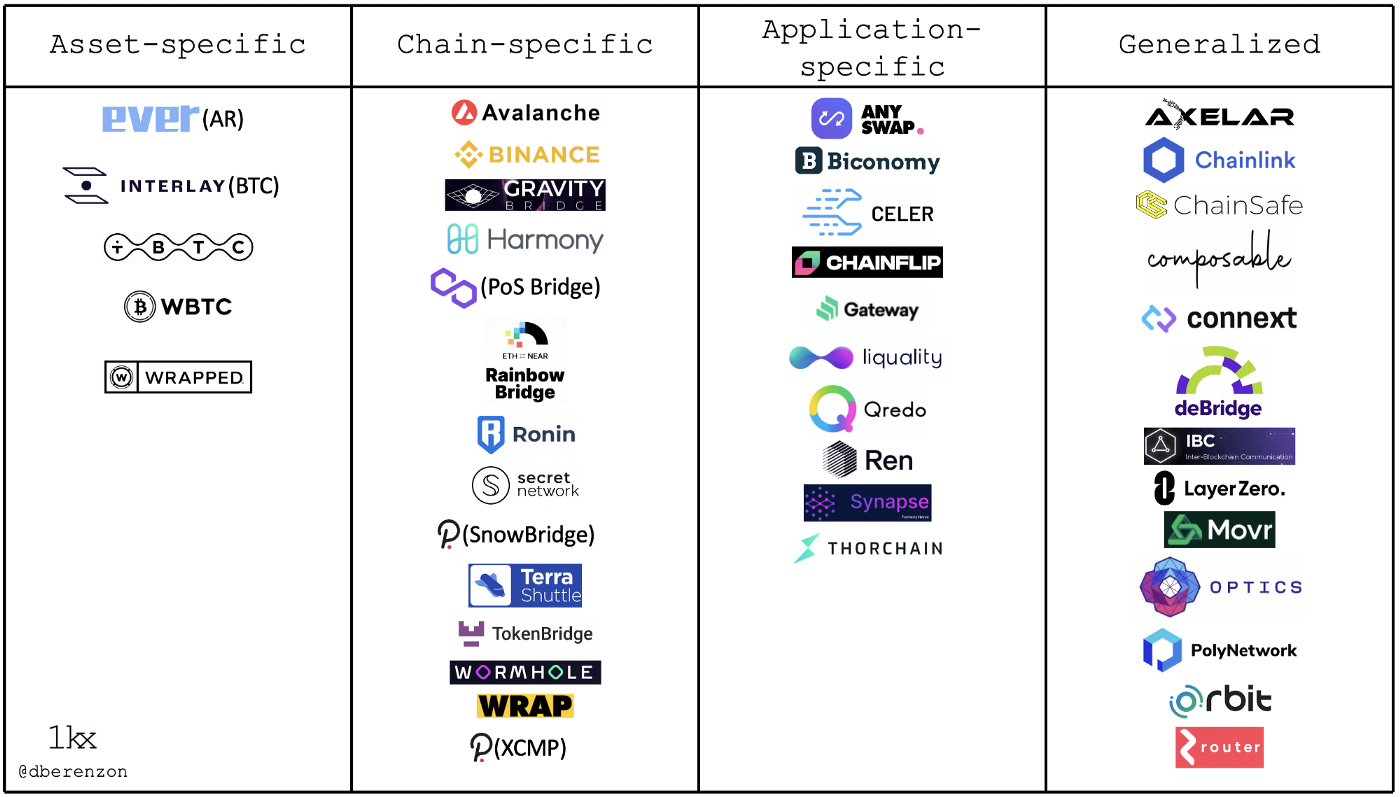
Blockchain bridges: building networks from encrypted networks
REN will compete with application-specific bridges like Anyswap, Synapse, and Celer, especially on blockchains where chain-specific bridges have not yet become standard (like the new AVAX<>ETH bridge).
The problem with any bridge is usually the lack of liquidity available to actually acquire assets on the other side. Answap and Synapse incentivize liquidity providers to provide any/syn assets in native tokens for native assets, creating an inflationary token effect. I like and have used both protocols, but it's not clear how sustainable the model is, no matter how convenient the current solutions are. While the same liquidity issues on adapters may technically apply to REN, the assets it currently offers are not there due to third party connections like CRV for liquidity on the EVM chain and Serum/Saber on SOL until. After host-to-host, this is probably the biggest hurdle to delivering more ERC-20/BEP-20 beyond ETH and stablecoins.
Celer's bridge is also great, and probably the most direct competitor to REN (apart from Solana compatibility), but is vulnerable to the integrity of individual relay nodes. Bridge funds may linger for an indeterminate amount of time, and unlike REN, does not rely solely on the tx finality bottleneck of funds moving between the slowest blockchains. This largely eliminates the possibility of things like cross-blockchain market making and arbitrage. However, their variable cost structure does make more sense for larger transactions and is usually cheaper than the fixed 15bps charged by REN.
Another thing about security: Bridges like Anyswap and Celer require some kind of trust in the bridge operator/relay node, and lost funds are repaid by the operator (although Celer does have a timelock contract to alleviate this situation). While Synapse would slash collateral for malicious actors, on any of these bridges victims would not be compensated for slashed collateral received as they would be under REN, although that has not happened yet.
It is also important to note that while Ren has traditionally been compared to other bridges, it does not have the disadvantages of other similar bridges as it is an independent blockchain that can be integrated with dapps. For example, if a dapp spans more than 3 chains, publish host to host, because RenVM has an internal balance ledger, it is possible to skip asset minting on each chain and only mint needed assets at the end (output) step.
Other interoperability solutions (DOT, ATOM, RUNE)
While REN's existing applications are only in the area of value transfer across blockchains, true interoperability is still in the early stages of development - similar to other solutions. However, others require active development by individual blockchain teams to integrate; ATOM needs to launch a gravity bridge to transfer ETH and ERC-20 tokens, and needs to create new hubs for each chain, DOT needs blockchains to become parachains , while RUNE is developing its own DeFi ecosystem on it. Other platforms can of course be adapted if they can meet the technical needs and use cases brought out in their white papers, but so far nothing has properly filled this niche and worked out-of-the-box, mainnet-to-mainnet.
With demand for interoperability surging, REN is well positioned to deliver industry-leading products over the next two quarters. The battle-tested REN technology stack should be of great value in the following environments:
1) Cross-chain security is often compromised.
in conclusion
in conclusion
No matter how you feel about each one, we limit the growth of the entire space through decentralized mobility and solutions, solutions like REN represent a compelling use case that can be used and integrated immediately.
The REN team is one of the most technically powerful and DeFi native teams in this field. Despite losing market share to centralized peers and other bridges that have emerged over the past year, the team has a largely sound and tested technology stack and hopes to scale products from old to new across blockchains and in-demand assets .
It's great to see the REN product fire up on all cylinders after the host-to-host launch and meet the needs of a growing user base for a seamless cross-chain future.





