






How to pledge your Ethereum holdings?


Compiler: Zion Editor in charge: Karen
Compiler: Zion Editor in charge: Karen
Original title: "Hold Ethereum? How and Where to Stake Your ETH, by Kyle
The general feeling across the cryptocurrency space over the past week has been one of anticipation, with the Ethereum network finally undergoing a London hard fork that included reforms to the transaction fee market thanks to EIP-1559.
The London upgrade is the latest in a series of upgrades in ethereum's transition from its original proof-of-work consensus model to a proof-of-stake model known as ethereum 2.0.
On Eth2, token holders who hold at least 32 Ethereum (ETH) can operate a validating node and verify transactions on the network. With Ethereum currently trading at over $3,100, this puts the entry cost of running an Eth2 validating node at $86,400, which is too high a price for most players in the market.
To help with this, several options have emerged, including staking pools and centralized exchange staking — offering all ethereum holders the opportunity to earn yield on their tokens.
secondary title
Lido
Another option for Ethereum holders wishing to stake their tokens while also receiving their equity is Lido, a liquid staking solution for Ethereum.
This liquid staking protocol allows users to earn staking rewards without locking up assets.
image description
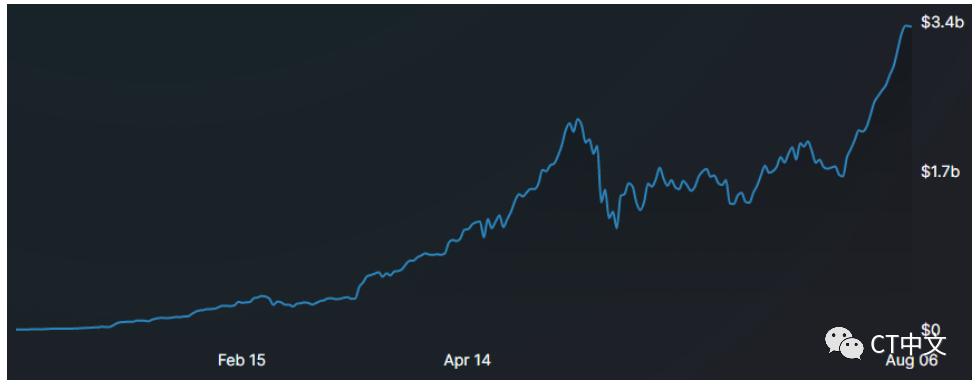
Total value locked on the Lido protocol Source: DeFi Llama
According to DeFi Llama, Lido is currently the number one Ethereum staking pool and the eleventh largest decentralized finance (DeFi) protocol by total value locked, with $3.26 billion currently locked in the Lido protocol.
A proposal has been submitted to list bETH (stETH anchored on Terra) as collateral on the Anchor Protocol.
This will enable users to borrow UST using Anchor’s staked Ethereum collateral and earn liquidity mining rewards.
— Lido (@LidoFinance) August 2, 2021
secondary title
StakeWise
StakeWise is an Eth2 staking service protocol, whose goal is to help users achieve the highest return on compound staking through a combination of staking, liquidity mining, low fees, and a unique token economics structure.
We just released an ETH2 compound rewards interface
StakeWise users can now reinvest directly from the dashboard and increase their APY with monthly compounding.
No other agreement offers this service
— StakeWise (@stakewise_io) July 30, 2021
Interested parties can deposit Ethereum into the StakeWise smart contract, and in return, stakers receive sETH2, or “staked ETH.” The rewards for pledged assets are paid in rETH2, which is "reward ETH". Both sETH2 and rETH2 can be converted into Ethereum at a one-to-one ratio.
These assets can also be transferred to any Ethereum wallet or exchanged for other tokens, enabling token holders to earn the staked Ethereum-owned equity while also being able to earn staking rewards.
The StakeWise protocol enables anyone with at least 0.001 ETH to participate in staking through the StakeWise Pool, while large token holders with at least 32 ETH can use StakeWise Solo, a non-custodial staking service where users provide their Public keys for withdrawals and blocks holding 32 ETH, validators created and managed on their behalf by StakeWise.
Centralized exchange
Centralized exchange
For users who are less familiar with the ins and outs of decentralized finance, or simply prefer a more traditional approach to custody, some of the top centralized exchanges in the ecosystem have begun offering Eth2 staking services to traders on their platforms.
Currently, the main options for U.S. users are Coinbase and Kraken, which are the second and fourth-ranked cryptocurrency exchanges in the world, respectively, based on 24-hour trading volume.
The main downside for users looking to use one of these options is that their stake will be illiquid, meaning they won't be able to trade their tokens or capture the value contained within them until the Eth2 network is fully launched.
Kraken currently offers annualized staking rewards of 5% to 7%, depending on the rules of the Ethereum protocol, and charges a 15% management fee on all rewards received.
We have reached 800,000 ETH staked on Kraken.
That's over $1.8 billion in ETH securing the beacon chain.
Since launch, we have distributed over 25,300 ETH ($58 million), which is the total rewards generated by our customers for staking ETH 2.0.
Stake your Ethereum
— Kraken Exchange (@krakenfx) July 26, 2021
After deducting the 25% commission, the current annual interest rate offered by Coinbase is 5%. While neither Kraken nor Coinbase provides any form of insurance for the staked ETH, Coinbase has pledged to cover any losses that occur if its validator responsibilities are not met.
In general, the top staking options offered to Ethereum holders range in annual interest rates from 5% to 7%, with minimum commission fees charged between 10% and 25%. Compared to the sub-1% savings rates offered by most banks, Ethereum staking may soon become the savings account of choice on a rapidly inflating dollar supply and a source of passive income for crypto proponents.





