






Ethereum "London" upgrade, EIP-1559 debut


Original title: "Here Comes, Ethereum "London" Upgrade"
The eleventh hard fork "London" upgrade of the Ethereum network will be activated at block height 12,965,000 (it is estimated that it will be carried out on the evening of August 5, 2021, Beijing time). This upgrade mainly includes 5 EIPs, namely EIP-1559, EIP-3198, EIP-3529, EIP-3541 and EIP-3554.
"London" upgrade countdown:
https://ethernodes.org/london
Ethereum "London" upgrade guide:
London Mainnet Upgrade Announcement
London upgrade overview
Ethereum 7-day talk • 8/3/2021 (How to handle user transactions under EIP-1559)
Ethereum Core Developers Meeting Update 005
EIP-3529: Reduce gas return
secondary title
What do I need to do to prepare?
Node operators need to upgrade the client version they are running. The following client versions support the "London" mainnet upgrade:
➤ go-ethereum (geth):1.10.6
➤ Nethermind:1.10.79
➤ Erigon (formerly TurboGeth): 2021.07.04-alpha
➤ Besu:21.7.1
➤ OpenEthereum (formerly Parity): v3.3.0-rc.4
➤ EthereumJS VM:v5.5.0
Tim Beiko (Ethereum ACD Coordinator/EIP-1559 Advocate) has recently received a lot of information about upgrading mining in London, and there are many misconceptions in it. He gave a detailed description of the work, precautions, and related resources for miners during the London upgrade, and also popularized science on how users should set tips in an environment with MEV:
Notice to miners
When the London upgrade is activated, the gas limit of the fork block will become twice that of the last pre-fork block, which can be seen on the test network that has been forked.
For example, the gas limit of the pre-fork block (https://goerli.etherscan.io/block/5062604) of the Goelie test network is about 8m, and the gas limit of the fork block (https://goerli.etherscan.io/block/5062605) It is approximately 16m.
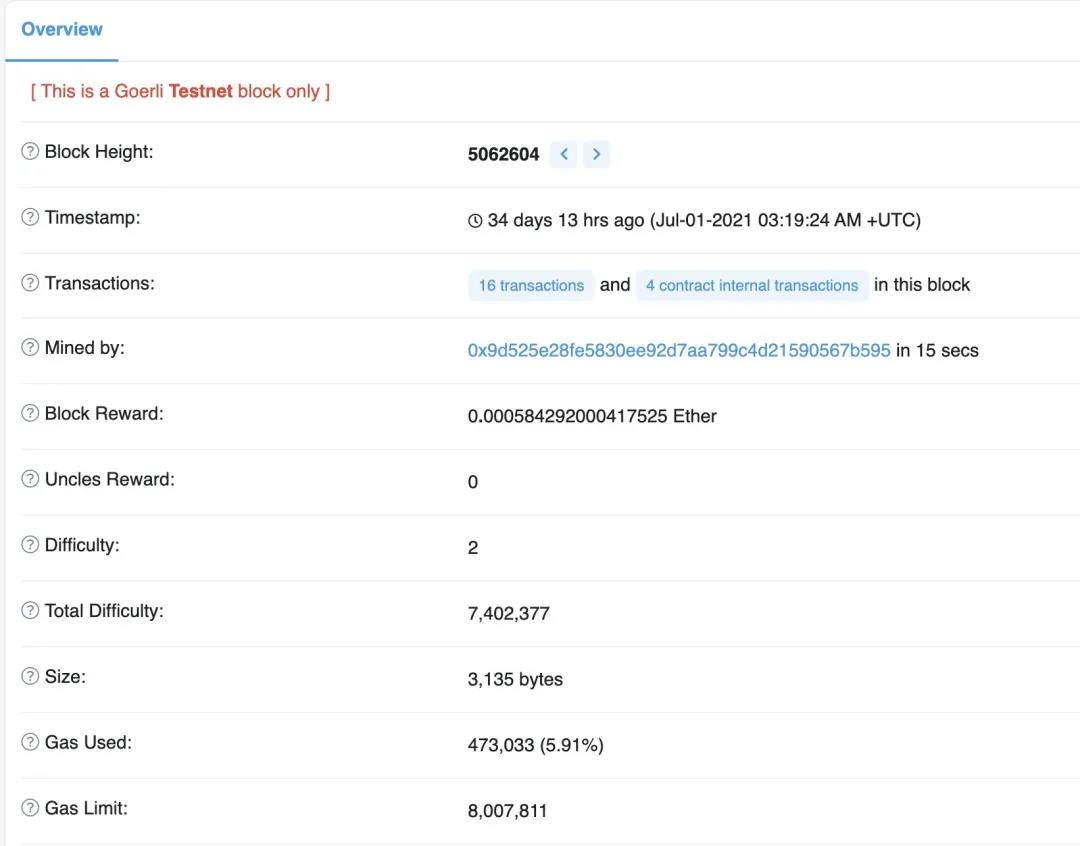
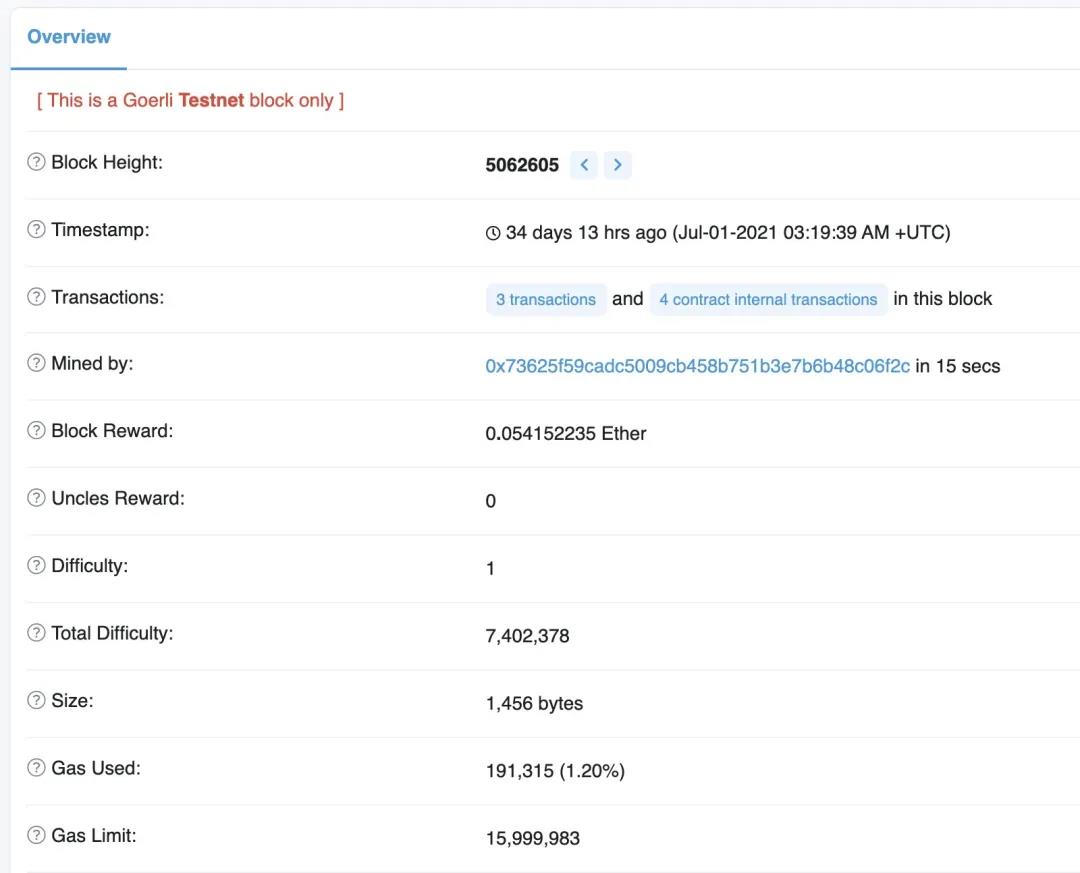
However, if you want to keep the throughput on the chain constant, miners need to keep the new gas limit constant (the average block capacity is expected to be about 50% full).
If the miners do nothing, they will continue to use 15m gas as the upper limit of the block size, and the block size will be gradually reduced. To avoid this from happening, miners need to increase the gas limit to 30m after the fork (if you want to keep the average capacity of the block at 15m gas).
Miners do not need to restart your mining nodes, each client that supports London upgrade will do so via JSON RPC, please see the API calls for each client in the London upgrade announcement:
➤ go-ethereum (geth):miner_setGasLimit
➤ OpenEthereum:parity_setGasCeilTarget
➤ Besu:miner_changeTargetGasLimit
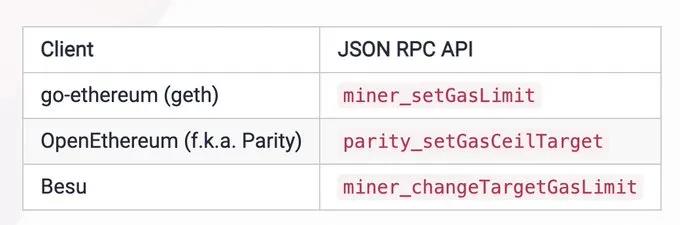
Here is the link to the JSON RPC documentation:
@go_ethereum:
https://geth.ethereum.org/docs/rpc/ns-miner#miner_setGasLimit
@OpenEthereumOrg:
https://openethereum.github.io/JSONRPC-parity_set-module#parity_setgasceiltarget
@ConsenSysQuorum: https://besu.hyperledger.org/en/stable/Reference/API-Methods/#miner_changetargetgaslimit
Again, miners don't need to restart nodes, they just need to set the new gas limit in the JSON RPC call.
Notice to users
During the upgrade period, Ethereum users or ETH holders do not need to take additional actions, but they should pay attention to the upgrade notices issued by wallets or other service providers. Also, Eth2 validators please make sure your PoW (eth1) nodes are updated to the latest version before the London upgrade.
The second big problem is the setting of priority fee/tip. In short, tips are paid to miners to deal with the extra risk of having an uncle block when packaging your transaction. Larger blocks -> slower broadcast on the network -> higher risk of uncle blocks.
One way to visualize this situation is to increase the gas limit of the previous block from 12.5m to 15m. The point on the left shows the probability of uncle blocks appearing in the range of 12.5, and the point on the right shows when we adjust to 15m: the increase in the rate of uncle blocks brought about by the newly added 2.5m gas.
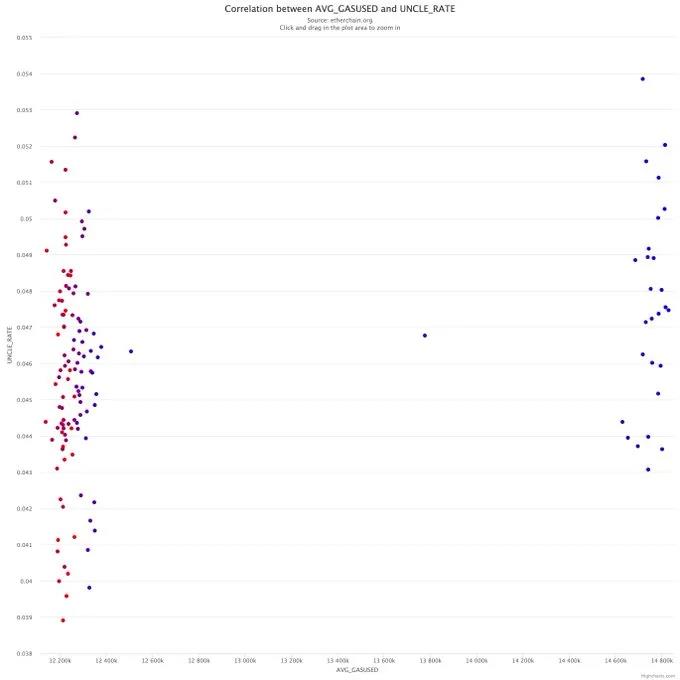
Therefore, if users want to pay miners high enough to allow them to include your transaction, then the tip needs to be a net benefit to them on average, and this is related to the probability of the user's additional transactions entering the uncle block.
In the pre-MEV world, this calculation is easy, because the block reward is different from the uncle block reward, so we can directly use a fixed value (0.5-1 gwei).
The challenge with MEV now is that when a block becomes an uncle block, the miners will lose the income in the MEV transaction bundle and part of the block rewards, and the MEV income changes greatly!
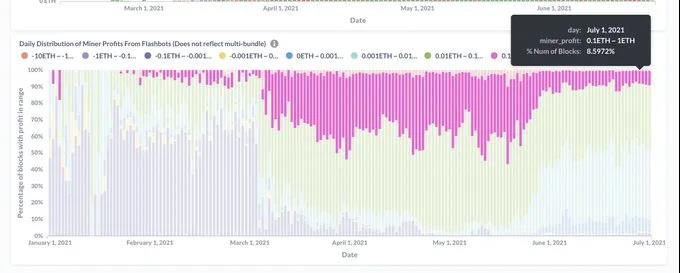
So the best approach is to look at the median or 80th percentile value of the bundle of MEV transactions and compensate miners for the risk of losing that revenue. Flashbots has some dashboards that display this data:
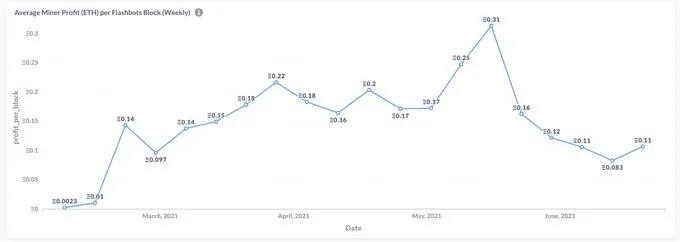
https://dashboard.flashbots.net/miners
The reason for tipping the top 50/80% of block revenue is that it doesn't make sense for the average user to try to compete with a 10ETH+MEV transaction bundle. This situation is rare, and if it does happen, the average user should not mind waiting for the next block.
So, how to choose the tip value? @barnabemonnot did a lot of calculations on this, and gives a simple strategy:
(https://notes.ethereum.org/@barnabe/rk5ue1WF_)
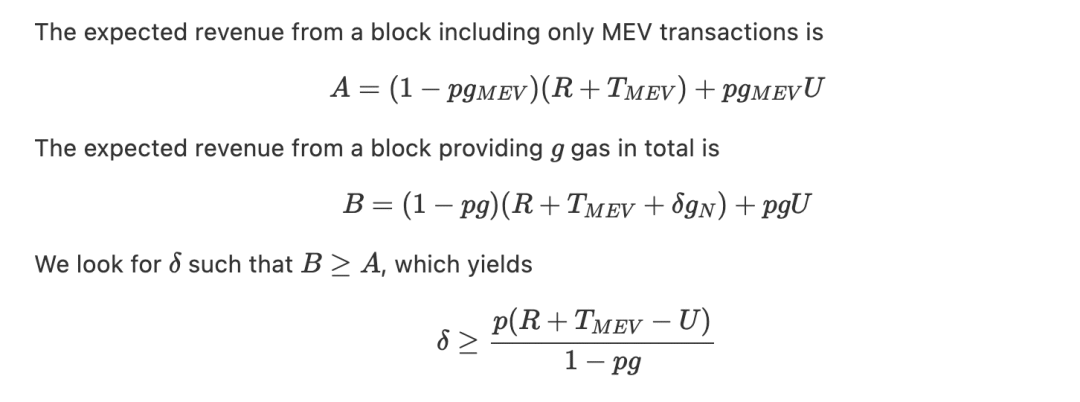
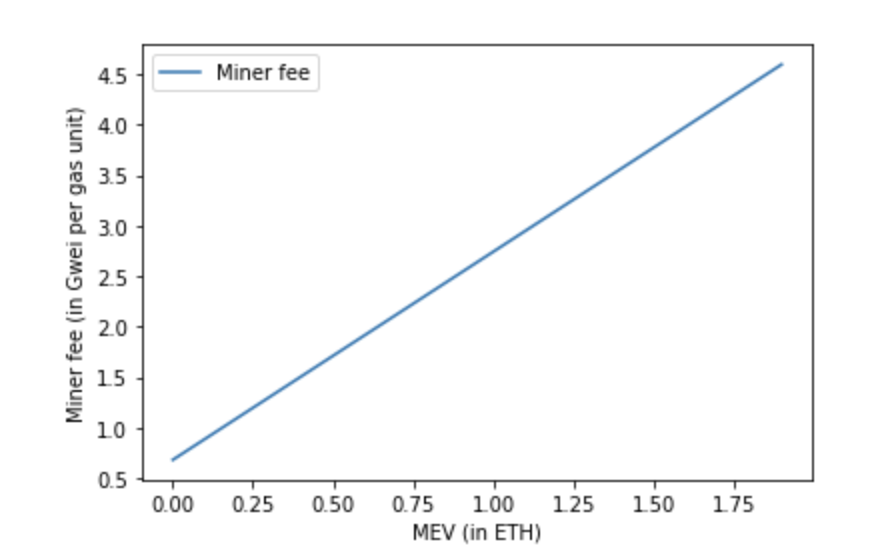
So, looking at the Flashbots dashboard and the chart above, we can see that 2-3 gwei is enough to cover the opportunity cost of 80-90% of the MEV bundle, so this would be a good default.
This method is not very intuitive right now, and the calculation of MEV makes it difficult to set it once and forget it, but hopefully in a few weeks APICs like @ETHGasStation and @gasnow_org will be able to abstract this data away.
secondary title
image description
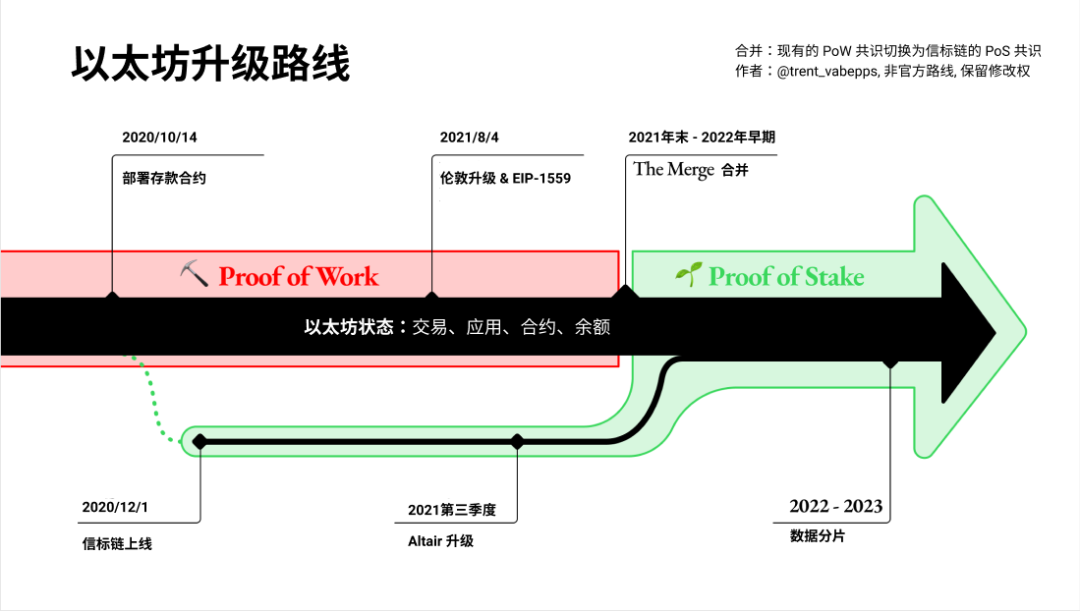
Ethereum Upgrade Road @trent.eth
Following the "London" upgrade, Ethereum will also usher in the Altair upgrade for the beacon chain and the merger of Eth1 and Eth2 (The Merge).
The main content of the Altair upgrade includes changes to the Ethereum 2.0 pledge parameters and reward and punishment calculations, and the introduction of a synchronization committee for the implementation of light clients, which is currently in the testnet stage.
After this upgrade, the related work and progress of The Merge will become the focus of the entire community. In December 2020, the Ethereum Beacon Chain was created and has been in operation for nine months, but the current Ethereum Blockchain and the Beacon Chain are still two Ethereum blockchains running in parallel. The specific content of the merger of Eth1 and Eth2 is to use Eth1 as the execution layer (execution chain), and its status, execution, transactions, etc. will be merged into the beacon chain as the consensus layer (consensus chain). Each PoS beacon area Each block will contain the data of the execution layer. At the same time, the Ethereum blockchain will no longer use the PoW consensus when creating a new block, thereby realizing the consensus upgrade from the proof of work (PoW) to the proof of stake (PoS).
On July 22, researcher Mikhail Kalinin, Ethereum core developer Danny Ryan, and Ethereum founder Vitalik Buterin jointly released EIP-3675, formally proposing the merger of Eth1 and Eth2 as an improvement proposal, and making progress on this PoS consensus upgrade. introduce.
secondary title
Where to watch the London Escalation Watch Party?
➤ Bankless Live Event
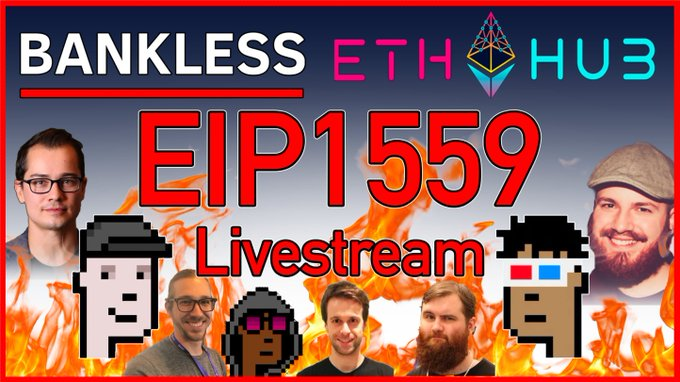
Participants: Justin Drake, Danny Ryan, Hudson Jameson, DCinvestor, Bankless and EthHub
Time: August 5th at 20:00
Live address: https://t.co/6bK70E267Y?amp=1
➤ EthStaker's "London Upgrade Launch Party"

Time: 19:45, August 5th, Beijing time
Live address: https://www.youtube.com/watch?v=afAFQY--GlI





