Today and Future Vision of the Crypto World


Original title: "How should LP enter Crypto?" ", author Su Yuan Yuxin Team
Cambridge Associates, the world's top alternative investment management company, has incomparable influence in the LP circle of the PEVC industry. After a long and careful research and review by the investment team and management, CA released a research report in early 2019 stating that the future of crypto assets is bright (focus, this is the 2019 report, don’t get it wrong) .
CA's message in this study is simple: the blockchain market and the crypto world are real, and LPs should take them seriously. In addition, institutional investors need to figure out the rules of the game in the crypto world as soon as possible to ensure that they will not miss potential opportunities, let alone fall behind in the rapid update iteration of crypto technology.
Two years later, we looked back at the predictions made by CA and found that they all came true. If institutional investors want to invest in crypto, these are the paths pointed out by CA. As an emerging asset class, how will crypto appear in the asset portfolio of most institutional LPs? What investment methods will be derived after the emergence?
In the longer term, Coinbase, Circle (USDC stablecoin), and the recent Bullish (of course, this is another story, it is full of coins) all reveal the grand future of the crypto world. Circle recently partnered with Compound and Fireblocks to allow financial institutions to exchange USDC for USD at a fixed rate of 4%. The integration of crypto/defi and tradfi has already begun, and this trend will further evolve in the future. Will crypto assets account for 1% to 5% of the world's important LP assets? It is very possible to look back 10 years later, not to mention that many institutional LPs we know have already invested in crypto through VC.
The crypto assets launched in 2020 are like high-yield bonds in the 1970s and technology growth stocks in the past 20 years. Halfway through 2021, the prelude to crypto has come to an end, and the scroll of the main story is slowly unfolding, constantly releasing signals of opportunities, although they are coming rapidly, they are also fleeting. So when the light turns green, pump up and move forward.
In 2018, investors witnessed the price dive of various crypto assets. Bitcoin lost about three-quarters of its value, from above $16,000 to below $4,000. The turmoil and bitter rain of a sharp drop has swept the crypto world, making people suspicious of the future of crypto assets and the blockchain technology that supports it.
However, looking at the entire crypto investment field, it is still a rising industry, and it has not fallen into a struggling defeat.
Blockchain technology is like a spiritual stone that fills the sky, filling the digital world with a part that has always been scarce: currency that can be circulated in compliance. With a currency tailored for the digital world, creative innovators can get the rewards they deserve to make more exciting new things. In the past, it was difficult for them to cross the boundary between the two worlds and get paid in the digital world in the real world. In addition, crypto assets simplify the cumbersome process when crossing multiple businesses (such as settlement between banks). A world where everyone has more control over their privacy.
secondary title
1. The crypto world is in full swing
In 2018, the activities in the crypto world were once hot. Crypto assets saw huge price swings (Figure 1), but fundraising activity surged (Figure 2), and there were important structural developments. The crypto world is changing fast, crypto futures trading is starting to emerge, and custody, scalability, and other key infrastructure-related items have all grown considerably.
figure 1
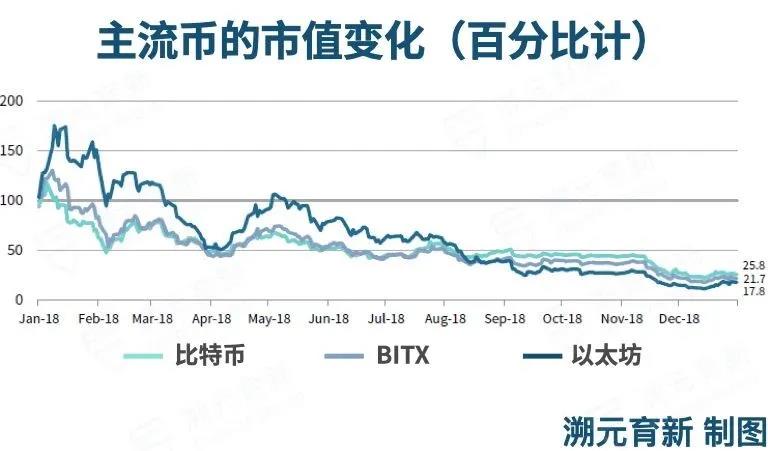
figure 1
figure 2
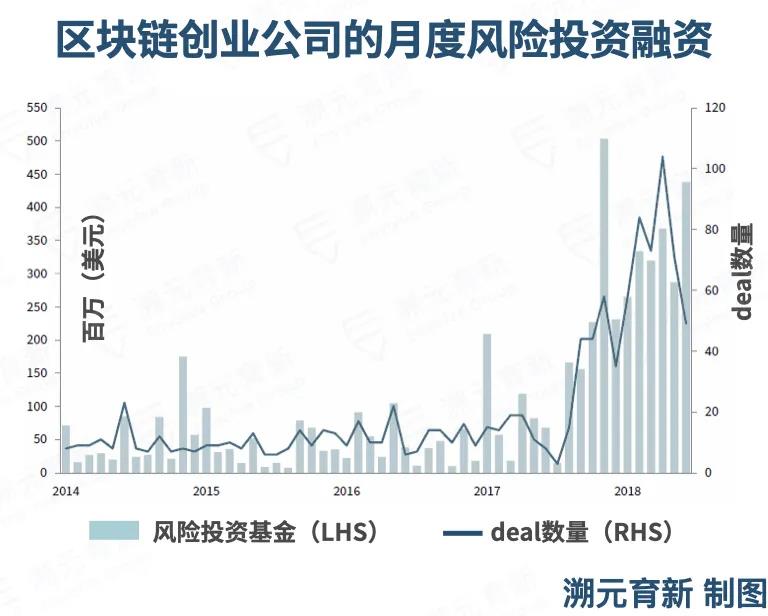
figure 2
A prime example of the pick-up in investment activity is Coinbase’s funding round. In 2017, following a Series D round at a $1.6 billion valuation, Coinbase raised $300 million in a Series E round at a $8 billion valuation. Coinbase said in the fundraising announcement that they believe that "crypto has great prospects on the way to the next great stage of the Internet (that is, Web3.0)."
Traditional venture capital firms are also gradually entering the crypto field. a16z launched a dedicated crypto fund, and Sequoia also became Paradigm's LP (later Paradigm will become one of the most influential crypto funds). Independent research firm Autonomous Next found that crypto fund assets have climbed to $10 billion to $15 billion (2019 data).
In addition to its investment activities, ICE also established a subsidiary called Bakkt, which began trading physically-settled bitcoin futures in early 2019. Previously, in December 2017, Bitcoin futures were listed on the Chicago Mercantile Exchange (CME). Fidelity also announced plans to launch Fidelity Digital Asset Services, LLC (FDAS), which will provide custody and trading solutions to corporate clients. In addition, some projects that solve the resistance in the crypto field are gradually on the right track, and issues such as scalability, privacy, custody, volatility of crypto assets, interoperability, and governance are no longer unexplored deserts.
secondary title
2. Directly invest in crypto assets, starting from three aspects
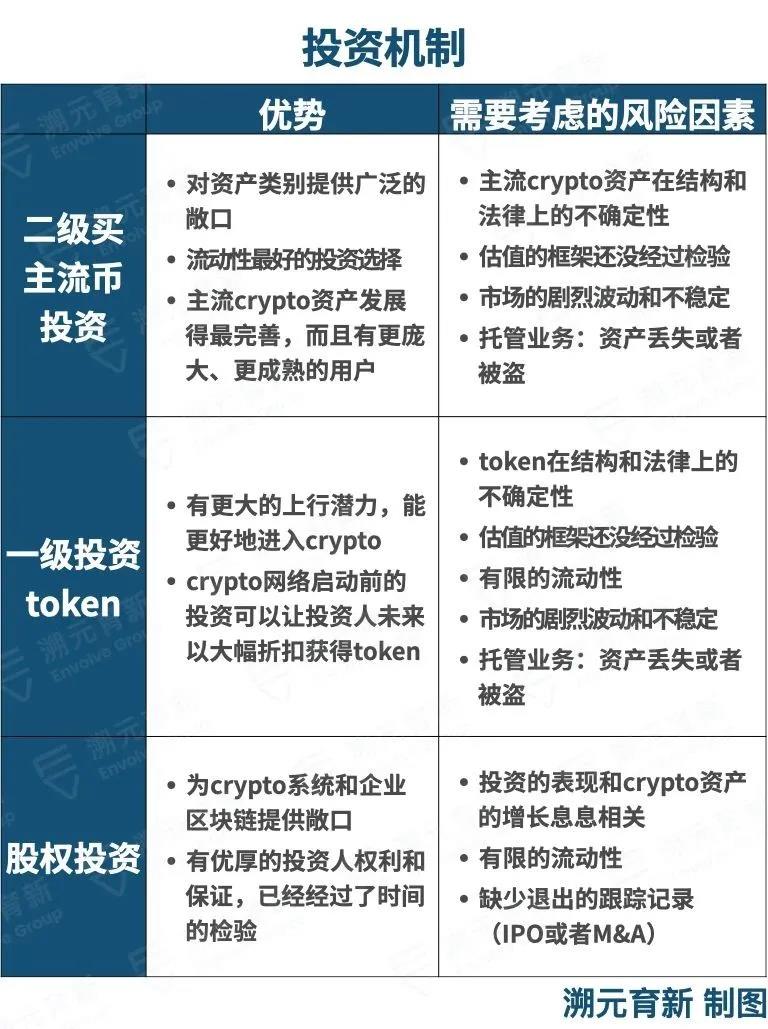
There are many ways for investors to invest in crypto assets. It can be mainly divided into three categories:
(1) Buy mainstream currency (GBTC) in the secondary market
(2) Relying on SAFT and other agreements, the primary market votes for tokens (Paradigm votes for UNI)
(3) Equity investment (Coinbase)
Let's talk about these three groups separately.
The first category is to invest in mainstream currencies in the secondary market. Investors can buy highly liquid crypto assets like Bitcoin. Bitcoin is traded 24/7, which means liquidity outperforms other investment options. However, as happened in 2018, such markets can sometimes be weak and assets are exposed to volatility. Investors can either directly buy tokens themselves and save them, or they can purchase and host them through centralized exchanges, or make indirect investments by investing in an active or passive management fund.
The second category is the first-level investment token. This category includes simple agreements for ICO tokens and future tokens (SAFT, which refers to the investment contract provided by the project to qualified investors, promising to deliver a certain number of tokens when the network or company is running). SAFT allows investors to obtain the crypto assets of the project at a discounted price before the project is released publicly. It differs from a standard ICO in that an ICO releases tokens immediately, whereas a SAFT is effectively a promise to deliver tokens in the future. What investors buy is the right to purchase tokens issued in the future, not the company's equity.
ICO projects will have different distribution plans after realization - some may immediately divide the profits generated by crypto assets, and some may need to wait for 24 months. Investing in SAFTs and ICOs is essentially the same as investing in early-stage technology companies, despite the shorter time to cash. What needs to be said here is that the fundraising mechanism of ICO has been abused by some people. Most of such projects have problems, or are outright frauds.
The third category is equity investment. Investors can invest in companies whose returns are correlated with the growth of the asset class, while maintaining a traditional capital structure. A typical example here is the aforementioned Coinbase for digital currency transactions. While these companies are subject to broader crypto asset price volatility, they should be more stable than any single private sector investment. They are long-term, illiquid investments held at cost that rise or fall based on funding rounds. The liquidity of this investment is similar to traditional venture capital.
Investing in tokens can also take the form of equity investment in companies operating token projects. The main model is to own the rights to the tokens being developed, which will be distributed or sold later. In addition, the operating company holding the token can also carry out other businesses, such as providing services for a specific network, and in this network, investors will have certain ownership.
secondary title
3. There are three ways to invest in crypto through funds
GPs can enter the crypto wealth pool through different investment strategies. Most strategies currently on the market can be divided into three categories: the first category is public offering index funds (ETFs and trusts), the second category is public offering active management funds, and the third category is private equity funds (poor liquidity).
Regardless of the approach, investors should understand that their targets are based on very early-stage technology, and therefore any investment should be considered early-stage venture capital, although early-stage liquidity has opened up some hedge fund-style trading opportunities , such as arbitrage.
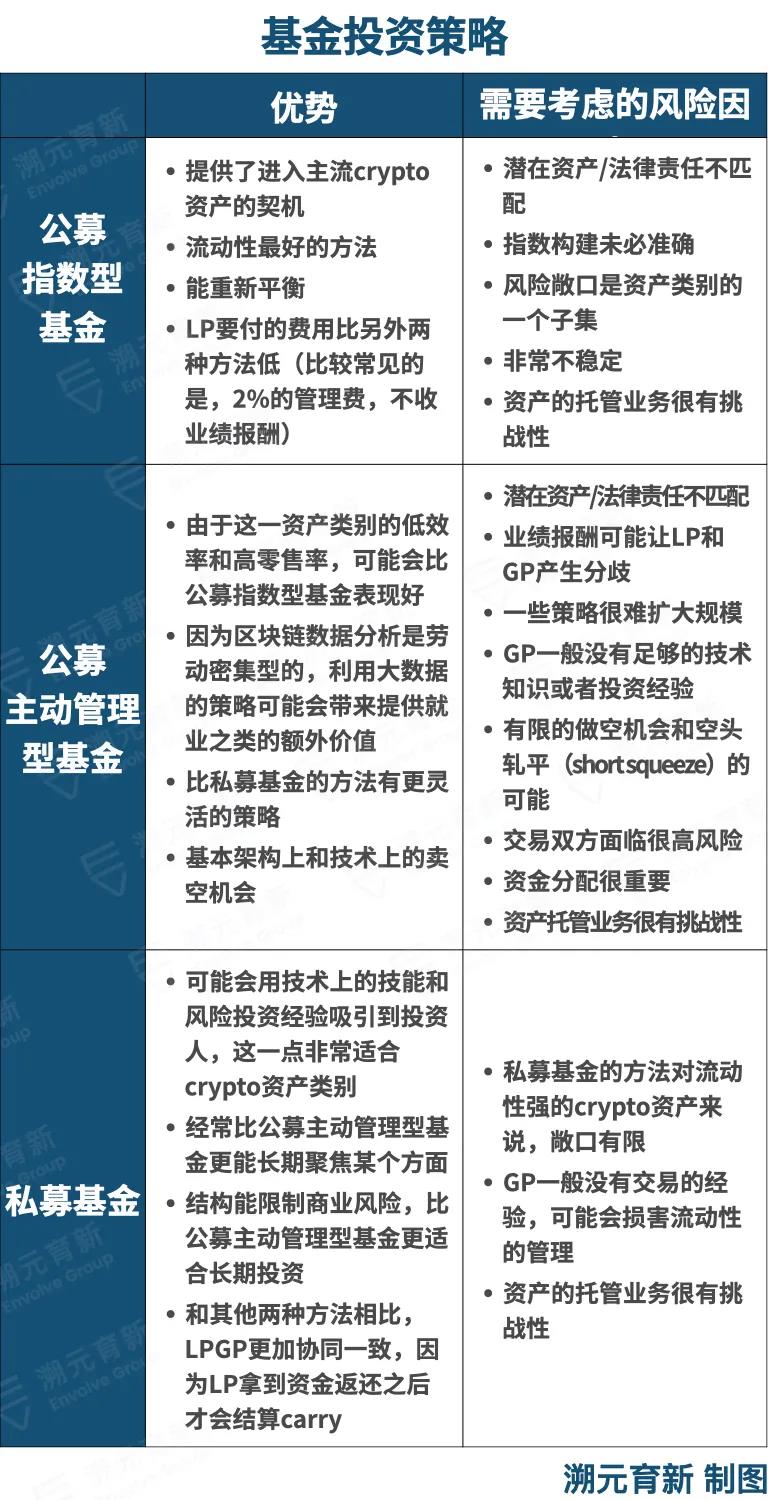
The early-stage nature of these investments means that there will be many losers, and there may be some big winners. In addition, due diligence and technical expertise similar to the venture capital industry can allow investors to better understand these investments and their long-term return potential. Therefore, investors should regard hidden investment as another form of venture capital. Although with the added risk of technology and adoption, it can be riskier than venture capital.
secondary title
4. Institutional investors flock to
At the beginning of 2019, the vast majority of institutional investors had almost never invested in or set foot in the emerging field of crypto assets. Even institutional investors with a wide range of interests usually only invest about 0.2%-0.3% of their funds in crypto assets.
These institutional investors who understand crypto assets generally allocate most of their funds to VC funds, explore and invest in some funds from time to time, and leave a sum of money to a selected crypto fund.
secondary title
5. The rise of generalized mining (such as staking)
An interesting phenomenon in the crypto world is that investors actively weave themselves into the crypto network. With the proliferation of proof-of-stake (PoS) protocols and the inflation of mining rewards, investors who buy and hold see new investment opportunities.
(1) On the basis of the original investment to earn income, they can also obtain additional income in the crypto world (usually in the form of crypto assets);
(2) Participate in voting on the chain by holding crypto currency to affect the ecology of the entire chain.
To give a specific example, some investors have been paying attention to Livepeer (LPT). LPT is an open transport protocol that facilitates decentralized video transcoding on the Ethereum blockchain. Any LPT holder can mortgage LPT tokens, handle transcoding needs from app developers, and get LPT tokens in return (the annualized rate of return in 2019 is 24%).
Such a mechanism encourages and urges investors to actively participate in the crypto network, and the prevalence of similar models is prompting some investors to rethink their investment models.
Although investors still mainly determine the funds that can be allocated to crypto assets based on the returns of VC funds in Portforlio (because it is more convenient to invest through VC), they should consider setting aside a sum of money for investing in crypto assets .
However, the field of crypto is highly professional and technical. This means that newcomers and non-professionals in the crypto world are completely unable to compete with early investors. Those investors in traditional venture capital institutions who focus on investing in the crypto world will also rely on their relationships and experience, and eventually spin off and establish their own crypto funds. (You can come and chat with Suyuan)
To sum up, even if a GP invested by an LP has rich experience in the crypto industry, it may miss a good opportunity in this potentially hugely profitable industry. (You can come and chat with Suyuan)
secondary title
6. Facing the wind and waves, embrace the peak
The crypto field allows people to see that in the slowly changing investment industry, there are still hidden holes. Even though the price of crypto currencies has fallen sharply recently, the wave of investment activity in the crypto space has been overwhelming. Investors interested in this industry need to spend a lot of time understanding the crypto space, accept the high risks that may come oncoming, conduct comprehensive due diligence, and allocate funds carefully.
Reference link:
Reference link:
1.https://www.cambridgeassociates.com/insight/cryptoassets-venture-into-the-unknown/
2.https://medium.com/@HuttCapital/reflecting-on-cambridge-associates-blockchain-investment-research-piece-d06bc3af0469