


An article to understand the pledge on Ethereum 2.0


A key vision of ETH 2.0 is to make their blockchain network more energy efficient, fast, secure and decentralized. To achieve this, they decided to upgrade their network to support proof-of-stake consensus, which will reduce energy consumption by 98% compared to existing proof-of-work based mining.
So today we’re going to explore in detail how this Proof-of-Stake Beacon Chain upgrade will help ETH 2.0 achieve its most ambitious transformation yet.
Pledge:
Pledge:
In ETH 2.0, staking is the act of any user depositing 32 ETH(Min ) or more so that they are eligible to run the required verification software and execute.
transaction processing
transaction data storage
Approve and add blocks in the main chain
32 ETH is a necessary condition to become a full validator, otherwise if the user has less ETH, he can pledge his ETH with other pledger pools, and they will set rewards for the user's contribution to their pledge pool. If you intend to stake in someone else's pool, DYOR is strongly recommended, as it has some associated risks that cannot be ignored.
What is the main goal of ETH 2.0 staking?
A key goal of adopting the Proof-of-Stake staking mechanism proposed in the Beacon Chain upgrade.
encourage more decentralization
Enhance blockchain security through more active validator participation
ETH 2.0 Proof of Stake Explanation:
Proof of Stake is a consensus mechanism, but what exactly is consensus? This is the first thing we need to understand before diving into PoS.
What is consensus?
In a decentralized and distributed system, consensus is a way of reaching agreement in any given network where everyone agrees on a single source of truth. For a blockchain like ETH, which is essentially a distributed database, all participating nodes of the network must be able to agree on the current state of the system (this becomes the source of truth for all nodes). It is necessary to achieve such a state consensus mechanism.
So what is the consensus mechanism?
It is a protocol that allows a distributed network of nodes (or computers) to collaborate and work in a secure environment. It establishes consensus among all database nodes, application servers, and other enterprise infrastructure.
ETH2.0 is upgrading itself to Proof-of-Stake consensus to ensure that all nodes participating in its blockchain network abide by its PoS rules.
Consensus mechanisms and their types:
Proof-of-Work
Proof-of-Stake
Proof-of-Stake Consensus in ETH 2.0:
ETH 2.0 is preparing to adopt the proof-of-stake consensus to achieve distributed consensus within its blockchain network nodes. Every user who decides to act as a validator of the network needs to put their ether at risk, and this behavior performed by these validators achieves the same function, as
Validate each transaction and complete the creation of a block.
After each successful block creation, consensus is reached among all nodes to agree on the state of the network.
Why Proof of Stake? What new features will it provide?
safer
safer
more scalable
more convenient
more energy efficient
Stakers (validators) get more rewards
It is suggested that once the Beacon chain is merged with MainNet, all the above goals will be achieved.
Proof of Stake offers the following key advantages:
Like PoS, energy efficient, users don't need much energy when creating blocks.
Low barrier to entry and easy access: Anyone with a decent laptop and smartphone can now act as a validator, while current proof-of-work based mining does not require expensive hardware.
Preserve the decentralized structure: PoS is designed to enable more network participation, which will lead to more network nodes and more decentralization.
More scalability: PoS is designed to support layer2 scaling solutions such as sharding which is proposed to be implemented to help ETH 2.0 scale.
How to stake in ETH2.0?
If you want to contribute and help the ETH2.0 blockchain to become more secure and accessible, there is really only one thing you need to do. Is to stake the lovely ETH accumulated so far and lock it up until ETH 2.0 sees its eventual migration.
There is one more important caveat to becoming an ETH2.0 validator
If you want to be a full-time validator (like a miner in ETH1.0), you need to have 32 ETH to do this. For the average retail investor, this may be a lot of money, but don't worry, you can still contribute to the project size you like.
If there are less than 32 ETH, it is still possible to add a small amount of collateral to the stake pool created by some company or full-time validator.
Staking with 32 ETH:
If you have 32 or more ETH, you can start working as a full-time validator by staking your ETH. In order to do this, users need to run a verification software on their machine using the ETH2 launchpad.
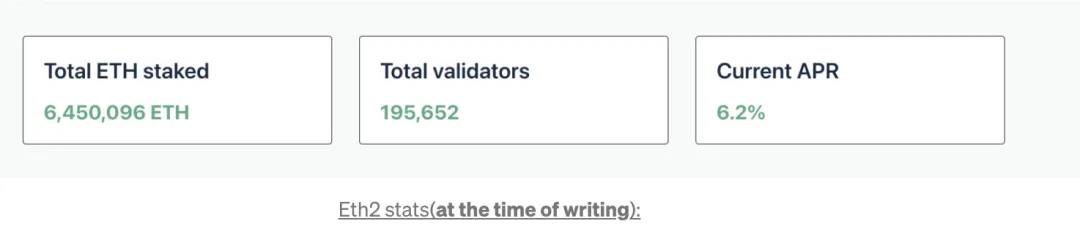
ETH2 Launchpad:
To stake, one needs to be running the ETH2 client, which is a local copy of the blockchain. This may take a while to download to the user's computer.
Follow the link given below, simulate the steps provided and carefully refer to the terms and conditions before making a staking decision as a validator.
https://launchpad.ETHereum.org/en/
1. Consulting and measurement and control:
The first step is to read the given recommendations and agree to understand them carefully before installing validator client software and staking ETH.
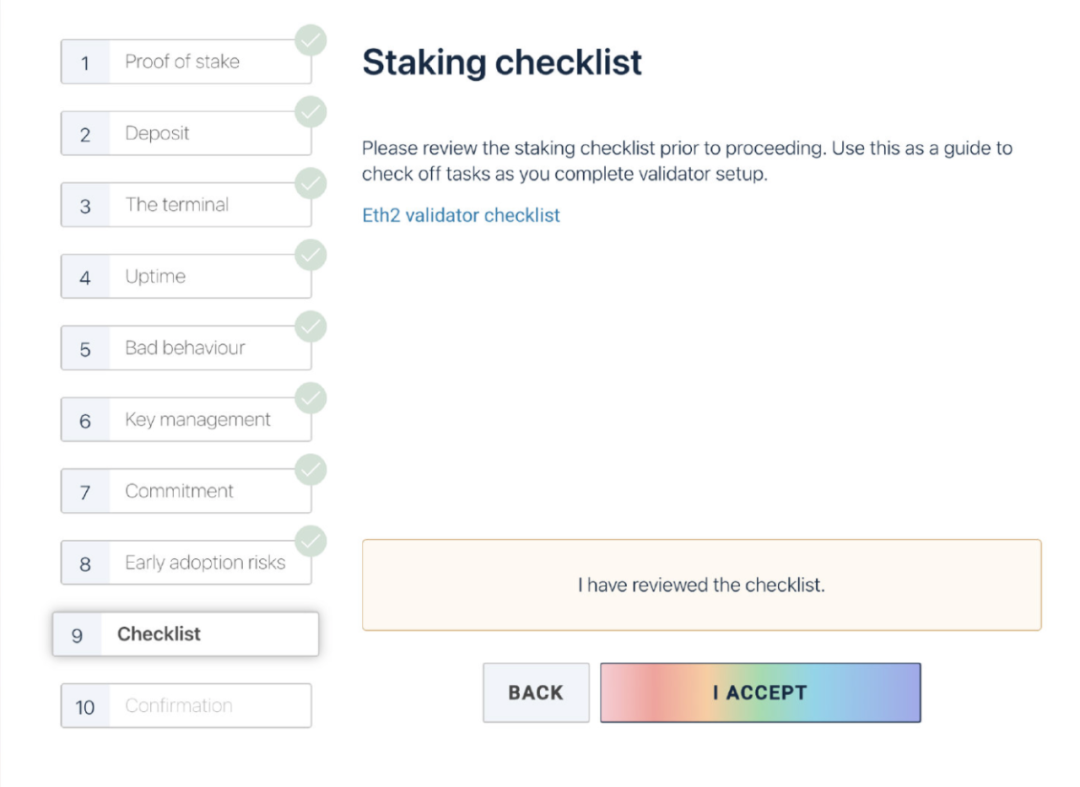
Users must accept all terms and conditions and complete the same 10 steps to proceed with installing the software.
2. Select ETH1 client:
Since ETH2.0 is not yet on mainnet, users will need to setup an ETH1 client to help process incoming validator deposits from mainnet (ie ETH1 client). The ETH 2 client runs in parallel to the ETH 1 client until the merger phase of ETH 2.0 is complete.
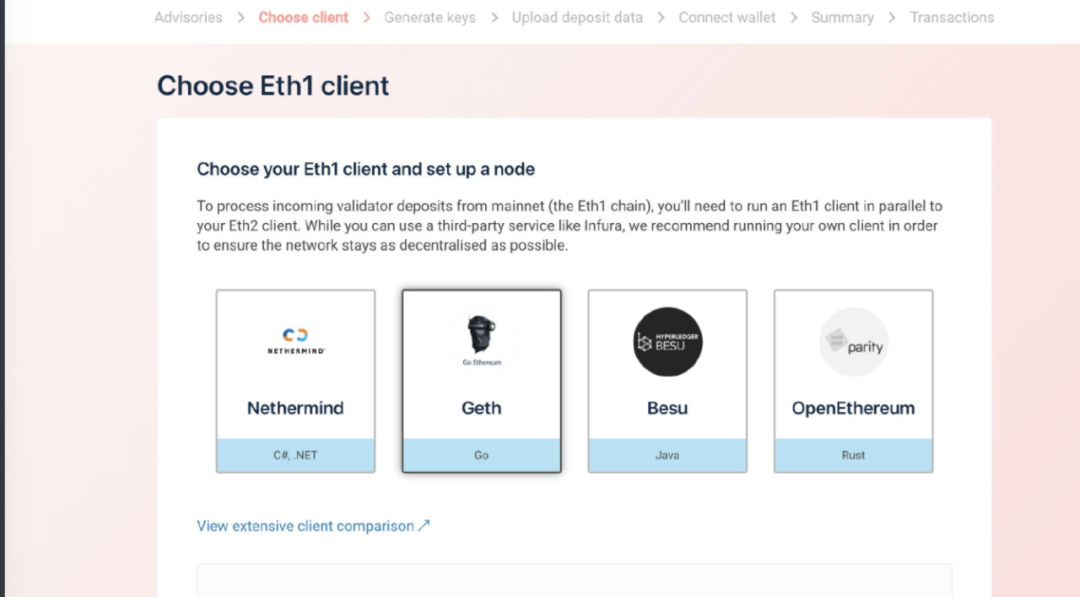
The whole process of setting up an ETH 1 and ETH 2 client is technical, if this is not your specialty, seek help from an expert.
3. Select the ETH 2 client software:
And setup a validator node. Each customer type selected by the user will have a detailed document for your reference. So take advantage of that too.
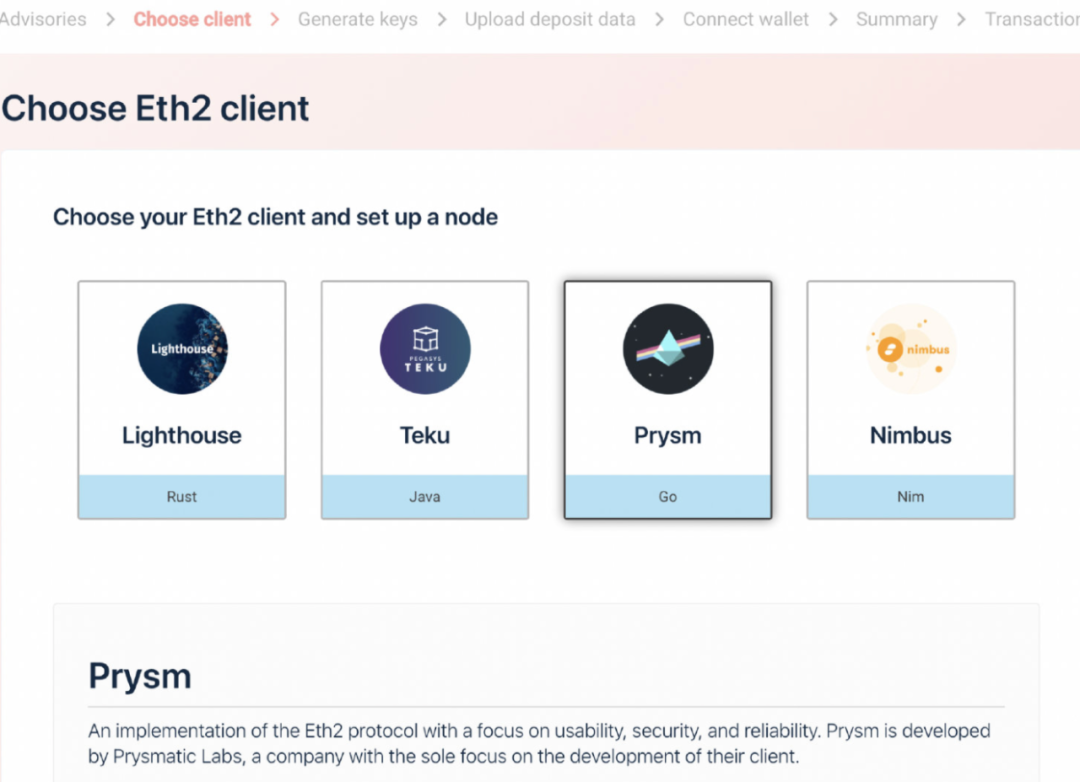
4. Generate a key pair: For network authentication:
https://launchpad.ETHereum.org/en/generate-keys
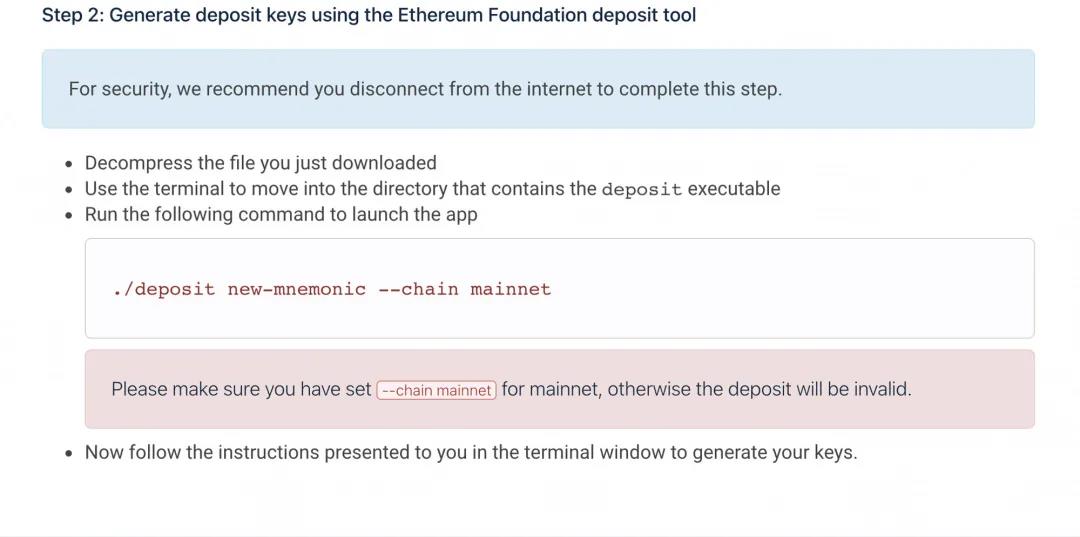
In order to access the ETH blockchain network, users will need a security key pair that will be used to authenticate the user as a validating node. To do this, the following key steps must be completed:
Select the number of validators to run
Select the operating system of the machine the user is plugging into
Download deposit CLI to type and run your terminal commands
After downloading and setting up the Deposit CLI software, you can obtain a security key pair using the instructions given below.
Generate key:
Save the key:
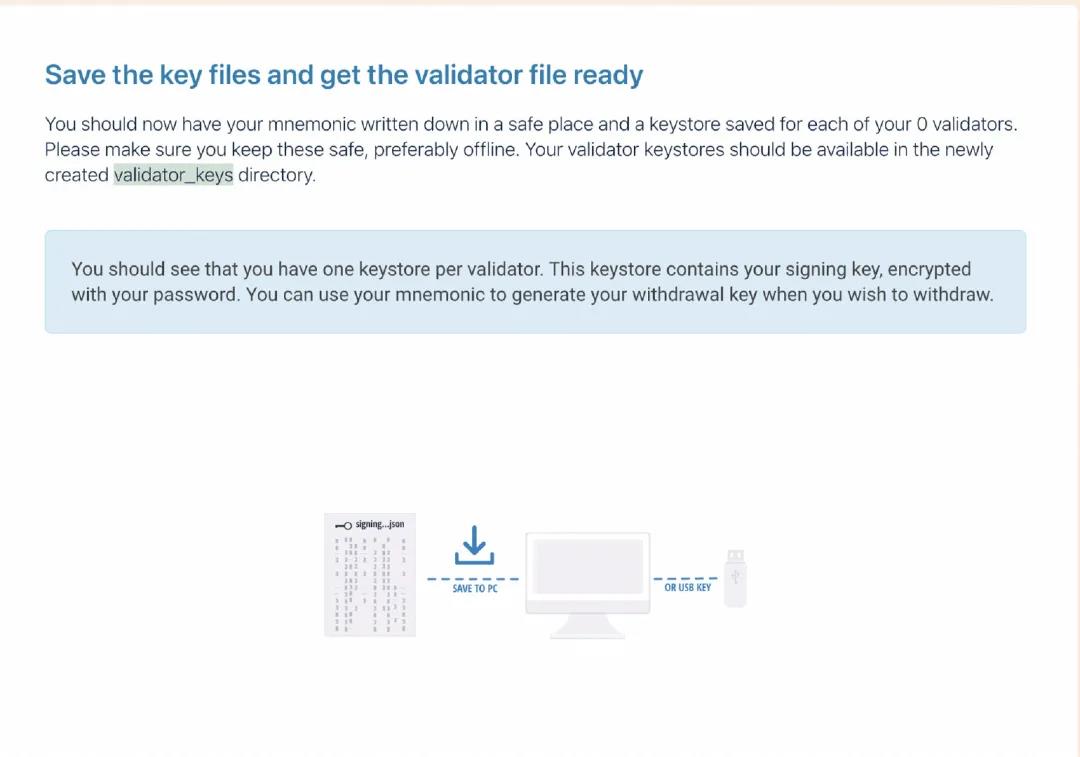
Users will be given two keys that need to be kept with extreme care
signing_json key:
After the key pair is generated, it is very important to save the mnemonic, it will appear as shown below. Keep them safe. Additionally, the Keystore file associated with each required node must be kept securely, this validator keystore file can be located in the validator_keys directory of the system.
deposit_data JSON key (public key):
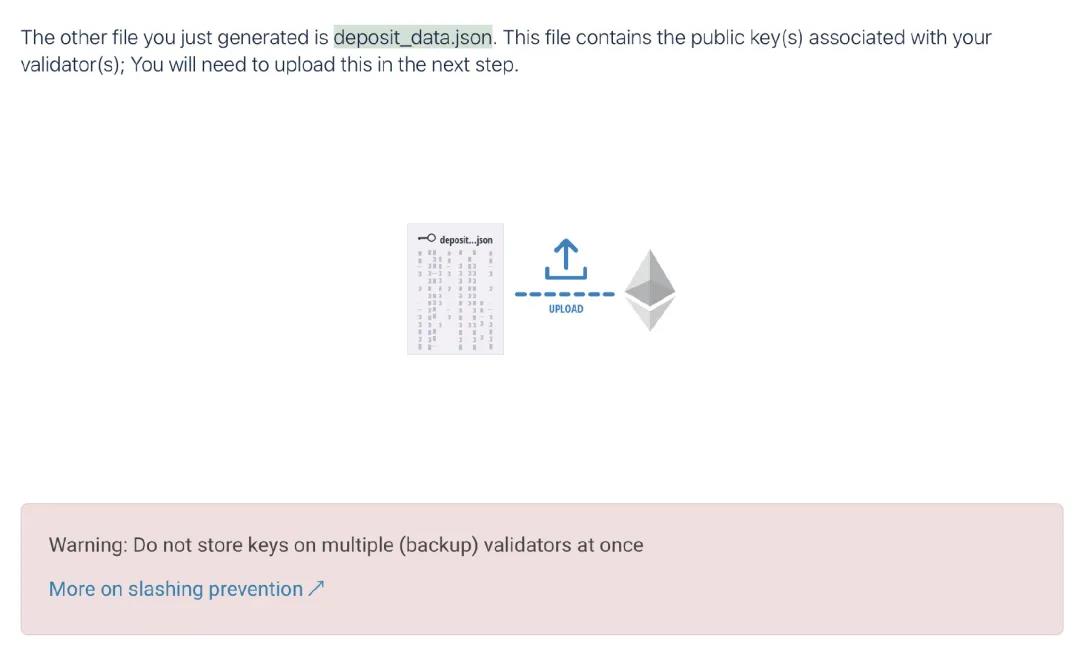
The deposit_data JSON key is the public key associated with the validator node, this key needs to be uploaded in the next steps
5. Upload deposit data JSON:
After saving the storage data JSON file in the previous steps and accepting the terms and conditions, you will be navigated to this screen where you will be asked to upload the JSON file as shown in the image below
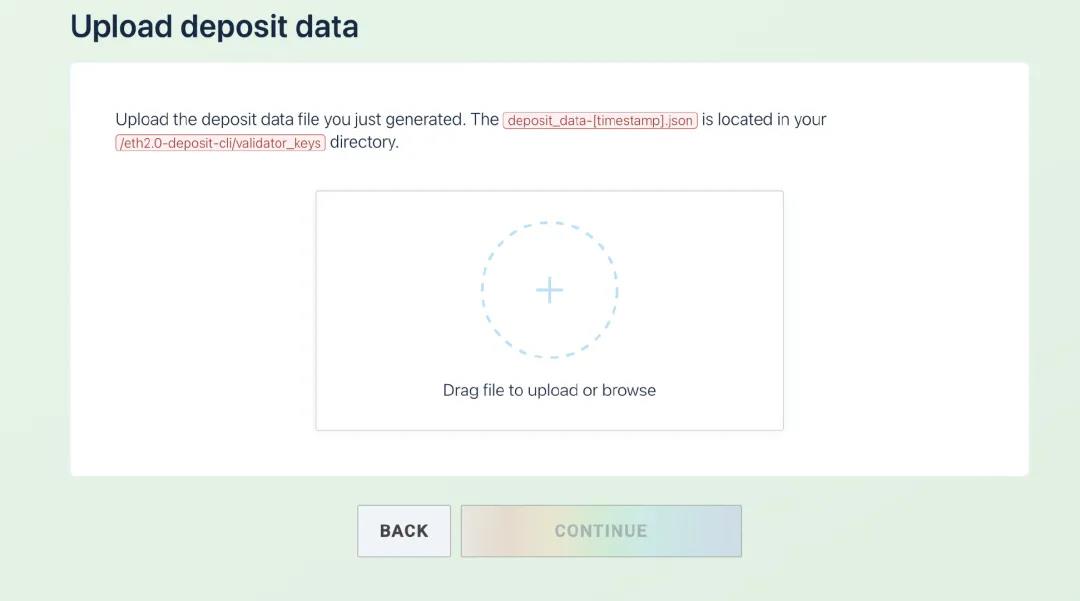
The user can find the file in the validator_key directory of the local system and proceed with the upload process.
6. Connect ETH wallet:
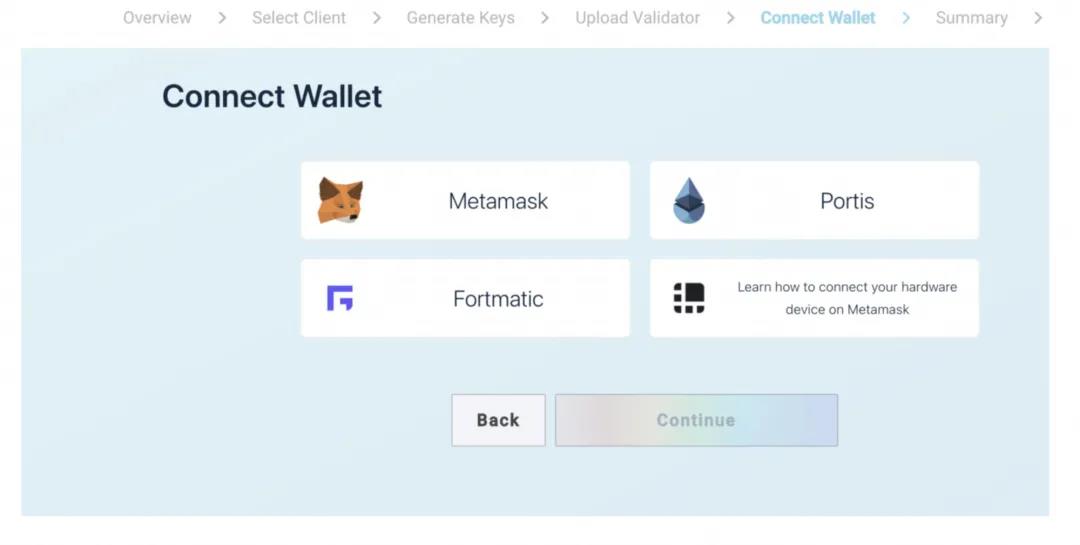
If the deposit JSON data file can be uploaded successfully, you now need to connect to a wallet that supports the ERC-20 protocol. You user can use any ETH wallet such as Metamask, MEW, etc. from the options that pop up.
7. Final security check:
If they have followed the setup instructions for the ETH 2 launchpad discussed earlier, users will know they need to send transactions to the collateralized deposit contract. It is recommended to double check the address. Official addresses can be found at ethereum.org and many other reputable sites.
Make an ETH transaction on this address and you are done.
What if you don't have 32 ETH to be a validator?
Don’t be disappointed if you don’t have 32 ETH, we can still play our part by participating in the staking pool. Some companies run their staking pools, where users can stake small amounts of ETH and receive rewards in return for helping them become validators.
Staking one's ETH to a third party can be risky, so it is advisable to do due diligence on these companies before making a decision.
What are the responsibilities of being a validator?
As a verifier, the user will participate in the consensus (PoS) of the ETH2.0 protocol and will be a voter for each new block created. The more votes a block gets, the more likely it is to be added to the chain.
A validator's vote is weighted according to the amount it is involved with.
Now, as a validator, you have some responsibilities to uphold
1. Need to be honest and positive: get rewarded
Users are rewarded for:
Propose a new block
Proving that the new block is correct and can be included in the chain
, actively participate and help the network reach consensus
You will be penalized if:
if inactive
Minor penalties for negligent acts (or inaction) that impede the negotiation process
Significant penalties (or cuts) for malicious behavior
So if you behave well and help the network run optimally, you will be rewarded better, otherwise you will be punished.
What happens if you go offline?
Since the network relies on validator nodes to reach consensus and create blocks, a majority of validators must be active and do their job.
That's why there are certain penalties based on these two situations given below:
If more than 2/3 (supermajority) of validators are online and active, you get a slight penalty for being offline, because there are still enough validators online waiting for the chain to complete.
However, if the number of validators is less than a majority, then the penalty is higher and harsher because blocks are no longer finalized.
Therefore, if the second situation occurs, that is, you go offline, you will gradually lose up to 50% of the pledge (16 ETH) within 21 days. After 21 days, you will be kicked out of the verification pool. This ensures that blocks start finalizing again at some point.
What are the penalties for acting maliciously?
If malicious emails are sent to prove invalid or contradictory blocks, the pledged ETH will be greatly reduced. The minimum amount that can be slashed is 1 ETH, but this number increases if other validators are slashed at the same time.
The sharp cuts are made to ensure fair practices in the network and minimize losses from honest mistakes, but also strongly discourage planned attacks.
Benefits of setting up (PoS) in ETH 2.0:
The vision of ETH 2.0 is largely driven by the way it migrates from Proof of Work to Proof of Stake, so let’s see how this migration will help validators and stakers, and more importantly how it will enable ETH The network as a whole benefits.
Make ETH more sustainable and energy efficient:
Since the proof-of-stake consensus does not require validators to have high-end energy-intensive machines, this will make the ETH blockchain more environmentally friendly and sustainable.
More convenient and safe:
With less stringent hardware requirements and people using laptops or smartphones as validators, the ETH 2.0 network will become more decentralized and globally accessible.
As the web becomes more distributed and decentralized, it will ultimately help make it more secure and reliable.
ETH 2.0 upgrades and phases
The new ETH2.0 incarnation is proposed with the following upgrades
Beacon Chain Upgrade
Merge phase
EIP-1559 upgrade
Summary and way forward:
ETH 2.0 brings new hope to crypto enthusiasts and investors, with proposed updates aimed at overcoming key challenges in transaction scalability, network security and sustainability. This new incarnation looks very promising for the future of the crypto world as it will instill more trust and confidence in this new type of democratized and decentralized economy.





