


One article to understand the vision of Ethereum


herehere, this republication has been re-proofed. Originally published in November 2018. Three years later, if the author writes another article like this at this time, it will undoubtedly add a lot of content and reduce the description of certain topics. But it's still relevant to look back at the article.
image description

- Image credit: Dmitri Popov on Unsplash -
The cryptocurrency community is constantly looking for new stories or improvements to existing ones to build solidarity. They also counter criticism by isolating the premise on which outside criticism rests (eg "Bitcoin is really expensive to use — but Bitcoin wasn't designed to be used frequently").
Whether active or passive, this search for meaning is endless.
image description

- The picture shows the development plan circulated in 2014 [3], when Ethereum was released -
Faith doesn't just stem from reality, it defines reality. In any social setting, people are locked in an endless tug-of-war as they compete to express "what's happening," "why this is happening," and "what's going to happen next." Given the inherent complexity and technicality of the field of cryptography, narratives of control are particularly powerful in the cryptocurrency community [2].
Coincidentally, the Ethereum community held events in Berlin and Prague for a few weeks in 2018, and it seems that now is a good time to chat about this topic.
first level title
History of Ethereum Vision Evolution
With leaders out of touch, Bitcoin proponents argue over what the "spirit" of Bitcoin is based on genesis documents (eg "Deciphering Satoshi 'Really Thinking'").
Ethereum is much younger than Bitcoin. In the process of seeking legitimacy, there have been a variety of overwhelming mainstream discourses in the community [4]. Not long after the creation document was written, the authors are still there, and they will fight each other[5].
The mission of Ethereum is built gradually (like a bee building a nest), not determined at the beginning (like the ball of thread that eventually leads Theseus back to the exit of the maze).
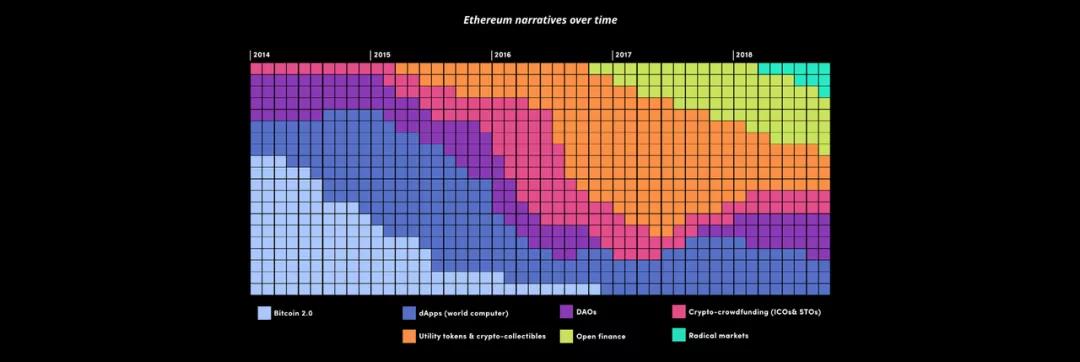
Here, we dissect 7 major themes in the history of Ethereum development. The order in which they appear is roughly as follows:
1. Bitcoin 2.0
Ethereum was made public at a Bitcoin conference [6]. Therefore, early media reports focused on comparing Ethereum with the predecessor of Bitcoin, a cryptocurrency (see "Bitcoin's Most Ambitious Successor" written by Al Jazeera in 2014 [7]; Bloomberg's "Bitcoin Coin 2.0"). The original motivation for creating Ethereum came from the limitations of Bitcoin's scripting language. Against the backdrop of bitcoin's 10-fold surge in late 2013, the story of "a young idealist leaving the 'evil' bitcoin scene" is particularly appealing to mainstream media reporters. Although this narrative has lost momentum after Ethereum established its own image, it is still a popular perception among newcomers who have just entered the circle.
2. dApp (aka World Computer)
image description
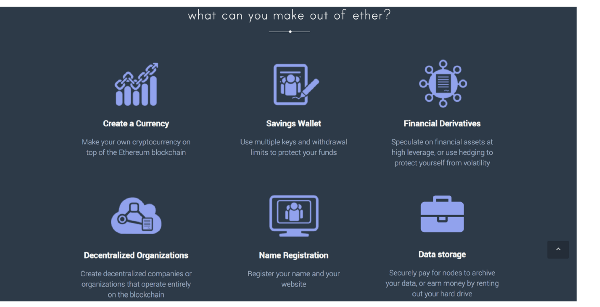
- Tokens, derivatives, domain name registries, and DAOs have been part of the on-chain functionality of Ethereum since its inception. The picture above is taken from Ethereum.org in 2014 -
3. DAO
For the politically inclined, the allure of the vision of an ownerless organization is hard to resist. Proposals such as the well-known DOUG People's Republic [9] (the first Ethereum-based DAO) were very popular during the early days of Ethereum development. Vinay Gupta, the co-founder of the Ethereum Foundation, once dubbed DOUG "the country in the box" [10]. The DAO [11] obviously blew everyone's expectations and cooled people's enthusiasm for autonomous organization experiments. This narrative has faded as no DAOs have actually prospered; now there is a resurgence, as there are no more organizations using ICO funding; and, governance tools for ownerless organizations are finally going live on mainnet.
4. Cryptocurrency crowdfunding platforms (ICO and STO)
There is no better example of the power of borderless digital currency crowdfunding than Ethereum. Cryptocurrency crowdfunding was seen as the most important role of Ethereum, because it is obvious that issuing tokens is the most straightforward thing that smart contracts can do. However, this narrative faded as the SEC increased scrutiny of the industry [12] and survival of the fittest began to show its power in the marketplace [13].
5. Utility Tokens and Collectibles
As "methods to obtain liquidity" for new tokens started to become increasingly complex, many people's attention began to shift to research [14], imitate and improve existing token frameworks [15]. Sometimes, "Utility" actually connotes "resisting legal measures imposed on securities", not just "shaping incentives". In 2017, the introduction of the "non-fungible token standard" [16] ignited people's exploration of non-fungible tokens, highlighting the value proposition of state-sharing games. This was actually mentioned in an early 2014 Ethereum video that hinted at which use cases would be hyped.
6. Open financial system
The term "open finance" [17] is proposed for the large number of air coins in the market. Abstracting ownership through socially recognized information structures (titles, tokens) is critical for economic development [18]. According to Hernando de Soto, the economic losses due to improperly registered property rights are as high as $9.3 trillion, and most of them happen to the poor. His point is that unless people can enjoy a permissionless sharing economy infrastructure, only the plutocrats will be able to reap the benefits of asset digitization to a certain extent. The meaning of permission-free ledger is the key in this expression. The 0x protocol has built a relayer ecosystem from scratch, and its success has promoted the practice of financial instruments. The #DeFi Alliance is built by the best teams in the industry. Following the "fat protocol" and "fat currency" theories, the "fat wallet" theory[19] also began to rise, keeping pace with the concept of a "fully open-source banking system".
7. Radical Markets [21]
"Open Finance" is all well and good, but what about redesigning markets from the ground up instead of emulating the complex financial systems of the real world? Could programmable money help transform private property contracts, improve (or eliminate) representative democracy, prevent data harvesting and foster more inclusive and efficient markets? Where is the greatest need for permission-free infrastructure? How can a community maximize the social impact of unit input? Beginning in mid-2018, Ethereum began to be valued for the social value it generated, as much as the technical merit it provided. If Bitcoin took advantage of the latest financial crisis to find its niche, Ethereum appears poised to fill the void created by the cultural, political, and economic decline of "surveillance capitalism" (such as the gradual decay of Facebook's empire) , transition to a more liberal future society.
timeline
timeline
When...Bitcoin started, the anonymous magician was eager to test two propositions: one was a trustless, decentralized database... and the other was a robust transaction system that could remove intermediaries and allow value to flow around the world . But the hard lessons of the past five years have shown that we still need a feature he overlooked: a powerful enough Turing-complete scripting language.
——Vitalik,Ethereum.org website, 2013-14
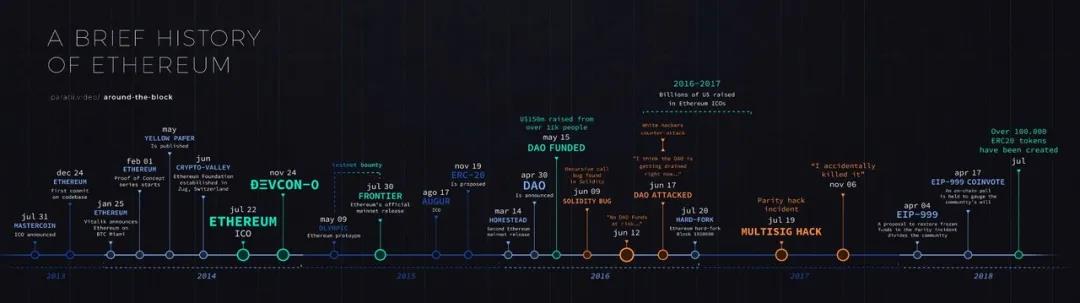
image description
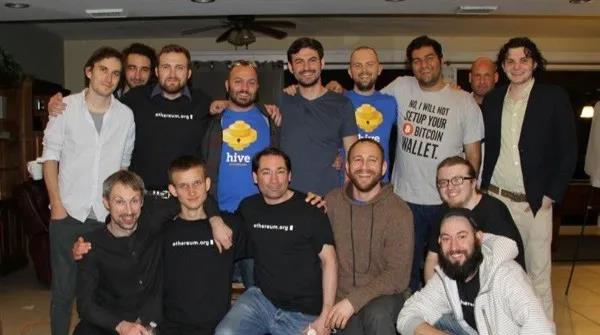
- A group photo of the founding members in Miami at the North American Bitcoin Conference 2014 -
The Ethereum white paper began to spread at the end of 2013, and at the North American Bitcoin Conference (North American Bitcoin Conference) in early 2014, the Ethereum project was officially made public. At that time, most of the founding members had lived together for some time [25]. They had already obtained seed round financing at that time, so they had to consider compliance risks and finally decided to establish a legal entity in Switzerland[26].
The team had to choose between "crypto-Mozilla" (i.e. not-for-profit) and "crypto-Google" (i.e. for-profit) development path. They reportedly preferred the latter at first, but ultimately chose the non-profit route [27]. Due to internal conflicts, Charles Hoskinson left after a brief tenure as CEO [28].
In mid-2014, the Ethereum sale went well, attracting close to 6,000 lucky participants.
image description
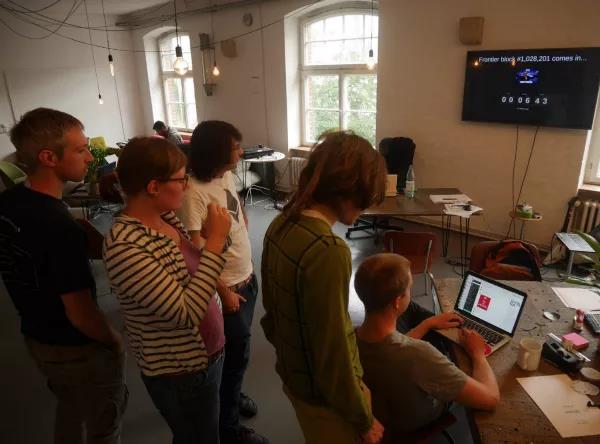
- The historic moment when the first block in the Frontier phase was mined. Image via Twitter of Lefteris Karapetsas -
Subsequent Frontier became the first version to go live on the mainnet. It sounds hard to imagine today, but at the time, many doubted that the Ethereum Foundation would survive looming financial collapse.
Having said that, code contributions are still pouring in from all directions, and the loose community is ready to organize Meetups in all corners of the world. Ethereum thus began its own path.
image description
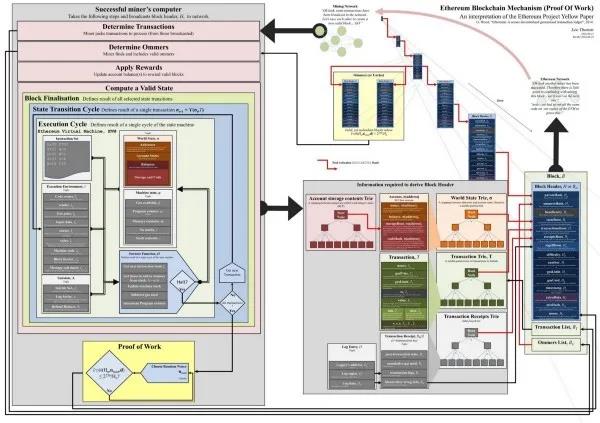
- Ethereum's PoW and virtual machine visualization, by atomh33ls -
In early 2016, the second version of the mainnet, Homestead, was released.
Since then, the entire network hasn't had a full year of peace until today - they've had to deal with bugs, hacks, DoS attacks that repeatedly diverted the community's attention from important decisions to more urgent ones on matters.
From the ICO to the launch of the mainnet, it took Ethereum 1 year.
From the release of the first usable version to the release of the second, it took Ethereum 9 months.
It has taken 2.5 years from the second version to the third and counting.
Shortly after the release of Homestead (homestead, the second version of Ethereum), it became clear that Ethereum had grown beyond its founders' imagination, and evolved into a system that could have a huge economic impact—both good and It can also be bad.
image description

- Alexey Akhunov discovered TheDAO's anomaly and posted it on Reddit, which became a historic post -
Discussions in the posts under this post were intense. Someone analyzed the structure of property rights, compared interventionism and non-interventionism, and discussed the importance of social consensus[34]. Clearly, the Ethereum community left some scars that will never heal in response to TheDAO hack. Subsequently, key stakeholders in the ecosystem collaborated to hard fork the network.
This network consensus split signaled that the so-called absolute immutability of the Ethereum network was not native (and also let the dominant expression "DAO organization platform" lose momentum). Social consensus is also publicly considered to be at least as important as "protocol consensus". It should be kept in mind that the Ethereum we are talking about today is the product of the fork of the original chain, and ETC is the original token on the original chain.
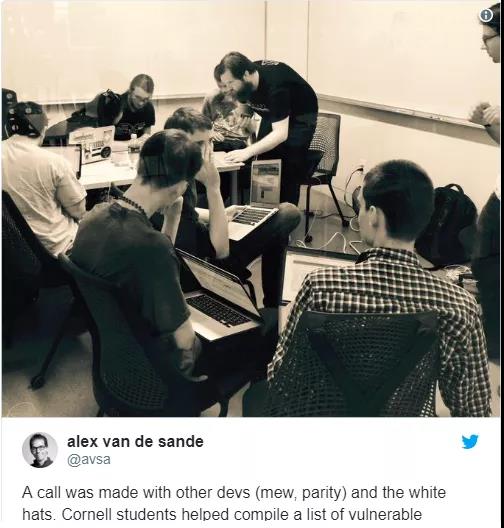
- Fighting back against DoS attacks during DecCon 2, "family room becomes makeshift war headquarters". Tweet from Alex Van de Sande -
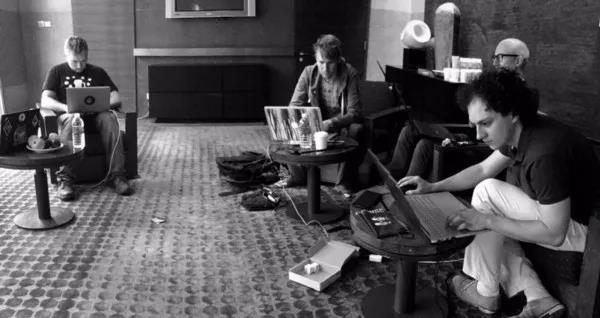
After the hard fork of The DAO, before the end of 2016, the network fell into a serious DoS attack, and it happened during DevCon 2 held in Shanghai [35]. In effect, the quick and coordinated response turned into an opportunity for the developer community to demonstrate their maturity, stronger than the 12-month ordeal.
2017 was also a year of unity. Ethereum, which survived The DAO hard fork, managed to attract widespread community attention. The prices of both Ethereum and ETC have risen sharply, and Ethereum has also gained liquidity on all major cryptocurrency exchanges. Silicon Valley is interested, and more inclined to capitalize on ether than any other trendsetting thing emerging at the same time.
image description
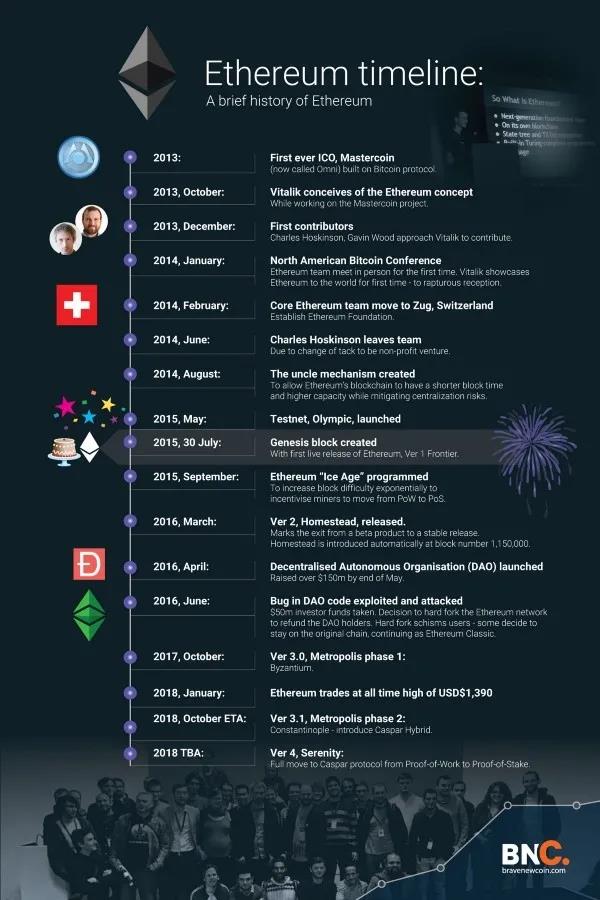
- Timeline of Ethereum development, quoted from Brave New Coin. The penultimate milestone is obsolete - postponed to January 2019 -
As competing smart contract platforms began to emerge, those holding large amounts of ether launched a lobbying campaign aimed at preventing the currency from being defined as a security by the U.S. Securities and Exchange Commission (SEC) [37]. The agency has taken a more aggressive stance on enforcement, gradually targeting larger corporations (as of today, dozens of legal entities have been embroiled in the "Operation Cryptosweep" movement). Needless to say, ICOs (and STOs, and whatever comes next) have lost most of their appeal [38].
Most of the teams that hold their own issued tokens defend themselves by highlighting the gaming and economic properties of the systems they create. The term “Tokenomics” became very popular in mid-2017 [39]. Digital collectibles also took off soon after.
In late 2017, the Cryptokitties that clogged the web gave Silicon Valley a pet project to celebrate [40]. Millions of dollars in venture capital money poured into blockchain games, non-fungible token markets, and projects related to art collectibles. But there was no considerable demand in the follow-up. Cryptokitties activity has stabilized at a few hundred users per day. An Andy Warhol painting was auctioned off to a group of shareholders via the Ethereum-based Codex protocol. As of today, there are still a few people blogging enthusiastically about how to accumulate and trade real estate on Decentraland.
image description
- After the Parity multi-signature wallet incident was discovered in mid-2017, the core contributor's tweet -
Incidents in July and November 2017 (a hack[41] and an alleged accident[42] both involving Parity software) resulted in legitimate owners of Ether losing their tokens, The value is as high as tens of millions of dollars [43].
Affected groups are proposing measures at the protocol level to ensure people can still withdraw funds (or even rollback malicious transactions). EIP999 has become the focus of tit-for-tat [44]. The handling of The DAO incident set an elusive precedent. Although there was fierce debate, no compromise was achieved. If anything, that period popularized politics in the ethereum public space — that is, made network governance more inclusive. Motivational things like the ETHPrize, the Fellowship of Ethereum Magicians, and the Etherean message board began to emerge, dedicated to helping people understand the shared vision and goals of the entire community.
In 2018, the capital that was once eager to ICO and issue tokens has dried up. Projects with the most determined pace of launching products seem to fall into the “Decentralized Finance” category, most of which do not (surprisingly) have their own tokens in the underlying technology. Lending infrastructure, stablecoins, derivative instruments, and non-custodial relayers once again attracted the attention of institutional investors and the SEC (see the EtherDelta case) [45]. This subcategory demonstrates that with well-designed, open-source, and modular components, synergies come into play.
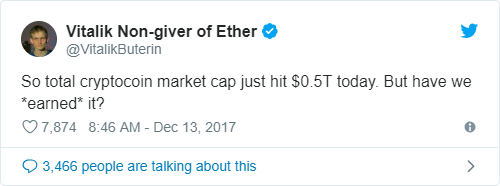
image description

- Some Ethereum core contributors are in Japan, quoted from Aya Miyaguchi's twitter -
What attracted much attention in the second half of 2018 was the conceptual integration of the Ethereum community and the RadicalXChange movement[46], which rose rapidly after the publication of "Radical Markets" co-authored by Eric Posner and Glen Weyl; Vitalik helped refine the concepts presented in the book and co-authored a paper on “Liberal Radicalism”, exploring better mechanisms for financing public infrastructure [47].
In the short term, a series of Ethereum-based applications will be incorporated into "radical" concepts, such as fractional communal property, self-valued property tax measures, and data production as labor [48]. Works that have emerged from recent hackathons demonstrate experiments such as auctioning advertising slots, pixels in images, and domain names under the Harberger-tax model [49]. We may soon arrive at a similar form of resource allocation for directing public art in urban spaces [50].
in conclusion
in conclusion
The purpose of this article is to describe the prevailing narratives that drive the development of Ethereum at different stages. The research method we chose was to trace The vibe of the community.
We do not believe that the above statement is the absolute truth. Our goal is to move people away from absolutism and realize that the face of the community is diverse, though far from settled. We might as well change our minds in response to emerging evidence. Vitalik's "that didn't work!" chorus on Devcon 4's "BUIDL song" was a powerful, albeit cheesy, wake-up call. A song led by the core contributors of Ethereum, to the effect that "a lot of great things are coming, we have to work hard to develop (buidl)"; while Vitalik's "didn't work" is interspersed in the middle, expressing negation of Ethereum's early upgrade plans (such as various rough plans on scalability)).
Bitcoin is often hailed as a conservative organism. Ethereum is seen as the other end of the spectrum, leaning towards progressivism.
Ethereum can be crowdfunding without borders, or it can be a revolution in financial channels. It could be a framework for enabling autonomous data marketplaces to flourish, or it could be used to test running a city in the desert with smart contracts.
It is also possible that Ethereum is just a collective delusion surrounding fantasy, a delusion that ignores reality. Ultimately, what is the status of this network, its assets, its community?
Vitalik once pointed out that "against dogmatic libertarians, freedom is a high-dimensional space". Perhaps, Ethereum is the basis for exploring these dimensions.
image description

- Image credit: Ahmed Carter's Unsplash -





