


OKEx Research | Analyzing Algorithmic Stablecoins: A Contest Between Algorithms and Human Nature


The most admirable thing about the cryptocurrency field is its continuous innovation, and the algorithmic stable currency that began to emerge at the beginning of the new year is undoubtedly the most ambitious and imaginative currency innovation experiment at present---trying to abandon the traditional human manipulation , and strive to achieve currency stability with the algorithm itself.
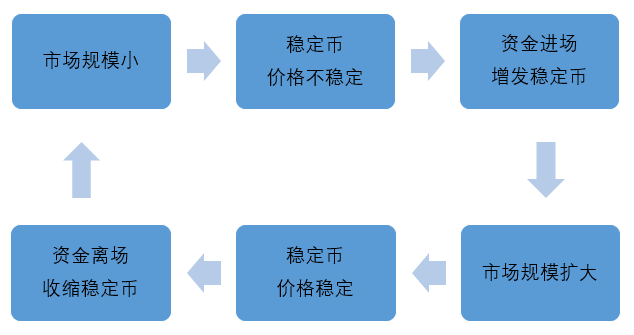
It can be said that the attempt to develop an algorithmic stable currency is a contest between algorithms and human nature. Algorithms, which pursue absolute rationality, present pre-set rules in the form of code, and their operating logic is not affected by the environment; human nature, often manifested in greed and fear under the "animal spirit", triggers skyrocketing and plummeting markets.
However, this has created a common paradox in current algorithmic stablecoins: in the early days, in order to achieve market expansion, algorithmic stablecoins must use human greed to issue additional stablecoins, but this is at the cost of price instability ; When the stable currency market is large enough, the stability of the currency value has been improved, but people have left the market because they are unprofitable, resulting in a shrinkage of the market size.
secondary title
The first generation of algorithmic stable currency --- single currency system (AMPL)
Although algorithmic stablecoins began to appear in the market as early as 2018, it was not until the emergence of AMPL in the summer of 2020 that algorithmic stablecoins really attracted everyone's attention.
From the perspective of algorithm principle, there is nothing special about AMPL. Its theoretical basis is the simplest and most important supply and demand model in economics: AMPL has no cap on the total amount; when the price of AMPL rises above $1.06, AMPL will be increased Circulation to reduce the market price; when the price of AMPL drops below $0.96, the AMPL circulation will be reduced to increase the market price, so that the price of AMPL will be maintained at around $1.
There is a joke that if you teach a parrot to say the words "supply" and "demand," it can become an economist. Although this is a joke, it also illustrates the important position of supply and demand analysis in economics. When analyzing AMPL, many people like to use two sentences in the analysis of supply and demand to explain:
"Rising Stablecoin Prices, Leading to Rising Stablecoin Supply"
"Stablecoin supply rises, causing stablecoin prices to fall"
In the first sentence, there seems to be no problem, because it is the same in reality. When the price of goods rises, it will increase the enthusiasm of merchants and produce more goods; in the second sentence, there is no problem. When there is too much supply of a commodity, it causes the price to fall. So many people like to explain how AMPL works like this:
AMPL price increases → AMPL supply increases → AMPL price decreases
In this way, AMPL has achieved price stability. However, from the actual operation situation, AMPL fluctuates violently. The reason is that the above reasoning seems to be logically self-consistent, but it is actually full of loopholes. The key point is that the "supply" in the first sentence and the "supply" in the second sentence are two different concepts.
In the first sentence, "price rises, supply rises", and "supply" here refers to "quantity supplied", that is, given other conditions unchanged, the higher the price, the greater the quantity of goods supplied by producers, From the supply and demand diagram, the supply quantity is a point; in the second sentence, "supply rises, price rises", the "supply" here should mean that at any given price, producers are willing to provide more Commodities, from the supply and demand diagram, the supply is a curve, the increase in supply means that the curve shifts to the right. So the complete statement of the above two sentences should be:
Stablecoin price increases → stablecoin supply increases (points on the curve move upward)
Stablecoin supply increases (curve shifts to the right) → stablecoin price decreases
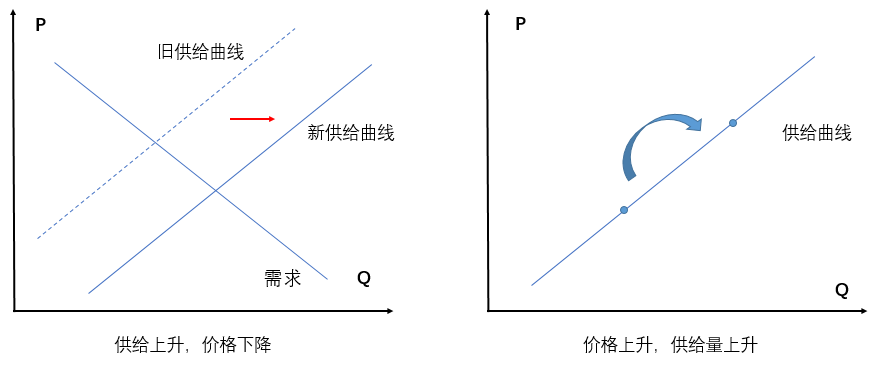
After distinguishing between "supply" and "supply volume", we can find that the so-called "supply elasticity" of the first generation of algorithmic stablecoins is just a misunderstanding---AMPL is still a currency with completely inelastic supply (A vertical curve causes greater price fluctuations), but it only relies on the parameter of price to adjust the supply. The actual operating logic is:
AMPL demand rises (the curve shifts to the right) → price rises → AMPL supply rises (algorithm control, the curve shifts to the right) → AMPL price falls
Decrease in AMPL demand (the curve shifts to the left) → price decline → AMPL supply decline (under algorithm manipulation, the curve shifts to the right) → AMPL price increases
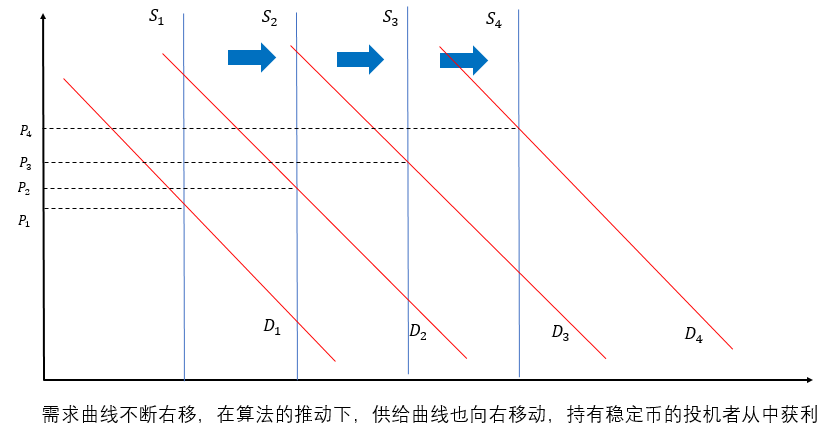
For speculators, this is an excellent opportunity to use algorithms to manipulate the market: the circulation of stablecoins in the early stage is low, and it is easy to increase the price at low cost by injecting funds (the demand curve shifts to the right, pushing the price up), causing The additional issuance of stable coins, these additional stable coins will be distributed to the holders, and when the price reaches a certain level, the holders will sell the additional stable coins to obtain huge profits.
However, when the market circulation of AMPL reaches a certain level, speculative funds need to pay more costs to increase the price. For this reason, speculative funds began to sell their stablecoins and withdraw from the project, resulting in a decline in demand (the left shift of the demand curve), and as a result, the price of AMPL began to fall. When the price falls, driven by the algorithm, the supply curve begins to shift to the right, which further causes the price to fall and pushes more funds to leave the market, thus forming a "death spiral" until the market demand falls to a stable level.
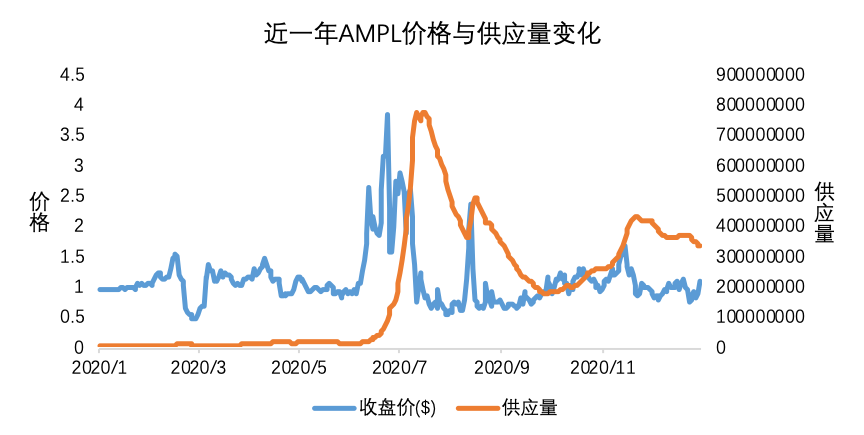
The above phenomenon can also be seen from the changes in the price and supply of AMPL in the figure below: in June, the influx of speculative funds kept raising the price of AMPL, making AMPL continue to issue more; by July, the price of AMPL had been pulled down As high as nearly $4, the cost of continuing to pull the market was too high, speculative funds began to withdraw, and speculators dumped their AMPL, causing the price of AMPL to break through $1, and then the supply of AMPL began to drop rapidly.
secondary title
The second-generation algorithmic stable currency --- multi-currency system (Basis Cash)
Compared with the first-generation algorithmic stablecoin with only one currency, in order to increase the stability of the system, the second-generation algorithmic stablecoin represented by Basis Cash and ESD has increased the richness of the system.
Taking Basis Cash as an example, there are three main roles in the algorithm: stable currency BAC (Basis Cash), BAB (Basis Bond), and BAS (Basis Share). According to official propaganda, these three tokens correspond to US dollars, bonds, stock. Its stabilization mechanism is as follows:
When the BAC price is lower than $1, users can use BAC to purchase the bond BAB at a low price (BAB price = the square of the BAC price), thereby reducing the circulation of BAC and increasing the price of BAC
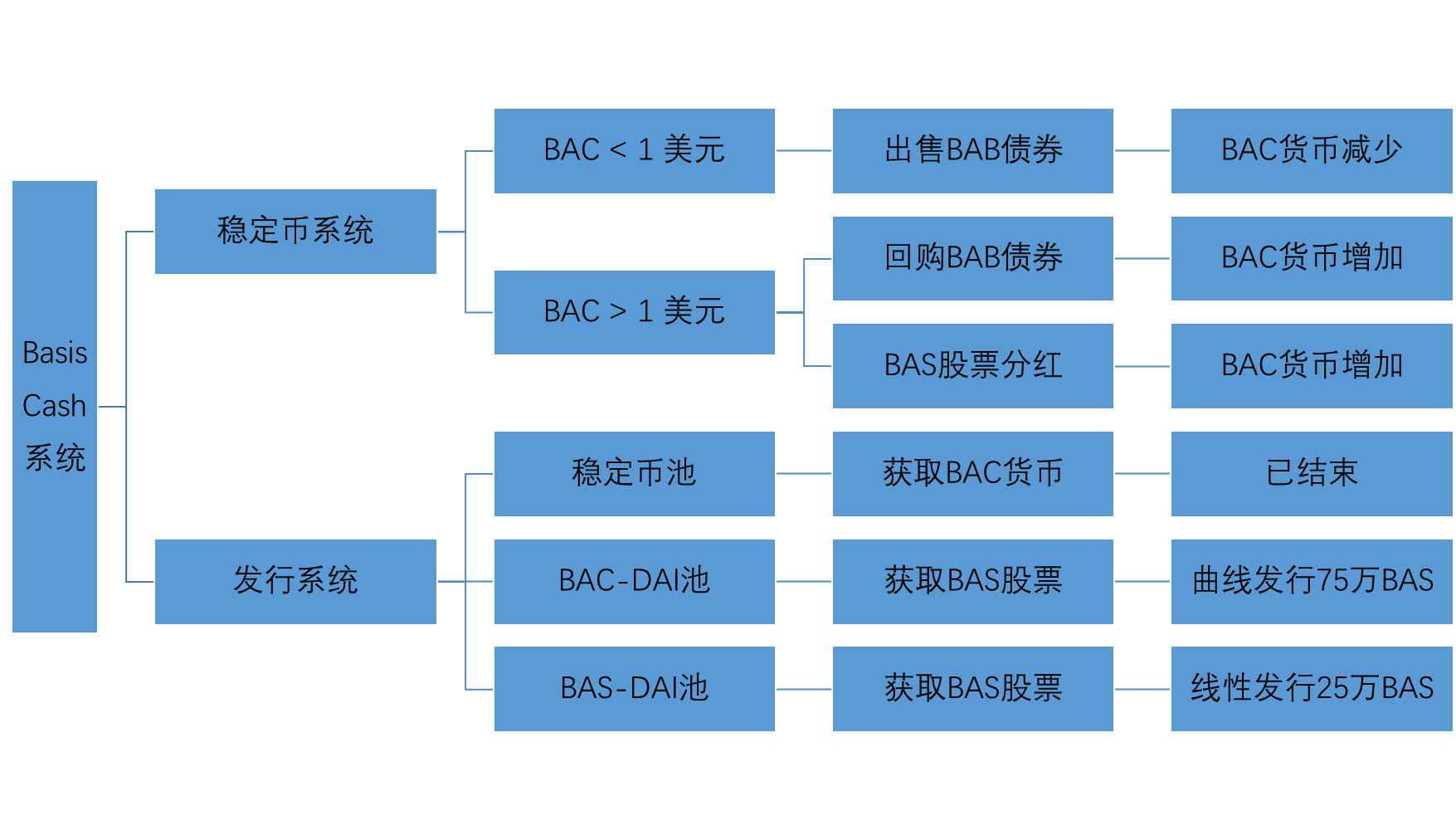
When the price of BAC is higher than $1, users can exchange BAC for BAC; if BAC needs to be issued after the end of the repurchase of BAB, the additional issuance will be distributed to BAS holders as dividends; through the above methods to increase the circulation of BAC, To reduce the BAC price.
In terms of currency issuance, Basis Cash has mainly designed three liquidity pools:
The first is the stable currency pool. In the early stage of the project, users can deposit DAI (MCD), yCRV, USDT, sUSD and USDC into the relevant contract pool to obtain new BAC as income. The pool is currently closed;
The second is the Basis Share 1 pool. Users need to provide liquidity to the DAI-BAC pool of Uniswap V2. After obtaining LP tokens and depositing them in the 1 pool, they can enjoy the BAS income. According to the design, 1 pool will allocate a total of 750,000 BAS;
Finally, there is the Basis Share 2 pool. Users will provide liquidity to the DAI-BAS pool of Uniswap V2. After obtaining LP tokens and depositing them in the 2 pool, they can enjoy the BAS income. According to the design, 1 pool will allocate a total of 250,000 BAS;
It can be seen from the above that Basis Cash’s stablecoin design mechanism simulates the central bank’s open market operations (Open market operations): when the market has excess funds, the central bank sells bonds and withdraws currency from the market; when the market is short of funds , the central bank buys bonds and puts money into the market. This is what the Basis Cash official has always advocated---creating a "decentralized Federal Reserve".
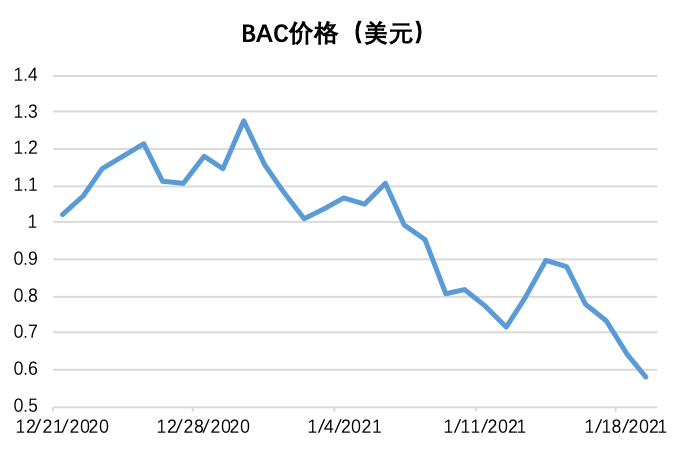
However, from the actual situation, the price of BAC has fluctuated violently after listing, and it has not shown stable characteristics. At present, the price of BAC has fallen below the $0.6 mark—that is, a 40% negative premium has appeared, but the price still has not appeared. upward trend. Why did Basis Cash, known as the "decentralized Federal Reserve", fail to achieve stable price control in the end? Because Basis Cash has only learned the appearance and fur of modern central banks, but not the essence. This is embodied in the nature of the Basis Bond and the design of monetary policy tools.
(1) What exactly is Basis Bond?
Officially, Basis Bond (BAB) issued by Basis Cash is a bond. In fact, BAB is not a bond (Bond), but a perpetual rise-knock-in call option (up-and-in-call).
It is very important to understand that bonds are issued to creditors and promise to repay the principal and interest on a specific date, which has nothing to do with the price of the underlying object --- even if the BAC price remains below $1 in the future, it will not affect the creditor's rights. reimbursement payment. Therefore, when the central bank issues central bank bills in the market, some investors are willing to buy them and successfully withdraw funds from the market.
So what is Basis Bond (BAB) an up-knock-in call? Because only when the price of the underlying asset BAC rises to $1, the system allows investors to exercise the right to buy BAC, where the income = the current BAC price - the square of the BAC price when buying BAB. For example, an investor buys a BAB at a price of US$0.81 when the BAC is US$0.9; when the BAC price rises to US$1.5, the condition for the option to take effect is triggered. It is 1.5 – 0.81 = 0.69 US dollars; and if the price of BAC has been lower than 1 US dollar, then the exercise condition of Basis Bond will not be triggered, and Basis Bond is a piece of "waste paper" for investors at this time.
It can be said that the exotic option nature of Basis Bond has led to the failure of Basis Bash's "open market operation". Investors buy Basis Bond, and their confidence is not based on the repayment of Bond itself when it expires, but betting on BAC The price will return to above $1 in the future, the bet is the market's confidence in BAC, and the bet is the future of BAC.
This is like when the price of BTC falls, some analysts with orders tell investors that they must take advantage of leverage to buy a large amount of BTC now. The logic is: as long as everyone buys BTC, the circulation of BTC will be reduced, thereby increasing BTC The price, and then you can get a lot of money. How many investors are willing to pay? I believe the market has already given the answer.
(2) Is Basis Cash a qualified "decentralized Federal Reserve"?
True open market operations require the central bank to have both tools to release liquidity and tools to withdraw liquidity. From the perspective of the types of open market operations, the current open market operations mainly include repurchase transactions; spot bond transactions and central bank bills. The specific businesses are as follows:
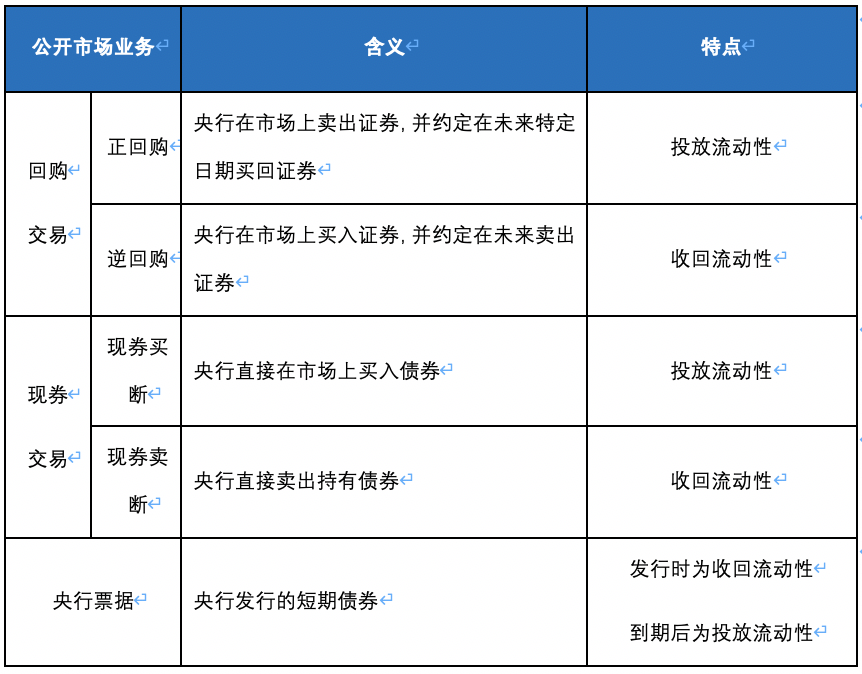
Although Basis Cash claims to be a "decentralized central bank", it only imitates the instrument of central bank bills, and can only withdraw liquidity by issuing Basis Bond (BAB), but in the face of market liquidity shortage (BAC > 1 U.S. dollars), there are not enough tools to inject liquidity into the market. So this has to go back to the old way of AMPL: to inject liquidity by directly controlling the supply of stable coins.
secondary title
The third-generation algorithmic stablecoin---semi-collateralized (FRAX)
In the current market, the representative of the semi-collateralized algorithmic stablecoin is FRAX. Unlike the first and second generation algorithmic stablecoins, the minting and burning of FRAX are based on two types of wealth---traditional The stablecoin USDC and the system finance "FXS", namely
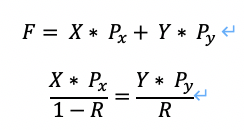
Among them, F is the amount of newly minted FRAX, X is the amount of FXS, and is the USD price of FXS, Y is the amount of the traditional stable currency USDC, and is the USD price of USDC, and R is the mortgage rate
The mortgage rate R is adjusted according to the system algorithm: at the beginning of operation, the mortgage rate of FRAX is 100%, and it is adjusted every hour (determined according to the number of blocks). In the first 1 hour, it costs 1 USD to mint a FRAX. Stablecoins serve as collateral. After every hour from now on:
If PUSD > 1 USD, in this adjustment, the mortgage rate will be reduced by 0.25%.
If PUSD < 1 USD, in this adjustment, the mortgage rate will be increased by 0.25%.
In order to ensure that the actual mortgage rate is equal to the mortgage rate set by the algorithm, FRAX has also designed a "buybacks and recollateralization mechanism". The first is the re-mortgage mechanism. When the algorithm increases the system mortgage rate, in order to make the actual mortgage rate equal to the system mortgage rate, the amount of USDC in the system must be increased. FRAX has set up an incentive: anyone can add USDC to the system, And in exchange for a larger amount of FXS; for example, a user can add USDC worth $1 to the system in exchange for FSX worth $1.2. The "repurchase mechanism" means that when the mortgage rate of the system is lowered, users can exchange FXS for USDC of the same value from the system at any time. Therefore, there are no incentives in the repurchase mechanism.
The existence of the "Buybacks and Recollateralization Mechanism" ensures that users can mint or redeem the stablecoin FRAX at any time according to the mortgage rate given by the algorithm, preventing the phenomenon of insufficient USDC collateral. At this time, under the action of the arbitrage mechanism, the stability of the FRAX price is guaranteed:
When 1 FRAX < $ 1, arbitrageurs will buy FRAX, redeem USDC and FXS with FRAX, and make a profit by selling FXS. Buying demand for FRAX will drive the price of FRAX up.
When 1 FRAX > $ 1, arbitrageurs will mint FRAX through USDAC and FXS, and sell FRAX to make a profit. The selling pressure will cause the price of FRAX to fall.
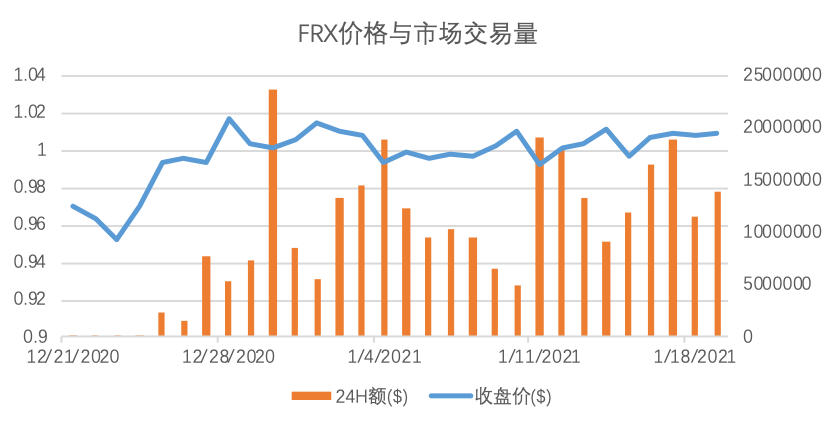
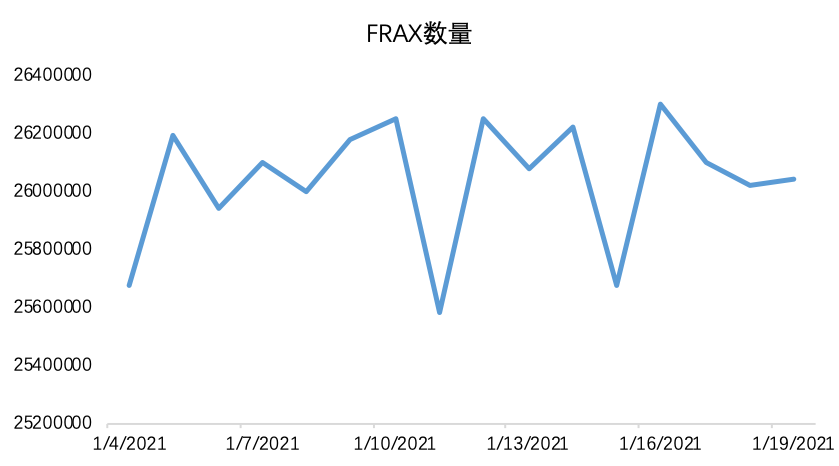
It can be seen from the above that although FRAX claims to be a "semi-collateralized" algorithmic stable currency, it is actually a "full-collateralized" algorithmic stable currency---users can exchange 1 FRAX for USDC and FRX worth 1 US dollar at any time , the algorithm only controls the mortgage rate of the system and the additional issuance rate of FXS, so the price of FRAX is extremely stable.
Of course, the problem with FRAX is: FXS has no value at all in reality, and arbitrageurs can exchange 1 FRAX for USDC and FXS worth $1 at any time, which means that the system completely transfers the risk of price fluctuations of stablecoins To holders of FXS. After all, $1 worth of FXS can be "100 FXS at $0.01" or "1000 FXS at $0.001".
secondary title
The Future of Algorithmic Stablecoins
Under modern economic conditions, there are two main channels for currency delivery:
The first is that money delivery institutions release currency by purchasing currency reserves or value anchors (such as gold, foreign exchange, etc.) to determine the unit value of the currency and enhance the credibility of the currency.
The second is the currency that is released by money delivery institutions by issuing loans to social entities or purchasing their bonds. Both loans and bonds represent future wealth, which breaks away from the limitations of current real wealth. According to the injection of money, it will be able to ensure the timely supply of money and the basic correspondence between the total amount of money and the scale of wealth, so as to ensure the value of gold coins. Stablize.
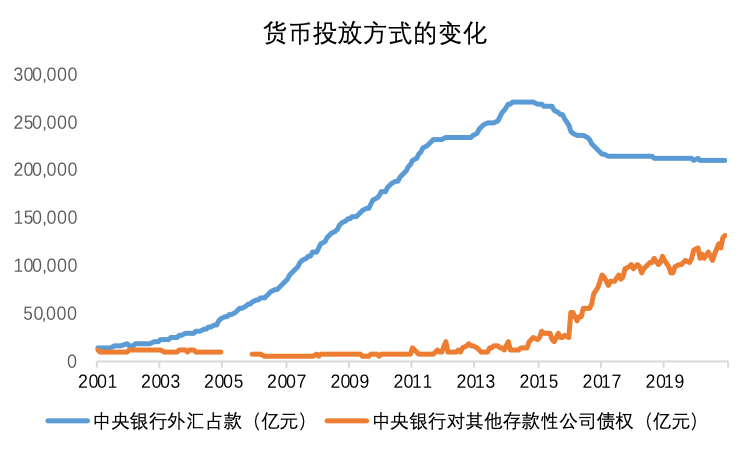
Taking China as an example, between 2000 and 2014, the issuance of RMB was mainly based on foreign exchange funds. The reason is that during this period, China’s foreign exports increased rapidly. The central bank had to purchase a large amount of US dollars in order to stabilize the RMB exchange rate. and other foreign exchange assets, and then release a large amount of RMB, that is, the additional issuance of RMB is based on foreign exchange assets such as the US dollar; since 2014, China’s foreign exchange funds have begun to decline year by year, and at this time the issuance of RMB has evolved into a domestic currency. The increase in debt in the banking system is dominant, that is, the issuance of RMB is based on debt.
Similarly, the first generation of stablecoins, such as USDT, USDC, etc., are all like this: behind every stablecoin issued, there is 1 dollar of real legal currency as a reserve (although some non-compliant stablecoins are tricky), so as to maintain stability The confidence in the currency ensures the stability of the price of the stable currency.
The root cause of the current paradox of "market size-price stability" in various algorithmic stablecoins is that the launch of algorithmic stablecoins is not based on the current or future wealth scale, which is easy to cause speculation and achieve the scale of stablecoins. The consequence of the expansion is the extreme instability of the currency value and the unsustainability of the project.
Similarly, there is a fallacy in the current market: the expansion of the algorithmic stablecoin market must rely on speculation, so the price instability of the algorithmic stablecoin can be sacrificed. This in itself is a lack of deep understanding of the market economy, and the expansion of the currency scale depends on the growth of social wealth. The wealth brought by speculation is temporary, because it does not create wealth, but only transfers wealth by using market rules, so when the speculative funds withdraw, the project will also decline.
Current algorithmic stablecoins generally lack a market where wealth can be created. Therefore, if the algorithmic stablecoin wants to succeed in the future, it is necessary to establish a "debt market" or "wealth creation market" for the algorithmic stablecoin. protocol. Based on the current and future wealth scale, the launch and withdrawal of algorithmic stable coins are carried out. This can not only solve the "market size-price stability" paradox, but also create enough "policy tools" for algorithmic stablecoins to maintain price stability.





