Editor's Note: This article comes fromBlue Fox Notes (ID: lanhubiji), reprinted by Odaily with authorization.
Editor's Note: This article comes from
In the previous article, Blue Fox Notes introduced ESD "One of the algorithmic stable currency duo: ESD
", the current market value of ESD exceeds 500 million US dollars, more than twice the market value of the elastic stable currency AMPL. It is not yet clear how much market capitalization scale ESD will gradually stabilize. At present, ESD is far more than $1. As of the writing of Blue Fox Notes, ESD was as high as $1.31. It issued a large amount of ESD rewards to early participants, mainly users who pledged ESD and users who provided liquidity for ESD. The benefits for participants are huge. But in the end, the goal of the ESD stablecoin is to return to the price of $1.Today, Blue Fox Notes is going to talk about Basis, another algorithmic stablecoin project that everyone pays more attention to in the market. Basis inherits the basic design framework and concept of Basecoin. Generally speaking, it is similar to ESD, but there are still many differences in the specific mechanism.Different from ESD, the Basis protocol has three types of tokens, BAC, BAS, and BAB. Among them, BAC is the abbreviation of Basis Cash, which is a stable currency, and its target price is 1 US dollar; BAS is the abbreviation of Basis Share, and BAB is the abbreviation of Basis Bond. The main function of BAS and BAB is to bring the price of BAC back to 1 US dollar .If compared with the ESD agreement, BAS is equivalent to the "ESD in pledge" in the ESD agreement, and can obtain newly issued stable currency rewards; BAB is equivalent to the "Coupon" in the ESD agreement, and has the opportunity to obtain premium income.When the BAC price exceeds $1, the agreement will first allow BAB to be redeemed, thereby issuing additional BAC. After repaying the debt, if the price of BAC is still higher than $1, BAC will continue to issue more, and this part will be distributed to BAS pledgers and Basis treasury. Holders of BAB can use BAB to exchange for BAC, which comes from the treasury. In other words, the newly added BAC will first meet the exchange needs of BAB holders, and then be issued to BAS holders. The current BAC issuance is basically issued to BAS pledgers.When the BAC is lower than 1 USD, the user buys BAB with BAC, and the BAC will be destroyed, resulting in a decrease in the circulation of BAC. BABs do not earn interest and have no maturity date. This is different from ESD. There is a validity period in the ESD design (the Coupon in the ESD protocol is valid for 90 epochs, about 30 days, and will not be redeemable after 90 epochs). When the price of BAC returns above $1, BAB can be exchanged back to BAC at a ratio of 1:1, thereby earning income. If the BAC price is lower than $1, users cannot redeem it.*if BAC is above $1
The additional issuance of BAC will be changed from "totalSupply *(oraclePrice-1)" to "circulatingSupply*(oraclePrice-1)" in the future. "circulatingSupply" is the total supply of BAC minus the balance of BAC in the Treasury contract of BAC.secondary title
Basis cold start needs to distribute the initial genesis BAC (Basis Cash), and the total amount of initial distribution is 50,000 BAC. The user deposits DAI, sUSD, yCRV, USDC, and USDT into the distribution contract, thereby obtaining. Each of the five pools has a deposit limit of 20,000 tokens (of the five stablecoins mentioned above). Get 10,000 BAC every day and distribute it in five days. After the creation of BAC, the next step is the distribution of BAS. This part is done.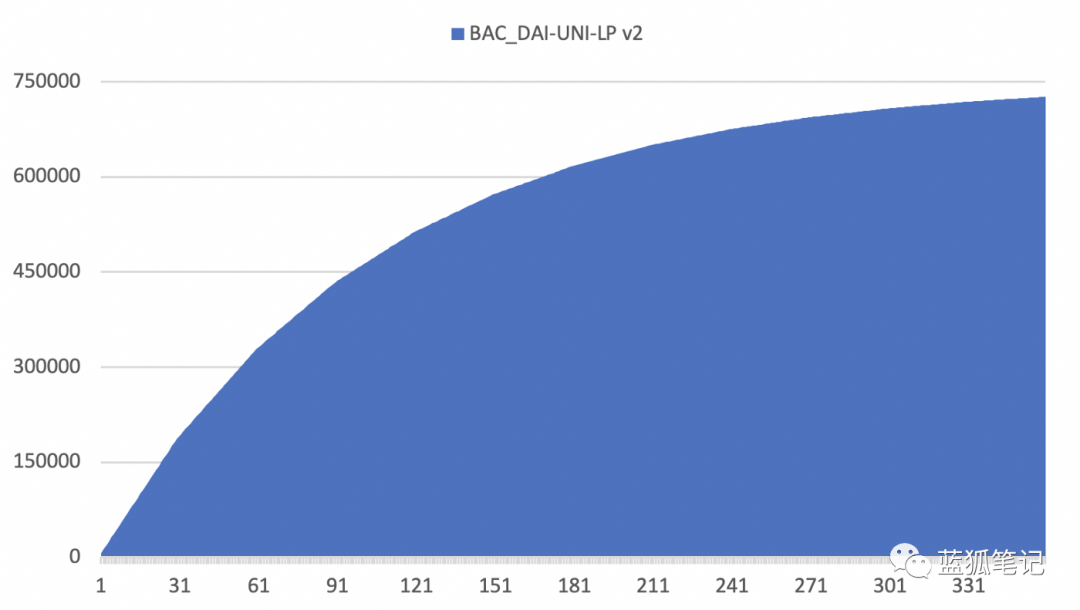
The total amount of BAS is capped, and there are a total of 1,000,001 BAS. They have no pre-mining at all and are distributed by providing liquidity and staking BAS.
*Provide liquidity to obtain BAS additional issuance rewards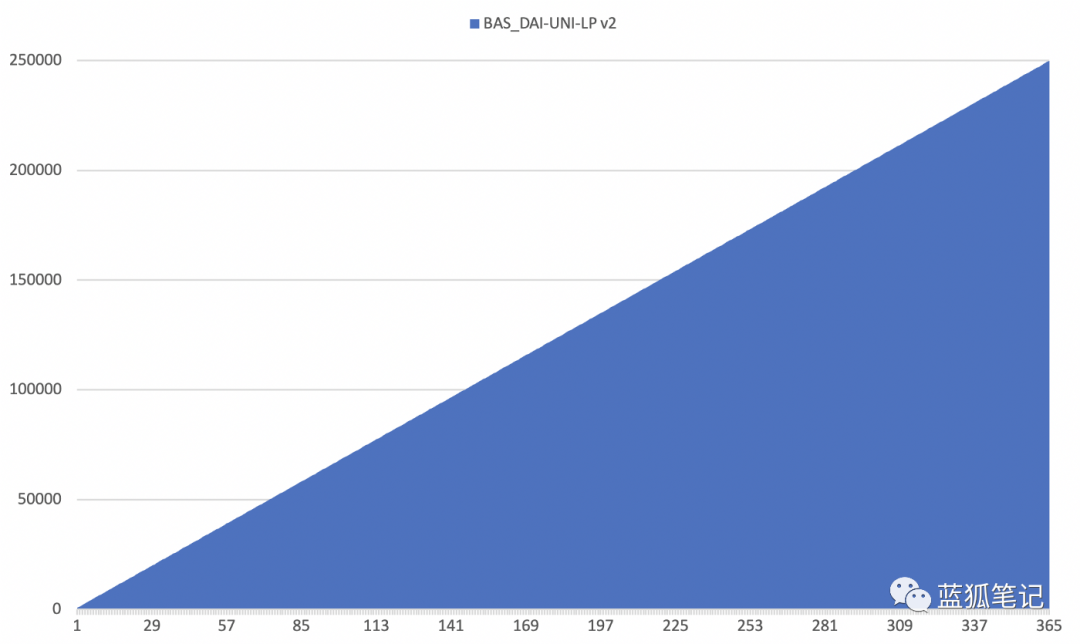
*Pledge BAS to get BAS bonus
The BAS/DAI pool can get 25% of the BAS reward tokens for one year, and the same number of tokens will be distributed every day, which is 684.9315.
BAS iteration
Since its launch on November 30, the Basis team has proposed four iterations. One of them is to use 2% of its future newly mined BAC tokens as a community development fund. This fund is different from Basis Cash's treasury, which plays a role in regulating the stability of tokens.Basis put forward this proposal, which shows that the team realizes that for stablecoins, although there are many speculative factors in the early stage, it must eventually mature and cannot rely too much on speculation, but the "adoption" of stablecoins. With the funds for community development, it is conducive to establishing a partnership with the DeFi ecosystem, encouraging contributors to the ecosystem, and facilitating its final adoption.Path differences under the detailed design of algorithmic stablecoinsWhether it is Basis, ESD, or DSD, the operation mechanism refers to the previous Basecoin model. For example, when Basis is additionally issued, as long as you pledge BAS, you will have the opportunity to obtain the additional issuance reward of BAC stable currency. This is similar to obtaining ESD additional issuance rewards after locking ESD stablecoins in the ESD protocol. These mechanisms are similar in nature. However, there are some differences in the detailed design between them, which lead to the difference in their path evolution.They differ in epoch time and lock time. For example, DSD has an epoch of 2 hours, ESD has an epoch of 8 hours, and Basis has an epoch of 24 hours. The lock-up time for providing liquidity and token staking is also different. For example, in the ESD protocol, the ESD pledge lock time is 15 epochs (about 5 days), while the lock time for liquidity providers is 5 epochs (about 40 hours). In BAS, there is no time-locked restriction, and you can enter or exit at any time.The difference in epoch time plus lock time causes them to show significantly different development trajectories. These seemingly simple mechanism settings lead to different rates of return and speculation for users, which are finally reflected in the price deviation of stablecoins and the growth rate of market value.Judging from the degree of deviation from the target price, as of the writing of Blue Fox Notes, the price of BAC is 1.21 US dollars, the price of ESD is 1.31 US dollars, and the price of DSD is as high as 2.86 US dollars. Relatively speaking, the BAC price deviates the least, while the DSD deviates the most. These represent varying yields and degrees of speculation. This is also shown in the growth rate of the market value. At present, the market value of BAC's stable currency is more than 32 million US dollars, while ESD is more than 500 million US dollars, and DSD has increased tenfold in two days, from 2200 US dollars to 230 million US dollars. market value.The growth scale of the stablecoin market value means the additional issuance of stablecoins. On the whole, the BAC price deviation is small and the market value growth is relatively moderate, the ESD is in the middle, and the DSD speed is the fastest.The fate of stablecoins is not speculation. Speculation is only the necessary path to realize the stability of algorithmic stablecoins in the early stage, but it is not the purpose. In the long run, its rate of return will drop to a reasonable level and maintain a balanced state.Stablecoins will win in the end, not because the epoch is 8 hours, 2 hours, or 24 hours, or the length of the lock-up time, but how it achieves continuous stability and how it is embedded in more DeFi ecosystems. If a stablecoin is long If it stays above $1.1 for a long time or below $0.9 for a long time, it will be difficult to be adopted by other DeFi protocols. Therefore, the current market value of stablecoins is not the final decisive factor. The key to stablecoins is always "stability". (Of course, this is not to say that the growth of market value is not important, the necessary growth of market value is very important, but the premise of stability cannot be ignored).
At present, Basis, ESD and DSD all have their own fans, but who will win in the end, it is estimated that we can see the clue in a month or two.If the algorithmic stablecoin can achieve a level of stability similar to the current level of "DAI", it is very likely that it will gradually match DAI, or even surpass DAI, and become the largest type of truly decentralized stablecoin. DeFi is like a living body. It has a natural impulse to expand. If its genes want to expand, they will advance infinitely toward decentralization. USDT" is more suitable for this role.Experiments unprecedented in human history





