Stablecoins: The Empire Strikes Back Has Begun


Editor's Note: This article comes fromBabbitt Information (ID: bitcoin8btc), compiled by: Kyle, published with permission.
Editor's Note: This article comes from
Babbitt Information (ID: bitcoin8btc)
Babbitt Information (ID: bitcoin8btc)
, compiled by: Kyle, published with permission.
When the closed thinker encounters concepts he doesn't understand, he chooses to fear or ignore them.
He said:
We have been sidelined and unwelcome by financial empires for more than a decade, but now a new force is waking up.
In the minds of the rebels, stablecoins represent new hope, a path to financial democracy and banking for the unbanked. For the existing elite, stablecoins and decentralized finance are a phantom threat — an otherworldly threat to their imperial power.
The G7 group is becoming more and more fearful. At a recent meeting, German Finance Minister Olaf Scholz reiterated his concerns about authorizing the launch of Facebook’s cryptocurrency Diem (formerly Libra) in Europe.
He said:
"Even in sheep's clothing, a wolf is still a wolf. My position is clear that Germany and Europe cannot and will not accept entry into the market without adequately addressing regulatory risks."
Those who believe in the true vision of DeFi have little interest in Facebook's cryptocurrency, so our community need not worry about this challenge.
But another statement from Schultz directly attacked everything we were fighting for. He said,
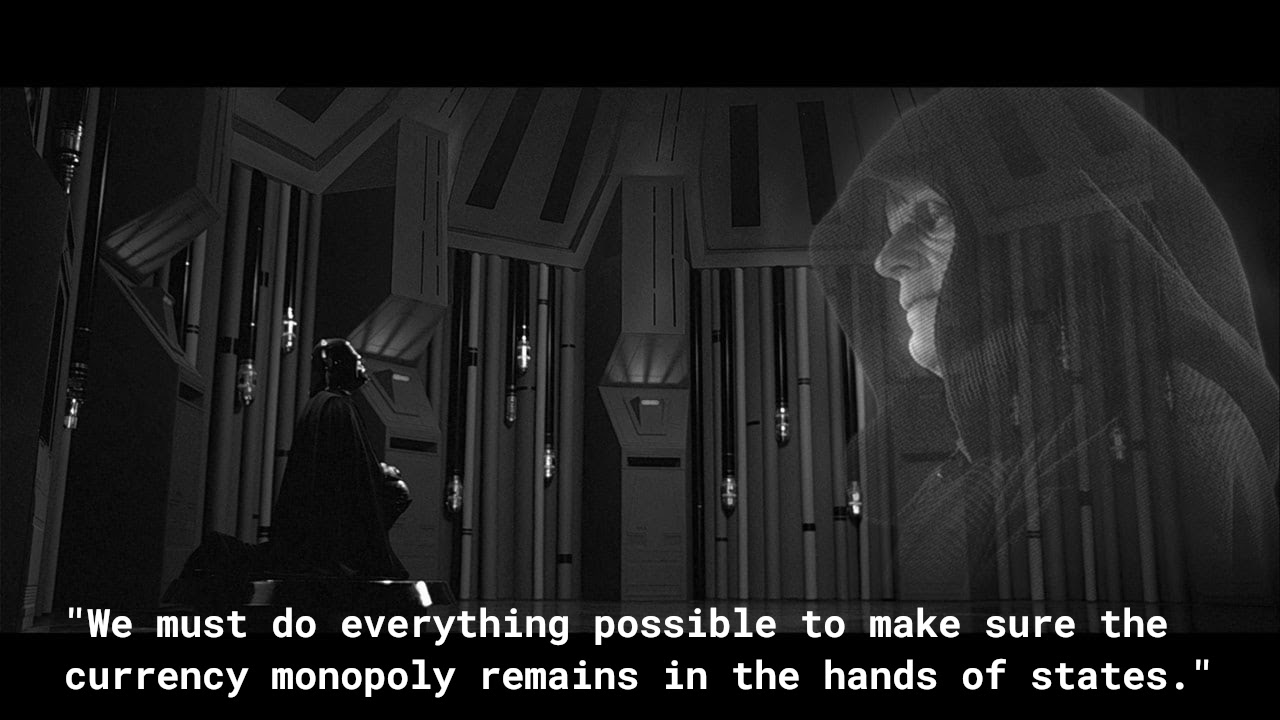
"We must do everything possible to ensure that the monetary monopoly is in the hands of the state."
This is the beginning of the battle for financial sovereignty.
So far, we have been free to structure finance. Our alternative economy has been built without interference from outside forces. However, stablecoins pose too many threats for regulators to ignore their existence.
Finance ministers and central bankers race to regulate these digital currencies, while politicians spread lies to slow their growth.
They know that mass adoption of stablecoins will slash their grip on the global economy, but their efforts to regulate and stop this are too late.
The STABLE ACT, recently introduced by US politicians Rashida Tlaib, Jesús García and Stephen Lynch, would require issuers to issue any stable The currency was previously approved by the Bank Charter and Regulatory Authority.
This will affect many stablecoin issuers currently operating in the US, including Circle, Gemini and Paxos.
An economic adviser to US Congresswoman Rashida Tlaib said:
“Any stablecoin that meets the definition of fiat is applicable because the focus is on what the token promises (e.g. an obligation) rather than how it claims to be able to fulfill the obligation (e.g. providing backing collateral).
In a shocking display of discrimination, Congresswoman Rashida Tlaib tried to claim on Twitter that the stability bill was designed to prevent cryptocurrency providers from re-enacting banks targeting large, low- and middle-income residents crime.

She continued;
“Especially in the #COVID19 pandemic, their [residents of color] vulnerability may be exploited by bad actors who have attempted to issue stablecoins in the past, and be masked like other shadow currency issuers in the past. #STABLEAct Stability Act can against this threat."
Assemblywoman Tlaib is exploiting public fear of the pandemic and desire for racial equality to advance her cause. This is just one of many underhanded tricks used to keep the public from controlling their own money.
Trying to pass legislation to discredit our industry and slow our progress is nothing new, but the Stability Act represents a change in political strategy. These are direct evidence that they are trying to limit our progress; this is the beginning of a series of new arguments that will define the next scenario in the regulatory battle across the crypto industry.
Violence in the digital age.
The powerful old forces are preparing for battle.
Bitcoin was created as a direct attack on the existing system. Now, the empire is fighting back.
The Stabilization Act is the first of many bills. This could be a potential attack vector employed by the US government. We will soon see more aggressive tactics being deployed in an attempt to change the pace of our industry.
Tether (USDT) has long been expected to fall prey to U.S. regulations, with many fearing the impact this will have on the market. However, the price movement is only temporary, and if Tether falls, other tokens will take its place.
Envious governments will closely monitor the ups and downs of cryptocurrencies, and they will look for any excuse to limit sales of their devalued currencies.
Details don't change trends. Although they have short-term impacts, when we zoom out to a longer time frame, we see these actions as the final blows of the current dying system.
It’s not just the tokenized dollar that will change the world. For those looking to increase their currency's international exposure, tokenizing fiat currencies is an excellent way to gain an international edge. As the inevitability of stablecoin adoption becomes apparent, we enter a race between states and corporations, both wanting to release the first widely adopted and heavily regulated stablecoin.
The STABLE ACT, for all its clumsiness, may be more tactical than it appears. The U.S. will carefully plan how to position itself when the EU and China issue their digital currencies.
The globalization of culture, currency, and commerce will provide opportunities for citizens of all nations; the most successful governments over the next 20 years will be those that provide a comfortable environment for promoting these opportunities, and successfully adapt to changing paradigms.