






Revolving Door Scandal: Who Tailored the U.S. Stablecoin Bill for Tether?


- Core Insight: A Bloomberg investigation reveals that during the drafting of the Trump administration's GENIUS Stablecoin Act, his aides Howard Lutnick and Bo Hines tailored favorable provisions for Tether, the world's largest stablecoin issuer, weakening regulatory constraints and creating a deep entanglement between government policy and personal financial interests.
- Key Elements:
- Key clauses favor Tether: Including allowing foreign issuers to be subject to "equivalent regulation" (e.g., El Salvador), setting a three-year compliance grace period, and exempting issuers from liabilities for DeFi secondary market transactions.
- Conflict of interest with key figures: Commerce Secretary Lutnick previously headed the custodian of Tether's reserves. In 2024, his company secured an option to purchase 5% of Tether's equity at a very low price, and his children also received loans from Tether.
- Bo Hines' involvement: White House staffer Hines, during negotiations for the bill, explicitly set the retention of the three-year grace period as a "non-negotiable red line." One month later, he was hired as an executive by Tether.
- USDT continues to be widely used for illicit activities. Elliptic data shows over $40 billion worth of USDT was circulating in fraudsters' black markets in 2025.
Original Authors: Anthony Cormier, David Kocieniewski, Annie Massa, Bloomberg
Original Translation: Saoirse, Foresight News
This event is regarded as a landmark moment for the crypto industry, and also the first legislative achievement in Trump's agenda to promote the US as the "global crypto capital."
One year ago, Trump signed the "GENIUS Act" into law in the East Room of the White House, witnessed by members of Congress and industry executives. He called the bill a key step in integrating digital assets into the US mainstream financial system.
The act establishes federal regulatory rules for stablecoins for the first time, aiming to restore market confidence in this $300 billion sector. It requires issuers to disclose accounts publicly and prevent financial fraud; it also plans to bring stablecoin issuers under US regulatory jurisdiction, regardless of whether the company is registered in the US, to address a long-standing industry pain point: criminals, terrorist groups, and sanctions evaders using stablecoins to move funds.
However, numerous interview records and court documents reveal the negotiation details: In the months before and after Trump's inauguration, his advisors Howard Lutnick and Bo Hines operated behind the scenes to weaken regulatory constraints, ultimately tilting the final bill in favor of Tether, the world's leading stablecoin issuer. Multiple sources involved in the negotiations say that among Trump's advisors, Lutnick and Hines were decisive in shaping the legislation, which ultimately included several provisions favorable to Tether. Dozens of industry executives, lobbyists, and current and former US officials who provided information for this report requested anonymity as they were not authorized to disclose negotiation details.
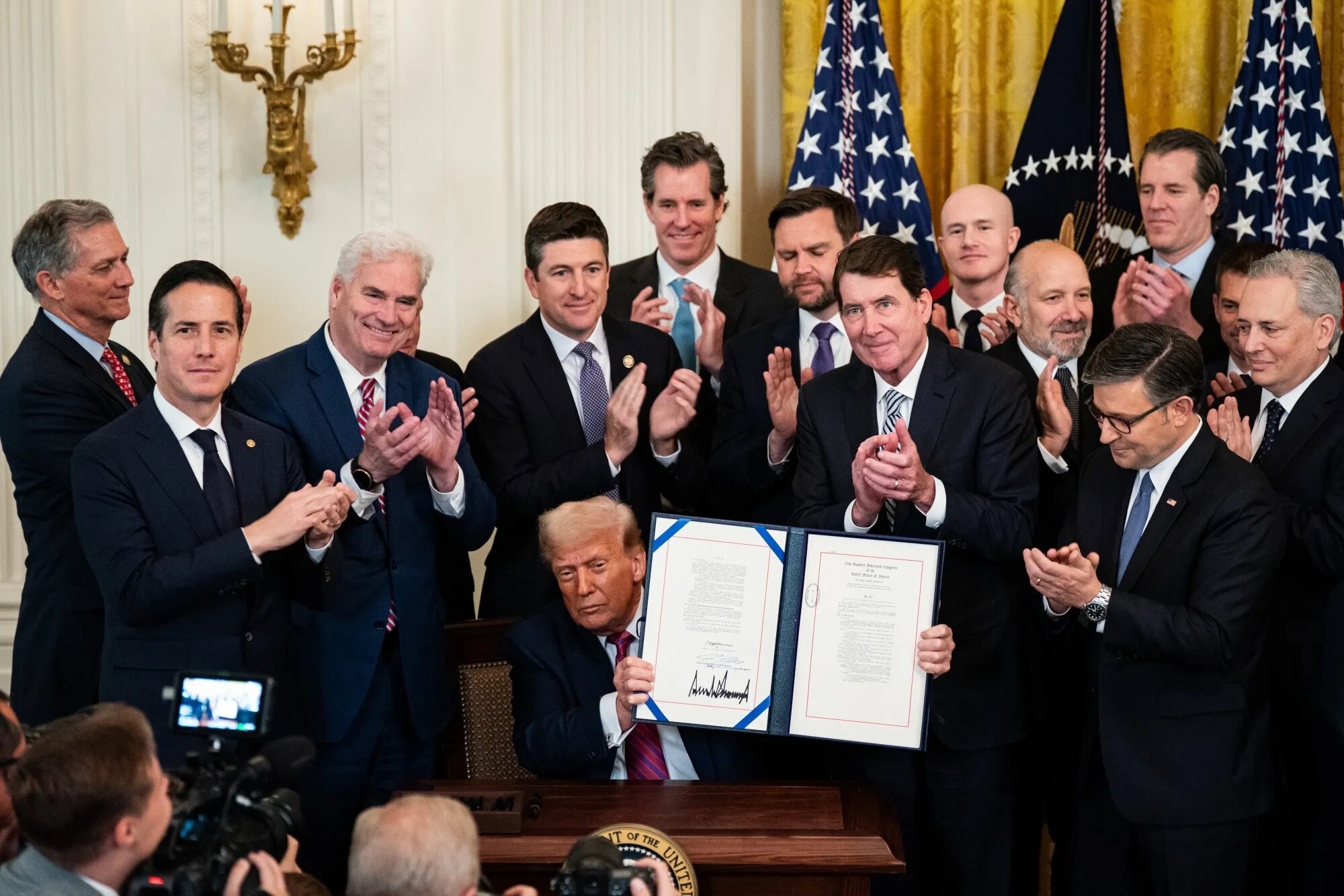
President Trump signs the GENIUS Act at the White House on July 18, 2025. He described the bill as a "major advance in cementing America's dominance in global finance and crypto technology." Photo: Al Drago/Bloomberg
Before becoming Trump's Secretary of Commerce, Howard Lutnick was the Chairman and CEO of Cantor Fitzgerald, the Wall Street investment bank entrusted with managing Tether's reserve assets. Congressional lobbying records, federal court filings, and a source familiar with the matter confirm: throughout 2024, Lutnick acted as Tether's crisis PR manager, quelling negative publicity and lobbying lawmakers against bills Tether opposed.
After Trump took office, Bo Hines was tasked with finalizing the legislative negotiations. This 29-year-old White House aide, a North Carolina native, entrepreneur, and crypto investor, unsuccessfully ran for Congress as a Republican in 2022 and 2024. He described himself as the White House's "tough enforcer" for the bill. Three sources revealed that as negotiations neared completion, Hines stated publicly that the provisions Tether was fighting for were non-negotiable "red lines" set by the White House.
This report outlines the complete legislative process, exposing previously undisclosed maneuvers: first by Howard Lutnick, and then by Bo Hines, who engaged in multi-party mediation to secure favorable rules for Tether, which controls about 60% of the global stablecoin market. The report also clearly demonstrates how the current administration's policy-making is deeply intertwined with the personal financial interests of its officials. Both Hines and Lutnick have received substantial returns from Tether.
Over an 18-month period from 2024 until shortly after the GENIUS Act was passed, Tether executives executed a series of business deals:
- In April 2024, granted Howard Lutnick's financial institution the option to purchase company shares worth tens of billions of dollars for only $600 million. Tether's chairman reportedly told partners the price was "ridiculously low."
- In December 2024, invested $775 million in Rumble Inc, a struggling streaming platform that partnered with the company operating Trump's Truth Social, and whose investors include several Trump associates.
- Hired Bo Hines as an executive in August 2025, just one month after the bill was signed.
- In October 2025, provided a loan to a trust benefiting Howard Lutnick's children, who were then acquiring their father's multi-billion dollar business assets.
Under the federal ethics agreement that Cabinet officials must sign, Howard Lutnick had promised to divest his Cantor Fitzgerald holdings and recuse himself from all matters involving conflicts of interest. A Commerce Department spokesperson did not respond to details in this article, only stating that Lutnick adhered to the ethics agreement, divested all assets including those related to Tether, and "did not participate in any work on the stablecoin provisions of the GENIUS Act."
Bo Hines did not respond to interview requests, and the White House also declined to comment.
Tether issued an official statement, strongly denying any improper conduct in its lobbying activities with policymakers regarding stablecoin legislation. The company stated it has long engaged in legal and transparent communication with regulators, lawmakers, and law enforcement, similar to what many market participants do. Tether also emphasized that the GENIUS Act does not contain special treatment for Tether, and the new rules will apply uniformly to all stablecoin issuers wishing to operate under the framework.
The act sparked intensive lobbying across the financial industry, with crypto exchanges, credit card companies, and community banks all participating. But Tether, as the undisputed industry leader—its largest competitor is only half its size—had the highest stake in the 2025 legislative negotiations.
Since the act took effect, Tether, registered in El Salvador, has continued to expand. The company launched a new compliant token for the US market, but its core product remains the world's most widely circulated stablecoin. Data from multiple industry research institutions and government sources show that USDT has been persistently used by terrorists, North Korean hackers, and sanctioned entities in Iran and Russia. According to the text of the GENIUS Act, this core USDT token may permanently escape direct US regulatory oversight.
Several provisions in the final version of the GENIUS Act favor Tether, differing significantly from stablecoin regulatory proposals previously drafted by members of Congress. Stablecoins combine convenience with pseudonymity: blockchain wallet addresses are permanently public, but the real identity of the user cannot be directly traced.
Trump's Core Advisors Shaping Crypto Legislation
As early as 2023-2024, bipartisan lawmakers drafted legislation setting strict requirements: foreign stablecoin companies (like Tether) wanting to do business in the US must submit to US regulatory review and implement full anti-money laundering (AML) standards.
The GENIUS Act significantly relaxes this constraint. A provision critics call the "regulatory equivalence loophole" states that as long as the US Treasury Secretary deems El Salvador's regulatory standards roughly equivalent to those of the US, Tether's USDT can be regulated by El Salvador—the country where Tether plans to relocate its headquarters. The specific rules for this equivalence determination are still being drafted.
Another change, known internally as the "DeFi loophole," reduces the liability of stablecoin issuers: they are not required to track misuse of their tokens in secondary decentralized finance markets. Users can trade peer-to-peer directly on the blockchain, bypassing banks and exchanges, without identity verification or explaining the purpose of their funds.
The act also includes a three-year compliance grace period: stablecoin issuers entering the US market are not required to meet all compliance requirements for three years. During legislative negotiations, some Democratic lawmakers proposed shortening this grace period to 18 months, but sources say Tether insisted on keeping the three-year term, with Bo Hines strongly advocating for it at critical moments.
During negotiations, Bo Hines told parties that Tether was crucial to the White House and that Republicans should hold their ground. Three sources conveyed that Hines explicitly stated that retaining the three-year transition period was a non-negotiable red line.
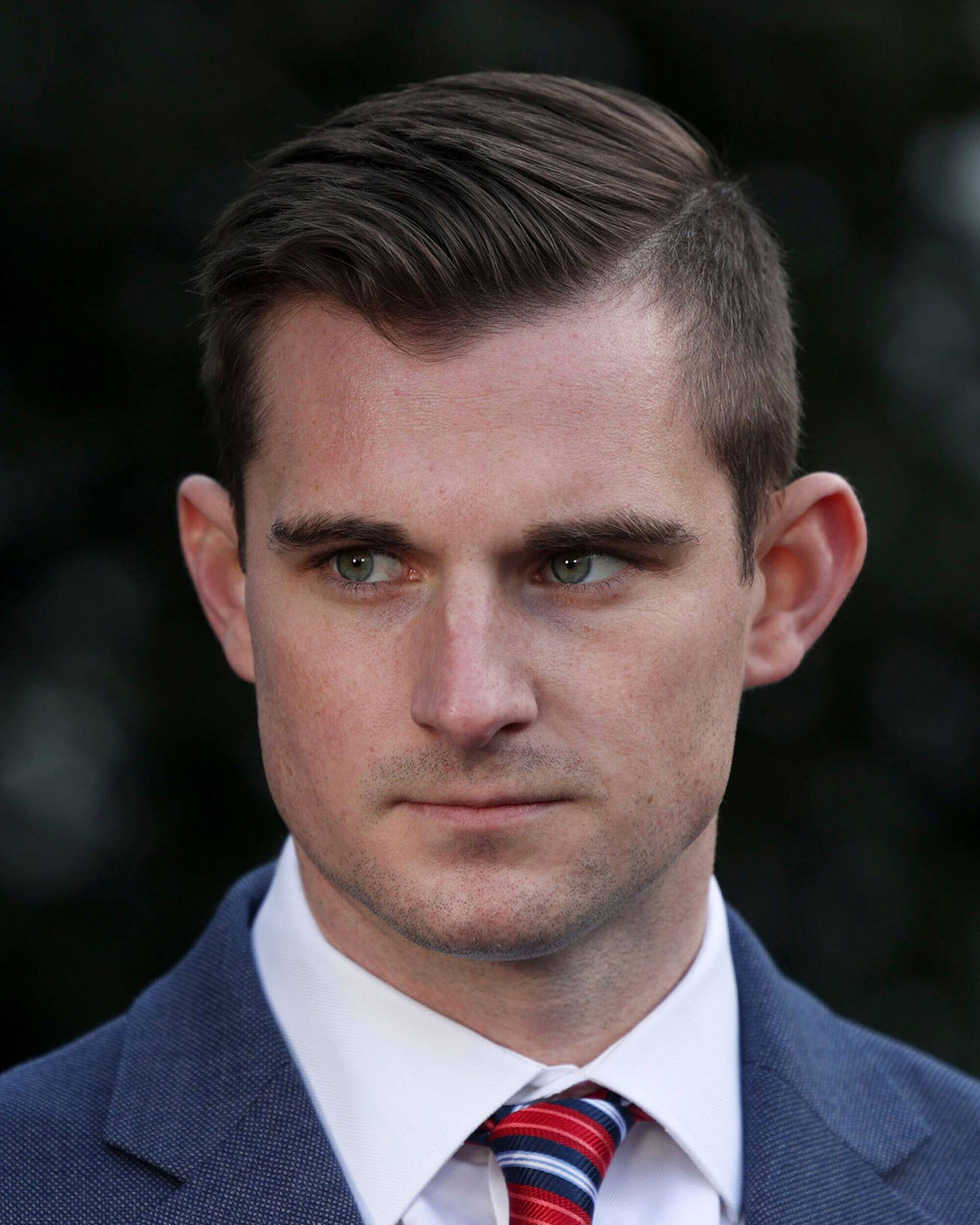
Bo Hines, appointed by Trump as Executive Director of the President's Digital Asset Advisory Council, led the push for the GENIUS Act through Congress. Photo: Tierney L. Cross/Bloomberg
Many financial experts warn that these provisions could weaken the US's ability to combat money laundering by criminals and sanctioned entities, while also hindering Trump's goal of making the US a global leader in digital currencies.
Timothy Massad, former Assistant Treasury Secretary under the Obama administration, raised concerns: regulatory loopholes create unfair competition, allowing foreign issuers to circumvent strict AML rules while US-based crypto companies face high compliance costs, potentially even undermining the dollar's global reserve currency status. Massad also served as Chairman of the US Commodity Futures Trading Commission from 2014-2017.
"If we want the dollar to maintain its central global reserve currency status, we cannot allow terrorists, sanctioned individuals, and criminals to anonymously transfer dollar funds," Massad said.
Any currency faces risks of illicit use. However, since launching USDT in 2014, Tether has faced persistent questions about the adequacy of its customer due diligence. Tether initially argued that being established overseas shielded it from what it called US "over-regulation." But its stance shifted later: in December 2023, Tether implemented rules to proactively freeze wallets associated with individuals and entities on the US Treasury's sanctions list.
Investigative bodies have continuously gathered evidence showing USDT being used in fentanyl trafficking from Mexico and helping Russia evade sanctions. A January 2024 UN report identified USDT as the top choice for Southeast Asian crypto money laundering rings. Two sources revealed that in 2024, the Biden administration's National Security Council even discussed a total ban on Tether's token entering the US market.
Ultimately, the proposal was shelved, with law enforcement citing the ability to still track illicit funds related to USDT through on-chain transactions. Over time, federal law enforcement also acknowledged Tether's increased willingness to cooperate in freezing assets involved in crimes.
A Tether spokesperson responded: "The company has built a law enforcement cooperation mechanism that is among the most effective in global finance." The company stated it is committed to combating financial crime and that the GENIUS Act will further strengthen these efforts.
Nevertheless, during the entire legislative process and after enactment, USDT continued to be frequently used by illicit groups.
Data from blockchain analytics firm Elliptic shows that in 2025, sanctioned Central Bank of Iran purchased $507 million worth of USDT. In July of the same year, the month Trump signed the act, Elliptic monitored nearly $2.5 billion in USDT flowing into wallets linked to multiple Russian-connected entities; the US Treasury Department determined these entities built cross-border channels to help parties evade sanctions.
This year alone, over $4 billion worth of USDT circulated in black markets operated by Chinese fraud rings, used for romance scams, impersonation fraud, and sextortion, according to Elliptic data.
Court records show that since July 2025, federal prosecutors across the US have filed dozens of lawsuits seeking to seize USDT involved in crimes, with the total amount sought being at least $172 million.
Tether's circulating supply is more than double that of its largest competitor, Circle Internet Group Inc, but it has fewer than half the employees, outsourcing much of the suspicious transaction analysis. Tether declined to disclose the size of its compliance team but stated: "We consistently cooperate with over 340 law enforcement agencies across 67 jurisdictions worldwide to identify, freeze, and assist in recovering assets related to illegal activities."
A company spokesperson said: "This is not just a paper compliance commitment, but a practical, quantifiable collaboration that most traditional financial institutions would find difficult to match."
Howard Lutnick's Lobbying Strategy
Cantor Fitzgerald began managing Tether's reserve assets in 2021, by which time the investment bank executive had known Trump for decades. Trump had just finished his first presidential term and was preparing for a return to the White House. Tether was highly profitable but its market reputation was controversial. In 2024, Howard Lutnick was simultaneously working for Trump's campaign and Tether.
Independent audits are crucial for convincing investors that a token has sufficient reserves, but Tether has never released a full independent audit of its reserves. In 2021, Tether and its affiliated exchange paid $61 million to settle charges brought by federal regulators and the state of New York, which alleged Tether had made false statements about its reserve size and misled investors; Tether did not admit wrongdoing in the settlement. The GENIUS Act requires stablecoin issuers to undergo annual audits; Tether announced this year that it had hired an auditor but has not disclosed a timeline for publishing a full audit report.

Howard Lutnick (then Chairman and CEO of Cantor Fitzgerald) at the World Economic Forum in Davos, Switzerland, January 2024. Source: Bloomberg
When the market persistently questioned the veracity of Tether's reserves, Howard Lutnick publicly defended the company. In January 2024, speaking on Bloomberg TV at the Davos forum, he stated: "They have the reserves they claim to have."
The following month, Lutnick traveled to El Salvador, meeting with Tether Chairman Giancarlo Devasini and President Nayib Bukele, a strong supporter of the crypto industry who calls himself the "world's coolest dictator." Shortly after, Tether officially announced its plan to move its headquarters to the capital, San Salvador.
In April 2024, Cantor Fitzgerald purchased $600 million in convertible notes, gaining the option to acquire a 5% stake in Tether. This deal was not made public until November 2024, after Trump won the election. Based on Tether's own financial data, the transaction involved a massive discount: Tether's net profit in 2024 was approximately $13 billion. Applying typical valuations for publicly traded financial institutions, Tether's valuation would be at least $130 billion. By this estimate, the paper value of Cantor's stake would be over $6 billion.
Bitcoin entrepreneur Cory Klippsten, who met with Tether executives and Howard Lutnick in 2024, recounted that Tether Chairman Giancarlo Devasini described the deal as "ridiculously cheap."
Cory Klippsten had previously collaborated with Tether, but the partnership soured, leading to litigation. In court filings, Klippsten alleged Tether executives poached employees, stole code and trade secrets, and breached agreements; Tether counter-sued, claiming Klippsten improperly used its investment as collateral for other trades. During the lawsuit, Klippsten sought to subpoena Howard Lutnick and obtain documents related to Cantor Fitzgerald and Tether. Lutnick's lawyers argued in court that the Commerce Secretary was unrelated to the dispute and that the subpoena aimed only to "harass and embarrass Lutnick."
In court documents from March, Klippsten stated he had kept complete records of his conversations with Giancarlo Devasini, including the quote "ridiculously cheap." The filing argued that the Cantor convertible notes were effectively covert compensation for Lutnick acting as Tether's representative in Washington and the media.
Early Failed Regulatory Bills
Members of Congress have long been skeptical of Tether. In late 2023, Senator Cynthia Lummis (R-WY) co-signed a letter urging the Justice Department to investigate whether Tether provided material support to Hamas or other terrorist groups following the October 2023 attack on Israel. In April 2024, Lummis, along with Senator Kirsten Gillibrand (D-NY), introduced a bill requiring all stablecoin issuers operating in the US to comply with US AML rules and disclosure requirements.
Lummis explicitly stated at the time: "If Tether wants to access the US market, it must abide by US rules." She told CoinDesk after the bill's introduction: "If Tether chooses to stay offshore and accept regulation by another jurisdiction, that's a business decision. But if it wants US market acceptance, we expect it to achieve US compliance."
In July 2024, at the Bitcoin Conference in Nashville, Lutnick again publicly supported Tether. Trump also delivered a keynote speech at this conference. Lutnick said emotionally: "We would never do business with anyone involved in jihadist terror activity. It's something I feel very strongly about." He reminded the audience that over 650 Cantor Fitzgerald employees died in the 2001 World Trade Center attacks, including his brother.
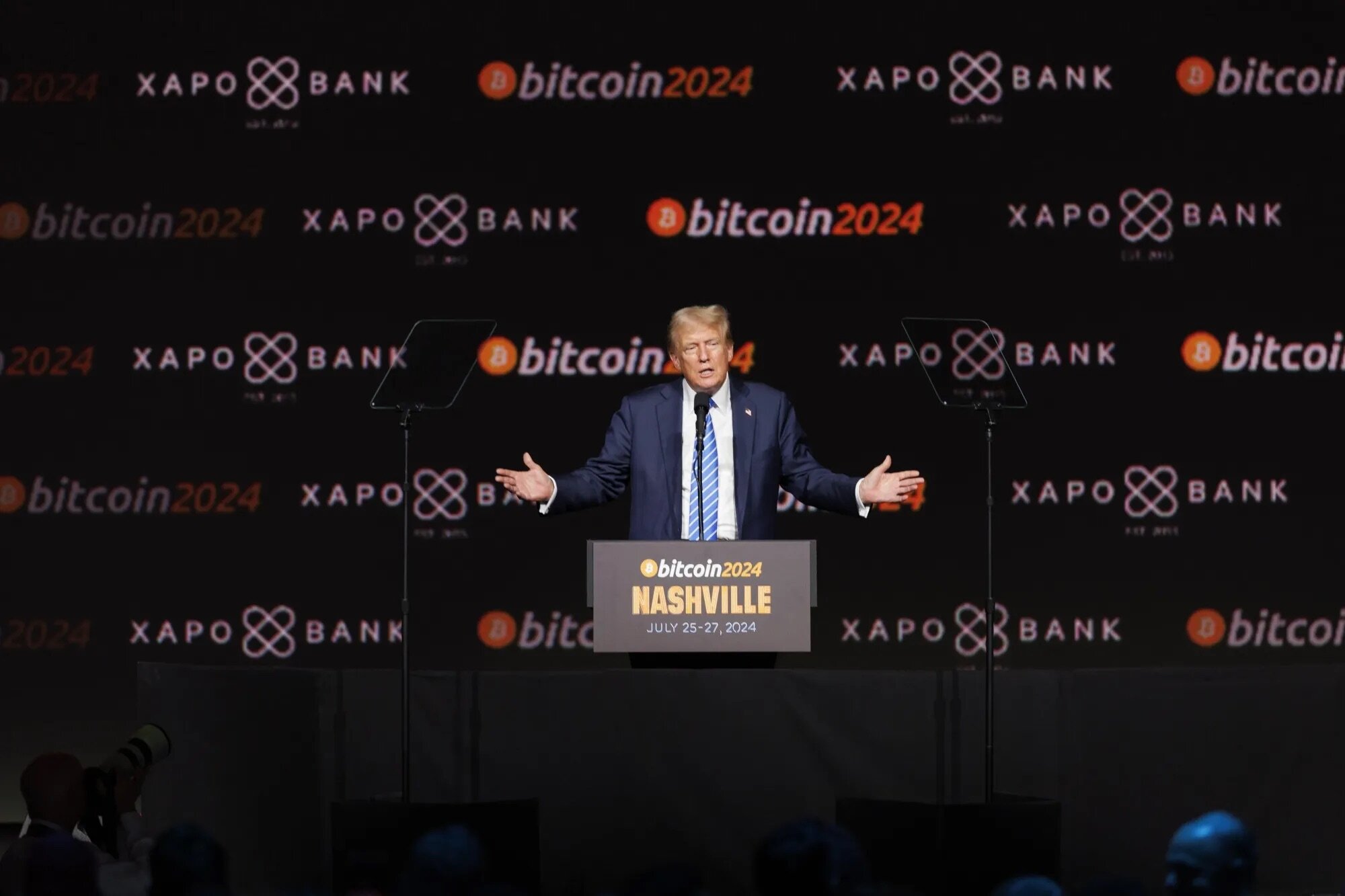
Trump speaking at the Bitcoin 2024 conference in Nashville, Tennessee, July 2024. Photo: Brett Carlsen/Bloomberg
After this speech, Trump, who had shifted from a crypto skeptic to a supporter, invited Lutnick onto his campaign plane and appointed him co-chair of the presidential transition committee. The group flew to Minnesota, where Lutnick warmed up the crowd before Senator JD Vance (R-OH), a known crypto supporter, spoke.
Cory Klippsten's notes state that Tether executives' confidence was significantly boosted by Trump's rising poll numbers. "They saw a new opportunity to fly to New York, get on CNBC—that's the platform Trump could provide."
In 2024, Howard Lutnick traveled to Washington. Lobbyists hired by Cantor Fitzgerald continuously communicated with House and Senate members to advance several pending stablecoin bills. Sources say Lutnick met with then-House Financial Services Committee Chairman Patrick McHenry to discuss how the new law would impact foreign companies like Tether. McHenry did not respond to interview requests. In September 2024, Lutnick met with Senator Lummis; her spokesperson said the meeting primarily discussed the presidential transition team and briefly touched on her concerns about Tether and financial crime.
The spokesperson emphasized: "No one tried to convince Senator Lummis to abandon her own bill. Secretary Lutnick and his team never pressured her to change the text in any way."





