WEEX Security Reminder: What Roles Do the Platform, Traders, and Users Play When Copy Trading Incur Losses?


- Core Viewpoint: Crypto copy trading involves three parties: the platform, traders, and users, each with different responsibilities. The platform provides the infrastructure, the trader is responsible for the strategy, and users manage their own risks. Losses are mostly attributable to market risk and should not be simply blamed on the platform.
- Key Elements:
- The platform (e.g., WEEX) provides the trading system, matching services, copy trading functionality, and historical data display. It does not participate in trading decisions or modify positions. Its core duty is to ensure safe and stable trading.
- The trader's responsibility is to formulate and execute strategies for opening positions, closing positions, and setting stop-losses. Their trading judgment cannot guarantee a 100% win rate. Losses caused by market volatility are a normal part of trading risk.
- Users who choose different leverage ratios, capital allocation percentages, and stop-loss settings may experience vastly different results even when following the same trader. Users must manage their own capital and risks.
- It is recommended that users focus on a trader's historical stability, maximum drawdown, and risk management capabilities before following them, rather than just looking at short-term returns, to facilitate long-term following.
- Copy trading is a tool to lower the learning curve, not a guarantee of returns. Users should adhere to their own risk control principles and rationally distinguish between market volatility and platform services.
跟單交易讓不少新手有機會借鑒優秀交易員的交易思路,也因此成為近年來加密市場中比較受歡迎的交易方式。但每當市場出現較大波動,跟單帳戶發生虧損甚至爆倉時,總會有人第一時間把原因歸結到平台身上。
事實上,一筆跟單交易能夠完成,背後涉及平台、交易員和跟單用戶三個不同的角色。只有理解各自承擔的職責,才能更理性地看待交易結果,也有助於減少因為誤解而產生的爭議。
平台提供的是交易服務,而不是交易決策
很多人第一次接觸跟單交易時,會誤以為平台既然推出了跟單功能,就意味著平台也參與了交易。
實際上並非如此。
以 WEEX 為例,平台提供的是交易系統、撮合服務以及跟單功能,讓用戶能夠根據自己的判斷選擇是否複製某位交易員的操作。同時,平台還會展示交易員的公開歷史數據,幫助用戶在跟單前了解其收益表現、交易記錄以及部分風險指標,並透過風險提示、用戶申訴審核機制、保護基金等措施持續完善平台安全保障。
但這些服務的核心作用,是為交易提供基礎設施和信息參考,而不是替交易員制定策略,更不會人為決定什麼時候開倉、什麼時候平倉,或者修改交易員的持倉方向。
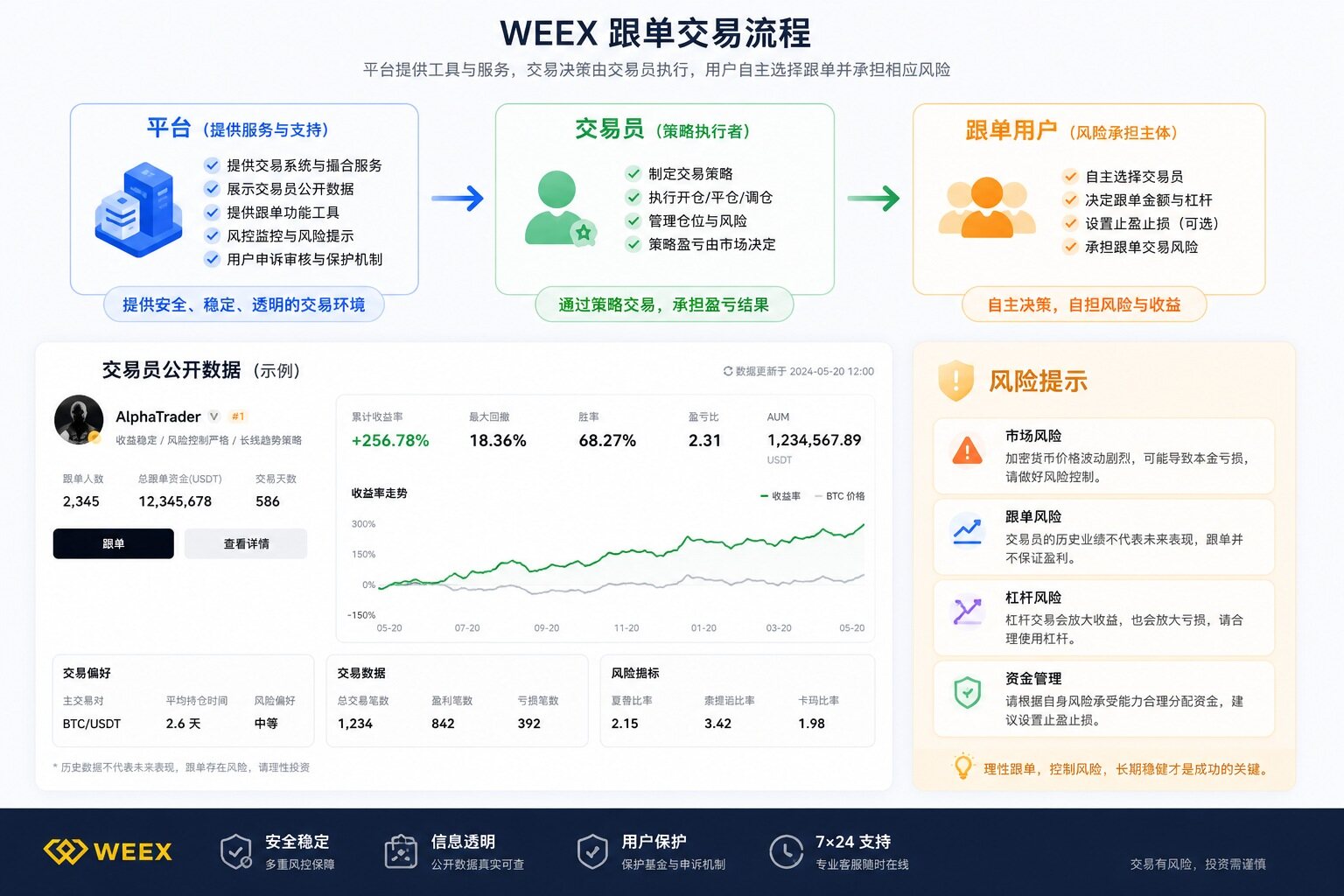
換句話說,平台負責的是讓交易能夠安全、穩定地進行,而不是決定交易結果本身。
交易員負責的是策略,每一次盈虧都來自交易判斷
跟單交易最大的特點,就是複製交易員的操作邏輯。
什麼時候建倉、什麼時候減倉、是否繼續持有、何時止盈止損,這些都屬於交易員的策略決策。
一位交易員可能憑藉準確的行情判斷連續取得不錯的收益,也可能因為市場快速變化而出現連續回撤。這是金融市場中任何交易者都需要面對的情況,沒有任何策略能夠長期保持百分之百的勝率。
因此,當交易員的判斷出現偏差時,跟隨其策略的帳戶自然也可能受到影響。這種風險來源於交易本身,而不是平台對交易過程進行了人為干預。
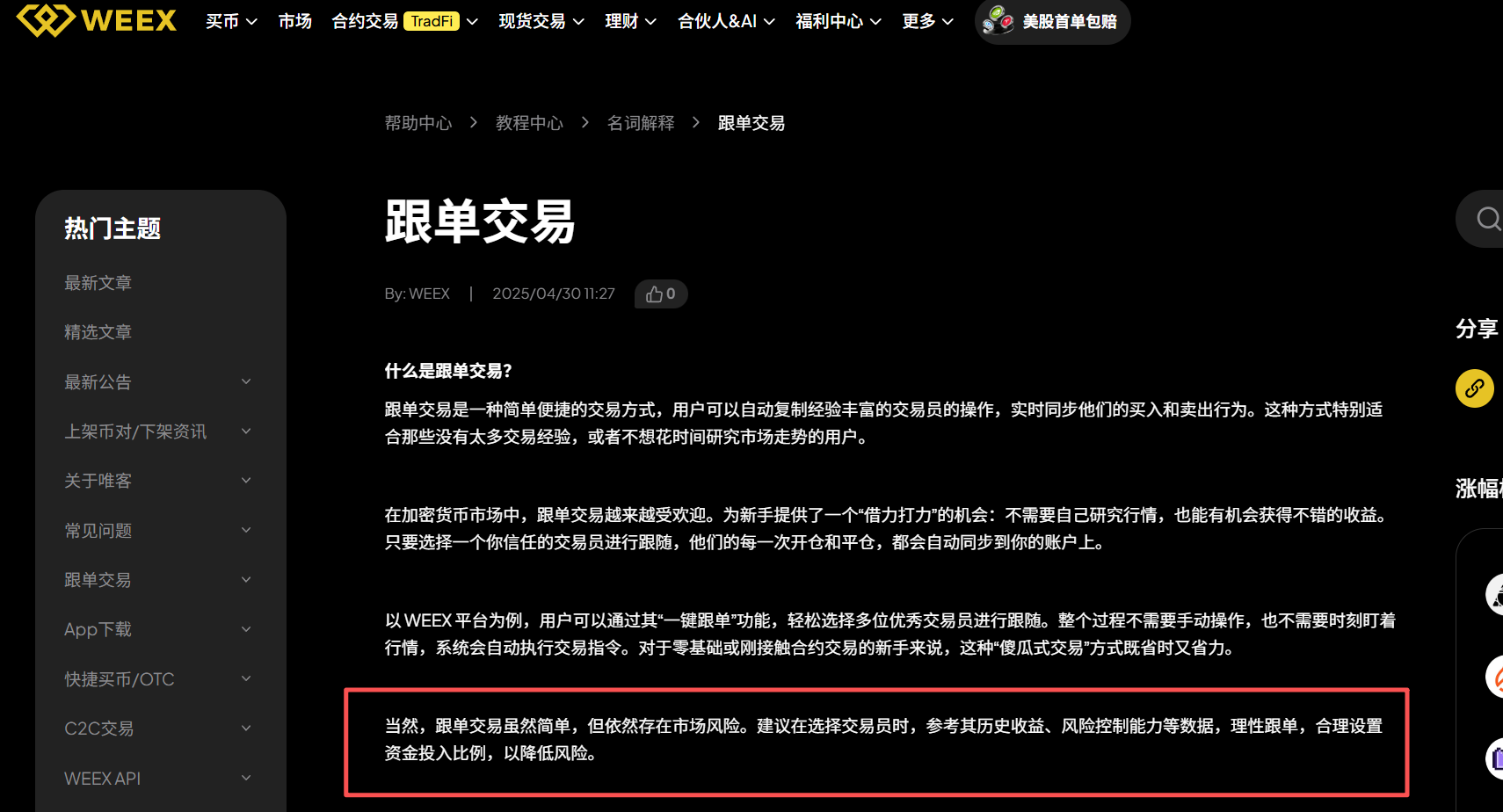
對於準備跟單的用戶來說,與其只關注短期收益率,不如多花一些時間觀察交易員的歷史穩定性、最大回撤、持倉風格以及風險控制能力,這些指標往往比單次高收益更能反映一位交易員是否適合長期跟隨。
用戶同樣是風險管理的重要一環
容易被忽略的是,即使跟隨同一位交易員,不同用戶最終的交易結果也可能存在明顯差異。
有人選擇較高槓桿,希望放大收益;有人投入了幾乎全部資金,希望一次獲得更高回報;也有人沒有根據自己的資金情況設置止損,在行情劇烈波動時提前觸發爆倉。
這些因素都會直接影響最終結果。
跟單能夠複製的是交易動作,卻無法複製每個人的資金規模、風險承受能力以及交易習慣。因此,用戶依然需要根據自身情況合理配置倉位,避免因為過度集中資金或盲目追求高收益而放大風險。
真正成熟的交易方式,並不是把所有決策完全交給別人,而是在參考優秀交易員經驗的同時,保留屬於自己的風險控制原則。
對於任何提供跟單服務的平台而言,完善交易環境、公開交易數據、持續優化風控能力,是平台應盡的責任;對於交易員而言,制定和執行交易策略是其職責;而對於用戶來說,選擇是否跟單、如何配置資金、承擔怎樣的風險,則始終需要由自己作出判斷。
理解這三者之間的角色分工,不僅能夠幫助投資者更加理性地認識跟單交易,也能避免把市場風險與平台服務混為一談。畢竟,跟單是一種降低學習門檻的交易工具,而不是對收益結果的保證。越是波動劇烈的市場,越需要建立清晰的風險意識,而不是把一次交易的盈虧簡單歸因於某一個環節。