






鲍威尔落幕,一個白話聯準會的時代結束了


- 核心觀點:文章深度回顧了聯準會主席鮑威爾的八年任期,重點闡釋了他如何在疫情、高通膨與政治壓力下,以非經濟學家身份做出史無前例的決策,並最終以卸任主席後留任理事的方式,捍衛了央行的獨立性。
- 關鍵要素:
- 鮑威爾沒有經濟學背景(政治學與法學),是自1978年以來首位非經濟學家出身的聯準會主席,其決策風格注重市場一線資訊而非純學術模型。
- 2020年3月,他在疫情中20天內將利率降至零並啟動無限量化寬鬆,推出了包括購買企業債在內的多個創新工具,速度遠超2008年金融危機時期。
- 2021年誤判通膨為「暫時性」成為其任期內最大失誤,但他主動承認錯誤,並在2022-2023年以累計525基點的加息幅度進行快速糾正,創22年來最高利率水準。
- 2022年傑克森霍爾峰會上,他發表僅有8分鐘的強硬演講,引用保羅·沃爾克的「堅持下去」作為收尾,明確展示其抑制通膨的決心,導致市場大幅下跌。
- 在川普政府持續施壓要求降息的背景下,他面臨前所未有的解僱威脅與刑事調查,最終透過法律途徑守住央行獨立性,並選擇卸任主席後以理事身份留任。
This morning, Powell stepped onto the podium of the Eccles Building press room for the last time. As he had done for every FOMC press conference over the past eight years, he walked up, adjusted the microphone, and began his opening statement.
This was Powell's final public address as Chair of the Federal Reserve. The agenda was routine: reviewing the FOMC's interest rate decision and answering questions from reporters. With only two weeks left until his official departure, everyone knew this press conference would be different from the usual ones. However, Powell still had some surprises in store that exceeded expectations.
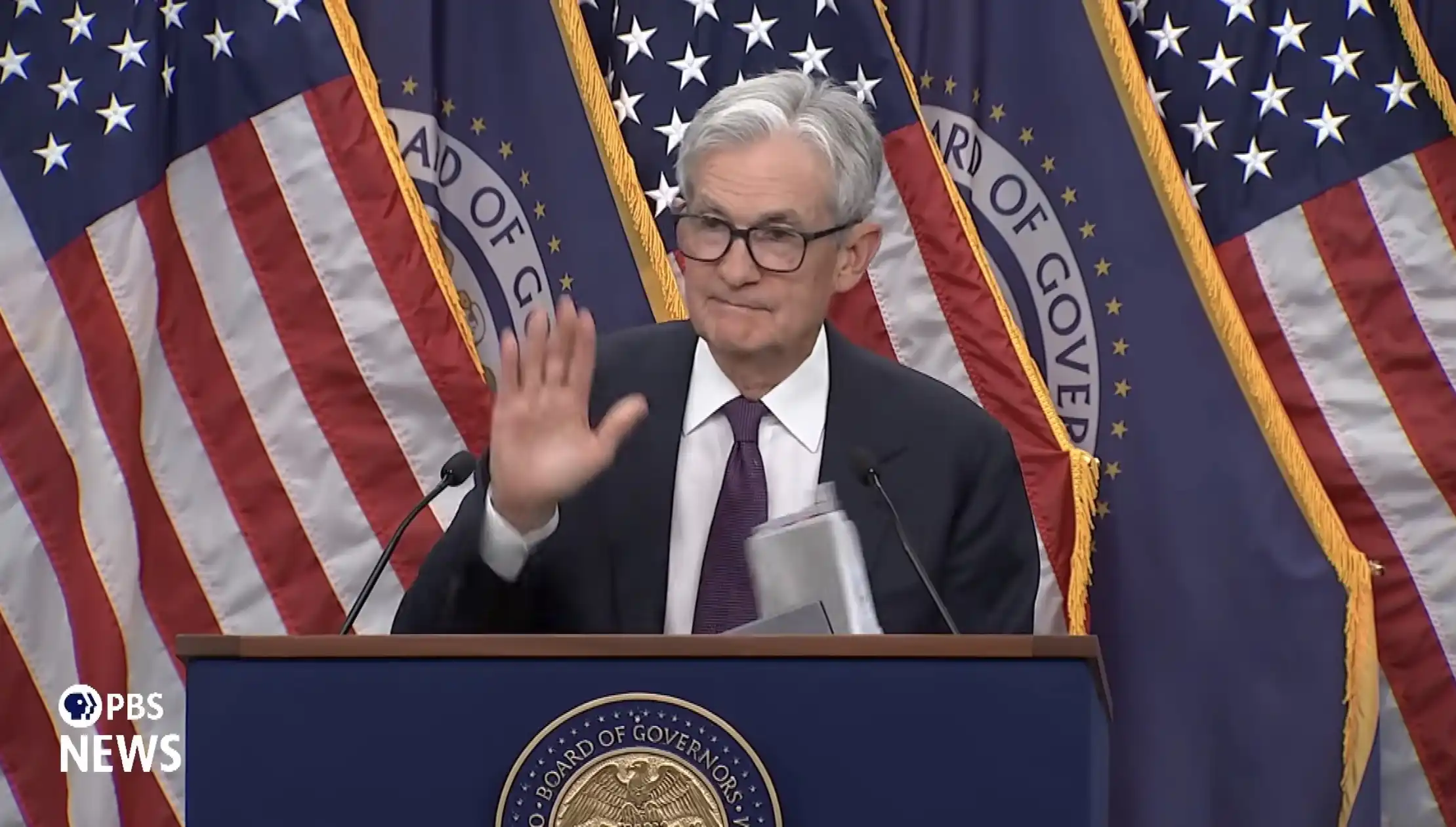
The decision to hold the interest rate steady in the 3.5%-3.75% range was not unexpected, but the committee saw four dissenting votes, making it the most divided FOMC meeting since 1992. At the same time, he formally addressed the market's speculation of recent weeks: he would remain on the Federal Reserve Board.
The last person to choose to stay on as a Governor after stepping down as Chair was Marriner Eccles in 1948, the man after whom the Fed building is named. That was 78 years before Powell.
Why did Powell choose to stay? The story of these eight years always begins with "Good afternoon." It was his signature opening line, spoken countless times from that podium in the press room, and it became his most widely recognized memory on social media. But to understand the weight of his decision today, we need to turn back the clock eight years.
The "Unqualified" Chair
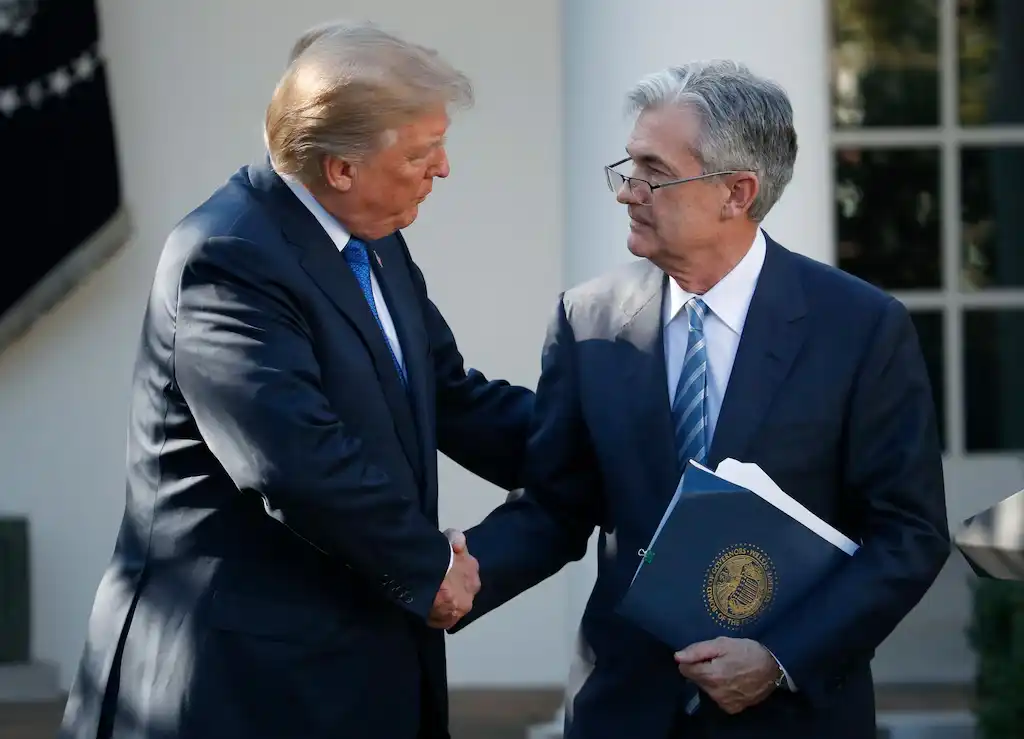
"I will do everything I can to achieve the dual mandate Congress has given us: price stability and maximum employment." — Jerome Powell, November 2, 2017, White House Rose Garden, Fed Chair Nomination Ceremony
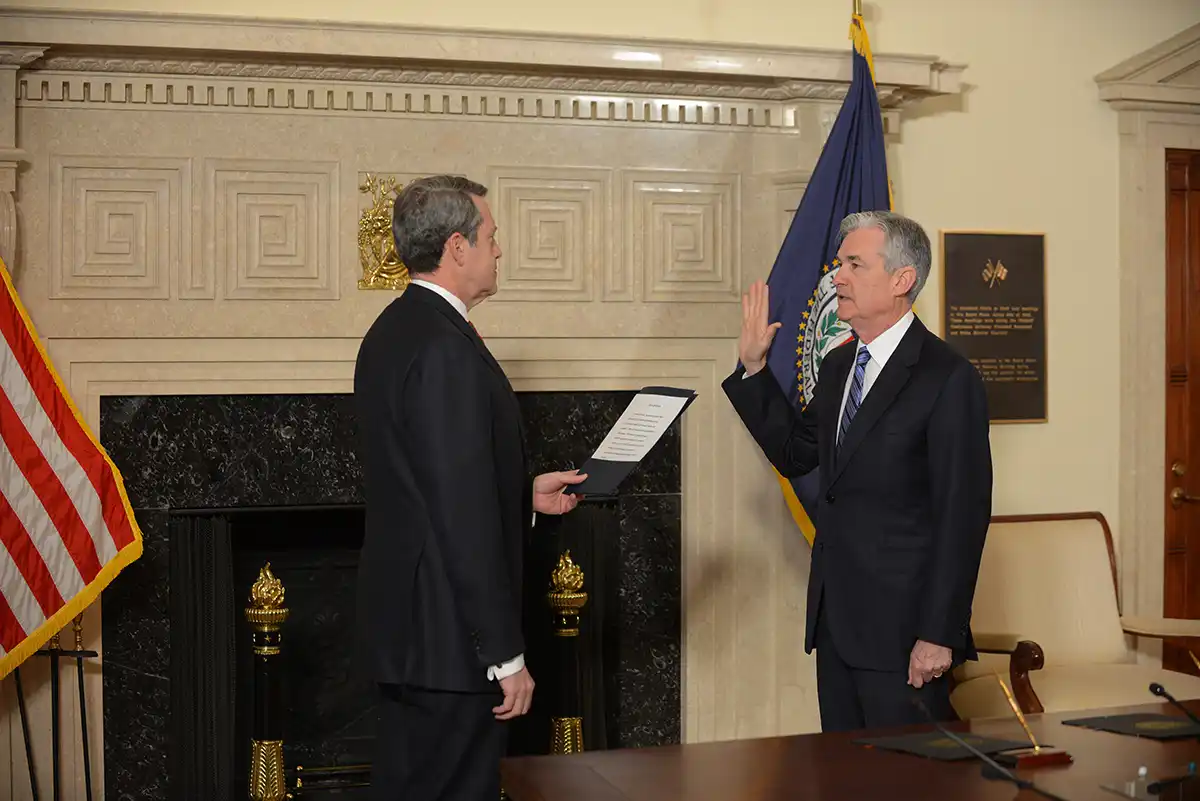
On the morning of February 5, 2018, Jerome Powell raised his right hand and took the oath of office in a conference room on the second floor of the Eccles Building. The ceremony was brief, lasting less than three minutes. No President attended. The oath was administered by Fed Governor Randal Quarles, a colleague junior to him. Two reporters captured the scene: a dark blue suit, a steady gaze, no one spoke.
He was 65 years old that day, officially succeeding as the 16th Chair of the Federal Reserve, with an annual salary just over two hundred thousand dollars. Judged by the standards of his four predecessors, he seemed unqualified.
Alan Greenspan held a Ph.D. in economics from NYU and had spent three decades in private economic consulting before his appointment. He was the recognized "market translator" in Washington and New York even before Reagan entered the White House. Ben Bernanke was the former chair of the economics department at Princeton University; his 1980s papers on the Great Depression later became the theoretical foundation for early 21st-century central banking policy. Janet Yellen earned her Ph.D. from Yale and spent most of her career as a professor in the economics department at UC Berkeley, becoming the first female Chair of the Fed.
Powell had no background in economics. He majored in Political Science at Princeton for his undergraduate degree and then earned a J.D. from Georgetown Law. Strictly speaking, he is a lawyer. Powell served in the Treasury Department under George H.W. Bush, rising to Under Secretary, before spending nearly a decade as a partner at The Carlyle Group. In 2012, President Obama nominated him, along with a Democratic economist, to the Fed's Board of Governors as a political balance. He served as a Governor for five years, largely unnoticed.
To find a precedent for a "non-economist" sitting in the Chair's seat, you'd have to go back to 1978.
In March 1978, President Jimmy Carter sent a man named G. William Miller into the Eccles Building. Miller was previously the CEO of Textron, a defense contractor. The Carter administration chose him partly because of his good relations with labor unions, believing he could "control inflation but not too harshly."
Miller lasted just 17 months in the chair. During his tenure, the CPI rose from 6% to 12%, and the dollar experienced its worst crisis on foreign exchange markets since World War II. In August 1979, Carter moved him to the Treasury Department and brought in Paul Volcker to lead the Fed. What followed is written in every central banking textbook: Volcker pushed interest rates to 20%, causing a double-dip recession, crushing inflation, and ushering the U.S. economy into the 1980s.
For nearly forty years after Miller, no non-economist held that chair. Until Powell.
During his five years as a Governor, Powell was virtually invisible. From his swearing-in in May 2012 to his assumption of the Chair in February 2018, every vote he cast at the FOMC sided with the majority. Not a single dissent. His daily work involved technical issues like financial regulation and payment systems, far from the spotlight. Colleagues later recalled that the most distinctive thing about him during this period wasn't a paper or a speech, but his phone calls. He wanted to bypass academic papers and official data, to hear directly from people on the front lines of the market. He would call bankers, bond traders, and corporate CFOs. A Governor making dozens of such calls weekly, at his own expense, was something his more academically-minded colleagues wouldn't do.
On the afternoon of November 2, 2017, President Donald Trump announced Powell's nomination to succeed as Fed Chair from the White House Rose Garden. Trump gave a forceful speech; Powell gave a measured one, focusing on his "commitment to the dual mandate of maximum employment and price stability."
That evening, the memos from major Wall Street traders to their clients shared a common assessment: a continuation of the dovish approach, no need for market anxiety. There were some dissenting voices in academia. Several economists interviewed by the *New York Times* that day worried whether a lawyer could lead the FOMC in a crisis. But these concerns were quickly drowned out by the optimistic financial news.
Less than a year into his term, Powell made a structural change. He transformed the Fed's post-FOMC press conference from a quarterly event into one held after every meeting. He also began speaking in the most everyday language possible, almost entirely avoiding academic jargon. Greenspan's once-revered "constructive ambiguity" ceased to be the Fed's communication style from that year on. But this new style hadn't yet become a habit when March 2020 arrived.
Every Choice, Unprecedented
"We will keep at it until the job is done." — Jerome Powell, August 26, 2022, Jackson Hole Economic Symposium, Wyoming
Sunday, March 15, 2020. Late in the afternoon, Powell convened an emergency FOMC meeting in the Eccles Building. It was originally scheduled for three days later, but he moved it up. The post-meeting announcement was drastic: a 100-basis-point cut in the federal funds rate to 0-0.25%, launching a $700 billion asset purchase program, and opening dollar swap lines with five major central banks. This was the single most aggressive action in the history of the Federal Reserve.
At that moment, COVID-19 was sweeping across the U.S. ICU beds were about to run out. The U.S. stock market had triggered circuit breakers twice in the past week. The Treasury market, supposed to be the deepest in the world, experienced a liquidity freeze that sent a chill down every trader's spine. There were days when no one was willing to take a quote on U.S. Treasuries.
Over the next three weeks, Powell rolled out a new facility almost every few days. March 17: Commercial Paper Funding Facility. March 19: Money Market Mutual Fund Liquidity Facility. March 23: unlimited QE, the revival of TALF (Term Asset-Backed Securities Loan Facility), and the formation of the Main Street Lending Program. April 9: expanded the corporate bond purchase program to $2.3 trillion. These tools pushed past boundaries the Fed had maintained for years.
Buying corporate bonds was something Bernanke explicitly refused in 2008. Lending directly to small and medium-sized enterprises, bypassing banks, was something even the 2008 financial crisis hadn't dared to do. In the fall of 2008, after Lehman Brothers collapsed, Bernanke took nearly three months to launch QE1. Powell, however, went from the emergency rate cut on March 3rd to unlimited QE in just 20 days.
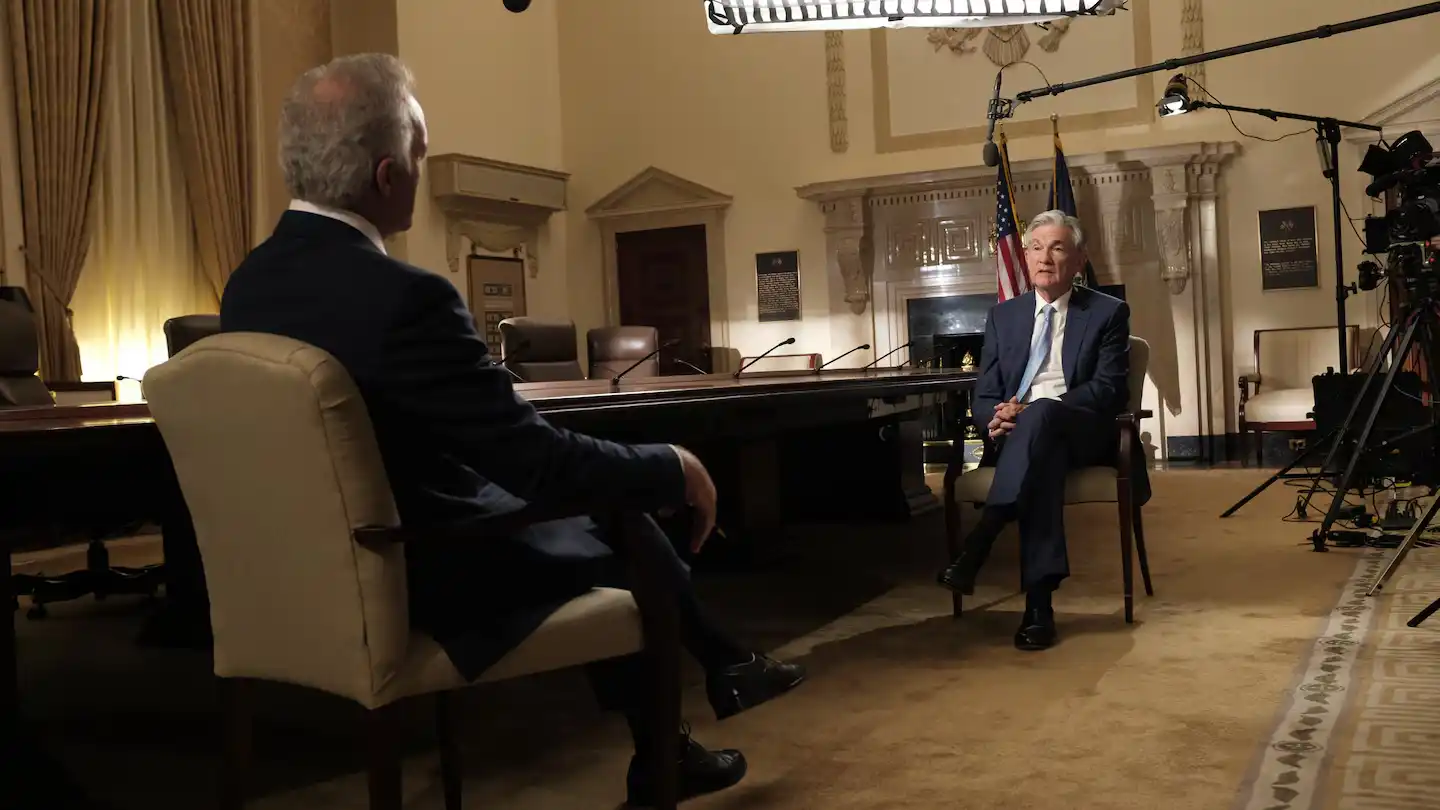
On May 17, sitting for an interview on CBS's *60 Minutes*, Powell said the line that would later be endlessly quoted: "We're not going to run out of ammunition." He wasn't just shouting a slogan; he was making a concrete promise to the markets. In the months that followed, the voices that had once called him "unlike a Fed Chair" fell collectively silent for the first time.
But his biggest mistake began precisely with this silence.
In the spring of 2021, the year-over-year CPI readings began to jump. April: 4.2%. May: 5.0%. June: 5.4%. Powell and his team of economists diagnosed it as "transitory." They believed it was a disruption caused by the pandemic's impact on supply chains, which would naturally resolve within a few quarters. This wasn't callousness; it was genuine belief. Powell repeatedly stated in internal meetings that he didn't want to choke off a recovering labor market due to a cyclical disturbance. Millions who lost their jobs during the pandemic, a significant portion of them low-income workers, were just being rehired.
So for the entirety of 2021, the Fed held interest rates at zero and continued buying $120 billion in assets monthly. At every press conference, Powell used plain language to explain why rate hikes should wait.
But inflation did not wait. September: 5.4%. October: 6.2%. November: 6.8%. Criticism returned, in new forms, from academia, Wall Street, and Republican Senate seats: a lawyer who didn't understand what the economists were saying had led America into an inflation crisis. Former Treasury Secretary Larry Summers wrote in his *Washington Post* column that he had never seen fiscal and monetary policy so disconnected from reality.
On the morning of November 30, Powell testified before the Senate Banking Committee. Asked about the inflation situation, he said, "I think it's probably a good time to retire that word ['transitory inflation'] and try to explain more clearly what we mean."
This was not a forced admission of error. No reporter had cornered him, no senator had demanded he abandon "transitory." He chose to say it himself.
After admitting the mistake, Powell acted swiftly.
March 2022: 25 basis point hike. May: 50 basis points. June: 75 basis points. This was the single largest rate hike since Greenspan's tightening cycle in 1994. July: another 75 basis points. Initially, markets interpreted this pace as "catching up," assuming the Fed would soon return to a gentler path. On August 26, the closed-door meeting of global central bank governors began as scheduled at the Jackson Hole mountain resort. The market expected Powell to soothe sentiment, leaving the door open for a potential "policy pivot."
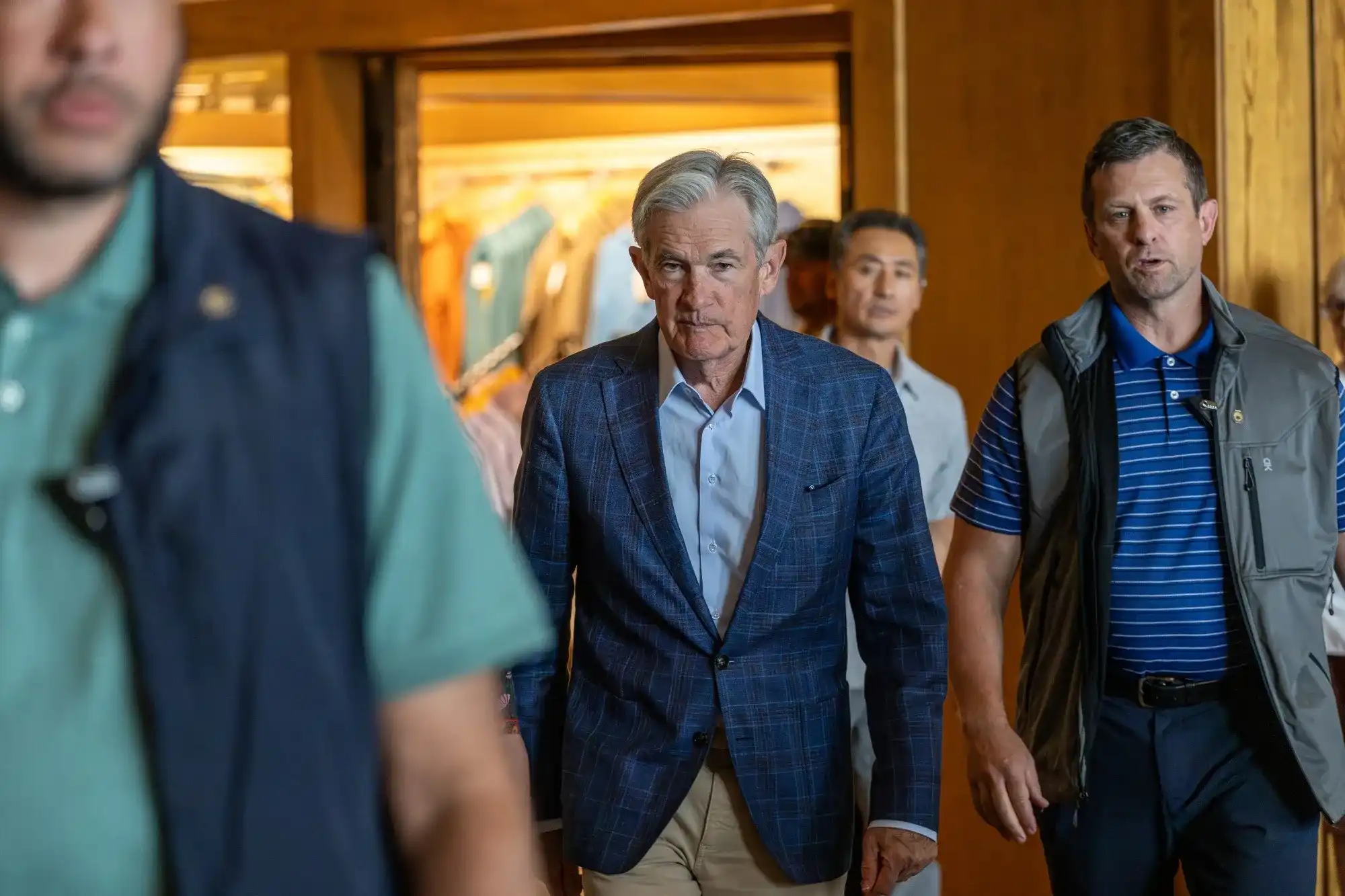
At 10 a.m., Powell stepped onto the stage to deliver his speech. Typically, a Chair's keynote at such an event lasts about half an hour. But that morning, Powell didn't look at the teleprompters. His speech lasted only 8 minutes. He didn't discuss academic frameworks or complex transmission mechanisms. He gave no dovish hints. He conveyed just three points: price stability is the Fed's responsibility; rate hikes will bring pain; and we will see it through.
The last sentence of his speech was, "We will keep at it until the job is done." Those who understood immediately recognized the borrowed language. "Keeping at It" is the title of Paul Volcker's 2018 memoir. Volcker, in his 1979 anti-inflation crusade, drove interest rates to 20% and caused a double-dip recession, summarizing those years with those three words. Powell mentioned Volcker three times during his 8-minute speech. He didn't compare himself to Volcker, but he chose Volcker's words to close his own.
That day, the S&P 500 fell 3.4%, and the Nasdaq dropped 3.9%. It was the market's final disappointment in the promise of a "continuation of a moderate approach."
He knew the market would fall after those words. He said it anyway. It was the moment, four years into his tenure as Fed Chair, that he let everyone see he wouldn't be defined by his own past.
After Jackson Hole, Powell's rate hikes continued unabated. September: 75 basis points. November: 75 basis points. December: 50 basis points. In March 2023, Silicon Valley Bank (SVB) collapsed within 48 hours, the second-largest bank failure in U.S. history. Powell did another unexpected thing: he created the Bank Term Funding Program (BTFP) to rescue the banking system while simultaneously raising rates by 25 basis points.
This dual-track operation is hard to grasp within a traditional central banking framework, as liquidity rescue and tightening policy usually pull in opposite directions. But Powell is not a textbook operator. He treated "systemic stability" and "inflation targets" as two separate issues: one set of tools for the banks, another for inflation. It's a lawyer's instrumentalist thinking: use the right tool for the right problem, don't let the logic of one squeeze out the other.
By the time of the final rate hike in July 2023, the federal funds rate had reached 5.25%-5.50%, its highest level in 22 years. The entire tightening cycle totaled 525 basis points.
Inflation finally began to subside. By June 2024, the year-over-year CPI had returned to 3.0%, and by year-end, it was back to 2.9%. The unemployment rate stayed near historic lows throughout the entire tightening cycle, avoiding the sharp rise typical of a recession. It was the first time since the 1980s that the Fed had brought down high inflation without plunging the economy into a widespread recession.
Economists will continue to debate whether he was "lucky"—if the unique nature of the pandemic shock made his tools more effective than theory suggested, or if falling energy prices helped his cause. This debate will continue.
In his final press conference, Powell summarized the eight years: "We've actually experienced four supply shocks: the pandemic, the Russia-Ukraine conflict, tariffs, and now Iran and the oil price spike. Each supply shock has the power to push up both inflation and unemployment, leaving a central bank wondering what to do." It is precisely this macro environment, unseen in decades, and the unprecedented actions forced upon the Fed, that made this morning's committee the most divided since 1992.
But in those 8 minutes on the morning of August 26, 2022, his judgment was a real judgment, his risk was a real risk, and his choice not to be defined by his own 2021 mistake was a real choice.
The Watchman Inside the Gate
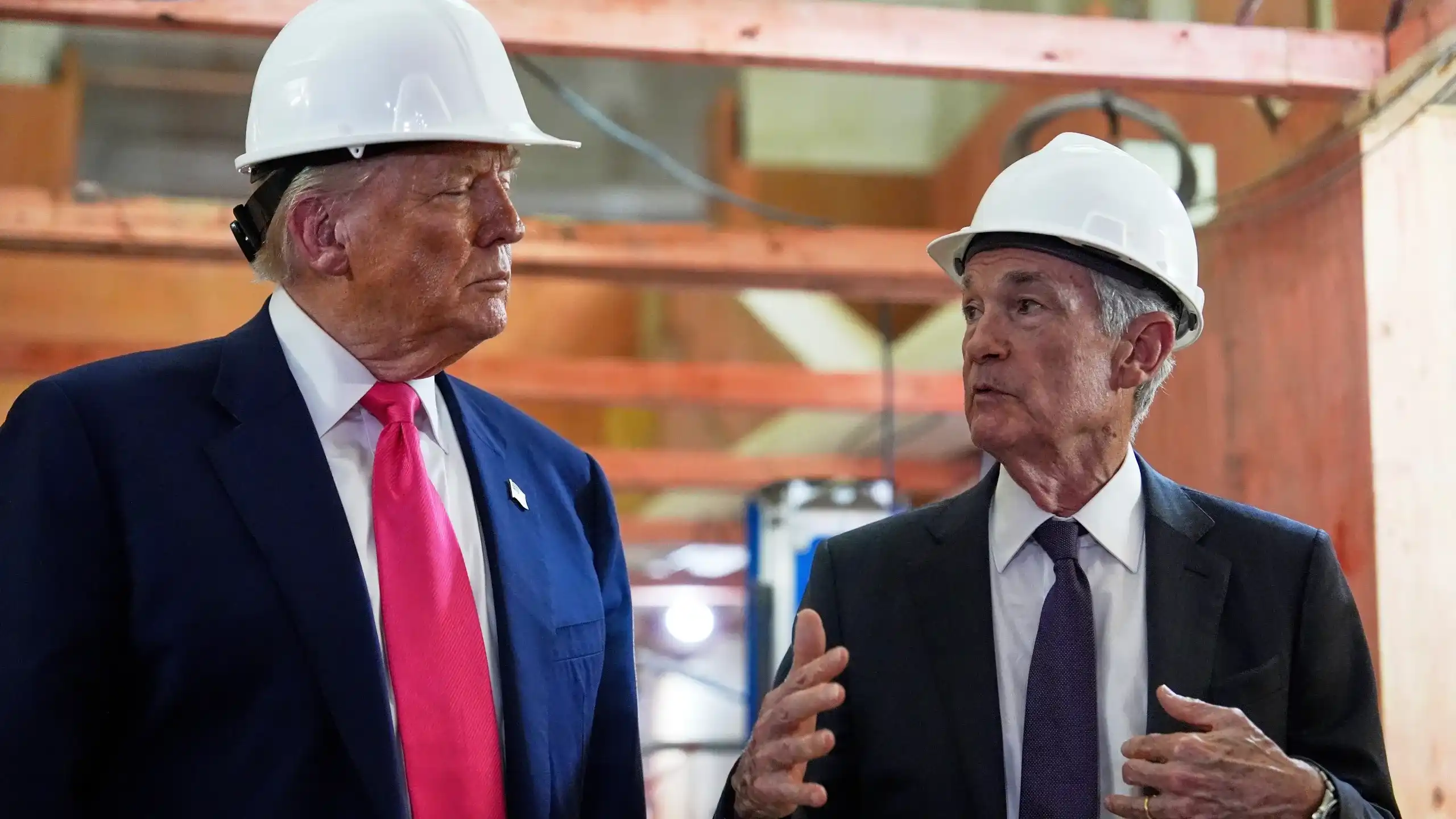
"I will not resign." — Jerome Powell, November 7, 2024, FOMC Press Conference, responding to "Can the President fire the Fed Chair?"
On the afternoon of January 11, 2026, Powell recorded a video in a conference room at the Eccles Building. The backdrop was the Fed's seal. He said into the camera: "What this criminal charge threatens is the Fed's right to set interest rates based on its best judgment for the public, not according to the President's preferences."
The video was released by the Fed's official account later that evening. Global financial media updated their headlines almost simultaneously. It was the first time in the Fed's 113-year history that it had engaged in such direct public confrontation with the executive branch of the U.S. government.
The trigger for the event occurred a few days prior. The U.S. Department of Justice, citing the Fed headquarters renovation project, issued a grand jury subpoena to Powell, initiating a criminal investigation against him. The DOJ's stated reasons were budget overruns and irregularities in the procurement process.
But everyone knew what it was really


