The most Crypto people are becoming the least Crypto


- Core Insight: As the Web3 industry narrative recedes, the core practitioners are shifting pragmatically, integrating blockchain technology into real-world applications such as traditional finance and AI. Stablecoin payments and RWA have become the core of financial infrastructure, while the inflation of the AI label reflects the industry's search for a new narrative.
- Key Elements:
- Hong Kong Blockchain Week and Bangkok Money 20/20 show that the industry's focus has shifted from speculative narratives to financial infrastructure like RWA (Real World Asset tokenization) and stablecoin cross-border payments.
- Stablecoin companies are no longer just selling tokens but are offering payment links, settlement, and custody services, penetrating traditional finance through compliant channels like a "Trojan horse."
- The combination of AI and Web3 is a hot concept, but most projects lack clear real-world use cases, leading to "label inflation"; some companies are pivoting to providing actual payment services for AI enterprises.
- Industry divergence is clear: Hong Kong focuses on financial productization (RWA and wealth management), while Bangkok focuses on payment rails (stablecoin cross-border), collectively forming the financial infrastructure left by blockchain, rather than a disruptive revolution.
- With the infrastructure layer already crowded, the key differentiator has shifted to the application layer, specifically who can embed stablecoins into high-frequency, essential use cases, as well as the trust framework and cross-border implementation of Agentic Payment.
Original Author: Web3 Little Lawyer
At the Hong Kong Blockchain Week this past April, what left the deepest impression on me wasn't any particular panel, but a scene.
Around ten at night, at a cha chaan teng in Wan Chai, four or five people crowded around a table, eating beef chow fun while chatting about what they were going to do next. A friend who used to work on stablecoin payments said their team had fully pivoted to AI; another, who works with on-chain data, mentioned that half his time was now spent building data pipelines for AI companies.
No one talked about coin prices, no one discussed narratives, and the term Web3 was barely mentioned.
My feeling at that moment wasn't surprise, but a strange sense of familiarity—three years ago, the same group sitting at the same table would definitely be discussing DeFi, NFTs, and blockchain gaming. They were the same people, with the same excitement, the same full commitment.
After attending the Hong Kong Carnival and Bangkok's Money 20/20, one thought kept lingering in my mind: the most crypto-native people are becoming the least crypto.
After the Web3 tide recedes, what is actually left? After these two events, I think I have my own answer.
1. Hong Kong: Familiar Faces, Unfamiliar Topics
First, Hong Kong. At this year's carnival, there were noticeably fewer crypto project teams. The lively atmosphere of the previous two years, with people handing out T-shirts and spinning grand narratives everywhere, had dissipated.
This year's official theme was "Mountain, Wind, Cloud, Sea," with a clear positioning—saying goodbye to the crypto trading narrative. Three years ago, this statement would have been met with boos from the audience. But this year, no one found it strange, because people simply weren't talking about coins anymore. It had become an unspoken consensus.
Walking around the exhibition, the faces were familiar: OKX Wallet, TRON, ZA Bank, HashKey, Xinhuo. But the topics they discussed had changed. The main focus was highly concentrated on two words: RWA and AI.
RWA continued its popularity from last year, but honestly, everyone knew who was genuinely building projects and who was just putting on a show. I think one assessment holds true: For Hong Kong, RWA is essentially the productization of wealth management and investment—moving real-world assets onto the chain to be more efficient and easier to distribute cross-border. This is precisely what Hong Kong excels at: institutional design and financial productization. As the bubble fades, Hong Kong has actually become more comfortable—the restlessness that never truly belonged there has finally dissipated.

AI was more interesting. Almost every panel discussed the integration of AI and Web3, but after listening to several, frankly, most discussions stayed at the level of "these two things should be combined." As for how to combine them and what problems to solve, no one could clearly articulate.
My feeling is that Web3 is latching onto AI not because it's clear-headed about it, but because without doing so, there are truly no stories left to tell. Furthermore, the guests on stage probably knew they were just latching on. But surviving first is the name of the game, and that's always been the survival philosophy of this space.
As for the Hong Kong Dollar stablecoin, there was no real news. Licenses were issued, but asking around, the two major banks each had their own pace, neither in a hurry to make a big splash. The result was that it seemed like nobody cared.
But what truly moved me were the people off-stage. The busiest people at the venue weren't the speakers, but those casually dressed, wearing exhibitor badges, bustling around the networking area—the BD people, community runners, content creators, and those helping projects find resources. They don't have impressive resumes and don't always sound "professional," but their understanding of the industry is forged through countless dinners and repeated rejections. This understanding isn't gained by reading reports; it's earned with time.
Whether an industry can navigate a cycle depends not only on the star companies at the top but also on how many people are willing to keep grinding below, even when there's no applause.
Web3's foundation is still there. But what runs on top of that foundation has completely changed.
2. Bangkok: The Trojan Horse of Stablecoins
Flying from Hong Kong to Bangkok, the scene changed completely.
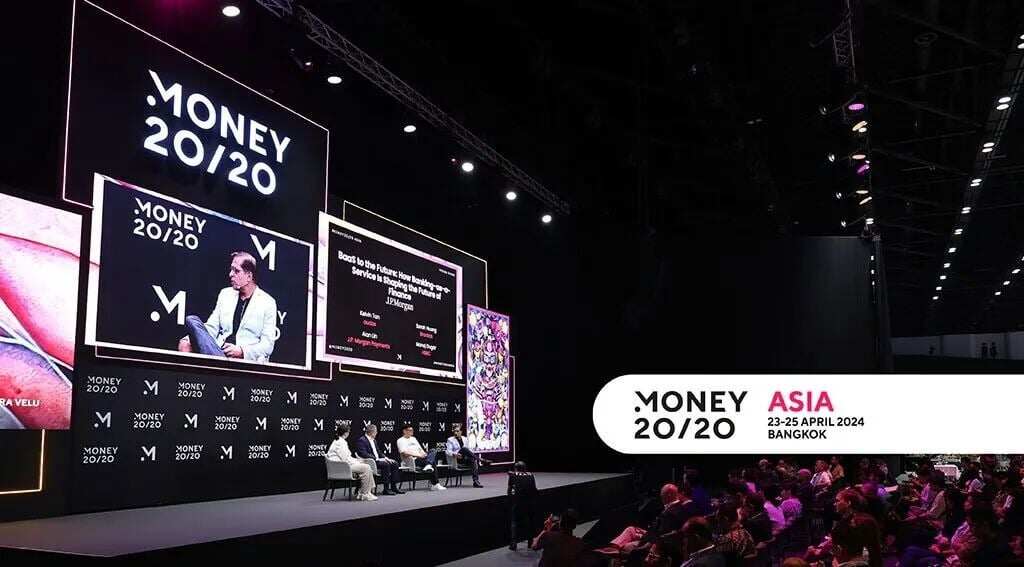
Money 20/20 is a pure fintech B2B exhibition. The entry fee isn't cheap, and everyone dresses like they're going to meet a client. The panel areas were sometimes empty, but the business networking zones were packed from opening to closing.
What surprised me was that stablecoin and crypto-native companies made up about one-third of the exhibitors. OSL, Circle, Ripple, Fireblocks, Cobo, Pyth… at least a dozen, many exhibiting for the first time. This year, Money 20/20 even added a dedicated zone called Intersection, positioning it as the meeting point of TradFi and DeFi. Stablecoins are no longer a fringe topic at fintech exhibitions; they are part of the main agenda.
But here's the interesting part—none of these one-third crypto companies were selling crypto at their booths.
They were all selling payment rails, settlement channels, and asset custody. Some exhibitors straightforwardly defined themselves as "Web 2.5 finance"—one foot in crypto-native, one foot in traditional payments. The people coming to do business didn't care what underlying chain it ran on. They wanted just three things: fast settlement, low cost, and compliant.
I sat in the networking area for two afternoons. At the tables next to me, I heard the word 'stablecoin' every ten minutes or so. No one talked about coin prices; conversations were all about how to build the pipeline, how to onboard merchants, and which compliance solution to use. Everyone there had a business to implement.
During one panel, the host directly challenged the guests: Brazil's Pix already offers instant free transfers, so why bother with stablecoins? The answer from the panelist was succinct: "Pix solves domestic problems; cross-border is still a mess." That's probably the most honest positioning for stablecoin payments: not replacing local payment systems, but filling the gap in cross-border transactions that traditional finance has never managed to do well.
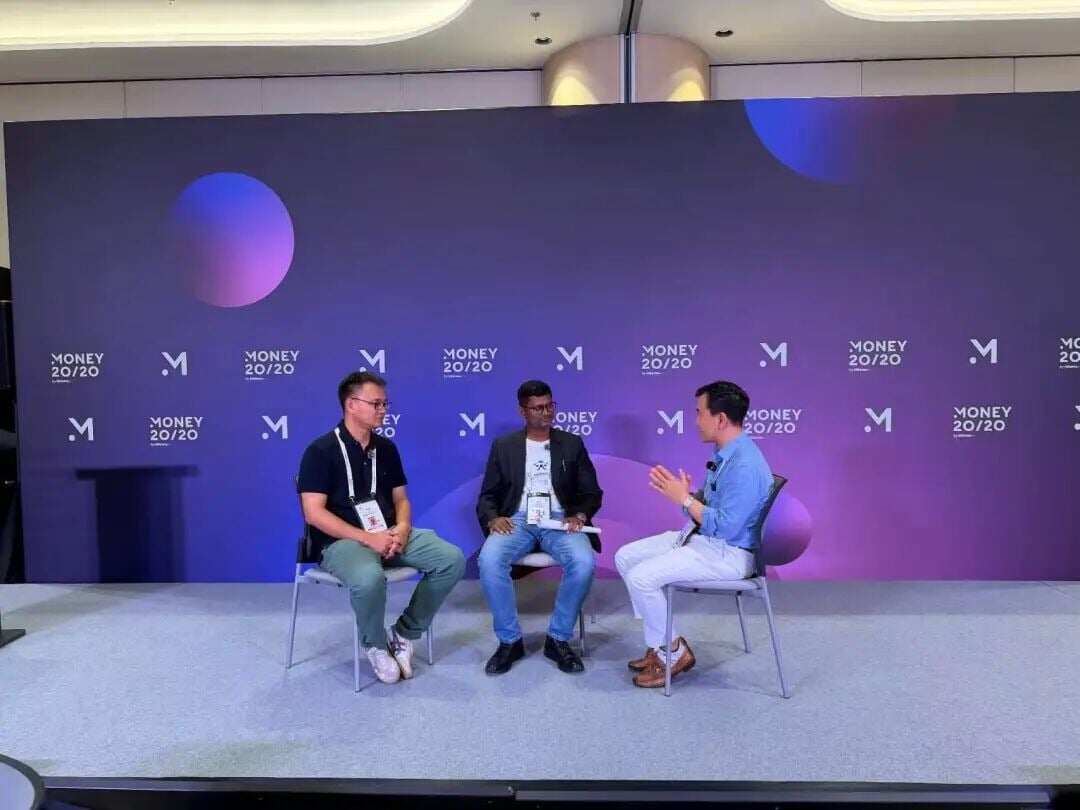
Thanks to the invitation from Finternet, I did an interview with Sumsub, and the conversation left a deep impression. This KYC/KYB company's earliest clients were all Web3 projects—exchanges, wallets, DeFi protocols. But now, their biggest new growth clients come from Web2: payment institutions, banks, and companies expanding overseas. The massive client base from Web3 actually served as a credential, allowing them to smoothly enter the traditional financial market. Web3 gave them practice; Web2 is the real market.
See, this is the footnote to my earlier point: the most crypto-native people are becoming the least crypto. Stablecoins are no longer just "entering" traditional finance; they have fully integrated into it—integrated to the point where at an exhibition, you can't tell which company is a stablecoin company and which is a fintech. Even if traditional financial institutions don't do stablecoin business themselves, their clients will force them to integrate.
Stablecoins didn't break down the front gate of the traditional finance castle. They slipped in through the back door, and by the time the occupants inside realized it, the channels were already laid.
3. AI Label Inflation
The channels are laid, but they are now plastered with new labels.
At the Bangkok exhibition, I counted—roughly eight out of ten booths I passed had 'AI' or 'Agentic' printed on them: Agentic Payment, Agentic Wallets, Agentic Banking.
I stopped and asked a few companies in detail: "What is your most mature use case for the AI module?" The answers were fairly vague, mostly pointing towards future scenarios of A2A (Agent-to-Agent). As for real transaction volumes, everyone tacitly avoided giving numbers.
One company, which worked on stablecoin payments in previous years, made a choice that many probably thought about but hadn't acted on. When the infrastructure layer is already crowded enough, building another channel means squeezing in with a bunch of similar channels. Instead of waiting for the water to come, it's better to switch to a river that already has water. So they pivoted towards providing payment solutions for the hot AI industry. Not labeling their product with AI, but actually serving AI. Compared to the vague A2A concepts on the exhibition floor, this was a much clearer strategy: don't wait for Agents to figure out how to pay by themselves; first, solve the payment pain points that AI companies have today.
But back to the AI frenzy at the exhibition, this scene is indeed very similar to Web3 in 2021—infrastructure first, killer applications nowhere to be found. However, there is one difference: in 2021, demand was created out of thin air to find users. Today's agentic payment has at least one real premise—AI agents are indeed growing exponentially, and they will eventually need to pay and receive money by themselves. The issue isn't whether the demand exists, but when it will arrive and in what form.
During this window period of "when it will arrive," putting on the label first is the safest choice.
What if it does arrive?
4. After the Channels Are Laid, What Then?
Looking at Hong Kong and Bangkok together, a clear divergence emerges.
Hong Kong is doing financial productization—RWA, wealth management, asset management, competing on product design and distribution channels, layered with crypto-style operational thinking. Bangkok is doing payment channels—stablecoin cross-border settlement, competing on compliance licenses and local distribution channels. These two paths combined represent what truly remains after the Web3 tide recedes: financial infrastructure.
Not the yield frenzy of DeFi Summer, not the mass FOMO of NFTs. It's individual channels, individual licenses, individual partners.
Boring, but real.
The pie in the sky that Web3 painted was "decentralization rebuilding everything." What survived the ebb tide are patches and extensions of the centralized financial system. The Cypherpunk revolution didn't happen. But the pipelines have been laid inside the city walls—this itself might be more enduring than any revolution.
The channels are laid, but three questions remain unanswered:
- Is stablecoin infrastructure too late? There are already too many companies building infrastructure at the Bangkok exhibition. The space for differentiation is shrinking rapidly. New entrants don't need to build another channel; they need to find what kind of water should flow through the channels—whoever can embed stablecoins into high-frequency, essential use cases will be the winner of the next phase. It's not the channel builders, but the channel users.
- Application solutions are the direction. The infrastructure layer is thick enough; value is beginning to migrate to the application layer. The companies that laid broadband in the 2000s made the first wave of money. The real big business was Taobao and WeChat that ran on top later. Stablecoins are approaching that inflection point.
- What about Agentic Payment? I've been tracking this area for a while. Visa, Mastercard, Stripe are all making moves, and the x402 protocol is advancing. But from protocol to implementation, the gap isn't technology; it's a trust framework and a sufficiently large cross-border transaction scenario, otherwise it will remain confined to demos and panels.
But then again, when someone first talked about stablecoin cross-border payments in 2021, they probably received the same reception: "Concept makes sense, but implementation is far off." Five years later, stablecoins are already embedded in the capillaries of traditional finance. Agentic payment might be at the same stage now. However, this cycle's window will be much shorter.
5. In Conclusion
On the flight back, my mind kept replaying not the panel contents, but that table in the cha chaan teng.
One person switched to AI, another is building data pipelines for AI companies, and the remaining few are still talking about how to integrate stablecoin payments into more merchants. Three years ago, they were discussing a different world, but one thing hasn't changed—they are still in the game, still working, still throwing themselves into the pool.
The most unique aspect of the Web3 circle isn't how cutting-edge its technology is, but that it naturally attracts this kind of person—the ones who, no matter how cold the water, dive in first. Sectors will change, narratives will shift, but this raw sense of participation won't disappear. It just changes its clothes.
After the tide receded, the revolution didn't happen. But the most crypto-native people, carrying their strategies, speed, and survival instincts, are infiltrating larger battlefields like traditional finance, AI, and cross-border payments. They no longer shout slogans, but they are more dangerous than before.
Because this time, they are wearing suits.