






Bỏ mốc 75.000, Bitcoin sẽ giảm lần cuối?


- Quan điểm chính: Thị trường tiền mã hóa gần đây ghi nhận sự điều chỉnh đáng kể, Bitcoin giảm xuống dưới 75.000 đô la Mỹ, tâm lý hoảng loạn lan rộng. Nguyên nhân chính là do rủi ro địa chính trị ở Trung Đông gia tăng và các nhà đầu tư tổ chức thu lợi nhuận lớn qua các quỹ ETF giao ngay Bitcoin. Trong ngắn hạn, thị trường có thể tiếp tục đối mặt với biến động và điều chỉnh.
- Các yếu tố chính:
- Chỉ số sợ hãi thị trường giảm xuống 34, tổng cộng 470 triệu đô la bị thanh lý trên toàn thị trường trong 24 giờ qua, trong đó lệnh Long bị thanh lý 420 triệu đô la, cho thấy tâm lý thị trường cực kỳ bi quan.
- Căng thẳng Mỹ-Iran leo thang, Trump đe dọa kiểm soát tài sản của Iran, quân đội Mỹ tấn công các căn cứ quân sự của Iran. Rủi ro địa chính trị thúc đẩy tâm lý trú ẩn an toàn, khiến dòng vốn chảy ra khỏi các tài sản rủi ro như tiền mã hóa.
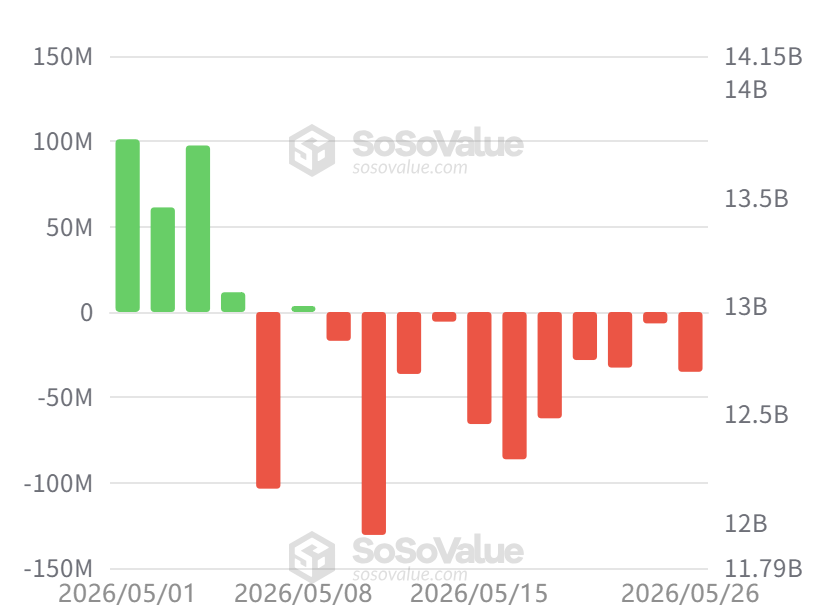
- Từ ngày 5 tháng 5 đến ngày 26 tháng 5, các quỹ ETF Bitcoin giao ngay của Mỹ ghi nhận dòng vốn rút ròng liên tục, với mức rút cao nhất trong một ngày lên tới 600 triệu đô la. Các quỹ ETF Ethereum cũng chịu dòng vốn rút ròng lớn, phản ánh việc các tổ chức thu lợi nhuận.
- Các nhà phân tích chỉ ra rằng, trọng số hoạt động trên chuỗi trong ngắn hạn đã giảm xuống mức cực kỳ thấp trong lịch sử, tương tự như các đáy thị trường gấu trước đây, cho thấy giao dịch ngắn hạn đã hạ nhiệt đáng kể và thị trường có thể đang ở vùng đáy hoặc giai đoạn tích lũy.
- Tổ chức Wintermute cho rằng, sau khi đà tăng của AI (ví dụ như Nvidia) lắng xuống, các yếu tố vĩ mô (lạm phát, niềm tin người tiêu dùng) sẽ có trọng số lớn hơn, và thị trường tiền mã hóa khó có thể đứng ngoài cuộc.
- Các nhà phân tích cho rằng mức 75.000 đến 76.000 đô la Mỹ là vùng hỗ trợ quan trọng của Bitcoin. Nếu giữ được mức này, giá có thể lấy lại đà tăng; nếu phá vỡ mức này, giá có thể nhanh chóng trượt xuống 70.000 đến 72.000 đô la Mỹ.
Original Author: Ma He, Foresight News
On May 28, after repeatedly fluctuating around the $75,000 mark, the price of Bitcoin ultimately failed to hold and has now slipped to around $74,000. ETH continues to oscillate around the $2,000 level. Previously strong performers like NEAR, WLD, and ONDO have all seen pullbacks.
The current market Fear & Greed Index has fallen back to 34, indicating a state of fear.
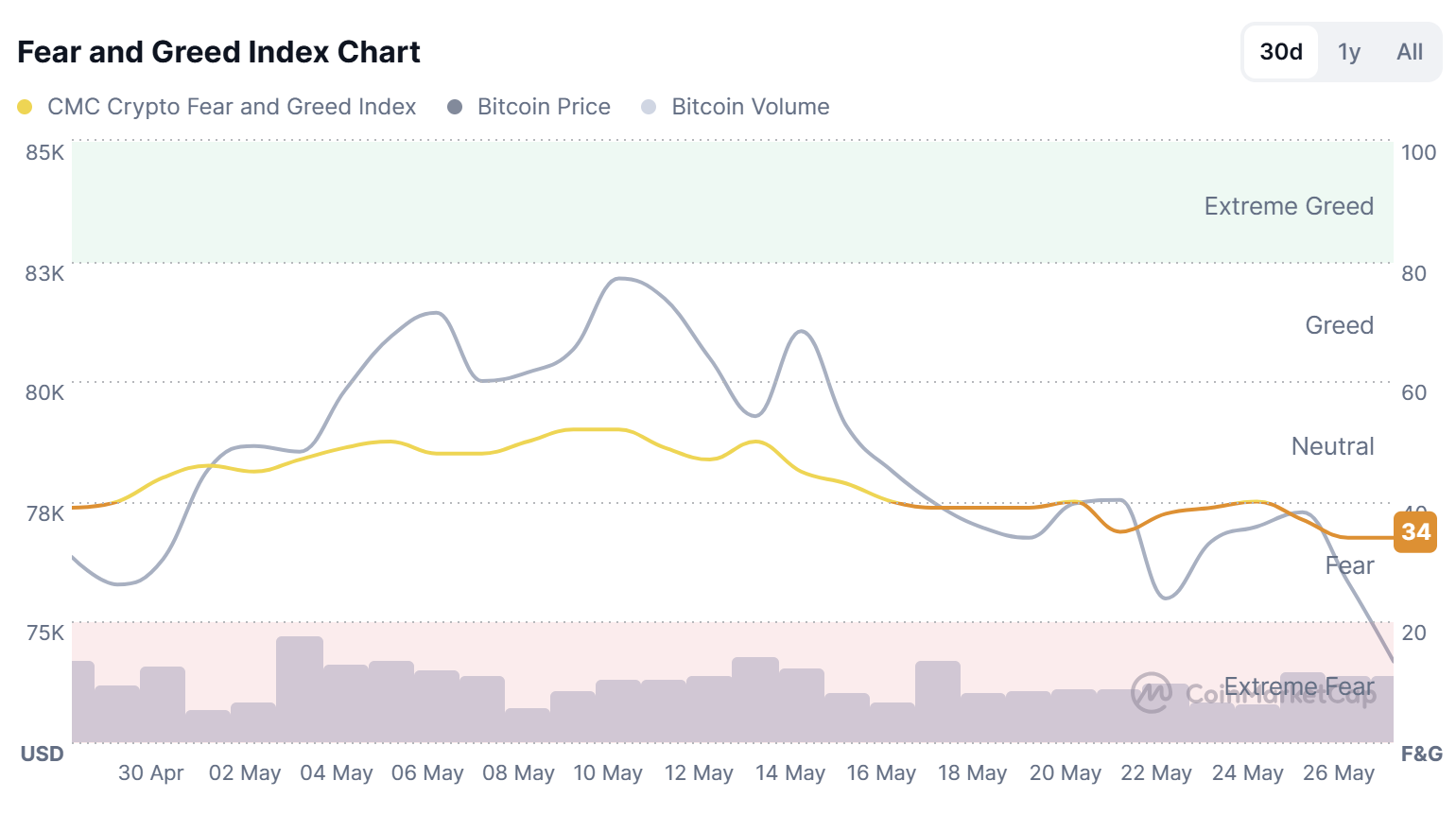
Data from Coinglass shows that total liquidations across all contracts on the entire network over the past 24 hours reached $470 million, with long positions accounting for $420 million in liquidations.
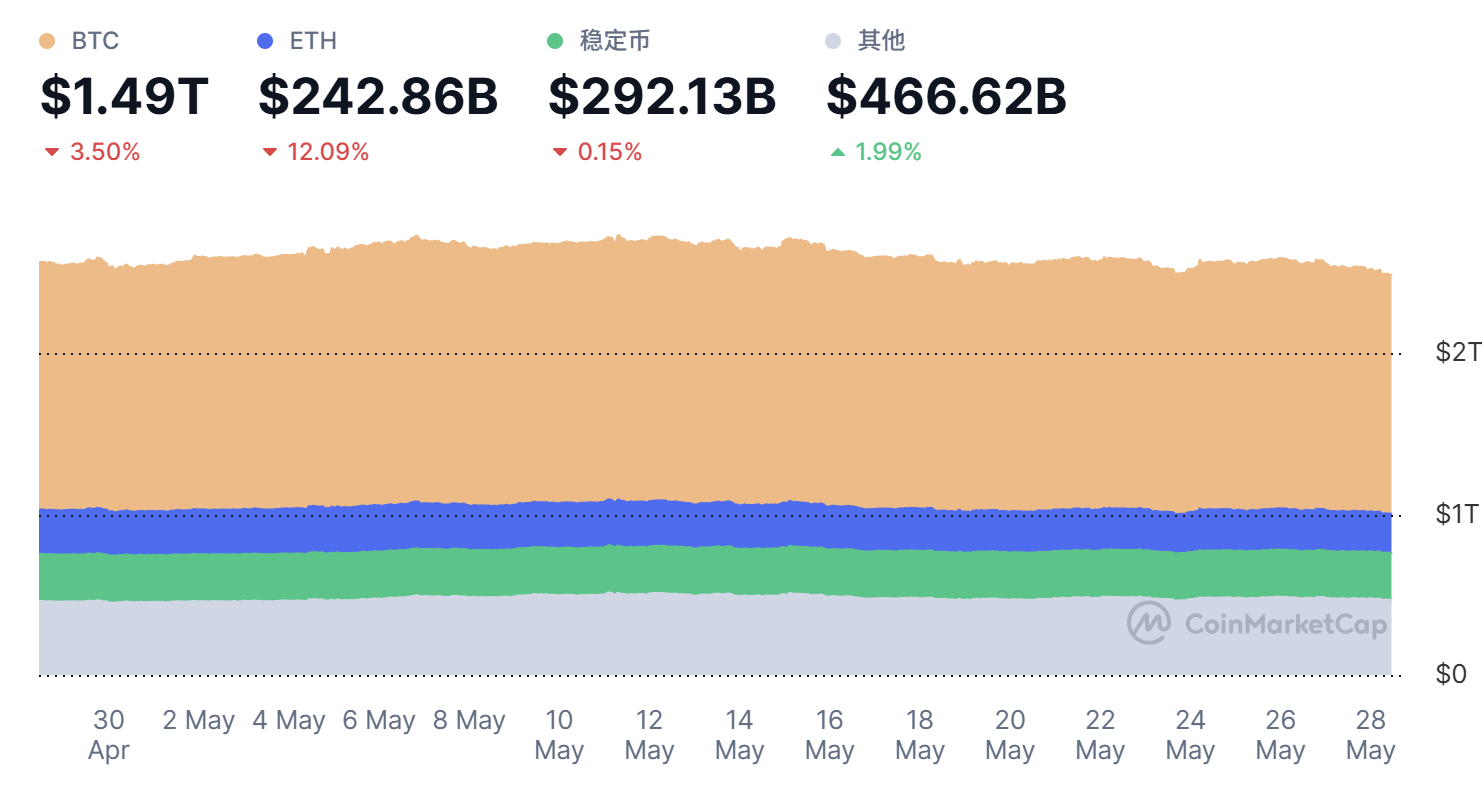
Over the past few weeks, Bitcoin has been oscillating repeatedly within the $75,000 to $80,000 range. It briefly attempted to break above $78,000 but failed to maintain that level. Over the past 30 days, BTC has dropped 3.5%, ETH has fallen approximately 12%, and stablecoins have also declined by 0.15%.
In terms of macroeconomic data, Brent crude oil edged up to $97 per barrel, silver dipped slightly to $73, and the Dow Jones Industrial Average rose 182.60 points (+0.36%) to a record high. The S&P 500 index increased by 1.24 points (+0.02%). The Nasdaq Composite Index stood at 26,674.73 points, up 18.55 points (+0.07%). Spot gold breached the $4,400 per ounce level for the first time since March 27, falling over $50 intraday, a decline of 1.25%.
US-Iran Conflict Reignites
Geopolitical risks in the Middle East have become another significant external variable. Since 2026, tensions between the US, Iran, and related parties over issues such as Iran's nuclear facilities and the safety of navigation in the Strait of Hormuz have alternated between escalation and de-escalation multiple times. In recent months, the US has adopted a strategy combining military action and diplomatic pressure, interspersed with airstrikes, rumors of port blockades, and repeated ceasefire negotiations.
Even during windows of ceasefire or diplomatic progress, the market's pricing of the risk of 'reignition' has not completely dissipated.
In the early hours of May 28, US President Donald Trump stated that the United States would continue to control Iran's assets. "Iran is starting to give us what we want. If things don't go well, Secretary of Defense Hegseth will finish the job. We can end the war with Iran very quickly, and we may have to. But I don't think we'll need to."
Around 5:00 AM Beijing time, according to Iranian media Fars News, local residents reported hearing explosions at the port of Bandar Abbas in southern Iran.
A US official told Reuters that the US military had carried out new strikes against an Iranian military base that posed a threat to US forces and commercial shipping in the Strait of Hormuz. The US military also intercepted and shot down several Iranian drones that posed a threat to US forces and commercial maritime traffic.
Tensions surrounding the Strait of Hormuz have once again become a focal point, leading to increased oil price volatility and putting pressure on global risk assets. In this environment, Bitcoin is exhibiting more characteristics of a risk asset rather than the safe-haven function traditionally associated with 'digital gold' – geopolitical uncertainty boosts demand for the US dollar and US Treasuries while dampening risk appetite, leading to capital outflows from the crypto market.
ETF Net Outflows Reveal Institutional Profit-Taking
Since their launch in early 2024, US Bitcoin spot ETFs had accumulated net inflows exceeding $57 billion, becoming a primary channel for institutional allocation to Bitcoin. However, since entering May 2026, the flow direction has seen a clear reversal.
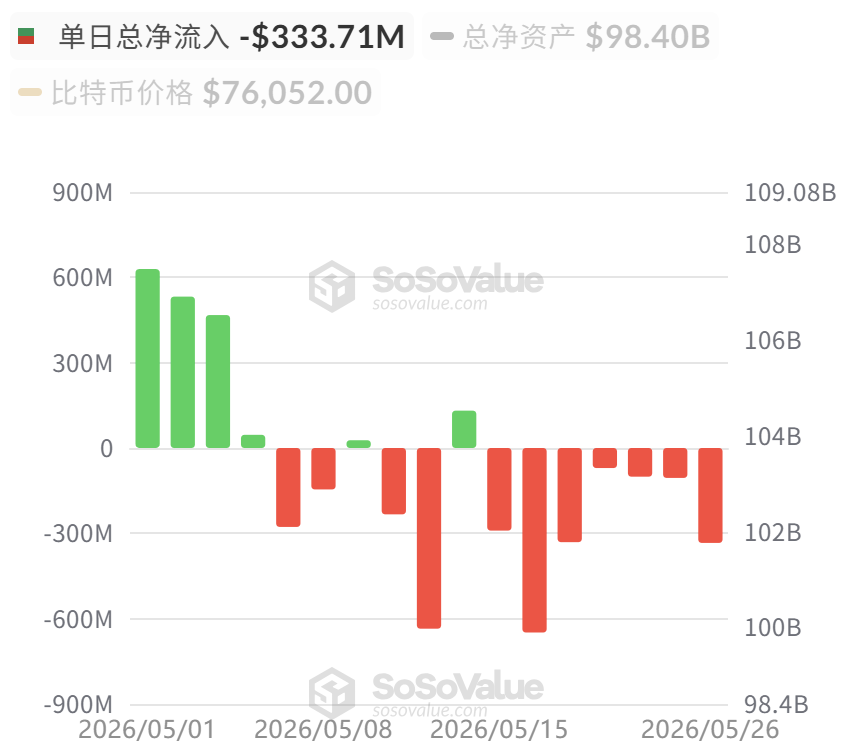
According to tracking data from SoSoValue, between May 5 and May 26, US Bitcoin ETFs recorded consecutive net outflows. The daily outflow scale expanded from tens of millions of dollars to a maximum of $600 million, occurring on two occasions.
The situation for Ethereum spot ETFs is similarly concerning. Mirroring Bitcoin, they have also seen significant net outflows since the beginning of May.
This may not simply be 'panic selling'; rather, it appears to be systematic profit-taking by previous holders. ETF holders include traditional asset managers, family offices, and hedge funds. After Bitcoin recovered from its lows to the $75,000-$80,000 range, many chose to lock in profits through redemption mechanisms. Some of this capital may have rotated into better-performing AI-related tech stocks – the S&P 500 and Nasdaq indices hit new highs during the same period, while the overall crypto market underperformed, highlighting a reallocation of capital among risk assets.
Future Outlook
Wintermute stated that Bitcoin seeing ETF outflows exceeding $1 billion for two consecutive weeks (following six weeks of inflows) indicates institutions are capitalizing on the strength to lock in recent gains. More noteworthy is AI. Nvidia delivered textbook-beating performance, but its stock barely moved after hours. Incremental beats no longer move the needle. If AI momentum fades, the macro picture (record-low consumer confidence, sticky inflation, Powell's hawkish Fed) will gain more weight, and cryptocurrencies will not be immune.
BTC's long-term structure remains intact (reserves are at multi-year lows, long-term holders continue to accumulate, CLARITY progressing, HYPE doing what major early-stage tokens should). However, short-term capital flows drive prices, and these are currently negative. The $75,000 to $76,000 range is a key line for BTC. Holding above this range could allow BTC to challenge $80,000 again. A breakdown below could lead to a rapid slide towards $70,000-$72,000.
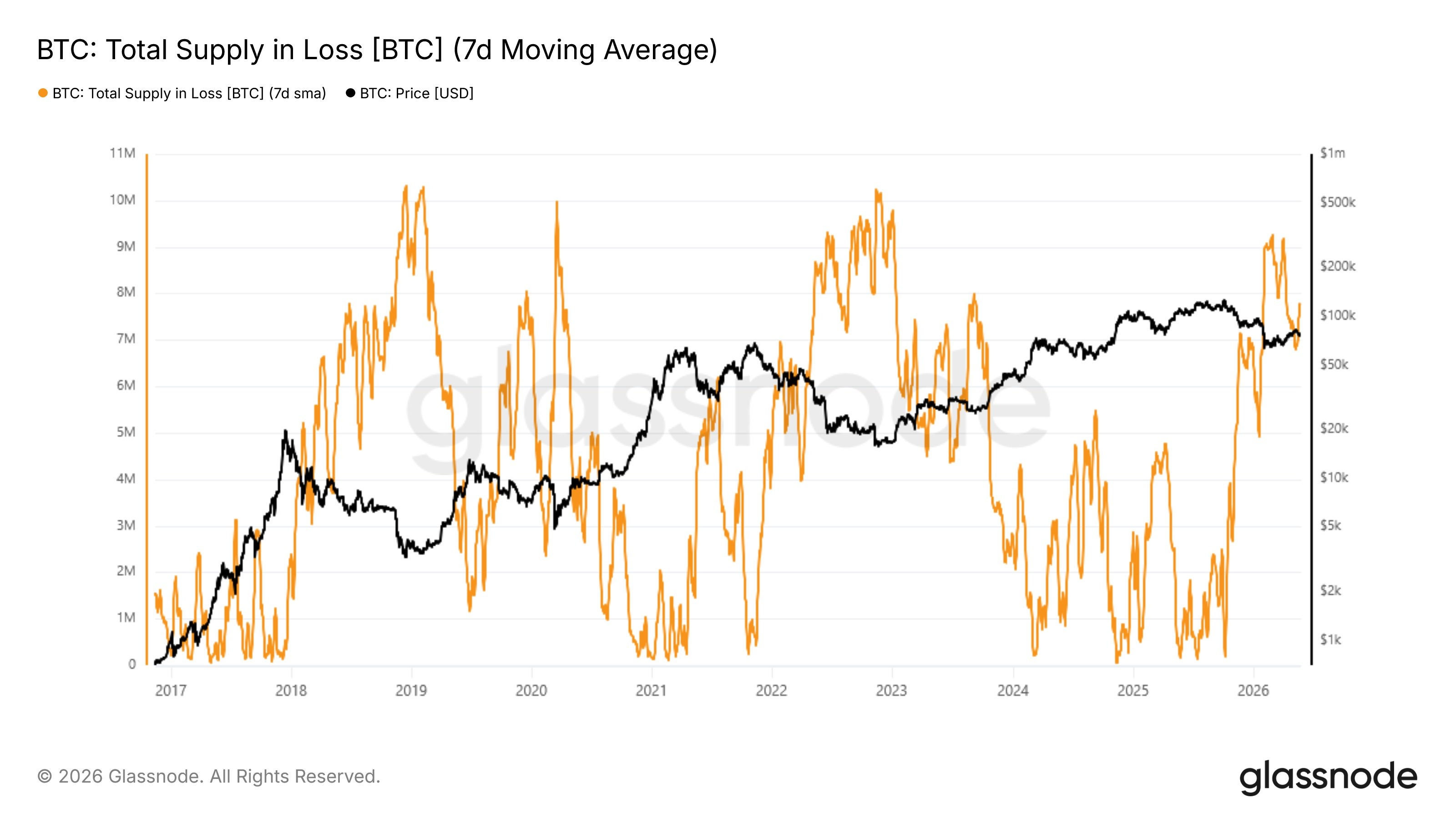
Glassnode tweeted that at a price of $76,000, approximately 7.75 million BTC are in a loss-making state. This supply overhang is a structural characteristic of a bear market and is typically only resolved when weak hands capitulate.
BIT tweeted that, for Bitcoin, the sustained upward trend over the past period has largely depended on the interplay between institutional demand and available market supply. Over the past year, Bitcoin spot ETFs and Strategy have been significant sources of this demand. When ETF inflows accelerated and Strategy continued to accumulate BTC, Bitcoin prices typically trended higher.
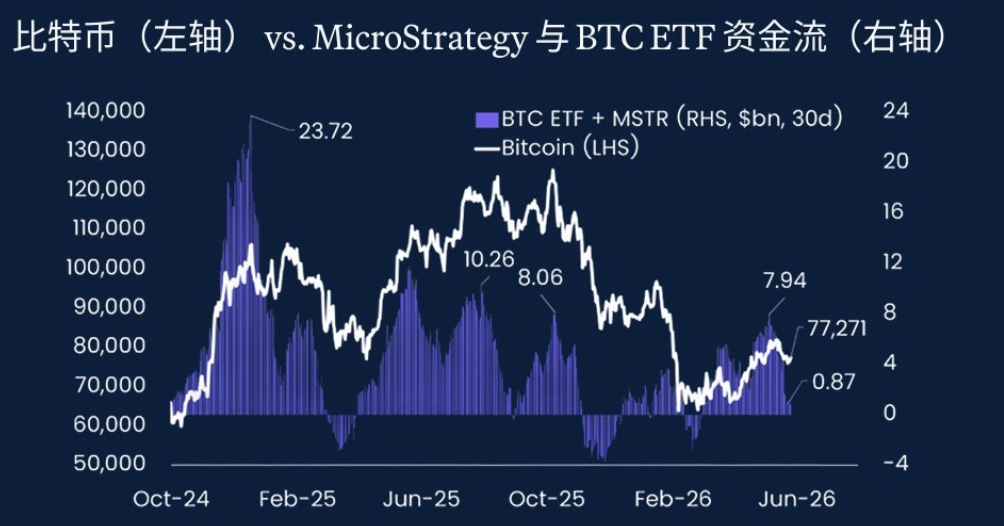
BIT noted that the total net purchases by ETFs and Strategy have currently fallen to just $870 million, primarily due to significant capital outflows from ETFs, shifting from net buying to net selling. Until ETF inflows stabilize and rebound, Bitcoin may continue to trade in a range-bound and consolidating manner in the short term.
Analyst Murphy stated that by observing the 'on-chain activity weight of short-term capital' (i.e., the proportion of USD value carried by short-term coin turnover), he assesses the current BTC market state. This metric reflects short-term trading behaviors such as fresh speculation, arbitrage, profit-taking, or panic selling. Currently, this weight has dropped to historically extremely low levels, seen in the past 15 years only during the deepest bear market bottoms. This suggests a significant cooling of short-term turnover, with economic value shifting towards long-term holdings, and the market exhibiting characteristics typical of low volatility, accumulation, or a clear bottom phase.
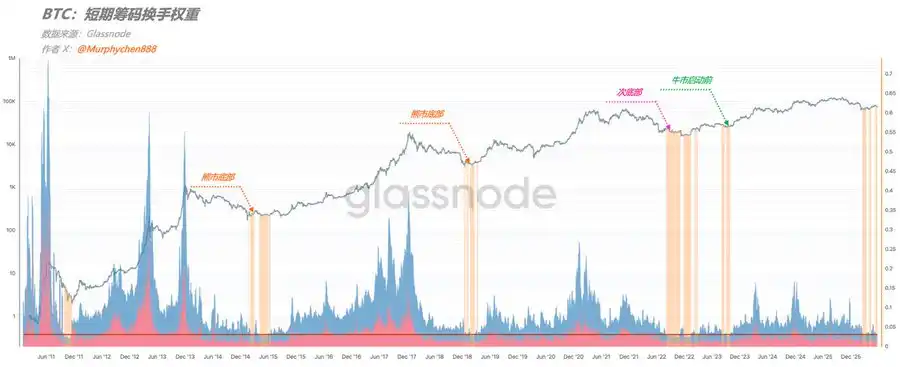
Murphy judges that based on this, the current market could be in one of three phases: a bear market bottom; a secondary bottom, possibly with one final drop; or accumulation before a bull run. However, under rational judgment, pre-bull run accumulation can be temporarily ruled out. For now, he advises against going all-in on a single scenario. Instead, a diversified position strategy is recommended to cope with different outcomes. The relative position on the long-term direction already suggests Bitcoin is near the bottom.


