MEXC Alpha Trader Weekly Research Report | Rate Cut Expectations Completely Reversed, Crypto Legislation Breaks Ice But Faces Historic ETF Selling Pressure


- Core Viewpoint: In the third week of May 2026, the U.S. Senate Banking Committee's passage of the CLARITY Act is a milestone for regulatory breakthroughs in the crypto industry. However, this positive development was offset by a complete macroeconomic reversal. April CPI and PPI figures significantly exceeded expectations, leading to a zeroing out of Fed rate cut expectations and a surge in the probability of a rate hike to 28%. Bitcoin came under pressure, falling below $77,000, and institutional capital ended its six-week inflow streak, shifting to net outflows of approximately $1 billion for the week.
- Key Elements:
- The CLARITY Act passed the Senate Banking Committee with a bipartisan vote of 15:9. This marks the first-ever committee vote on comprehensive crypto market structure legislation in U.S. history. It now requires a full Senate vote.
- April PPI surged 6.0% year-over-year, and core PPI rose 5.2% year-over-year, marking its largest increase in over three years. CPI jumped to 3.8% year-over-year. The CME-implied probability of a December rate hike soared from 2% to 28%.
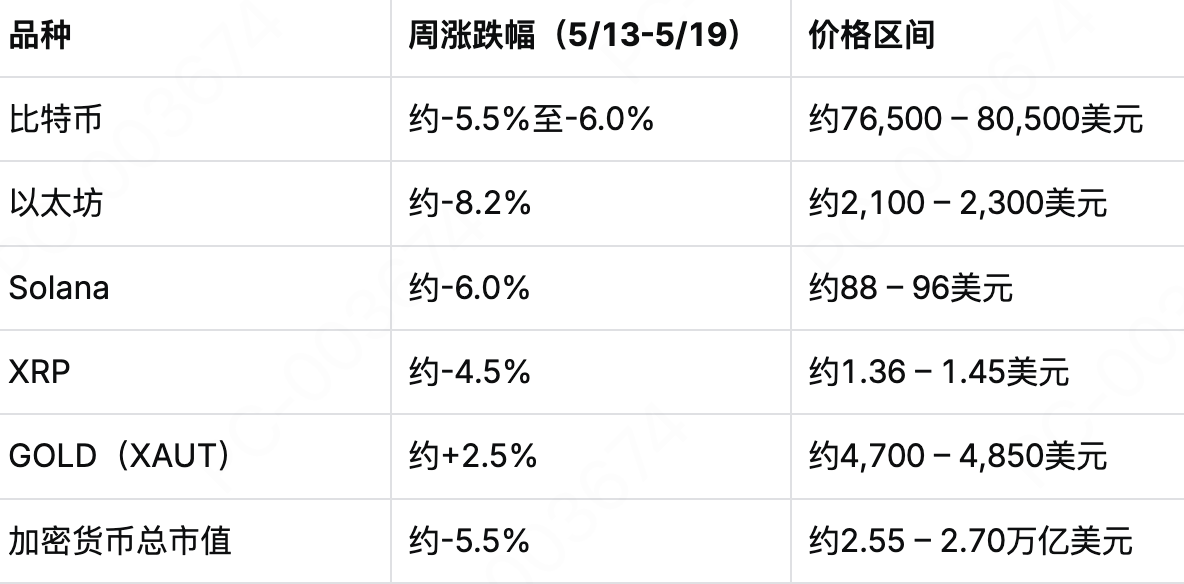
- Bitcoin continued its decline from $82,000 to approximately $76,700 by May 19, erasing most of its gains for the month. Ethereum fell to around $2,100, hitting a two-month low.
- Spot Bitcoin ETFs recorded net outflows of approximately $1 billion for the week, ending a six-week consecutive net inflow trend of about $3.4 billion. A single-day net outflow on May 13 reached a high of $635 million.
- The stalemate in US-Iran ceasefire talks pushed Brent crude oil above $110 per barrel. High energy prices strengthen inflation stickiness through transportation costs, further solidifying expectations of tighter Fed policy.
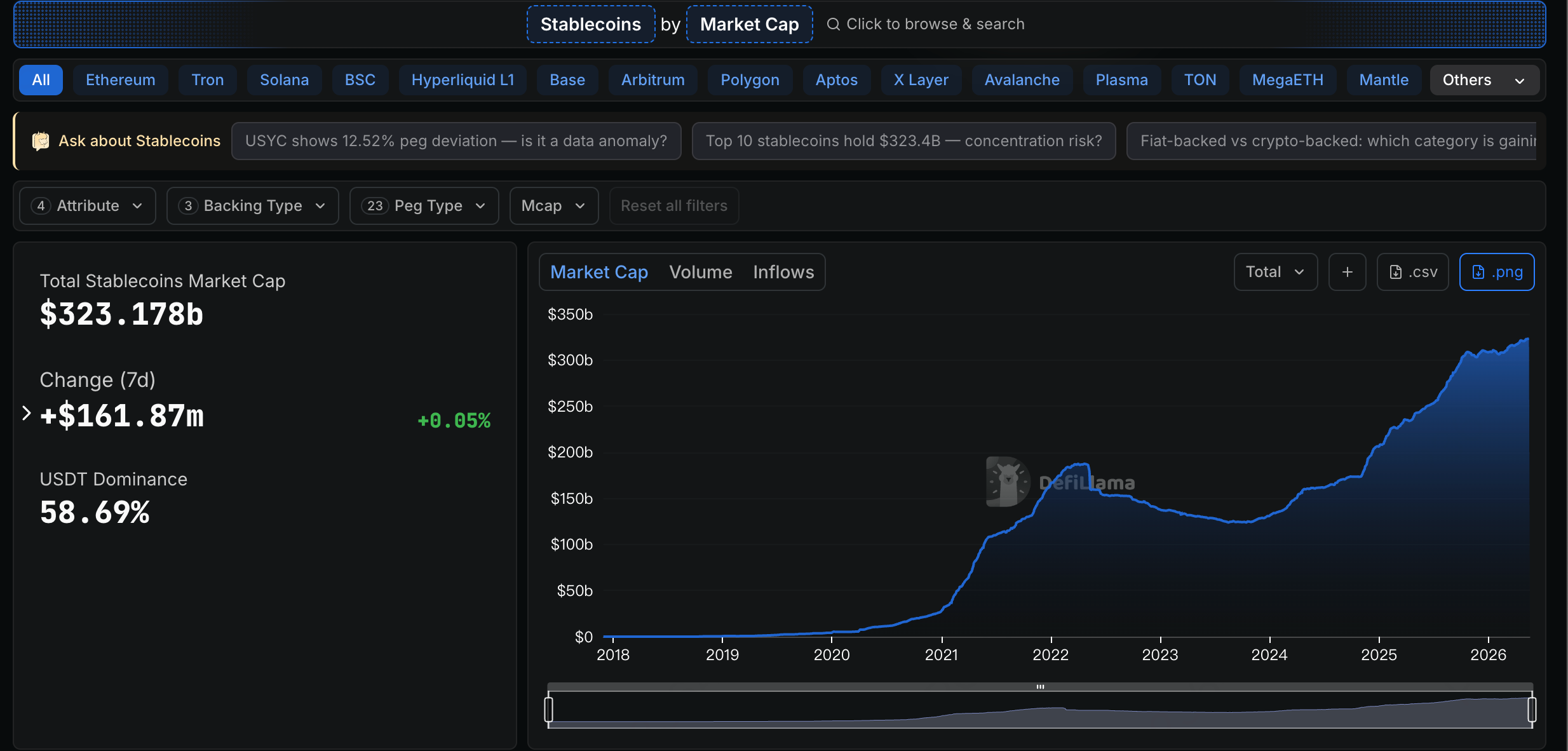
- The total stablecoin market cap surpassed $320 billion, with USDC minting an additional 250 million tokens on Ethereum in a single event, indicating that the on-chain capital pool is still expanding.
- The Nasdaq and S&P 500 ended their six-week winning streak, with the 30-year Treasury yield returning to the 5% threshold. The market shifted from being driven by earnings season to being driven by inflation pricing.
Week 3 of May 2026
Statistical Period: May 13, 2026 – May 19, 2026
Data as of: May 19, 2026
Core Narrative
The past week was a critical window for the thorough reconstruction of the macro logic in the crypto market since 2026. On May 14, the U.S. Senate Banking Committee passed the CLARITY Act with a bipartisan vote of 15 to 9. This marks the first time in U.S. congressional history that a committee-level vote has been held on comprehensive crypto market structure legislation, signaling an end to the nearly decade-long regulatory "gray area" for the crypto industry. However, this legislative breakthrough was unable to offset a deep reversal on the macro front.
A turning point emerged in the macro landscape. After the April CPI jumped to 3.8% year-over-year on May 12 (the highest level since fall 2023), the U.S. Bureau of Labor Statistics reported on May 13 that the April PPI surged to 6.0% year-over-year, far exceeding all economist expectations and posting the largest monthly increase since 2022. Core PPI rose 5.2% year-over-year, the largest gain in over three years. The combination of higher-than-expected inflation and rising energy costs from geopolitical conflicts has fundamentally shifted the Fed's monetary policy trajectory. The CME's implied probability of a Fed rate hike by December 2026 skyrocketed from about 2% a month ago to approximately 28%. The 30-year Treasury yield returned to the 5% level, and the market consensus pivoted directly from "rate cuts this year" to "possibility of rate hikes."
Bitcoin experienced significant downward pressure this week. From above $82,000 in early May, Bitcoin slid to below $77,000 during the Asian session on May 19, briefly approaching the $76,500 mark, erasing most of its gains from earlier this month. Ethereum weakened to around $2,100, its lowest level since April 7. Against the backdrop of a macro certainty reversal, the crypto market entered a phase of risk resetting in mid-May – shifting from pricing in "regulatory optimism + easy policy expectations" to the complex narrative of "regulatory breakthrough + tightening liquidity."
Geopolitical factors continue to inject volatility. With the US-Iran ceasefire talks failing to make substantial progress, Brent crude oil stood above $110/barrel during the Asian session on May 18, and WTI crude broke above $107/barrel, its highest level since May. Rising oil prices are transmitting to core inflation through transportation costs, further reinforcing the Fed's policy tightening expectations.
In the US stock market, although the Nasdaq and S&P 500 had hit record highs for six consecutive weeks, US stock futures fell across the board starting May 13, led by the semiconductor sector. The market is transitioning from being "earnings-season-driven" to "inflation-pricing-driven." Nvidia's earnings report and the Fed's meeting minutes will be the two major focal points for the market in the coming week.
1. Core Developments in the Crypto Market
1. Institutional Flows: Six-Week Inflow Streak Ends, ~$1 Billion Weekly Outflow
The robust net inflow trend for Bitcoin spot ETFs, which had lasted for six consecutive weeks, officially reversed this week. According to multiple data sources, over the five trading days ending May 15, 2026, the total net outflow from US spot Bitcoin ETFs was approximately $996 million to $1 billion, bringing an end to the previous six-week streak of cumulative net inflows totaling around $3.4 billion.
May 13 was the key day for this round of selling pressure. According to reports from BingX and CoinDesk, Bitcoin spot ETFs saw a single-day net outflow of up to $635 million (some reports cite $630.4 million), one of the largest single-day net outflows since the beginning of 2026. Amid a confluence of ETF selling, the shock of inflation data, and long position liquidations in the derivatives market, Bitcoin's price accelerated its decline from nearly $82,000 to around $78,000. Ethereum spot ETFs also recorded net outflows for most of the week, with BlackRock's Bitcoin and Ethereum ETFs seeing a combined net outflow of approximately $653.9 million for the week, reflecting a phased defensive de-risking strategy by institutions following the macro risk reset.
May 14 saw a brief respite in capital flows. Bitcoin ETFs recorded a net inflow of $131 million that day, with total trading volume reaching $2.76 billion, higher than the previous trading day's $1.99 billion. However, this rebound was short-lived – a net outflow of about $290 million occurred again on May 15, creating a weak weekly pattern of "sharp outflow → minor replenishment → renewed outflow."
Notably, despite the weekly net outflow reaching approximately $1 billion, the total cumulative net inflow for Bitcoin ETFs remains above $59 billion, indicating that the existing holdings have not been severely eroded. As of press time on May 19, Bitcoin was trading at approximately $76,769. Total market-wide derivatives liquidations for the day were about $180 million, and the Crypto Fear & Greed Index dropped to 31, falling into the "Fear" zone.
2. Price Action: Bitcoin Drops Below $77K, Ethereum Falls to Two-Month Low
The Bitcoin price trajectory this week was characterized by sustained, one-sided decline, broadly breaking down into three phases:
- Phase 1 (May 13-14): Inflation Data Shock, Breaks Below $80,000. Following the double miss of April CPI at 3.8% YoY and PPI at 6.0% YoY, Bitcoin rapidly declined from above $81,000, breaking below the key $80,000 level and briefly touching the sub-$79,000 area. On May 13, Bitcoin fell below $80,000 intraday, a drop of over 2% from its daily high.
- Phase 2 (May 15-17): Temporary Regulatory Boost, But Limited Rebound. The news of the Senate Banking Committee passing the CLARITY Act on May 15 provided some emotional support, with the price briefly stabilizing in the $78,000-$79,000 range. However, the continued outflow from ETFs capped the rebound's potential.
- Phase 3 (May 18-19): Macro Pressures Accumulate, Breaks Below $77,000. Heading into the latter part of the week, mounting concerns over macro pressures – including rising oil prices from the stalled US-Iran talks and the increasing likelihood of a Fed rate hike – came to a head. Bitcoin fell below $77,000 on May 18 and further declined to the $76,500-$76,800 range by May 19, erasing most of its gains this month.
The Crypto Fear & Greed Index (FGI) fell to 31 on May 19, entering the "Fear" zone.
Data Source: CoinGecko, MEXC
On the technical side, after breaking below the 100-hour moving average and the psychological $80,000 level, Bitcoin's short-term trend turned bearish. The $76,000 level is the core support zone since February – it also corresponds to the low area tested multiple times previously. A decisive break below this level could open the door to further downside. On the Polymarket prediction market, the probability of traders betting on Bitcoin falling below $75,000 by the end of May has risen to 74%.
3. Stablecoins: Total Market Cap Surpasses $320 Billion, USDC Continues Minting
The stablecoin market continued its gradual expansion trend. As of mid-May, the total global stablecoin market cap has officially surpassed the $320 billion mark. Among them, USDT's market cap stands at approximately $189.6 billion, accounting for about 60% of the total stablecoin market cap; USDC's market cap is around $77-78 billion, representing about 24-25% of the market. Together, they hold nearly 90% of the market share.
New USDC continues to enter circulation through ongoing minting. On May 19, according to Whale Alert on-chain monitoring reports, the USDC Treasury executed a large-scale minting transaction on Ethereum, generating 250 million new USDC tokens in a single batch.Yield-bearing stablecoins are becoming the fastest-growing sub-sector. In Q1 2026, the market cap of yield-bearing stablecoins increased by about $4.3 billion, with sUSDS alone attracting over $2.5 billion in new capital. The latest activities of USDT and USDC indicate that on-chain "dry powder" (available liquidity) pools are still expanding in an orderly manner.
2. Global Asset Performance
1. Equity Markets: Inflation Data Weighs on US Stocks, Ending Nasdaq and S&P's Six-Week Winning Streak
The US stock market pivoted this week from being "earnings season-driven" to "inflation pricing-driven." With April's CPI (3.8% YoY) and PPI (6.0% YoY) both far exceeding expectations, the CME's implied probability of a Fed rate hike by December 2026 surged from about 2% a month ago to 28%. The 30-year Treasury yield returned to the 5% level.
The Fed's April FOMC meeting maintained the federal funds rate at the 3.50%-3.75% range, with an 8-4 vote, the most split decision since 1992. Following the inflation data, institutions like CICC adjusted their forecasts from "possible rate cuts this year" to "further rate cuts unlikely this year." In the baseline scenario, US PCE inflation is expected to remain above 3.5% for the year, with core PCE above 3%, both significantly higher than the Fed's 2% policy target.
On May 13, futures for the three major US stock indices fell across the board. Chip stocks generally declined, with the semiconductor sector leading the losses. After six consecutive weeks of hitting record highs, both the Nasdaq and S&P 500 began to face pressure at elevated levels. The repricing of the Fed's policy path is driving capital outflows from growth sectors.
Key earnings and events this week include: Cisco (CSCO) earnings on May 13; Home Depot (HD) earnings on May 19; Nvidia is expected to report earnings in late May, seen as a litmus test for market sentiment.
2. Commodities: Oil Volatile at Highs, Precious Metals Under Pressure
Over the past week, the international commodity market showed a clear "strong oil, weak gold" pattern. On May 18, Brent crude broke through the $110/barrel mark, with WTI crude standing above $107/barrel. Key factors driving this rally include: core disagreements in the US-Iran ceasefire talks that are difficult to bridge; the ongoing closure of the Strait of Hormuz reducing global oil supply by over 10 million barrels per day; the expiration of the Russian oil sanctions waiver in mid-May; and a drone attack on Gulf energy facilities over the past weekend.
For the week ending May 12, London gold was quoted