






The Crypto Fear & Greed Index Plunges into Extreme Fear: What It Means and How Investors Should Respond


- Key Takeaway: The Crypto Fear & Greed Index currently stands at 22, placing it in the "Extreme Fear" zone. This reflects the triple impact of geopolitical pressure, capital flows moving toward stocks, and Bitcoin breaking below a key support level. The index serves as an effective emotional barometer but is not a reliable trading signal. Investors should formulate strategies by combining technical indicators and their own risk tolerance.
- Key Elements:
- The current score of 22 stems from geopolitical tensions (e.g., the US-Iran situation), capital rotation into the stock market, and weakening technical conditions for Bitcoin, leading to a sharp surge in market panic.
- Historical data shows that "Extreme Fear" does not always predict an immediate price rebound. For instance, after the March 2020 COVID crash, the market recovered quickly. However, following the LUNA collapse in 2022, the index remained in low territory for months while prices continued to fall.
- The index is maintained by Alternative.me, which calculates it from six weighted data points: Volatility (25%), Market Momentum & Volume (25%), Social Media Sentiment (15%), Surveys (15%), Bitcoin Dominance (10%), and Google Trends (10%).
- For long-term holders, extreme fear should not be a reason to sell. Instead, they should examine the fundamentals of their assets. Investors on the sidelines may consider dollar-cost averaging (DCA) rather than buying in a lump sum at the bottom to reduce timing risk.
- Common trader mistakes include: treating extreme fear as an automatic buy signal, ignoring the index's direction and rate of change, or using it as a standalone decision-making tool while neglecting technical analysis and risk management.
Core Points
- The Crypto Fear & Greed Index measures market sentiment on a scale of 0 to 100, distilling six data signals—including volatility, trading volume, and social media—into a single daily reading maintained by Alternative.me.
- The current reading of 22 places the market deep in the Extreme Fear zone, reflecting a combination of geopolitical pressures, capital rotation toward stock markets, and Bitcoin trading below key short-term price levels.
- Extreme fear does not guarantee an immediate price recovery—during the 2022 LUNA crash, the index remained at very low levels for several months while prices continued to decline.
- Your response depends on your starting position: long-term holders are generally better off staying put, while investors on the sidelines could consider dollar-cost averaging (DCA) rather than entering with a lump sum all at once.
- The index serves as a sentiment thermometer, not a trading signal—it tells you how fearful the market is, not where prices are headed next.
- Always use the Fear and Greed Index in conjunction with technical indicators and your personal risk tolerance; using it as a standalone buy or sell trigger is one of the most common and costliest mistakes traders make.
Why the Crypto Fear & Greed Index Is in Extreme Fear Today
Bitcoin has broken below key support levels, while geopolitical risks have surged sharply—a combination that has dealt a quick and heavy blow to market sentiment.
As of late May 2026, according to CoinMarketCap's available data, the total cryptocurrency market cap has seen a notable decline over the past week, reflecting broad market selling pressure.
The most immediate catalyst is the escalating U.S.-Iran situation—rising geopolitical tensions are introducing significant uncertainty to global markets. As overall macro sentiment deteriorates, investors are pulling out of risk assets like Bitcoin.
Capital rotation is adding to the pressure. Investors appear to be shifting funds into the stock market, where renewed interest is drawing capital away from the crypto market, particularly into tech stocks.
On the technical side, according to CoinMarketCap historical price data, Bitcoin has fallen sharply and is trading below key short-term price levels—showing that bears currently dominate the short-term price trend.
When a geopolitical shock, capital outflows, and a technical breakdown hit simultaneously, the Crypto Fear & Greed Index reacts quickly and dramatically.
The reading of 22 is the manifestation of these three pressures converging at once.
What Is the Crypto Fear & Greed Index? A Clear Explanation
The Crypto Fear & Greed Index is a daily sentiment indicator that scores the overall emotional state of the cryptocurrency market on a scale from 0 to 100.
The core idea is simple: cryptocurrency prices are driven by emotion as much as fundamentals, and quantifying that emotion into a number help investors step back from the noise and think more clearly.
The most widely cited version is maintained by Alternative.me, which gathers six weighted data inputs—market volatility (25%), market momentum and volume (25%), social media sentiment (15%), surveys (15%), Bitcoin dominance (10%), and Google Trends data (10%)—all condensed into a single daily reading.
While the most widely cited version is maintained by Alternative.me, CoinMarketCap also publishes a Crypto Fear & Greed Index using a slightly different methodology.
A low score means fear dominates; a high score means greed dominates.
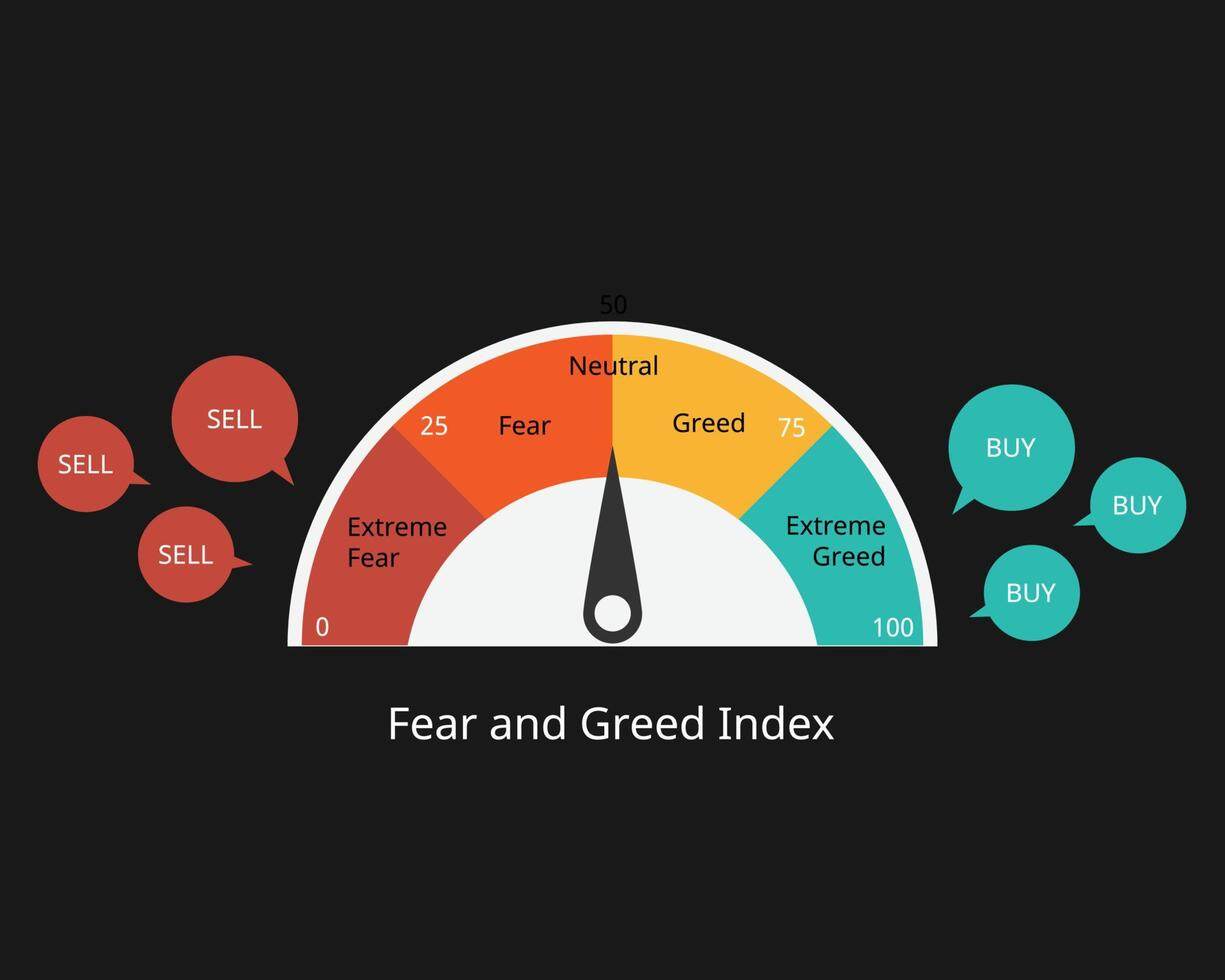
The Crypto Fear & Greed Index Scale: The True Meaning of Each Score Range
0–24: Extreme Fear—Market in Panic
A score of 0 to 24 indicates the market has entered the Extreme Fear zone—investors are panicking and selling, sentiment has reached a pessimistic extreme, and selling pressure is elevated across the board.
This does not automatically mean the crash is ongoing.
In many cases, such low readings tend to signal that the most emotional, irrational selling is already underway.
Historically, readings below 25 have often coincided with periods where the valuation of crypto assets is compressed relative to their longer-term price trends, as reflected in the historical index data published by Alternative.me.
25–49: Fear—Cautious but Not in Crisis
In the Fear range, negative sentiment is prevalent but hasn't reached a critical point.
Investors tend to be cautious, FUD (Fear, Uncertainty, and Doubt) circulates in the market, and many participants choose to wait on the sidelines rather than actively buy or sell.
This range doesn't signal imminent danger, but it reflects a clear loss of confidence in the market—one that could swing sharply in either direction on a single piece of news.
50–74: Greed—Optimism Is Brewing
A score between 50 and 74 means optimism is beginning to outweigh caution.
FOMO (Fear Of Missing Out) starts to influence buying decisions, trading volume picks up, and overall market sentiment turns broadly bullish.
This range is often when many new investors feel most confident entering the market—and that's precisely when discipline matters most, because prices may already reflect much of the positive sentiment driving the rally.
75–100: Extreme Greed—When Euphoria Becomes Dangerous
Extreme Greed marks the full takeover of euphoric sentiment—prices may become disconnected from fundamentals, and buying is increasingly driven by momentum rather than analysis.
This is the range where Warren Buffett's principle applies most directly: be fearful when others are greedy.
Across multiple cryptocurrency market cycles, sustained periods of Extreme Greed have often preceded significant corrections, as documented in Alternative.me's historical Crypto Fear & Greed Index data.
Why 22 Is a Number Worth Watching
A score of 22 isn't just in the Extreme Fear zone—it's deep within it.
More important than the number itself is the speed at which it arrived at this level.
A rapid drop from a neutral zone down to the low 20s often reflects emotional capitulation—selling driven by panic faster than any rational assessment of intrinsic value.
This doesn't guarantee a rebound is imminent, but it does confirm that market fear has reached an acute, quantifiable extreme that, for investors tracking the current Crypto Fear & Greed Index regularly, has historically merited serious attention.
How Should Investors Respond When the Crypto Fear & Greed Index Hits Extreme Fear?
The right response to an Extreme Fear reading depends almost entirely on your starting position—your position size, investment timeline, and the reason you entered in the first place.
If You Are a Long-Term Holder
An Extreme Fear reading on the Crypto Fear & Greed Index is not a signal to exit long-term positions.
Panic selling at an emotionally charged market low locks in losses and causes you to miss the eventual recovery.
A more meaningful action is to re-examine your original investment thesis: have the fundamentals of the asset fundamentally changed, or is this purely an emotion-driven decline?
If your thesis still holds, holding—or gradually adding to your position at a lower average cost—is a more disciplined response than reacting to a single number.
If You Are on the Sidelines
Extreme fear can create buying opportunities—but the risk of going all-in with a lump sum is very real if fear deepens further.
A more cautious approach is dollar-cost averaging (DCA): spreading your purchases across multiple, smaller intervals rather than committing your entire capital at a single price point.
This removes the pressure of trying to time the bottom perfectly—a challenge that even seasoned traders tracking the Crypto Fear & Greed Index's real-time readings daily often fail at.
If You Are in a Losing Position
This is the hardest situation to maintain emotional discipline in—and the most crucial one.
Selling at a loss when fear spikes often means exiting at the worst possible time, precisely when emotion—rather than fundamentals—is suppressing the price.
Before taking any action, ask yourself one question: have the fundamentals of the underlying asset changed, or is this purely a reaction to short-term fear?
The answer should guide your decision—not the current reading of the Crypto Fear & Greed Index.

 ลิงก์ต้นฉบับ


