






Hong Kong Ethereum Observation: When the "World Computer" Meets the "Yield-Bearing Asset," Two ETHs, How Do They Resonate?


- Core Thesis: In 2026, Ethereum exhibits a narrative divergence: Vitalik Buterin emphasizes from the protocol level Ethereum's role as a secure, decentralized "public bulletin board" and "world computer," while institutional investors are redefining it as a "yield-bearing asset" that generates staking income and can be included in balance sheets. These two perspectives actually reinforce each other, jointly strengthening Ethereum's long-term credibility and economic foundation.
- Key Elements:
- Vitalik proposes Ethereum's two core functions are the "public bulletin board" (message publishing and verification) and "shared computing" (a decentralized rule execution environment), prioritizing self-sovereignty and verifiability over pure efficiency.
- Vitalik's roadmap includes short-term scaling and account abstraction, medium-term state layer scaling, long-term quantum-resistant migration (relying on ZK tools), and formal verification, all aiming to achieve a "test of exit" not dependent on any specific team, ensuring long-term trustworthiness.
- From an institutional perspective, BitMine holds approximately 4.976 million ETH (4.12% of the total supply) and has staked 70% of it, viewing ETH as an "on-chain base asset" with native yield.
- BlackRock's ETHB product packages ETH price exposure and staking yields into a traditional asset management framework, lowering the barrier for traditional capital; the Ethereum Foundation has also begun staking about 70,000 ETH to generate income to support its operations.
- These two perspectives complement each other: Vitalik's technical roadmap provides the prerequisite of "long-term credibility" for ETH's asset properties, while large-scale institutional staking economically raises the cost of attacking the consensus, jointly expanding the Ethereum ecosystem.
In April 2026, Hong Kong was simultaneously telling two stories about Ethereum.
At the 2026 Hong Kong Web3 Carnival, Vitalik Buterin continued to discuss security, decentralization, verifiability, quantum resistance, and long-term sustainability, attempting to answer "what Ethereum should become in the next five years." Meanwhile, on the other side, from BitMine to BlackRock, institutional investors and asset management giants are increasingly inclined to view ETH as a foundational asset that can be placed on balance sheets, generate staking yields, and be packaged into ETFs and traditional account systems.
In other words, while Vitalik is still talking about the "world computer," institutions have already turned ETH into a "cash-flow asset." The paradox is that both descriptions refer to the same Ethereum.
This creates a very interesting and noteworthy sense of divergence.

The Ethereum seen by Vitalik and the Ethereum seen by institutions seem to be turning into two different things. One belongs to protocol design, cryptography, security boundaries, and long-termism, while the other belongs to asset allocation, staking yields, ETF packaging, and balance sheet management.
But the issue isn't about who is right or wrong. The question is, as these two perspectives emerge simultaneously, has the narrative重心 of ETH subtly shifted? Furthermore, for the average Ethereum user who is neither an institution nor a protocol code writer, what does this change mean?
1. Vitalik is Still Answering 'Why Ethereum Exists'
In his public statements in Hong Kong, Vitalik essentially reorganized all the key directions on Ethereum's roadmap for the coming period.
Individually, each keyword is very technical, like scaling, account abstraction, post-quantum, ZK-EVM, Lean Consensus, formal verification, and state layer optimization. But when these are placed back into a single question, you realize he is doing something very unified—designing a long-term architecture for Ethereum that can continue to operate securely even without any specific team.
The two core functions he identified for Ethereum are quite concise:
First, a public bulletin board. Applications publish messages here, and everyone can see the content and order of the messages. These messages can be transactions, hashes, encrypted data, or more complex on-chain commitments. Crucially, it's not what the messages are, but the fact that "they are seen by everyone simultaneously, and their order can be verified" that gives this public credibility (Further reading: From 'World Computer/Settlement Layer' to 'Bulletin Board': What Does Ethereum and Vitalik Want to Do?).
Second, shared computation. This means providing a layer of shared digital objects controlled by code. Tokens, NFTs, ENS, identities, DAO control rights, and on-chain organization rules—on the surface, they seem like different applications, but from a protocol perspective, they are all different expressions of the same layer of abstraction. They all need an open, verifiable rule execution environment that is resistant to single points of manipulation.
Around these two functions, Vitalik's value hierarchy for Ethereum is also very clear: self-sovereignty, verifiability, and fair participation come before pure efficiency. In other words, speed is important, scaling is important, but they cannot be reasons for Ethereum to sacrifice its core foundation. Ethereum is not meant to be the fastest chain, but the most trustworthy chain.
This hierarchy also determines every technical trade-off on the roadmap for the next five years.
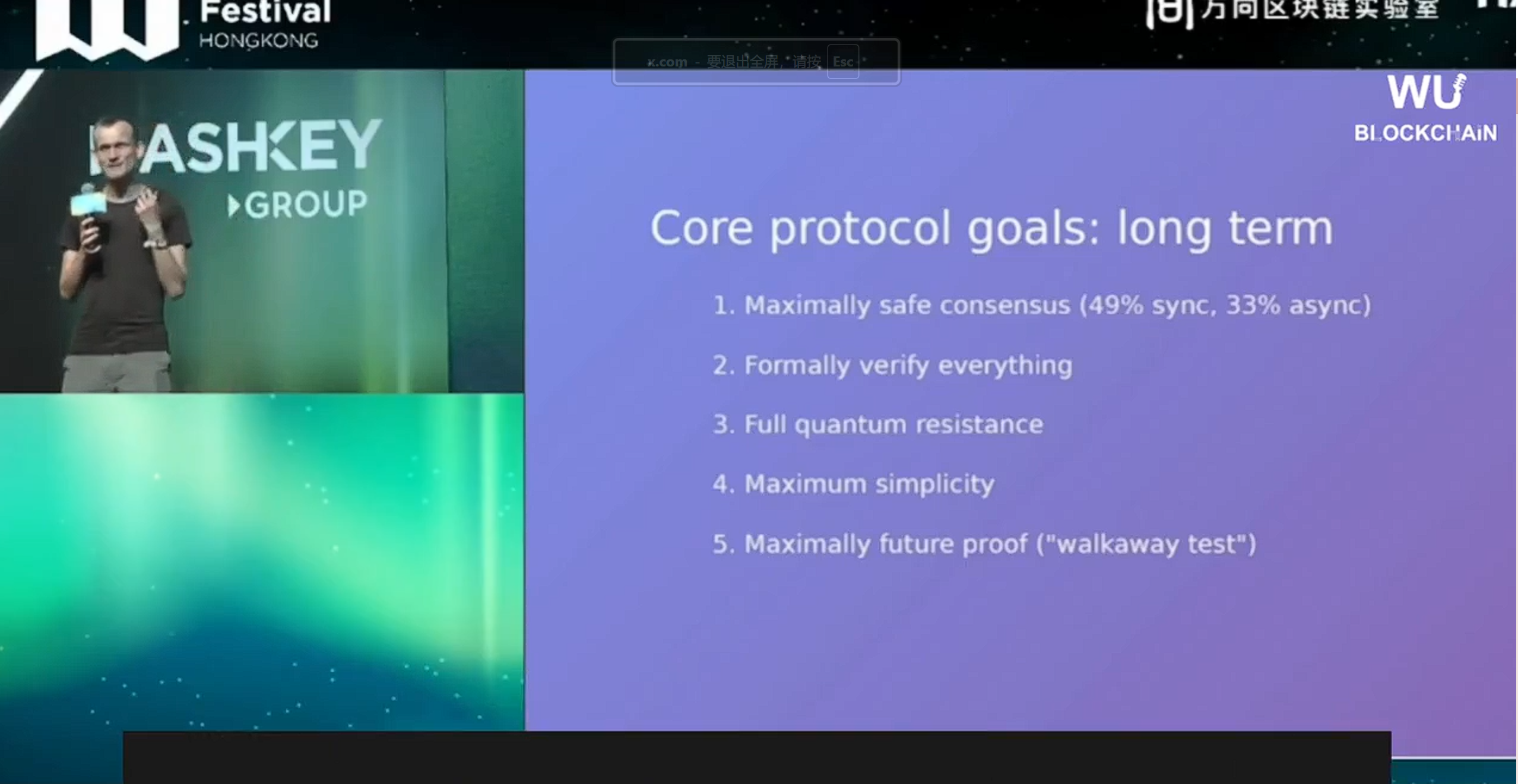
In the short term, Ethereum needs to continue scaling, improve account abstraction, block building processes, node synchronization, and privacy support. For example, raising the Gas limit further, achieving better parallelized verification through block-level access lists, allowing validators to perform more thorough block checks via ePBS, and further optimizing node state synchronization.
In the medium term, the real challenge is not execution layer scaling but state layer scaling. Computation can be optimized and parallelized, driven by hardware and engineering. But the state must be stored, synchronized, and verified. If handled poorly, it can gradually push out regular nodes and lightweight validators. This is why Vitalik repeatedly emphasizes the state layer issue. If the barrier to validation keeps rising, Ethereum could imperceptibly lose its most precious foundation of decentralization.
Post-quantum is another medium-to-long-term theme. Vitalik used a vivid analogy: imagine a country that has never experienced rain. No buildings are designed for it. When it rains for the first time, maybe only 5% of houses leak. But initially, residents aren't worried because they've never seen rain. Not until they are told that in five or ten years, the rain will definitely come.
At that point, the entire society must relearn how to build houses, schools, and offices. For Ethereum, quantum computing is like that rain—it hasn't fallen yet, but preparations must be made in advance.
Quantum-resistant signature algorithms themselves aren't entirely new. The real difficulty lies in efficiency. Hash-based signatures could be 2-3 KB, while current common signatures are only a few dozen bytes. The Gas cost of verifying a quantum-resistant signature on-chain could also be much higher than current schemes. If every single transaction were simply replaced with a quantum-resistant signature, Ethereum's efficiency would be crippled.
Therefore, the solution is not to burden each transaction individually, but to shift the pressure from a "single signature" to "packaging them into a block." This means the migration to quantum resistance only has a feasible engineering path once ZK tools mature.
Looking further ahead, Vitalik's roadmap almost describes an endgame state for Ethereum: Lean Consensus, ZK-EVM, formal verification, and the walkaway test.
Connecting these technical items, what Vitalik truly aims to solve is how to make Ethereum's security independent of any specific team, client, hardware assumption, or the continued existence of a particular generation of cryptographic tools. Essentially, he wants Ethereum to hold its ground in areas like decentralization, security, and credible neutrality—positions "others can't do well, but it must hold"—while leaving efficiency, user experience, and vertical needs to L2s and application layers.
2. From 'World Computer' to 'Yield-Bearing Asset': Institutions Revalue ETH
Compared to Vitalik's protocol perspective, institutions have a much more straightforward understanding of ETH.
They may not necessarily discuss Lean Consensus, state tree optimization, or quantum-resistant migration first. They are also less likely to describe Ethereum as a "public bulletin board." The questions they care about are usually more direct: Can ETH be held securely? Can it generate returns? Can it be placed on a balance sheet? Can it be packaged into a compliant product? Can it accommodate larger capital flows?
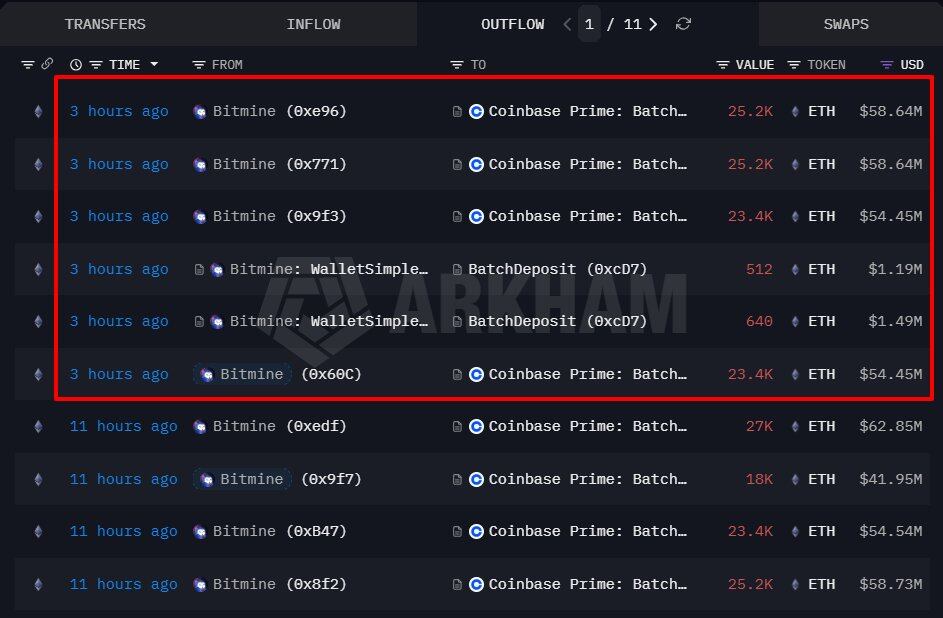
BitMine's actions are a concentrated embodiment of this institutional language.
As of April 24th, BitMine held 4,976,485 ETH, representing approximately 4.12% of the total ETH supply. Of this, 3.471 million ETH was staked, accounting for 70% of its total ETH holdings.
It is visibly clear that Tom Lee and BitMine are accelerating the staking of their ETH holdings. This transforms the ETH they hold from merely a crypto asset waiting for price appreciation into a native yield-bearing foundational on-chain asset.
This is perhaps the biggest difference between ETH and most other crypto assets. The value of many assets is still highly dependent on narratives, liquidity, and risk appetite. However, ETH's asset attributes are becoming more complex. It has utility demand, a staking mechanism, a burning mechanism, on-chain economic activity, and the potential to be continuously repackaged by traditional financial products.
BlackRock's ETHB represents another path.
As a Staked Ethereum product under its iShares brand, it packages ETH's price exposure and staking yield distribution into a traditional asset management framework. It emphasizes that investors can gain ETH-related exposure through traditional brokerage accounts without having to manage private keys, run nodes, or handle on-chain staking processes themselves (Further reading: When Wall Street's ETH Starts to 'Yield': Examining Ethereum's Asset Attribute Shift from BlackRock's ETHB).
This is essentially a translation exercise. It encapsulates the complexity of professional terms like self-custody, Staking, Validator, Slashing, and Gas in the Ethereum world, re-translating them into more understandable concepts like Custody, monthly/annualized yields. For crypto-native users, this might seem unremarkable. But for traditional capital, this is exactly the interface needed to enter a new asset class.
More interestingly, the Ethereum Foundation itself has also started to more actively utilize ETH's yield-bearing attributes. On February 24th, the Ethereum Foundation announced the launch of its Treasury Staking Initiative, pledging roughly 70,000 ETH and directing the staking rewards back to the foundation treasury to support long-term operations and ecosystem development. The foundation also emphasized that this process would use open-source software as much as possible, reduce client concentration, and control risk through multi-location and multi-operator configurations.
This move is quite telling. It shows that from Tom Lee's BitMine to BlackRock to the EF, ETH is being placed into a new asset framework. Consequently, the ETH seen by institutions begins to take on a hybrid form, somewhere between a "digital commodity," an "infrastructure asset," and a "yield-bearing asset." It possesses Bitcoin-like scarcity asset attributes, growth-stock-like potential, and a native yield characteristic due to the PoS mechanism.
This means that ETH's valuation framework is no longer solely dependent on "will it go up in a bull market?" and is beginning to enter more traditional discussions, such as staking yield rates, total supply, burn rate, institutional holding percentage, product scale, net capital inflow, and whether future on-chain settlement demand will continue to grow.
Of course, this doesn't mean ETH has become a low-risk asset. It remains highly volatile and is still exposed to regulatory, technological, market cycle, and liquidity risks. However, the difference is that institutions are now repricing these risks within their familiar asset management frameworks, rather than simply treating ETH as a high-beta crypto play.
3. Two Ethereums, Double Discounting of the Same Value
At this point, it's easy to get the illusion that Vitalik's Ethereum and the institutions' Ethereum are two different things:
One is a protocol with a continuously evolving technical roadmap; the other is a yield-bearing asset generating cash flow from a financial perspective. One belongs to developers; the other belongs to Wall Street. One preaches long-termism; the other talks about asset returns.
But the truth is quite the opposite. These two perspectives are not mutually exclusive; in fact, they are mutually reinforcing.
After all, the reason institutions are willing to buy heavily, "HODL," and stake ETH is precisely because the long-term vision for Ethereum that Vitalik promises provides the prerequisite for ETH's long-term asset attributes.
For institutions whose holding periods span years, what they truly fear is not short-term price volatility, but the unpredictability of the underlying asset's rules. If a protocol's signature scheme could suddenly fail in the quantum computing era, if a client vulnerability could lead to repeated network outages, if the chain's finality and consensus security cannot withstand extreme conditions, or if the roadmap heavily depends on a specific team remaining active, then even the most appealing yield model is just a numbers game built on quicksand.
Therefore, the terms that excite the tech community in Vitalik's roadmap—quantum resistance, Lean Consensus, ZK-EVM, formal verification, walkaway test—can be condensed into just two words when translated into institutional language:
Long-term trustworthiness.
So, while the "walkaway test" (or "exit test") is engineering jargon, its meaning for institutions is crystal clear: ETH's stability does not rely on any specific team being present forever, does not hinge on a single cryptographic assumption holding eternally, and does not depend on a few client teams never making mistakes. This is a necessary condition for Ethereum to be considered a long-term asset.
Conversely, institutional capital and massive staking are also providing economic-level support for Vitalik's roadmap.
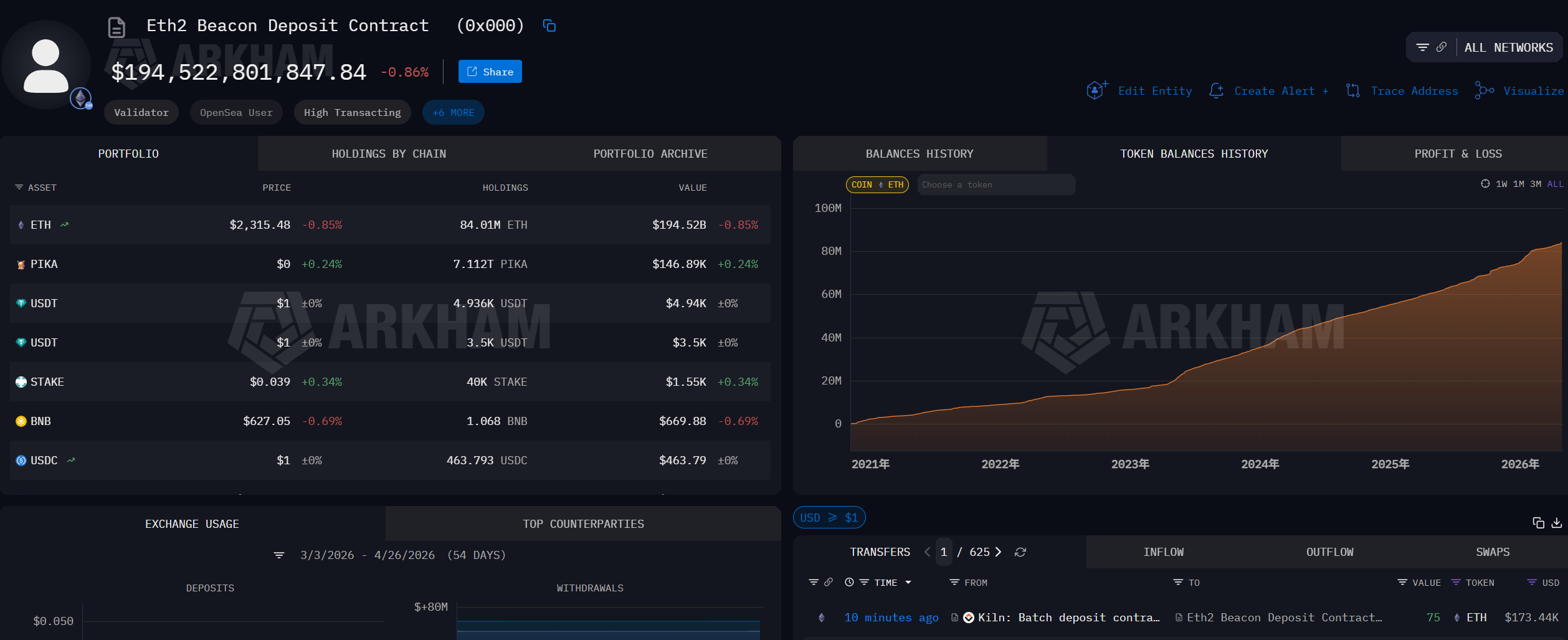
As is well known, since Ethereum transitioned to PoS, its security no longer stems solely from cryptography and client engineering. It also depends on the scale, distribution, and slashing mechanisms of staked ETH. The more ETH staked and the higher its market cap, the greater the economic cost an attacker must pay to influence the consensus. Therefore, every single ETH staked by BitMine, at least at the consensus level, is not just a slogan; it is actively participating in building Ethereum's security budget.
In other words, by advancing quantum resistance, Lean Consensus, and ZK-EVM technically, Vitalik is raising Ethereum's technical floor. By holding and staking ETH on a large scale economically, institutions are raising Ethereum's economic floor. As these two curves push each other higher, they are jointly making Ethereum more trustworthy.
This is also why the "world computer" and "yield-bearing cash flow asset," while seemingly two different definitions, are not contradictory. Different paths lead to the same goal: making Ethereum bigger.
A mature global infrastructure inherently requires both perspectives to exist simultaneously.
Final Thoughts
Objectively speaking, as of today, Ethereum is no longer a network that can be explained by a single narrative.
It is both Vitalik's public bulletin board and world computer, and the yield-bearing asset and infrastructure exposure in the eyes of institutions. It is both the protocol engineering that developers continuously advance, and the digital asset being repriced by capital markets. It carries the values of self-sovereignty, verifiability, and credible neutrality, while also beginning to be included in ETFs, balance sheets, and yield models.
In the coming years, the market may not necessarily price ETH in Vitalik's language. However, the very reason institutions are willing to continuously buy, stake, and package ETH is precisely because Vitalik's persistence on security, decentralization, verifiability, and long-term robustness is slowly becoming a kind of "institutional dividend" that the capital market can discount.
Perhaps this is the most important change for Ethereum in 2026.


