






Trump's Shopping Cart: Greenland, Canals, and Canada


- Core Viewpoint: Trump applies real estate business logic to international politics and crypto regulation.
- Key Elements:
- Threatens military intervention in Greenland under the pretext of national security.
- In the crypto sphere, investments can be exchanged for regulatory exemptions or pardons.
- His actions are undermining the international rules-based system established under U.S. leadership.
- Market Impact: Increases policy uncertainty and erodes market trust in established rules.
- Timeliness Note: Long-term impact.
Original author: Curry, Shenchao TechFlow
On April 4, 1949, 12 countries signed the North Atlantic Treaty in Washington.
Two of them were the United States and Denmark.
Seventy-six years later, the United States threatened a military invasion of Danish territory.
White House spokesperson Levitt said, "Military force is always one of the options available to the President." Danish Prime Minister Frederiksen said that if the U.S. really did this, NATO would be over, and the post-World War II security system would be over too.
"Everything would stop."
This is what one founding member of NATO said to another founding member.
The cause of the matter is Greenland.
Trump said the U.S. "needs" this island, citing national security reasons. Greenland is an autonomous territory of Denmark, covering 2.16 million square kilometers with a population of 56,000, 85% of whom oppose joining the United States.
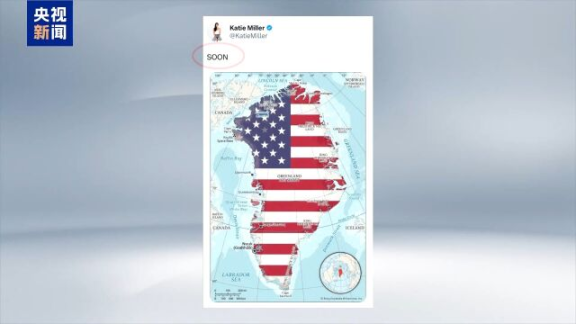
Trump doesn't care much about voting. Last weekend, U.S. forces went to Venezuela and captured President Maduro. A few hours after the operation ended, the wife of a senior White House advisor posted a picture on social media: Greenland colored in the U.S. flag's colors, with a single-word caption: SOON.
You should know, Venezuela has no nuclear weapons. Neither does Denmark.
But Greenland isn't the only item in Trump's shopping cart.
The Panama Canal is also on the list. Trump said China "controls" the canal and it needs to be "taken back." In reality, the canal is operated by Panama's own authority; Hong Kong's Hutchison Whampoa only operates ports at both ends, handling container loading and unloading.
Later, Hutchison Whampoa agreed to sell the ports to BlackRock. Trump didn't get the canal, but Chinese capital was out.
Canada is also on the list. Trump said Canada should become the "51st state," offering free inclusion in his $175 billion "Golden Dome" missile defense system as a condition. Not joining? Then spend $60 billion to buy it separately.
After two Canadian prime ministers refused, tariffs arrived. 100% on pharmaceuticals, 30% on furniture, 25% on trucks.
If you can't agree on a price, raise it.
The way Trump sees the world is no different from how he sees Manhattan real estate.
Every piece of land has a price. Greenland has rare earths, Panama has shipping lanes, Canada has resources. If you can't agree, apply pressure; if pressure doesn't work, threaten; if threats don't work, take action. Venezuela has already seen action.
This logic is also used in the crypto circle.
In 2024, the Trump family established World Liberty Financial to sell tokens, with the family taking 75% of the profits. Justin Sun invested $30 million, and a few weeks later, the SEC dropped its investigation into him. An Abu Dhabi sovereign wealth fund invested $2 billion in stablecoins into Binance, and shortly after, Changpeng Zhao received a pardon.
Investment for regulatory exemption, investment for presidential pardon. Clearly marked prices, fair to all.
The real estate business can operate because there is a set of rules. There are courts to enforce contracts, police to protect property rights, and governments to recognize deeds.
Without these, a deed is just a piece of paper.
In the international order, NATO is that set of rules. The U.S. spent 76 years building it. Now the biggest shareholder says, I'm going to tear down the neighbor's house.
He probably thinks he made the rules and can change them as he pleases.
The question is, if the real estate developer tears down the rules, will his own deeds still be valuable?


