






Who is protecting Satoshi Nakamoto's legacy? A look inside the 41-person team behind Bitcoin's trillion-dollar market capitalization.


Original author: Eric, Foresight News
How many developers does a company with a market capitalization of 2 trillion need? What are the development costs?
Based on publicly available data, it is estimated that among US-listed companies with a market capitalization of over 2 trillion, the number of technical or development personnel ranges from several thousand to tens of thousands, with annual salary expenditures reaching hundreds of millions or even billions of US dollars.
For Bitcoin, whose market capitalization once reached a peak of $2.5 trillion and still has a market capitalization of nearly $1.75 trillion today, these two figures are $41 and $8.4 million respectively. That's right, this absolute "number one" in the cryptocurrency field has a core development team of only 41 people, who are supported by millions of dollars in donations each year and salaries paid by a few companies.
Through dozens of hours of interviews and research, 1A1z released a report revealing the mysterious team behind Bitcoin Core and its financial backers. While this report, published last October, presents a comprehensive picture of Bitcoin's development team and donors in 2023 and 2024, and is somewhat outdated, the changes in Bitcoin's developer ecosystem are measured in years, and remain almost unchanged even today compared to when the report was conducted.
The purpose of this report is to raise awareness among participants, at a time when the world is focused on Bitcoin's price, that Bitcoin is still "fragile" to some extent, and that as perhaps the only truly decentralized project, we can all contribute to its development. Special thanks to X user Aaron Zhang for his interpretation of the report and for providing the latest information for 2025.
The world's most efficient distributed team
The report's first chart illustrates the difference between Bitcoin and tech companies of similar market capitalization:
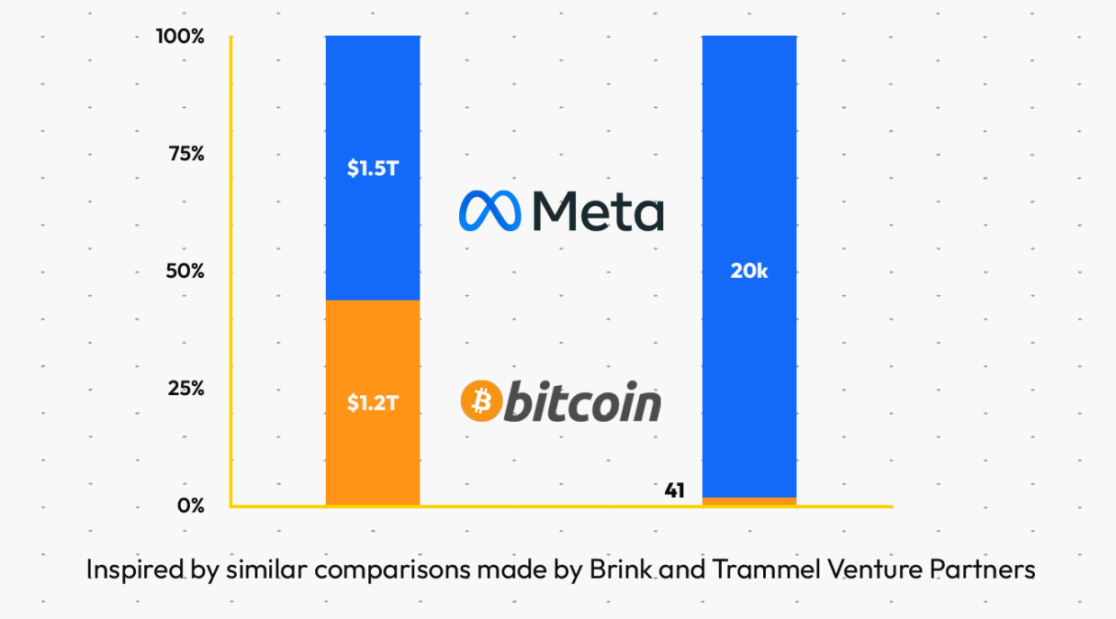
In 2023, Meta had at least 20,000 developers and a market capitalization of approximately $1.5 trillion, while Bitcoin, with a market capitalization of $1.2 trillion, had only 41 developers. These 41 developers contributed code to Bitcoin Core, commonly known as the Bitcoin Core developers. Among these 41 core developers, there were 5 Maintainers with a special status; they are currently the only 5 people in the world with the right to incorporate improvement proposals from core developers into Bitcoin Core.
It's worth noting that only 13 people have held this status in the past 10 years, and we'll tell their stories later.
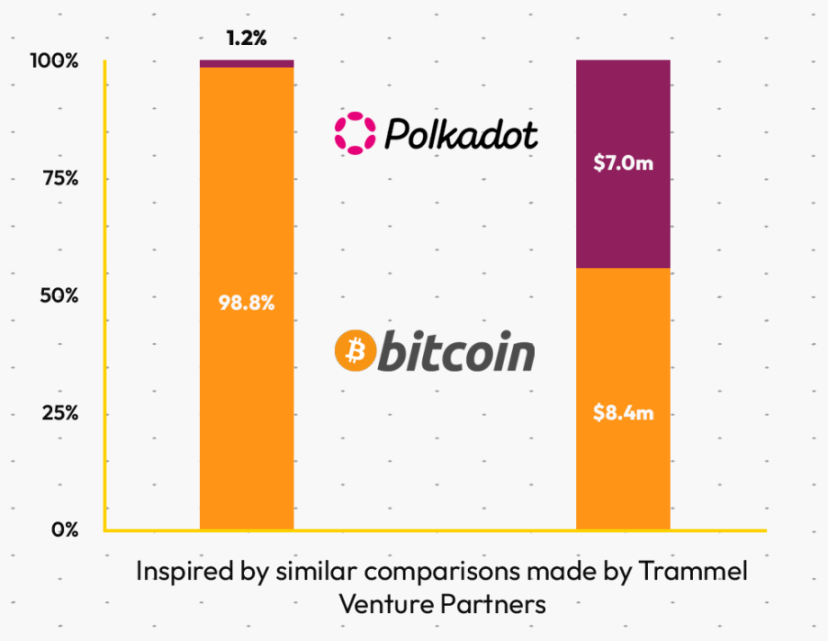
If you think Bitcoin and publicly traded companies are incomparable, the report also uses Web3 projects for comparison. Taking Polkadot as an example, in 2023, Polkadot spent $7 million on core developers, but its market capitalization was only 1.2% of Bitcoin's. In 2024, Polkadot's spending on Bitcoin-like development activities reached $16.8 million. Meanwhile, Ethereum spent approximately $32.3 million on core developers in 2023, and $50 million in 2024.
There are certainly more than just these 41 people who have contributed to the Bitcoin code. The numbers given in the report only cover those who provide code directly to Bitcoin Core. Test engineers, researchers, and other personnel are not included, nor are protocols such as the Lightning Network and Nostr. Even the libsecp256k1 library, which is closely related to Bitcoin Core, is not included in the count.
The numerical "contrast" truly reflects Bitcoin's powerful "antifragility." Bitcoin lacks the foundation organization standard for other projects, resulting in its inability to raise funds and allocate resources. However, the author argues that precisely because of this, Bitcoin does not rely on a single entity for decision-making and avoids the problem of fund misuse; every penny is spent wisely: "Bitcoin's unwavering resistance to any form of centralization or single point of failure is what makes it unique, and it is the only way we believe Bitcoin can succeed."
I once asked an investment firm during an interview: "Web3 projects' decentralized DAOs are so inefficient, and it's often difficult to reach a consensus on simple matters. What is their value?" The firm replied that inefficiency is simply one of the ways this system operates. It's impossible to achieve broad consensus on something efficiently, and this seemingly mindless and inefficient "democracy" is precisely where its value lies.
At this point, you might think the report is a hymn to Bitcoin. While the data may demonstrate some of Bitcoin's resilience, this resilience is, to some extent, an unavoidable choice under extremely high decentralization. In other words, the author's point, as stated at the beginning, is that Bitcoin Core is fragile, and our attention and investment in the protocol layer of this trillion-dollar empire that has allowed many to leapfrog social classes overnight, is still insufficient.
Who is funding the Bitcoin Core developers?
The report's authors made a strict distinction between Sponsors and Donors. In my opinion, the difference lies in the fact that Sponsors tend to focus more on execution, such as ensuring that funds are allocated to designated developers, while Donors are more like the "financial backers."
Before we delve into the organizations that have selflessly dedicated themselves to the development of Bitcoin, let me first present a diagram to avoid overwhelming you.
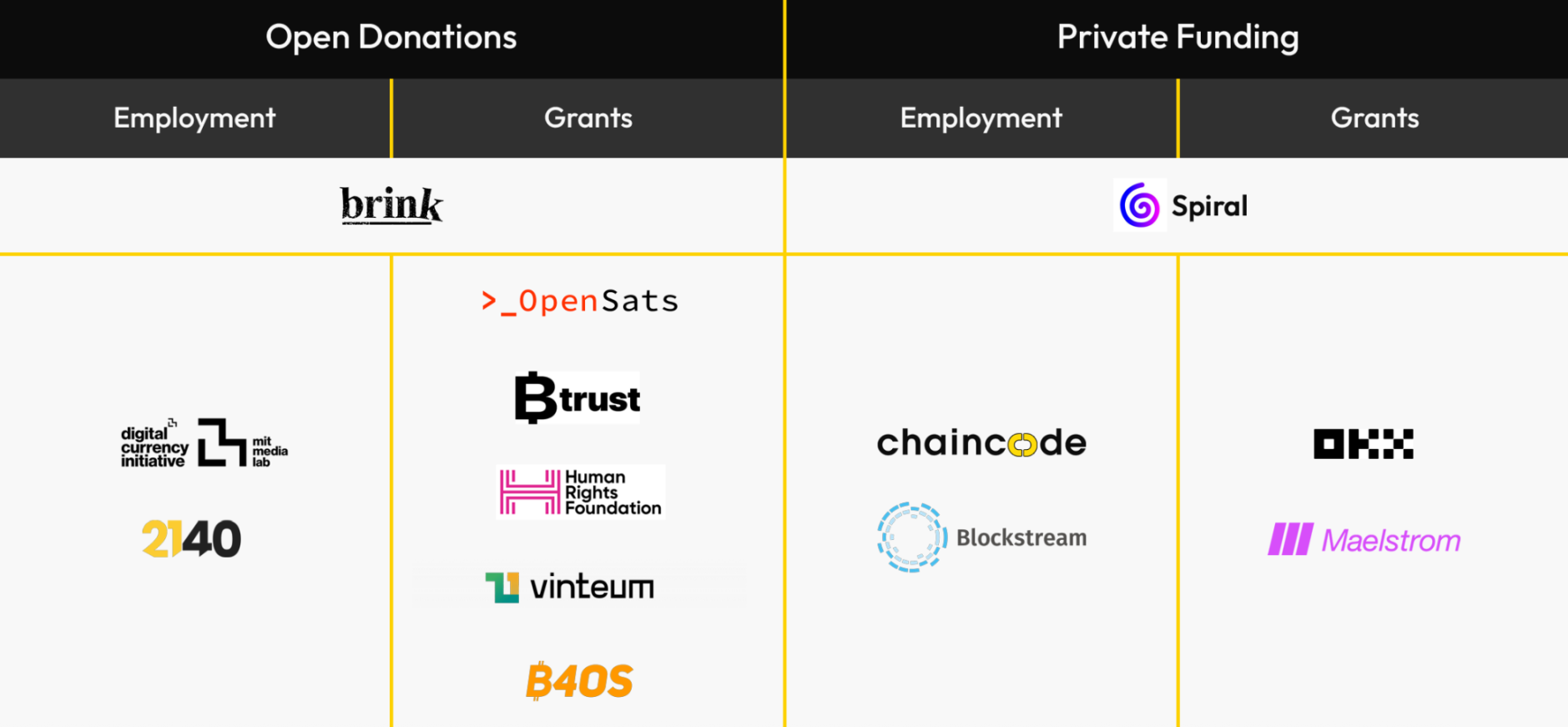
The report lists 13 major funding organizations. The organizations listed must directly employ Bitcoin Core developers or have ongoing funding programs directly targeting core developers. "One-off" grants or grants without ongoing support programs are not included.
Blockstream
Founded by early Bitcoin Core developers, Blockstream has contributed significantly to Bitcoin Core and libsecp256k1, but its corporate identity has also led to speculation that it might influence Bitcoin for its own benefit. Currently, Blockstream employs only one core developer. Since 2014, Blockstream has disclosed six rounds of funding totaling at least $510 million, giving it a "ConsenSys-like" feel to the Bitcoin ecosystem.
Adam Back, co-founder and CEO of Blockstream, is hailed as one of the "closest to Satoshi Nakamoto." His Hashcash Proof-of-Work system, proposed in 1997 for anti-spam purposes, became the prototype for Bitcoin's PoW consensus mechanism. Satoshi Nakamoto cited Adam Back's work in the Bitcoin white paper and also exchanged technical details with him via email. After founding Blockstream, Adam Back also led the development of scaling and privacy components such as the Bitcoin sidechain Liquid and the Lightning Network.
Chaincode Labs
Chaincode Labs was founded in 2014 in Manhattan, New York, by Alex Morcos and Suhas Daftuar. Alex Morcos initially focused on automated and quantitative trading, becoming a Bitcoin Core developer in 2012 and remaining an active contributor to the Bitcoin Core development community. Suhas Daftuar also worked in trading before venturing into the Web3 industry, having founded Hudson River Trading LLC (HRT). Both are pioneers of algorithmic trading on Wall Street.
Chaincode Labs drives the development of the Bitcoin ecosystem through self-funding, including improving the reliability and scalability of the Bitcoin protocol; nurturing Bitcoin developers by developing tutorials and funding projects; and conducting cutting-edge research, including the potential threats of quantum computing to Bitcoin. This year, Chaincode Labs released its report, "Bitcoin Post-Quantum," proposing a migration path based on the NIST post-quantum cryptography standard, including introducing new signature schemes (such as Dilithium or Falcon) through soft forks, with phased implementation expected between 2026 and 2028.
Chaincode Labs is also the driving force behind important Bitcoin network upgrades such as Taproot and SegWit, and was one of the funders of Bitcoin Core's first independent third-party audit.
It's worth mentioning that Aaron Zhang, mentioned earlier, announced on X on the 3rd of this month (https://x.com/zzmjxy/status/1996092229962916119) that he has become the China partner of Chaincode Labs BOSS (Bitcoin Open Source Software) Challenge. The BOSS Challenge is a free 30-day coding challenge combined with a 2-month practical period to help developers get started in open-source projects. It has already helped dozens of developers start from scratch and become full-time open-source engineers.
Digital Currency Initiative
The Digital Currency Initiative (DCI) is not strictly an organization; it was launched by MIT in 2015 as an academic platform to neutrally support core developers after the dissolution of the Bitcoin Foundation. MIT DCI accepts donations to employ Bitcoin developers long-term, providing stable salaries and research environments that allow them to focus on protocol security, performance, and consensus improvements, producing academic papers, open-source code, and public reports. It also participates in central bank digital currency (CBDC) research and collaborates with the Federal Reserve Bank of Boston on Project Hamilton.
DCI emphasizes the principles of open source, self-hosting, and privacy protection, aiming to demonstrate the value of decentralized technology to policymakers while maintaining independent contributions to the Bitcoin Core codebase.
Spiral
Spiral is an independent Bitcoin development entity under Block (formerly Square), founded in 2019 (initially named Square Crypto) and officially renamed Spiral in January 2022. As of December 2025, Spiral has funded over 100 open-source projects, investing hundreds of millions of dollars to drive improvements in Bitcoin's privacy, security, scalability, and user experience (UX). Spiral emphasizes independence, not being directly controlled by Block or its founder Jack Dorsey, but rather driven by the Bitcoin developer community.
Spiral is currently led by former Google engineer Steve Lee, and its team includes former Bitcoin Core maintainers and Lightning Labs engineers. According to public information, while Spiral's funding scope is broad, its core revolves around the Lightning Network, aiming to improve Bitcoin payment efficiency—a commitment to Satoshi Nakamoto's original vision.
OKX
This goes without saying. What's worth mentioning is that OKX's funding program began with OKCoin in 2019, and was subsequently taken over by OKX and has continued to this day, now primarily driven by executives Lennix Lai and Hong Fang. OKX currently supports key developers such as Amiti Uttarwar and Marco Falke, as well as other organizations that fund Bitcoin Core, such as Brink, Vinteum, and 2140, which we will discuss shortly.
Human Rights Foundation
The Human Rights Foundation (HRF) was founded in the United States in 2005 to promote and protect human rights in closed societies worldwide, with a focus on combating authoritarian regimes, authoritarian governments, and tyranny. HRF has a long history of supporting Sakharov Prize and Havel Prize laureates, as well as prominent dissidents such as Liu Xiaobo, Navalny, and Kim Jong-nam. It has funded thousands of grassroots human rights projects in more than 70 countries around the world.
Since 2019, HRF has regarded Bitcoin as one of the most important "human rights technologies" of the 21st century, and believes that Bitcoin is a powerful tool against financial surveillance, financial oppression, and monetary tyranny. In May 2019, HRF established the HRF Bitcoin Development Fund to fund the open-source development of Bitcoin and the Lightning Network, and has donated more than 120 Bitcoins to date.
Brink
Brink is a non-profit organization co-founded in 2020 by Mike Schmidt and former Chaincode Labs developer John Newbery. Its aim is to cultivate and support a new generation of Bitcoin protocol developers through full-time salary funding, mentorship training, and community building, thus addressing the "succession crisis" in Bitcoin Core development.
Brink selects 4 to 6 promising engineers annually, offering them 1 to 2 years of full-time salary (approximately $120,000–$180,000 per year) to dedicate themselves to contributing to Bitcoin Core and related protocols. To date, it has funded over 20 developers, including notable figures such as Gloria Zhao (now a Bitcoin Core maintainer), Greg Sanders, and Josie Baker. Brink is currently the most recognized "Bitcoin Core developer incubator" in the community; almost all newcomers to the Bitcoin Core maintenance team after 2022 have received funding or training from Brink.
Brink's operating funds come entirely from donations, including Twitter co-founder Jack Dorsey, Chaincode Labs, HRF, and Spiral mentioned earlier, as well as exchanges such as Gemini, Bitfinex, and Kraken, and hundreds of individual donors.
Btrust
Founded in 2021 with a base of 500 bitcoins by Jack Dorsey and Jay-Z, Btrust is headquartered in Lagos, Nigeria. It focuses on empowering African and Indian developers to participate in the open-source development of Bitcoin and the Lightning Network through education and funding. As of December 2025, Btrust has trained hundreds of African developers and funded over 50 open-source projects. Btrust acquired Qala, an African Bitcoin developer training program, early on and integrated it into the Btrust Builders Fellowship.
Btrust acts as Bitcoin's "African operations center." In addition to funding development and providing training, it also hosts BitDev events in major African cities and maintains weekly updates on the Bitcoin ecosystem for the African community.
In September 2024, Abubakar Nur Khalil, a core Bitcoin developer from Nigeria, became the interim CEO of the organization. He is also the co-founder of Qala, which was acquired by Btrust. In addition to this role, Abubakar Nur Khalil has been a core Bitcoin developer since 2020 and provides Forbes with information on the development of the Bitcoin ecosystem in Africa, as well as writing investment insights focusing on macro trends. Furthermore, he is a founding partner of Recursive Capital.
OpenSats
Founded in 2020 by the Bitcoin open-source community, OpenSats' core driving force includes Elizabeth Stark, co-founder of Lightning Labs. OpenSats' formation largely stemmed from concerns in 2020 about the stagnation of Bitcoin protocol development and maintenance due to a shortage of developer funding. Since its inception, OpenSats' funding has focused not only on Bitcoin Core developers but also on numerous open-source projects surrounding Bitcoin, including Nostr and lightweight full nodes. Over the past five years, OpenSats has provided approximately $30 million in funding to more than 330 contributors.
Vinteum
Vinteum was founded in August 2022 by Bitcoin Core contributor Lucas Ferreira and former Brink developer Bruno Ely Garcia, with the aim of supporting Bitcoin ecosystem builders in Brazil and Latin America.
Vinteum can be seen as a product of the 2022 wave of Bitcoin "developer diversification," having funded over 20 developers to become full-time open-source project developers, contributing to the review, testing, and improvement of Taproot upgrades. A 2025 report shows that its project accounts for over 15% of Bitcoin contributions in Latin America. Furthermore, Vinteum is committed to promoting Bitcoin adoption in Brazil's high-inflation macroeconomic context.
Maelstrom
Maelstrom is a Bitcoin-focused venture capital firm led by the family office of BitMEX co-founder Arthur Hayes. Maelstrom primarily focuses on investment and has established a "Bitcoin Grant Program." According to its official website, the fund currently provides funding to four full-time developers, including Bitcoin Core developers, and projects related to Bitcoin privacy tools such as Payjoin, Silent Payments, and peer-to-peer network privacy.
Prior to this, Maelstrom funded the Nostr protocol and client ecosystem, the Fedimint ecosystem, and others, and sponsored Chaincode's BOSS Challenge this year. Furthermore, in the third quarter of this year, Maelstrom launched the Bitcoin Moonshot Grants program, specifically designed for high-risk, high-potential Bitcoin projects that "sound crazy but could be game-changing," emphasizing radical innovation. As of December 2025, the program has funded 5 to 10 early-stage projects, with a cumulative investment of approximately $20 million to $30 million.
B4OS (Bitcoin For Open Source)
Launched in April 2024 by the Spanish-speaking Bitcoin learning community Libraría de Satoshi, B4OS is a free, advanced open-source Bitcoin training course for experienced developers in Latin America, the Caribbean, and Spain. B4OS offers training courses on Bitcoin basics, Lightning Network development, and FOSS tools such as Rust/Python. B4OS funding is relatively small, with grants ranging from $1,000 to $5,000 per developer.
2140
2140 was announced at the 2024 Bitcoin conference in Amsterdam by two Bitcoin developers, Josie Baker and Ruben Somsen, with OKX as the main funder. The name 2140 comes from the expectation that all Bitcoins will be mined by 2140, and the organization's purpose is to promote the development of protocols that will enable Bitcoin to cope with the situation of no block rewards before 2140 arrives.
2140 is currently the only organization of its kind registered in Europe. It recruits full-time developers at its Amsterdam headquarters and also provides a one-year grant to newcomers.
In addition to the organizations mentioned above, according to BitMEX research, in the nearly 17-year history of Bitcoin, institutions that have funded the development of Bitcoin and the Lightning Network include Bitmain and Bitfinex, while exchanges including Coinbase, Kraken, and Gemini have also provided grants to varying degrees, but most of these grants have not been sustained.
These funders provide funding in various ways. Some publicly accept donations and then provide them to developers, while others use company profits to provide direct support. Some organizations directly hire developers as full-time employees and provide job security, while others only provide grants, as shown in the image at the beginning of this paragraph.
The report's authors, through interviews, found that many developers, like many others, need to support families, pay mortgages, and optimize their resumes, making them more inclined to choose employment-based funding. Some developers described the grant model as requiring them to "reapply for a job every one or two years." The authors stated that while grant funding has increased significantly in recent years, there is still a real need for more employment-based funding to retain talent. The authors also noted that the current funding structure still needs to find a balance between non-profit organizations and companies to mitigate the risks associated with the departure of unpaid donors and a sluggish market environment.
Between the lines, we can sense a delicate balance between the current developer ecosystem and the organizations that initiate funding. Developers are not all people who are "working out of love" for Bitcoin. The imbalance between hiring and simply funding makes developers feel insecure. We will see more evidence of this in the following introduction.
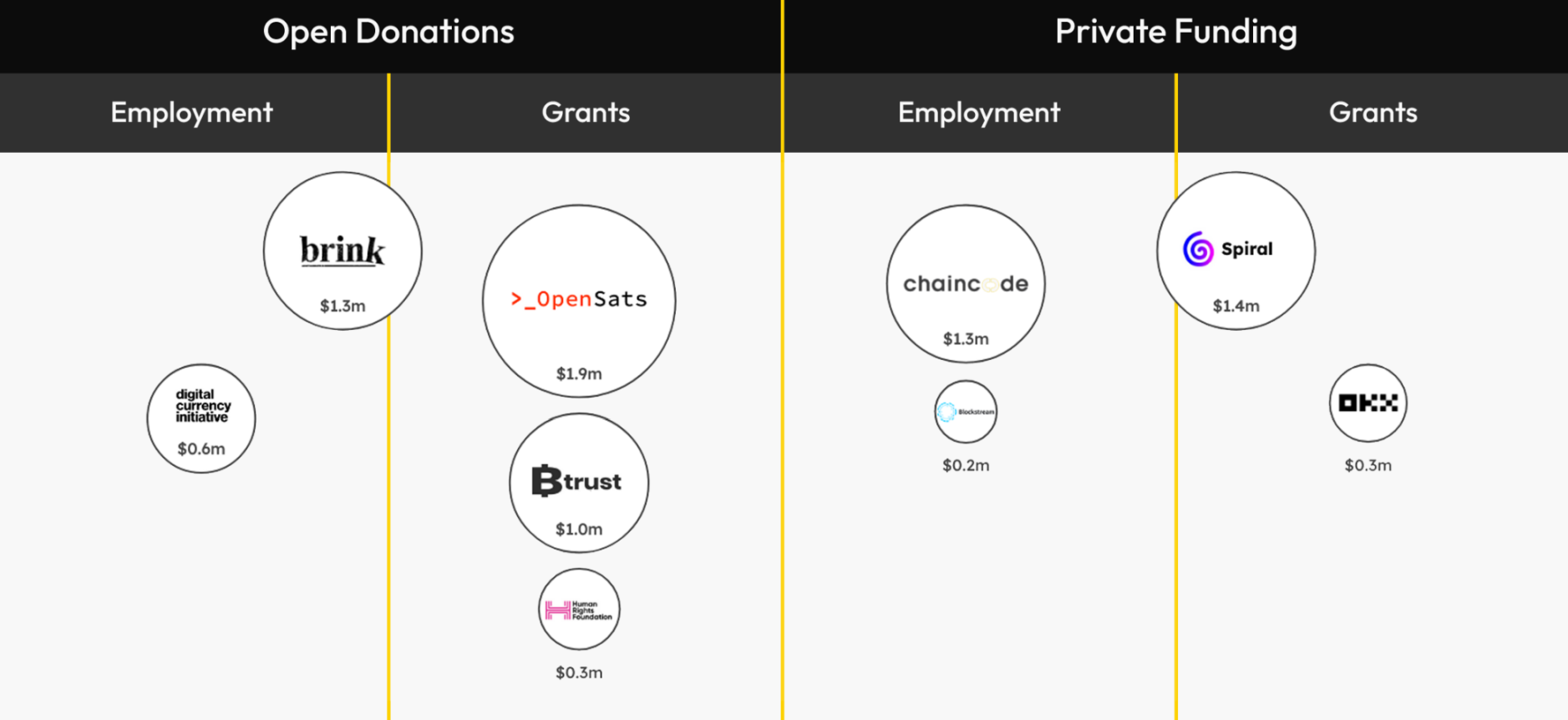
Regarding the amounts, the authors state that some figures are estimates based on publicly available information and are not entirely accurate. The report states that the total expenditures of publicly accepting donations (61.5%) are almost double those of companies (38.5%), and grants (60.8%) exceed salaries (39.2%). The main difference stems from the fact that the total grants from donor organizations (70%) are significantly higher than those from corporate entities (30%), while total salary expenditures are roughly similar for both.
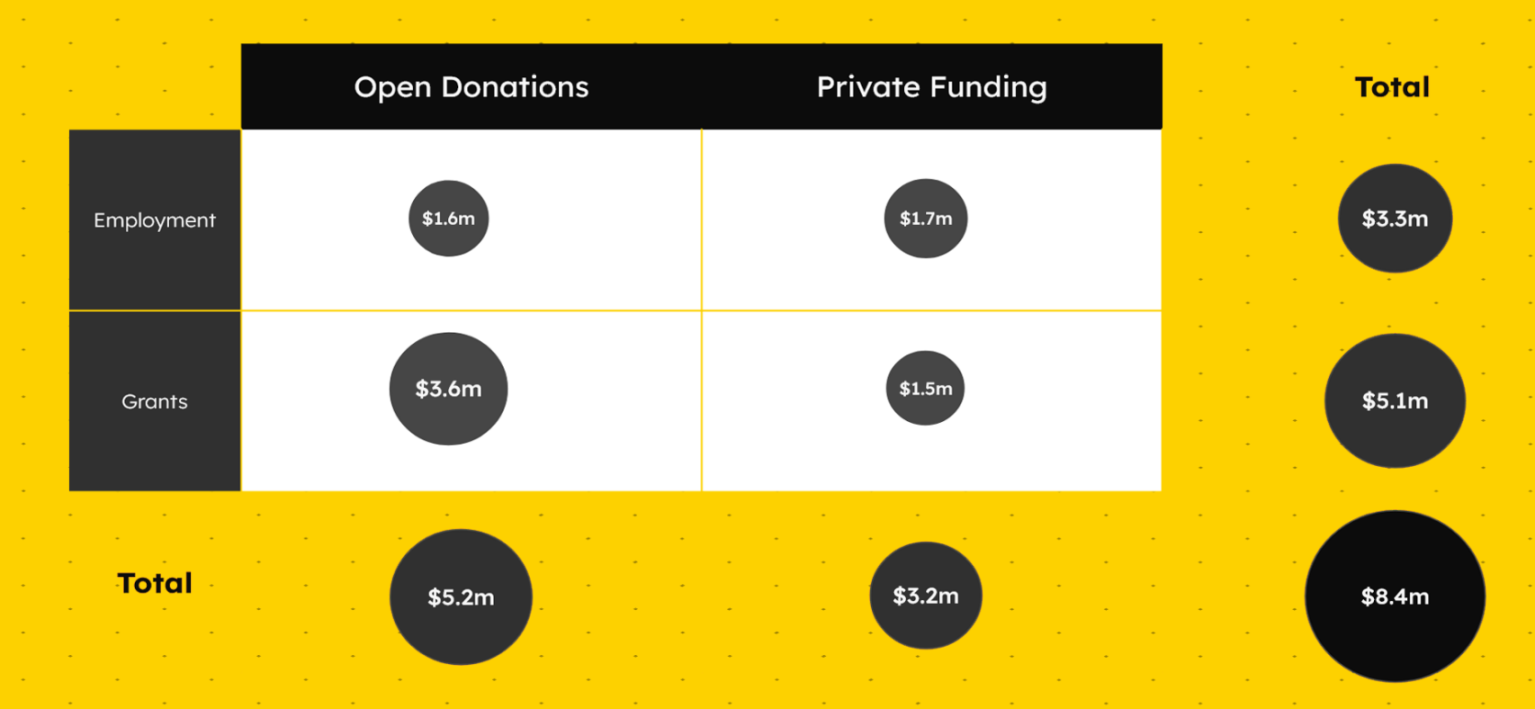
The report highlights a significant problem: the mismatch between donor support and resources allocated to some developers with ulterior motives, coupled with insufficient support from for-profit companies. The talent exodus from Ethereum should serve as a wake-up call for Bitcoin; we still need more companies to step forward and take responsibility for upholding the anchor of cryptocurrency value. I believe that high-profit companies in the industry, such as stablecoin issuers and exchanges, should be required to provide long-term, employment-based support to Bitcoin developers, rather than simply "taking the benefits without doing the work."
Where are the funding organizations located?
Of the 13 organizations, 7 are located in North America, with 6 of them having their legal headquarters in the United States. While Blockstream is registered in Canada, it also has an operations center in the US. It can be said that the US covers more than half of the funded organizations, and these are also the 7 "oldest" ones.
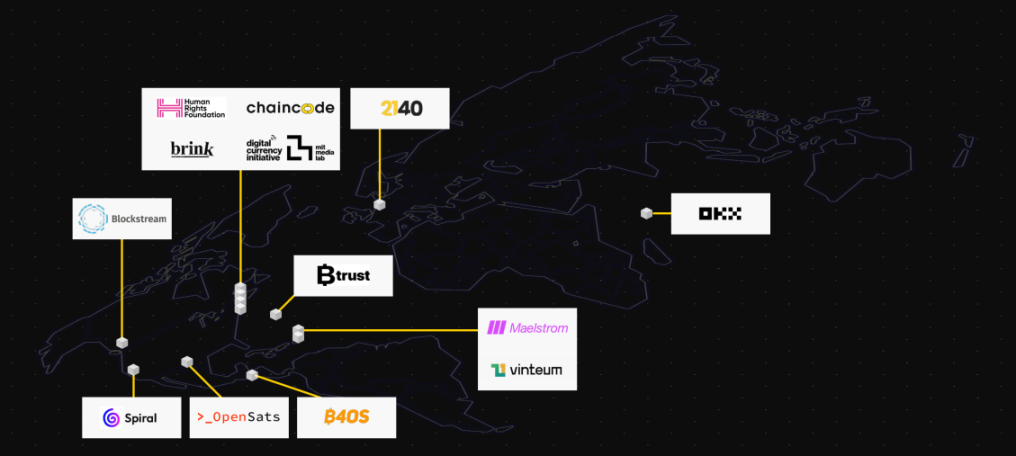
Outside of North America, apart from 2140, which landed in Amsterdam, Netherlands last year, all other organizations are registered in tax havens. The author listed the distribution of registration locations because differences in regulatory attitudes could affect the diversity of organizations, especially given concerns about US crackdowns on the cryptocurrency industry. However, with Trump's election as the new US president, this issue has been largely resolved. Nevertheless, the author's concern about the legal risks that funding privacy technology development poses to donors and developers is indeed a matter worth considering.
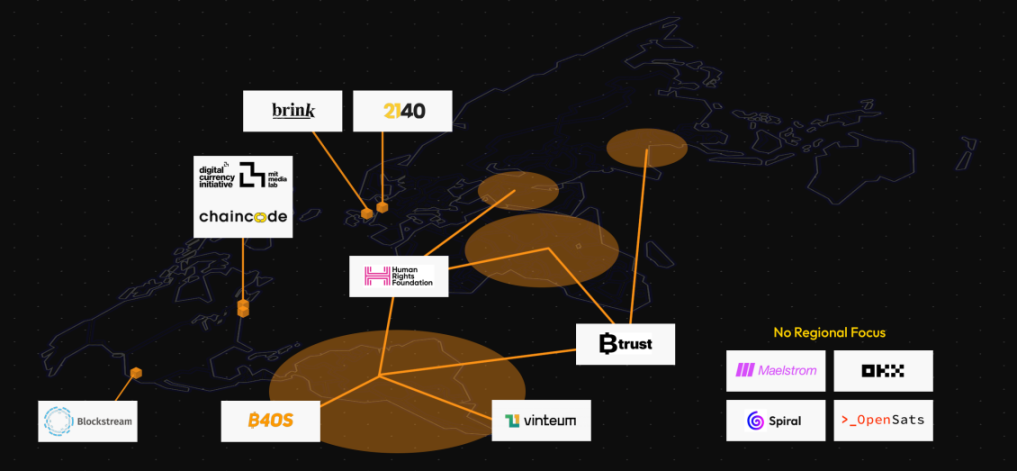
The scope of these organizations' funding has been touched upon to some extent in previous introductions. Brink, OpenSats, Maelstrom, Spiral, and OKX's funding is not fixed to a specific region, Blockstream, MIT DCI, and Chaincode are mainly focused on the United States and primarily employ workers, while the others are mainly focused on Europe, Africa, and Latin America, and most of them adopt a grant model.
Where are the developers?
The report shows that among the 41 active core developers who had submitted at least five applications to be merged into Bitcoin Core by 2024, 33 publicly disclosed their locations.
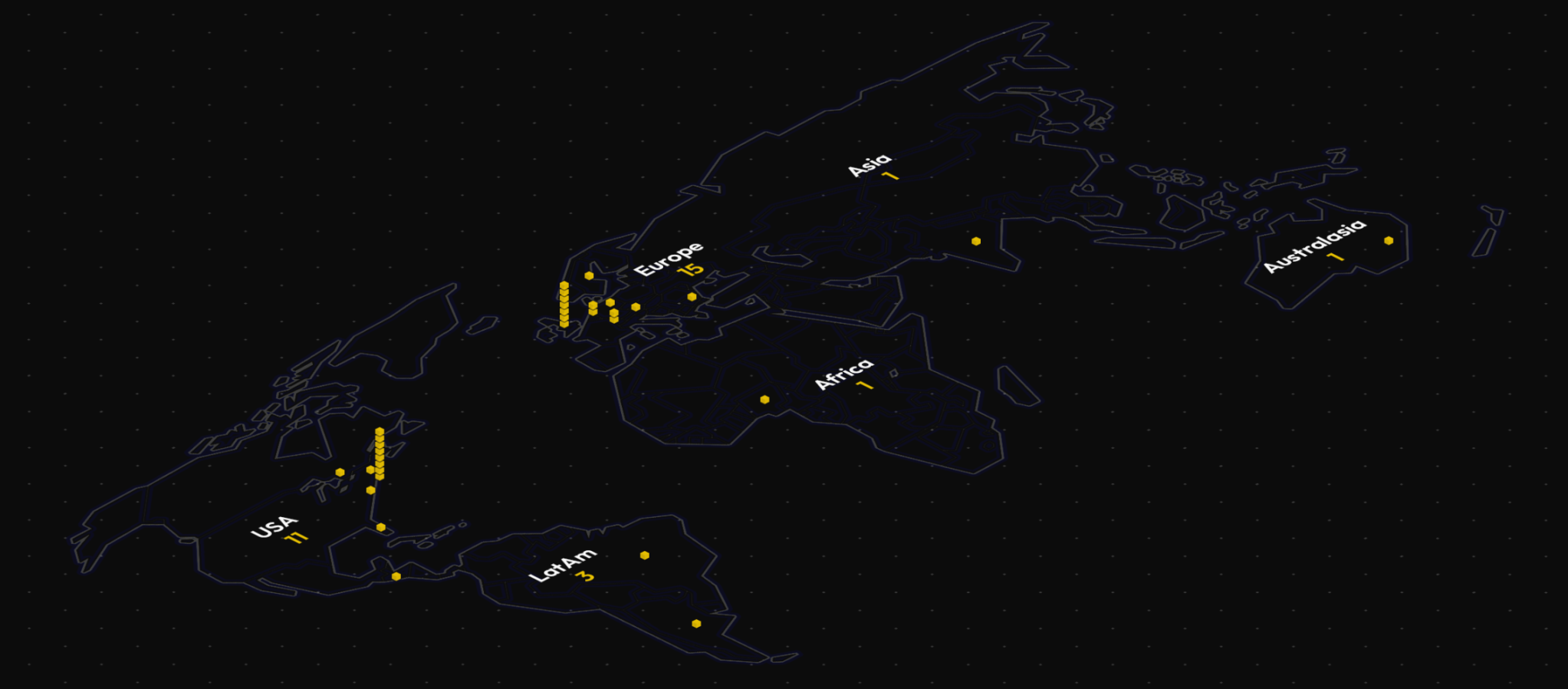
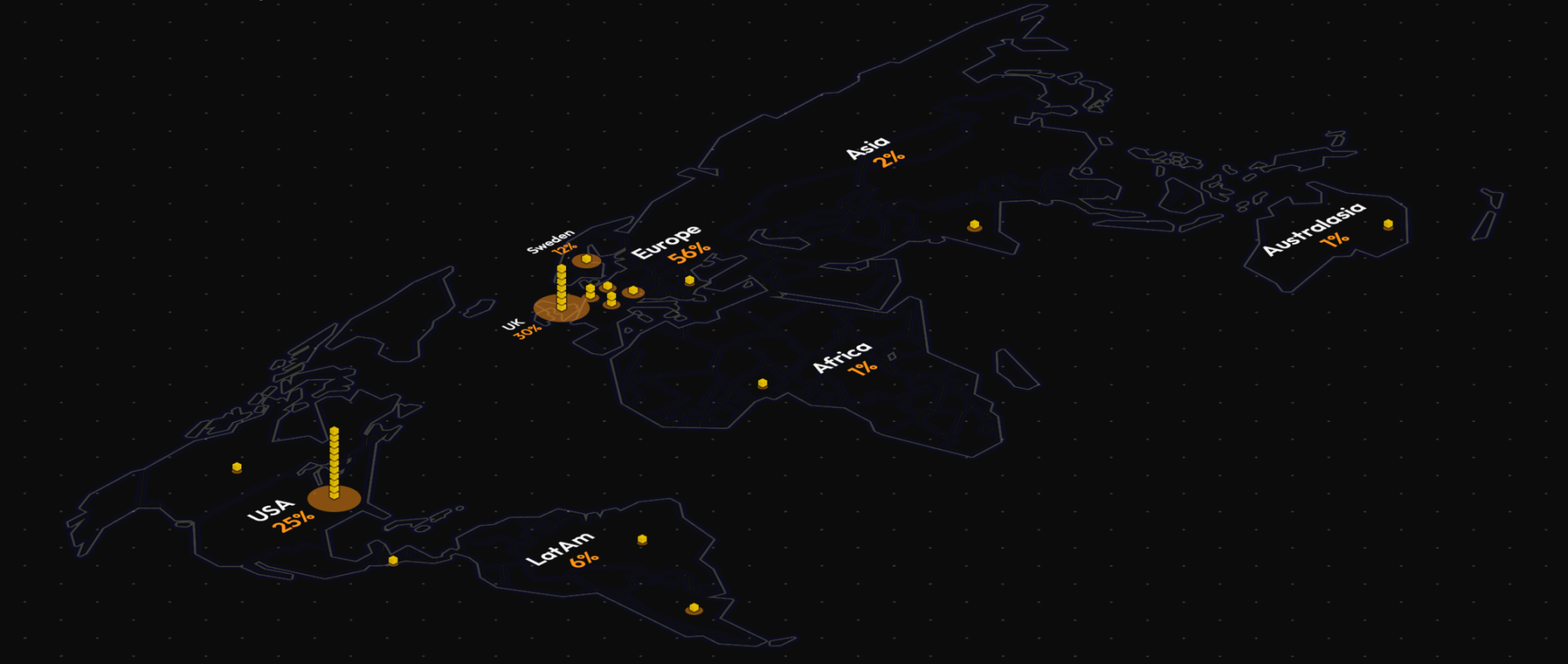
The statistics show that there are 26 developers in the United States and Europe alone, 3 in Latin America (Argentina, Brazil, and El Salvador), and the remaining four in Africa, Asia (India), Australia, and Canada.
Significant differences exist in code contributions among developers from different regions. In the year ending October 2024, among 41 active core developers, the top 15 accounted for 71% of all contributions, the top 5 for 41%, and the most active developer alone contributed 11%. Although the US has the most core developers, it ranks second in the number of commits (25%), lagging behind not only Europe (56%) but also the UK alone, which accounts for 30% of all commits. Furthermore, Sweden's sole representative contributed half the total amount of code submitted by all US developers combined.
Regarding the distribution of funding organizations and developers, both the report's authors and Aaron Zhang raised the question: Asia, with 78% of the world's population, has no core developers except for India. The report's authors used the euphemistic expression "huge growth potential" to address this, while Aaron Zhang bluntly stated that Asian developers' contributions to Bitcoin Core are almost zero, "meaning that a system serving global users has its core development circle almost completely isolated from Asia."
In my opinion, this is largely due to cultural differences. Open-source culture, originating in Europe and America, is not widely accepted in Asia, and the region doesn't seem to have a strong sense of "freedom." While Asia is comparable to Europe and America in terms of talent pool and density, cultural incompatibility makes effective spontaneous organization difficult within such decentralized communities. However, I also believe that once such organizations develop, Asia will have a voice in the future development of Bitcoin.
The Mysterious "Maintainer"
The report reveals the secrets of the Bitcoin Core maintainers, a group of only 13 people over 10 years, who have the authority to merge code into Bitcoin Core.
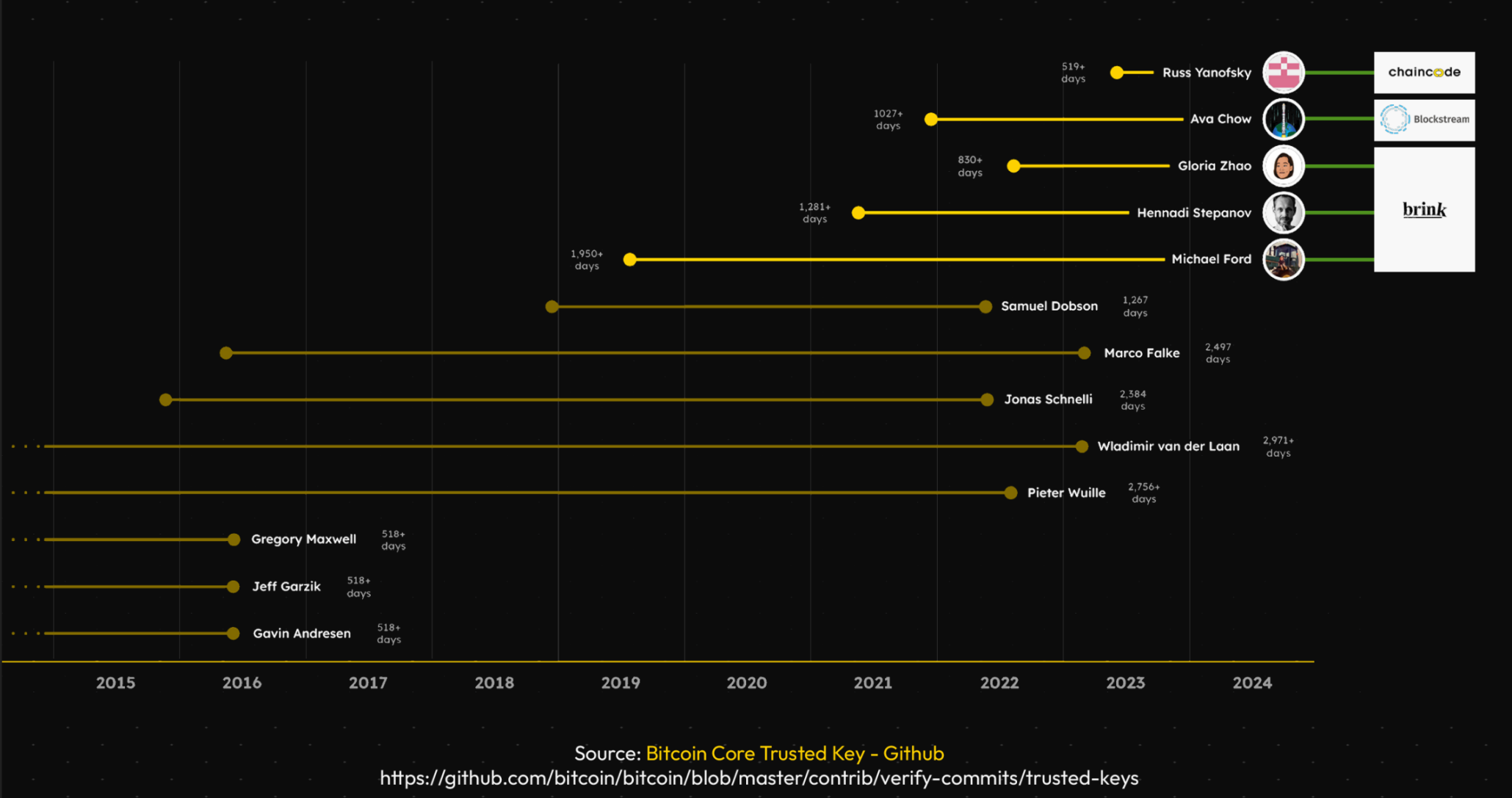
There are currently five maintainers. At the time of writing, three were with Brink, and the other two were from Chaincode and Blockstream, respectively. Two years later, although the personnel have remained the same, Ava Chow has moved from Blockstream to Localhost , and Gloria Zhao has moved from Brink to Chaincode.
Russ Yanofsky, funded by Chaincode, is one of the most active and respected long-term contributors, known for his extreme rigor, focus on code quality, and long-term maintainability. His most famous contribution is assumeUTXO, which allows nodes to "assume" the correctness of the official historical UTXO set during synchronization, requiring only verification of the most recent block, thus drastically reducing the initial synchronization time for new nodes (from days to hours).
However, the idea actually originated with James O'Beirne, but Russ Yanofsky spent nearly five years refining it and finally incorporating it into Bitcoin Core 27.0. Currently, Russ Yanofsky is leading the effort to change Bitcoin Core from a single-process to a multi-process architecture, significantly improving future security and scalability. This is an extremely complex and highly controversial refactoring project that has been underway for several years.
Ava Chow, a transgender female developer who moved from Blockstream to Localhost, focuses on the usability and security of the Bitcoin ecosystem and is known for her contributions to wallet functionality and hardware integration. Ava Chow is the lead developer of the Hardware Wallet Interface (HWI) open-source library, which supports integration of hardware wallets such as Ledger and Trezor with Bitcoin Core.
In 2024, amidst controversy, Ava shut down Luke Dashjr's PR, which aimed to limit Ordinals, citing "lack of consensus and noise." If you've made money on ORDI, you might need to thank him.
As the only one of the five maintainers and the first biologically female in Bitcoin history, Gloria Zhao focuses on research in the areas of mempool, transaction relay, and consensus policy, and is considered a leading figure among the younger generation (around 26 years old) of the Bitcoin developer community.

Gloria Zhao led the "Cluster Mempool" project (PR #30611, etc.), introducing the concept of transaction clusters, rewriting the mempool logic, and improving the efficiency and fairness of RBF (Replace-By-Fee) and package relay. This feature has been partially activated in Bitcoin Core v28.0, significantly improving the network's resistance to pinning attacks.
Hennadii Stepanov is a Ukrainian developer who worked at a university before becoming a full-time Bitcoin developer. In 2020, after receiving funding from CardCoins and Payvant, he quit his job to "go all in" on Bitcoin. Hennadii Stepanov focuses on GUI (Graphical User Interface) and is responsible for the Bitcoin Core GUI sub-library, fixing numerous GUI crashes and cross-platform compatibility issues.
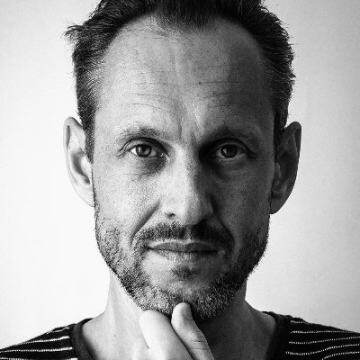
According to the information I found, this guy seems to care a lot about "user experience" and is one of the key drivers for Bitcoin's popularization. His technical philosophy is always based on the "end-user" perspective, and he even uses old laptops to simulate some niche scenarios during testing.
The last and longest-serving maintainer (over 6 years), Michael Ford, has been contributing code to Bitcoin since 2012 and was nominated as a maintainer at the CoreDev conference in 2019. Unlike the previous four, Michael Ford focuses on making Bitcoin development easier, driving Bitcoin's transformation from a dependency-intensive project to a modern, modular open-source project.
Michael Ford spearheaded the migration from the old Autotools to the modern CMake, improving cross-platform build efficiency (Windows, macOS, Linux) and reducing the number of dependencies by 44%. Furthermore, he pushed for the migration of security checks from legacy tools to LIEF (Library to Instrument Executable Formats) to prevent supply chain attacks. In short, Michael Ford is a "developer who serves Bitcoin developers."
The "Dorsey Problem" in the funding system
The report identifies two hidden dangers in the current funding system, one of which is the "Dorsey Problem".
Although the current funding organizations appear to be quite decentralized, five organizations actually receive funding from Jack Dorsey to varying degrees.
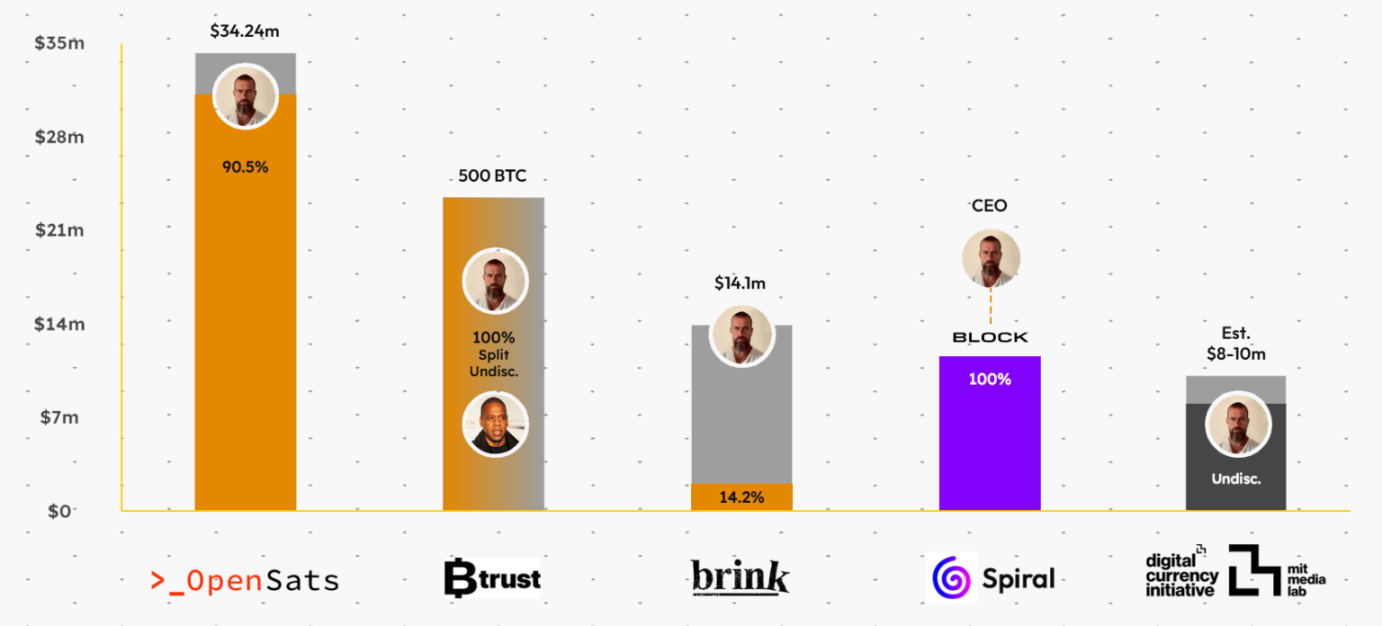
- 90.5% of OpenSats' donations come from Jack;
- 14.2% of Brink's donations come from Jack;
- Btrust's funding came entirely from Jack and Jay-Z;
- Jack also donated to MIT DCI’s Bitcoin program; the exact amount was not disclosed, but it is estimated to be a relatively small percentage.
- Spiral is also a project under Block, co-founded and led by Jack.
The author learned in interviews that Jack Dorsey generally does not interfere with the flow of donated funds, and in some cases, his decisions are not even directly made. However, this reliance on the "top donor" still raises concerns. The author expressed the same view as the writer, that more "Jack-level" donors, especially private companies that have profited from Bitcoin, should assume greater responsibility in this regard. Fortunately, the newly established organizations are not related to Jack, and the same is true for the two new organizations the report author is aware of that will be established soon.
The second concern lies in the sustainability of donated funds. While most respondents believed that the current funds available for funding were ample, whether this level of funding could be sustained was questionable. During the 2022 bear market, MIT DCI's $8 million in donation commitments received in 2021 shrank significantly, and donations to Brink also decreased by 58% that year. Based on the assumption of the cyclical nature of the cryptocurrency market, many organizations would also choose to be cautious in their funding during non-bear market periods to prevent funds from drying up during bear markets.
Given the current trading-oriented nature of Web3 products and companies, the revenues of most companies will fluctuate with the price cycles of risky assets for a considerable period. A solution to this problem may require a third mention of holding companies with cross-cycle profitability (such as exchanges) accountable for maintaining a certain level of donated funds.
Asia needs to step up its game!
The report concludes by summarizing several major problems in the Bitcoin developer ecosystem: a small number of active developers, low funding amounts, a concentration of funding organizations in different jurisdictions, a lack of presence in Asia, high concentration of maintainers (in 2024, three maintainers belonged to the same company, but this issue has improved), scarce employment opportunities (most funding is still in the form of grants), concentrated funding sources, and fragile sustainability.
I've analyzed the reasons for the lack of Bitcoin developers in the Chinese-language Web3 community in previous articles. In fact, there are countless excellent developers in China, but simply paying lip service isn't enough; an individual or organization needs to step forward and take on this task to truly solve this problem.
Many people may worry about regulatory issues, especially with the recent release of several documents strengthening regulations, which has caused considerable anxiety. However, I would like to say that in the current complex international competition, especially against the backdrop of great power rivalry, strengthening the regulation of cryptocurrencies is essentially activating the classic "foolproof mechanism," namely, preventing a large number of fraud cases and capital outflows during a period of slower economic growth. But this does not prevent non-governmental organizations in the industry from striving for our voice in Bitcoin.
After reading the report from beginning to end, it is fortunate that over the past ten years, a large number of talented technical personnel have devoted themselves to improving and maintaining Bitcoin, and some bosses have also been sending virtual gifts to support these developers. This seemingly insufficient support has enabled Bitcoin to become a representative of new assets in less than 20 years, which can be called a "miracle".
What is worrying is precisely that "this is a miracle".


