






Bitcoin Native Economics: An article to understand the rules behind this bull market


Original author: NavigatorLabs, Crypto Kitchen, Rebbeca
Original source: Metaverse Commando
In the past 2023, the Ordinals theory and protocol, which were born based on the two technological innovations of Segregated Witness and Taproot upgrade, unexpectedly pushed Bitcoin, the strongest decentralized consensus, to begin to transcend its single narrative of value storage. Ordinals Protocol, and BRC 20, Runes Protocol, Atomic Protocol, DMT Digital Material Theory, NAT Non-arbitrary Token, Bitmap and other theories, protocols, token standards, and projects based on or inspired by it are emerging in endlessly, and they are creating a foundation for digitalization, An intelligent future is the cornerstone of a decentralized value network.
Since March 11, when Bitcoin exceeded US$70,000 and hit a new all-time high, the Bit Native Narrative series has been officially launched based on the exploration and practice of the aforementioned pioneers. BIT FM, Navigator Labs, Crypto Kitchen and other colleagues have jointly promoted Bitcoin Native narrative research, and jointly strengthen the Bit native narrative movement.
The seventh article in the Bit-native narrative series was published today, which is a staged summary of the previous six articles introducing the six elements of Bit-native: Bit-native economics.
Every bull market has a new narrative, and this time Bitcoin is undoubtedly the “brightest star”, with prices hitting new highs repeatedly.
In addition to the passage of Bitcoin ETFs opening up channels for traditional financial institutions to invest in positions, as well as the price increases brought about by the upcoming halving in April and other benefits, we also need to pay attention to a larger trend, which is a revolution surrounding Bitcoin. The ecological revolution is advancing rapidly: technological progress and innovation have allowed it to transcend the single narrative of store of value, and instead significantly expand application scenarios - Make Bitcoin More Useful and Fun Again!
Just imagine that all the innovations that have been practiced and evolved on Ethereum in the past can be repeated on Bitcoin, and there may even be more innovations, which means that the possibilities for Bitcoin ecological creation are almost unlimited.
What is the Bit Native Economy?
The circulation of Bitcoin is only 21 million, making it a scarce resource similar to gold and other precious metals, and has the characteristics of a store of value. On the other hand, the Bitcoin network has limited scalability and can only handle a limited number of transactions per block. When the transaction volume exceeds the available space, it results in slow transaction times and high fees, making it difficult to build applications on the Bitcoin network. very difficult.
With the launch of the Lightning Network in 2018, the cost of building applications on the Bitcoin network began to gradually decrease; the launch of protocols such as Ordinals in 2023 made it easy to create NFTs on the Bitcoin blockchain. ..As a result, Bitcoin began to transcend its single narrative of value storage and will usher in an increasingly active ecology and a new economic operation system.
In short, the core of the Bitcoin native economy is centered on the narrative of native elements such as Block and Satoshi, shifting from Code is Law to Block as Ledger ) This methodology emphasizes the role of the blockchain as a basic ledger, which is more in line with Bitcoins minimalist philosophy.
Currently, almost all protocols, standards, infrastructure, applications and projects revolve around Bitcoin’s six native elements -
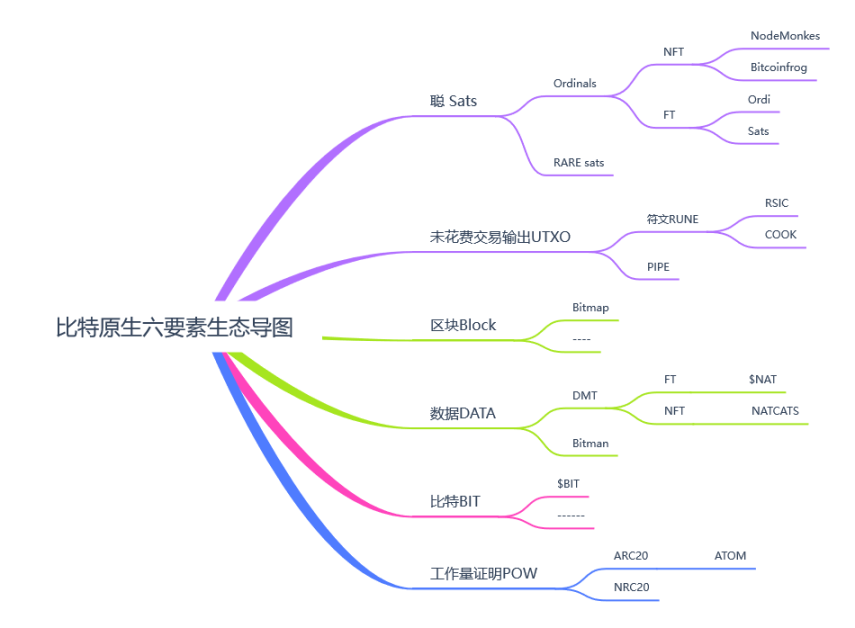
1. Sats (Satoshi)
Satoshi (Sat for short) is the smallest unit of Bitcoin. One Bitcoin contains 100 million Satoshi.
Application: Ordinals and Rare Sats
Ordinals is a protocol for creating digital artifact assets based on Sats, proposed by Casey Rodarmor. Under this protocol, a single Satoshi can inscribe any content and create unique Bitcoin-native digital artifacts called NFTs.
This means that up to 100,000,000 NFTs can be created from a single Bitcoin. These NFTs are traceable and transferable, running directly on the Bitcoin blockchain without relying on second-layer solutions. This approach is more secure than most NFTs stored on external servers.
The Ordinals Protocol enables Bitcoin miners to significantly increase their income and on-chain fee income, enhancing support for the BRC-20 asset class and the entire Bitcoin ecosystem.
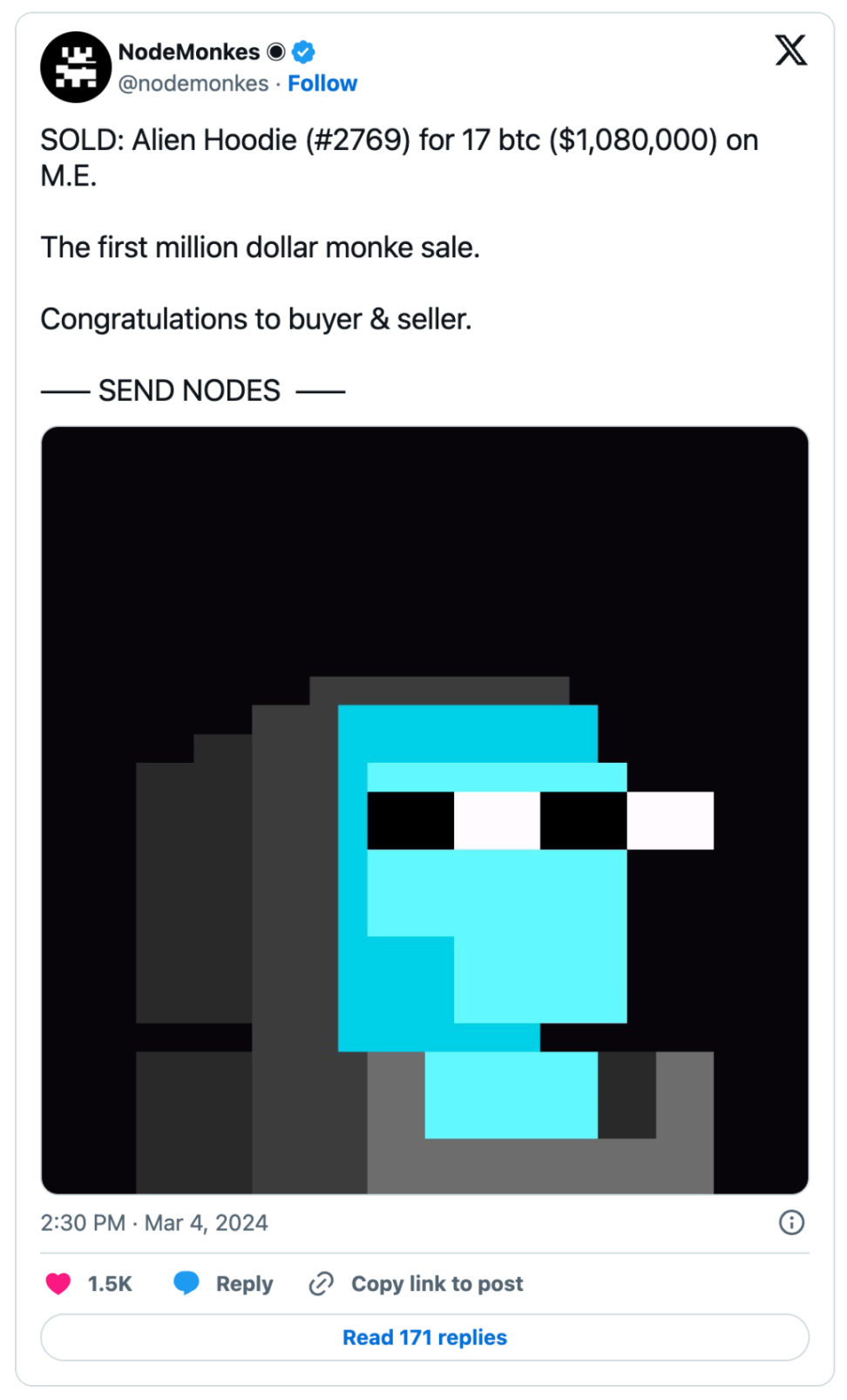
Currently, NodeMonkes and Runestone are the two most popular NFT projects on the Ordinals protocol. As of March 20, the market value of all on-chain NFTs ranked fourth and sixth respectively.
Rare Sats. Not all Satoshis are created equal, some Satoshis are rarer than others, creating a market for rare Satoshis. For example, the first Satoshi mined after the Bitcoin halving event is considered rarer than other Satoshis in the same block, and these Satoshis are classified as Epic Sat. Rodarmor Rarity Index divides talents into Common, Uncommon, Rare, Epic, Legendary, and Mythic.
Rare and uncommon Satoshis are highly sought after and are becoming increasingly popular collectibles.
Professional rare satoshi platform: https://sating.io/
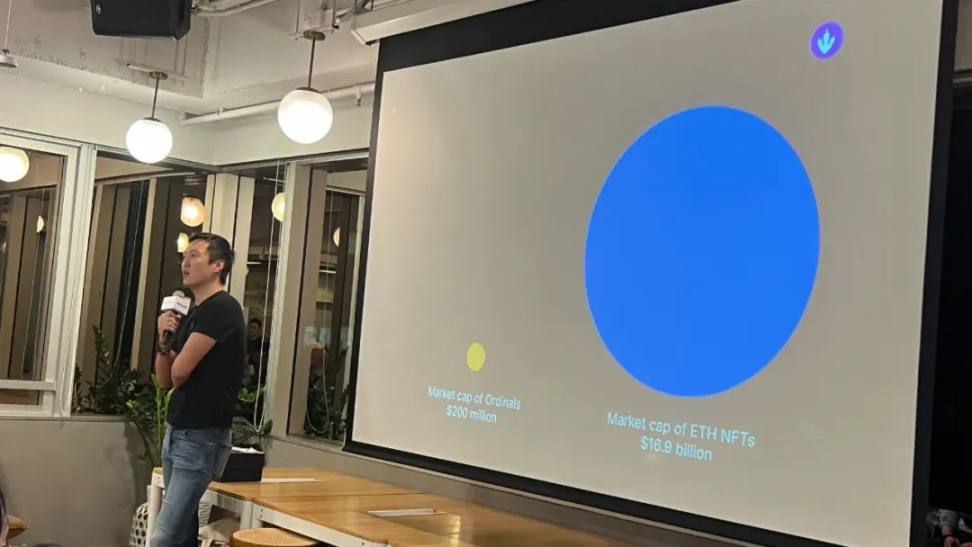
In-depth interpretation:# Can Bitcoin Ordinals surpass Ethereum NFT? - Bit native narrative ③
2. UTXO (Unspent Transaction Output, unspent transaction output)
UTXO is the basic unit of Bitcoin transactions. The value transfer of Bitcoin is realized through the transfer of UTXO. At the same time, each UTXO is a whole and cannot be divided into smaller units. The balance of a Bitcoin account is not stored in a central database like a traditional account, but is calculated by scanning the blockchain and aggregating all UTXOs belonging to that user.
Think of it as spending specific coins from a wallet, rather than a general pool of funds. For example, suppose 1 BTC is a coin and you want to spend 0.5 BTC to buy something from person A. At this time, you need to give a coin worth 1 BTC to person A, and then person A returns a coin worth 0.5 BTC to you. , you cannot directly transfer 0.5 BTC from 1 BTC to A.
UTXO has multiple advantages: each UTXO can be traced back to its source, allowing for a transparent audit trail of all transactions on the Bitcoin blockchain; UTXO transactions do not directly reveal the users total balance, providing users with privacy advantages; making It becomes difficult to fake transactions or spend unreceived Bitcoins.
Application: Runes Protocol and Pipe Protocol
Considering that the transactions of BRC-20 related tokens account for the majority of the Ordinals protocol, resulting in a large number of on-chain footprints and occupying the space of Bitcoin, Casey Rodarmor, the author of the Ordinals protocol, proposed a new protocol Runes based on UTXO. The protocol produces a smaller on-chain footprint and encourages responsible UTXO management. Runes will be launched on the mainnet in late April when Bitcoin is halved for the fourth time.
Pipe Protocol, also known as the first UTXO Rune Protocol, aims to introduce the functionality of digital assets and NFTs to the Bitcoin ecosystem while leveraging the security and efficiency of UTXO transactions.
In-depth interpretation:# Runestone airdrop is imminent, what kind of Alpha will the Runes Protocol intended to replace BRC 20 breed? - Bit native narrative ①
3. Data
Data is the basic information unit of cryptocurrencies such as Bitcoin, including transaction data, signature data, metadata, etc., which are verified and transmitted through encryption algorithms and stored in the blockchain. Data is the value carrier of cryptocurrencies such as Bitcoin and the basis of the consensus mechanism.
Application: Digital Matter Theory (DMT)
DMT proposes a framework for creating new digital assets, focusing on Non-Arbitrary Value derived from the data of the Bitcoin block itself.
DMT attempts to get rid of the situation of assigning arbitrary value (Arbitrary Value) to digital tokens. For example, the value of an NFT is often subjective and not based on any clear or objective factors, so it is assigned an arbitrary value.
Under the framework of DMT, the value and supply of new digital assets are determined using the inherent attributes and data patterns in Bitcoin blocks.
The proposal of DMT has opened up a new continent for the blockchain that is equivalent to smart contracts. From smart contracts following Code is Law (code is law) to block elements following Block as Ledger (block is ledger), returning to Bitcoins Minimalism allows us to examine from a new perspective what is the native digital substance of Bitcoin, which is unique to the ecological characteristics of Bitcoin and is discovered from block elements rather than arbitrarily created by contracts.
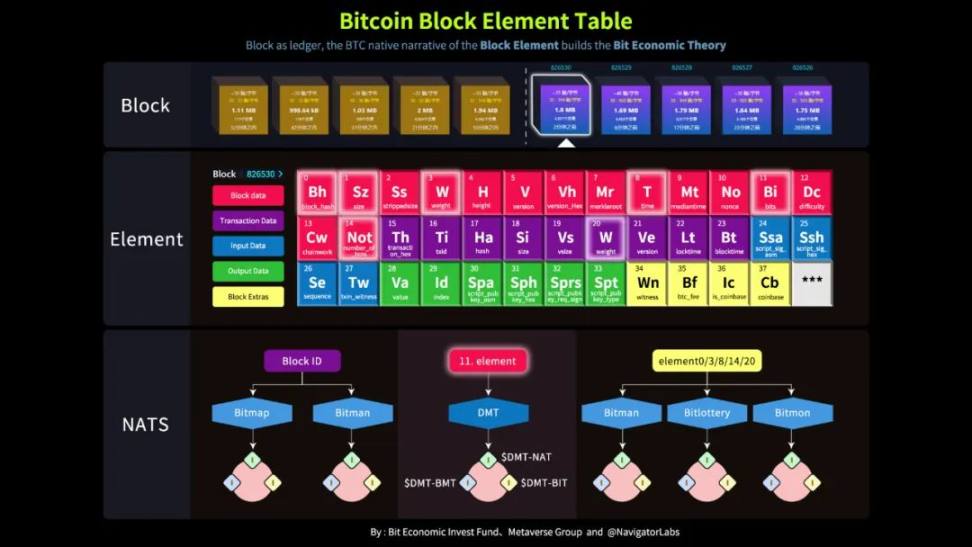
It is worth noting that DMT was originally proposed by some physicists, who believed that digital information can be regarded as a digital substance similar to physical substances (such as wood or metal). It is predicted that the use of digital information in the future may exceed atom. Just like the real world is made up of elements, the periodic table of elements provides a theoretical basis for finding new elements in the real world. Scientists use the periodic table to find new substances (such as semiconductor materials, catalysts, etc.) in a certain area to serve the construction of the real world. The blockchain technology community promotes the acceptance and sustainable development of DMT in the Bit ecosystem.
Also based on DMT is the Non-Arbitrary Token (NAT) issuance mechanism, as well as the first token $NAT under the NAT issuance protocol.
In-depth interpretation:# What is digital matter theory? Can’t tell the difference between NAT and $NAT? Ten questions about DMT to help you understand - Bit Native Narrative ②
4. Block
Blocks are a fundamental component of the decentralized and distributed ledger system that underpins Bitcoin, and they help maintain the integrity and security of the network by ensuring that all transactions are verified and recorded in a transparent and immutable manner.
Since each block contains a large amount of information, including timestamps, transaction details, unique identifiers, etc., the utilization of data on blocks is becoming a trend in digital asset exploration. For example, using different data types can create non-arbitrary Asset types such as FT (Fungible Token) and NFT (Non-Foungible Token).
Application: Bitmap
Bitmap was proposed by Bitoshi Blockamoto and is a specific concept that uses Bitcoin blocks to create a new type of digital asset under the DMT framework.
A block is no longer just a collection of transactions, but can be viewed as a Digital District in the virtual world. Each transaction within the block is regarded as each parcel in the digital area. The specific data points and characteristics of each transaction determine the nature of the parcel.
Holding a Bitmap is a certificate for holding land in this digital world, similar to a real estate certificate in the real world. It is one of the many digital material types of DMT and exists in the form of NFT. If you have to explain by analogy, you can understand Bitmap as the land in Decentraland, and $NAT as MANA (refer to our previous article:# About $NAT and digital matter theory: from all chains are unified to all universes are unified...)。
In-depth interpretation:# Can Bitcoin blocks be turned into “land”? How to play the non-arbitrary Metaverse Bitmap? - Bit native narrative ⑤
5. Bit
A bit is the smallest unit of data that a computer can process and store. The state is represented by a single binary value, usually 0 or 1. It is the core element of digital technologies such as blockchain. Bitcoin is named after Bit.
Analyzing the above six-element mind map of bit native, BIT, which is juxtaposed with Sats, UTXO, Block, DATA and POW, is the underlying element and underlying dimension of the other five elements.
BIT was proposed in Shannons book The Mathematical Theory of Communication on information theory published in 1948. As the smallest unit of information, BIT was introduced into the data formula and proposed the three laws and other basic theories of information theory.
The emergence of Bit later led to public key cryptography, computers, networks, Moores Law, and todays developed information industry, Bitcoin and blockchain.
Application: $DMT-BIT has the potential to become the largest MEME currency in the Bitcoin ecosystem
$DMT-BIT is a non-arbitrary asset issued based on the DMT and NAT protocols. The quantity is taken from the 11th element BITS of the block element table. The value of the BITS field determines the calculation amount and mining cost of the PoW miner. $DMT- BIT can be mapped and understood as the tokenization of the Bits field of the block element. The value of $DMT-BIT and the POW mining cost will create quantum entanglement.
In-depth interpretation:#Bitcoin: All the mysteries start with BIT - Bit native narrative ⑥
6. PoW (Proof of Work)
PoW is a consensus mechanism first introduced and widely adopted by Bitcoin, which uses the computing power of computers to solve complex mathematical problems to obtain new digital currency rewards. Both mobile phones and computers can participate in PoW, which makes its entry threshold low and its popularity high.
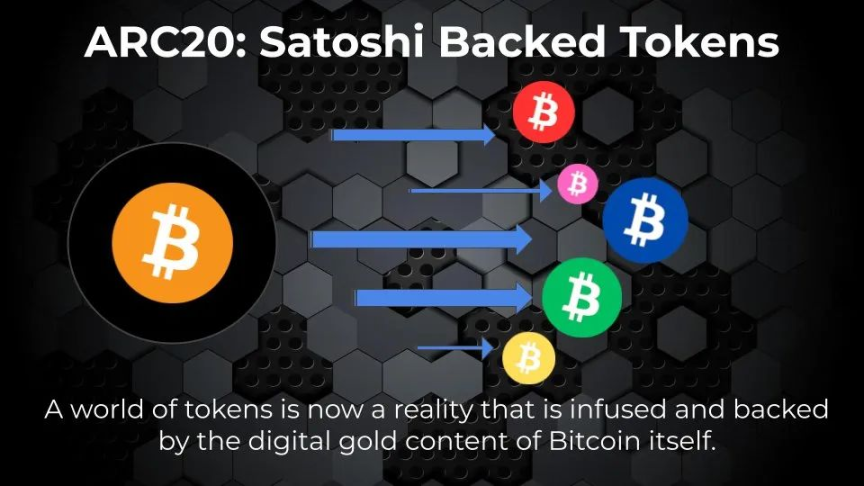
Application: Atomicals Protocol The Atomicals protocol is built on the Bitcoin network and helps create, transfer and enhance digital assets, such as native digital NFTs, game NFTs, digital identities, domain names, etc. A key aspect of the protocol is the introduction of the ARC-20 token, a fungible token.
The token standard ARC-20 launched by the Atomics protocol provides a decentralized minting method, allowing the community to participate in the token creation process, that is, using the PoW mechanism to calculate and obtain the minting rights of ARC 20 tokens.
In-depth interpretation:# See how the Atomics Protocol can revive Bitcoin? - Bit native narrative ④
Why should we pay attention to Bit Ecology?
Bitget predicted in a December 2023 analysis report that if the Bitcoin ecosystem continues to expand, an escalation in demand could push its price beyond its previous peak. Against this backdrop, Bitcoin could reach a $100,000 valuation in a bull market.
According to data released by Cryptoslam.io on March 20, NFT sales in the past seven days reached $327,969,100, a decrease of 7.56% from the sales in the previous seven days. Among the NFT sales of 21 different blockchains analyzed, Bitcoin ranked first, with sales reaching $130.91 million, an increase of 25.97%. Ethereum, which ranked second, had sales of $97.24 million during the same period, a decrease of 30.30%. BRC-20, as unclassified Ordinals, became the highest-grossing NFT series that week, with sales reaching US$70,073,053, followed by the Nodemonkes series, with transaction volume reaching US$15,542,910, an increase of 4.65%. .
The signs that the Bitcoin ecosystem is booming are very clear, and the driving force behind this is the continuous innovation and evolution of Bitcoin’s native asset issuance. The bit native economy was proposed precisely to clarify the issuance rules of bitcoin native assets, which is crucial for future investment.


