






"Escape Twitter" trend, there are these few alternative social networking platforms


Original Author: Jaleel, LeftOfCenter, BlockBeats
Original Editor: Jack, BlockBeats
The proliferation of Web 3 has made us question the existence of decentralized social platforms.
Indeed, when Web 2 can satisfy all our daily social needs, why do we need a decentralized social platform? However, when Reddit announced the closure of its free API and started charging approximately 1.7 yuan per 1000 requests from July 1st, followed by Elon Musk's introduction of limited traffic policies on July 2nd, temporarily imposing tweet reading limits on Twitter users: verified accounts can read up to 6000 tweets per day, unverified accounts 600 tweets, and new unverified accounts 300 tweets.
These measures and changes from Reddit and Twitter have sparked discontent among a large number of users. Many subreddits on Reddit have announced closures to protest against the high pricing of API. In addition, tags and search terms like "GoodBye Twitter" and "RIP Twitter" have also appeared frequently, making finding alternative social platforms almost a necessary choice for us.
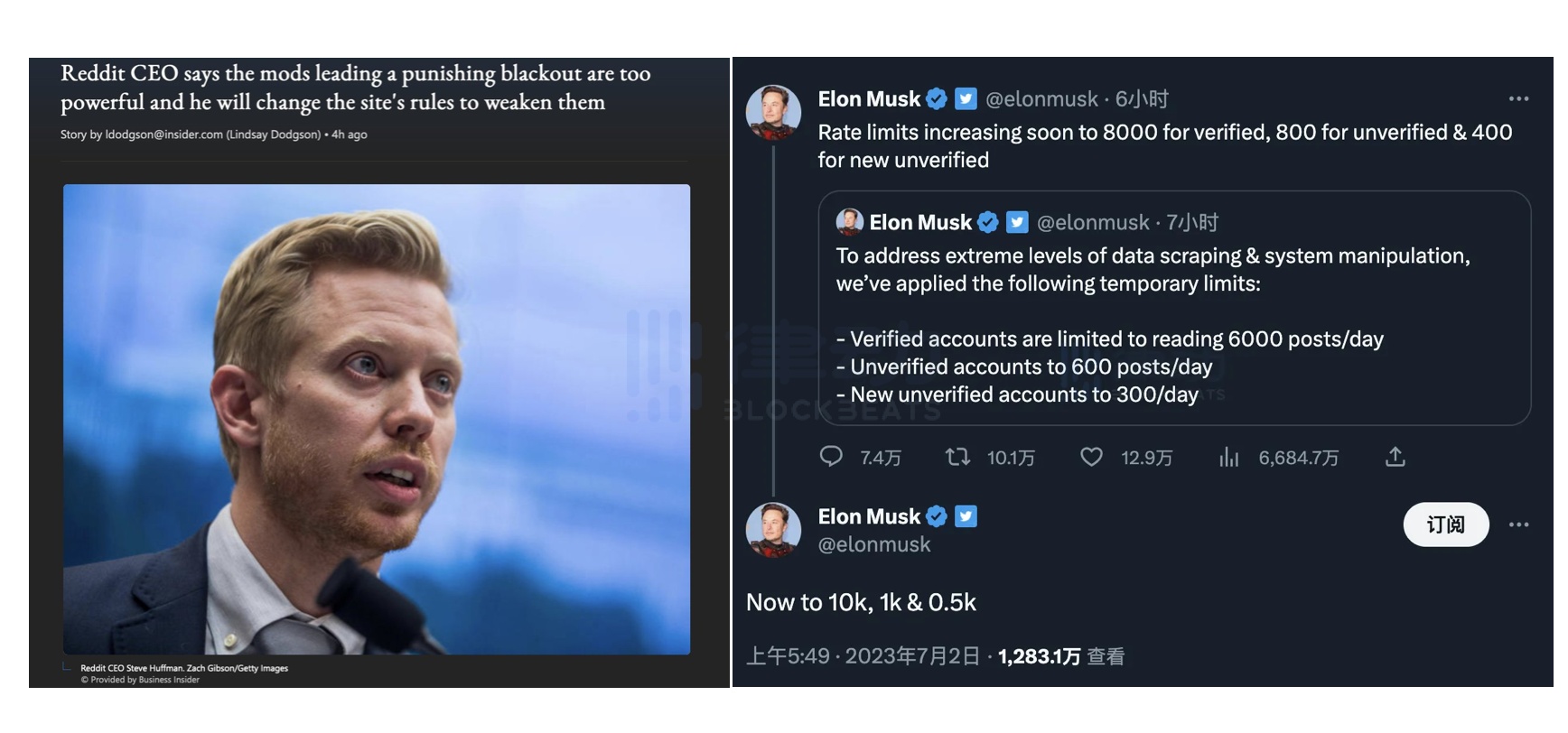
When users flee from Reddit and Twitter, where else can they go? When the internet is no longer the best option, what other alternatives are there?
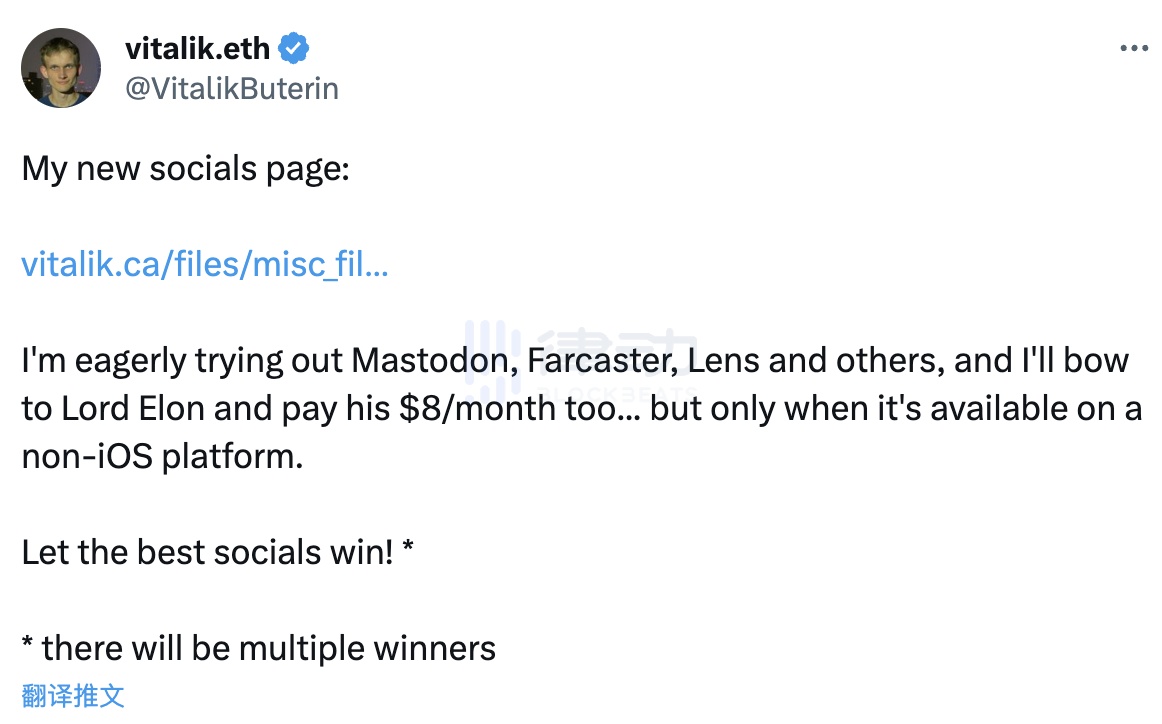
Like everyone else, even prominent figures in the crypto industry such as Vitalik face this question. Last year, at the end of the year, he bowed to Elon Musk on Twitter and stated that he would still pay Twitter a monthly $8 membership fee. However, at the same time, he is eagerly trying out some new social platforms and protocols, including Mastodon, Farcaster, Lens Protocol, and Nostr.

In the data charts compiled by CoinGecko, we can see that according to the average number of monthly unique visitors from January to April 2023, Steemit, as an alternative to Reddit, has seen significant growth in the number of independent visitors. Gab, Mastodon, Bluesky, Minds, Lenster, Snort, and other alternatives to Twitter also rank highly.
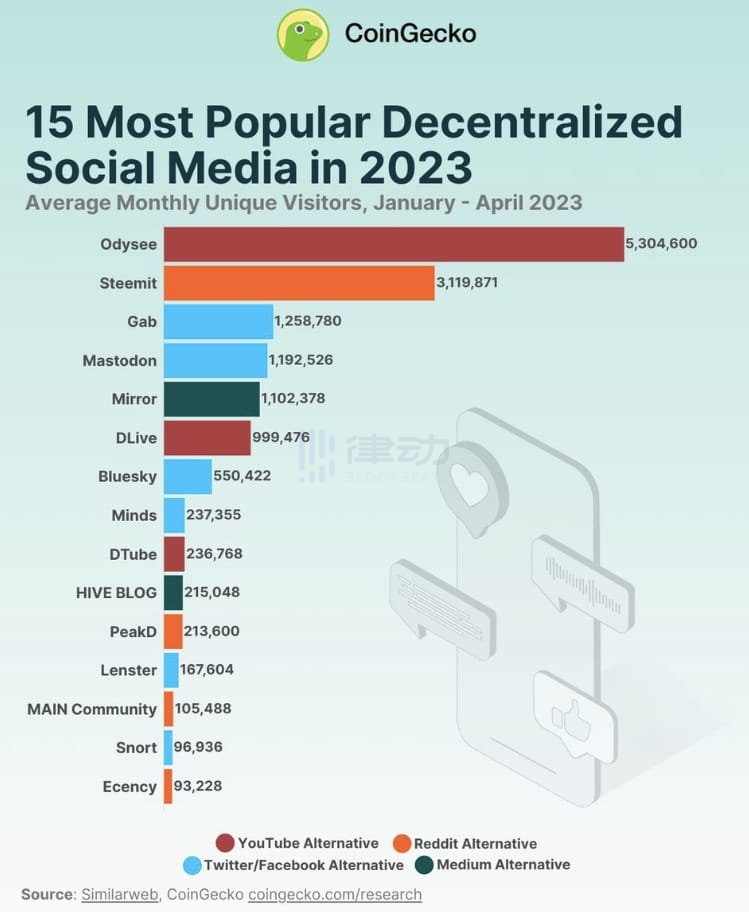
BlockBeats will introduce several alternative social networking platforms in the following content as decentralized alternatives to Twitter. Users can try them out according to their needs.
Bluesky sees "record-breaking traffic"
Since July 2nd, when Elon Musk introduced limited traffic policies, Bluesky has witnessed "record-breaking traffic".
Bluesky is a decentralized social app, initially incubated in 2019 by Twitter when Jack Dorsey was still the CEO of Twitter. Bluesky features a user interface and algorithmic choices similar to Twitter, along with collaborative design and community-specific moderation. At its inception, Jack Dorsey stated that Twitter would fund a "small independent team of up to five open-source architects, engineers, and designers" to establish a decentralized standard for social media, with the initial goal of Twitter adopting this standard.
However, as we all know, Elon Musk made a high-profile move to acquire Twitter, and as a result, Bluesky completely separated from Twitter by the end of 2022. Although Jack Dorsey funded Bluesky and serves as a board member, he is not involved in day-to-day development. Jay Graber, a former software engineer for the cryptocurrency Zcash, is the CEO of Bluesky and previously founded an event planning website called Happen.
Currently, Bluesky is still invite-only in its test version, but its user base is growing as more people join the platform. According to data released at the end of April, Bluesky has approximately 50,000 users. As of mid-May, a spokesperson for Bluesky stated that the platform has over 66,000 users and a waiting list exceeding 1.9 million. According to estimations by data.ai, the app has been downloaded over 375,000 times. These scarce invitations are sent out to users every two weeks, each time generating frenzy and selling for as much as $200 per invitation on eBay.
Currently, many prominent media personalities and organizations have found a new home on Bluesky, including Congresswoman Alexandria Ocasio-Cortez and CNN's Jake Tapper.
Speaking of Bluesky, funded by Jack Dorsey, it's impossible not to mention Nostr, a social protocol that received a donation of 14 BTC from Jack Dorsey.
Nostr - A Censorship-Resistant Global Social Network
Nostr's founder, fiatjaf, is a person with strong humanitarian concerns. As a technical expert, the hundreds of book recommendations on his personal website are all about sociology and philosophy.
On November 20, 2019, fiatjaf started developing the Nostr protocol, hoping to create a simple, open, globally supported, decentralized, and censorship-resistant social protocol. That day, he wrote in his blog post: "Nostr is the simplest open protocol, based on encryption keys and signatures, not relying on any trusted central server, not relying on P2P technology, able to create a censorship-resistant global social network once and for all."
After a year, in November 2020, the first group of participants gradually expanded. The Nostr group in Telegram transformed from a basic group to a supergroup and started discussing the possibility of decentralized social networks, the possibility of funding such projects, the support of smart contracts by Nostr, and the name of the Nostr protocol.
Nostr is not a product or protocol of Web 3, and it can even be said that Nostr has nothing to do with Web 3. Jack Dorsey believes that the essence of Web 3 has not escaped the monopoly of capital. If this problem is to be solved economically, institutional financing must be abandoned, whether in the form of equity or tokens. Nostr meets his expectations, no institutional financing, no token model, which is why Jack Dorsey donated 14 BTC to Nostr and publicly supported the project.
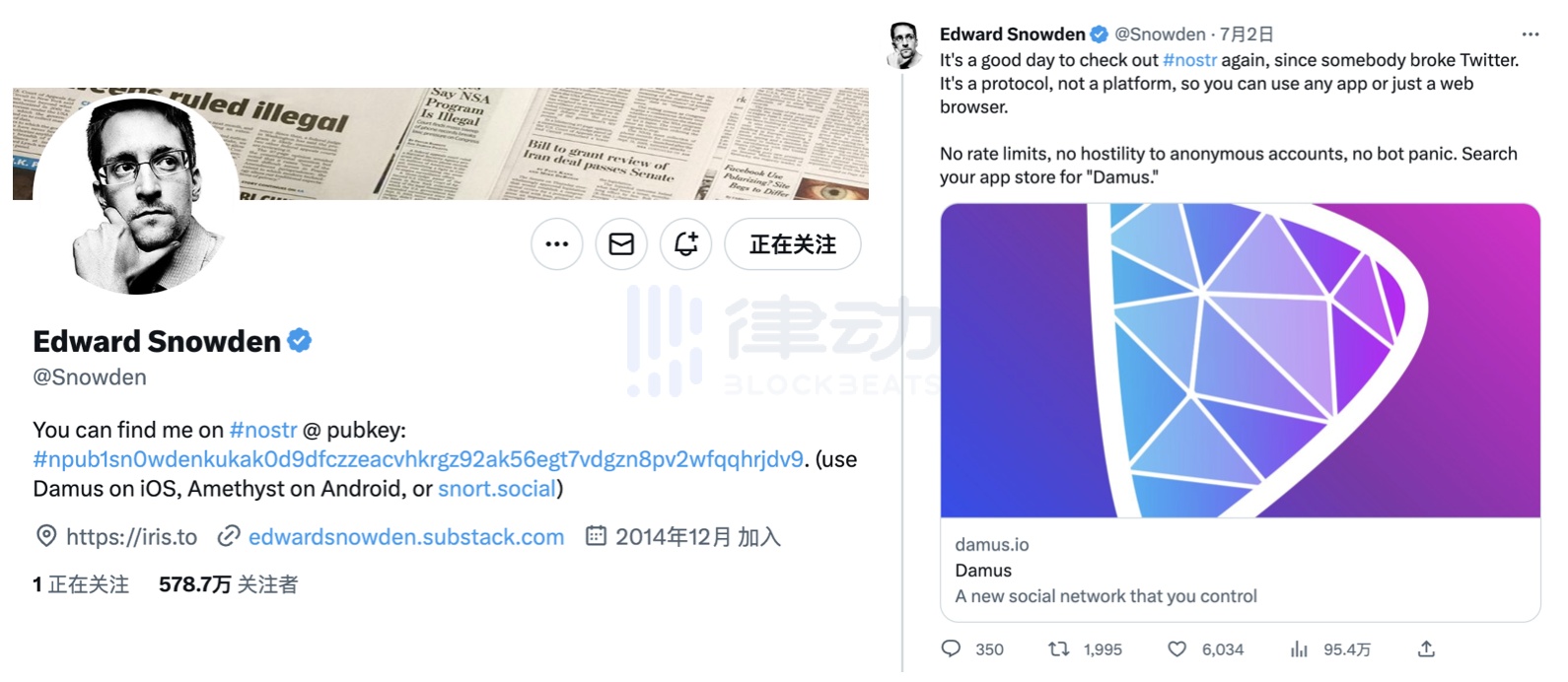
Edward Joseph Snowden, a former employee of the US Central Intelligence Agency (CIA), who previously revealed the Prism program to the media, hates the government's secret surveillance apparatus that destroys privacy, internet freedom, and the basic freedoms of people around the world. He also wishes to have a social garden without walls, which is why he is a "loyal" user of Nostr.
Composable social graph Lens
Before the launch of Lens, it was destined to be compared with Nostr. The founder of the Lens Protocol is Stani Kulechov, the CEO and founder of the famous Defi protocol Aave. As mentioned earlier, Jack Dorsey has always been critical of Web 3 and seems to mock the concept of Web 3. He even skipped Web 4 and proposed to build Web 5.
Jack Dorsey's criticism of Web 3 has also received a lot of backlash, including from Stani Kulechov, the CEO and founder of the famous Defi protocol Aave. Stani couldn't stand Jack Dorsey's mockery and quoted his tweet, jokingly saying: "Since Jack Dorsey is going to build Aave on Bitcoin, Aave should also build Twitter on Ethereum."
Related reading: "Lens or Nostr? Find the ultimate solution for future social media".
In February 2022, Stani publicly released the Lens protocol on Twitter in the form of a signed open letter, and it officially launched on the Polygon mainnet in May of the same year after testing.
Lens has a different positioning from Nostr. Its positioning and explanation are: Lens Protocol is a composable and decentralized social graph and protocol where developers can easily build social media platforms, design meaningful social experiences, and lock users' attention without relying on feedback mechanisms. The Lens protocol utilizes NFT technology to ensure that users fully own their data when using the Lens protocol, and creators can explore new ways to profit.
A passage on the Lens official website summarizes the features of Lens very well, "With the Lens Protocol, everything is under your control. You own your profile, where you use it, how you use it, and even how you profit from it. This means you have control over your content, and it's stored as an NFT in your wallet. It's not just easy. This is what digital identity should do: everything is yours."
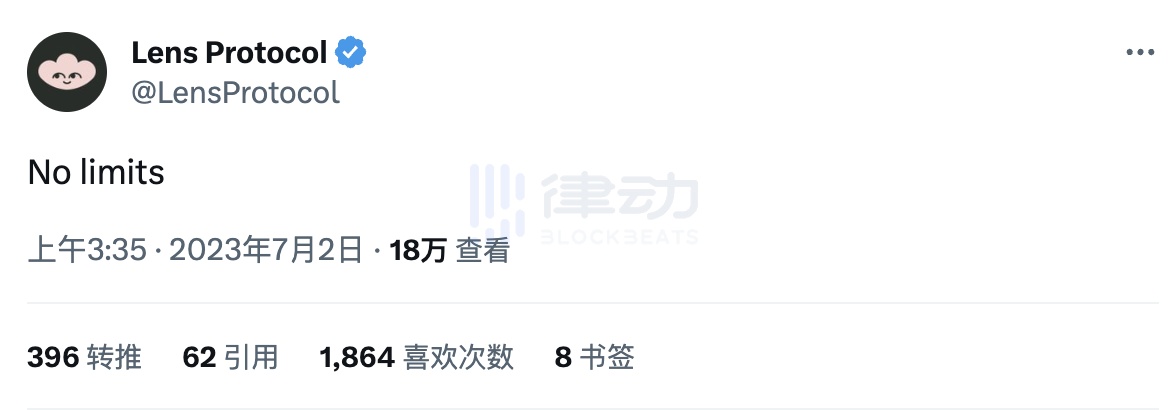
In the wake of temporary limitations imposed on Twitter users reading tweets, the Lens protocol also released a tweet with the message "No limits", and the floor price of NFT profiles on the Lens protocol has also increased.
The biggest beneficiary of leaving Twitter: Mastodon
Last year, Elon Musk acquired Twitter and embarked on a series of unsatisfactory actions, with Mastodon being the biggest beneficiary at the time.
Established in 2016, Mastodon is a freely open-source decentralized microblogging social network consisting of servers operated independently by different operators, exchanging data in a federated manner. Prior to Elon Musk's acquisition of Twitter, Mastodon had accumulated approximately 500,000 active users.
By the end of 2022, when Elon Musk carried out massive layoffs and modified Twitter's verification policies, causing a lot of confusion, Mastodon saw a surge in users. At its peak, Mastodon added over 130,000 users per day. By early December last year, the number of active users reached 2.5 million. After January this year, the number of active users dropped to 1.8 million, still exceeding Lens and Nostr by an order of magnitude.
The rapid growth of Mastodon users has obviously caught Elon Musk's attention. Twitter has banned links to Mastodon and suspended users who mention Mastodon usernames, including the official Mastodon account. In a Twitter Spaces, Elon Musk directly said, "Fucking post Mastodon all goddamn day long, I don't care."
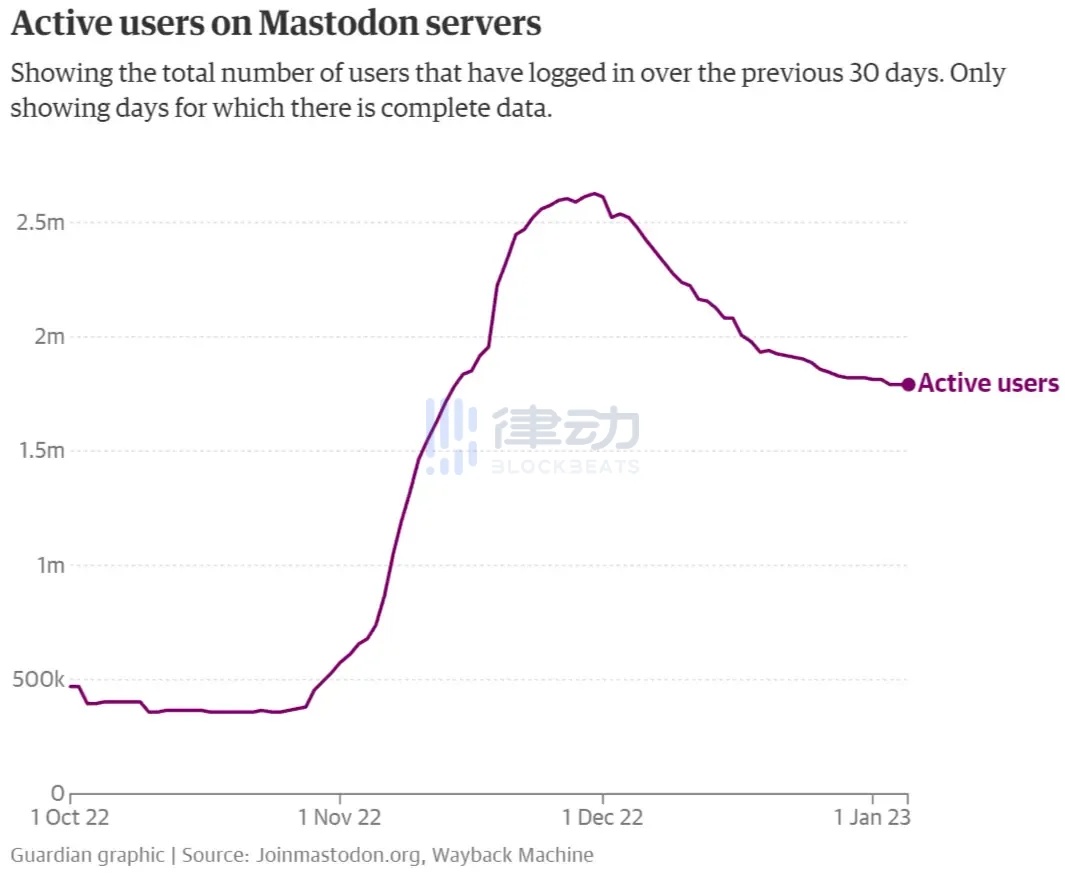
Mastodon, based on the ActivityPub protocol, has a relatively more complete set of infrastructures. Many users who have personally experienced it believe that it has reached a state no less superior to Twitter. It is much more mature in this aspect than Lens and Nostr, with more complete tools at the application layer or protocol level.
Due to its slightly higher product maturity, Mastodon seems to be the biggest winner in the recent controversy over users fleeing Twitter. Mastodon's founder and CEO, a German programmer named Eugen Rochko, shared data showing that the active user count on Mastodon increased by 294,000 over the weekend, and the amount of activity posted roughly doubled.
It is worth mentioning that Phil Daian, a member of the Ethereum Foundation, operates a crypto community called cryptodon.lol on Mastodon, and Vitalik has also joined.
P 2 P network Urbit
Urbit aims to break the centralized "client-server" model and invent a brand-new P 2 P network. This network consists of personal servers owned and operated by users, which means that users will not access third-party servers provided by others, but directly connect with other people on the network in a P 2 P manner - completely eliminating intermediaries and the power that comes with them. Urbit's goal is to completely replace the existing oligopoly of Web 2 Internet with a fairer, more private, and more open alternative solution.
From the very beginning, Urbit has received support from top-tier venture capitalists and investors such as Peter Thiel, crypto venture a 16 z, and Balaji S. Srinivasan. It has subsequently attracted engineering-oriented venture capital funds like Coinfund and Assembly Capital to build communities and develop on Urbit.
The official launch of the first Urbit accelerator program, u/acc, will begin at the Lisbon Conference on July 24th. At that time, applications from founders, developers, and others will be accepted. The goal of u/acc is to provide pre-seed funding and address space for teams that want to push the limits of Urbit and build companies within its ecosystem.
Urbit is an old project with a longer history than Bitcoin. It started as a hobby project as early as 2002 and was first released in 2013. From a user's perspective, Urbit's growth has always been steady. However, compared to other crypto projects, the adoption of Urbit seems to progress slowly.
Currently, the active user space on Urbit accounts for only a small portion of its total user base. According to the data from the Urbit/Network explorer, there have been approximately 111,000 network projects created within the Urbit network, including galaxies, stars, and planets. Among them, only 13,226 have set network keys, which means they can join the Urbit network. The daily active users are around 4157.
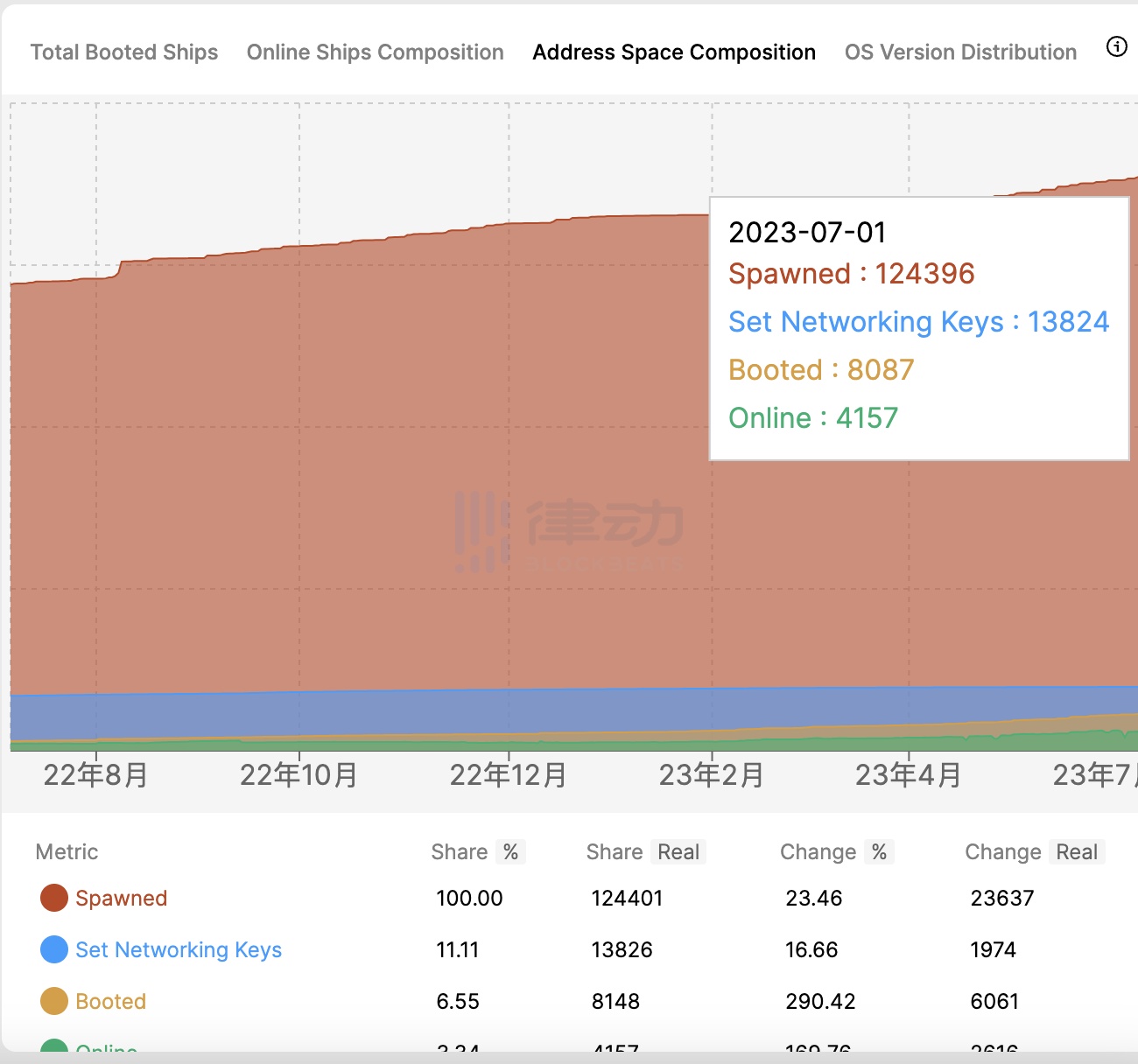
Compared to other cryptocurrency projects, Urbit has been slow in achieving the expected level of adoption. This is due to its mysterious beginnings, controversial founder, scarcity of killer applications, unfriendly application discovery mechanism, and most importantly, the difficulty of getting started. However, these issues are not insurmountable. For example, community-supported applications have made application discovery easier. The controversial founder stepped down in 2019, and technological barriers have been alleviated through the use of multiple third-party applications, including Planet.one or Third.earth for Urbit instance hosting, the Umbrel Urbit node application, and a locally hosted program called Port for PC.
In addition, unlike other projects, Urbit's adoption is organic. Urbit does not have its own cryptocurrency or related token incentives. Currently, users are not driven by speculation, which means these 4157 daily active users are early adopters. If any incentive mechanisms are adopted in the future, it is expected that this number will increase significantly.
Threads: Zuckerberg and Musk Engage in Intense Business Battle
In addition to the social protocols and products we mentioned above, Twitter seems to have given Zuckerberg an opportunity, leading to a series of notable new moves by Meta.
Meta Platforms launches an offensive in the wave of the "Twitter exodus" by planning to release a social app called Threads, which is expected to go live on Thursday, July 6th. Threads is developed based on Instagram's user base and combines elements from both Instagram and Twitter.
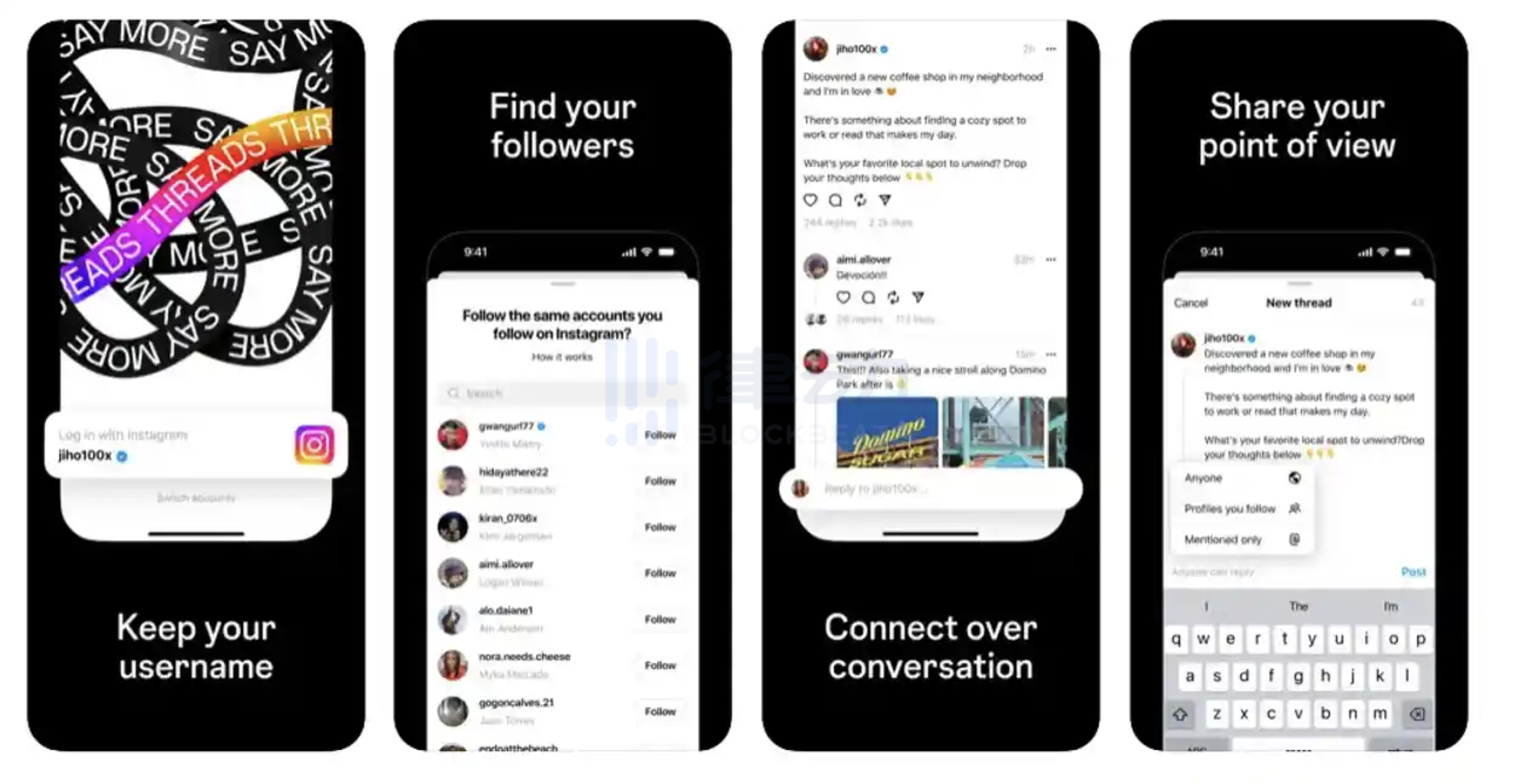
Screenshots indicate that users will seemingly be able to log into Threads using their Instagram IDs, which might attract existing Instagram users and new users who seek a different social media experience. In a company-wide meeting last month, Meta executives shared that Instagram Threads will integrate with the decentralized social media protocol ActivityPub, based on Mastodon.
The official and brief description of Threads on the App Store states: "Threads is the place where communities come together to discuss everything from what you care about today to tomorrow's trends. No matter what you're into, you can follow and connect directly with your favorite creators and others who love the same things, or build your own loyal following and share your thoughts, perspectives, and creativity with the world."
Threads derives its name from a Twitter competitor, and its features seem similar to Twitter. Some technicians even call it the "Twitter killer." This inevitably brings to mind the fierce confrontation between Musk and Zuckerberg last week. Musk and Zuckerberg have never seen eye to eye over the years, and tensions escalated after Musk acquired Twitter at the end of last year. The upcoming launch of Threads seems to shed light on the trigger of this confrontation.
Conclusion
Going back to the initial topic, the stories of Reddit and Twitter remind us that as users, we can truly feel the drawbacks of centralization and the benefits of decentralization, only when real problems arise— "open sharing + data availability."
Meanwhile, as more and more users flee traditional social media platforms like Reddit and Twitter, social protocols and products such as Bluesky, Mastodon, Urbit, Lens, and Nostr will also have a growing market in the future.
The entry of Threads has also livened up this race track. However, what is the future of the social media race? Is decentralization the ultimate goal of social media? Who can emerge in this market? The answers to these questions will still require a lot of time to witness, but one thing that is indisputable is that the future of social media will definitely be determined by the users.


