






Binance Research: When liquidity staking meets DeFi


Table of contents
The main points
Current status of LSDs
Financialization of LSDs
LSDfi Ecosystem
Growth of LSDfi
The main points
risk
conclusion
references
The main points
LSDfi refers to DeFi protocols built on Liquid Staking Derivatives (“LSDs”). By providing additional opportunities to generate yield, the LSDfi protocol allows LSD holders to stake their assets and maximize yield.
The LSDfi protocol has experienced rapid growth in Total Value Locked (“TVL”) over the past few months, fueled by the adoption of liquid staking. Among the top LSDfi protocols, the cumulative TVL has already topped $400 million, more than doubling from a month ago.
Contributing factors to LSDfi growth include the growth of staked ETH, and the current low penetration of LSDfi. Currently, the TVL of the LSDfi protocol represents less than 3% of the total accessible market.
secondary title
Current status of LSDs
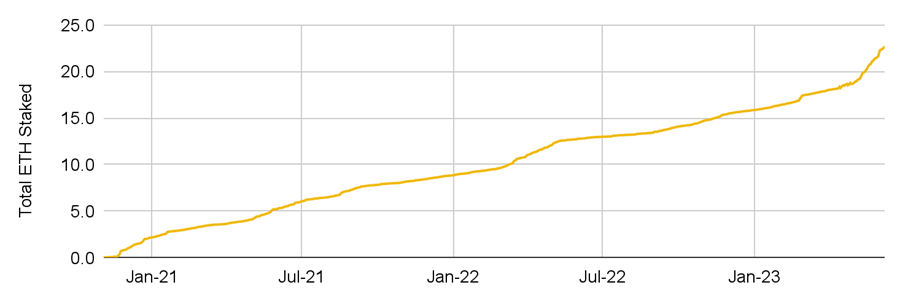
Ethereum’s successful move to proof-of-stake (“PoS”) and the withdrawal of staked ETH enabled by the Shapella upgrade have both contributed to the massive growth in staking.
Figure 1: Total staked ETH has accelerated and surpassed 22.8 million ETH
Source: Dune Analytics (@hildobby)
As of June 14, 2023
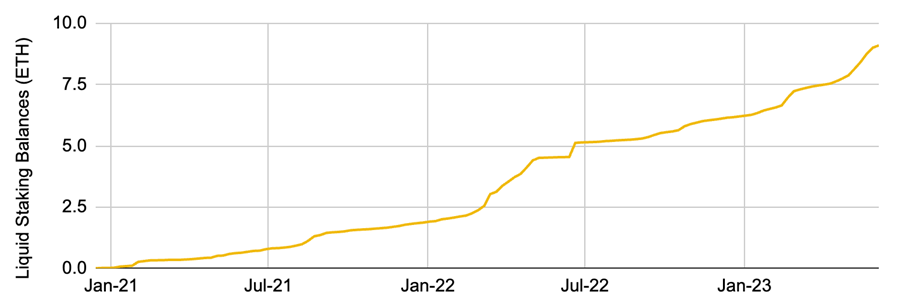
Correspondingly, we have also seen significant growth in Liquid Staking Derivatives (“LSDs”). To recap, LSDs are tokens issued by liquid staking platforms such as stETH, rETH, WBETH, etc. Running a standalone node may not be for everyone given the technical difficulty and significant capital requirements involved. Therefore, the liquid staking protocol allows more users to participate in the staking process, while also preserving the liquidity of the pledged assets. This is achieved by issuing liquid collateral tokens for users of the protocol so that users can participate in the wider cryptocurrency ecosystem.
Figure 2: Liquid staking balances grow alongside the overall staking market
Source: Dune Analytics (@eliasimos)
As of June 14, 2023
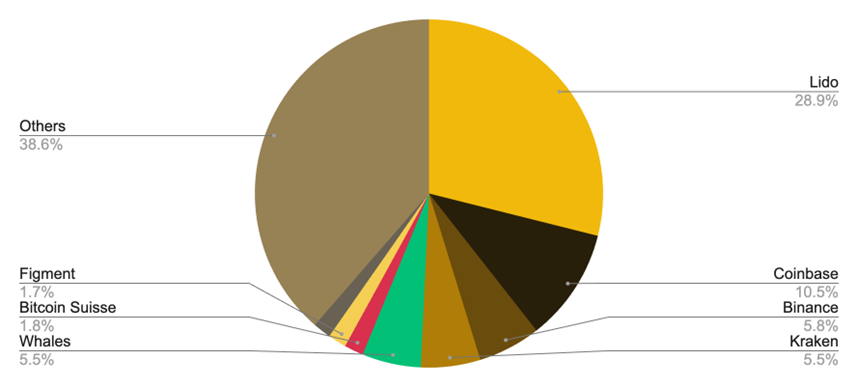
Looking at the overall ETH staking situation today, Lido is the largest player in the market with a 28.9% market share. Next up are centralized exchanges like Coinbase, Binance, and Kraken. There are also smaller liquid staking providers, but their share of staked ETH is much smaller.
Figure 3: Market share of deposit-based ETH staking providers
Source: Etherscan
As of June 14, 2023
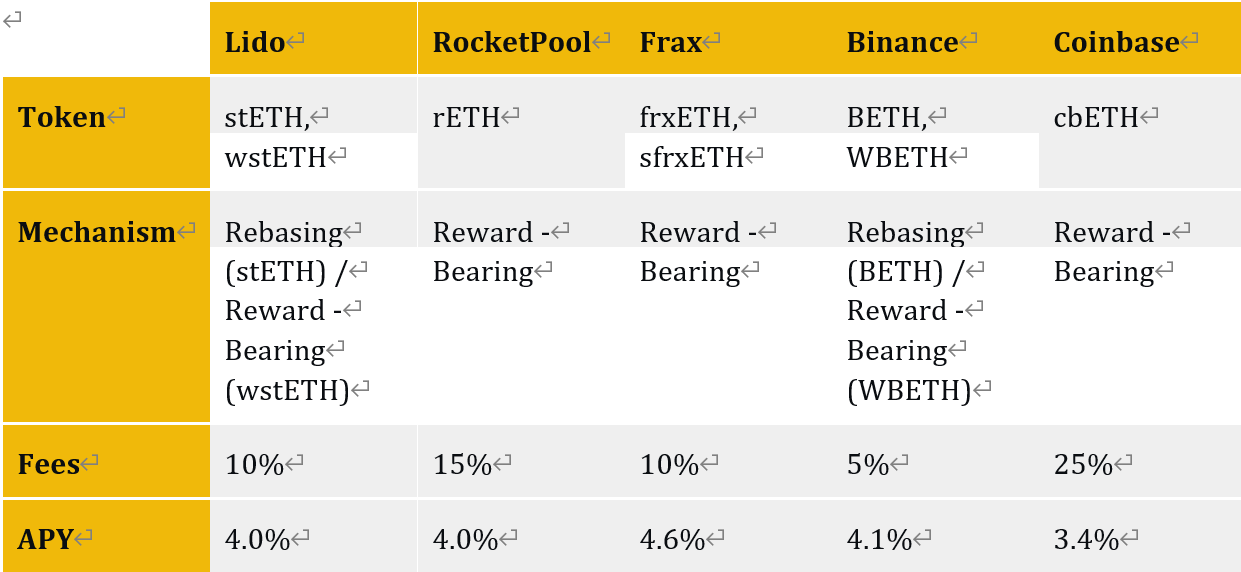
Liquidity staking providers issue their own LSDs, thereby unlocking liquidity and allowing holders to participate in broader opportunities for the cryptocurrency ecosystem. LSDs can be adjusting or return generating tokens. Holders of adjusted tokens like stETH experience balance changes as token supply changes occur as a result of staking rewards or slashing penalties. In contrast, return-generating tokens reflect cumulative earnings through changes in token value rather than balance changes.
Figure 4: Liquid staking providers for the Ethereum ecosystem
Source: Project websites, DeFi Llama
As of June 14, 2023
While this report focuses on the Ethereum liquid staking situation, please note that liquid staking is not limited to the Ethereum ecosystem.
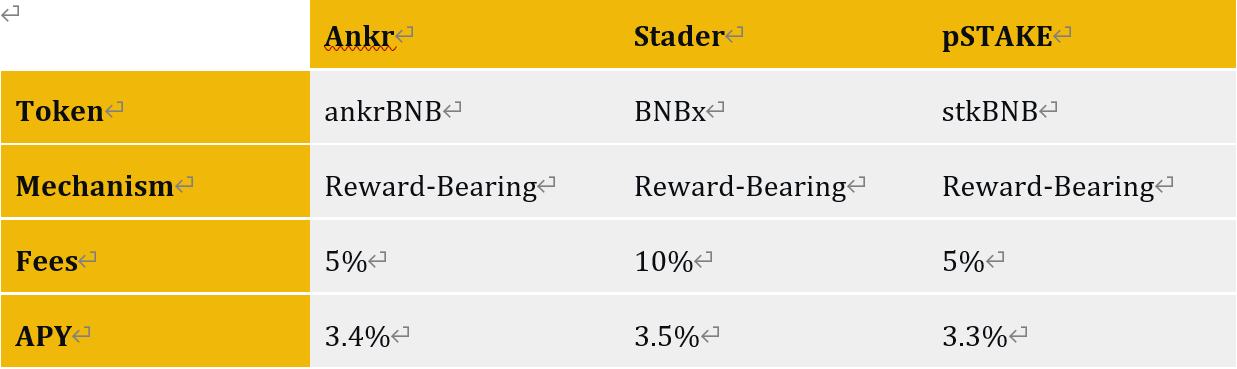
Liquid staking, for example, is a sector of the BNB ecosystem with roughly $150 million in TVL. (1) Similar to the mechanism of ETH liquid staking, stakers of BNB receive liquid staked BNB, which provides instant liquidity that can be used in other aspects of decentralized finance (“DeFi”) to generate additional yield.
Figure 5: Liquid staking providers of the BNB Chain ecosystem
Source: Project website
As of June 14, 2023
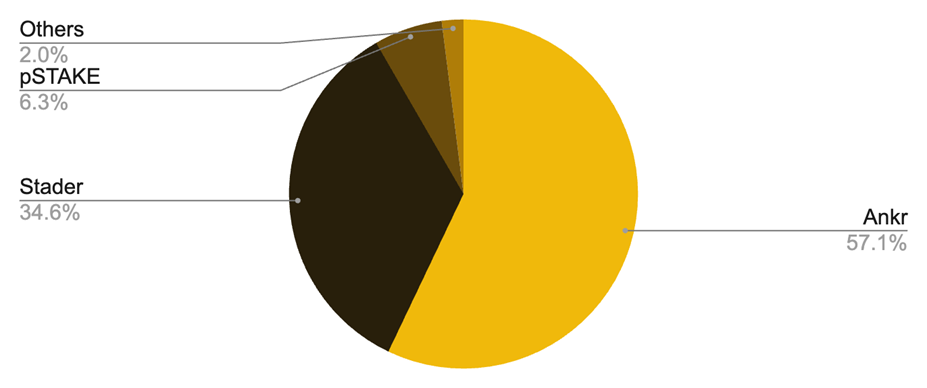
In the BNB Chain ecosystem, Ankr is the largest liquid staking provider with over 214K BNB staked with the protocol. (2) Together with Stader and pSTAKE, these three protocols are the main liquidity staking providers on the BNB Chain. Fees are generally similar across protocols and competition is fierce, but the availability and liquidity of their respective liquid pledged tokens in DeFi’s decentralized applications (“dApps”) vary.
Figure 6: Market Share of BNB Chain Liquidity Staking Provider TVL
Source: DeFi Llama
secondary title
Financialization of LSD
secondary title
Welcome to the world of LSDfi
secondary title
LSDfi Ecosystem
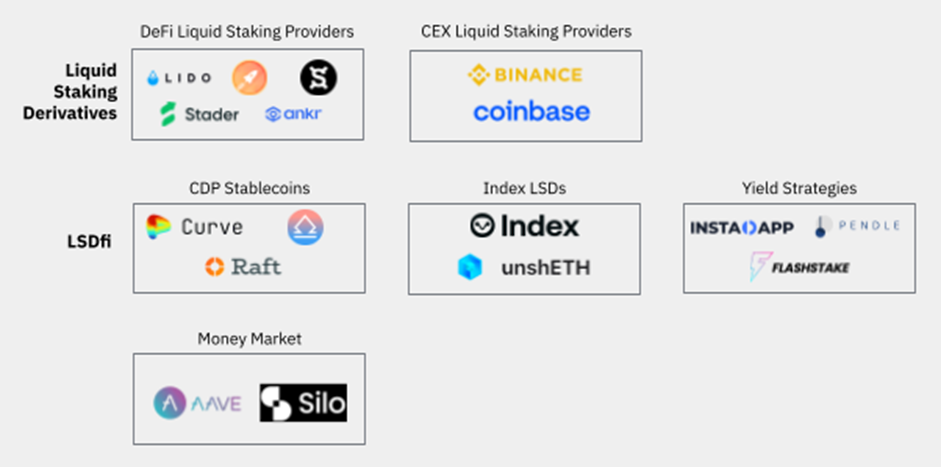
The LSDfi ecosystem includes some established DeFi protocols that already use LSD as part of their diverse product suite, as well as some newer projects that are primarily based on LSD.
For completeness, we also include the major LSD protocols and providers.
Figure 7: Liquid staking and LSDfi map
Source: Binance Research
As of June 14, 2023
◆ DeFi Liquid Staking Provider: A DeFi provider that enables users to participate in staking and earn LSD in return
◆ CEX Liquidity Staking Provider: Centralized Exchange (“CEX”) that provides Liquidity Staking Services
◆ CDP Stablecoin: A debt position (“CDP”) protocol that allows users to generate stablecoins using LSD as collateral
◆ Index LSD: A token representing a basket of LSD shares
◆ Revenue Strategy: Protocols that enable users to obtain additional revenue opportunities
◆ Money Market: A protocol for borrowing and lending activities using LSD
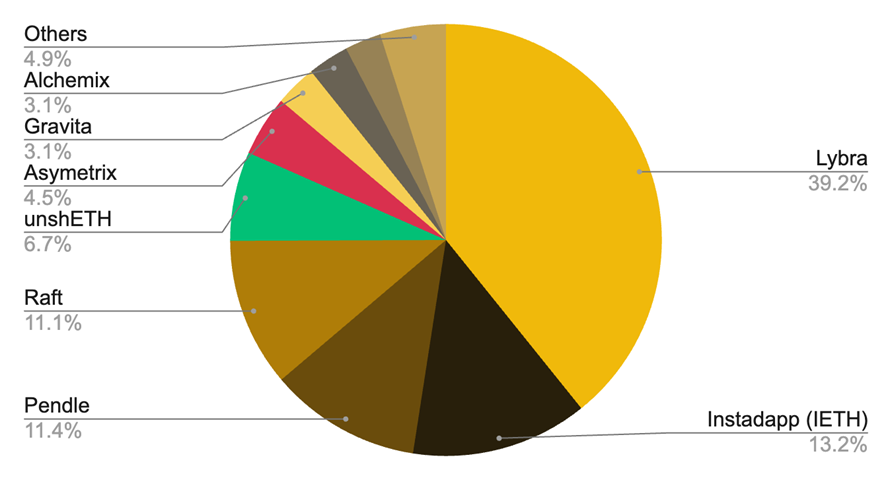
The LSDfi landscape is relatively concentrated, with the top 5 players owning over 81% TVL. Lybra is the market leader, and considering the project only launched its mainnet in April, its rise has been rapid.
Figure 8: TVL market share of LSDfi ecosystem players
Source: Dune Analytics (@defimochi)
secondary title
LSDfi Project Overview
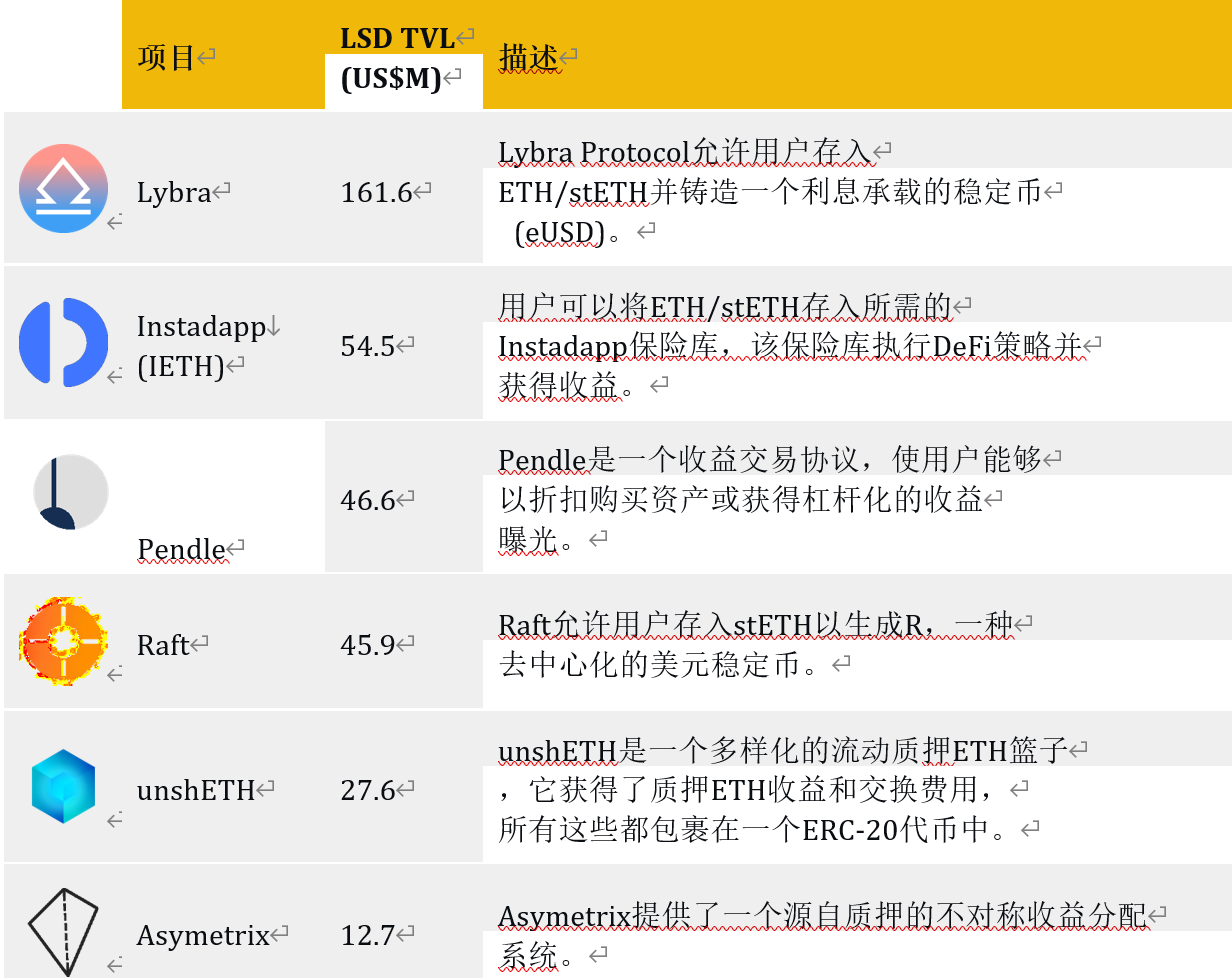
Sources: Project website, Dune Analytics (@defimochi), Binance Research
As of June 14, 2023
secondary title
Growth of LSDfi
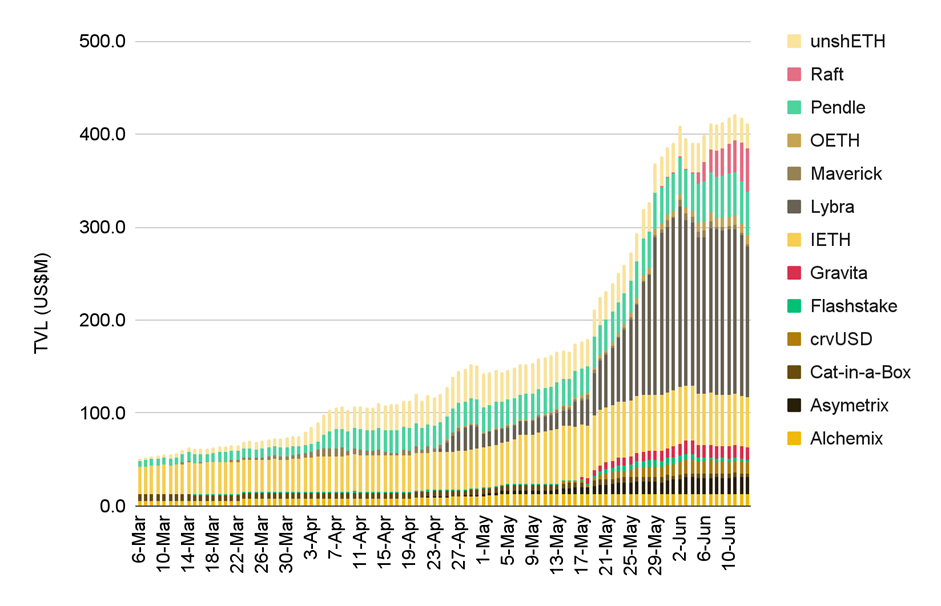
The TVL (Total Value Locked) of the LSDfi protocol has experienced rapid growth in the past few months, benefiting from the adoption of liquidity staking. As this trend intensifies, the cumulative TVL of the top LSDfi protocols has surpassed $400 million, more than doubling a month ago.
Figure 10: The TVL of the LSDfi protocol has shown strong exponential growth since mid-May
Source: Dune Analytics (@defimochi)
As of June 14, 2023
The growth of the LSDfi protocol is due to the structural growth of ETH staked after Shapella. As participation in staking increases, adoption of liquid staking increases accordingly. Naturally, LSD holders also seek the LSDfi protocol to generate additional revenue. Such growth is not surprising considering there are currently over $16.9 billion in LSD on Ethereum and only about $412 million in TVL in the LSDfi protocol (~2% penetration).
image description
Source: Dune Analytics (@eliasimos, @defimochi)
secondary title
Prospects for LSDfi
Driver 1: Staked ETH Growth
Currently, ETH’s staking ratio is 16.1%, which is well below the average of the top 20 PoS chains (58.1%). Going forward, this gap should narrow as post-Shapella makes withdrawals possible, increasing the attractiveness of staking by allowing stakers to exit their holding positions at any time.
If the stake ratio does increase, the influx of staked ETH will be a positive catalyst and structural boost for the LSD and LSDfi protocols.
image description
Source: Staking Rewards, Binance Research
As of June 14, 2023
Referring to the on-chain data, there are already signs of increased demand for ETH staking. From less than 15% before Shapella to over 16% now, and over 4.6 million ETH has been staked since the Shapella upgrade. Also, further evidence of the need for staking comes from the current validation queue of 46 days. Any new validators wishing to join the network and stake their ETH must wait 46 days.
Push 2: Penetration of LSDfi
Although the adoption of the LSDfi protocol (as measured by TVL) has increased, it is still a relatively small industry. The industry is still in its early days, considering most projects were released within the past few months. However, as LSD continues to gain traction, and more holders seek to generate yield, it won't be surprising to see more innovations and project launches to meet the growing demand.
Looking at it another way, the TVL in the LSDfi protocol currently represents less than 3% of the total serviceable market (proxied by LSD market cap). Admittedly, while some LSD holders may have reservations about using the LSDfi protocol, and achieving 100% penetration is practically impossible, low-digit penetration represents significant room for growth.
image description
Source: Dune Analytics (@eliasimos, @defimochi), Binance Research
risk
risk
It is worth noting that LSDfi is a relatively young market, and as with all emerging technologies, one should be aware of the risks involved in interacting with such projects, including the general risks involved in staking liquidity.
Slashing risk: If validators fail to meet certain staking parameters (e.g., go offline), they may face penalties, and holders of LSD may be exposed to these slashing risks.
LSD Price Risk: The price of Liquid Collateral Tokens may fluctuate due to market forces and may differ from the underlying Token. This could expose users to price volatility and potential liquidation risks if used as collateral.
Smart Contract Risk: Every smart contract user interacts with introduces new layers of smart contract vulnerabilities.
Third Party Risk: Certain projects may use other dApps as part of their normal operations (e.g., yield strategies). In this case, users are exposed to additional counterparty risk.
concluding thoughts
concluding thoughts
The LSDfi protocol opens up new opportunities for yield-seeking LSD holders. By providing additional use cases for liquidity staking tokens, LSDfi incentivizes staking participation and potentially accelerates the growth of liquidity staking. Given the early stages of development of this industry, it will be interesting to observe further innovations in this space and the adoption of LSDfi.
References
References
1. https://defillama.com/protocols/liquid% 20 staking/BSC
2. https://www.ankr.com/staking-crypto/binance-bnb/
3. https://dune.com/hildobby/eth 2-staking
4. https://wenmerge.com/


