






After the Shapella upgrade: Yields, competition, and the long-term impact of LSD-Fi


Author: Lawrence Lee
Author: Lawrence Lee
On April 13, 2023, the upgrade of Ethereum's Shapella (Shanghai at the execution layer and Capella at the consensus layer) was officially launched. This upgrade mainly supports the retrieval function of pledged ETH. At this point, the PoS process of ETH can finally be counted as "completed". In this article, we will discuss possible future changes in the rate of return of ETH Staking, discuss the competitive situation of the Staking segment, and the potential impact of LSDfi on the ETH Staking ecology.
ETH Staking Past and Present
Before we start, we still need to briefly review the Staking of ETH. Unlike the vast majority of PoS public chains that are currently online, Ethereum’s PoS does not support chain-native proxy delegation, and also limits the maximum pledge size of a single node (profitable) to 32 ETH. The benefits of this pledge method are obvious. It can minimize the possibility of a single entity controlling the Ethereum consensus directly by controlling a large node, and keep the Ethereum network as decentralized as possible. However, since the operation complexity of node operation is quite high for ordinary users, in addition to the solo staking that users pledge themselves, in practice, three other types of staking methods have gradually emerged: staking pools, liquid staking and cex staking , the characteristics of these four pledge methods are as follows:
Solo staking is a way for staking users to handle all staking processes and subsequent maintenance by themselves. Its main disadvantages are high requirements for equipment, funds, knowledge, and network
Staking pools, to a certain extent, exempt staking users from the need for network and hardware. Pledge users only need to pay a certain fee, and they can ask a professional pledge service provider to pledge the 32 ETH provided by them to obtain income. At the same time, this method can also ensure that the withdrawal private key is still controlled by the pledger himself, and the control over the funds is also relatively high. However, there are still high requirements for the funds and knowledge of the pledgers. In some classifications, this pledge method is also called Staking as a service.
Liquid staking goes a step further on the basis of staas outsourcing the specific operation of nodes to professional node operators. The pledge pool uniformly collects the user's ETH for pledge operations, so that users can pledge with any amount, and the pledge pool will issue to users A pledged derivative LSD (Liquid Staking Derivatives/ Tokens, we will replace it with LSD below). LSD has already had a wealth of use cases in DeFi, which we will introduce in detail later. Of course, in the liquid staking model, essentially all pledged funds belong to the contract of the pledge pool. For pledge users, they need to trust the pledge pool. In some classifications, this type of staking is also known as Pooled staking.
image description
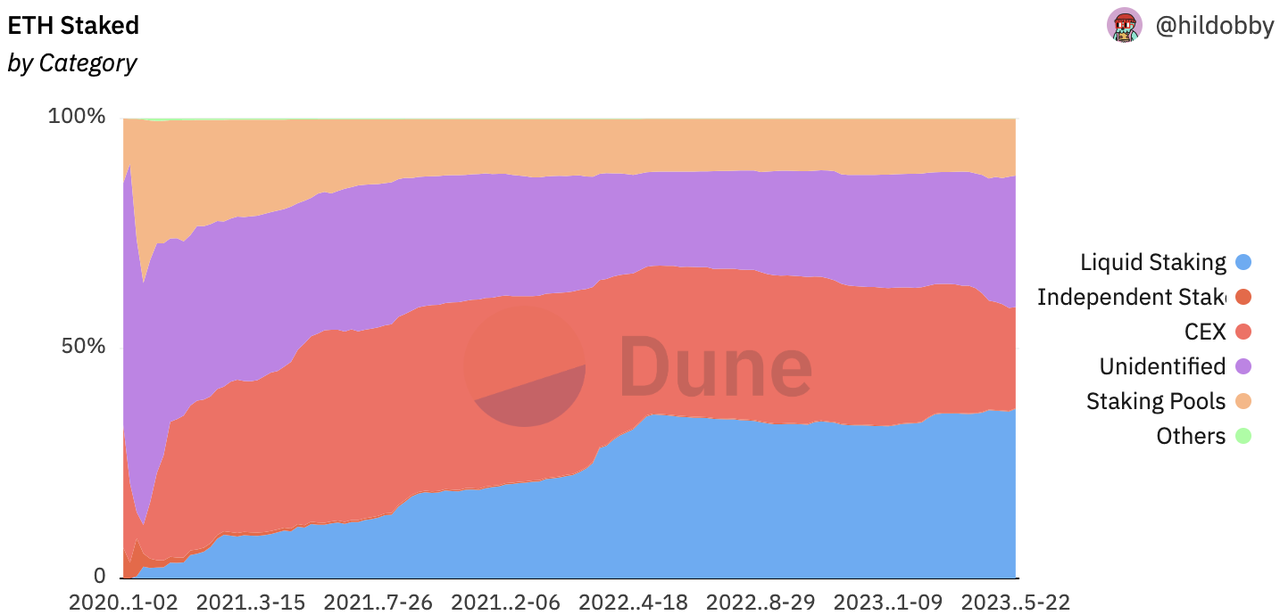
source:https://dune.com/hildobby/eth 2-stakingsource:(Note: Due to the complexity of statistics, it is difficult to count the proportion of solo staking. In most statistics of pledge classification, there will be a category of "unidentified" (Unidentified in the above figure), and according to the recentRated Analysis
, currently 6.5% of the total stake is provided by solo stakers)
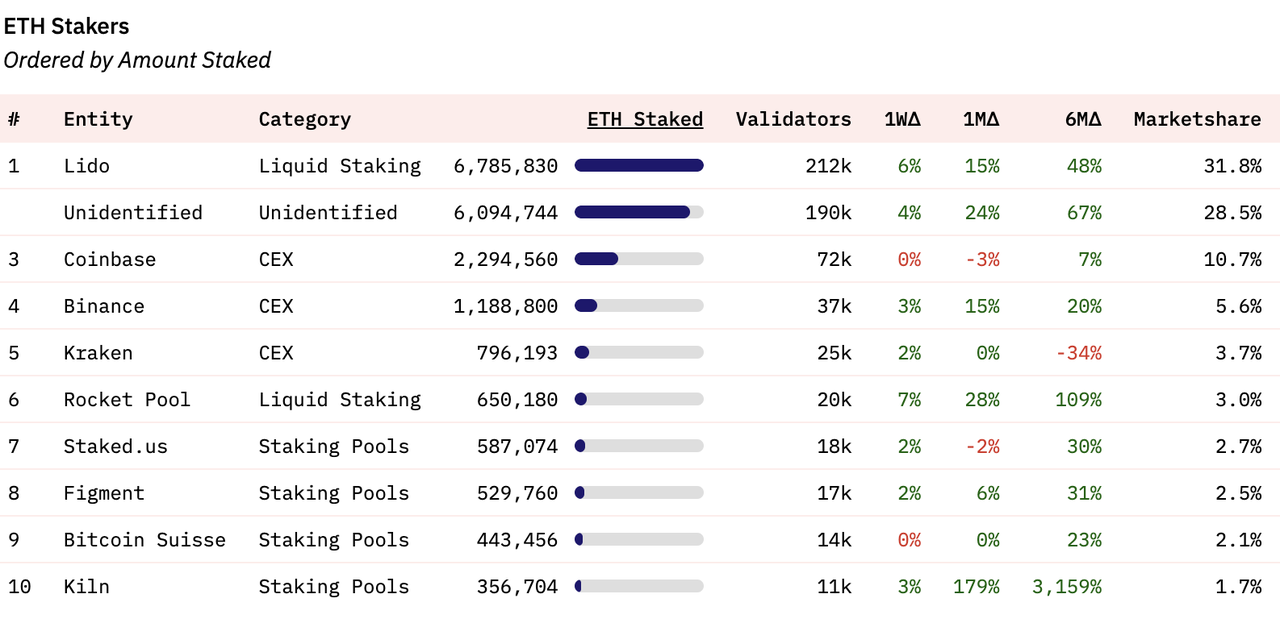
From the above figure, we can clearly see that, except for the two months when the beacon chain was just launched, until April 2022, because Cex naturally has a lot of user-hosted ETH, as a natural interest-generating channel, CEX Staking quickly became the leader in staking, and this situation is not what the Ethereum Foundation and community members want to see. With the investment of institutions such as Paradigm in Lido, and the good liquidity and composability gradually built by stETH, Lido developed rapidly, and subsequently led to the development of the entire liquid staking type. Up to now, liquid staking has been taking the lead in the track.
image description
source:https://dune.com/hildobby/eth 2-staking
source:
image description
sourcehttps://ethereum.org/en/staking/
source
image description
sourcehttps://transparency.flashbots.net/
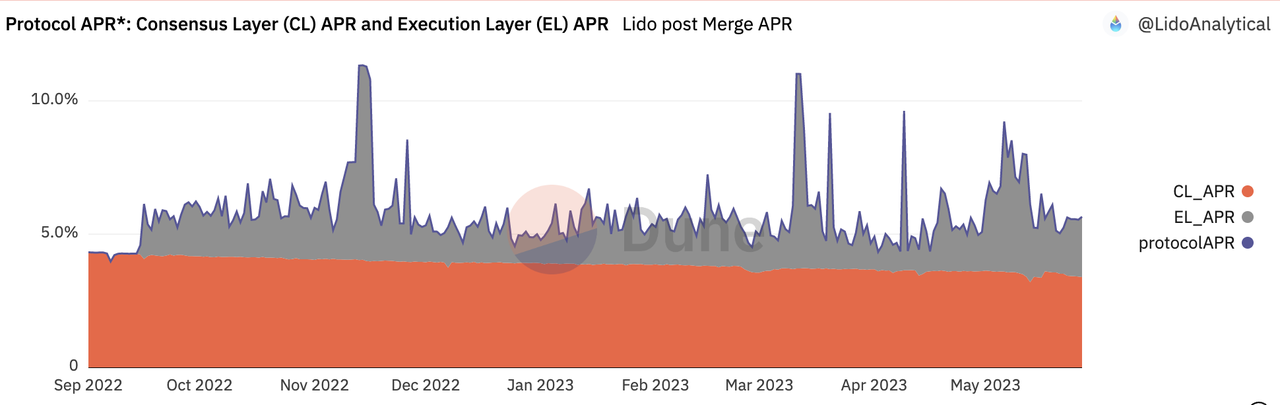
source:https://dune.com/LidoAnalytical/lido-execution-layer-rewardssource:
Among them, CL_APR represents the revenue of the consensus layer; EL_APR represents the revenue of the execution layer
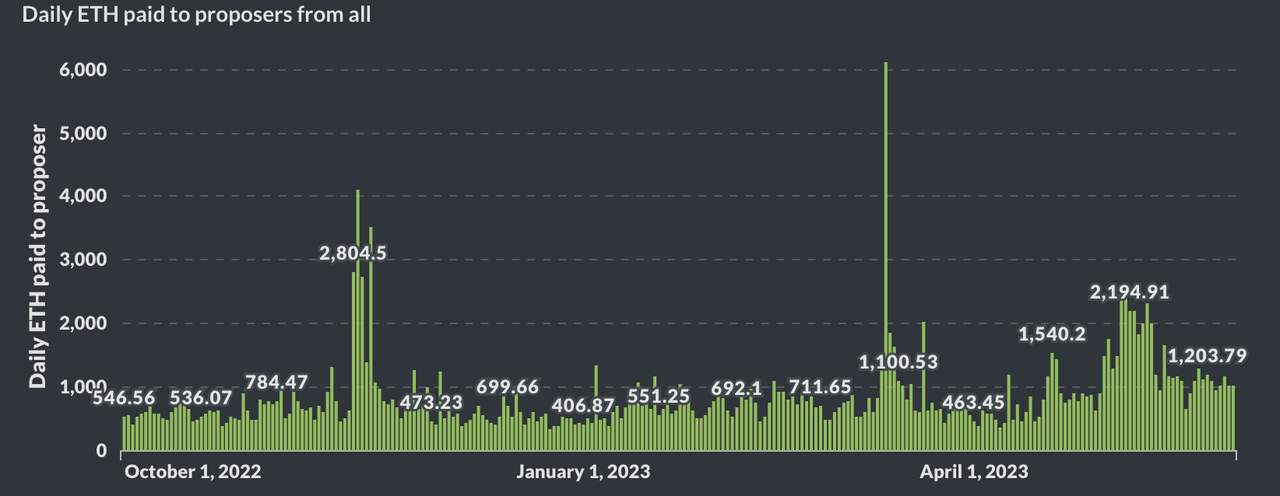
Flashbots counts the total income of proposers (validators) since Merge. Lido has also counted Lido's consensus layer income and execution layer income APR since Merge. The two trends are consistent. Lido also counts the comparison of consensus layer and execution layer income. We use Lido's chart for detailed analysis.We can see that after the Merge, the APR of the consensus layer is slowly decreasing with the increase of the total amount of pledges, while the APR of the execution layer has a relatively large change, with an average of about 1.5%, so that the pledge income can reach 5%. And when there are frequent activities on the chain (such as the meme season in May), the APR from the execution layer will even exceed the APR of the consensus layer, making the rate of return of staking Ethereum close to 10%. Staking returns serve as the "risk-free rate of return" for the Ethereum network (seeMint Clips|How to define the native benchmark interest rate in the encrypted world?
image description
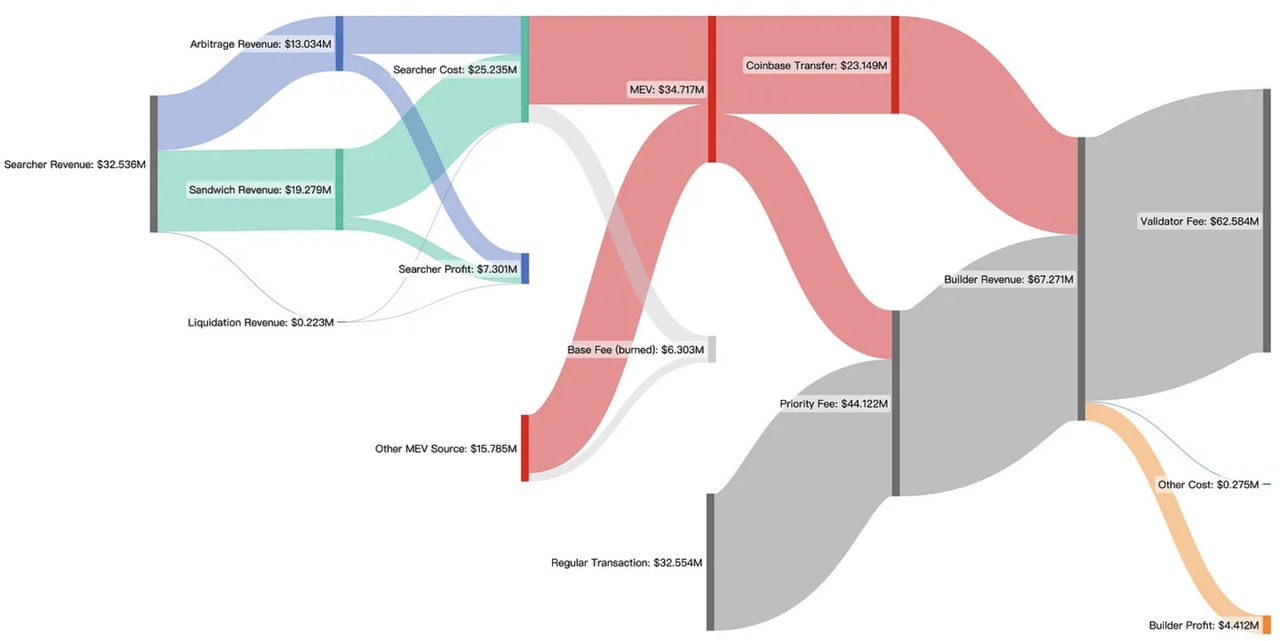
source:https://eigenphi.substack.com/p/value-allocation-in-mev-supply-chain
source:
We next explore the future trend of priority fee and MEV.
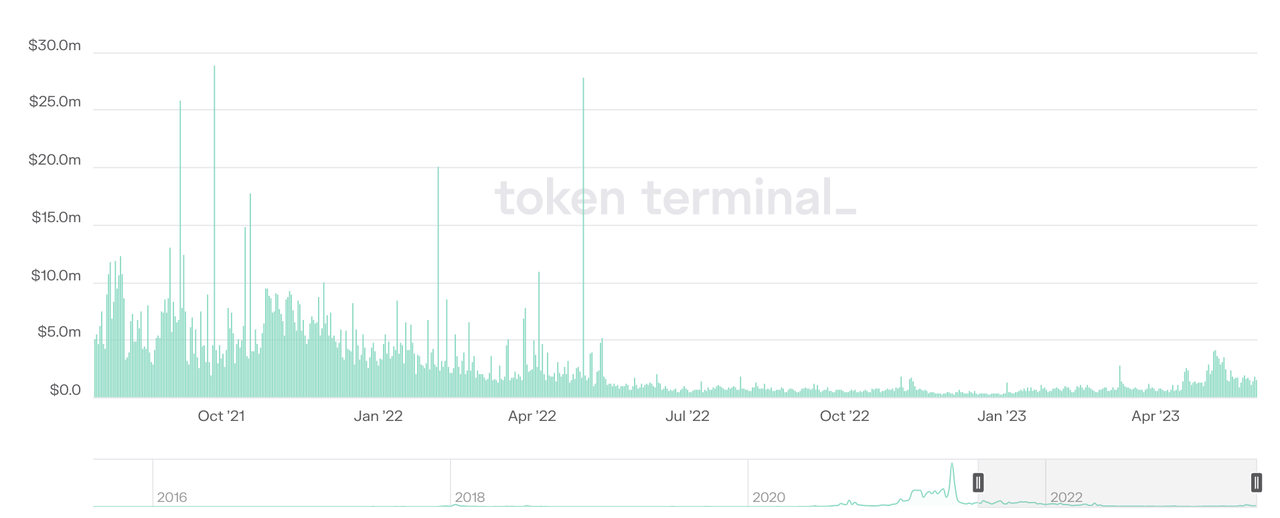
image descriptionhttps://tokenterminal.com/terminal/projects/ethereum
Sources of priority fees for the Ethereum network:
In terms of priority fees, since the launch of EIP-1559, the current market has undergone a wave of bull-bear conversions. We can see that priority fees are closely related to market popularity. During the 21-year bull market, the average daily priority fee It can be close to 10 million US dollars. During the 22-year bear market, the average daily priority fee was around 800,000 US dollars. In the Meme Season in May this year, the average daily priority fee could reach about 3 million US dollars. In the future, the priority fee will still change with market fluctuations, and this part of the income is based on ETH, and will continue to fluctuate with the market in the future.PBSIn terms of MEV, it is more complicated. In addition to MEV that cannot be fully analyzed from the chain, its composition mainly includes arbitrage, sandwich attacks, and liquidation. We have not found the latest trend data on MEV after Merge. However, the Ethereum Foundation has long held a relatively negative attitude towards MEV. They proposed a year agoMEV burn(Proposer-builder separation, proposer-builder separation) plan, one of the purposes is to eliminate the impact of MEV on the income of small pledgers. Recently, Justin Drake, a researcher at the Ethereum Foundation, proposed a
It is planned to destroy all MEV in the next 3-5 years, as another force of Ethereum deflation. Although this plan is still in the planning stage and involves many interest trade-offs, judging from the successful transformation of Ethereum from PoW to PoS, they have "persuaded" key stakeholders in the ecosystem to abandon their interests and realize the Ethereum route. ability to map.
Therefore, MEV, which accounts for about 20% of the current total staking income, will likely shrink or even disappear in the medium and long term because it does not conform to the value orientation of the Ethereum Foundation.
Another notable marginal factor is L2. Driven by the Ethereum roadmap centered on Rollup, more and more transactions will be transferred from Ethereum L1 to L2, which will inevitably reduce the MEV and priority fees on the Ethereum mainnet, while the current L2 The MEV/priority fee is handled by L2 itself, and has nothing to do with the stakers of the Ethereum mainnet. Especially after the Cancun upgrade further reduces the cost of ETH L2, it may drive the further vigorous development of L2, and the overall service fee + MEV that L1 can obtain may also be further reduced.
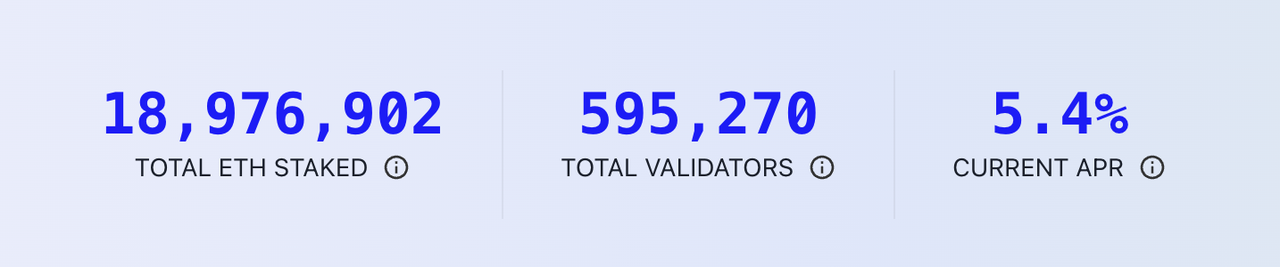
To sum up, in terms of the composition of ETH staking income, considering the impact of MEV burn and L2, when the proportion of ETH staking reaches 30%, the income of ETH staking will likely be reduced to 3% (including 2.4% of the consensus layer yield and 0.6% executive level yield). This rate of return will have a significant impact on users' enthusiasm for staking.
The Liquid Staking method will still be the mainstream of staking, and its concentration may be further improved
The Shapella upgrade activates the withdrawal function of ETH, which makes the ETH pledged by Solo staking and Staking pool also obtain liquidity. The core factor of the rapid development of Liquid staking in 21-22 is that the liquid staking protocol can provide liquidity to LSD, thus realizing the withdrawal of pledge in disguise. Therefore, the Shapella upgrade significantly reduces the advantages of liquid staking. Although solo staking still has a considerable operating threshold, the number of tools serving solo stakers is increasing day by day, so the threshold for solo staking will gradually decrease, and solo staking also maintains the decentralization of the Ethereum network. Strong support from Fang Foundation.
Why do we still think that liquid staking will maintain its dominant position in the staking track, and even the concentration may be further improved?
image description
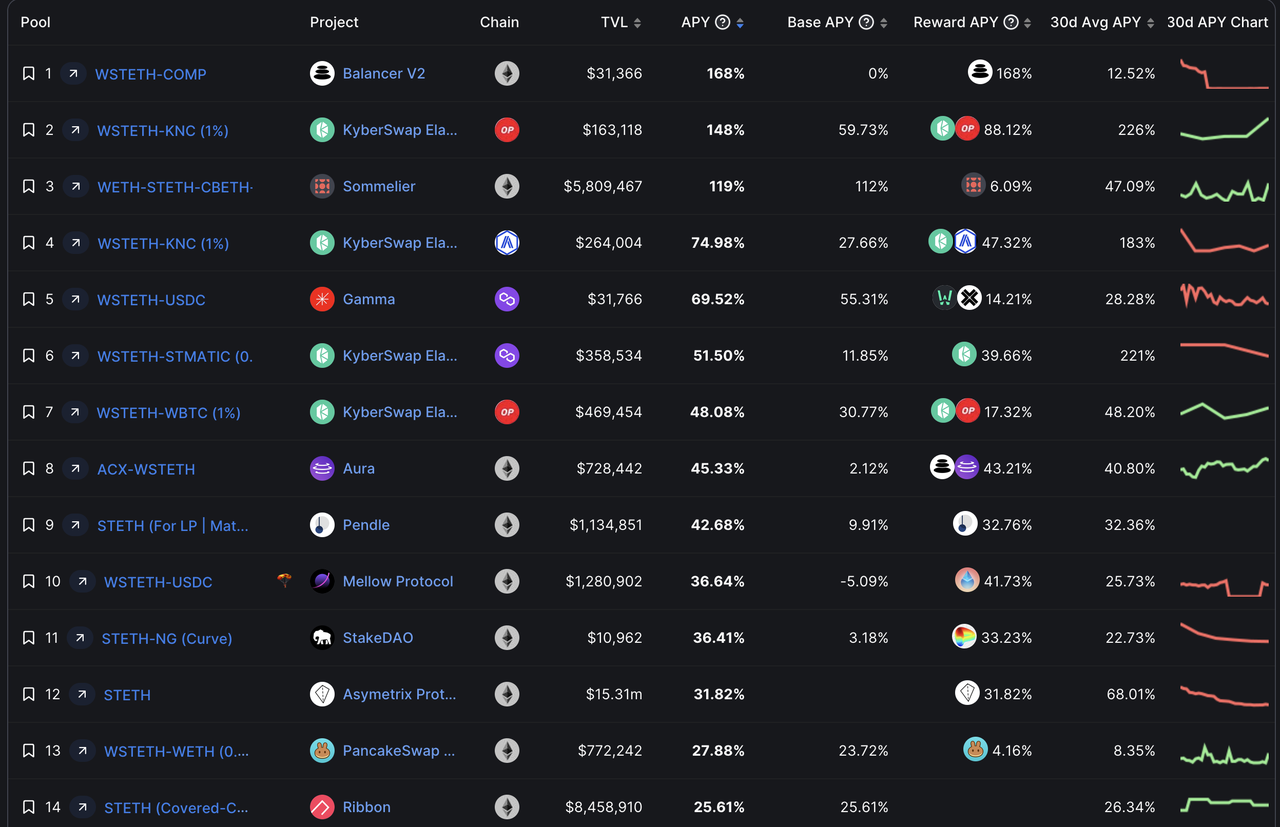
source:https://defillama.com/yields? token=STETH
source:
We can see that at present, stETH LP can easily obtain more than 50% APR. Considering the capital occupation of matching assets, the total APR can also exceed 25%. (Option agreement) can also obtain an APR of more than 25% (although it may face some risks), and when superimposed on the 5.6% APR of stETH itself, the total income of the user's pledge through lido will reach 30%.
In addition to high returns, stETH is also widely integrated in DeFi blue-chip protocols: Maker, Aave, and Compound all support stETH (wstETH) as collateral, which is not far behind ETH in terms of mortgage parameters. Curve's stETH-ETH There is still more than $1.1 billion in liquidity, which makes it easier to obtain liquidity by holding stETH, whether it is direct swap or mortgage lending.
These advantages are not available in solo staking and staking through staking pools. In particular, if the ETH staking rate of return is reduced to only 3% as we mentioned above, considering the equipment, knowledge, time and energy that solo stakers and pool staking have devoted to 3% rate of return, people will very likely Choose the simpler and more profitable option.
Ethereum community users are willing to maintain the decentralization of Ethereum, but they also need to consider the opportunity cost. "It's important and cool to maintain the decentralization of Ethereum, but I still want to choose 30%".
image description
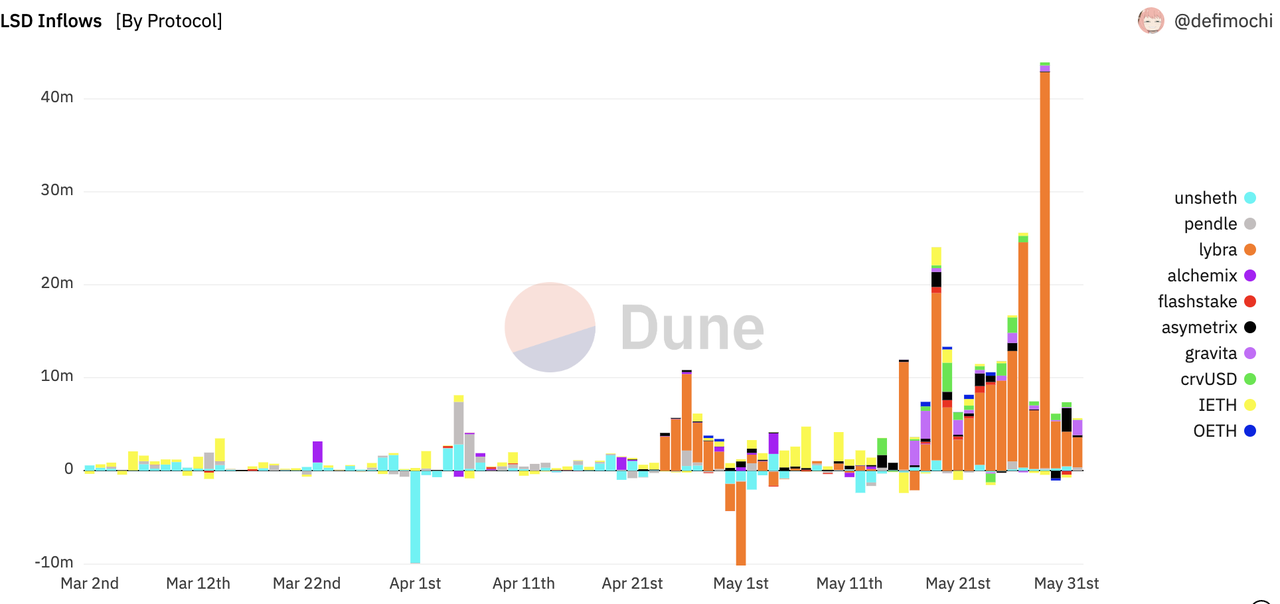
source:https://dune.com/defimochi/lsdfi-summer
source:
We do not discuss the advantages and disadvantages of specific LSDfi projects in this article, because in my opinion, LSDfi does not create a certain business category, but only allows LSD to be used as a collateral for many businesses. Essentially, the business done by these agreements is still Stablecoins, still yield aggregation, still Dex, still interest rate services. Whether their business can be successfully launched still depends on their understanding of the stable currency, income aggregation, Dex, and interest rate service markets. Among the LSDfi projects that have actually launched products, we have not yet seen a project that can get rid of Fork and pure Yield farming games. Of course, there are still more high-quality LSDfi projects that have not been launched yet, and we also look forward to more innovations based on LSD in the future.
image description
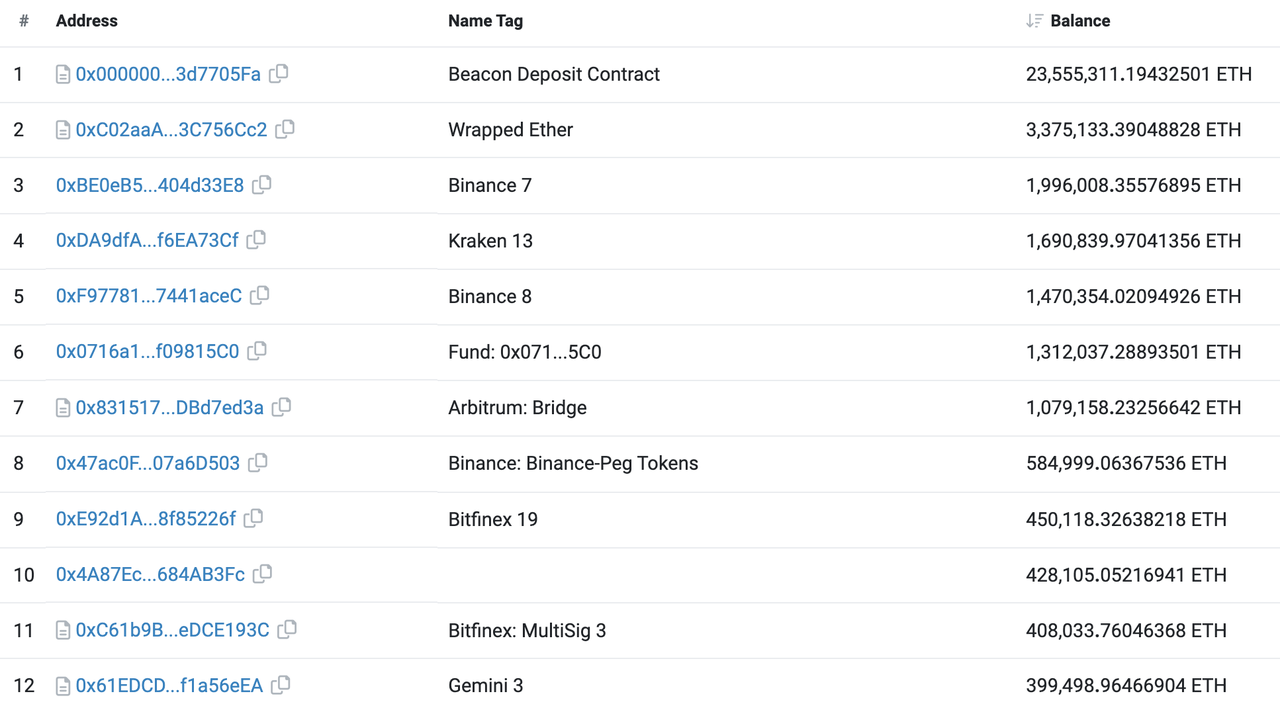
source:https://etherscan.io/accounts
source:
Based on this wave of LSDfi upsurge, more and more LSD projects will be initially launched. They all have brand-new tokens, which means they have a brand-new market budget. What happened on unshETH, Agility, and Lybra may take turns in LSDfi in the next 3-6 months. LSD will continue to have an APR that far exceeds the income of ETH on the chain, and it may form LSD and LSDfi A self-reinforcing flywheel effect: the more LSDfi there are, the higher the income provided, the more motivated ETH holders are to convert their ETH to LSD; more and more LSD will incentivize DeFi protocols to target these users, Attract these users by providing high returns to get through the protocol's cold start phase.
In the end, it is possible that all DeFi protocols can be called LSDfi in a broad sense, because they all support LSDfi more or less (in fact, except for a few stablecoin protocols, most of the DeFi protocols have already cooperated with LSD. association). Apparently, LSD can capture the beta of LSDfi. The popularity of LSDfi will further promote the proportion of liquid staking in the overall staking track.
Attitude of the Ethereum Foundation
On issues related to staking, the attitude of the Ethereum Foundation is as follows:1. Don’t want too much ETH to enter into staking. On the one hand, too much ETH into staking will increase the release of ETH rewards in the consensus layer, which is contrary to the concept of “minimum feasible issuance” of Ethereum. It will reduce the economic bandwidth of Ethereum (economic bandwidth,An idea proposed by Bankless
, refers to the liquid market value of Layer 1, which is the basis for supporting the operation of all Dapps on it).
2. Negative view on MEV. For every Ethereum pledger, MEV is a huge reward that may fall from the sky at any time and has a very low probability. Without intervention, it is easy to be forced to centralize (such as BTC and ETH in the PoW mining pool), so that in the Ethereum Establishing new alliances (such as the current MEV-boost) on top of the consensus of Fangfang, resulting in unnecessary and not necessarily secure complexity at the consensus layer. In the medium and long term, the Ethereum Foundation will promote the destruction of MEV, changing MEV from the privilege of a few validators to a common reward for all ETH holders.
image description
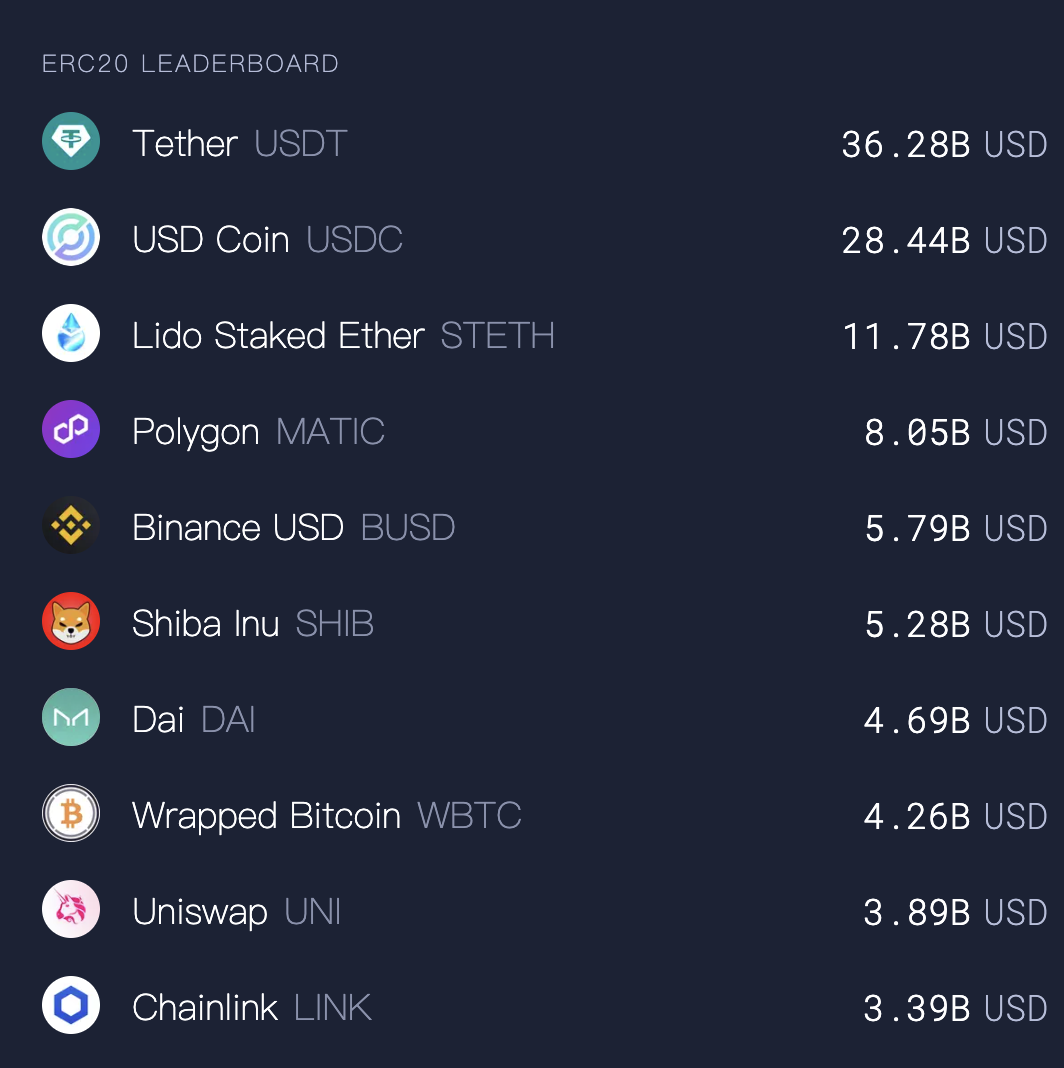
sourcehttps://ultrasound.money/
source
stETH is currently the largest non-native non-stablecoin asset on the Ethereum network. USDT and USDC, which rank higher than stETH, have a wide range of use cases, but they are essentially maintained by the credit of Tether and Circle. If there is a problem with them, it may indeed have a great impact on Ethereum, but Does not consume Ethereum credits.
But what is special about stETH is that it has been integrated by almost all DeFi protocols as a collateral similar to ETH. Let’s do a thought experiment. If Lido Finance’s contract is attacked, all Lido’s withdrawal private keys on the beacon chain will be controlled by hackers. So will Ethereum need a hard fork like the DAO event?
No one wants to see this, so we can understand why the Ethereum Foundation needs to work hard to support solo staking, why the Ethereum community discusses whether to limit the scale of Lido, and it is not difficult to understand why Lido regards decentralization as a My next main task. But the problem is that the emergence of a large liquid staking service provider is not intentional by some evil centralized organization, but the natural result of market games. Even if the Ethereum Foundation/core community can control the scale of Lido in some form, Mido or Nido will appear and become the Schelling point of the pledge.
There are two worlds before us:
From the current point of view, the probability of the latter appearing is much higher.
From the current point of view, the probability of the latter appearing is much higher.
References:
https://eigenphi.substack.com/p/value-allocation-in-mev-supply-chain


