






A comprehensive analysis of the differences in digital currency regulatory policies between Singapore and Hong Kong


Original author: Li Ke, PANews
2022 is an extraordinary year in the history of digital currency development. In May this year, Luna, the largest algorithmic stablecoin, was decoupled and thundered, triggering a series of chain reactions. Three Arrows Capital thundered, and lending platforms Voyage and Celsius were liquidated . Waves of ups and downs followed. In early November, FTX, a leading exchange, collapsed rapidly in insolvency. The valuation of tens of billions of dollars was quickly wiped out. Zero, BlockFi declared bankruptcy, Genesis was on the verge of bankruptcy, and the thunderstorm of FTX made the digital currency industry that was already decimated even worse.
It’s a blessing in disguise, and a series of hacking incidents and thunderstorm incidents have given birth to the arrival of strong supervision. For centralized institutions, the necessity of supervision is further highlighted, and only with appropriate regulatory policies can the industry develop soundly. In order to explore the status quo of digital currency regulatory policies, PANews conducted an in-depth analysis of the regulatory policies of Singapore and Hong Kong, the two major digital currency centers, trying to understand their regulatory status and future trends for digital currencies.
Hong Kong Digital Currency Regulation
security token
Security Token Offering (STO for short) refers to the issuance of Token tokens with traditional security attributes. Security attributes indicate that tokens have certain assets or economic rights (such as equity and income dividend rights). In March 2019, the Hong Kong Securities Regulatory Commission issued the "Statement on the Issuance of Security Tokens" stipulating that security tokens fall under the "Securities and Futures Ordinance""securities", and thus subject to Hong Kong securities laws, the promotion and distribution of security tokens (whether in Hong Kong or to Hong Kong investors) must be regulated under the Securities and Futures Ordinance for Type 1 regulated activities (securities trading ) were issued to take pictures or register. Anyone who engages in the above activities without being licensed will be subject to penalties and fines unless exempted.
virtual asset token
On June 24, 2022, the Hong Kong government gazetted the "Anti-Money Laundering and Terrorist Financing (Amendment) Bill 2022" (hereinafter referred to as the "Amendment Bill"), which has now passed its second reading and will be considered by the Hong Kong Legislative Council , which is expected to come into force on March 1, 2023.
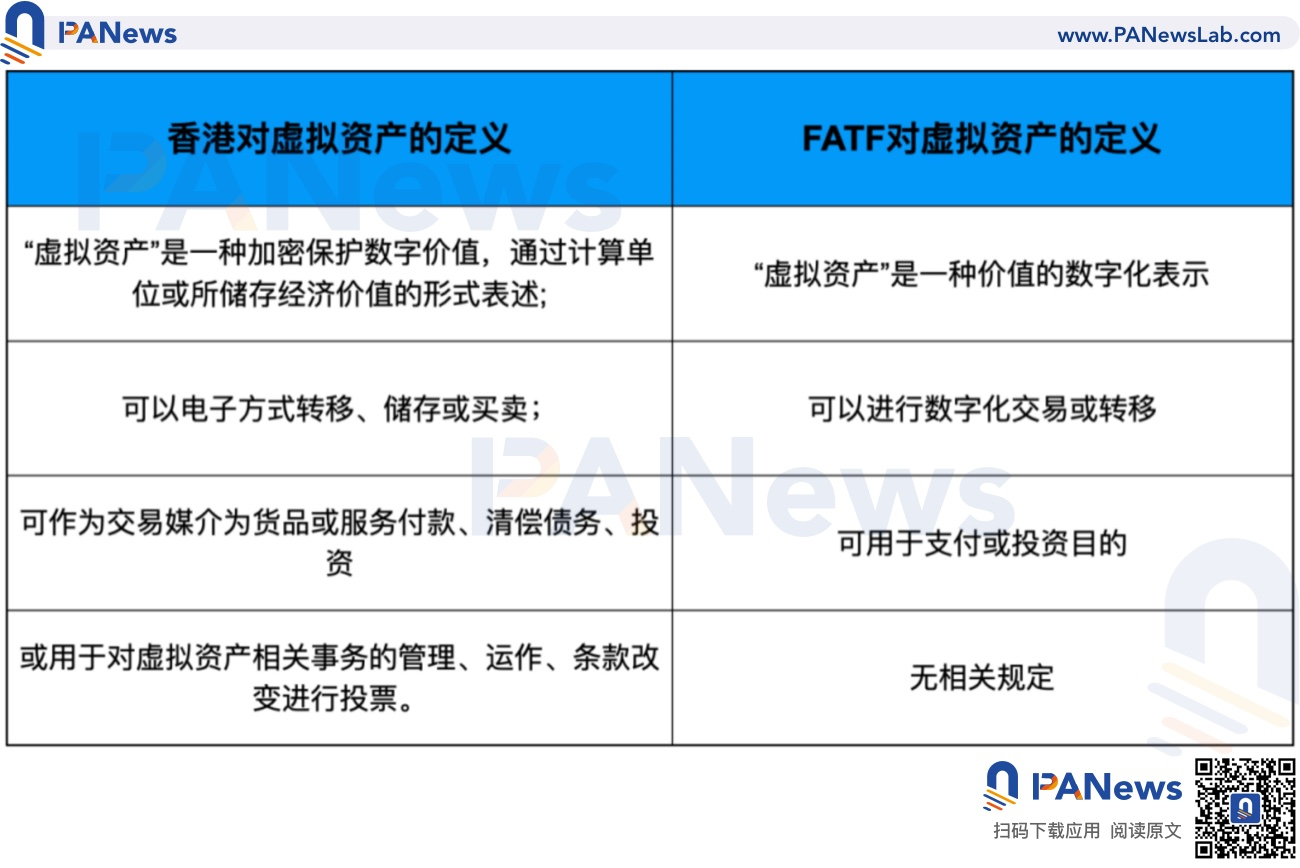
The "Draft Amendment to Regulations" defines virtual assets, stipulating that (1) a virtual asset is an encryption-protected digital value expressed in the form of a unit of calculation or stored economic value; (2) it can be used as a medium of exchange for goods or Payment for services, liquidation of debts, investment; or for voting on the management, operation, and changes in terms of virtual asset-related matters. (3) can be transferred, stored or bought and sold electronically; (4) the Securities Regulatory Commission or the Treasurer can expand the scope of "virtual assets" by publication in the Gazette.
Hong Kong's definition of virtual assets is based on the standards set by the International Anti-Money Laundering Financial Action Task Force (FATF). FATF is one of the most influential and authoritative international organizations in the field of international anti-money laundering and anti-terrorist financing, and its member countries are located in major financial centers on all continents. The "Forty Recommendations on Anti-Money Laundering" and "Nine Special Recommendations on Anti-Terrorist Financing" formulated by FATF are the most authoritative documents on anti-money laundering and anti-terrorist financing in the world. The virtual asset risk guidance document formulated by FATF in 2021 has a clear definition of virtual assets: "virtual asset" is a digital representation of value (a digital representation of vale), which can be digitally traded or transferred (can be digitally traded or transferred) ), and can be used for payment or investment purposes.
exchange
exchange
Prior to this, Hong Kong regulators applied the original "Securities and Futures Ordinance" to supervise digital currency exchanges based on the principle of "same business, same risk, and same rules". The book Supervising Virtual Asset Trading Platforms puts forward a voluntary application licensing system, and virtual asset exchanges can "selectively" apply for licenses.
The CSRC stated in Article 4 of Part 1 of the Position Paper that it has no power to license or regulate platforms that only buy and sell non-securities virtual assets or tokens. Since such virtual assets do not belong to "securities" or "futures contracts" under the Securities and Futures Ordinance. This shows that under the current regulatory framework, only platforms that provide customers with security token transactions are within the scope of the CSRC’s supervision. In this context, OLS and Hashkey, the Hong Kong digital currency exchange, have obtained Type 1 (Securities Trading) and Type 7 (Automated Trading Services) licenses under the Securities and Futures Ordinance through application, and Huobi Technology has obtained Type 4 licenses. (Advising on Securities) license and Type 9 (asset management) license.
stable currency
stable currency
In May 2021, the Financial Services and the Treasury Bureau of Hong Kong published the conclusion of the public consultation on "Legislative Proposals for Hong Kong to Strengthen Anti-Money Laundering and Terrorist Financing Regulations" mentioned that the International Anti-Money Laundering Financial Action Task Force (FATF) The definition standard formulated by virtual assets: "can be traded or transferred; can be used for payment or investment" is applicable to all forms of virtual assets, regardless of whether they are stable or not, so stablecoins will also be regulated as virtual assets by this regulation, because Stablecoins can be traded or transferred, and can also be used for payments.
The consultation results of the "Discussion Paper on Encrypted Assets and Stablecoins" issued by the Hong Kong Monetary Authority ("HKMA") in January 2022 will be released soon, and it is believed that further regulatory policies on stablecoins will be introduced. The above-mentioned discussion paper on stablecoins discusses the current regulatory framework for stablecoins in Hong Kong, and seeks public and industry opinions on whether stablecoins are stored value instruments and how stablecoins should be regulated. The Hong Kong Monetary Authority stated that it will be possible to learn from Hong Kong's current "Payment System and Stored Value Instruments Ordinance" to supervise the issuance of stablecoins and implement a licensing system for stored value instruments.
Through the Luna stablecoin decoupling incident in May, we saw that Hong Kong’s regulatory considerations for stablecoins are relatively advanced. In January this year, a discussion paper on stablecoins was released and 7 types of related risks were mentioned: financial stability risks , currency stability risk, calculation risk, user protection risk, financial and cybercrime risk, international compliance and regulatory arbitrage risk, and conducted a series of regulatory demonstrations and public consultations.
About ETFs
On the same day that the Hong Kong government announced the "Virtual Asset Development Policy Declaration", the Hong Kong Securities Regulatory Commission issued a circular stating that it will authorize the public offering of virtual asset futures exchange-traded funds in Hong Kong for the first time in accordance with Sections 104 and 105 of the Securities and Futures Ordinance ETFs. The Hong Kong Securities Regulatory Commission only allows the issuance of index funds for virtual asset futures traded on traditional regulated futures exchanges. Initially, it will only approve Bitcoin futures and Ethereum futures index funds traded on the Chicago Mercantile Exchange. Later, it will consider expanding as appropriate category. The circular shows that ETFs need to meet trust and fund management requirements, and ETF issuers need to show at least three years of track record and regulatory compliance records. The issuer will need to demonstrate that the ETF has sufficient liquidity and that the net derivatives exposure cannot exceed 100% of the ETF's total net asset value. Issuers also need to conduct the necessary investor education before launching an ETF.
About NFTs
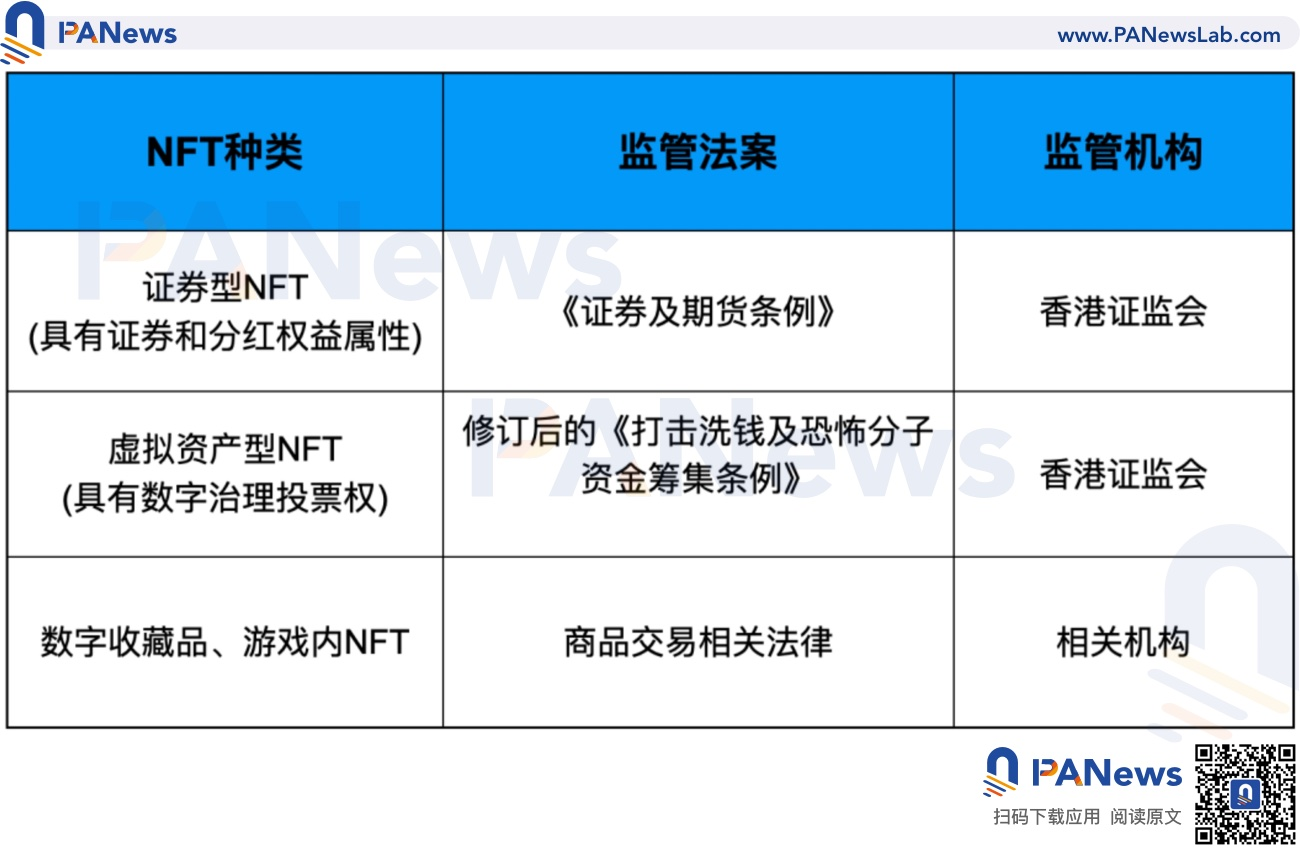
Hong Kong's "Anti-Money Laundering and Terrorist Financing (Amendment) Bill 2022" stipulates that NFTs used in games are not virtual assets. When the Hong Kong Securities Regulatory Commission issued a reminder to investors on NFT risks on June 6, 2022, it stated that if an NFT is a collectible in digital form (such as electronic images, artworks, music or videos), related activities It does not fall within the regulatory scope of the Securities and Futures Ordinance of the Securities and Futures Commission. However, some NFTs cross the line between collectibles and financial assets, and may have the securities attributes of "securities" or "interests under collective investment schemes" regulated by the Securities and Futures Ordinance, and will therefore be regulated.
It can be seen from this that the supervision of NFT cannot be generalized. NFT is essentially a token. According to the asset attributes represented behind it, it will be divided into three situations to deal with. NFTs with securities rights and dividends will be regulated by the China Securities Regulatory Commission as security tokens; NFTs with governance voting rights will be regulated as virtual assets; if they are NFTs in games or electronic goods and collectibles, they will not be regulated. Regulated by the "Securities and Futures Ordinance" and not within the scope of the "Draft Amendment Regulations", this kind of NFT will be regarded as an ordinary virtual commodity and subject to the laws related to traditional commodity transactions.
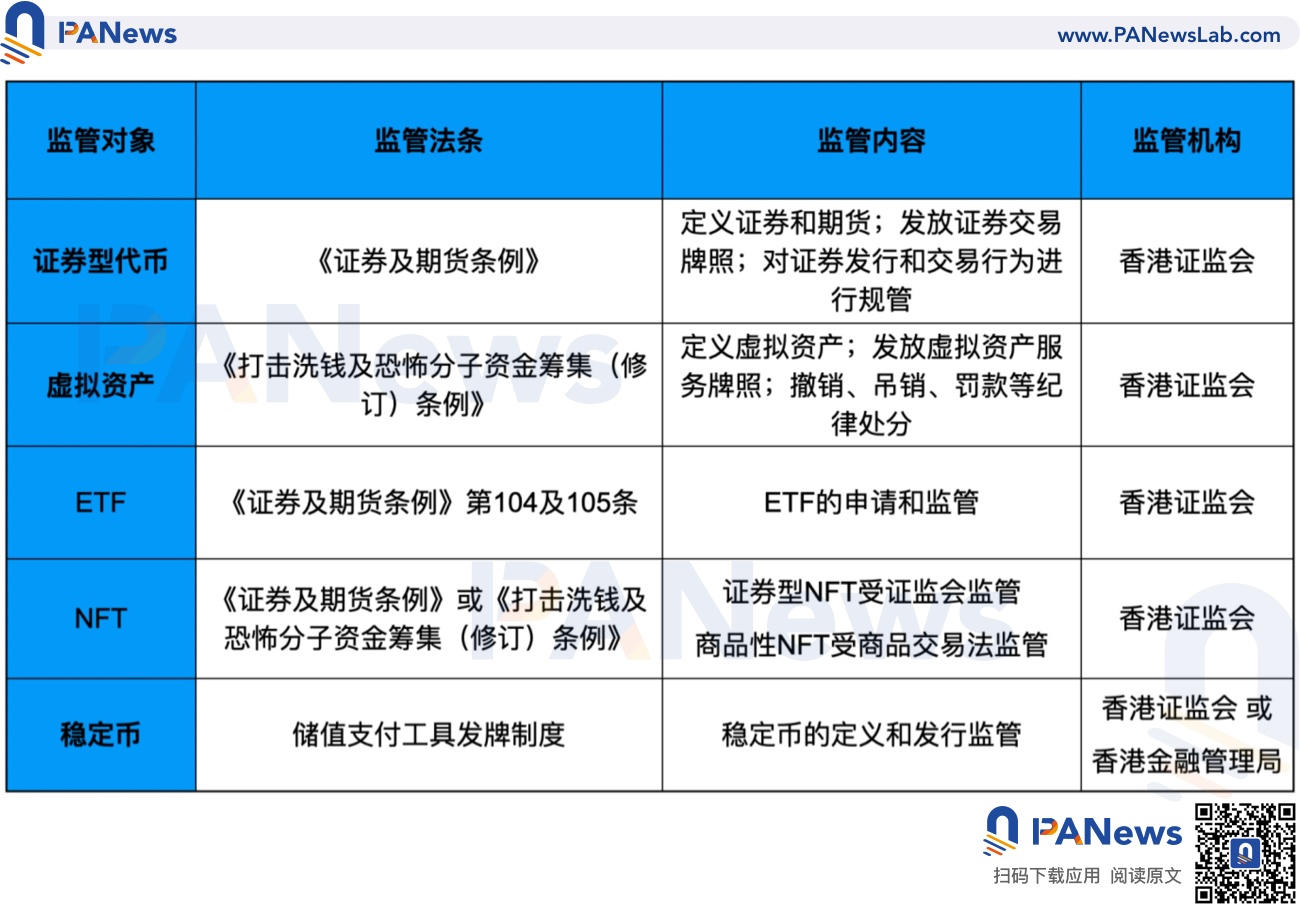
In general, Hong Kong is establishing a comprehensive and targeted digital currency regulatory policy.
For stablecoins, they will be subject to the same supervision as virtual assets, and may be combined with Hong Kong’s existing regulatory framework for stored value payment instruments, and will be regulated by the "Payment System and Stored Value Instruments Regulations".
For virtual assets, through the upcoming Anti-Money Laundering and Counter-Terrorist Financing (Amendment) Ordinance, Hong Kong will classify virtual assets separately and introduce a new regulatory and licensing system.
For stablecoins, they will be subject to the same supervision as virtual assets, and may be combined with Hong Kong’s existing regulatory framework for stored value payment instruments, and will be regulated by the "Payment System and Stored Value Instruments Regulations".
There is currently no one-size-fits-all regulatory policy for NFT. Some NFTs with securities rights are classified as security tokens for supervision, some NFTs with governance voting rights will be regulated as virtual assets, and NFTs used for points or games will not be subject to regulation. above regulation.
Singapore Digital Currency Regulation
security token
As a supplement to the Securities and Futures Act, the Monetary Authority of Singapore (MAS) issued the Guidelines for the Offering of Digital Tokens on November 14, 2017, and amended them on May 26, 2020 . The guidelines stipulate that if digital tokens belong to the capital market products (Capital Markets Products, CMP) stipulated in the Securities and Futures Act (SFA), they will be regulated by the Monetary Authority, and the capital market products (CMP) include Securities, bonds, derivatives contracts, collective investment schemes, etc. The "Guidelines for the Issuance of Digital Tokens" also includes security token issuance service intermediaries under supervision. These intermediary structures need to hold capital market service licenses, financial advisory licenses or become MAS-approved exchanges according to their service content.
digital payment token
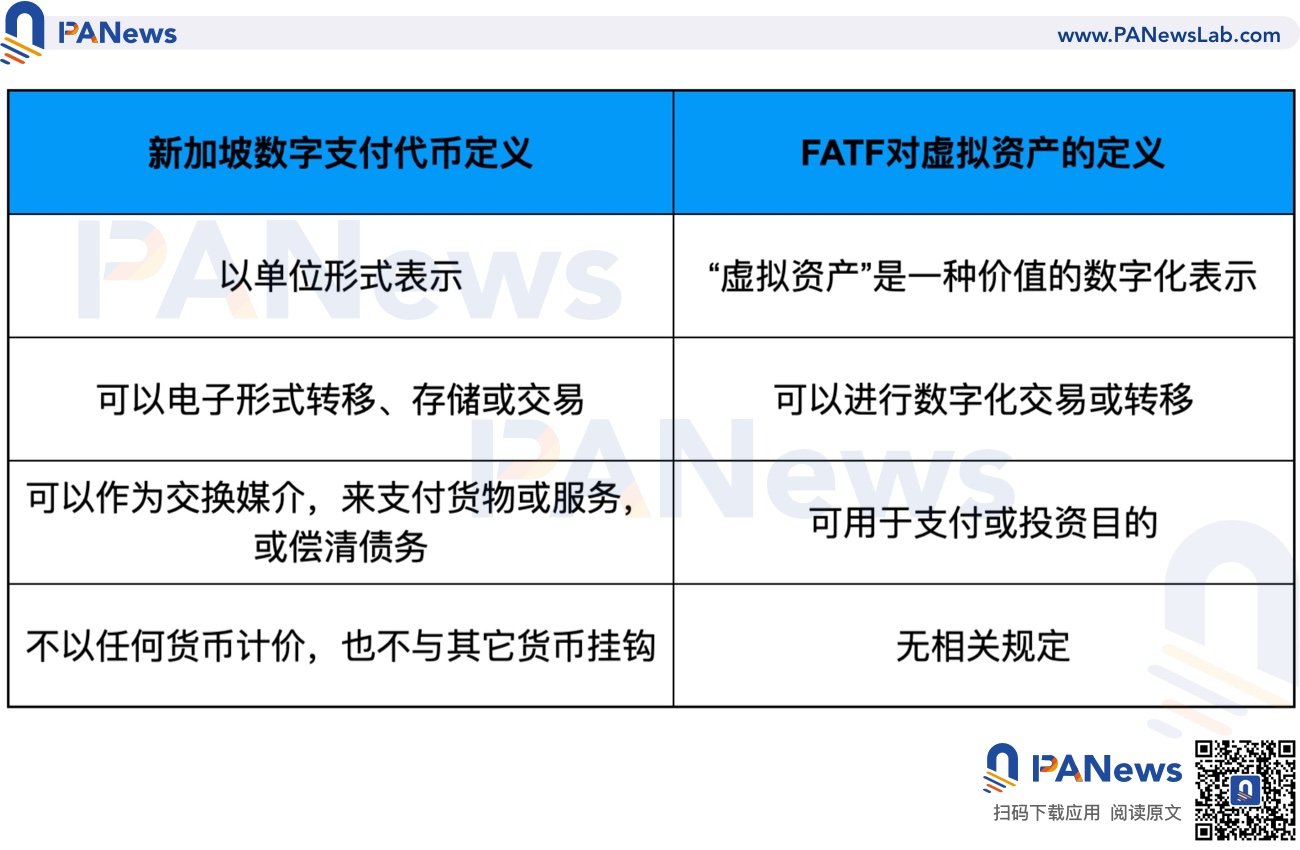
On January 14, 2019, Singapore passed the Payment Services Act (PSA). The PSA bill will (1) account issuance, (2) domestic remittance, (3) cross-border remittance, (4) merchant payment , (5) issuance of electronic currency e-Money, (6) digital payment token DPT service and (7) currency exchange, these seven types of payment services are included in the scope of payment license supervision. The PSA Act defines digital payment tokens (Digital Payment Token, DPT) as cryptocurrencies for payment purposes (such as Bitcoin BTC and Ethereum ETH).
Like Hong Kong's definition of "virtual assets", Singapore's definition of "digital payment tokens" also draws on the standards of the international Financial Action Task Force (FATF) on anti-money laundering. Through comparison, it is found that digital payment tokens in Singapore, virtual assets in Hong Kong, and virtual assets defined by the International Anti-Money Laundering Task Force (FATF) are the same asset.
In addition, the "Payment Services Act" (PSA) also stipulates that the provision of digital payment token services DPTS (Digital Payment Token Service) in Singapore, including the provision of DPT trading or transaction services, requires a license issued by MAS and compliance with PSA's anti-money laundering and anti-money laundering regulations. Terrorist financing regulations.
On January 4, 2021, the Singapore Parliament passed the "Payment Services Act (Amendment)" to meet the regulatory requirements of the International Anti-Money Laundering Financial Action Task Force (FATF) on anti-money laundering and anti-terrorist financing. Expand digital payment token service providers to service agencies that provide DPT transfers, DPT wallet custody, and decentralized DPT transactions, further regulate digital payment services, and strengthen anti-money laundering and anti-terrorist financing supervision.
On January 17, 2022, MAS issued the "Guidelines for Providing DPT Services to the Public", pointing out that digital payment tokens (DPT) have high risks and are not suitable for public participation, and require DPT service providers to avoid public places or mass social media. To promote DPT services, you can only promote its DPT services on the company's website and applications and social accounts.
In April 2022, the Singapore Parliament passed the "Financial Services and Markets Act" (FSM), requiring digital token issuers and service providers to obtain valid financial licenses, and proposed higher anti-money laundering and anti-terrorism financing requirements. With reference to the standards of the Financial Action Task Force (FATF), the FSM Act expands DPT services to include direct or indirect transactions, exchanges, transfers, safekeeping of cryptocurrencies, or provides related investment advice, and also expands the coverage of regulators to establish in Singapore (but providing services outside of Singapore).
stable currency
stable currency
The Monetary Authority of Singapore (MAS) issued a proposed regulatory policy consultation paper on stablecoins on October 26, 2022. In the consultation paper, the MAS stated that stablecoins have the potential to play a reliable digital medium of exchange if well regulated.
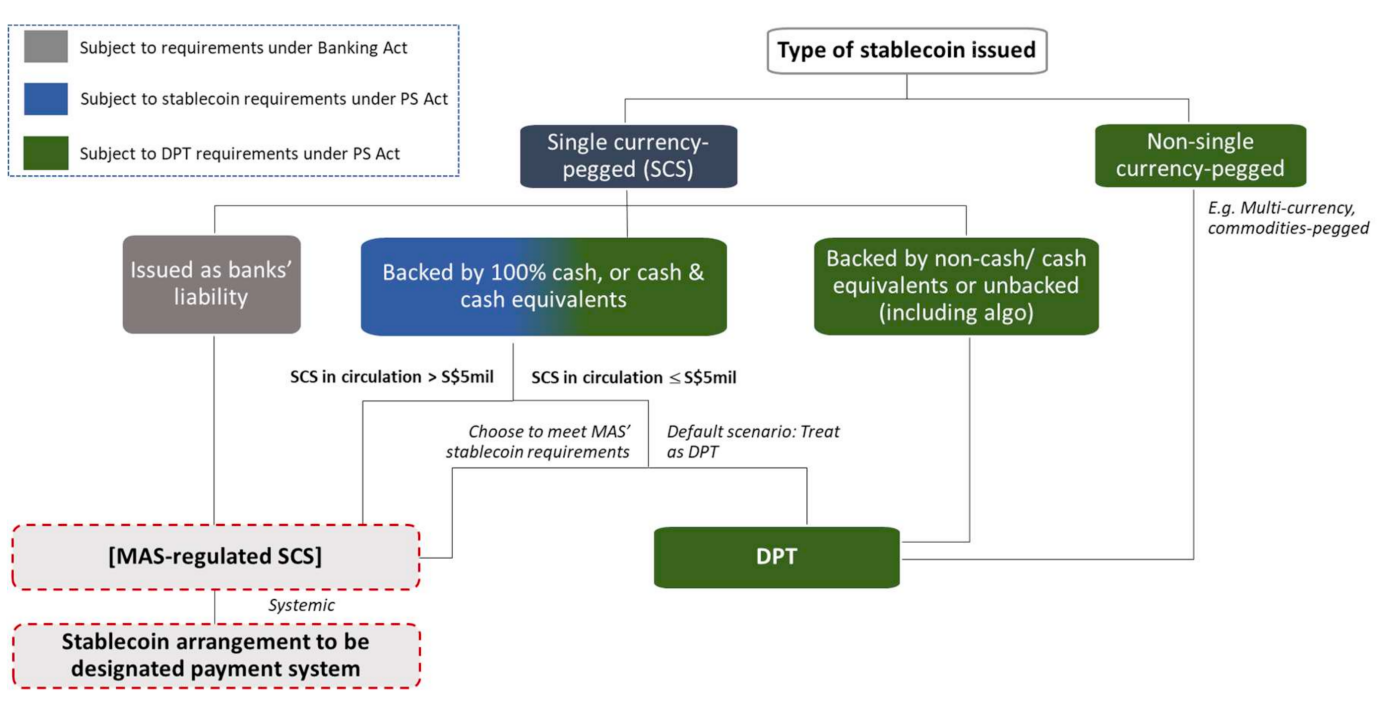
Under the current PSA Act, stablecoins are considered digital payment tokens DPT and are regulated accordingly. The Monetary Authority of Singapore believes that as Singapore seeks to develop a digital asset ecosystem, it is necessary to establish a new regulatory regime for stablecoins. The current regulation under the PSA Act is insufficient to achieve this goal, because it lacks the regulatory mechanism to ensure that stablecoins maintain a stable value.
According to different linked assets and stable mechanisms, there are currently a variety of stablecoins, and MAS intends to focus on: single-currency pegged stablecoins (Single-Currency Pegged Stablecoins, CSC) and stablecoins issued in Singapore. MAS intends to regulate "stable coin issuance services" by introducing a new provision in the Payment Services Act (PSA), with the goal of maintaining a high degree of value stability for SCS.
About NFTs
NFT is essentially a token, so some NFTs may be security tokens, some NFTs may belong to digital payment tokens, and some do not belong to the above two, so it is necessary to individually judge the underlying value attributes represented by NFTs. Determine how it will be regulated.
The Monetary Authority of Singapore stated that the emerging market of NFT is still in its infancy, and there is no targeted regulatory plan for NFT, but it may be determined according to the specific circumstances whether it falls under the supervision of the Monetary Authority. If the underlying assets represented by NFT have a securities nature, such as Representing some kind of shares and dividend rights, it needs to meet the regulatory requirements of the HKMA. Providers of an NFT that has the characteristics of a digital payment token under the Payment Services Act (PSA) may be subject to certain restrictions and requirements.
In general, the Monetary Authority of Singapore is the central bank and comprehensive financial regulator of Singapore. It divides Singapore's financial industry into four categories: banking, securities, insurance and payment, and has formulated targeted access licenses and regulatory policy. The Hong Kong Monetary Authority follows the previous regulatory logic of the securities industry and the payment industry, and divides digital currencies into security tokens and digital payment tokens for supervision, forming a matching relationship in terms of business logic.
Similarities and differences between Hong Kong and Singapore regulatory policies
By comparing the digital currency regulatory policies of Singapore and Hong Kong, we found that the regulatory policies of a country (region) are closely related to the business scope of the regulatory agency of the country (region) and the existing legal system of the country (region). For example, the main business scope of Singapore’s Regulatory Authority is to supervise the banking, securities, insurance and payment industries. Therefore, Singapore divides digital currencies into securities-type and payment-type for separate supervision. The Hong Kong Securities Regulatory Commission is responsible for the supervision of traditional securities, so before that, it mainly supervised security tokens, but some tokens are not securities, so the supervision of non-security tokens has been in a vacuum for a long time. The United States has independent Securities and Exchange Commission (SEC) and Commodity Futures Trading Commission (CFTC), as well as different "Securities Exchange Act" and "Commodity Futures Exchange Act", so the two parties are classifying digital currencies as security tokens or Commodity tokens, and who should be regulated, have their own opinions.
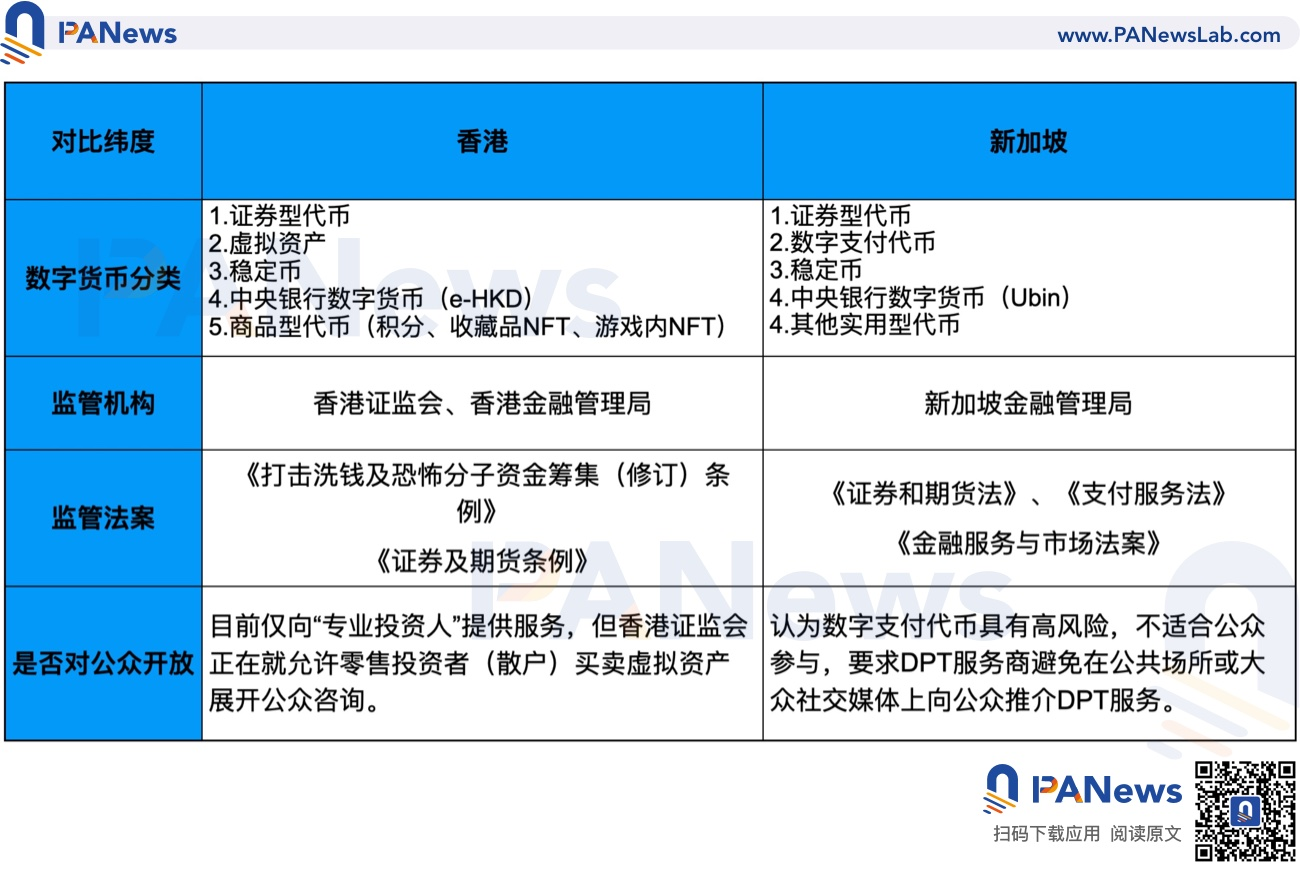
Singapore and Hong Kong have both similarities and some differences in how they regulate digital currencies.
In terms of the supervision of security tokens, securities already have a relatively mature regulatory system, so both Singapore and Hong Kong apply the existing securities regulatory policies and regulate them through the "Securities and Futures Ordinance" or "Securities and Futures Law".
In terms of the regulation of non-security tokens, Singapore tends to formulate new regulatory laws, and newly enacted the "Payment Services Act" (PSA) and the "Financial Services and Markets Act (FSM)" to classify most non-security tokens. The class is Digital Payment Token (DPT) for regulation. Hong Kong is more inclined to amend existing laws to cover digital currency supervision, such as by amending the original "Anti-Money Laundering and Terrorist Financing Ordinance" to classify non-security tokens as virtual assets for supervision.
In terms of stablecoin regulation, Singapore and Hong Kong have a lot in common. On the one hand, they both regulate it as a digital payment token or virtual asset. The virtual asset defined by Hong Kong and the digital payment token defined by Singapore are mentioned above. It is very close in nature; on the other hand, both Singapore and Hong Kong have taken further measures to regulate stable coins. Hong Kong will likely combine the "Payment System and Stored Value Instruments Regulations" for supervision. PSA) to add regulatory provisions for stablecoins.
Both Singapore and Hong Kong pay more attention to the supervision of stablecoins. On the one hand, they realize the important role of stablecoins in building a global digital currency center. On the other hand, they have taken targeted measures against the thunderstorm of stablecoin Luna this year.
In addition, in terms of central bank digital currency (CBDC), Singapore launched the central digital currency Ubin project in 2016 for cross-border real-time settlement, and has now entered the fifth stage. The Hong Kong government began to explore the central bank's digital currency e-HKD in 2017, and will implement the application of the digital Hong Kong dollar through three stages.
As competitors for the digital currency center in Southeast Asia, Singapore and Hong Kong adopt an inclusive and open attitude in regulating digital currency. On the one hand, they embrace and encourage technological innovation, and on the other hand, they implement supporting regulatory policies to properly control risks and protect investment. By. From the fact that Singapore and Hong Kong have adopted similar regulatory strategies at different latitudes, we can roughly understand the development direction of digital currency regulation. Good industry regulation is a prerequisite for the orderly and vigorous development of the market. The responsible regulatory attitudes of Singapore and Hong Kong give us hope for the development of the digital currency industry.
references:
1. Public consultation on legislative proposals to strengthen anti-money laundering and terrorist financing regulations in Hong Kong
2. Summary of Public Consultation on Legislative Proposals for Strengthening Anti-Money Laundering and Terrorist Financing Regulations in Hong Kong
3. Anti-Money Laundering and Counter-Terrorist Financing (Amendment) Bill 2022
4. Position Statement: Regulating Virtual Asset Trading Platforms
5. Statement on Security Token Issuance
6. The China Securities Regulatory Commission reminds investors to pay attention to the risks associated with non-homogeneous tokens
7.Consultation Paper on Proposed Regulatory Measures for Digital Payment Token Services
8.Discussion Paper on Crypto-assets and Stablecoins
9.Guidelines on Provision of Digital Payment Token Services to the Public PS-G 02
10.Guidelines to Notice PSN 02 on Prevention of ML and Countering the Financing of Terrorism
11.Guidelines on Provision of Digital Payment Token Services to the Public PS-G 02
12.Proposed Regulatory Approach for StablecoinRelated Activities
13.Singapre Payment Services Act 2019
14.Singapore Payment Services (Amendment) Act 2021
15.Virtual Assets and Virtual Asset Service Providers by FATF


