






Interview with Alan Omnet, COO, World Mobile Team Series


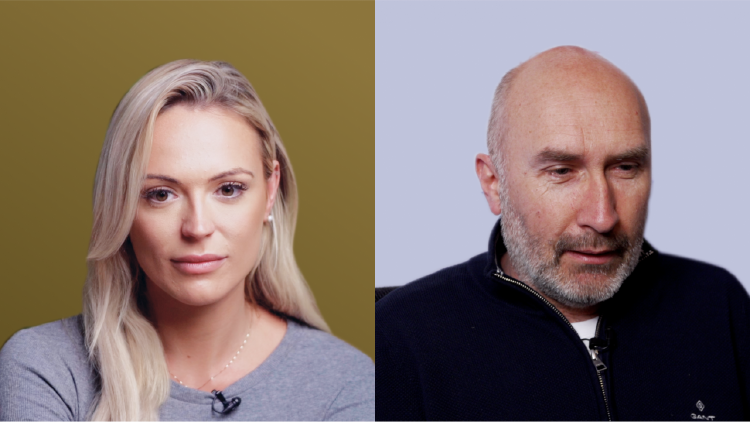
Jessica:Welcome to the World Mobile special, and learn more about World Mobile with me. I'm Jessica Walker and joining us today is Alan Omnet, COO of World Mobile. Alan Thank you so much for being with me today!
Alan:It's my pleasure
Jessica:Very happy to have you, I am very interested in World Mobile Communications, I have interviewed many people in the team, such as the company's CEO Micky. I'd love to hear some of your work background and how did you get into telecommunications?
Alan:I was fresh out of university, studying business and computer science in London, at a time when the telecommunications industry was being liberalized, so BT and Mercury formed a duopoly with no competition and no innovation. I joined a start-up company, we used off-the-shelf equipment, and I completed a switch with a computer and software. Before we knew it, we were already competing with BT (British Telecom Group). It's very innovative and we've managed to scale a service that's used by the travel industry and a lot of businesses like American Express, Virgin and many others.
We found that traditional operators were trapped by the existing infrastructure, and by taking action and changing the model, we found that we could compete.
This was my first experience in the telecommunications industry. It's all been a lot of fun and we have a great team. Really exciting! Over the past 20 years, I have been involved in many different areas of the telecommunications industry, from writing software for switches, to building mobile services, to deploying equipment around the world. Generally speaking, I have been exploring what can be done with technology, and how technology can be used to change the world.
Jessica:It's interesting! Because of working in different roles in different areas of the telecommunications industry. You may have identified some positives, but also some areas for adjustment or improvement. I thought we could talk about that today, and the work you and Micky do. Can you tell us a little bit about the founding of World Mobile? How did you meet Micky and how did you guys get in touch?
Alan:Micky and I have been working together in the telecommunications industry for about 6 or 7 years and around that time I was first introduced to Bitcoin and blockchain and what it can do. I have delved into the world of crypto and blockchain technology, and over the years I have attended many cryptocurrency events, joined the community, and seen telecom companies working on blockchain. See what telcos are doing with blockchain. Companies like IBM and Deloitte have published some papers on how to use Bitcoin to improve the telecommunications industry, solve some forwarding problems or billing problems, and establish some number ranges, but we found that they missed the point. Blockchain is a game changer, and telecom operators are paying attention to it and considering how to integrate it into their current operations. I guess wait, you have to redesign the whole business because it's a foundation. So for me to get into blockchain and telecom, it's about starting with those foundations and building something on top of that. When Micky and I talked about this, we came to the same conclusion;
"It's not just about embracing blockchain, it's about rebuilding the industry and solving the problems that are inherent in the industry."
There are 1,000 mobile operators and large technology companies around the world who are trying to bridge the digital divide, but this wish has not been realized, and half of the people are not connected to the Internet. We found that we actually needed a new model. For us, it could be the sharing economy or some other solution. When you bring these together, you can build something truly new and exciting. That's when we came together with our idea and a plan on how to make it happen, and it's been really beautiful and exciting since then. And you've put the plan into practice
Jessica:And you have put this plan into practice, how is the project white paper written and finally written? What was their feedback when you wanted to get more people involved and share the concept?
Alan:"Because no one has done this before, when we talk to people about this program, it's really amazing how many people want to join us as a team."
We've had so much talent on our team, we've been so lucky to have our team, and everyone wants to help, and everyone wants to solve this problem. We have a lot of people who have been in this industry for a long time, someone who finances mobile operators, someone who installs solar energy for farmers, someone who develops new technologies in free space optics, someone who innovates in solar drones, we are all in Work towards the same goal.
"When we talk about the job and the mission, I find that they want to be a part of it, they want to be part of the change, they want to see the change, they want to bring about the change that other operators aren't bringing, they want to bring about the change that other operators aren't bringing changes, and that’s how we work as a team.”
Speaking of white papers, I've seen a lot of white papers, many of them are just a technical marketing manual, but for us, we distilled the problem and removed a lot of complicated details, but in fact we explored a path. Bitcoin's white paper is very well written, although it is not long, it describes the solution to the problem very succinctly. For our white paper, our solution to this problem is to create a new one through the sharing economy. telecommunications infrastructure
Jessica:marvelous! So if people who are watching want to help or join World Mobile, what do they need to do, what is the process?
Alan:Anyone can help World Mobile, and you can contribute in many ways, starting with being part of the community. We have a lot of social media channels where you can get involved, whether it's designing some graphics, or helping translate some material, or telling people about the service, you can get involved in the community if you want to take on running a part of the network. For ground nodes, you may need to master some technical or software tools, but you can do this from anywhere in the world. So we're pretty open globally.
If you want to provide connectivity, you can choose the air node, if you want to build an air node, we can deploy the infrastructure there. These are open to interested businesses, communities and individuals who can get involved installing an air node and providing connectivity.
"By providing this connectivity and ground nodes. You get paid for it. So you're definitely rewarded for doing that, and you get to be part of this new sharing economy."
Jessica:marvelous! I want to ask how the equity mechanism works, and I want to explain it for our audience. They may not fully know what the equity mechanism is. First of all, what is the equity mechanism? And how does World Mobile's equity mechanism work?
Alan:let's see. First, let’s understand Proof of Stake (PoS). what does that mean. Proof of stake was a consensus in 2012. That's when the first white paper appeared, which aimed to solve the power consumption problem of proof-of-work (PoW). Now everyone is talking about the power consumption of virtual currency. The proof of equity is formulated to solve this key problem. It is actually a consensus mechanism, so it allows a node network to reach an agreement and reach a consensus on this agreement, so There is a distributed network where everyone is independent and there is no central authority. Trust comes from a consensus. Everyone agrees on what constitutes a valid transaction on the chain. This is called Proof of Stake.
The meaning of holding shares is that I need to hold some tokens. Then throw them into the network. Honest participants will be rewarded, and dishonest participants may lose some or all of their shares in the network. It helps to promote this kind of honesty in the network, so this is called the staking mechanism, and hopefully these can answer this question.
So how to use the share mechanism in the network? We're going to see blockchain company operations, running nodes and validating transactions will get paid, but beyond that, you can provide other services on top of blockchain operations. Such as communication services, network services.
Jessica:I am very interested in this. Curious to see what kind of knock-on effect it will have for World Mobile and how it will actually integrate and change people's lives, so for me, I'd be interested to hear what your vision for World Mobile is going to be over the next two or three years, How do you see its actual development, and its impact on the local economy?
Alan:I'm really looking forward to it, it's going to be a great move, and I think our mission is to bridge the digital divide. To do this we have to go further. Many technology companies, thousands of operators are trying to solve this problem, if we can successfully provide sharing economy for various industries, we can bring them change, but who will make it happen? It's you! It is the person who operates the node. It's community! We need to work together to make this a reality and drive change. So to your question, how I look at World Mobile in the next two or three years, I'm really interested to see what people are able to do and how people are going to use this technology. The sharing economy supports simultaneous launch and deployment in multiple countries and regions.
"So I think we're going to grow very quickly, very broadly. I think there's going to be explosive growth, but it's really going to take everybody involved and helping."
Jessica:Of course, I'm looking forward to doing follow-up interviews with you and Micky et al in the future to see how you go. But Alan thank you so much for taking the time today. Glad to learn a lot and I look forward to seeing your progress!
Alan:Thanks, nice to meet you!


