






The theft of MtGox will enter the stage of substantive compensation, and the theft of encrypted assets has sounded the security alarm


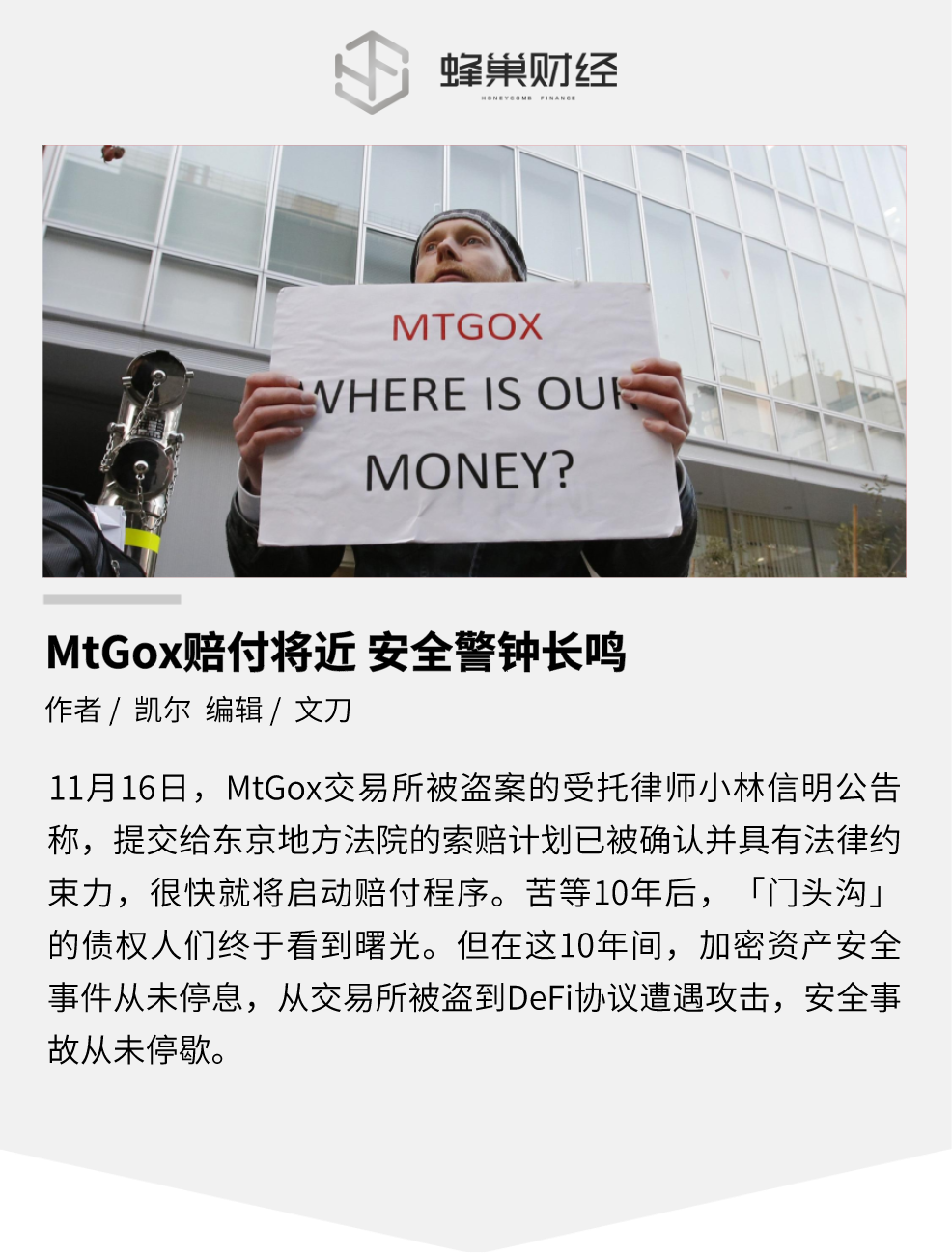
The coin theft case of the MtGox exchange commonly known as "Mentougou" will finally enter the stage of substantive compensation after years of delays in compensation.
According to the latest announcement issued by Nobuaki Kobayashi, the lawyer entrusted with the case, the claim plan previously submitted to the Tokyo District Court has been confirmed and is legally binding, and the compensation process is expected to be officially launched soon.
In 2011, Japan-based MtGox lost 850,000 bitcoins (BTC) due to a hacker attack. After the company went bankrupt in 2014, nearly 24,000 creditors embarked on a long road to recovery.
According to previous statistics, the trustee Kobayashi holds 141,686 BTC, Bitcoin Cash (BCH) derived from BTC forks, and legal currency assets. These assets will be the limit of MtGox's ability to pay creditors. Although the compensation details have not yet been made public, according to the previous draft, creditors are expected to receive compensation exceeding 20% of the lost assets. It should be noted that the compensation amount is likely to be denominated in Japanese yen, but since BTC has continued to rise for 10 years, the value of assets available to creditors will also be revalued accordingly.
It has been 10 years since the "Mentougou" theft case, but in the past 10 years, the theft of assets in the encrypted world has never stopped. According to statistics from the security agency PeckShield, from 2017 to 2020, major security incidents of encrypted assets have increased year by year, and with the development of on-chain applications, the DeFi protocol has become the hardest hit area for security incidents and asset losses. According to incomplete statistics, there have been 82 chain security issues this year, and the total amount of stolen funds has reached 1.116 billion US dollars.
first level title
The "Mentougou" coin theft case will enter the stage of substantive compensation
The MtGox theft case that has been seen for many years may soon have a payout result.
image description
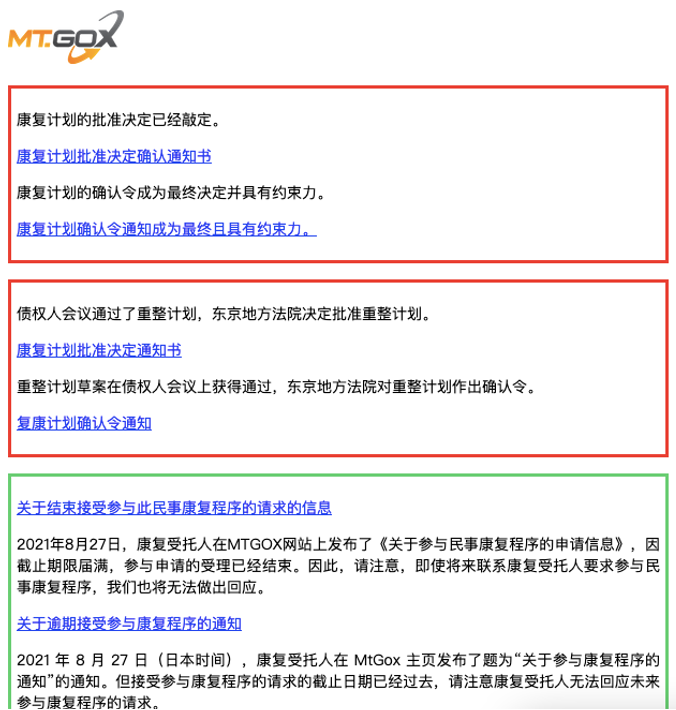
MtGox official website announced the latest progress of the compensation plan
In October of this year, Kobayashi hinted that the "final and binding" court ruling was the last major obstacle in the compensation process. Now that the court has approved the compensation plan, the creditor's claim will finally enter the substantive stage.
Back in 2011, a hacker attack led to the loss of 850,000 BTC, worth about $460 million at the time, at MtGox, the world’s largest encrypted asset exchange. This theft resulted in property losses for nearly 24,000 users. In 2014, MtGox, which was unable to operate, initiated bankruptcy protection procedures, and more than 20,000 users became creditors.
However, the process of obtaining compensation is extremely torturous and lengthy, especially as the market price of BTC continues to increase, and the urgency of creditors to recover has also intensified. However, the stolen assets have long since disappeared, and how to reach a consensus on compensation has become a thorny problem.
In June 2018, the Japanese court approved MtGox’s application for civil compensation to creditors and requested a draft compensation plan. Subsequently, MtGox launched an online claims settlement system to support creditors to register online. However, due to various reasons, the compensation plan has been postponed many times. It was not until December 2020 that the Tokyo District Court accepted the draft compensation plan and allowed creditors to vote on it.
In October of this year, Kobayashi issued an announcement saying that creditors representing about 83% of the total voting rights voted in favor of the plan. Subsequently, the claim plan was also recognized by the Japanese court as legally binding.
Although the details of the final compensation plan are still unclear, according to the draft compiled by the previous creditors, we can see the general compensation ideas of MtGox.
According to previous documents, as of September 2019, trustee Kobayashi held 141,686 BTC, Bitcoin Cash (BCH) and fiat currency assets derived from BTC forks. This part of assets will be the limit of MtGox's ability to pay creditors.
Since BTC has continued to rise in the past 10 years, whether the compensation is based on the legal currency standard or the BTC standard has always been a controversial point. Legally, however, all claims in related litigation must have a yen-denominated standard. According to the creditor, from 2014 to 2018, the value of 1 BTC was valued at 50,058.12 yen (about 435.8 US dollars), and in mid-2018, the BTC claimed by the creditor was revalued, and the value of 1 BTC was 749,318.83 days Yuan (approximately US$6,523); at the same time, creditors of BTC can also claim the forked asset BCH.
According to the previous draft, creditors will be denominated in yen, and the corresponding value obtained includes the combined assets of yen, BTC and BCH. Since the stolen assets cannot be recovered, MtGox can only pay about 23.6% of the assets. It is written in the draft that creditors can choose to accept one-time compensation in advance, but the compensation rate is only 21%; if they do not accept it, creditors may have to wait for a long time, and the final compensation may be more or less.
first level title
The theft of encrypted assets has never stopped
During the 10-year claims and litigation process surrounding the MtGox case, the issue of asset security has been raised repeatedly. In fact, with the development of blockchain and encrypted activities, asset theft incidents have never stopped.
In May 2019, the encrypted asset trading platform Binance was hacked, resulting in the theft of 7,000 BTC; in September 2020, another trading platform KuCoin was also unfortunately involved, with assets worth more than 200 million U.S. dollars stolen.
According to statistics from the security agency PeckShield, the losses of encrypted assets due to security issues are increasing year by year. In 2017, there were 11 major security incidents, with a total loss of US$294 million; in 2018, there were 46 major security incidents, with a total loss of US$4.758 billion. In 2019, there were 63 major security incidents, with a total loss of US$7.679 billion; in 2020, there were 170 encrypted asset hacking incidents, resulting in economic losses of US$2.33 billion; only in the first quarter of 2021, the encrypted asset industry experienced major There were a total of 162 security incidents, including nearly 100 hacking incidents and more than 56 fraud incidents.
What is alarming is that with the development of DeFi, more and more encrypted users put their assets on the chain for income farming and other operations, and asset theft incidents occur from time to time; at the same time, because the DeFi protocol relies on the smart contract on the chain Various vulnerabilities have also become "cash machines" for hackers.
PeckShield related reports show that there will be 60 DeFi attacks in 2020, with a loss of more than 250 million US dollars. According to incomplete statistics from OKLink, as of November 7, there have been 82 on-chain security issues since the beginning of 2021. The initial stolen funds were about 1.816 billion US dollars, but about 700 million US dollars of them have been returned. The total amounted to 1.116 billion US dollars.
In this "dark forest" on the chain, if the DeFi protocol is attacked or user assets are stolen, it is not easier to recover than "Mentougou".
On October 30, BXH, a decentralized trading protocol deployed on multiple chains, was stolen, and $139 million in encrypted assets was looted. This security incident occurred in the BXH protocol on the BSC chain, and the application party temporarily suspended the deposit and withdrawal services of the 4 chain protocols of BSC, Heco, ETH, and OEC. At the same time, CoinWind and other aggregator agreements (machine gun pools) that carry out income farming on BXH have also been affected, and their user assets stored in BXH have also suffered damage.
As of November 17, the solution to the BXH theft case has been slow. Only the OEC and ETH on-chain protocol deposit and withdrawal functions that have not been damaged have been restored. The deposit and withdrawal has not yet been opened, and the progress of the recovery of stolen assets and the processing of BXH residual value is still unknown. According to the latest announcement of BXH, the protocol’s handling of stolen assets on the BSC chain will be announced on November 18th.
In various communities, BXH and the most affected CoinWind users have also embarked on the road of recovery just like the victims of the "Mentougou" case. Recently, CoinWind has provided a transitional solution, that is, to support users to withdraw some assets first, and at the same time issue the redemption certificate dToken of the rest of the assets. There is a high probability that the exchange will not be possible until the principal is recovered from BXH. For affected users, this will undoubtedly go through a waiting period.
Whether it is the MtGox case or the various subsequent security incidents, it has sounded the alarm for projects and users in the encrypted asset world. PeckShield reminds that users need to do due diligence before participating in DeFi projects, for example, query and verify whether the project has carried out comprehensive and professional security audit work. If the project has not passed any security audit, it is necessary to be vigilant when participating Risk; Even if the project party passes the security audit, it cannot relax its vigilance and needs to be rational at all times.


