






比特币前景探究:市场一片沉寂,反转信号会是什么?


- 核心观点:比特币已进入历史估值区间下沿,网络基本面健康,多数风险已被市场定价,但缺乏明确反弹催化剂,短期仍可能面临最后一跌,长期配置价值显现。
- 关键要素:
- 市场停滞:过去一年比特币ETF净流出50亿美元,现货交易量、期权隐含波动率及期货基差均处多年低位,显示交易者看涨预期缺失。
- 估值信号:MVRV指标处于历史低位,价格围绕200周均线震荡,RSI出现牛市背离,链上数据显示长期持有者正重新吸筹。
- 网络健康:比特币节点覆盖近200个国家,哈希率虽因矿企转向AI而下滑,但仍维持在去年年中水平,去中心化程度未衰减。
- 风险缓释:加密资产财库企业(DATs)抛压出清,Strategy出售比特币反而引发价格上涨;量子计算威胁被市场充分讨论,部分已计价。
- 潜在驱动:大型机构被动配置需求或成增量资金来源,比特币与其他资产低相关性具备组合分散价值。
Original author: WClemente
Translation: Luffy, Foresight News
Last year, my personal market research focus gradually shifted toward commodities. At that time, one reality was particularly clear: the cryptocurrency market suffered from oversupply and lackluster price performance. Meanwhile, aside from a few sectors like Hyperliquid, industry innovation was scarce, making the crypto space less attractive compared to other markets—creating a demand-side challenge that had to absorb massive supply. In the second half of last year, small-cap tokens surged and gold also enjoyed a strong rally. I had originally expected Bitcoin to follow with a decent run, but the final result was disappointing. In the trading days leading up to October 10, Bitcoin's upward breakout failed. In January this year, I further reduced my personal Bitcoin holdings, as the market characteristics at the time bore a striking resemblance to the 2022 bear market.
To be frank, this year has been tough for anyone focused on Bitcoin and the broader cryptocurrency market. Although the drawdown from the peak has been milder compared to previous cycles, in many ways this bear market feels even harder to endure than 2022. At least in 2022, the catalysts for the decline were clear: rising interest rates, deleveraging and the purge of fraudulent projects, and the FTX collapse. At that time, a consensus could form: if those external conditions changed—and by late 2022 the market had reached a point where it could hardly get worse—then Bitcoin would likely be a high-quality long-term buying opportunity.
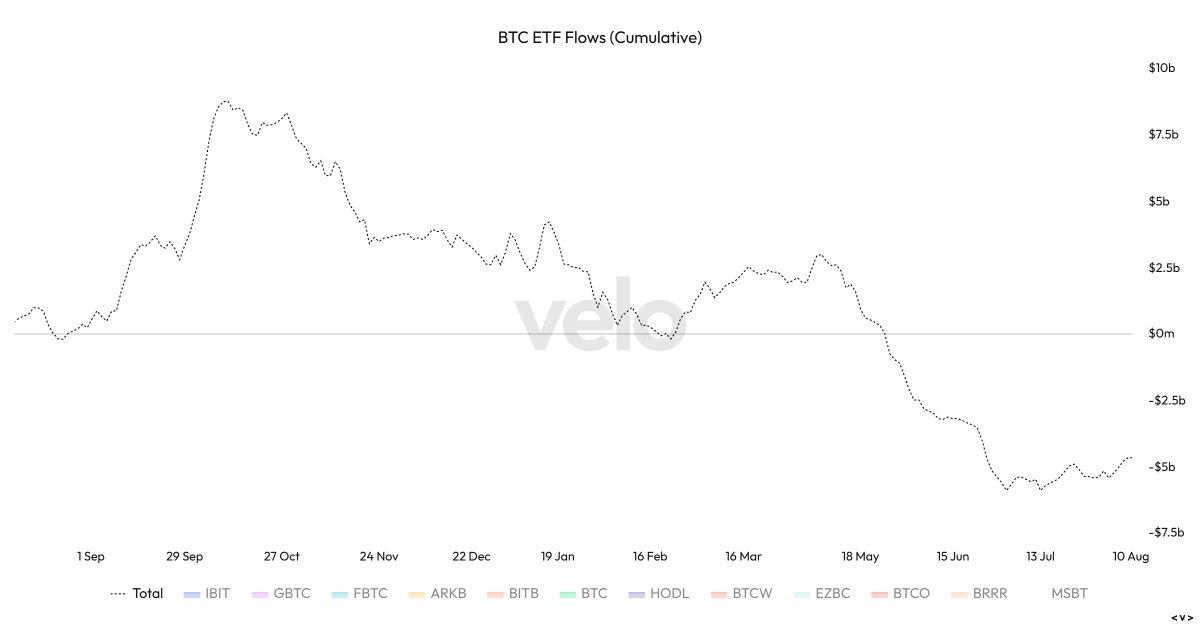
In contrast, there is no such clear reversal logic today. Of course, Digital Asset Treasury companies (DATs) and quantum computing risks are two major variables—I'll discuss them later—though in my view, some of these risks have already shown signs of easing. Bitcoin ETF AUM reached $50 billion and set records for capital inflows, but earlier this year, that record was surpassed by memory chip ETFs. Large traditional institutions have also begun offering crypto lending products. Last year, boosted by central bank reserve allocation demand and the "de-dollarization" narrative, gold delivered a stellar performance—this should have been a window for Bitcoin to shine. Now, nearly all individuals and institutions interested in allocating to Bitcoin have entry channels, yet the reality is disappointing: over the past year, Bitcoin ETFs have seen net outflows of $5 billion, while DRAM-related ETFs achieved $10 billion in inflows in a single month.
Network Fundamentals
When discussing Bitcoin fundamentals, we don't use traditional financial valuation metrics; instead, we observe the network's operational health. I won't pile up all the data—just two core points. In today's world, where economies and markets are increasingly influenced by state intervention and big tech exerts highly concentrated technological power, decentralization itself holds unique value.
Readers unfamiliar with Bitcoin's underlying mechanics need to distinguish between miners and nodes. Miners are widely known; nodes, on the other hand, can be run by anyone and are responsible for enforcing network rules and validating transactions. Miners rely on massive computational power to provide security for the network. Bitcoin nodes are distributed globally, with many difficult to track; even public statistics lists cover nearly 200 countries.
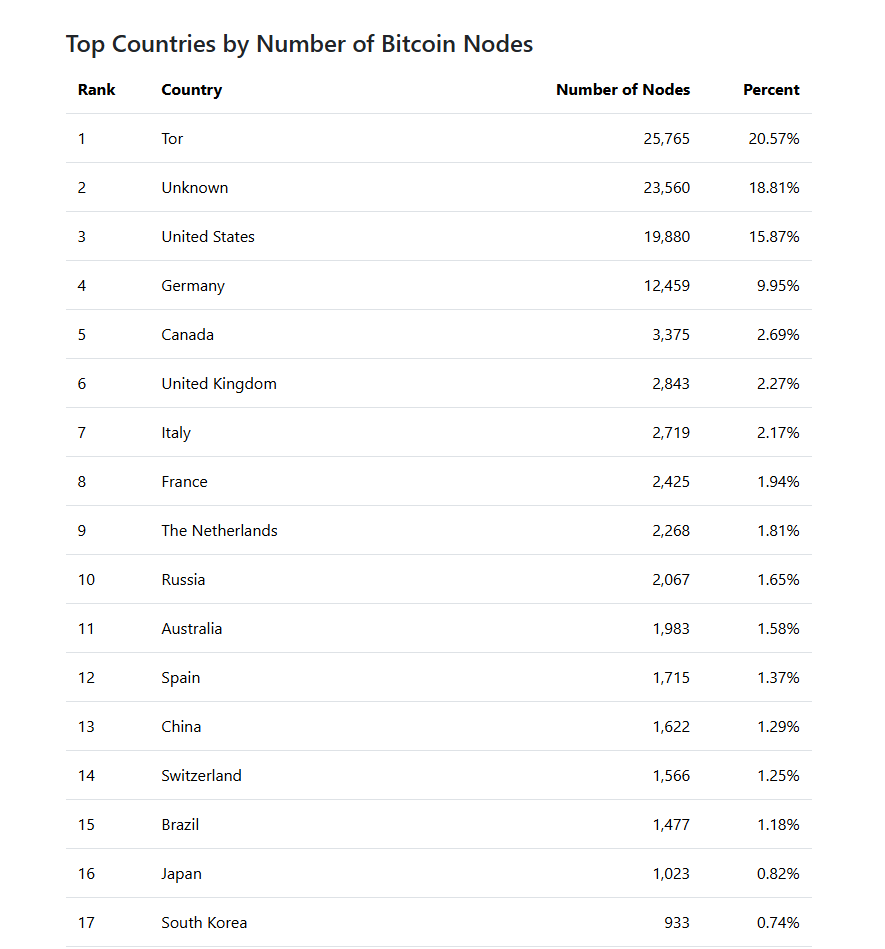
Data source: https://bitref.com/nodes/
We can observe mining pool data, but mining pools cannot control individual miners, making it difficult to track every miner. However, we can measure the total computational power supporting the network through hashrate. Objectively speaking, Bitcoin's hashrate has entered a downward channel.
After 2022, intensifying industry competition and rising energy costs squeezed miner profit margins. More critically, a large number of publicly listed mining companies pivoted to AI businesses—a decision that has proven wise for these firms. Bitcoin underperforming AI-related assets and shifting hashrate demand patterns have further exacerbated this trend.
This can be interpreted from both positive and negative angles.
Negative perspective: From a hashrate security standpoint, Bitcoin network security has declined; as a digital commodity, the energy input and production cost backing each token have correspondingly decreased. It's worth noting that Bitcoin has a difficulty adjustment mechanism: the system automatically adjusts mining rewards every two weeks based on hashrate. When hashrate declines, it incentivizes new miners to enter and maintain the network—the network itself won't collapse.
Positive perspective: Despite nearly all publicly listed miners pivoting to AI, the overall hashrate has only retreated to levels from mid-last year. This indicates that many entities with access to cheap energy are still mining. Combined with the global distribution data of nodes, this sufficiently demonstrates that the Bitcoin network retains strong distributed characteristics and remains operationally healthy.
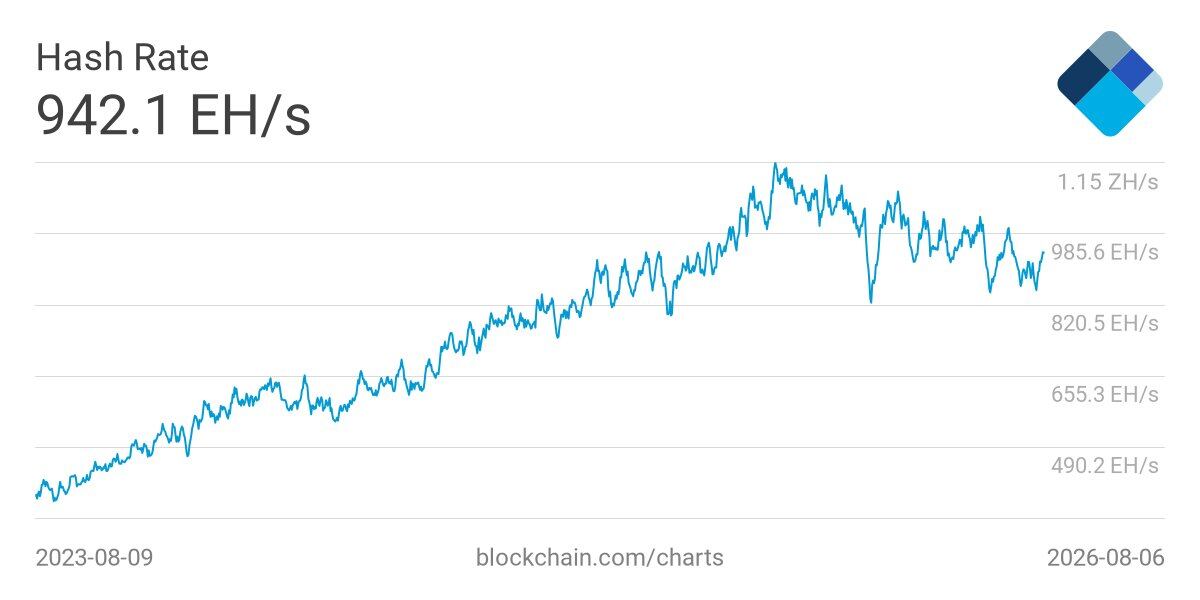
In summary, the Bitcoin network's degree of decentralization and overall health have not diminished compared to the past.
Valuation Framework and Current Market Signals
Bitcoin itself generates no cash flows, but there are several unique valuation methodologies that allow comparison between current conditions and historical cycles.
From a technical perspective, Bitcoin is currently consolidating around its 2021 all-time high, with prices slightly below the 200-week exponential moving average. The weekly RSI has emerged from oversold territory, forming a bullish divergence—the last time such oversold conditions appeared was at the bottom of the previous bear market. Historically, the 200-week moving average has been a key reference level; when price reaches this zone, it's worth considering building spot Bitcoin positions.

Among on-chain valuation models, the Market Value to Realized Value (MVRV) ratio is the most effective indicator. It compares Bitcoin's current market trading price against the network-wide average cost basis of all tokens, with cost basis calculated based on wallet clusters where tokens last moved.
When this indicator rises, it means market trading prices are well above the network average cost basis, and substantial unrealized profits create profit-taking pressure. When the indicator falls below zero, it signifies the market is collectively at a loss—historically, this has been a favorable zone for accumulation.
It can be observed that during the 2024-2025 cycle, this indicator did not reach the extreme euphoric top readings seen in past bull markets. This reflects the asset maturing, with volatility narrowing. Each bull market peak has been progressively lower, while bear market bottom readings have ticked up slightly. Based on this pattern, this cycle may not necessarily require MVRV to fall into negative territory for the market to bottom out. Precisely catching the bottom is nearly impossible; the core conclusion is that Bitcoin is already at the lower end of its historical valuation range.
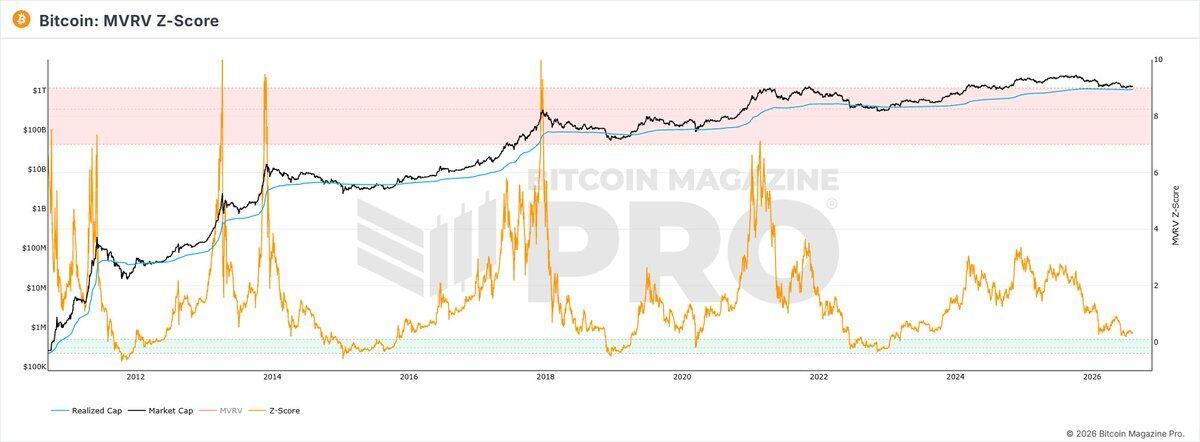
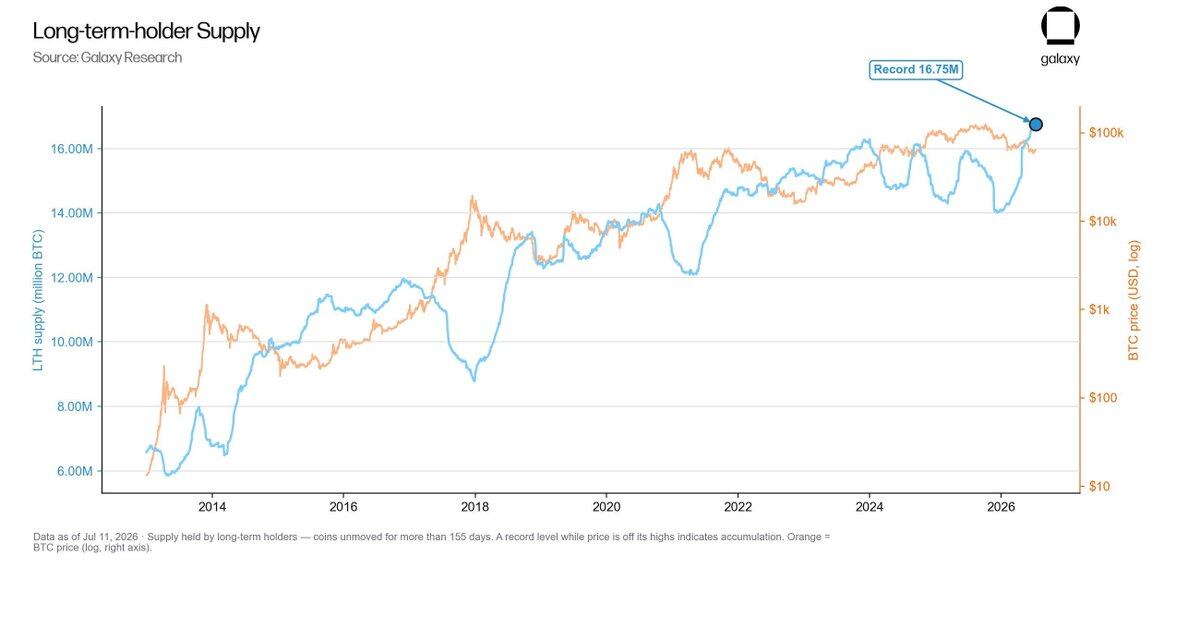
From on-chain data, long-term holders, after completing a round of selling in mid-to-late 2025, have begun accumulating aggressively again—indicating that at current prices, long-term investors see value.
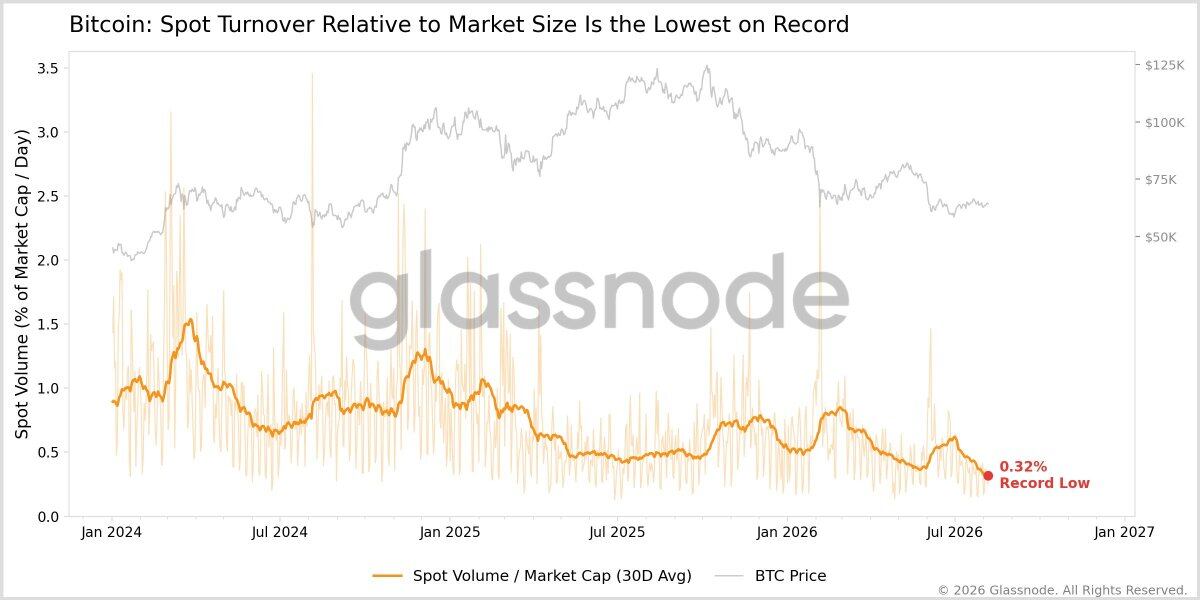
Spot market trading volume has contracted extremely sharply. A chart published by @n3ocortex shows that Bitcoin spot turnover relative to market capitalization has fallen to all-time lows. Trading volumes for ETF and DAT products have also been sluggish.
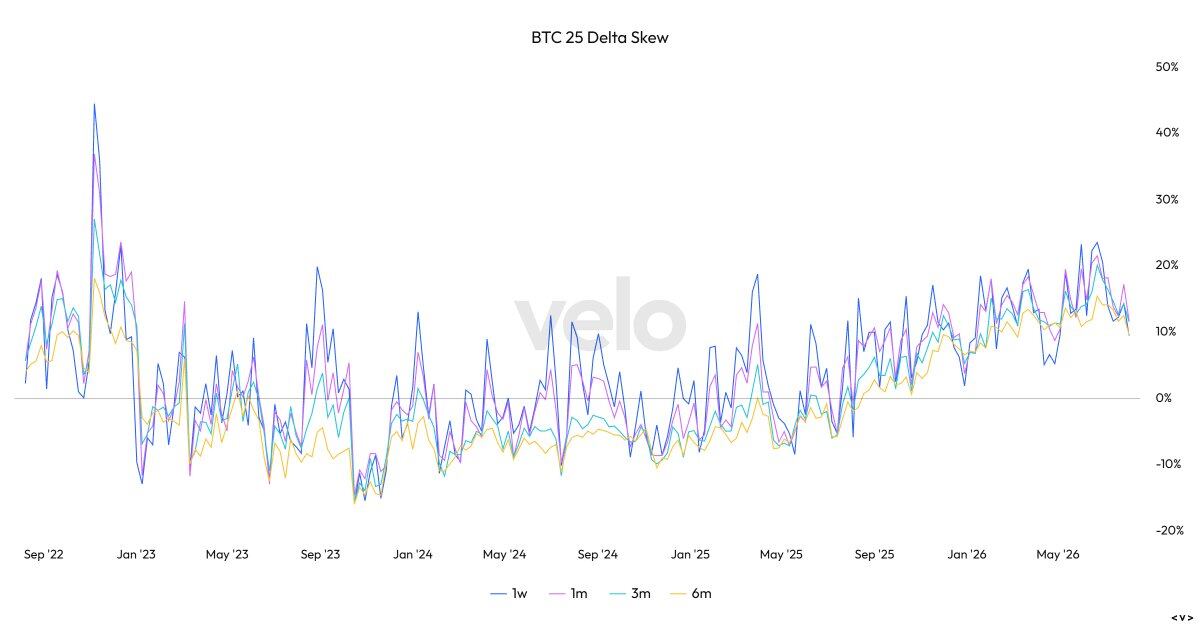
Short-term implied volatility in the options market has reached multi-year lows, with market pricing reflecting a view that Bitcoin has become a "dead asset" with no action. Meanwhile, options skew data shows that throughout the past year, the market has been persistently buying downside protection.
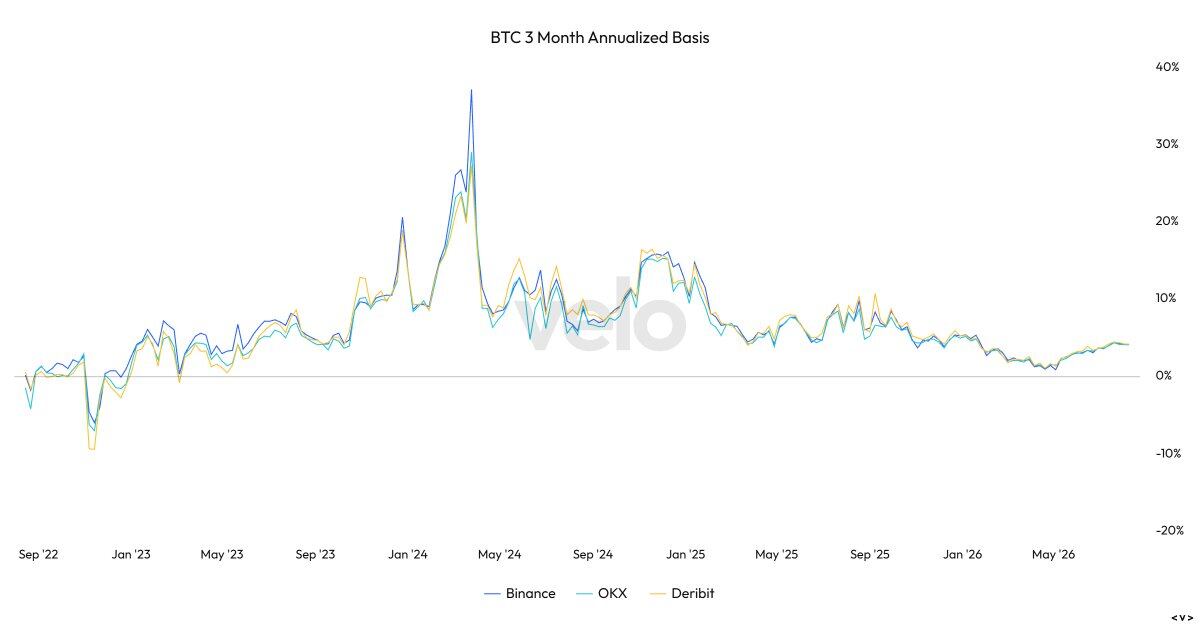
There's another signal from the derivatives space: Bitcoin futures basis (the spread between forward futures contracts and spot) has been declining for years and can barely keep up with short-term Treasury yields. This phenomenon implies two things: first, significant capital is engaged in futures basis arbitrage; second, the market is not pricing forward futures contracts at a meaningful premium to spot.
Combining all signals, an objective summary emerges: the market is nearly frozen. Neither the futures nor options markets show bullish expectations from traders, and positioning indicates Bitcoin volatility will remain suppressed. Yet the contradiction lies in the fact that multiple valuation metrics suggest Bitcoin has entered deep value territory, with long-term holders continuously accumulating. Meanwhile, over the past 52 weeks, Bitcoin ETFs recorded $5 billion in net outflows—a stark contrast between trader behavior and long-term holders.
Digital Asset Treasury Companies (DATs) and the Potential Threat of Quantum Computing
The biggest risk during the 2023-2025 bull market came from Digital Asset Treasury companies (DATs). The design logic of these products is theoretically to raise capital by diluting common shareholder equity to continuously buy Bitcoin, thereby enhancing shareholder value. But after Strategy and Japan's Metaplanet achieved success, more participants entered the space, diverting significant capital and directly compressing the premiums of these products relative to net asset value.
In recent months, multiple news items have shown that several treasury companies are slowing their Bitcoin purchase pace, some institutions are directly selling Bitcoin, and a few entities have completely pivoted their business strategies. In my view, this is a positive sign of market self-correction. An interesting phenomenon has even emerged recently: when Saylor announced Strategy's Bitcoin sale, Bitcoin's price actually rose. Correspondingly, in the company's latest earnings call, Strategy is optimizing its capital structure and shifting focus toward STRC. This is completely opposite to the old pattern where "announcing buys pushed prices up, and announcing sells pushed prices down." Looking ahead, the selling pressure DATs exert on the market is no longer as pronounced as it was 6-9 months ago, especially with prices now more than 50% below their highs.
As for quantum computing risk, I believe it's a genuine concern—over a time horizon of 5+ years, the threat should not be underestimated. Over the past few months, I've been involved in investment analysis work at STIX, engaging with early-stage startups and industry professionals, which has given me some understanding of quantum computing—though I'm by no means an expert in this field. My view is that the risk should be taken seriously. However, with Bitcoin currently around $60,000, cut in half from its highs and underperforming many other assets, this risk has largely been priced into the current valuation.
Even in an extreme catastrophe scenario, the market has already openly and extensively discussed quantum risk, so the risk can only marginally ease going forward. The more Bitcoin underperforms other assets due to quantum concerns, the greater the incentive for large institutional holders—and businesses that profit from Bitcoin trading, custody, and lending—to fund developers and push the industry toward solutions. Just like the previous ETF approval, the market will price in the possibility of risk resolution in advance; by the time the risk is fully resolved, investors will find it difficult to secure extremely low entry prices.
Potential Bull Case
Even if one agrees that Bitcoin is at a favorable long-term accumulation point, from a medium-term asset allocation perspective, deploying capital into Bitcoin carries significant opportunity cost. Over the past few months, everyone has been asking a core question: with gold strengthening and high-beta equities performing well this year while Bitcoin fails to rally in tandem, what conditions would be needed for Bitcoin to stage an independent move?
The data above already illustrates: on-chain metrics show long-term holders buying aggressively; DAT selling pressure is clearing out, yet ETFs continue to see significant net outflows. Looking at history, Bitcoin bear markets typically end when selling pressure is completely exhausted, rather than when some powerful new demand catalyst emerges.
From a multi-month macro perspective, setting aside one-off crash risks from macro or geopolitical events: DAT risk, quantum risk, and the pessimistic narrative of underperformance have all been fully digested. Who else could sustain large-scale selling that exceeds the levels of the past 6-9 months? Admittedly, there's no clearly defined bullish catalyst—the CLARITY Act might bring some changes, but I don't believe it will provide decisive momentum for Bitcoin. Yet this is often precisely what bear market bottoms look like. Investors need to weigh whether the probability of further deterioration has already been adequately priced into current levels—the exact inverse of betting on upside surprises during bull markets.
I wouldn't rule out one final leg down within the year, but overall, the vast majority of risks over the past year have already been priced into the market.
One potential driver comes from sustained passive buying by large institutions. ETF inflows exploded during the initial launch phase, but since October of last year, total AUM has been steadily declining—the hype has faded. If major asset managers decide to allocate a small, uniform percentage of Bitcoin to their portfolios, it would bring price-insensitive incremental capital. That might sound like wishful thinking, but over the past year, Bitcoin has shown low correlation with most assets—for large managers seeking diversification, a small Bitcoin allocation has portfolio-level value.

Conclusion: How to Approach Asset Allocation Going Forward
I believe Bitcoin is already in an "undervalued" zone, but a final decline within the year remains possible. Network fundamentals are broadly healthy, most risks have been priced in by the market, and entities that wanted to sell due to various concerns have most likely already completed their distributions. Precisely catching the absolute bottom is nearly impossible.
In my view, there are several allocation approaches available right now:
- First, dollar-cost averaging into spot positions over the coming months—also the simplest strategy.
- Second, waiting for the market to complete its final decline, or for clear signs of recovery and momentum signals before entering.
- Third, deploying capital now; with implied volatility at low levels, options can be used to hedge against further downside and avoid being shaken out of positions during pullbacks.
I personally haven't entered yet, but I'll likely begin positioning in some form soon. The four-year cycle sometimes makes one feel the world is a simulation. But over the next few months, this orange coin deserves close attention.


