






速览OKX比特币生态最新进展,多标准铭文时代开启


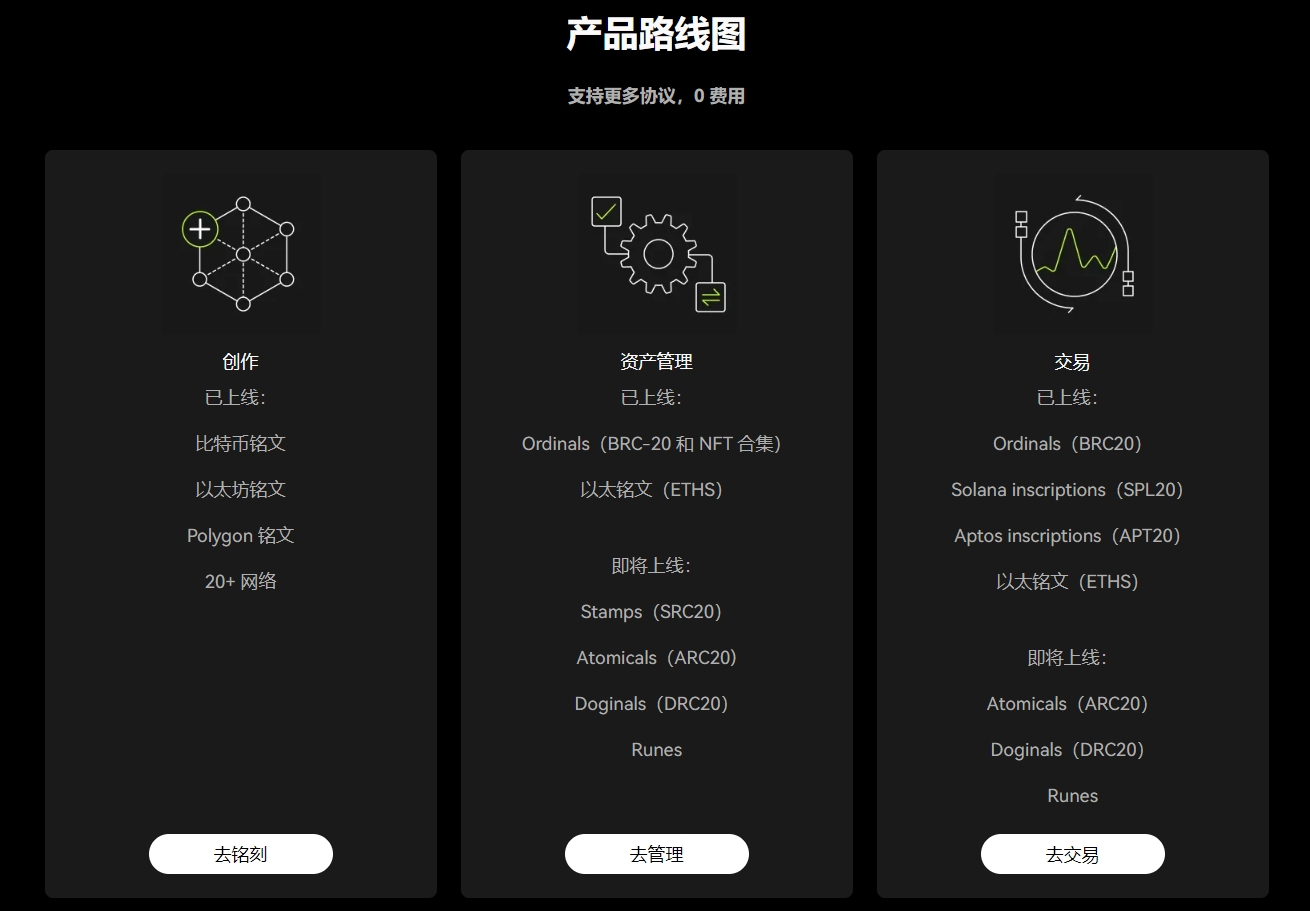
Since the adoption of the Ordinals protocol, OKX has been actively involved in the construction of the Bitcoin ecosystem. Yesterday, OKX announced that it will integrate the SRC-20 standard into the OKX Web3 wallet in early February. Users will be able to view and transfer SRC-20 tokens. In addition, the development team will gradually integrate the ARC-20, DRC-20, and Runealpha protocols starting at the end of February. Meanwhile, the OKX MarketPlace will also gradually launch corresponding sections such as ARC-20, providing users with convenient token trading functions.
As of now, OKX Web3 wallet is not only the aggregator of the Bitcoin ecosystem, but also the largest marketplace for BRC-20 tokens and BTC NFT trading. Behind this is OKX's commitment to becoming a one-stop token ecosystem in the Web3 industry, providing users with richer and more convenient services. This article summarizes the latest progress of OKX in Bitcoin ecosystem development and its thinking and planning for the future development of the Bitcoin ecosystem.
I. Overview of the Latest Progress of OKX in Bitcoin Ecosystem Development
SRC-20 (Stamps)
The Bitcoin Stamps system was introduced by its founder Mike In Space in March 2023. Initially, the system was a proof-of-concept project on Counterparty (a Bitcoin L2 project that has existed since 2014). Due to updates to the underlying protocol, Stamps fully transitioned to the Bitcoin token direction, also known as the SRC-20 protocol, in the summer of 2023.
The main difference between the SRC-20 protocol of Stamps and the BRC-20 protocol of Ordinals lies in their architectural designs. The data of SRC-20 is not dependent on UTXOs but uses an account address model, which greatly reduces the development cost of parsers and ensures that SRC data is not limited by the rules of asset protocol truncation. In addition, SRC-20 adopts the multi-signature address model, eliminating the need for UTXOs and avoiding UTXO reuse as in other asset protocols.
OKX Web3 wallet will integrate with the SRC-20 protocol in early February, allowing users to view and transfer related assets on the asset display page.
ARC-20 (Atomicals)
The Atomicals Protocol, full name Atomicals Protocol, includes the homogenous token standard ARC-20, NFT, Realm (domain names), and Atomicals Virtual Machine (AVM), etc. In terms of asset trading ordering, Atomicals differs from the Ordinals protocol in that it does not rely on third-party sorters. It can be used to create (mint), transfer, and upgrade various digital items, including native NFTs, games, digital identities, and domain names.
It is worth noting that this protocol is based on UTXO for minting and transferring. According to the ARC-20 protocol, for every token issued, a corresponding amount of sats UTXO is required as support. This means that each token is bound to 1 sat, ensuring that the value of each token will not be less than 1 sat. In addition, when minting tokens, the ARC-20 standard uses a proof-of-work mechanism similar to Bitcoin, requiring computing power to calculate a prefix, which serves as a necessary condition for minting the token. In the future, ARC-20 and Atomicals will bring new opportunities to Bitcoin in asset management and asset issuance.
OKX Web3 wallet will complete the integration with the ARC-20 protocol by the end of February. In late February, an independently developed ARC-20 Marketplace may go live, allowing users to view and transfer related assets on the display page, as well as enabling limit orders and market orders for these assets.
Runes (Runealpha)
The Runes system is a new Bitcoin asset issuance solution designed by Casey Rodarmor, the founder of the Ordinals protocol. It is expected to launch around April (before and after the Bitcoin halving), aiming to provide a better experience for Bitcoin users. Runealpha is the protocol standard designed based on Runes, using the UTXO model.
OKX Web3 Wallet will complete the integration of Runealpha by the end of February, and users can view and transfer related assets on the display page.
2. Based on the industry development, promote the development of the multi-chain inscription ecosystem
In addition to supporting the asset issuance protocol of the Bitcoin ecosystem, OKX will also support the Doginals (DRC-20) standard of Dogecoin. At that time, users can also view and trade/transfer related assets on the OKX Web3 Wallet. Currently, OKX Web3 Wallet supports inscription exploration and engraving functions on 23 mainstream public chains, including Bitcoin, Polygon, and Ethereum. As the largest BRC-20 inscription and BTC NFT trading market, OKX has been committed to becoming a one-stop inscription ecosystem for the Web3 industry, providing users with richer and more convenient services.
Jason Lau, the Chief Innovation Officer of OKX, said: "Although the infrastructure of the Bitcoin ecosystem inscription is relatively complete, there are still many inscription assets defined based on different chains and different protocol standards that are more like isolated islands, which greatly increases the user's participation threshold. OKX's vision is to simplify the complexity of Web3 and help more users participate efficiently and conveniently. To this end, OKX chooses to integrate multiple leading inscription standards in the industry, allowing users to seamlessly experience the multi-chain inscription ecosystem through the wallet.
In addition, OKX insists on driving and setting new industry standards through technological innovation. Currently, the wallet supports batch casting and automatic error checking, which enhances the practicality and functionality of the product. At the same time, OKX also provides inscription zones and inscription tracking tools to help users explore and learn about the continuously evolving ecosystem."
Last year, OKX strongly supported the construction of the Ordinals market and achieved good results. According to Dune data, since OKX Web3 Wallet NFT platform announced the integration with the Oridinals market in May last year, supporting functions such as inscription casting, engraving, sending, receiving BRC-20 and BTC NFT, etc., the market share of Oridinals has been continuously increasing from the initial 0.3%. After the second boom of the Bitcoin ecosystem in November, the market share of OKX Ordinals has been maintained at over 80%, and has been leading ever since.
The person in charge of product development admitted that after establishing connections with the developer community and actively practicing, OKX has a deeper understanding of innovation than before, and they hope to contribute their own strength to the industry while developing. On the 12th of this month, OKX announced the open source of the BRC-20 parser, which facilitates the unified industry parsing standard and avoids problems such as user asset losses caused by data misalignment.
Next, OKX will continue to focus on other application scenarios in the Bitcoin ecosystem. On the one hand, it is the empowerment of hot imprint assets in application scenarios, such as native DeFi and native stablecoins in the Bitcoin ecosystem. In addition, at the underlying technical level, the development of the Bitcoin Layer 2 track will provide more possibilities for the performance and scalability of the Bitcoin network. Many project teams will develop their own products around these hot narratives and promote the prosperity and development of the ecosystem. For example, the asset issuance protocol Runes advocated by Ordinals founder Casey will go online in April. At the same time, the Lightning Network will also have significant actions. As an innovation-driven Web3 technology company, OKX will actively participate in the hottest and cutting-edge narratives, and jointly build a more prosperous Bitcoin ecosystem with the developer community, and promote the mature development of the multi-chain imprint era.





