






Global Web3 encryption industry regulatory policies and event observations in the third quarter of 2023


Original author: Will Awang
Original source:Web3 small rules
The following is the regulatory policy and event observation section that co-wrote Beosin’s quarterly report. This article covers the regulatory dynamics and hot event observations of the encryption industry in the third quarter of 2023, including the joint report on encryption supervision issued by the FSB and the IMF, the progress of the Ripple case, how Grayscale’s victory affects the BTC ETF, and US regulatory agencies’ views on the NFT and DeFi industries regulatory enforcement, the undercurrent and momentum of the stablecoin market, and the first regulatory enforcement of JPEX by Hong Kong regulators after the new encryption policy.
The U.S. Securities and Exchange Commission (SEC) passed lawsuits against Coinbase and Binance in June, directly raising the most controversial question to the U.S. judicial and legislative bodies - What kind of crypto assets are securities?. Since then, the SEC has gradually shifted its focus from CeFi to NFT. At the same time, the U.S. Commodity Trading Commission (CFTC) has also turned its attention to DeFi after previous regulatory explorations. Against this background, the SEC will target CeFi, the CFTC will target DeFi, and FinCEN will focus on KYC/AML/CTF for the circulation of global crypto assets. This should be the regulatory landscape of the crypto industry before the 2024 US election year.
From a traditional financial perspective, the continued standardization of the market, as well as the clear positioning of Bitcoin products and the continued recognition of its value, are further promoting the entry of Wall Street capital. Various traditional financial giants are ready to go forward. When the SEC approves the spot BTC ETF will become a symbol of the charge, which is why Grayscale’s victory is so eye-catching.
From a higher perspective, stablecoins, as a bridge between the real world and the crypto world, are the only way for traditional capital to enter the crypto world. We already know that the EUs MiCA bill includes requirements for relevant stablecoin issuers, the U.S. Congress is also proposing draft stability-related legislation, the new bill that the UK has approved includes stablecoins, and Singapore has announced its stablecoin regulatory framework. Hong Kong, China, is also fiercely discussing the operational path for stablecoin supervision. Currently, U.S. dollar stablecoins with U.S. dollar assets as collateral account for 99% of the stablecoin market. It is believed that competition for stablecoins in various jurisdictions and industry giants will inevitably become fierce in the next few years.
1. FSB and IMF jointly release global crypto asset supervision report
(https://www.fsb.org/2023/09/imf-fsb-synthesis-paper-policies-for-crypto-assets/)
On September 7, 2023, the International Monetary Fund (IMF) and the Financial Stability Board (FSB) recently released a joint report on crypto regulation, discussing the macroeconomic, financial stability and other risks related to the crypto market, and policy recommendations to address these risks.
The report stated: The crypto market has existed for more than a decade and has shown tremendous volatility. While crypto markets currently still have limited direct linkages between systemically important financial institutions, core financial markets, and market infrastructure, once they gain traction in payments or retail investments, they have the potential to become a source of systemic risk in specific jurisdictions. source.
The IMF therefore outlines key elements of the policy response, including macroeconomic, legal and financial integrity considerations, as well as implications for monetary and fiscal policy. At the same time, the FSB publishes regulatory recommendations and standards to address financial stability, market integrity, investor protection, prudential requirements and other risks from cryptoassets. The recommendations provide comprehensive guidance on addressing risks from crypto markets, helping authorities address macroeconomic and financial stability risks posed by crypto asset activities and markets, including risks associated with stablecoins and those brought about by decentralized finance (DeFi). Come risk.
The report’s main conclusion is that as the use of crypto-assets becomes widespread, jurisdictions should safeguard monetary sovereignty, prevent excessive capital flows, and conduct comprehensive regulation and oversight of crypto-asset activities to address macroeconomic and financial stability risks. The report also recommends that various jurisdictions take effective measures to deal with the risks in legal compliance, market integrity, investor protection, prudential supervision and other aspects caused by crypto-asset activities.
2. Whether Ripple is a “securities” or not requires further clarification from the court.
On July 13, 2023, SEC v. Ripple, a major litigation case in the encryption industry that lasted for three years and cost US$200 million, finally came to a brief conclusion. In the 34-page ruling, the judge pointed out that Ripple’s fundraising with institutional investors was an investment contract and the sale of “securities,” while the algorithmic sale of tokens through exchange programs did not constitute an investment. The contract is not an offering of securities.
On December 22, 2020, the SEC filed a lawsuit against Ripple and its founders, stating that since 2013, Ripple and its founders have issued and sold (Offered to Sell or Sold) Ripple tokens multiple times and through various methods. currency XRP in exchange for more than billions of dollars. However, Ripple and its founders did not register their issuance and sale of tokens with the SEC, nor did they obtain any registration exemption from the SEC, thus violating Section 5 of the U.S. Securities Act regarding securities offerings.
(https://blockworks.co/news/judge-rules-ripple-xrp-not-security)
The judge in this case cleverly avoided the most controversial issue among U.S. regulators: whether tokens are securities. Instead, he looked at whether the different sales of XRP tokens constituted the sale of securities by judging the economic substance of token transactions. The judge held that the underlying underlying objects of most investment contracts are only commodities, such as gold, crude oil, etc., which do not necessarily meet the definition of securities. The same applies to Ripples XRP token.
Regarding the institutional sales of XRP, due to Ripples public announcement and promotion and the rational understanding of institutional investors, the judge believed that this token sale method complied with the Howey test and constituted a securities sale. As for XRPs exchange sales (Programmatic Sales), the way in which secondary market investors expect profits may not necessarily be the efforts of the Ripple project team, but may be more based on the judgment of its market macro environment, the use of trading strategies, etc., so Failure to meet the Howey test does not constitute an offering of securities.
For other distributions, this includes XRP payments to employees and payments to third parties (ecosystem participants). The judge believed that this method of offering did not meet the definition of investment of money in the Howey test, that is, there was no record of any investment of money or other tangible consideration in Ripple.
This referee has brought significant benefits to the encryption market. Many exchanges such as Coinbase, Kraken, Gemini and Crypto.com announced the reopening of XRP trading. fourth. However, it should be noted that this ruling was made by the local court and is not binding. On August 18, 2023, the SEC formally submitted an interlocutory appeal motion to the Southern District Court of New York, seeking an interlocutory appeal (Interlocutory Appeal) against the summary judgment order in this case.
Web3 Xiaolu Comments:In this case, we can also see that the judge’s idea is to downplay the definition of the token itself (for example, the underlying objects of many investment contracts are “commodities”), and prefer to judge the way the token is issued and sold (such as Solo Staking itself does not constitute securities, but Staking financial products may constitute securities). This may be a regulatory idea in the future.
The judges determination that exchange sales (Programmatic Sales) are not securities offerings may be beneficial to the exchange listing business. In addition, the judge’s determination of Other Distributions is significantly different from the “Framework for “Investment Contract” Analysis of Digital Assets” revised by the SEC on March 8, 2023. difference. The SEC believes that in addition to the conventional definition of “money (usually currency)” that we can understand, other definitions of “money” include but are not limited to: (1) Investors complete specific tasks (Bounty Program) and receive digital currency rewards; (2) Investors receive digital currency rewards through air drops. I believe that this conflict will be more fully argued in the appeal case.
related articles:Interpret the SEC v. Ripple case to further clear up regulatory fog
3. Grayscale wins the SEC lawsuit. How far is it for the Bitcoin spot ETF?
On August 29, 2023, a U.S. federal court ruling allowed Grayscale Investments LLC to win its lawsuit against the SEC’s refusal to apply for a Bitcoin spot ETF. The move may accelerate the process of applying for Bitcoin spot ETFs from traditional financial giants such as Blackrock and Fidelity in the past few months.
In October 2021, Grayscale applied for the first time to convert its closed-end Bitcoin trust fund GBTC into a Bitcoin ETF exchange fund. But it was later rejected by the SEC, which said Grayscale failed to answer questions about preventing market fraud and manipulation. Last year, Grayscale filed a lawsuit with the SEC, asking the court to re-examine the SECs administrative actions.
The SEC has not yet approved a Bitcoin spot ETF, citing concerns about market fraud and manipulation. For all rejected ETF applications, the SEC cited the securities laws rationale for protecting investors from market fraud and manipulation (the products were not designed to prevent fraudulent and manipulative acts and practices).
The SEC previously allowed trading of Bitcoin futures ETFs for the first time in 2021 and said futures products are more difficult to manipulate because the market is based on futures prices on the Chicago Mercantile Exchange (CME), which is regulated by U.S. commodity futures. Commission (CFTC) regulation.
In the lawsuit, the judge said: Administrative agencies must treat administrative actions equally, which is a basic principle of administrative law. The SEC recently approved two Bitcoin futures ETFs and allowed trading on exchanges, but declined to approve Grayscale’s Bitcoin spot ETF. Grayscale asked the court to review the SEC’s reasons for refusing to approve the ETF and insisted that the Bitcoin ETF it applied for was materially similar to the above-mentioned approved Bitcoin futures ETF.
In this regard, Grayscale stated: (1) The underlying asset of its product, BTC, is highly consistent with the above-approved Bitcoin futures ETF, (2) The fund’s Surveillance Sharing Agreements are also consistent with the above-approved Bitcoin futures ETF. Consistent, then there should be an equal likelihood of detecting fraud or manipulation in the Bitcoin and Bitcoin futures markets.
The logic for Bitcoin futures ETF approval should be equal to the logic for Bitcoin spot ETF approval, otherwise all Bitcoin futures ETF applications should be withdrawn.
The judge agreed that the SECs rejection of Grayscales application was acting arbitrarily and capriciously because the SEC failed to explain how it treated similar ETF products differently. Therefore, the court held that this administrative act of differential treatment violated administrative law, agreed to Grayscale’s request and revoked the SEC’s rejection of the application.
(https://cryptodnes.bg/en/izvunredno-grayscale-specheli-deloto-bitcoin-etf-sreshtu-sec/)
Web3 Xiaolu Comments:The court has not yet ordered the SEC to approve Grayscale’s ETF application. The ruling document simply said that the SECs analysis of the fraud and manipulation issues was wrong. So what will the SEC do?
One possibility is that the SEC will choose to continue to concoct a different reason to reject Grayscales application and force it to engage in longer and more expensive litigation. This is entirely possible, but it depends on whether the SEC can swallow the bitter pill of this defeat and Gary Genslers determination to continue fighting the crypto world. Another possibility is that the SEC will use this court ruling as a step towards its graceful exit from its opposition to Bitcoin spot ETFs. The SEC could write in its press release: Although we disagree with the courts decision, we must follow the law and uphold justice.
This is a convenient excuse to cut your losses and exit a losing battle. Because traditional financial giants are actively preparing for applications for Bitcoin spot ETFs, we have seen that Blackrock CEO Larry Fink has been exerting his political influence in DC. Moreover, the SEC has been criticized for its opaque regulation of encrypted assets (Regulation by Enforcement). This move can change the publics inherently harsh attitude towards the SEC.
related articles:Grayscale wins a victory about the future, how far away is the SEC’s Bitcoin spot ETF?
4. U.S. encryption regulatory enforcement
The United States has yet to form a unified encryption regulatory framework. In the current absence of legislation and the approaching election year, various regulatory entities are still further clarifying/expanding their jurisdiction through Regulation by Enforcement. In this process, excessive enforcement of supervision will also be challenged by courts in the judicial system, and the scope of supervision and the bottom line of enforcement will be further clarified.
4.1 SEC turns its attention to NFT, which may affect the entire NFT industry
On September 13, 2023, the SEC accused Stoner Cats 2 LLC (SC 2) of selling unregistered securities. SC 2 raised approximately US$8 million from investors by selling NFTs of animated web dramas. This is the SEC’s second major action against the NFT industry since it took regulatory enforcement action against Impact Theory NFT in August.
This regulatory enforcement action may affect the entire NFT industry, because the operation path of 99% of NFT projects is basically the same as Stoner Cats. SC 2 Marketing promotion and commitments made to investors through public channels are the key to identifying it as a securities.
SEC officials said: Whether it is an NFT packaged as a beaver, chinchilla or other animal, according to the economic substance under the Securities Act, if it constitutes an investment contract, then such NFT will be included in the securities Definition. In this case, Stoner Cats NFTs, through the above-mentioned marketing activities, led investors to believe that they would be able to profit from the resale of the NFTs in the future.”
Since Stoner CatsNFTs security identification is broader than Impact Theory NFT, this regulatory enforcement may affect the entire NFT industry. The scary thing is: 99% of NFT projects are similar to Stoner Cats NFT, and there will be a roadmap to tell NFT investors the future development path, as well as the experience and resource endorsement of the project side. After the project is launched, the project party will promote the NFT through a large number of online social media, and the NFT royalties will be much higher than 2.5%.
In the end, SC 2 reached a settlement with the SEC, (1) agreeing to pay a civil penalty of US$1 million, (2) establishing a fair fund to compensate damaged investors, (3) destroying all NFTs under its control, (4) and listing it on the official website and issuing regulatory enforcement orders on social media.
Web3 Xiaolu Comments:In fact, when Azuki launches the Elementals series, Azuki NFT will have the risk of being considered a security: (1) investment of money (2 ETH); (2) common cause, investors wealth and Azuki NFT project partys Wealth is closely linked (not necessarily, peoples wealth is transferred directly to Coinbase for withdrawal); (3) We look forward to obtaining the expected profit from the increase in resale of NFT through the efforts of the Azuki NFT project team. Whats more important is that the project party is so closely related to the price of NFT that the Azuki NFT project party can single-handedly bring down the price of the entire Azuki NFT with the help of the Elements series.
So the remaining question is which NFT project will be the SEC’s next target?
related articles:SEC punishes Stoner Cats NFT, this time it may really affect the entire NFT industry,The SEC issued a fine against the NFT industry for the first time. What kind of NFTs are securities?
4.2 The US Department of Justice files criminal charges against the founder of Tornado Cash
On August 23, 2023, the U.S. Department of Justice (DOJ) filed criminal charges against Tornado Cash founders Roman Storm and Roman Semenov, accusing the two of conspiring to launder money, violating sanctions, and operating an unlicensed money transfer business during the operation of Tornado Cash. .
Tornado Cash was once a well-known currency mixing application on Ethereum. It aims to provide users with privacy protection for transaction behavior. It achieves private and anonymous transactions by confusing the source, destination and counterparty of cryptocurrency transactions. On August 8, 2022, Tornado Cash was sanctioned by the U.S. Office of Foreign Assets (OFAC). Some on-chain addresses related to Tornado Cash were included in the SDN list. Any entity or individual has any connection with the on-chain addresses in the SDN list. All interactions are illegal.
OFAC stated that since 2019, the amount of money laundered using Tornado Cash has exceeded US$7 billion. Tornado Cash has provided substantial assistance, sponsorship, or financial and technical support for illegal network activities inside and outside the United States. These activities may have a negative impact on the United States. poses a major threat to our national security, foreign policy, economic health, and financial stability, and is therefore sanctioned by OFAC.
The DOJ said in an Aug. 23 press release: The defendants and their co-conspirators created the core functionality of the Tornado Cash Service, paid operating expenses for critical infrastructure to promote the service, and received millions of dollars in return. The defendants knowingly knew the illegality of the transactions and chose not to implement legally required know-your-customer (KYC) and anti-money laundering (AML) compliance measures.
However, the DOJ’s approach leaves important questions unresolved for the future of decentralized protocols, including whether individual actors should be held accountable for actions taken by third parties or for decisions resulting from loose community votes.American defendant Roman Storm will appear in court for the first time in the next few days and be arraigned. The courts may then have an opportunity to resolve these outstanding issues.
related articles:DeFi regulatory woe, Uniswap is in heaven, Tornado Cash is in hell
4.3 Uniswap’s winning investor—the first referee in the context of decentralized smart contracts
In April 2022, a group of investors took Uniswaps developers and investors, Uniswap Labs, its founder Hayden Adams, and its investment institutions to court, accusing the defendants of failing to register in accordance with the U.S. federal securities laws and illegally listing fraud. Token caused damage to investors and demanded compensation for damages.
Presiding judge Katherine Polk Failla said,The real defendant in this case should be the issuer of the “scam token”, not the developers and investors of the Uniswap protocol.Due to the decentralized nature of the protocol, the identity of the issuer of the fraudulent tokens was agnostic to the plaintiffs (and equally agnostic to the defendants). The plaintiff can only sue the defendant in the hope that the court will transfer its right of recourse to the defendant. The reason for the prosecution is that the defendant provided the convenience of issuance and trading platform to the fraudulent token issuer in exchange for the handling fees generated by the transaction.
Taken together, the judge held that the current crypto regulatory system did not provide a basis for the plaintiffs claims, and that under current U.S. securities laws, Uniswap developers and investors should not be liable for any damages caused by third parties using the protocol, and therefore dismissed the case. Plaintiffs action.
Web3 Xiaolu Comments:This case is the first judgment in the context of decentralized smart contracts. The judge admitted that there is currently a lack of judicial precedents related to DeFi protocols. No court has yet made a ruling in the context of smart contracts in decentralized protocols, and no court has found a basis for securities laws. Ways to hold the defendant legally accountable.
The judge believes that in this case, the smart contracts of the Uniswap protocol can indeed operate legally, just like providing transactions for the crypto commodities ETH and BTC (Court finds that the smart contracts here were themselves able to be carried out lawfully, as with the exchange of crypto commodities ETH and Bitcoin).
Section 12(a)(1) of the Securities Act gives investors the right to sue for damages if a seller violates Section 5 (Registration and Exemptions of Securities) of the Securities Act. Because the complaint was based on the regulatory conundrum of whether crypto-assets are securities, the judge said: This situation is not decided by the court, but by Congress. The court refused to extend the Securities Act to the plaintiff. alleged conduct and concluded, citing a lack of relevant regulatory basis, that investor concerns are better raised with Congress, not with this Court.
Although SEC Chairman Gary Gensler has so far avoided calling ETH a security, Judge Katherine Polk Failla directly called ETH a commodity (Crypto Commodities) in this case and refused to expand the application of the Securities Act in the case against Uniswap. scope to cover the conduct alleged by the plaintiff.
Considering that Judge Katherine Polk Failla also heard the SEC v. Coinbase case, her response to whether crypto assets are securities: This situation is not decided by the court, but by Congress and ETH is a crypto commodity. Can the same interpretation be applied to the SEC v. Coinbase case?
Regardless, while laws are currently being crafted around DeFi, regulators may one day address this gray area. However, the Uniswap case does provide the crypto-DeFi world with a sample of how to deal with regulation, that is, decentralized exchange DEX cannot be held responsible for losses suffered by users due to tokens issued by third parties. This actually has a greater impact than the Ripple case and is good for DeFi.
related articles:DeFi regulatory woe, Uniswap is in heaven, Tornado Cash is in hell
4.4 CFTC turns its attention to DeFi and may be a more terrifying regulator than the SEC
On September 7, 2023, the CFTC once again focused its regulatory enforcement on DeFi and penalized three U.S.-based blockchain companies, Opyn, Inc., ZeroEx, Inc., and Deridex, Inc., and the company finally accepted the penalty and settled.
Opyn and Deridex have developed and deployed DeFi protocols and websites respectively, providing token derivatives transactions and perpetual contract transactions respectively; ZeroEx has developed and deployed protocols (0x Protocol) and DEX applications. Since there are some unaffiliated third parties on DEX, Deployed tokens with leverage/margin properties for investors to trade. The above transactions can only be provided to retail users on registered exchanges that comply with the provisions of the U.S. Commodity Exchange Act (CEA) and CFTC. However, the three have never registered to illegally provide services, nor have they performed the KYC required by the Bank Secrecy Act.
According to the charges, the CFTC required three developer operating companies, Opyn, ZeroEx and Deridex, to pay civil penalties of US$250,000, US$200,000 and US$100,000 respectively, and required them to cease violations. Under the settlement, the three companies agreed to pay civil penalties to avoid further legal action.
CFTC Director of Enforcement Ian McGinley said: Once upon a time, there was an inherent idea among DeFi project parties that the chain was a place outside the law. However, this is not the case. The DeFi industry may be innovative, complex, and constantly evolving, but law enforcement We will also keep pace with the times and actively pursue those illegal and unregistered platforms that allow U.S. users to trade derivatives.
Web3 Xiaolu Comments:In a statement of objection, the CFTC members raised the following question: If a DeFi protocol is developed and deployed for legitimate purposes, but is used by an unrelated third party for purposes that violate CEA and CFTC regulations, who should be held responsible? Are developers of DeFi protocols forever liable? These questions have actually been answered in previous Uniswap cases. The court told us from a judicial perspective: Uniswap developers and investors should not be liable for any damage caused by third parties using the protocol, because the underlying smart contract of Uniswap and the third party The token contracts deployed by the three parties are completely different.
There is huge space here that needs to be fully discussed and debated. The perspective of most lawyers on this issue is consistent with the perspective of the judge in the Uniswap case, that is, the evil third party should be held responsible for the damage caused, rather than the developers who cannot control the evil third party to commit the infringement. The developers are just Just post the submitted code.
However, combined with the U.S. Department of Justice’s criminal charges against the founder of Tornado Cash, the CFTC v. Ooki DAO case, and the CFTC’s regulatory enforcement this time, it can be seen that supervision does not think so. The CFTC will still attribute the responsibility of evil third parties to developers, even if developers cannot control the behavior of evil third parties.For example, in the regulatory enforcement against ZeroEx, the supervision did not consider whether the protocol developers were related to the listed derivatives tokens, or whether the protocol developers had the ability to control the listing of the derivatives tokens.
Previously, the CFTC, through the case of Ooki DAO, realized the identification of DeFi business violations and the responsibility for the DAO on the chain and the voting members within the DAO. After DAO can be sued, the chain is no longer a place outside the law. Supervision and law enforcement agencies can use this as a breakthrough to supervise DAO, DeFi, and DEX projects on the chain. This case is the CFTC’s further expansion in the field of DeFi regulatory enforcement.
related articles:CFTC enforces three DeFi protocols, sounding alarm bells for all derivatives trading platforms
(https://cryptoslate.com/cftc-settles-charges-against-companies-behind-0x-zrx-two-other-defi-protocols/)
5. Undercurrents and momentum in the stablecoin market
5.1 Payment giant Paypal’s stablecoin is expected to lead the crypto industry to the mainstream
On August 7, 2023, the American payment giant Paypal announced the launch of its stablecoin PayPal USD (PYUSD). The PYUSD stablecoin is 100% fully collateralized by U.S. dollar deposits, short-term U.S. Treasury bonds and similar cash equivalents, and qualified U.S. users can conduct 1:1 USD exchanges through Paypal. As a result, Paypal became the first technology giant to issue a stable currency.
As the only stablecoin supported by the PayPal ecosystem, PYUSD leverages PayPals more than 20 years of experience in the global payment industry, combines the efficiency, low cost and programmability of blockchain, and will be used to connect to PayPals existing 4.31 100 million users, providing Web2 consumers, merchants and developers with a seamless bridge between legal currency and digital currency.
PayPal CEO Dan Schulman said: The shift to digital currency requires a stable instrument that is both digital and easily pegged to fiat currencies such as the U.S. dollar. PYUSD will provide the necessary foundation for the growth of digital payments.
Eligible U.S. customers can use PayPal: (1) Transfer: transfer PYUSD between PayPal and compatible external wallets; (2) Send: use PYUSD to make peer-to-peer payments; (3) Fund Purchases: select PYUSD to pay at checkout ; (4) Convert: Convert to any cryptocurrency supported by PayPal.
Paxos Trust Company, which issues PYUSD, was established in 2013 and mainly provides cash custody, cryptocurrency services, digital asset issuance, securities and commodity settlement and other services. The company holds a New York State Bitlicense crypto asset operating license and is regulated by the New York State Department of Financial Services (NYDFS). Although Paxos received regulatory requirements from NYDFS in February this year to delist the Binance-Peg BUSD stablecoin, and received a Wells Notice from the SEC to consider identifying BUSD as a security, it believes in this cooperation with Paypal. , both in terms of market size and qualification review, both parties are cautious about supervision.
Web3 Xiaolu Comments:In the current stablecoin market with a market capitalization of US$120 billion, USDT and USDC already account for approximately 68% and 21% of the market share respectively. PYUSD, which is currently only available to eligible PayPal customers in the United States, wants to carve out a corner of the existing market and will directly face competition from USDC and BUSD, because these US customers tend to use U.S. onshore regulated stablecoin.
According to reports on August 21, Coinbase is acquiring part of CircleInternet Financial, which means that Coinbase and Circle will have greater strategic and economic alignment in the future development of the encrypted financial system to compete with USDT and PYUSD. opponent. At the same time, Coinbase can open up broader application scenarios for USDC. USDC will not only be limited to trading scenarios, but may also be extended to foreign exchange and cross-border transfers through Web3 payments.
Related Articles: Payments Giant Paypal’s Stablecoin Possible to Lead Crypto Industry to the Mainstream
5.2 Singapore takes the lead in launching a regulatory framework for stablecoins
On August 15, 2023, the Monetary Authority of Singapore (MAS) announced the final version of the regulatory framework for stablecoins, making Singapore the first jurisdiction in the world to include stablecoins in the regulatory framework. MAS launched a public consultation on stablecoins in October last year.
Stablecoins are digital payment tokens (Digital Payment Tokens) designed to anchor one or more designated legal currencies and maintain a constant value. When well regulated to maintain this value stability, stablecoins can serve as a trustworthy medium of exchange. to support innovation, including the “on-chain” purchase and sale of digital assets.
MASs stablecoin regulatory framework will apply to single-currency stablecoins (SCS) issued in Singapore that are anchored to the Singapore dollar or any G 10 currency. Issuers of such SCS (banks and non-banks) must meet key requirements in terms of:
Value stability: SCS reserve assets will be subject to requirements regarding their composition, valuation, custody and auditing to ensure a high degree of value stability.
Capital: Issuers must maintain a minimum base of capital and liquid assets to reduce the risk of bankruptcy and, if necessary, to wind down the business in an orderly manner.
Redemption at Par Value: The issuer must return the face value of the SCS to the holder within five business days of the redemption request.
Disclosure: Issuers must provide appropriate disclosures to users, including information about the SCS value stabilization mechanism, SCS holder rights, and reserve asset audit results.
MAS stated that only stablecoin issuers that meet the requirements of the regulatory framework can apply to MAS for their stablecoins to be recognized and labeled as MAS-regulated stablecoins. This unique classification will help users differentiate between regulated and unregulated stablecoins, thereby enhancing user trust and confidence. MAS stressed the importance of compliance, noting that individuals or entities that falsely represent a token as MAS-certified will be subject to penalties outlined in the framework. These consequences include fines, possible jail time and inclusion on official alert lists.
MAS official Hern Shin said: MASs stablecoin regulatory framework aims to promote the use of stablecoins as trusted digital transaction media and serve as a bridge between fiat currencies and digital asset ecosystems. We encourage its stablecoins to be recognized Make compliance preparations as early as possible for SCS issuers of MAS-regulated stablecoins.
5.3 All walks of life in Hong Kong call for the launch of Hong Kong dollar stable currency
Wang Yang, Vice President of the Hong Kong University of Science and Technology and Chief Scientific Advisor of the Hong Kong Web3.0 Association, said in the policy recommendations on August 22: With the rapid development of the digital asset field, Hong Kong has a unique advantage to lead this revolution. However, this prospect depends on Hong Kong’s ability to issue a stablecoin HKDG backed by foreign exchange reserves in a timely manner. Hong Kong will miss out if it lags behind major U.S. entities that are already preparing to issue large amounts of U.S. dollar stablecoins.
Although the Hong Kong dollar is readily convertible into other currencies, perhaps because it is pegged to the U.S. dollar, the Hong Kong dollar is rarely used in international trade or as a global reserve currency. If Hong Kong can seize the opportunity of RWA tokenization to issue HKDG, the potential of the Hong Kong dollar as an international currency will be greatly enhanced, and it can even challenge the dominance of the US dollar in some areas.
The timely issuance of HKDG can enhance the international status of Hong Kong dollar, especially in the field of digital assets. This, coupled with the imminent emergence of RWA tokenization, could lay the foundation for greater internationalization of the Hong Kong dollar and provide a way to challenge the dominance of the US dollar. Although the stablecoin market is currently small relative to the global economy, it will thrive with the momentum of RWA tokenization. If HKDG can gain a favorable position early and establish a foothold before major U.S. financial giants enter the market, HKDG can maintain its leading position even after the stablecoin market surges. If the market value of the RWA tokenization market reaches trillions, and HKDG can capture 10% of the stablecoin market, this will be a major victory for the internationalization of the Hong Kong dollar and a substantial challenge to the dominance of the US dollar.
Regarding stablecoins, the Hong Kong Securities Regulatory Commission previously made it clear in the Consultation Summary: The Hong Kong Monetary Authority has issued the Consultation Summary on Cryptoassets and Stablecoins Discussion Paper in January 2023, stating that it will implement stablecoins in 2023/24. The regulatory arrangements for the currency will establish a licensing and licensing system for stablecoin-related activities. Until stablecoins are regulated, the SFC believes that stablecoins should not be included for retail trading.
Web3 Xiaolu Comments:As the most important medium of exchange (Medium of Exchange) that communicates the real world and the crypto world, stablecoins have always played a vital role in the crypto market. Governments around the world are gradually realizing the huge potential of stablecoins. Various major jurisdictions have successively launched consultation and legislative activities related to stablecoins. For example, the EUs MiCA Act includes requirements for relevant stablecoin issuers, the U.S. Congress is also proposing draft stability-related legislation, and the new bill that has been approved by the United Kingdom includes Regarding the content of stablecoins, Singapore has announced its stablecoin regulatory framework, and Hong Kong, China is also fiercely discussing the operational path of stablecoin regulation.
In the current stablecoin market of more than 120 billion US dollars, 99% of stablecoins are collateralized by US dollar assets. We see that Tether, which accounts for more than 65% of the stablecoin market, already holds US$72.5 billion in U.S. debt, becoming the 22nd largest holder of U.S. debt in the world.So how to issue stablecoins that are collateralized by other legal currency assets to compete with U.S. dollar stablecoins is a topic that needs to be focused on in various jurisdictions.
6. The Hong Kong government’s first regulatory enforcement after the new encryption policy
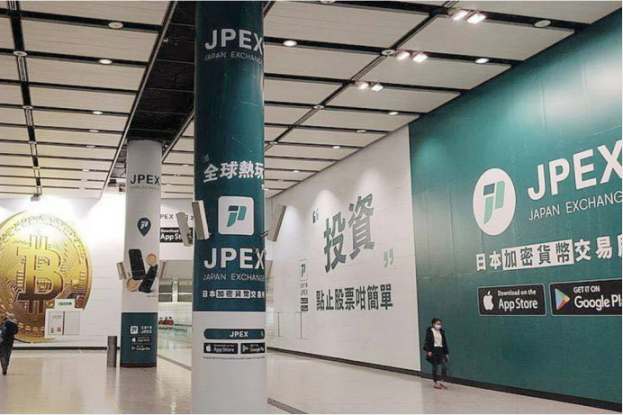
On September 13, 2023, the Hong Kong Securities and Futures Commission (SFC) named JPEX, a self-proclaimed virtual asset trading platform. This is the Hong Kong government’s first regulatory enforcement action since Hong Kong’s new encryption policy.
SFC stated: JPEX actively promotes the platform’s services and products to the Hong Kong public through social media influencers and OTC. None of the JPEX entities have been licensed by the SFC, and have not applied for a license from the SFC to operate a virtual asset trading platform in Hong Kong. JPEX responded on its official website: It has been unfairly suppressed by the Securities and Futures Commission. The Securities and Futures Commission should also bear full responsibility for damaging the development prospects of Hong Kongs cryptocurrency.
In the following days, users discovered that the platform had restricted withdrawals in disguise, JPEX’s booth at Token 2049 was empty, and there were unusual financial activities on the chain, involving 190 million USDT. The China Securities Regulatory Commission said it had referred the case to the police for follow-up, and the police continued to receive reports and arrested many people, including KOLs and Internet celebrities, on suspicion of conspiracy to commit fraud.
The Hong Kong Securities and Futures Commission (SFC) issued an announcement on September 20, 2023, pointing out that JPEX, which claims to be a virtual asset trading platform, operates without a license in Hong Kong and may defraud investors. As of the 23rd, the police had received reports from 2,305 people, with the amount involved reaching 1.43 billion yuan. The incident was widely implicated and attracted widespread social attention.
(https://www.scmp.com/news/hong-kong/law-and-crime/article/3235185/jpex-cryptocurrency-scandal-hong-kongs-mtr-corp-removes-outdated-online-ad-trading-platform-amid)
On September 25, the SFC stated at a press conference on virtual asset trading platform issues: It will optimize the current virtual asset trading supervision in four aspects, further strengthen the release of virtual asset investment information and investor education, and improve Public awareness of virtual trading platforms.
In view of this, SFC will take the following measures: (1) Publish a list of four types of virtual asset platforms online, including platforms with existing licenses, closed platforms, platforms that have been licensed, platforms that have newly applied for licenses, etc. ; (2) In order to make it easier for citizens to recognize and increase vigilance, SFC will publish a list of suspicious platforms on its website; (3) SFC will jointly carry out a series of publicity activities with the Investor and Financial Education Committee to strengthen awareness of Investor education; (4) Increase information collection, track suspicious illegal trading platforms in a timely manner, and impose judicial sanctions on them.
In addition to the above measures, the SFC will continue to strengthen cooperation with the police and explore the establishment of special channels to exchange information on suspicious activities and irregularities on virtual asset trading platforms, and work together to bring violators to justice. At the same time, the SFC will continue to review the existing regulatory system and supplement and improve it based on the actual situation.
SFC CEO Liang Fengyi emphasized: Hong Kong currently has a number of measures to provide protection for investors, and Hong Kong’s announced virtual asset development policy will not be changed just because of suspected illegal activities.
Web3 Xiaolu Comments:In fact, judging from the entire incident, some of JPEXs deceptive methods are indeed childs play in the eyes of veteran leeks in the currency circle, such as KOL celebrity endorsements, well-known institutions such as JPX and Visa, and the MLM model of inviting profit-sharing per head, and high interest rates to attract savings. These methods were common in previous P2P pyramid schemes, and they are even embarrassing to compare with FTX.
But why are there still so many victims? The SFCs request to strengthen investor education at the press conference tells us the answer, that is, investor education needs to be provided to newcomers who enter the circle, and new leeks need to be provided with profound lessons. This is actually one of the goals of the SEC that Gary Gensler often talks about - protecting the interests of investors. The purpose of the SECs regulatory enforcement is more directed at traditional financial market investors rather than crypto market investors.
The Hong Kong government’s first regulatory enforcement after this new encryption policy shows that Hong Kong’s encryption supervision still has a long way to go. Although we have seen that the cases involve many victims, the real victims are Hong Kong’s cryptosphere, which is still in its infancy.
REFERENCE:
[ 1 ] IMF-FSB Synthesis Paper: Policies for Crypto-Assets
[ 3 ] DOJ, Tornado Cash Founders Charged with Money Laundering and Sanctions Violations
[ 4 ] SEC Charges Creator of Stoner Cats Web Series for Unregistered Offering of NFTs





