


LD Capital 9.4 Weekly Report: Bad News Supports US Stocks, China Stabilizes, Last-Minute Surge in 30Y, BTC Door Painting.



Key Points:
- Over the past week, the stock markets, gold, and short-term bonds in developed countries and China have all risen, with only long-term bonds and digital currencies seeing declines;
- On Friday, long-term government bonds rose without any apparent reason, and there is still room for both long and short-term bonds to move in both directions, becoming potential pressure in the future;
- E-commerce companies such as Alibaba and Pinduoduo have generally performed better than expected, indicating that potential demand may accumulate momentum and support the initial recovery of the Chinese stock market;
- China's PMI unexpectedly jumped to a six-month high, indicating that stimulus policies have been effective;
- The positive effect of Grayscale's victory in the lawsuit is not substantial because the SEC can appeal again and refuse for other reasons in the next window in mid-October. However, benefiting from the optimistic sentiment in the US stock market, GBTC recorded a weekly increase of 6%, ETHE+ 2.4%, COIN+ 4.6%, which is much better than the performance of the crypto spot market. Investing in these types of assets can provide better risk-return ratios;
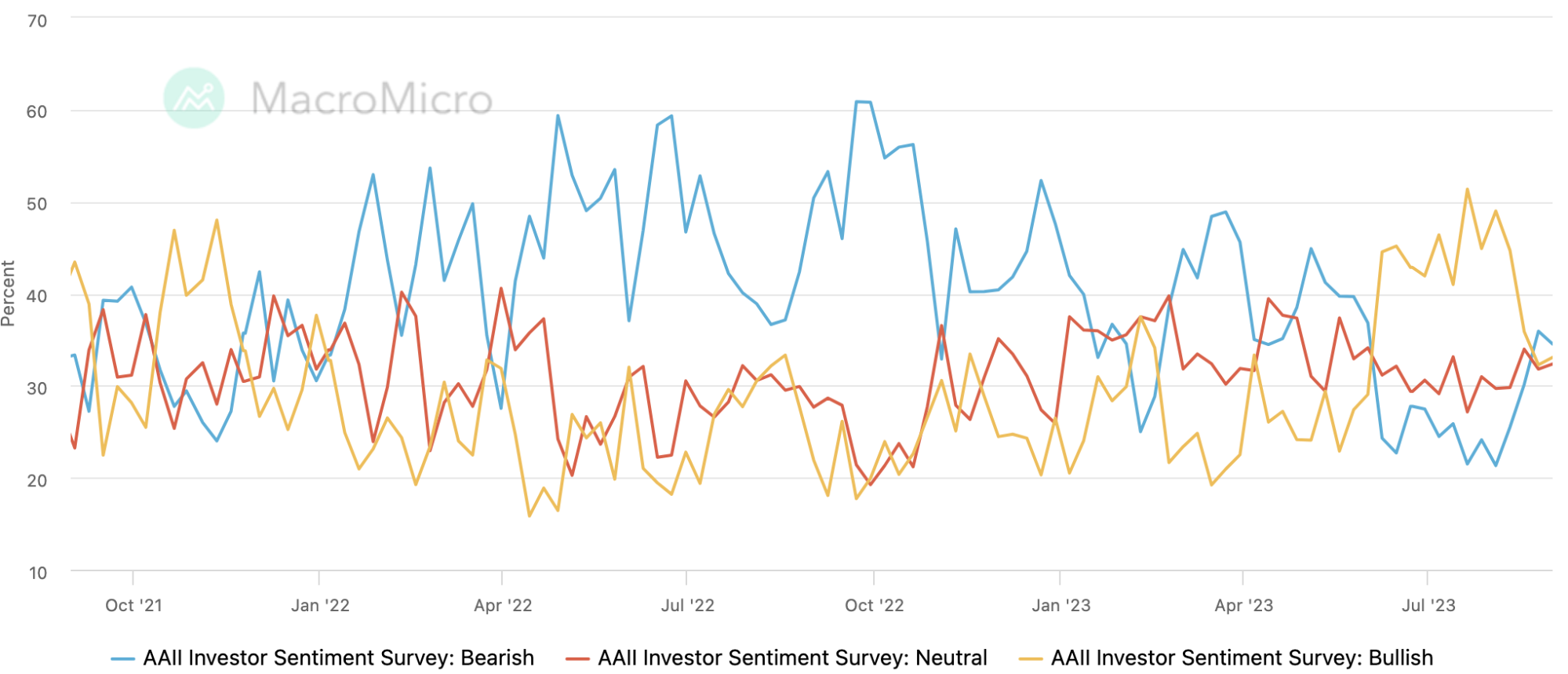
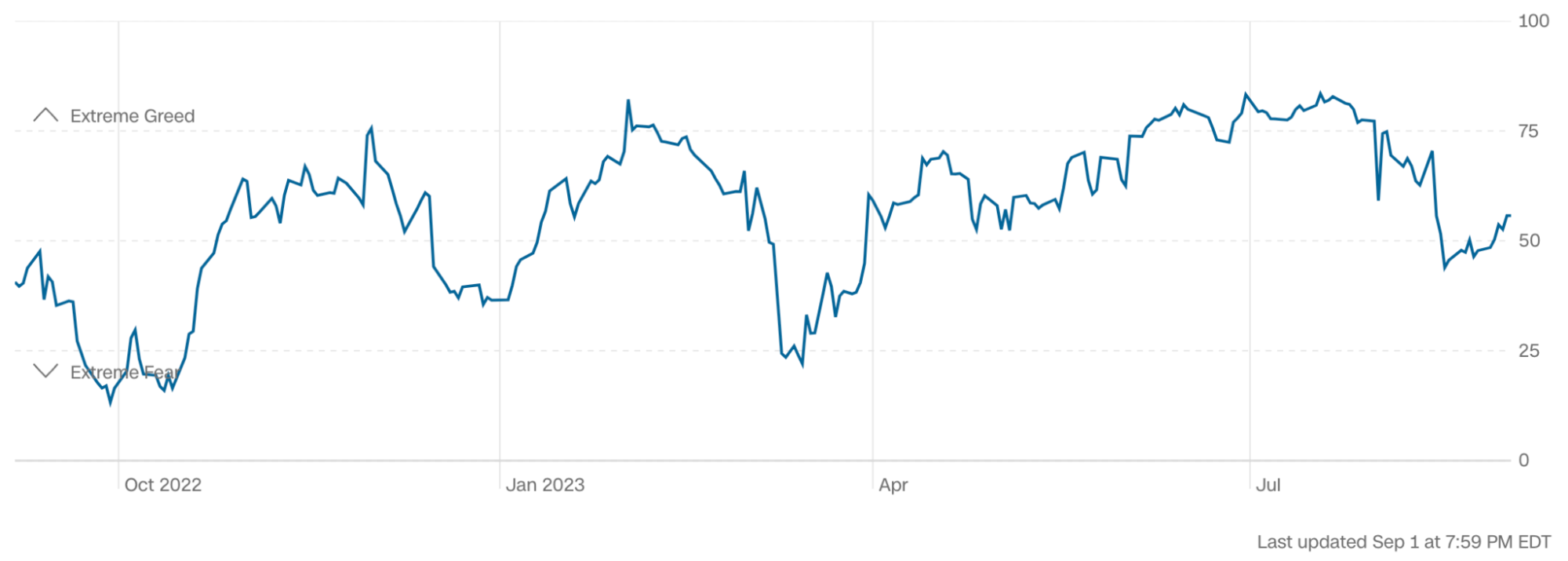
- The investor sentiment indicators for AAII and CNN have turned slightly optimistic; Deutsche Bank's subjective investor statistics showed an increase in positions last week, while systematic investors decreased their positions.
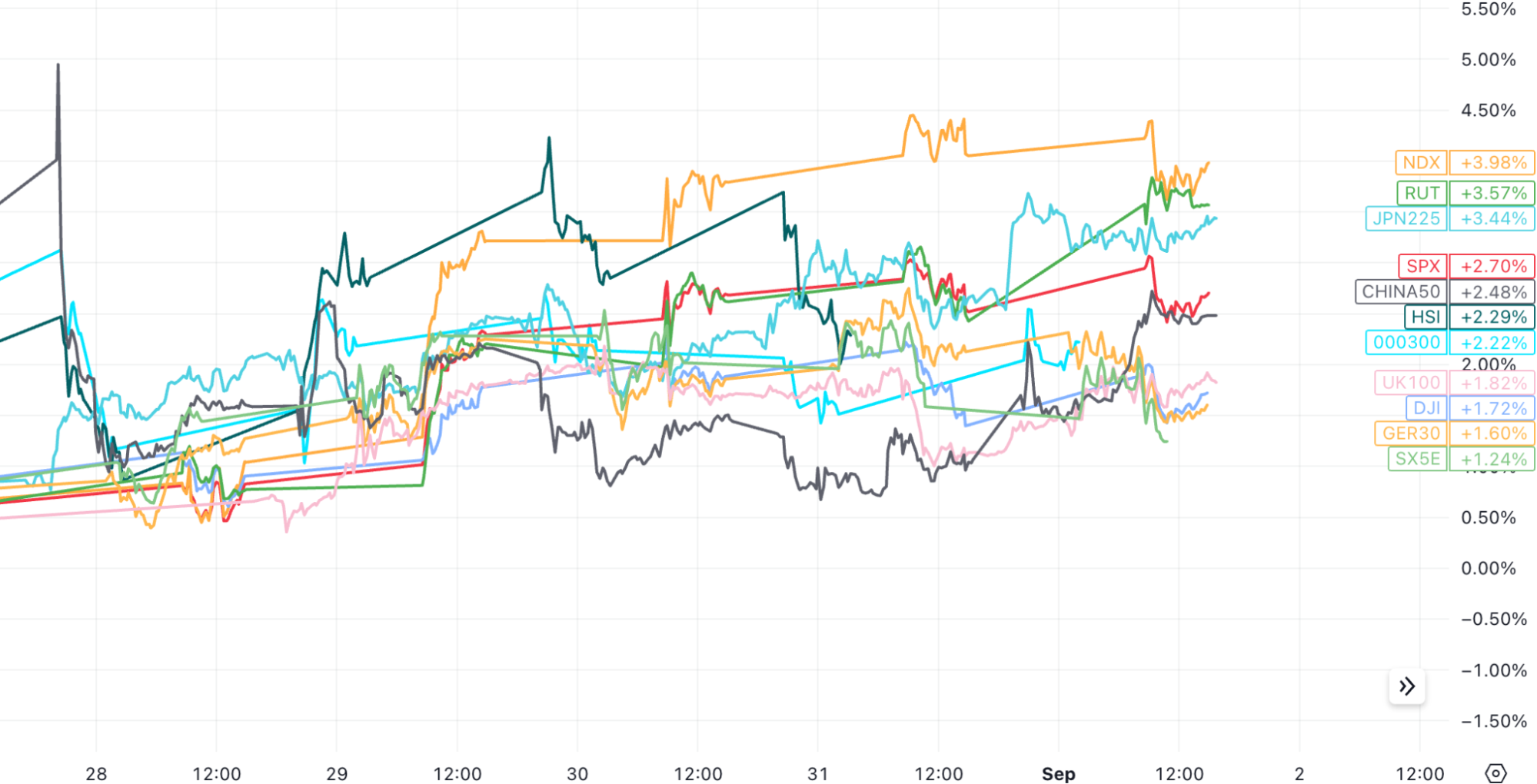
Last week was a very happy week for most investors around the world. Not only in developed countries, but also in the recently underperforming Hang Seng and mainland Chinese stocks, there was a rebound from the previous decline. The S&P 500 index rose 2.5% last week, with four out of five trading days showing gains, marking the best weekly performance since mid-June. This was driven by expectations of an economic slowdown brought about by data, which strengthened bets that the Federal Reserve may postpone further interest rate hikes.
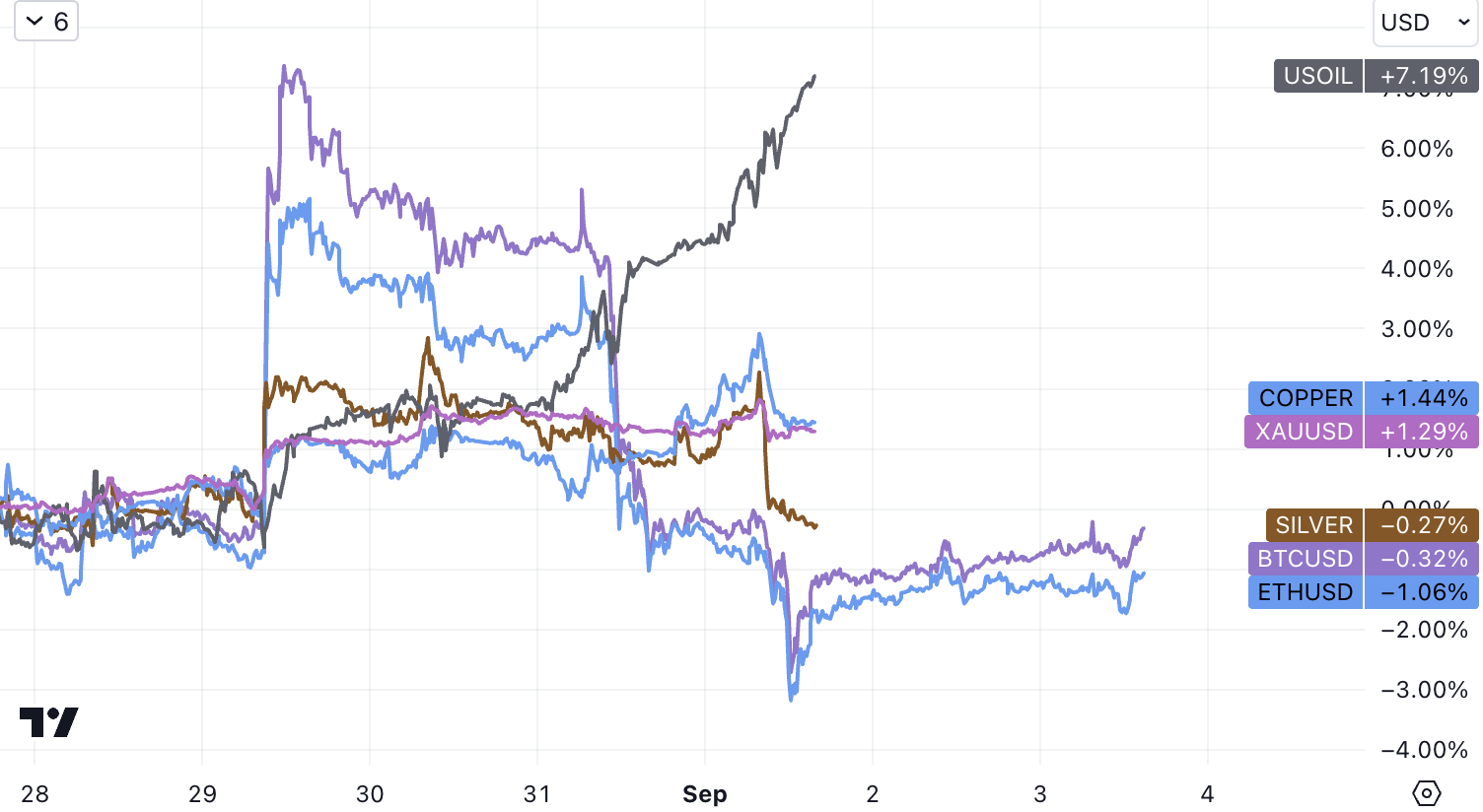
In addition, the Nasdaq 100 index, which tracks tech stocks, surged 3.8%, and the small-cap Russell 2000 index rose by 3.6%. The U.S. dollar fell and then recovered throughout the week. Gold, which had been suppressed by the U.S. dollar and interest rates, saw a second week of rebound, rising by 1.3%. WTI crude oil rose by 7.8%, mainly supported by Russia's agreement to further cut production with OPEC+ and the continued decline in U.S. crude oil inventories to the lowest level since the end of last year.
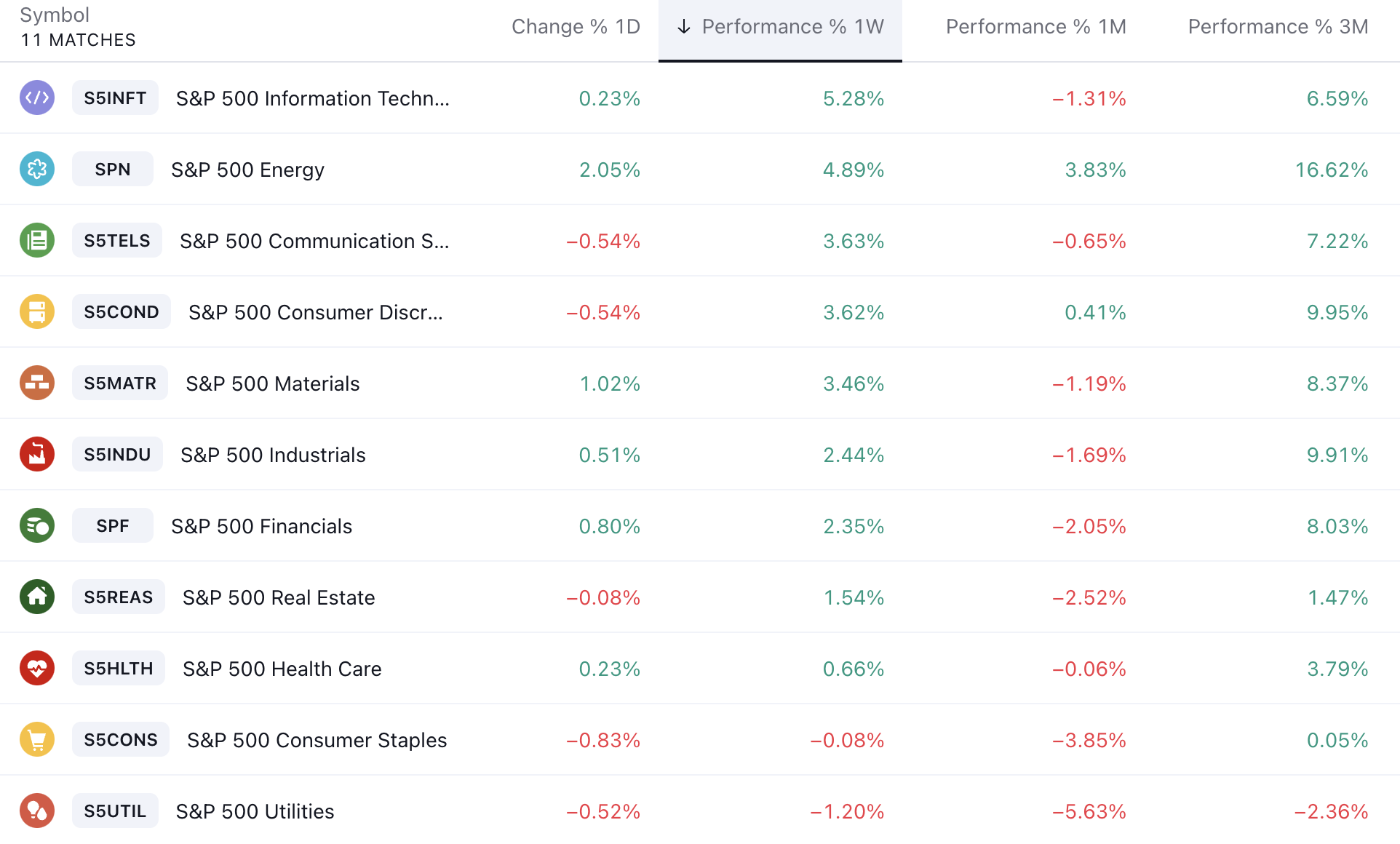
The performance of the S&P 500 industry sectors clearly favored the aggressive ones, with technology and energy being the strongest and utilities and consumer staples being the weakest:
However, as we observed before, cryptocurrencies have shown a weak response to macroeconomic factors. Even in the case of a favorable macro environment last week, Bitcoin fell by 1% and Ethereum fell by 1.4%. This divergence requires some industry-specific positive factors to reverse. For example, when Grayscale won the lawsuit last week and the possibility of an ETF emerged, the market originally had the intention to restore valuation. Unfortunately, this positive factor is not substantial enough because the SEC can continue to appeal or reject it for other reasons. As a result, the market ended up in a downward trend.
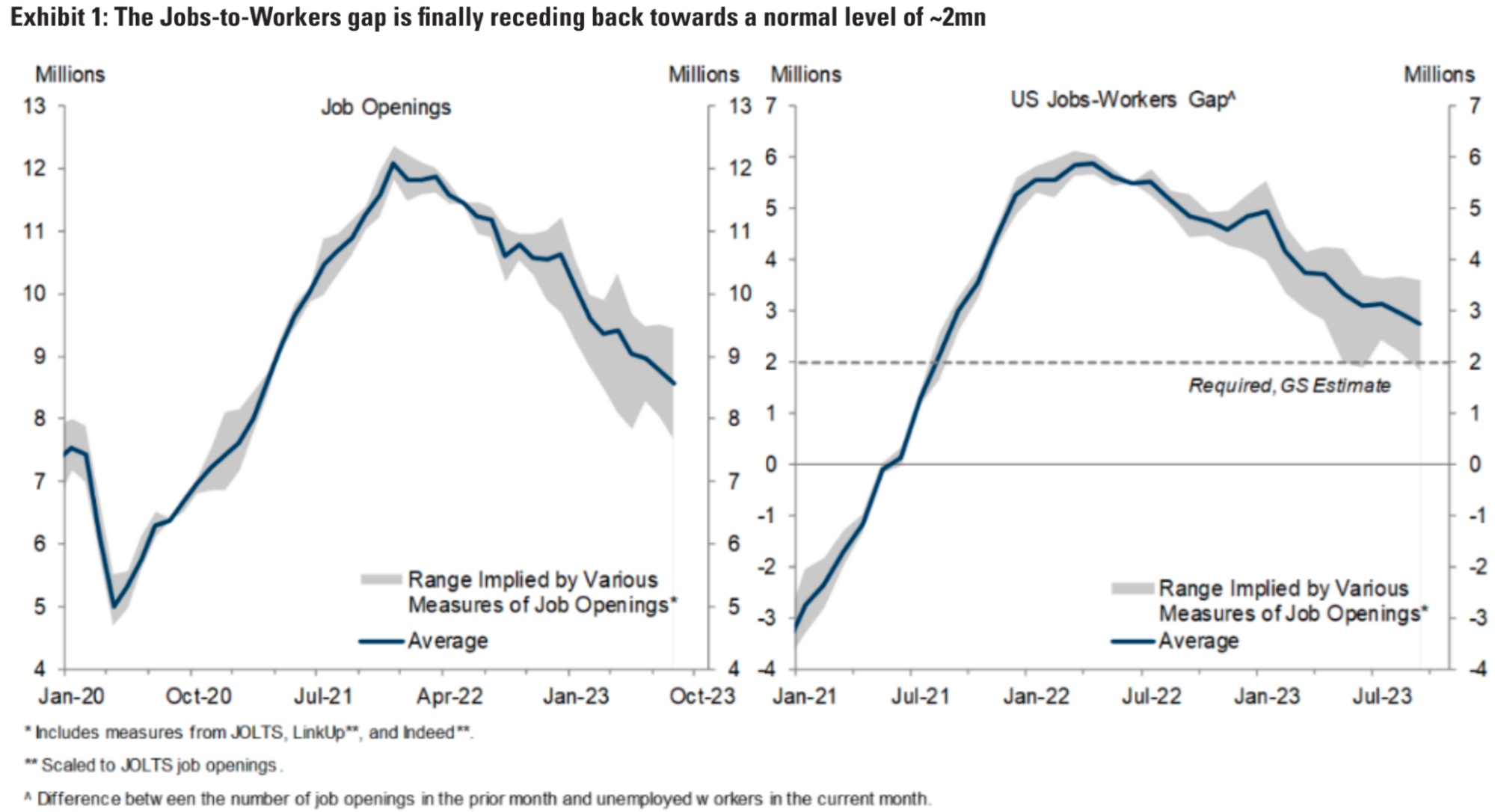
The two most important macro data points are:
On Tuesday, JOLTS job openings fell to a 2-year low, and Friday's non-farm payroll report showed an increase in the unemployment rate. Market participants were encouraged by these data points, which indicate that the overheated labor market is finally showing signs of fatigue and the effects of the Federal Reserve's aggressive tightening actions are becoming apparent. The market hopes that these reports are enough to convince the Fed to stop raising interest rates (although initial jobless claims have fallen for the third consecutive week, contradicting this notion).
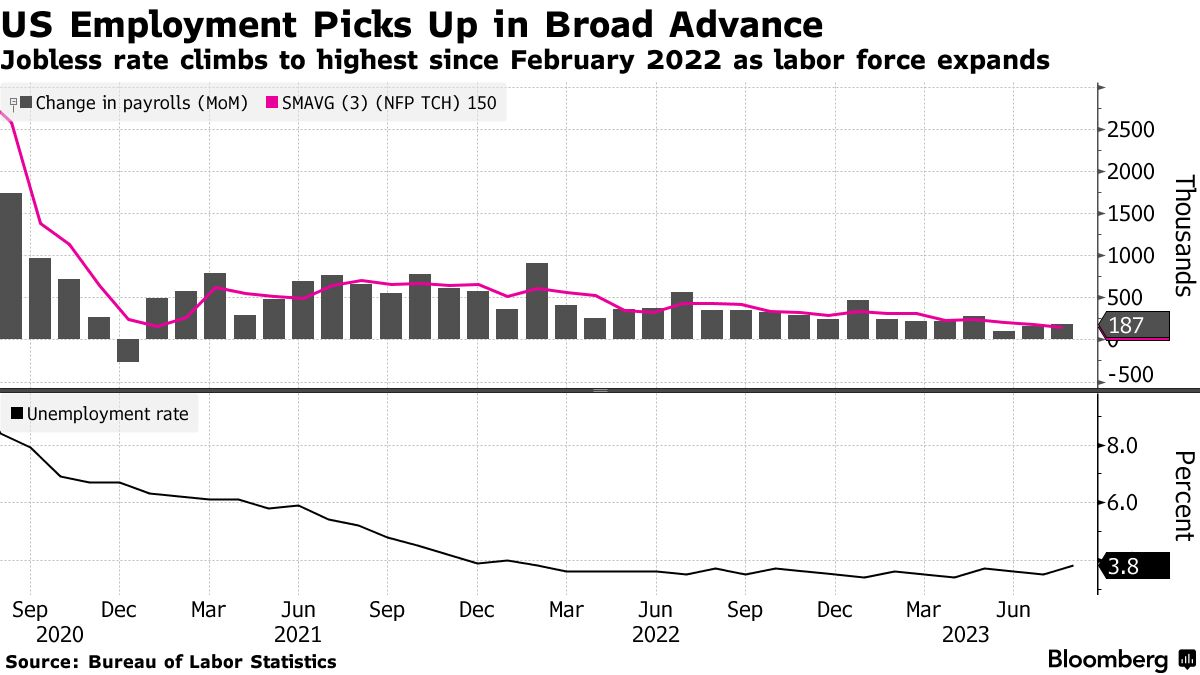
In addition, many people are puzzled why non-farm payroll numbers exceeded expectations but the unemployment rate still rose. This situation has occurred more than once this year. The main reason is that the total size of the employment army has increased (which is also related to savings depletion). Therefore, the labor force participation rate and working hours have increased correspondingly. Although the wage growth rate has slowed down, considering the increase in working hours, the total income growth remains at a certain level, so it has not had a negative impact on the economy.
Another important but limited impact data is:
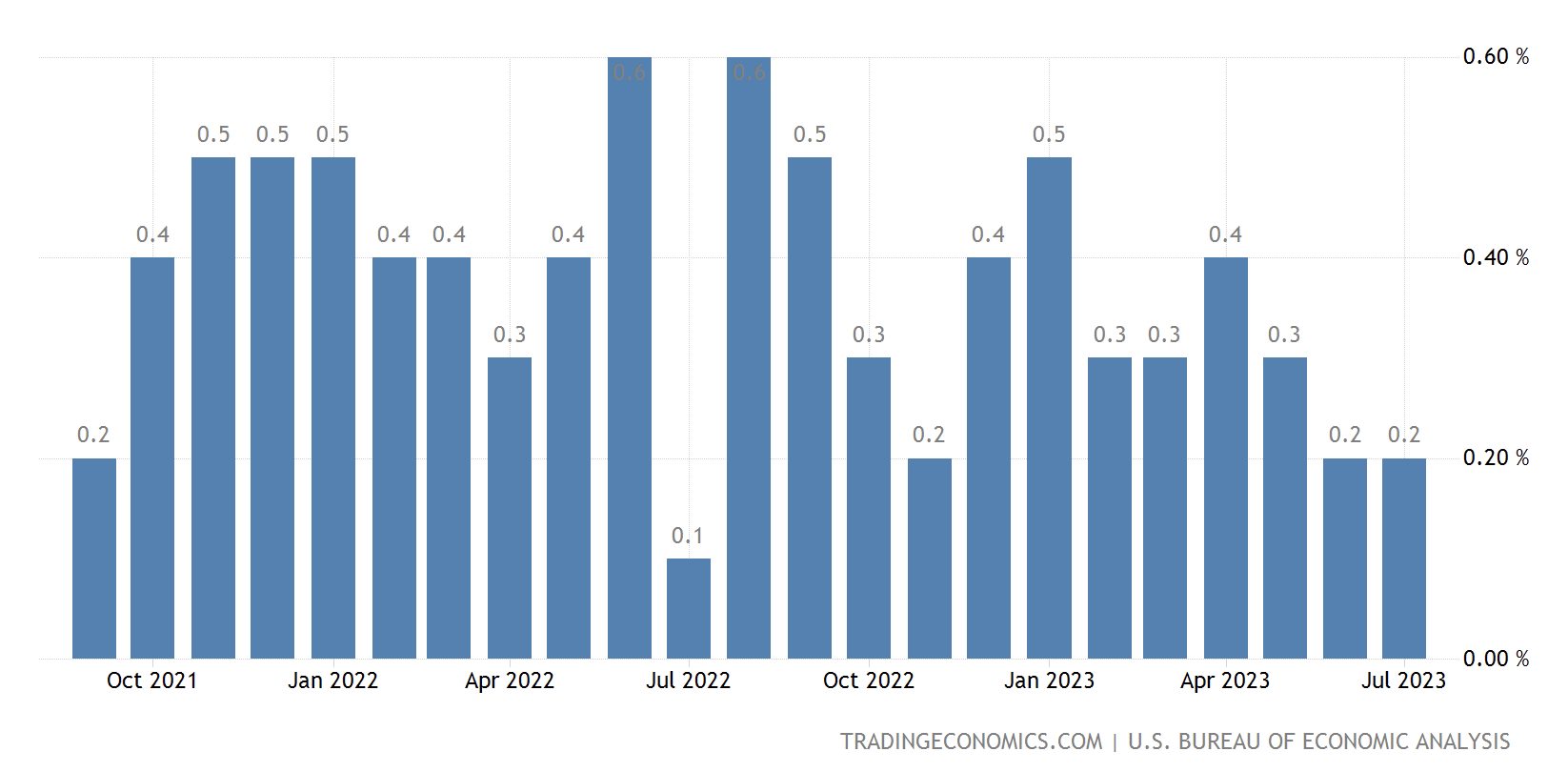
In July, the core PCE price index rose by 0.22% month-on-month, the smallest consecutive increase in two years. After adjusting for inflation, consumer spending further increased by 0.6% month-on-month, but real disposable income, which supports consumer spending, fell by 0.2% month-on-month. The personal savings rate fell to 3.5%, indicating that the pace of spending may not continue in the coming months.
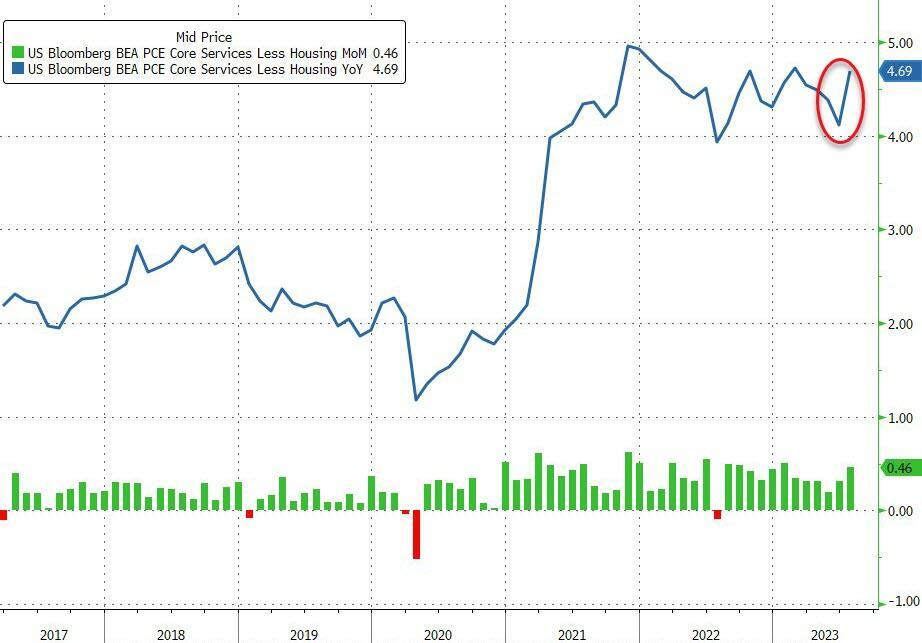
It is worth noting that the Fed's view on removing housing from service sector inflation is more concerning, and the corresponding PCE price index shows that service sector inflation remains largely high:
U.S. manufacturing improved in August: final value of Standard & Poor's Manufacturing PMI at 47.9 vs initial value of 47.0, and ISM Manufacturing PMI at 47.6 vs expected 47.0. Manufacturing has been in contraction for some time, but there have been some signs of recovery in the past two months. However, we suspect that this survey will deteriorate again in the coming months as it appears that a strike by auto workers is imminent.
Global manufacturing PMI improved in August, but there are significant differences in PMI levels among countries. Overall, emerging market countries perform better than developed countries, and among developed countries, North America and Japan outperform Europe.
Strong US Dollar and Yield
The US dollar exchange rate rebounded strongly throughout August, with the US dollar index (DXY) rising by about 2.2% in August. It reached its peak on August 25 during Jerome Powell's speech at Jackson Hole and then fell back in the last week of August, ending a four-week rally. The trend of the US dollar is highly correlated with the market interest rates. The two-year yield reached near its highest point for the year last week, briefly surpassing 5.1%. However, in the last three days of August, it experienced a sharp drop of over 25 basis points. Along with the pricing changes in the futures market, this confirms that the market has almost completely abandoned the possibility of a rate hike in September, mainly due to the volatility brought by August employment market data (led by JOLTS).
In August, the BRICS countries held a meeting to discuss gold-backed currencies or trade settlement tokens, but there were no substantial outcomes. Ironically, while there is widespread discussion about de-dollarization, the weight of the US dollar has further increased. This is demonstrated not only by the strong exchange rate price, but also by its usage on SWIFT, reaching a historical high of 46% in July. The increase in the US dollar's share mainly comes at the expense of the euro, whose share has dropped to slightly below a record low of 25%. The share of the Chinese yuan is slightly above 3%.
In the late trading session on Friday, the long-term US treasury bond yields experienced a V-shaped reversal and continued to rise, with the 30-year bond yield recovering all the losses of the past three days. The stock market remained calm in response to this, while gold and bitcoin were more affected. During the same period, BTC plunged from 26,000 to 2.5400, gold fell from 1950 to 1936.
Given the dovish data of the day, it is difficult to explain why bonds were sold off, but the trend is worth noting. Currently, the long and short-term yield curve inversion is still significant, and there is still considerable "two-way rush" space for long and short-term bond rates. If there is no crisis, it would be a good thing for the market if the short end declines faster. However, if the long end rises faster, the market will have to endure a period of pressure.
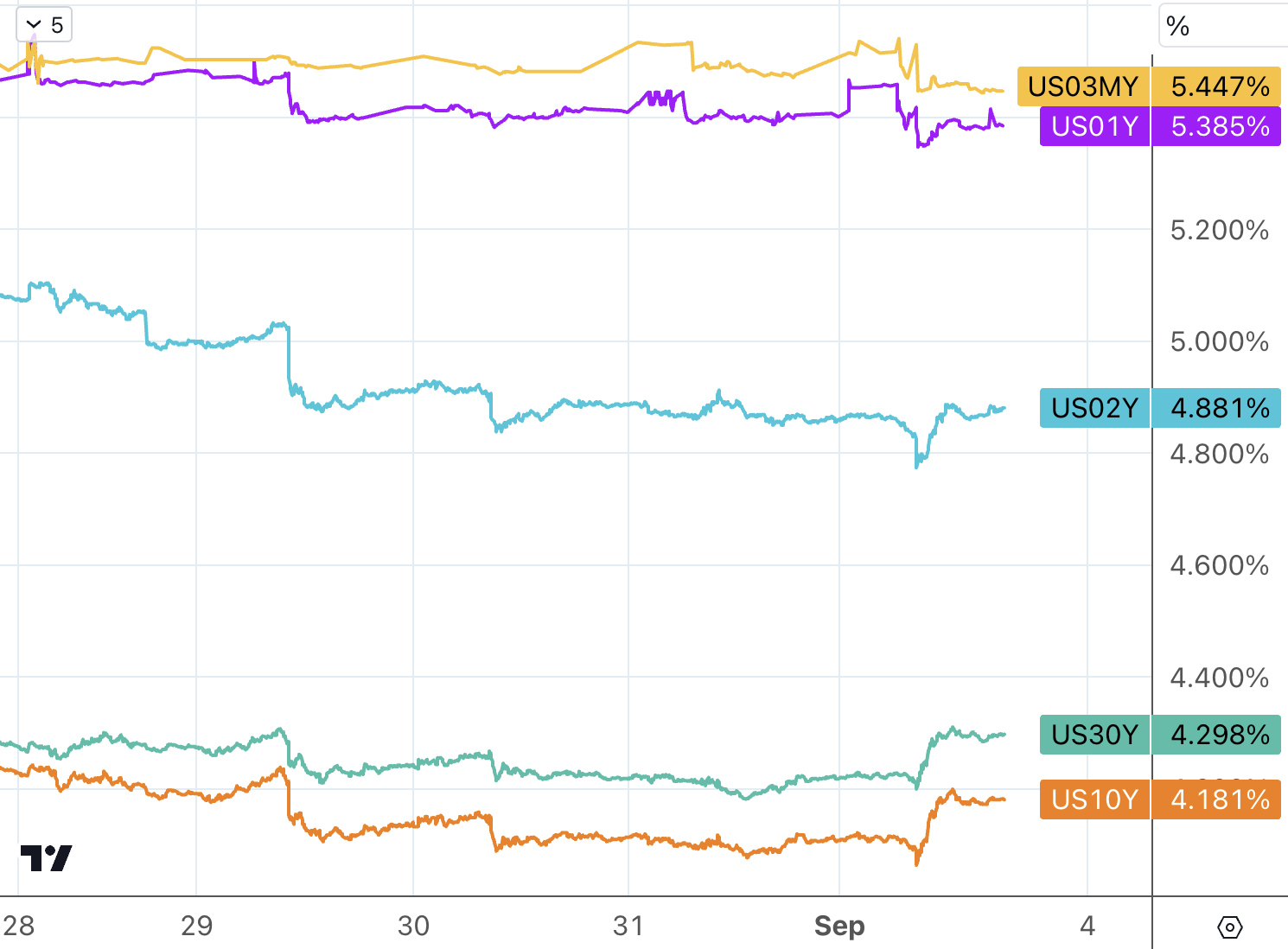
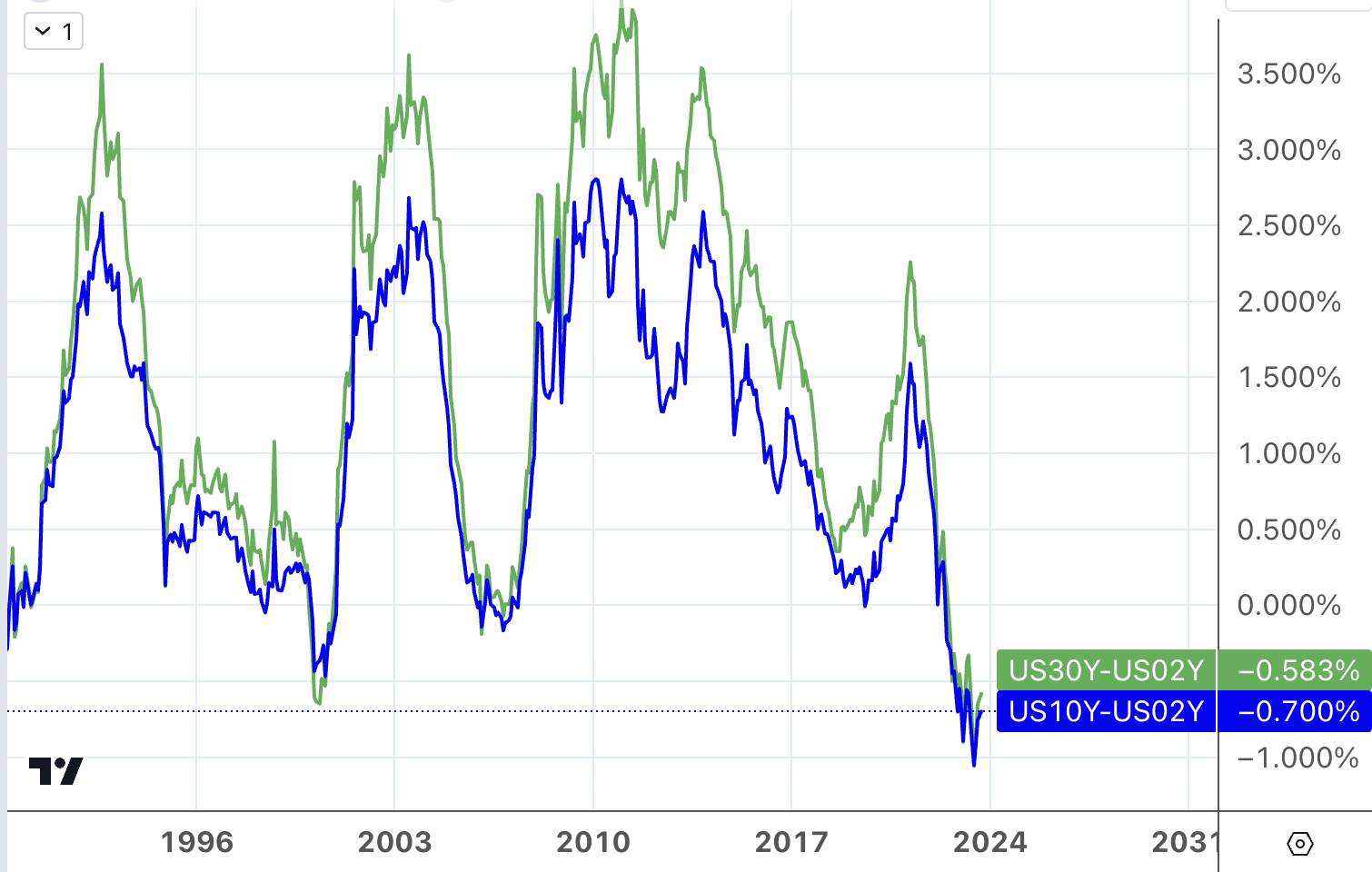
In the first half of August, long-term bonds led the risk-free interest rates to rise sharply, and short-term rates caught up from 22nd to 28th, causing a pullback in long-term bonds. Regarding the strong performance of interest rates, the trigger factors were stronger-than-expected economic activities, increased supply, and Fitch downgrading the U.S. rating. Of course, fundamentally, it is not reasonable to have an inverted yield curve for long and short bonds, which has accumulated for more than a year.
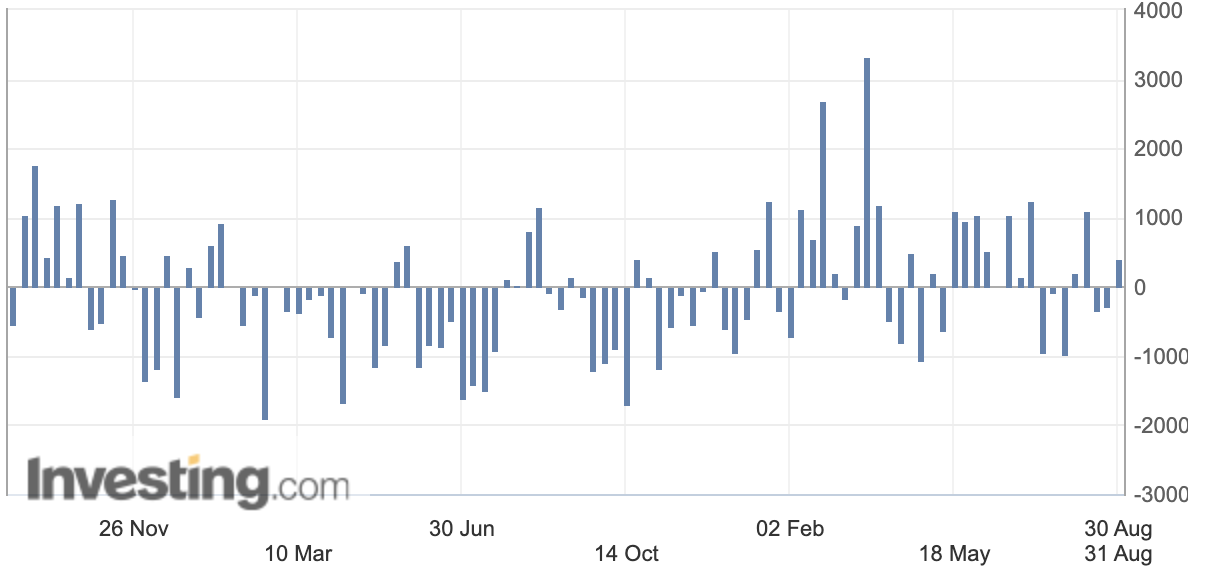
Some people also believe that the adjustment of the yield curve control by Japan at the end of July is responsible for the global bond sell-off at the beginning of August. However, the weekly investment portfolio liquidity report from the Ministry of Finance shows that Japanese investors have been buying foreign bonds. In fact, since the upper limit of the 10-year Japanese government bond yield doubled from 0.25% to 0.50% in December last year, they have been net buyers of foreign bonds for most of the time. The chart below shows the weekly net flow of foreign bonds by Japanese investors over the past two years (in billions of yen):
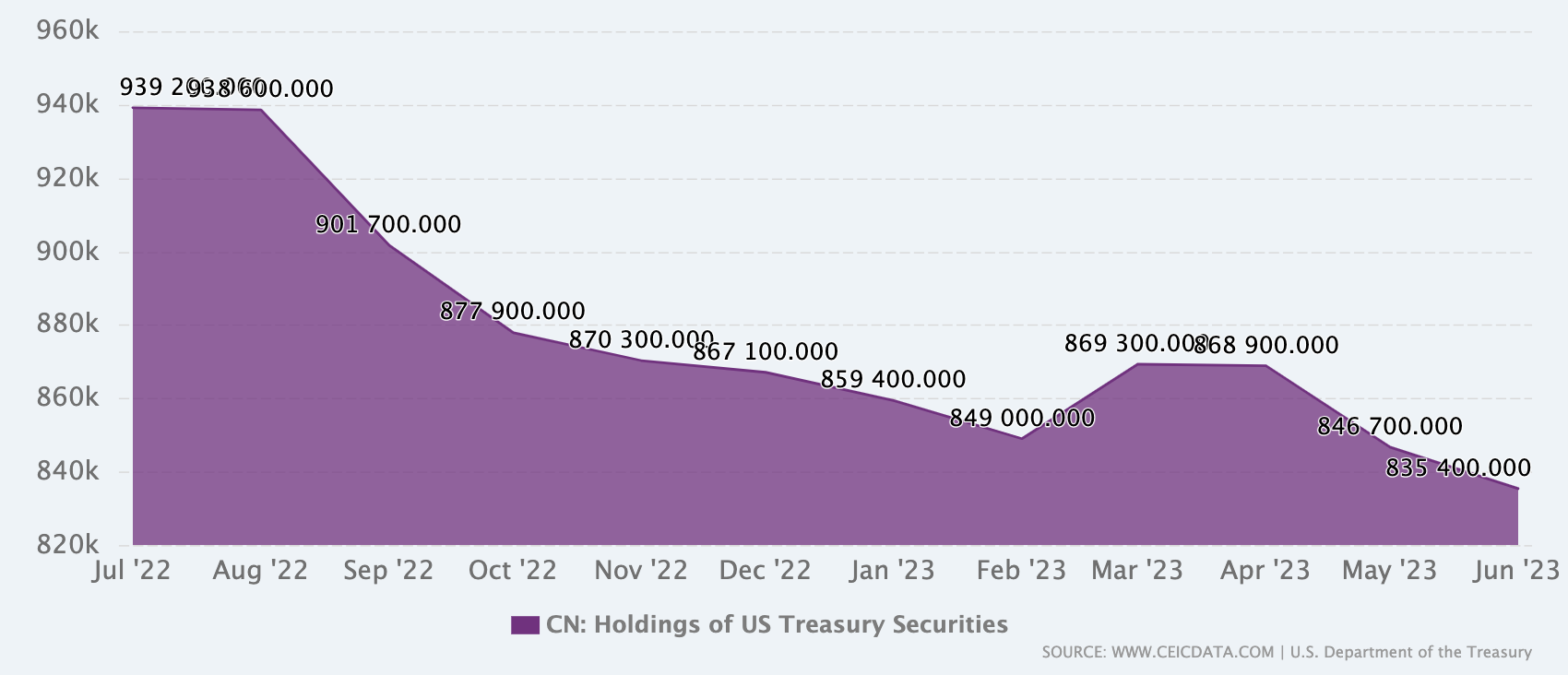
There have also been rumors that China's intervention in the foreign exchange market has put pressure on U.S. bonds. This is possible, but because the data is lagging, we still can't know the situation in August:
China Stabilizes
Concerns over China's debt, especially in the real estate sector, were one of the macro themes in August. However, with new stimulus measures being introduced almost every day in the past two weeks, including the first reduction of stock transaction stamp duty since 2008 and lower existing mortgage rates, it seems that panic selling has temporarily stabilized, as seen from the exchange rate and stock market performance. The Nasdaq Golden Dragon Index, representing Chinese ADRs, rose 7.4% for the week, while the Hang Seng Index rose 1.9% and the CSI 300 nominaly dropped 3%, mainly due to a significant gap up on Monday, but actually up 2.2% from the previous Friday's close. The renminbi had narrow fluctuations below the key level of 7.3 last week.
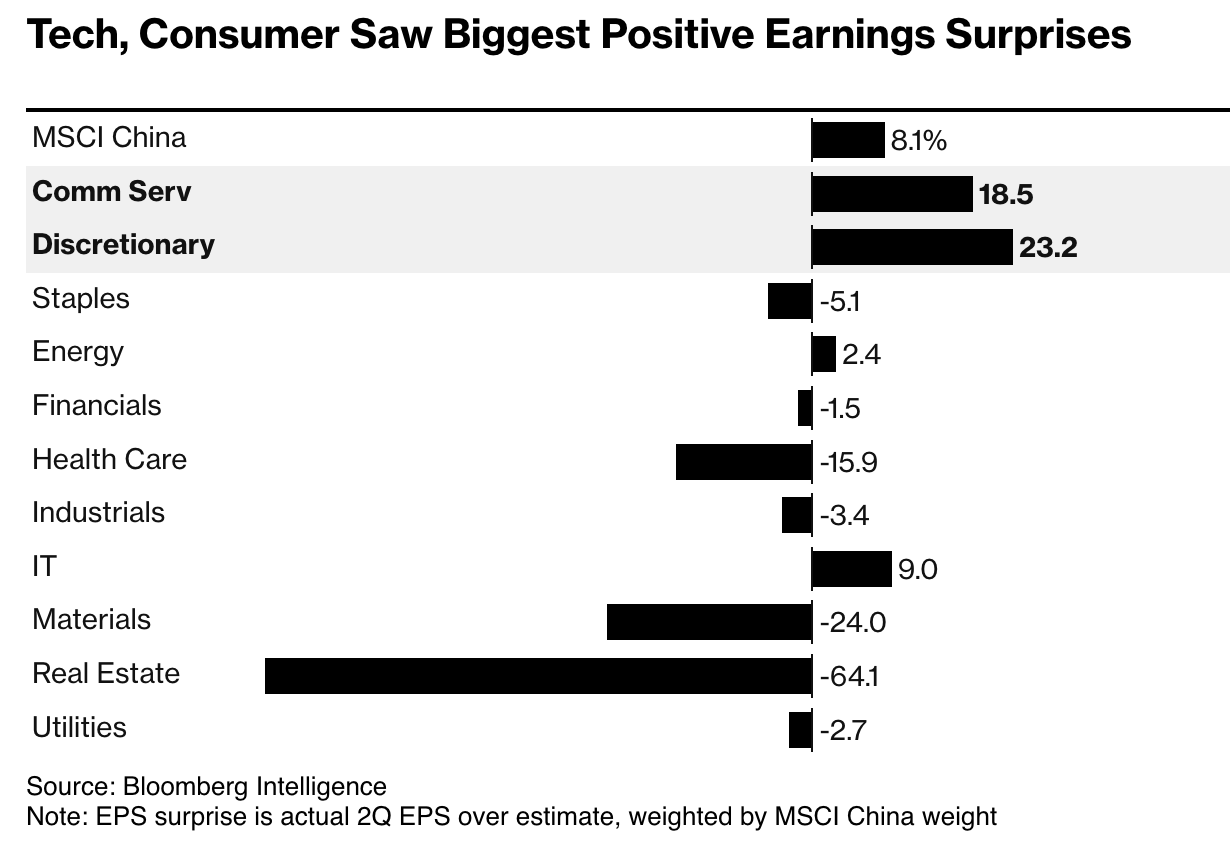
In addition to the real estate sector, which hit bottom in July, China's technology and consumer stocks performed well during the earnings season and showed some resilience.
E-commerce companies like Alibaba and Pinduoduo reported better-than-expected results as they successfully met the pent-up demand from consumers after the lifting of COVID-19 restrictions. Massive spending in food, travel, and entertainment has boosted optimism, and it is believed that potential demand may accumulate momentum and support an initial recovery in the Chinese stock market after a series of market-boosting measures taken by the government recently.
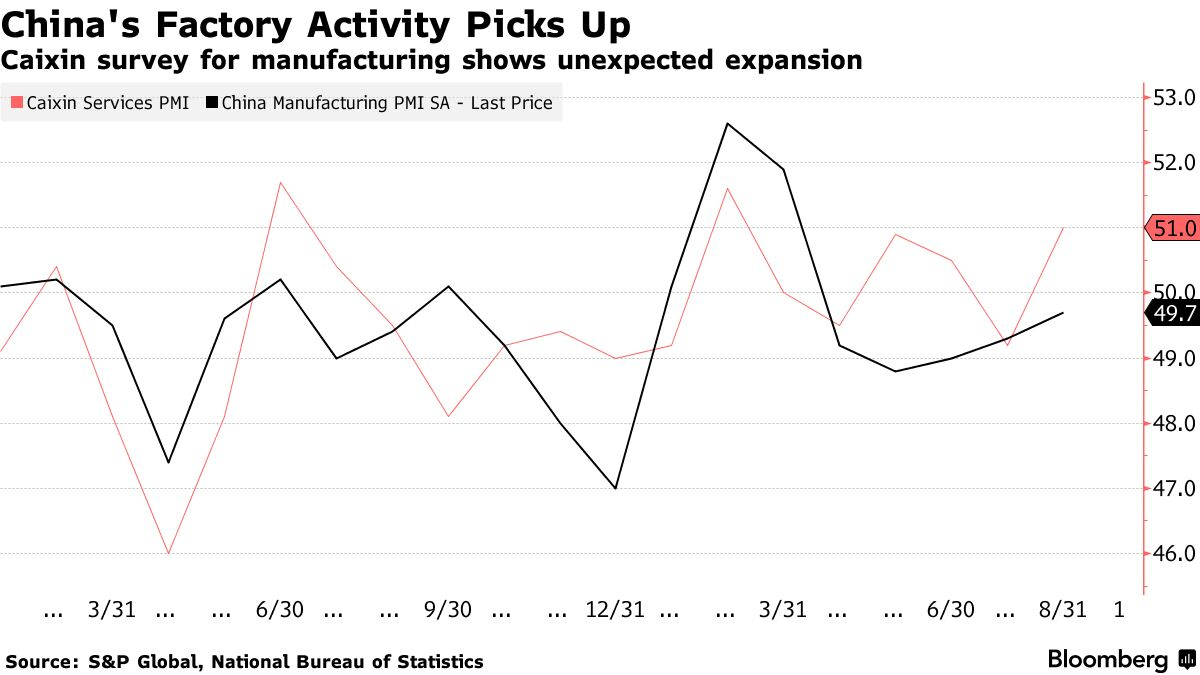
In addition, last week's Caixin Manufacturing PMI unexpectedly expanded to a 6-month high, returning to the expansion zone, further proving that targeted economic stimulus policies are having some effect and indicating that the downturn in factories may be nearing an end. Moreover, there has been notable improvement in the construction industry, as the issuance of local government special bonds and government financing platform bonds has been accelerating, leading to an increase in corresponding infrastructure investment.
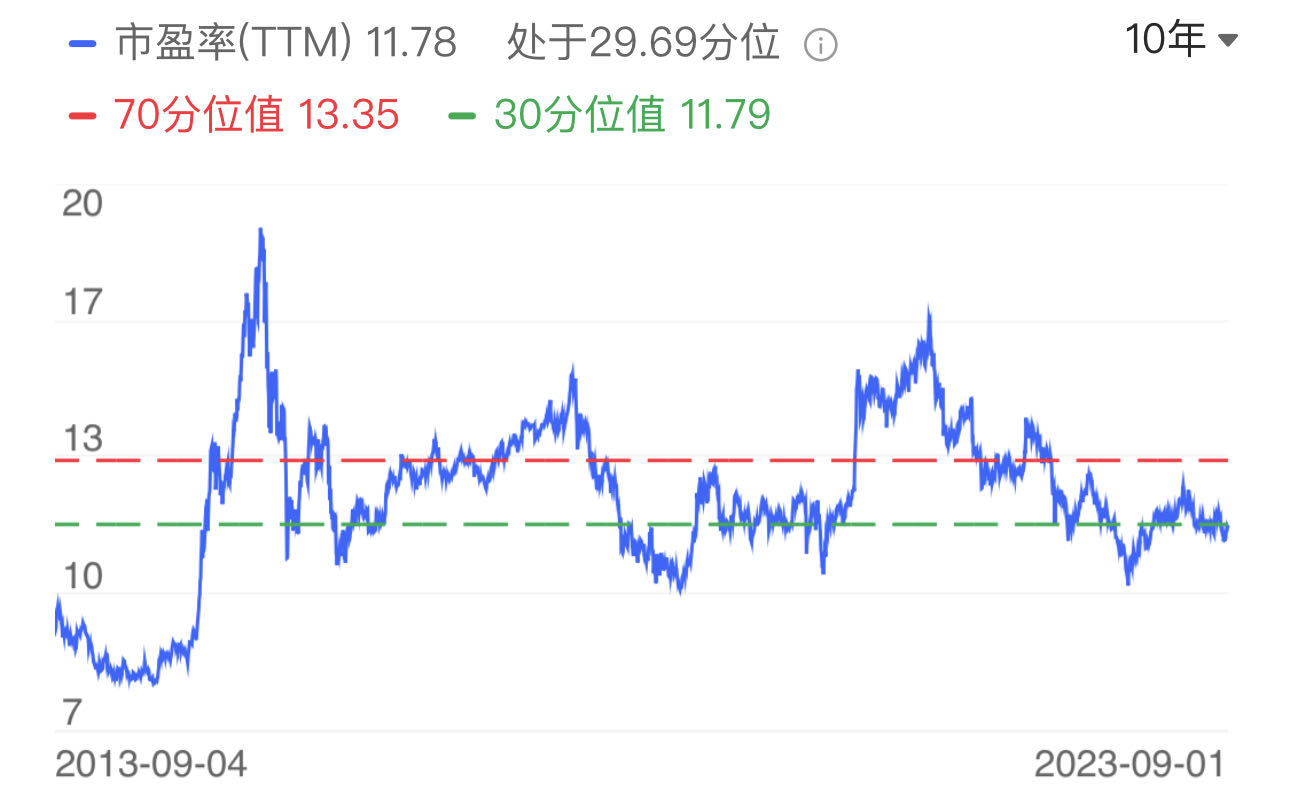
Currently, the Shanghai and Shenzhen 300 Index has a price-to-earnings ratio of 11.8 times, which is in the 29.7th percentile of the range over the past 10 years, indicating relatively low valuation.
US Secretary of Commerce Gina Raimondo met with Chinese officials last week. As the fourth senior US official to visit China this summer, she said that this visit will help establish open channels of communication. On the one hand, she claimed that the US is not seeking to decouple from or hinder the Chinese economy, but on the other hand, she emphasized that export controls are for national security. Overall, both sides have shown some compromises and goodwill, resulting in a cautious and optimistic outcome.
Grayscale Won, But Not Really Winning
Grayscale has won a ruling from the federal court, and the SEC must rescind its rejection of Grayscale's request to convert the Grayscale Bitcoin Trust into a Bitcoin Exchange-Traded Fund (ETF). Previously, the SEC believed that their product failed to meet the requirements for preventing fraud and protecting investors.
The stock price of Grayscale Bitcoin Trust soared by 19%, while Coinbase's stock price jumped by 15% on this news. However, we commented earlier that such positive news is not substantial enough because the SEC can appeal again and reject it based on other reasons.
As expected, when the SEC postponed its decision on spot Bitcoin ETFs for all applicants including BlackRock and Fidelity, BTC and ETH both plunged, giving back all the gains made earlier in the week (although we don't believe there is a direct connection between Grayscale's ETF conversion and the new product offerings by other fund companies).
The former chairman of the SEC stated that despite the delay, the approval of spot Bitcoin ETFs is "inevitable."
After that, Bitwise submitted a request to withdraw its Bitcoin and Ethereum market value weighting ETF application, which was an unexpected move. The application was originally submitted to the SEC on August 3, and Bitwise's withdrawal adds a hint of uncertainty to the outlook for spot ETFs. < p id="cb9d" class="pw-post-body-paragraph lu lv fw lw b lx ly lz ma mb mc md me mf mg mh mi mj mk ml mm mn mo mp mq mr fp bj" data-selectable-paragraph=""> However, benefiting from the optimistic sentiment in the US stock market last week, GBTC recorded a 6% increase for the whole week, ETHE+ 2.4%, COIN+ 4.6%, far better than the performance of the cryptocurrency spot market, demonstrating that investing in such US stock cryptocurrency-related assets can have better risk-return ratios. < p id="f291" class="pw-post-body-paragraph lu lv fw lw b lx ly lz ma mb mc md me mf mg mh mi mj mk ml mm mn mo mp mq mr fp bj" data-selectable-paragraph=""> Last week's market was a mini version replay of the mid-June market. When BlackRock unexpectedly submitted a BTC spot fund application to the SEC, the price of Bitcoin was around $25,000. In the following weeks, the price soared by more than 20%, but due to the extended waiting time and the rise in market interest rates, overall interest in cryptocurrencies weakened, and the price fell back to the level before BlackRock's application in mid-August. < p id="4ba3" class="pw-post-body-paragraph lu lv fw lw b lx ly lz ma mb mc md me mf mg mh mi mj mk ml mm mn mo mp mq mr fp bj" data-selectable-paragraph=""> The next date worth paying attention to: After the delay last week, the U.S. Securities and Exchange Commission has another 45 days to respond to the issuer, which means that investors will receive a response from the agency before mid-October, but there is still no hope.
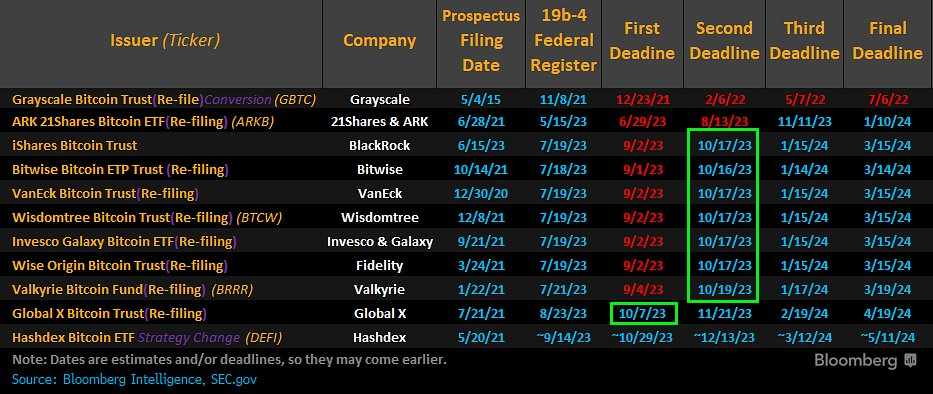
In addition, the earliest Ethereum futures ETFs, including Volatility Shares, Bitwise, Roundhill, and ProShares, have applied to launch ETFs around October 10. According to insiders, regulators are unlikely to block these products.
Fund Flows and Position Changes
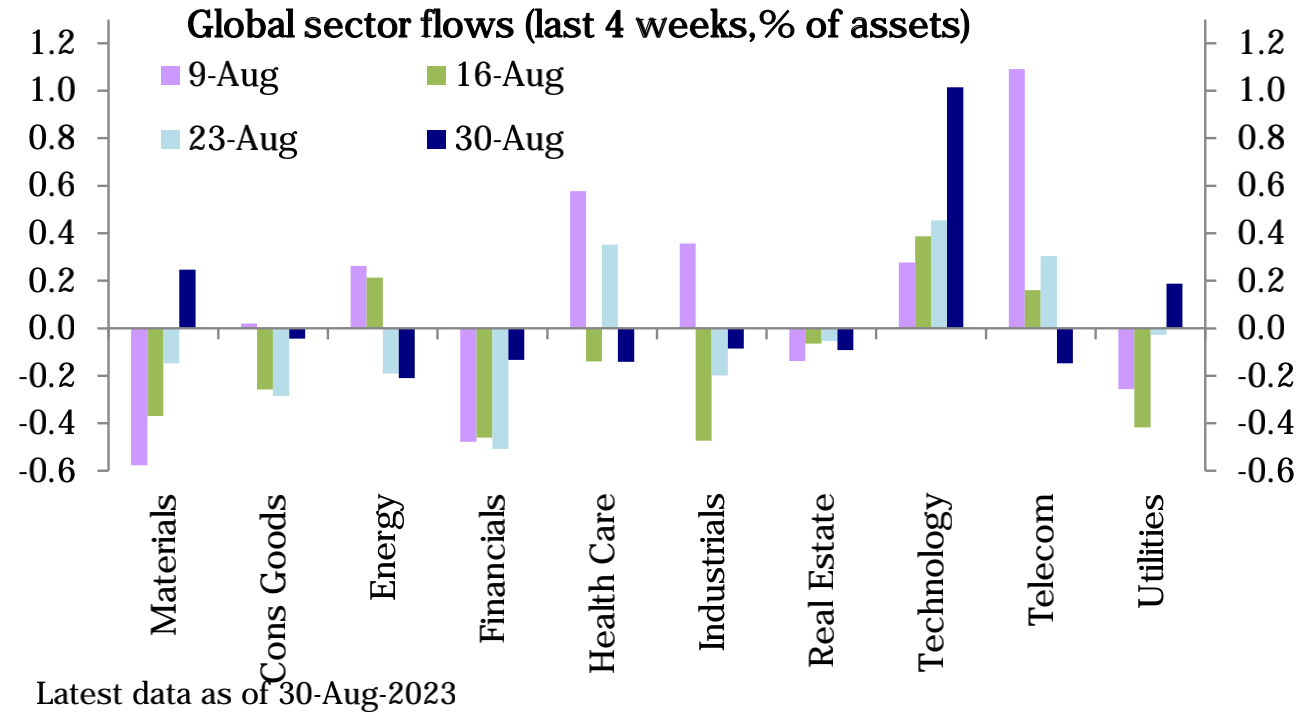
Last week, investors focused on stock funds, particularly in the US and emerging markets, as well as the technology sector. Subjective investors increased their positions while systematic strategy funds reduced their positions.
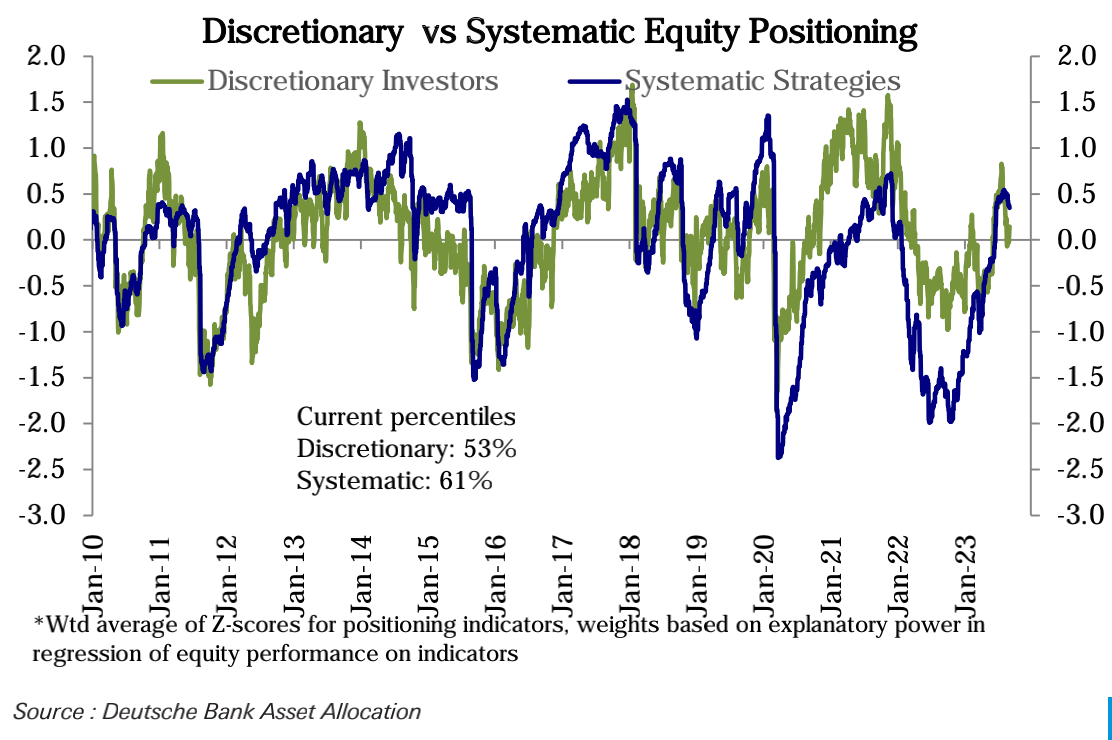
According to indicators calculated by Deutsche Bank, the subjective investor position in the US stock market has recently dropped sharply to slightly below neutral levels since the end of July. It slightly rebounded last week and returned above neutral levels, currently at a historical 53rd percentile. On the other hand, systematic strategy positions have been consistently rising since mid-June, but they declined in the past two weeks and currently stand at a historical 61st percentile.
Stock funds received the largest net inflow in five weeks of $10.3 billion, mainly from the United States ($4.5 billion) and emerging markets ($4.9 billion). Bond funds saw a slight increase in net inflows of $1.7 billion compared to the previous two weeks. Money market funds had a net inflow of $6.5 billion, with a net inflow of $10.7 billion in the United States and a net outflow of $4.5 billion in Europe:
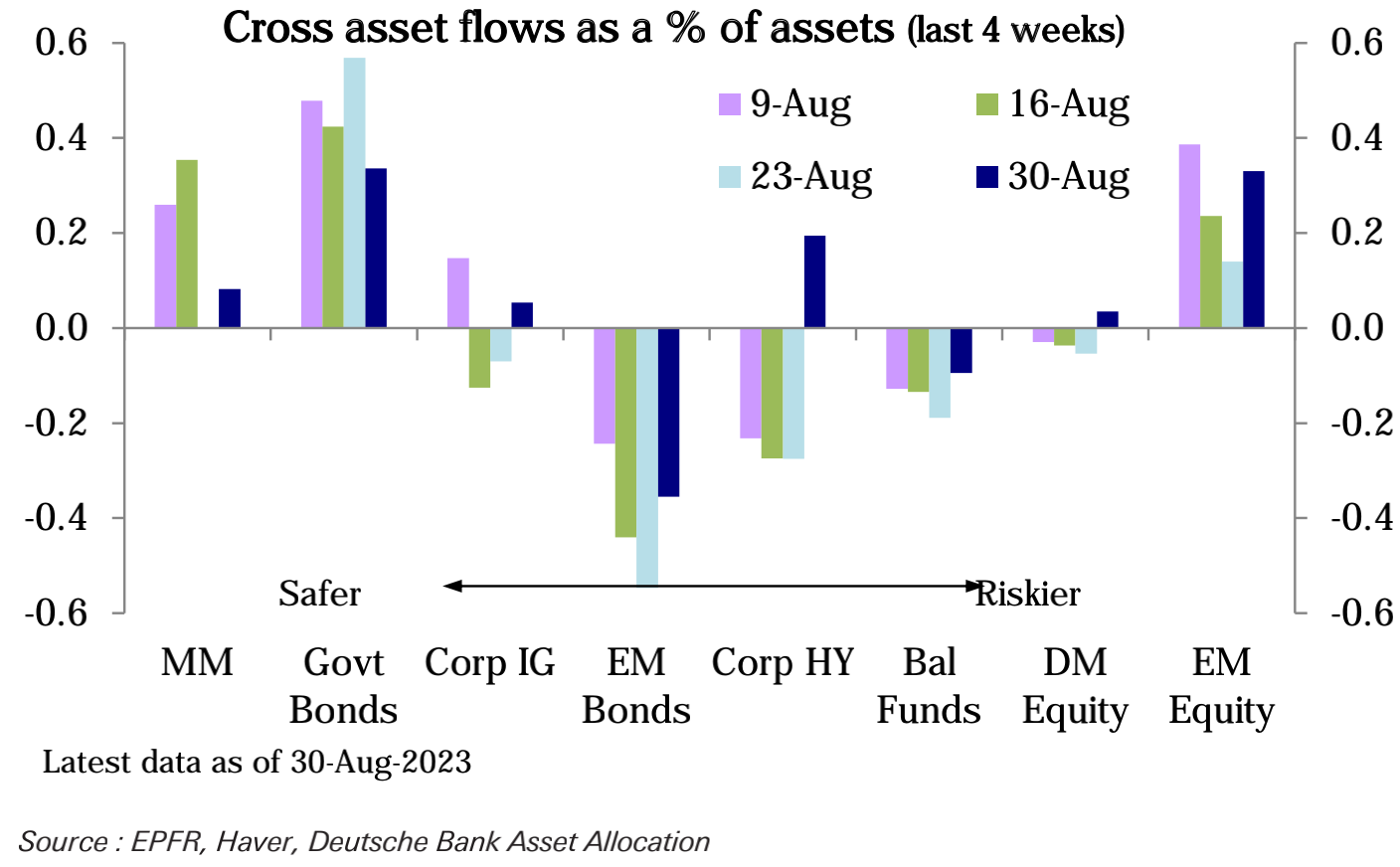
The technology sector had the largest inflow in stock funds, while the energy industry had the largest outflow despite rising oil prices:
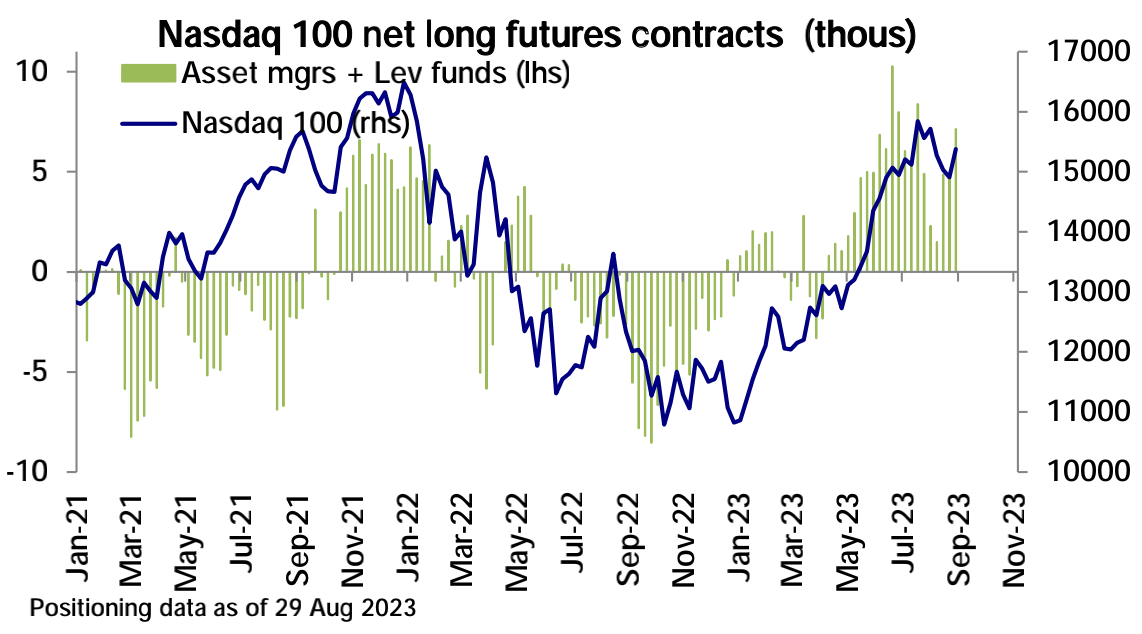
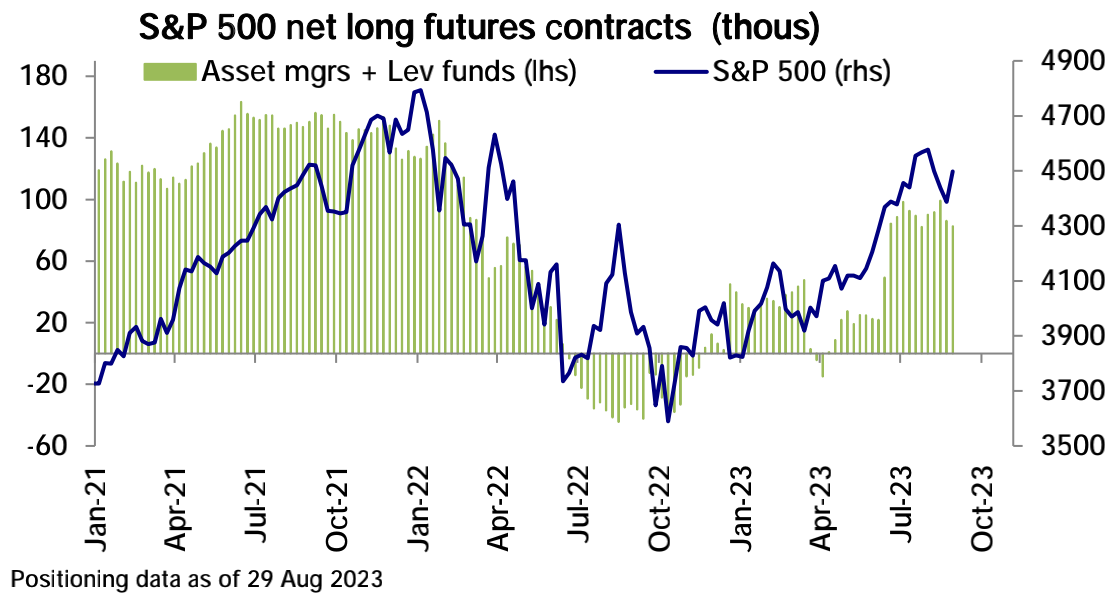
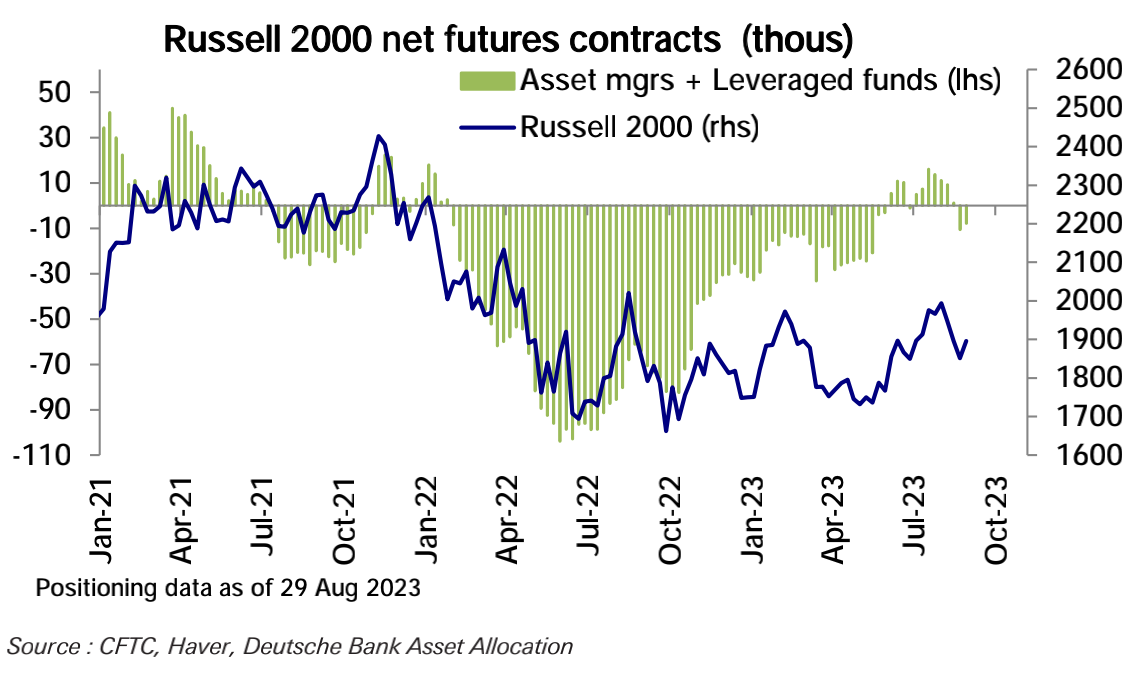
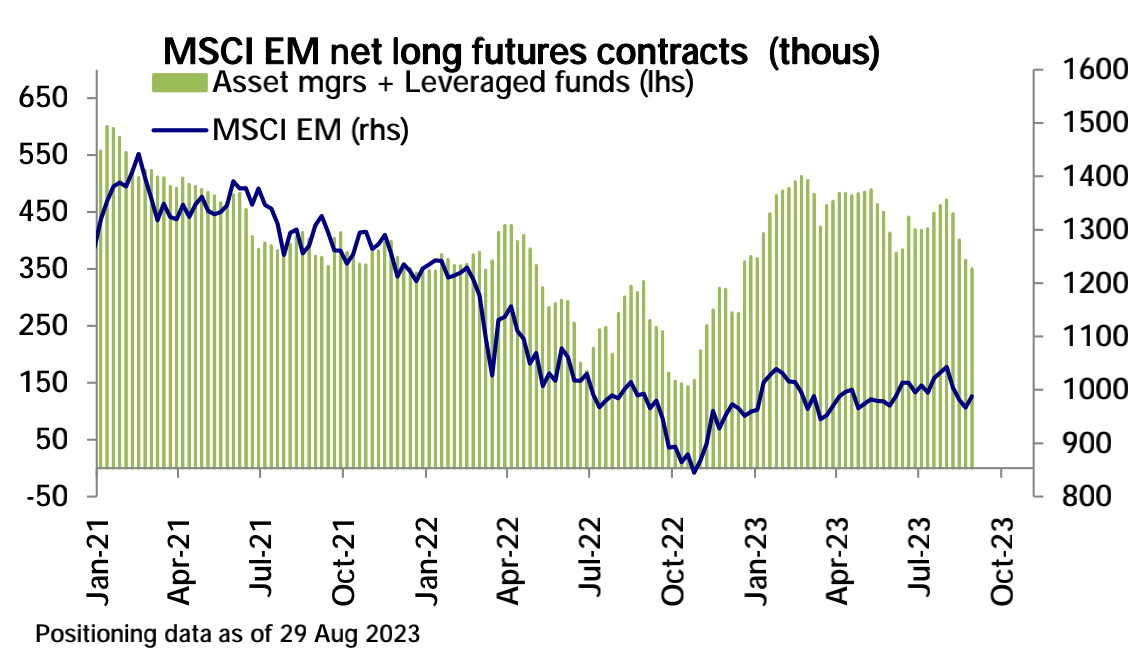
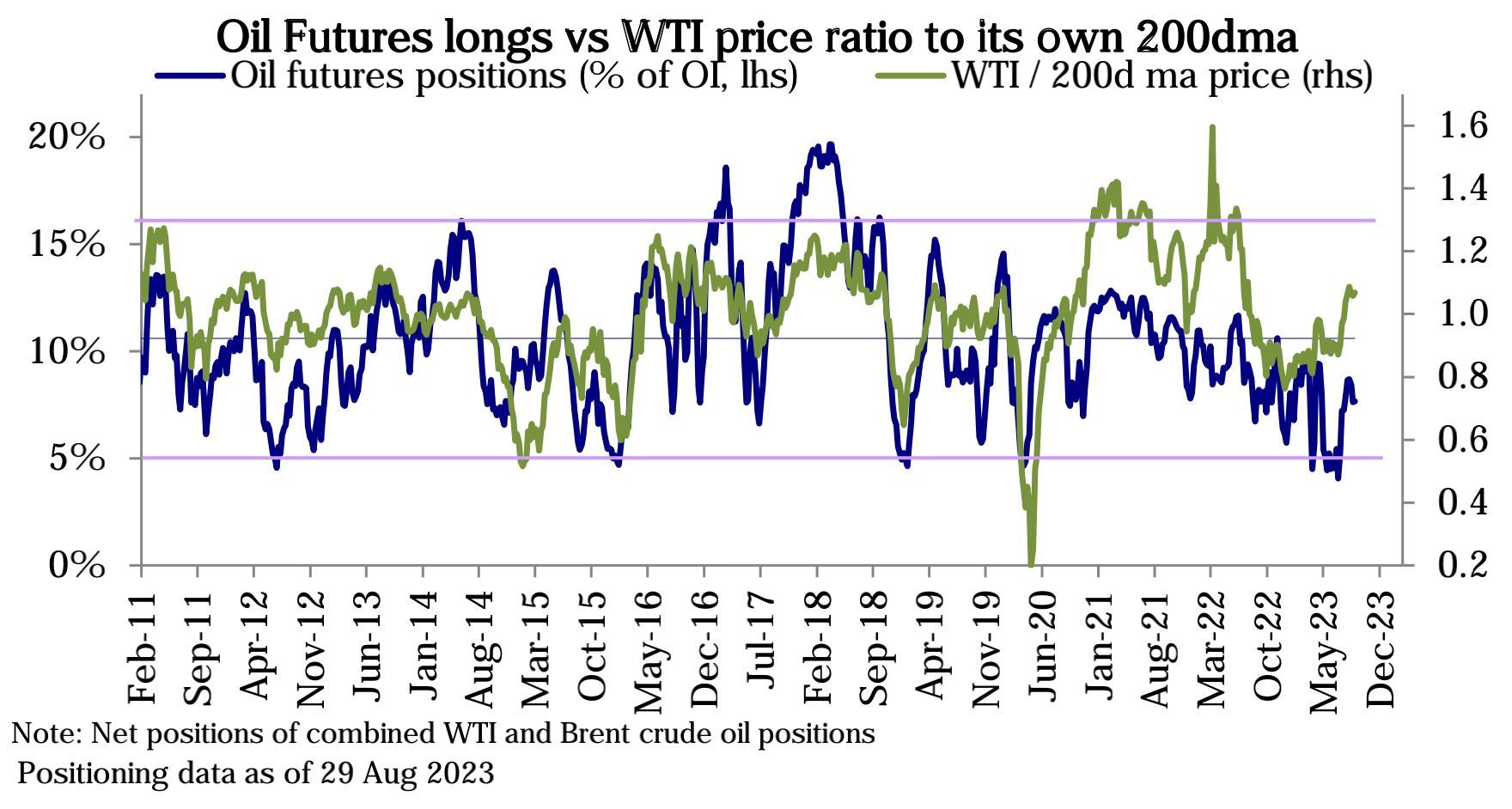
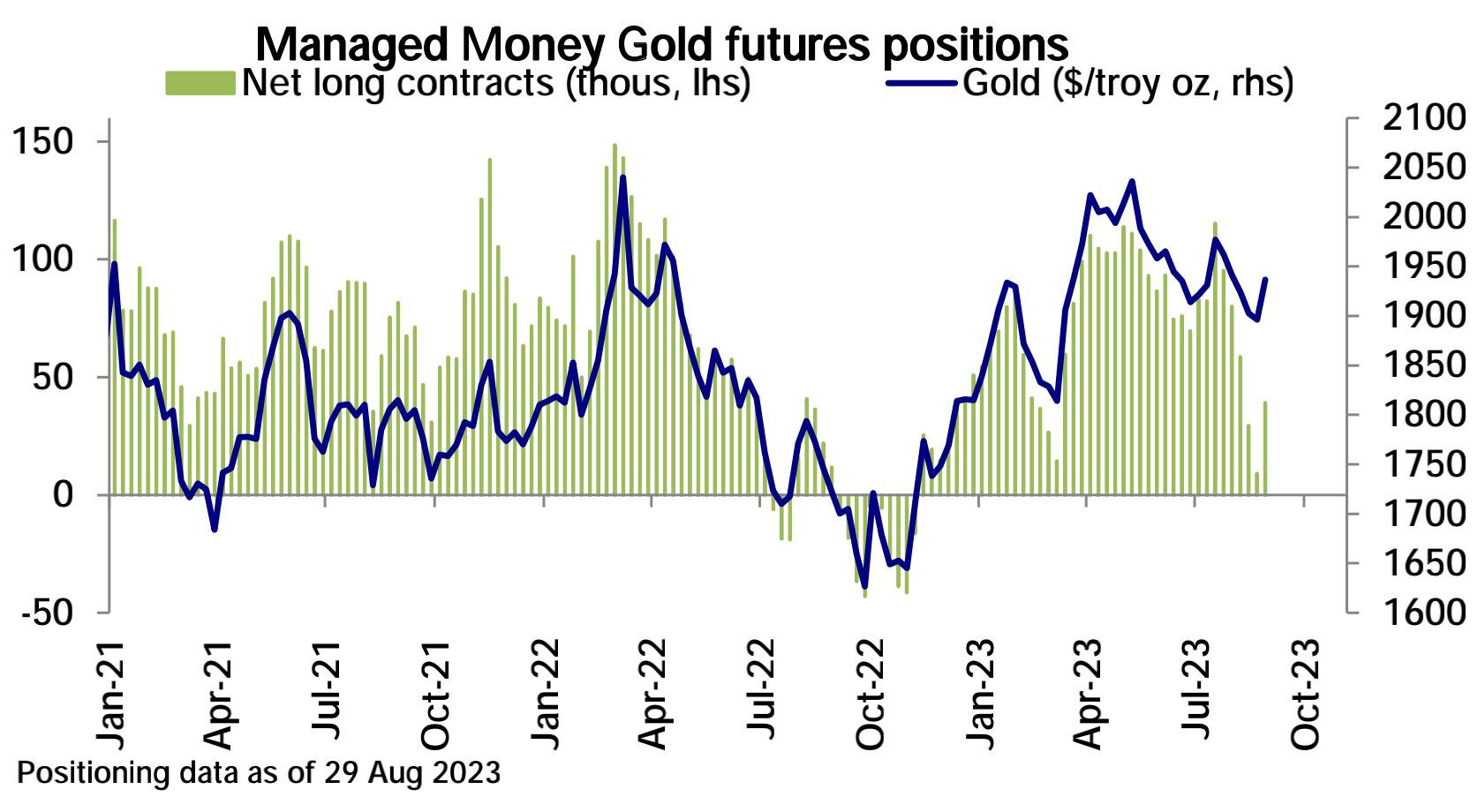
CFTC data shows that overall net long positions in the US stock market remained unchanged last week, mainly due to a decrease in net long positions in the S&P 500 being offset by an increase in net long positions in the Nasdaq 100. Net short positions in the Russell 2000 and DJIA also decreased. Outside the US, net long positions in emerging markets decreased, possibly reflecting investors' cautious attitude towards emerging markets.
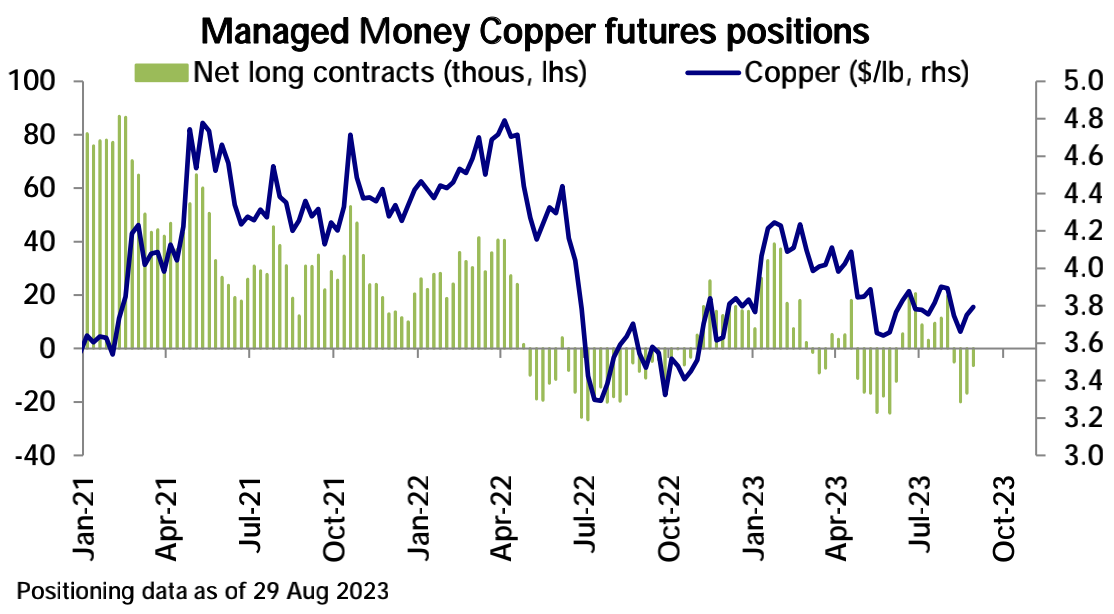
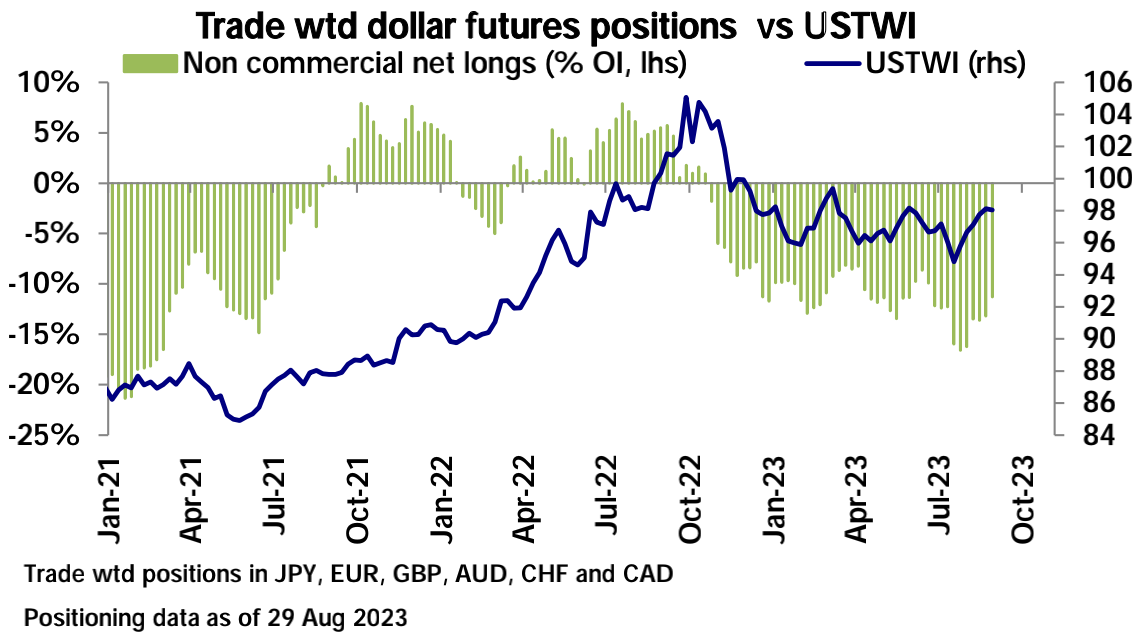
In the foreign exchange market, net short positions in the US dollar declined, indicating increased optimism among investors. In the commodity market, net long positions in oil remained unchanged, while net long positions in gold and silver increased, and net short positions in copper decreased:
Investor Sentiment Index
Last week, there was little change in the bullish and bearish results of the AAII investor survey, and sentiment slightly turned optimistic:
CNN Fear Greed Index rebounded from 48 to 56, entering the positive range:
Stablecoin Flows
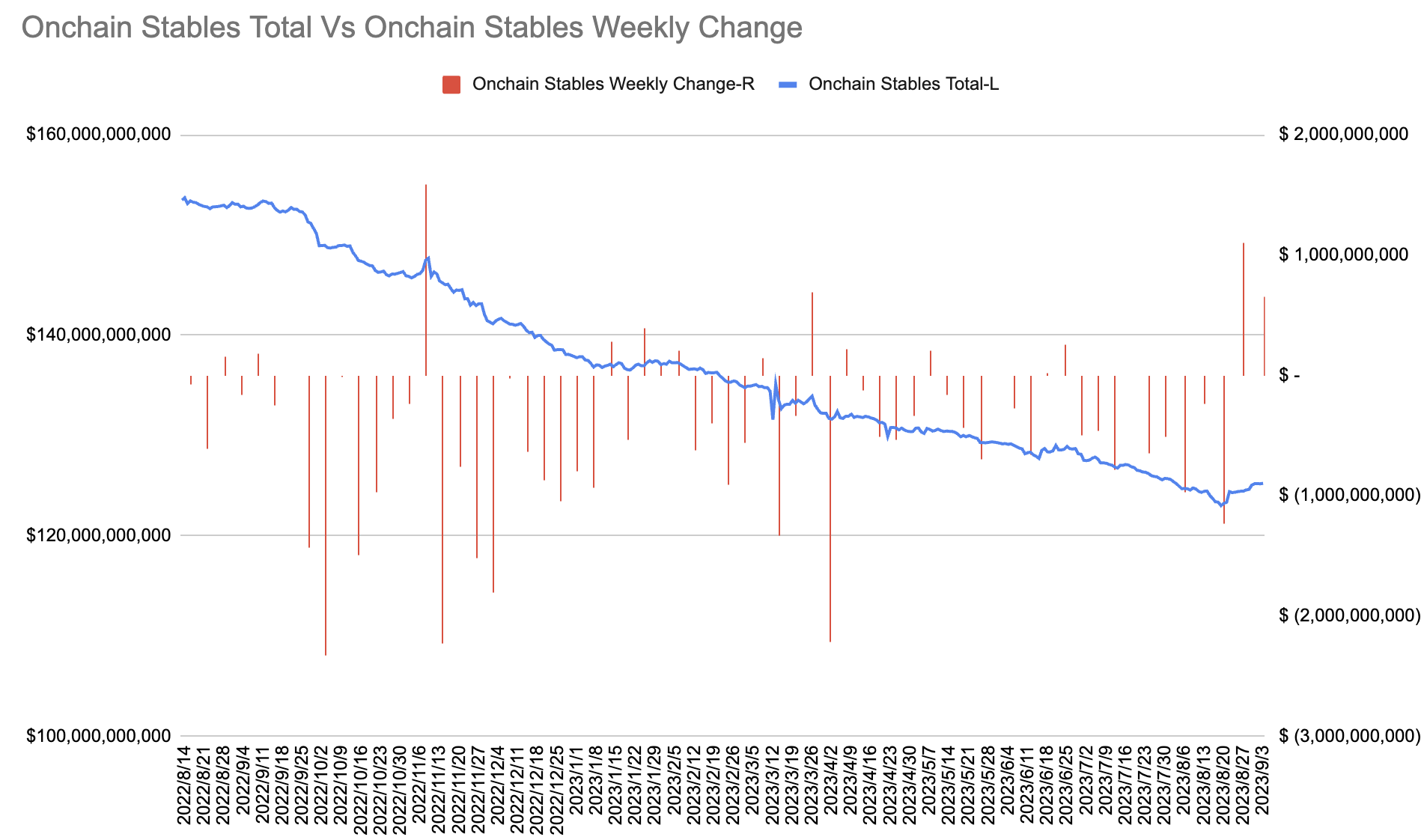
Total on-chain stablecoin increased significantly for the second consecutive week (+ $660 million), also the first two-week net growth since February this year, mainly contributed by the issuance of TUSD:
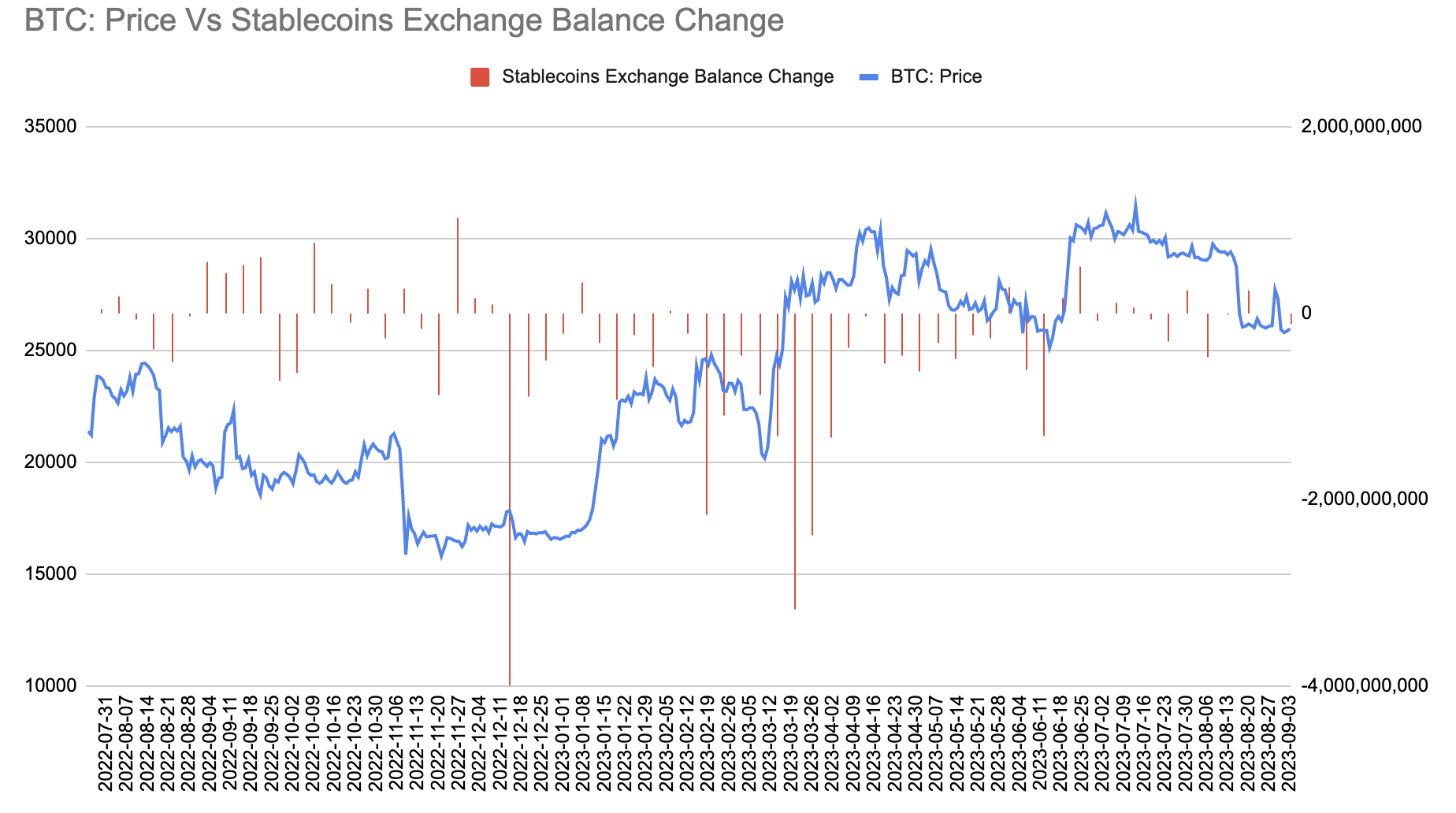
Stablecoin balance in the exchange decreased for the second consecutive week (-118 million US dollars), the largest outflow in four weeks:
Future Focus
Monday was the Labor Day holiday in the United States, and important data is limited this week. Here is a preview of some mid-term focal points.
Savings during the Covid period are decreasing, the labor market is cooling down, delinquency rates are rising, and student loan interest will start accruing in October. This may weaken consumer momentum from September onwards. The current data shows strong consumer recovery in the US this summer. Some retail companies in the recent earnings season also expressed similar concerns and maintain a cautious outlook for the future.
Regarding student loans, Goldman Sachs expects that the full resumption of payments will amount to approximately $70 billion, or about 0.3% of disposable personal income. This will reduce PCE (personal consumption expenditure) growth by 0.8 percentage points in the fourth quarter. The impact may be relatively small because some borrowers may not immediately resume payments, and some individuals may qualify for benefits through the income-based repayment plan recently announced by the Biden administration.
The debate over the US budget has become a focus again, as budget spending authorizations are needed before the start of the new fiscal year on October 1st. There is still a lot of conflict between the two parties in Congress, and there has been almost no progress on this issue. In addition, many authorizations for various programs will expire in September, including expanded unemployment benefits. Unlike the default threatened by the debt ceiling debate, failure to grant spending authorizations may result in a partial government shutdown. Market commentary generally believes that the US federal government is likely to shut down later this year.
There is a higher possibility of a government shutdown. However, the financial markets did not react strongly to previous government shutdowns. (Do Americans still have the nerve to criticize Fitch?)
In addition, on September 14th, the contract of the United Automobile Workers union will expire, posing a threat of a strike.
Institutional Perspectives
From BlackRock to Pacific Investment Management, bond investors are betting that the Federal Reserve's rate hikes are over.
The recent employment data has led bond market participants to believe that the Federal Reserve is unlikely to raise rates in the short term, and may even complete its rate hikes in the current economic cycle. As the focus shifts to when the Fed may turn to easing, short-term bonds are expected to outperform long-term bonds. This strategy may also benefit from seasonal trends: companies often rush to sell debt after the US Labor Day holiday, putting pressure on long-term bonds. BlackRock's Jeff Rosenberg calls this a "screaming buy." Michael Cudzil, a portfolio manager at Pacific Investment Management, believes that the rate hiking cycle has already been completed, and the first rate cut will steepen the bond duration curve.
"How Much Deposit Do Americans Still Have?" by Citic Securities Overseas
Citic Securities uses Aladangady's calculation method and the results show that excess savings currently amount to $770 billion, which will be completely exhausted by Q2 4; low-income individuals may have already depleted their savings as of the end of last year; the San Francisco Fed's calculation shows that excess savings will be exhausted by Q2 3. Structurally, low-income individuals are "living beyond their means," and excess savings were already depleted by the end of last year; middle-income individuals have stable income and expenditure, so they still have a relatively large amount of excess savings; highThe income group's excessive savings consumption rate has accelerated. The support of excessive savings for consumption will gradually weaken, and the overall direction in the future is still slowing down. The rapid surge of US Treasury bonds has come to an end, but the short-term downward space is limited, with a short-term reasonable central point at around 4%. Financial liquidity may bring about a 10% pullback pressure on the US stock market, but the fundamental resilience can provide support, with a preference for growth styles. The US dollar is difficult to decline, and the turning point of the trend awaits Chinese growth. "Morgan Stanley: Stick to a Late-Cycle Defensive Strategy" Michael Wilson: In the past week, stock prices rebounded strongly, driven by growth stocks once again. Due to relatively weak economic data, participants in the stock market seem willing to increase their valuations based on the belief that the late-stage economic cycle environment will prolong again. In short, price momentum is a key driving factor of sentiment, especially in late-stage economic cycle environments when there is high uncertainty about outcomes. Considering that growth concerns or financial pressures may return at any time in late-stage economic cycle environments, especially as we enter September, we continue to recommend adopting a more defensive strategy in investment portfolios. We suggest that investors maintain a cautious attitude towards the existing consensus view that economic growth will re-accelerate. We recommend continuing to maintain a late-stage economic cycle mentality, which means investing in growth stocks and defensive stocks rather than cyclical stocks or small-cap stocks. Entering the second quarter earnings season, we believe it will be a "sell-the-news" event, mainly because stocks have already risen before mid-July. Nonetheless, apart from a few major companies driven by cost-cutting efforts, the overall contribution from revenue growth may be limited.Outside of the dynamic field, this year's profit results have not kept pace with the economy, further reinforcing our view that we are still in the late stage of the economic cycle.





