






LD Capital: RWA Going Live Soon, Frax Future Product Plan and Potential Impact


Original Author: Yuuki, LD Capital
FXS in the CRV turbulence has been well received by the market due to FraxLend's dynamic interest rate design to protect borrowers; at the same time, Frax Protocol founder Sam initiated a governance proposal on August 4th to promote RWA business, which also attracted some market attention. This article aims to outline Frax's future product plans (FRAX V 3, frxETH V 2, and Fraxchain) and analyze the potential impacts.
I. Frax V 3 — — Focus on the development of RWA business (to be launched within 8 months)
Currently, Frax founder Sam has proposed on the governance forum to expand RWA business through FinresPBC, which is expected to be launched within around 8 months. The key points are as follows:
1. FinresPBC is a nonprofit company established earlier this year, so all income generated from the assets held by Frax Protocol, except for operating costs, will be returned to the protocol;
2. FinresPBC does not participate in the development, operation, and governance of the Frax protocol, nor does it engage in any other profit-seeking activities such as mortgages, loans, pledges, or other commercial activities, in order to ensure the purity and stability of the business;
3. Currently, FinresPBC's partner bank is Lead Bank, which provides compliant financial services for Crypto protocols. FinresPBC is also actively expanding its partnerships with more Crypto-friendly financial institutions;
4. FinresPBC's future business operations include: minting/redeeming USDP and USDC; earning interest on US dollar deposits in IntraFi savings accounts insured by the Federal Deposit Insurance Corporation; purchasing US Treasury bonds in independent accounts to earn interest;
5. FinresPBC will publish monthly asset details, reserve reports, and operating costs. FinresPBC can provide 24/7 custodial asset access for the Frax protocol, and can also use reserve funds to repurchase and destroy FRAX or mint USDP and USDC to send to Frax Protocol AMO as needed.
No further official disclosure has been made regarding the architectural details of FRAX V3. However, some information released by the team through Telegram, forums, and interviews can be summarized as follows:
1. Sam stated that the operating expenses of FinresPBC will be significantly lower than Maker or other RWA protocols. If FinresPBC holds $500 million in assets for Frax Protocol, the annual expenses are estimated to be no more than $200,000.
2. In an interview conducted by Ourodoros Capital on July 28th, Sam mentioned that Frax V3 will be launched within 30 days. Considering the current establishment of FinresPBC and its underlying banking relationships, it is speculated that its RWA business will also be implemented in August. Currently, we are awaiting proposal voting and determination of initial parameters by the DAO.
3. FraxBonds will be introduced in FRAX V3: Frax Protocol will issue four bonds consecutively, allowing anyone to purchase them. The bonds will automatically convert to stablecoin FRAX upon maturity.
first level title4. In FRAX V 3, the Borrow-AMM design for FRAX liquidity does not require an oracle price feed, eliminating the oracle risk.
Possible impacts:
1. The scale of FRAX stablecoin is currently being squeezed by the strong promotion of RWA business by Maker, especially with the deposit interest rate of Maker DSR as high as 8%. Some market participants are turning to holding Dai for interest. The reason why the current yield in DSR is much higher than the yield of US Treasury bonds is due to the difference in the scale of Maker's bond purchases and protocol-side Dai interest. This yield is currently unsustainable. The specific details of Frax RWA business have not been disclosed, but based on its structural similarities to ETH collateral business and the currently known information, it is speculated that Frax can achieve high yield by combining bond yield with Crv incentives in the early stage of RWA business to complete product launch. In the medium to long term, if the operating cost of FinresPBC isIf the content is in English, we should return it directly without translating it.
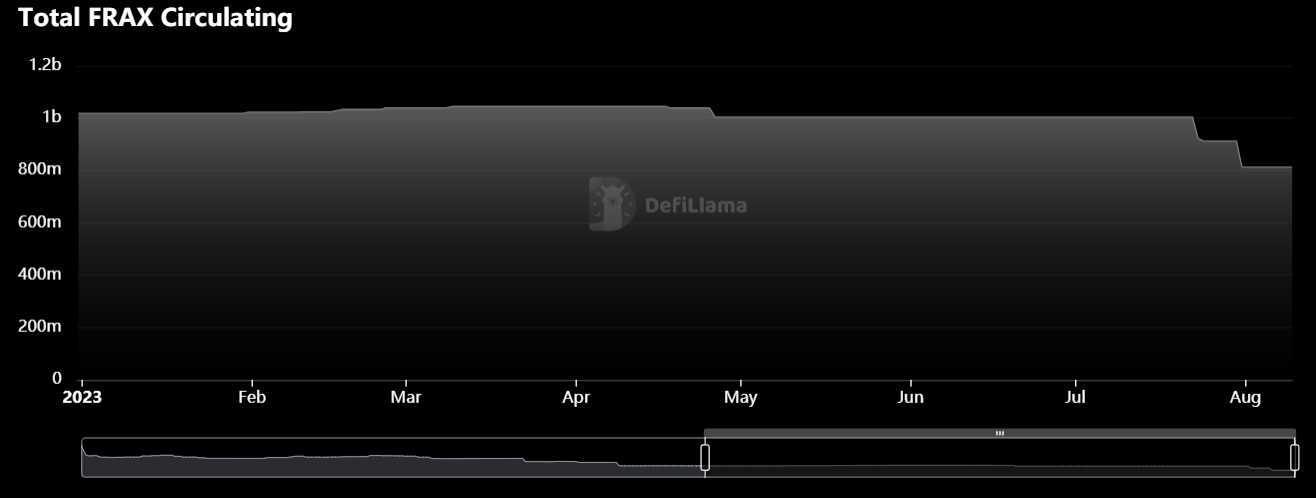
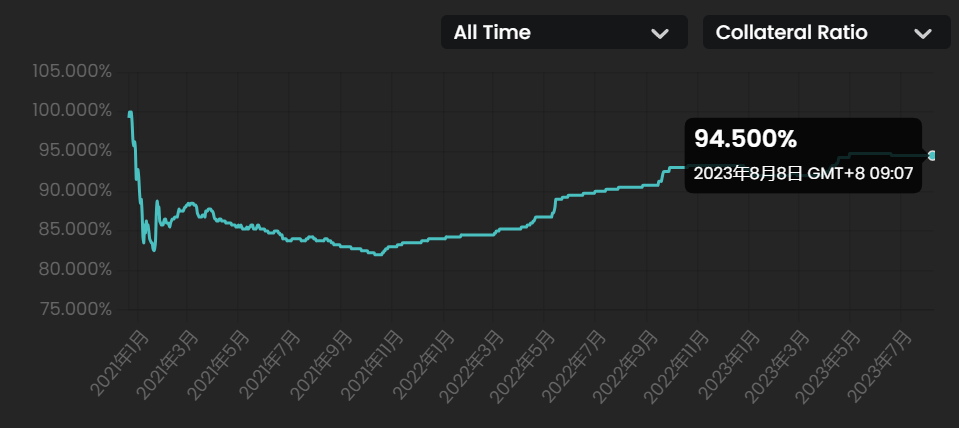
2. Maker profited significantly through the strategy of US bond RWA and repurchased MKR on the chain, becoming the main driving force for the recent rise in MKR's price. As for Frax, part of the stablecoin is collateralized, and the protocol's income is used to improve FRAX's collateralization ratio CR. If the RWA business can bring additional income to the Frax protocol and accelerate the supplementation of collateral, the protocol's income will flow back to veFXS holders or be used for FXS repurchase, which will provide support to the price of FXS. Currently, FRAX's collateralization ratio is 94.5%. Frax Protocol holds idle USDC worth $280 million, which, at a 5% interest rate, can generate $14 million in annual income, accounting for 75% of Frax's current annual income.
Currently, FRAX's collateralization ratio is 94.5%.
2. frxETH V 2 - Focus on decentralization and attracting stake (online after 50 days)
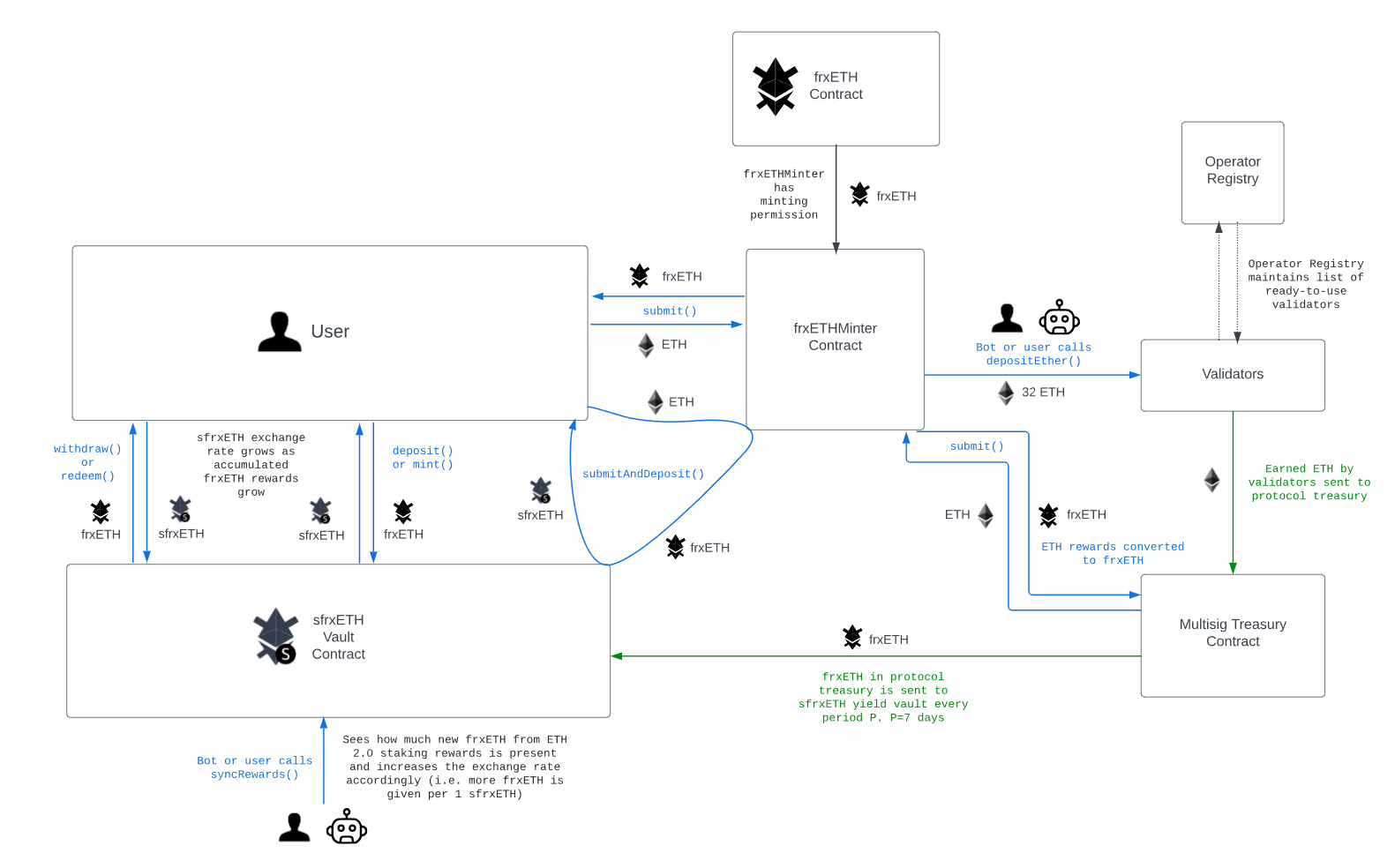
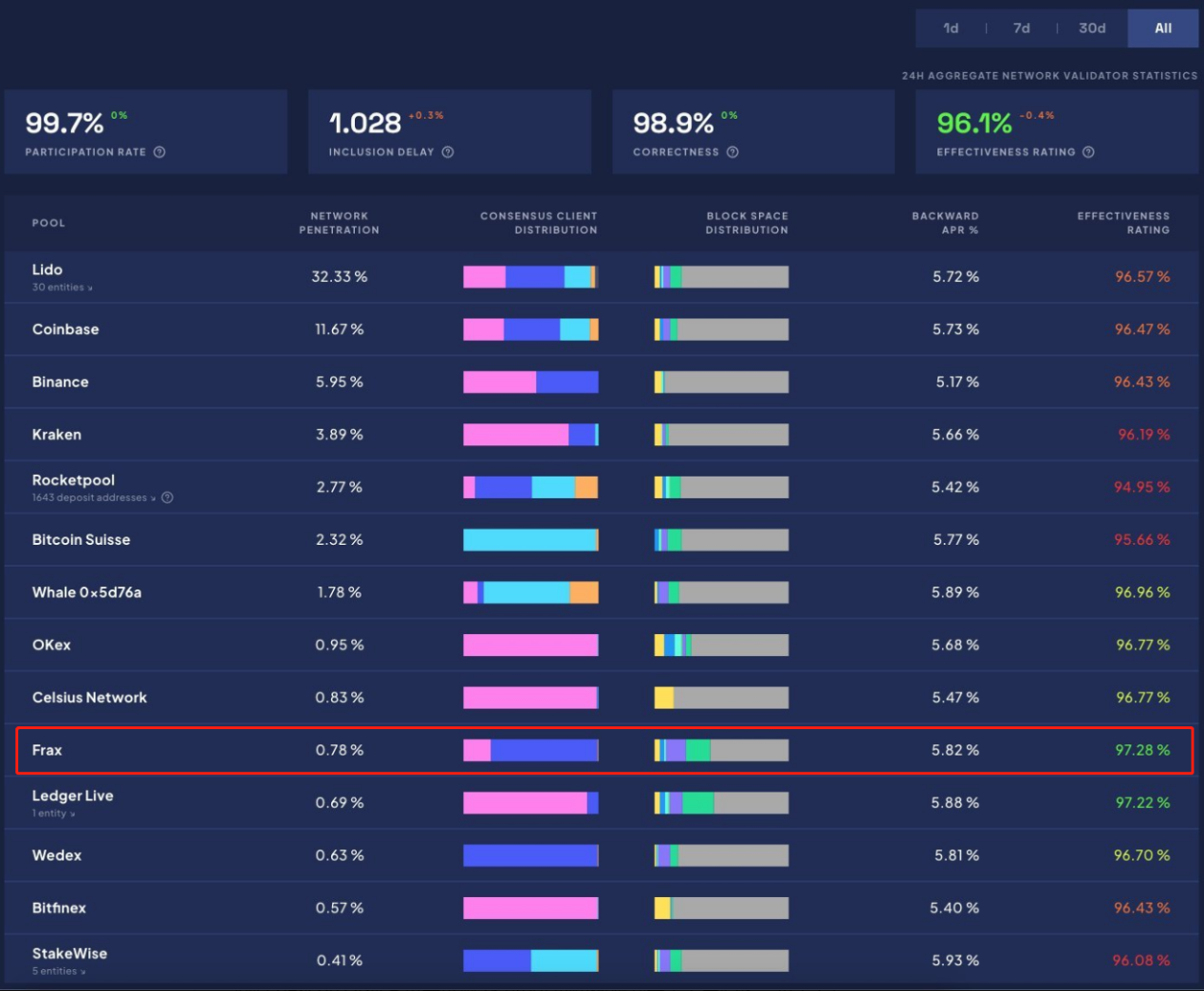
Sam mentioned in a Twitter Space that frxETH V 2 will be launched in approximately 50 days. In the current frxETH V 1, users' ETH is staked by the team-operated nodes, while the protocol charges a 10% fee. The advantage of frxETH V 1 is its utilization of the advantages in Curve ecosystem governance, which can effectively guide the liquidity of frxETH. At the same time, the design of frxETH and sfrxETH dual coin model enables the Frax Ether system to have the highest yield in the market. This helps frxETH establish itself as one of the top three LSD protocols in the LST field.
frxETH V 1 staking process diagram:
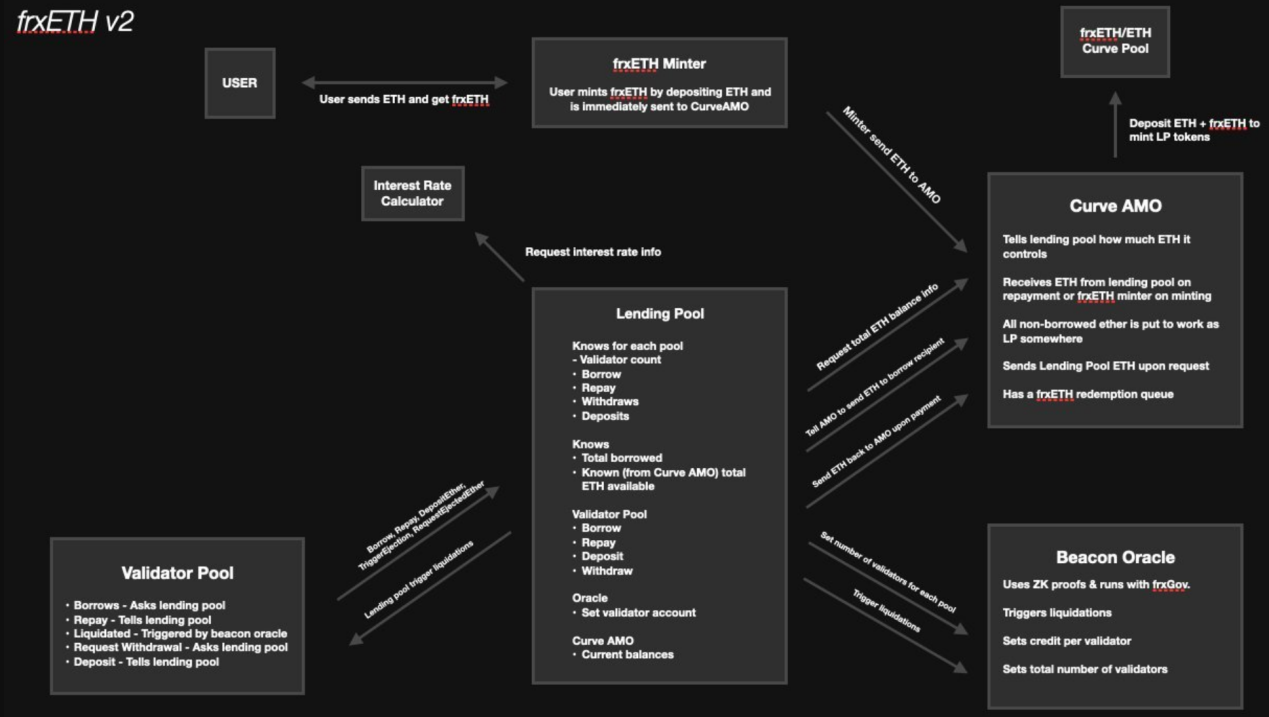
In the future version of Frax protocol frxETH V 2, the team will focus on ensuring high annualized returns while addressing centralization issues. The overall design logic of frxETH V 2 is similar to that of Rocket Pool but with Frax's own unique aspects, with the key differences being:
1. In Rocket Pool, the ETH deposited by users is accumulated in the deposit pool and cannot generate returns until activation is verified, which will drag down the overall yield of rETH. Currently, the deposit pool has a limit of 18,000 ETH. In the design of frxETH V 2, user deposits will first be allocated to Curve AMO. When the node needs ETH pairing from the user side, it will be allocated by Curve AMO to the Lending Pool. Therefore, idle ETH can earn transaction fees and mining rewards in Curve AMO, resulting in higher overall yields compared to Rocket Pool.
2. After the Atlas upgrade, Rocket Pool's node commission is basically fixed at 14%.
, while frxETH V 2 is intended to determine the node's water extraction ratio through market regulation. In frxETH V 1, Frax is the most efficient and stable team in the market, and it will also join frxETH V 2 to compete for node water extraction in a market-based manner. The introduction of the competition mechanism and the participation of efficient teams are expected to further benefit users, allowing them to achieve higher yields.Currently, Frax Ether's staking is the most efficient.
frxETH V 2 product process diagram
Regarding the frxETH product, in addition to focusing on frxETH V2, attention also needs to be paid to the launch of the redemption function. Currently, sfrxETH has the highest yield in the market, but its growth rate in the past month, 4.56%, lags behind Lido+ 5.17% and Rocket Pool + 7.47%. The main reason is that currently frxETH cannot be redeemed and can only be exchanged for ETH on the secondary market through Curve. This amplifies the concerns of whales and some users, leading them to switch to using Lido or Rocket Pool.
III. Fraxchain - Focus on its ecosystem development and frxeth consumption and deposition (launching in early 2024)
Fraxchain is an Ethereum-based Layer 2 network that adopts a hybrid rollup solution (a combination of op rollup and zk rollup). It can provide developers with the coding environment brought by op and provide users with the final determinism, security, and decentralization brought by zk. As one of the top three LSD protocols, Fraxchain and frxETH will also have a synergistic effect. With Fraxchain adopting the frxETH as a GAS fee, the reduction in frxETH holdings resulting from this will reduce its conversion to sfrxETH, thereby helping the Frax protocol provide higher staking returns to compete for market share. In the future, the complete DeFi product matrix of the Frax protocol will migrate to Fraxchain to lower Gas fees and attract initial traffic and funds to Fraxchain. It should be noted that Fraxchain is not just an application chain. In addition to supporting the current stablecoin ecosystem of Frax, it also aims to expand the ecosystem and increase adoption to better contribute to the native ecosystem of the protocol. Overall, Frax has a capable team with efficient execution and fast product implementation, which is worth paying attention to, especially with the launch of FRAX V3 and frxETH V2.





