






LD Track Weekly Report (2023/08/09): RWA Continues to Expand, Significant Shrinking in Derivatives Trading Volume


Overview
RWA: According to rwa.xyz, the size of the US Treasury bond tokenization is about $790 million. After the MakerDAO DSR interest rate increase, the PSM module has increased by about $36 million in the past 24 hours, with $120 million increase in Dai size in DSR and the total Dai supply reaching 4.52 billion, still growing in size.
LSD: Last week, the ETH staking rate increased to 21.01%, with a 0.68% increase compared to the previous week. There were 25.26 million ETH locked in the beacon chain, corresponding to a staking rate of 21.01% and a 0.68% increase compared to the previous week. Among them, there were 712,500 active validation nodes, with a 2% increase compared to the previous week. The number of nodes in the queue for validation decreased by 11.1% to 72,200, and the number of waiting activation validator nodes decreased significantly, resulting in a slowdown in the overall staking rate growth.
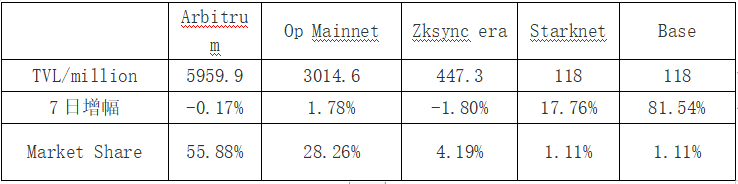
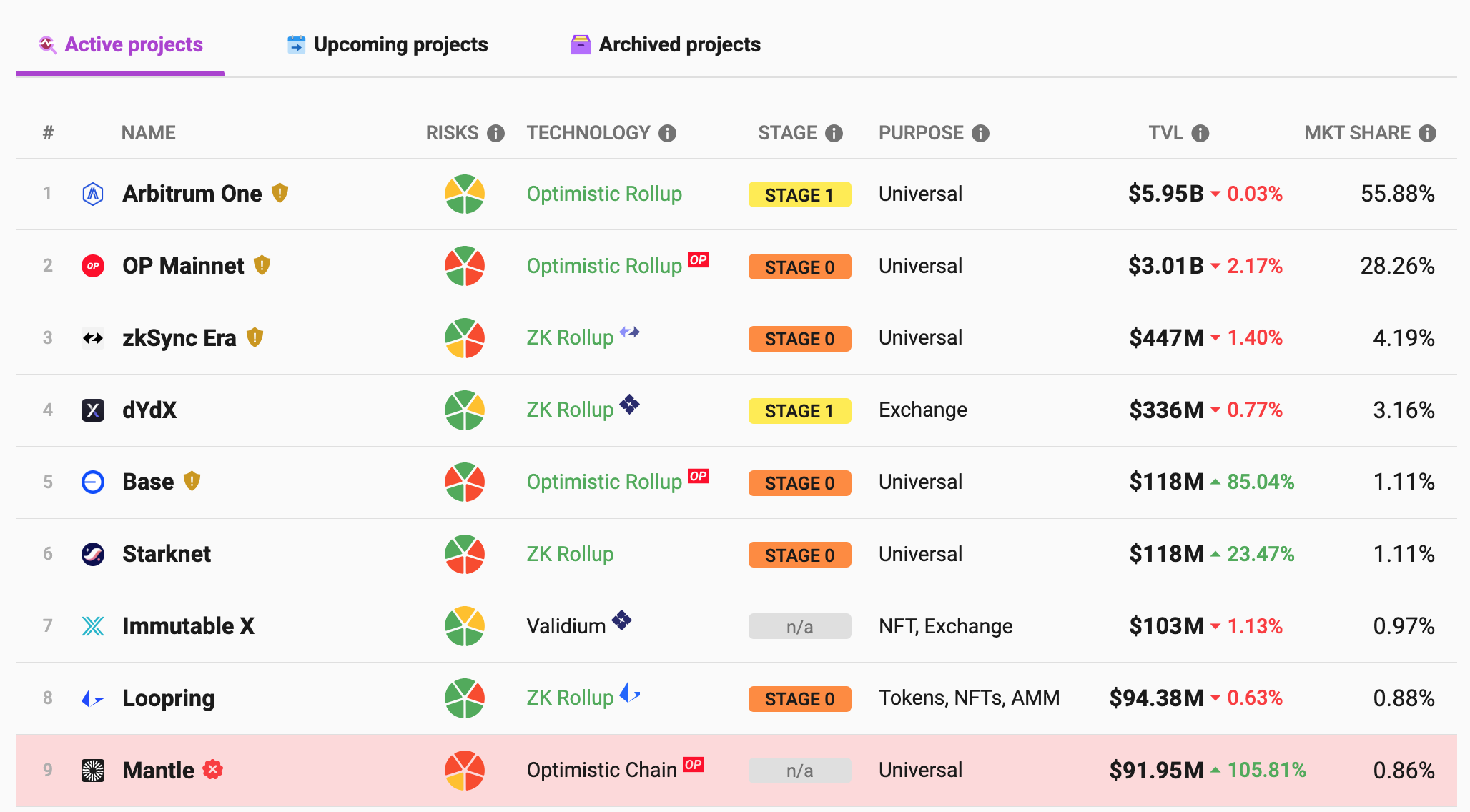
Ethereum L2: Layer 2 TVL increased by $110 million compared to last week, with a total locked amount of $10.66 billion. Base TVL continues to rise and currently ranks above Starknet at $11.8 billion. The Base mainnet will be open to the public this week, and the opBNB mainnet will be launched in mid-October 2023, intensifying the competition in Layer 2.
DEX: Dex combined TVL is $1.32 billion, which is relatively stable compared to last week. Dex has a 24-hour trading volume of $1.77 billion and a 7-day trading volume of $14.31 billion, with a growth of $3.5 billion compared to last week. Following the Curve incident, the attacker has returned all stolen funds from Jpeg and Alchemix, while keeping 10% as a white hat reward. The price of CRV has shown a significant increase over the weekend as the suppliers return the funds, creating a short squeeze situation.
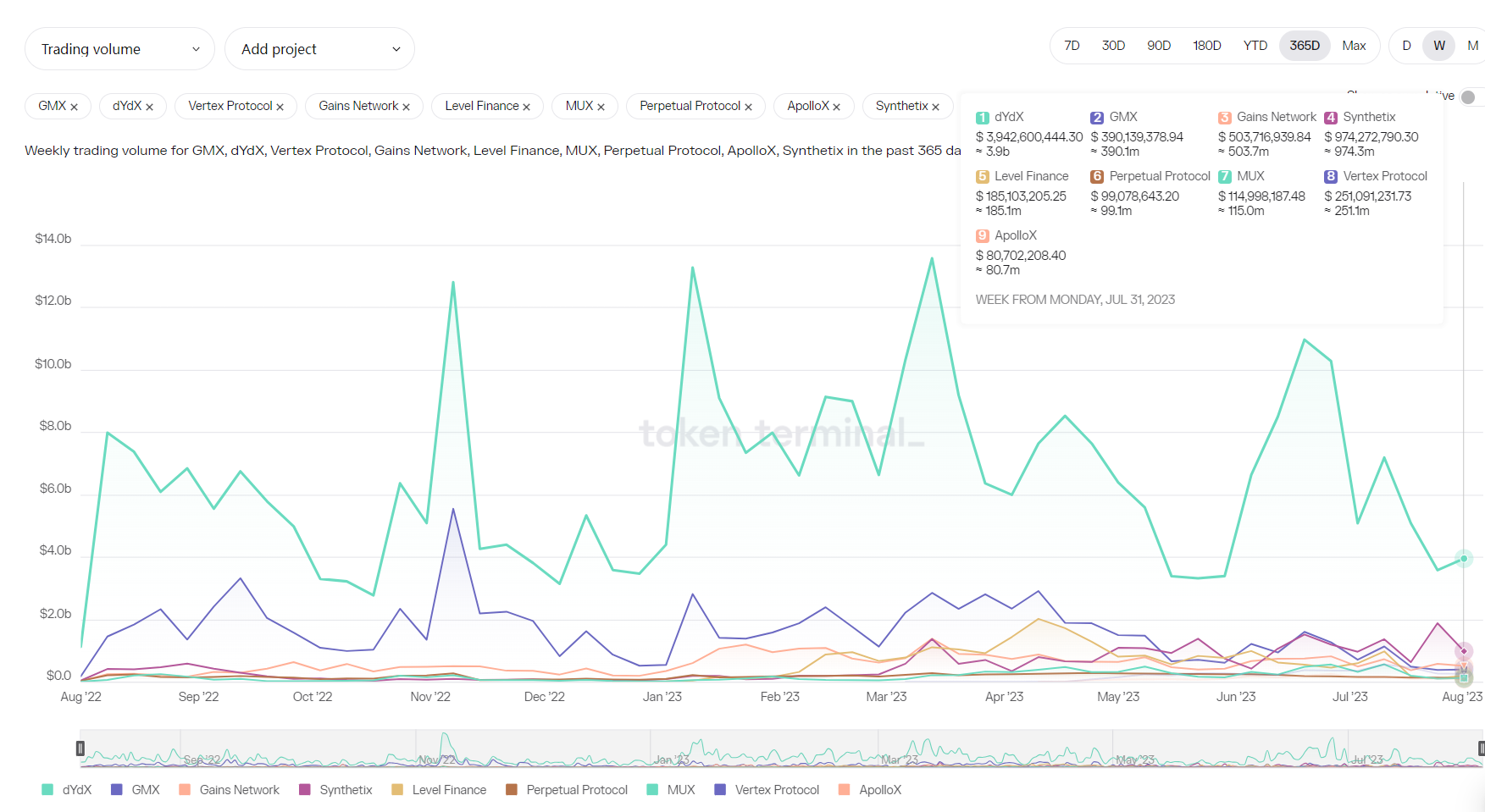
Derivative DEX: The overall trading volume of derivative DEX has been relatively low in the past two weeks (July 24th to August 6th) with a weekly trading volume of around $7 billion. The volume contraction is quite severe, reaching levels similar to the end of May to early June 2023 and the end of December 2022, indicating a relatively low position.
RWA
RWAs: According to rwa.xyz, the tokenized scale of US Treasury bonds is approximately $790 million. Following the increase in MakerDAO DSR interest rates, the PSM module has increased by approximately $36 million in the past 24 hours. The Dai scale in DSR has increased by 120 million tokens, bringing the total Dai supply to 4.52 billion, and the scale is still growing.
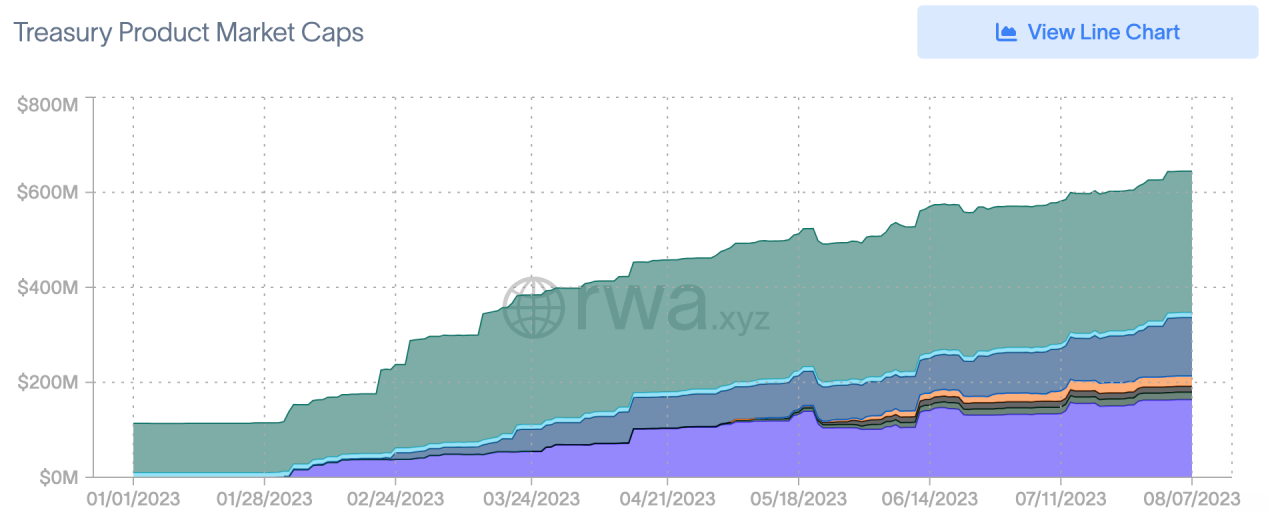
According to rwa.xyz, the scale of US bond tokenization is approximately $790 million, which has increased by about $150 million in the past two weeks.
Makerdao
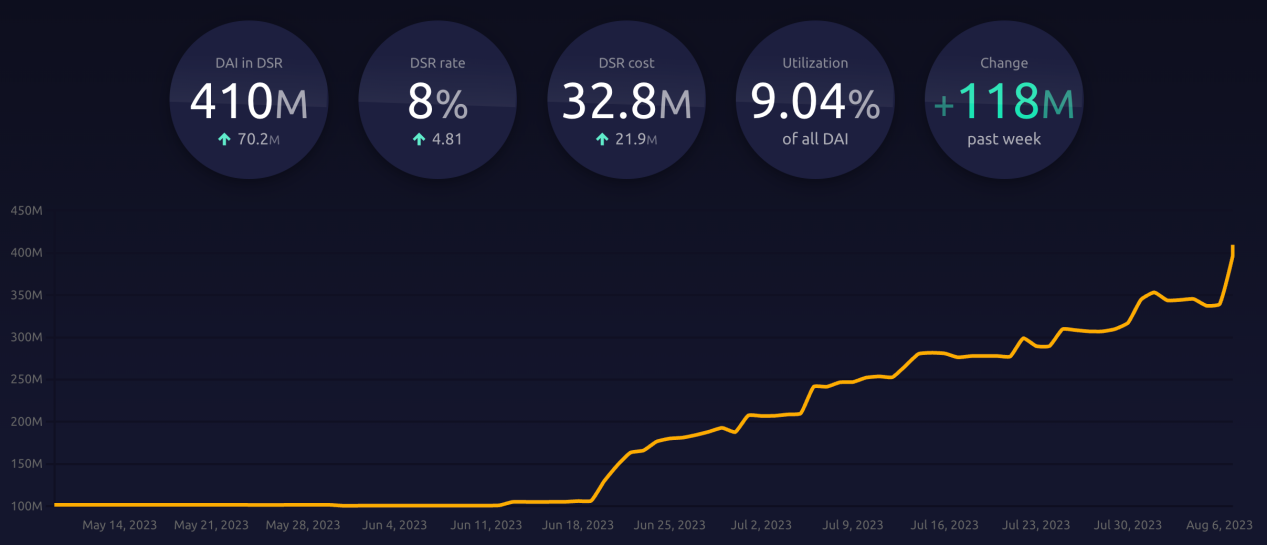
The DSR interest rate of MakerDAO has been increased twice this year. The first increase was from 1% to 3.49%, and the second increase was from 3.49% to 8%. At the time of writing, the PSM module has increased by about 36 million in the past 24 hours, and the Dai scale in DSR has increased by 120 million. The total Dai supply has grown to 4.52 billion and is still increasing. Currently, DSR accounts for 9% of the total Dai supply, so the DSR deposit rate will continue to be maintained at 8%. As of August 6, the total supply of Dai is approximately 4.44 billion, reaching a new two-year low in supply. After the DSR interest rate increase, the total Dai supply has rebounded.
Other proposals:
D 3 M module's maximum debt limit has been increased from 20 million to 200 million.
The RWA 004 debt limit has been reduced from 7 million to 0 (as of March 2023, defaulting 1.3 million, currently being coordinated for resolution).
A total of 134.1 MKR in Q2 compensation has been distributed to 10 AVC members.
RWA 007 arranges the sale of some ETFs (1-year term/3-year term), $6.8 million will be returned to the surplus buffer.
200 million DAI has been arranged to be transferred to the contract address for the partial funding of the endgame plan.
Other protocol updates:
Clearpool went live on Polygon zkEVM on July 31.
Tangible migrated USDR and wUSDR to version 3.
LSD
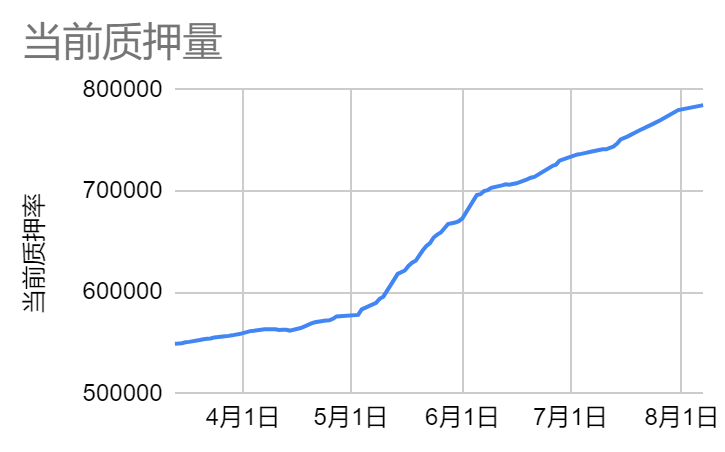
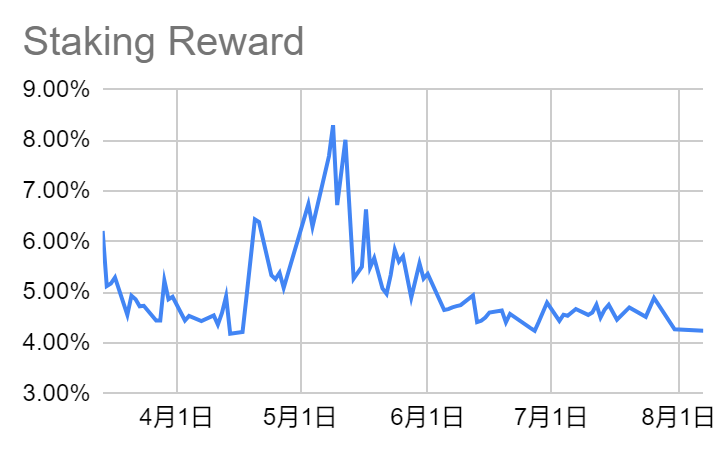
Last week, the ETH staking rate rose to 21.01%, an increase of 0.68% compared to the previous week. There were 25.26 million ETH locked in the beacon chain, corresponding to a staking rate of 21.01%, an increase of 0.68% compared to the previous week. Among them, there were 712.5 thousand active validator nodes, a 2% increase compared to the previous week, 72.2 thousand validator nodes in the queue for validation, an 11.1% decrease compared to the previous week, and waiting.The number of activated validator nodes has significantly decreased, and the overall staking rate has declined.
The staking growth rate slowed down this week.
Source: LD Capital
ETH Staking Yield 4.24%
Source: LD Capital
Among the three LSD protocols, in terms of price performance, LDO has fallen by 3.3% in the past week, RPL has fallen by 5.5%, and FXS has risen by 6%; from the perspective of ETH collateral, Lido has risen by 0.93% in the past week, Rocket Pool has risen by 1.51%, and Frax has risen by 0.69%. Lido has announced the upcoming launch of the LDO+stETH dual governance model, allowing all stakeholders in the protocol to participate in governance to ensure the healthy development of the protocol. This adjustment also indirectly reflects the insufficient utility of the LDO token; Layer 2 network Mantle initiated a proposal vote, intending to pledge 200,000 ETH to Lido; Coinbase Wallet has launched the staking window for Rocket Pool, providing traffic channels for Rocket Pool. Currently, the balance of the Rocket Pool deposit pool is 14,200 ETH, which is a relatively high level after the Atlas upgrade. The Minipool queue has been cleared, and the RPL pledge rate is 47.27%; Frax founder has initiated governance proposal FIP-277, intending to implement Frax V3's US Treasury RWA strategy through FinresPBC. FinresPBC's current partner banks and Lead Bank, and it is also actively engaging with more compliant and-
Crypto establishes partnerships with financial institutions that provide services.Ethereum L 2
TVL
Layer 2 TVL increased by $110 million from last week, with a total locked amount of $10.66 billion.
Data Source: l 2 beat
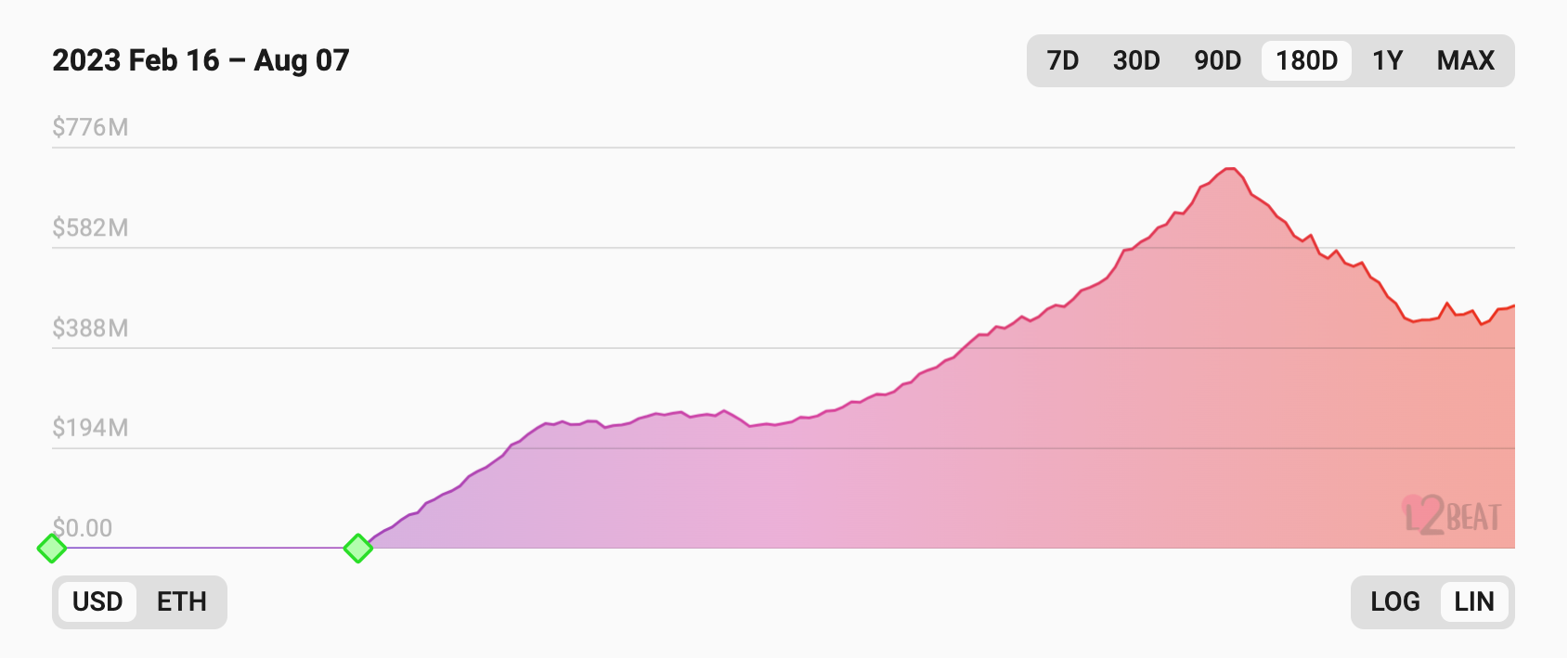
Zksync TVL ended its rapid decline, with reduced volatility in recent times, currently down approximately 36% from its all-time high.
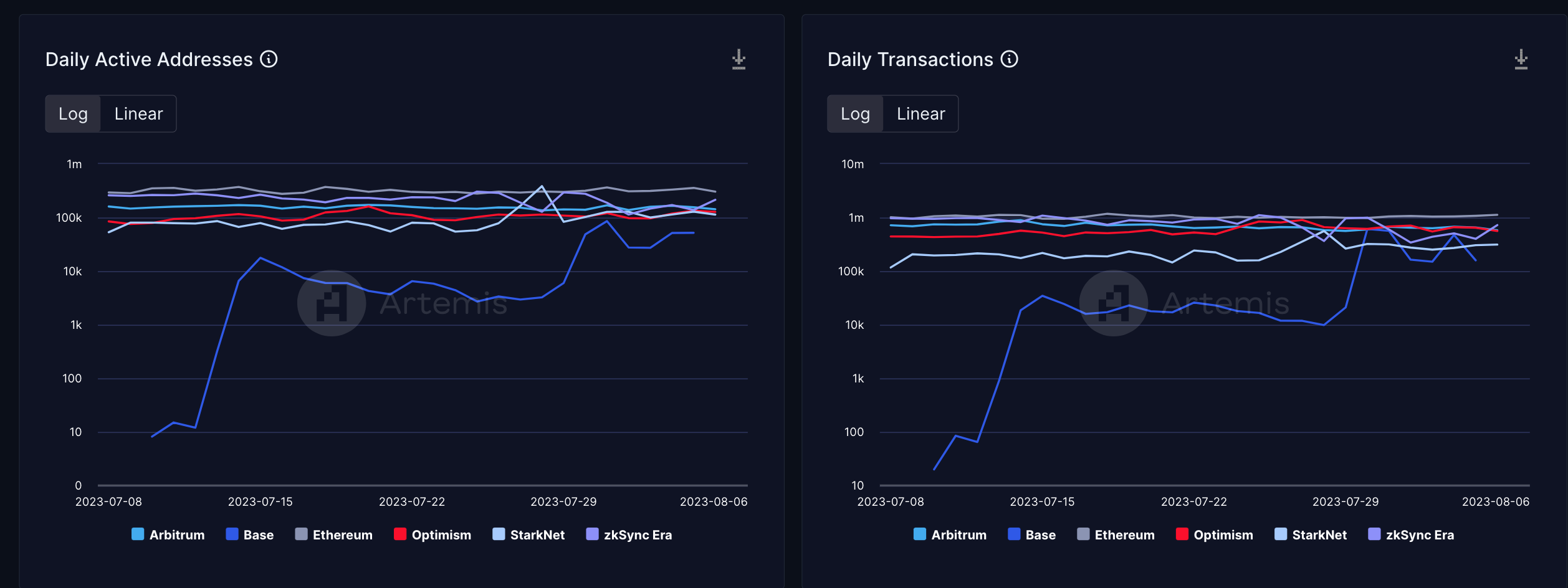
Base TVL continues to grow, surpassing Starknet in ranking.
Base cross-chain funds have cooled off after a single-day inflow of nearly $60 million on July 30, with an average net inflow of over $7 million in recent days.
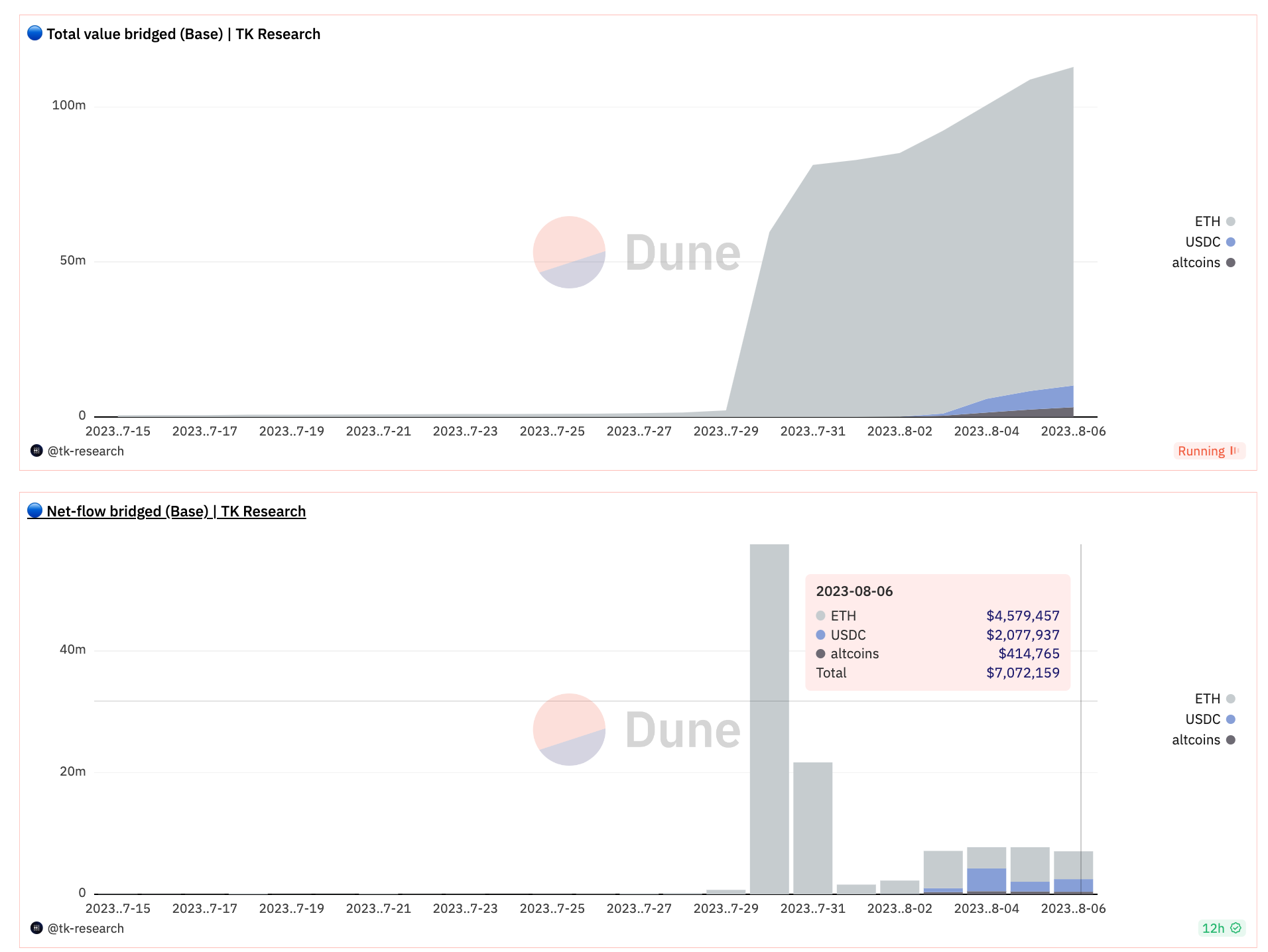
Base Mainnet will be publicly released on August 9th, open to the general public. At the same time, Base will launch a month-long on-chain event called Onchain Summer on August 9th, which includes providing a grant of 100 ETH to projects built on Base and collaborating with Superchain members for an online hackathon called Superhack. Base's official Ethereum bridging feature is now live, and Base is no longer in a one-way mode, with a confirmation time for withdrawals of approximately 7 days.
opBNB Mainnet will also launch in mid-August 2023, initially opening to infrastructure providers, and then to the public by the end of August or the beginning of September. Testing will be conducted before the mainnet opens to evaluate availability, performance, transaction costs, and security. opBNB will also provide grants, builder programs, and funding initiatives to promote ecosystem development.
On-chain Activity
DEX
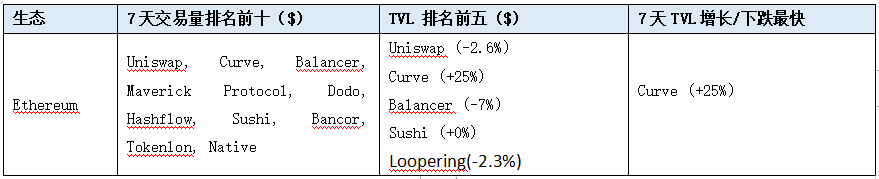
Dex combined TVL at 13.2 billion, remaining relatively stable compared to last week. Dex 24-hour trading volume at 1.77 billion, and 7-day trading volume at 14.31 billion, with an increase of 3.5 billion compared to last week.
Following the Curve incident, the attacker has returned all the stolen funds from Jpeg and Alchemix and kept 10% as a white hat reward. The CRV price has noticeably increased over the weekend as the suppliers return funds, leading to a short squeeze. There is still 1850 million USD pending to be returned in the CRV/ETH pool, and Curve has expanded the bounty range to the public (10% bounty). Since the incident, Curve TVL has decreased from the pre-incident lowest point of 3.64 billion to 1.96 billion, a 50% decline, and currently recovered to 2.73 billion with a 25% downturn. Currently, the main four loans of Curve Founder Michael are as follows: 4000 million USD has been repaid on Aave, with remaining debt of 21 million USD and a liquidation price of 0.276 USD; 1070 nbsp;10,000 FRAX, health factor 2.03; Abracadabra essentially debt-free; Inverse borrowed 7.68 million USD + 1.68 million USD Dola respectively from two pools, health factors 1.85 and 1.93.
Ethereum
ETH L 2/sidechain
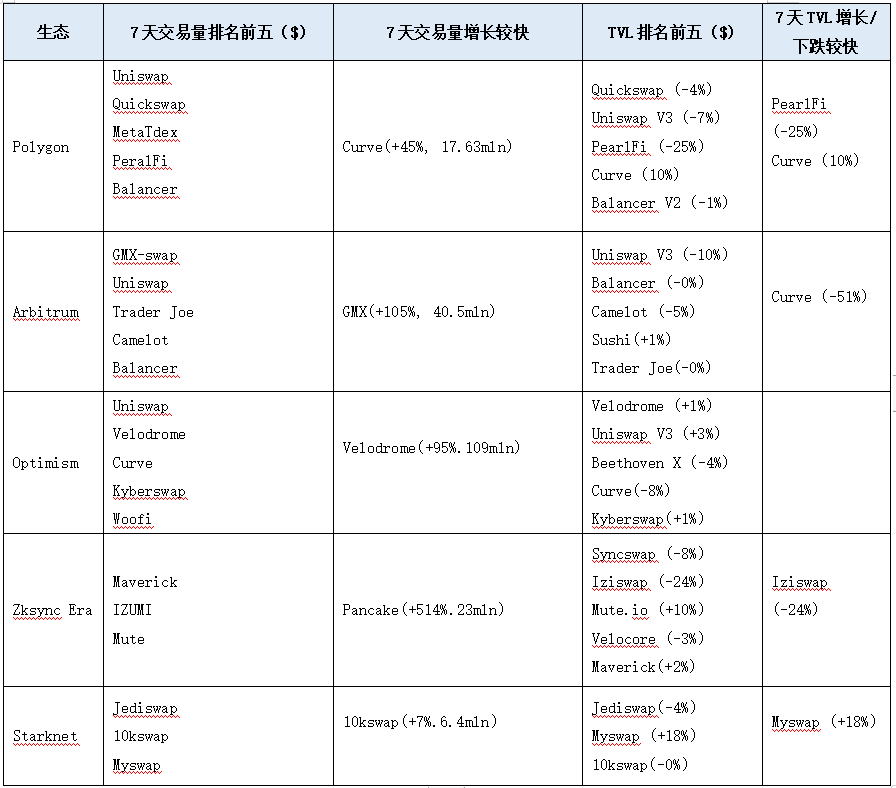
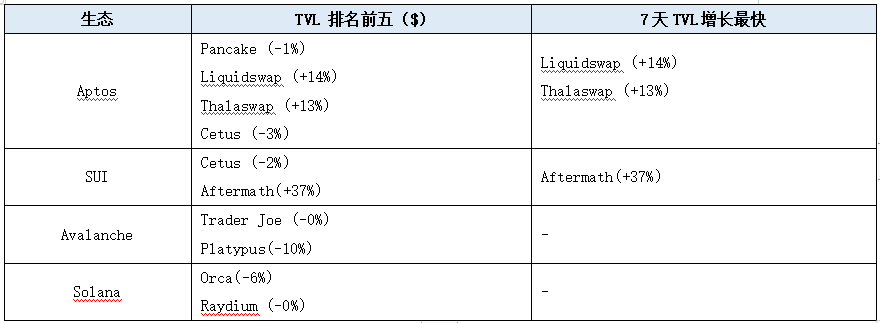
Arbitrum on GMX swap trading volume is growing rapidly (105%), 7-day trading volume 40.5 mln; Optimism on Velodrome trading volume is growing fast (95%), 7-day trading volume 109 mln.
BTC L 2/Sidechain

Alt L 1
Derivative DEX
In the past two weeks (July 24th to August 6th), the overall trading volume of derivative DEX has been relatively low, with weekly trading volumes around 7 billion US dollars. The shrinking trading volume is quite severe, reaching levels comparable to the end of May to early June 2023 and the end of December 2022, remaining at a relatively low position.
Source: tokenterminal
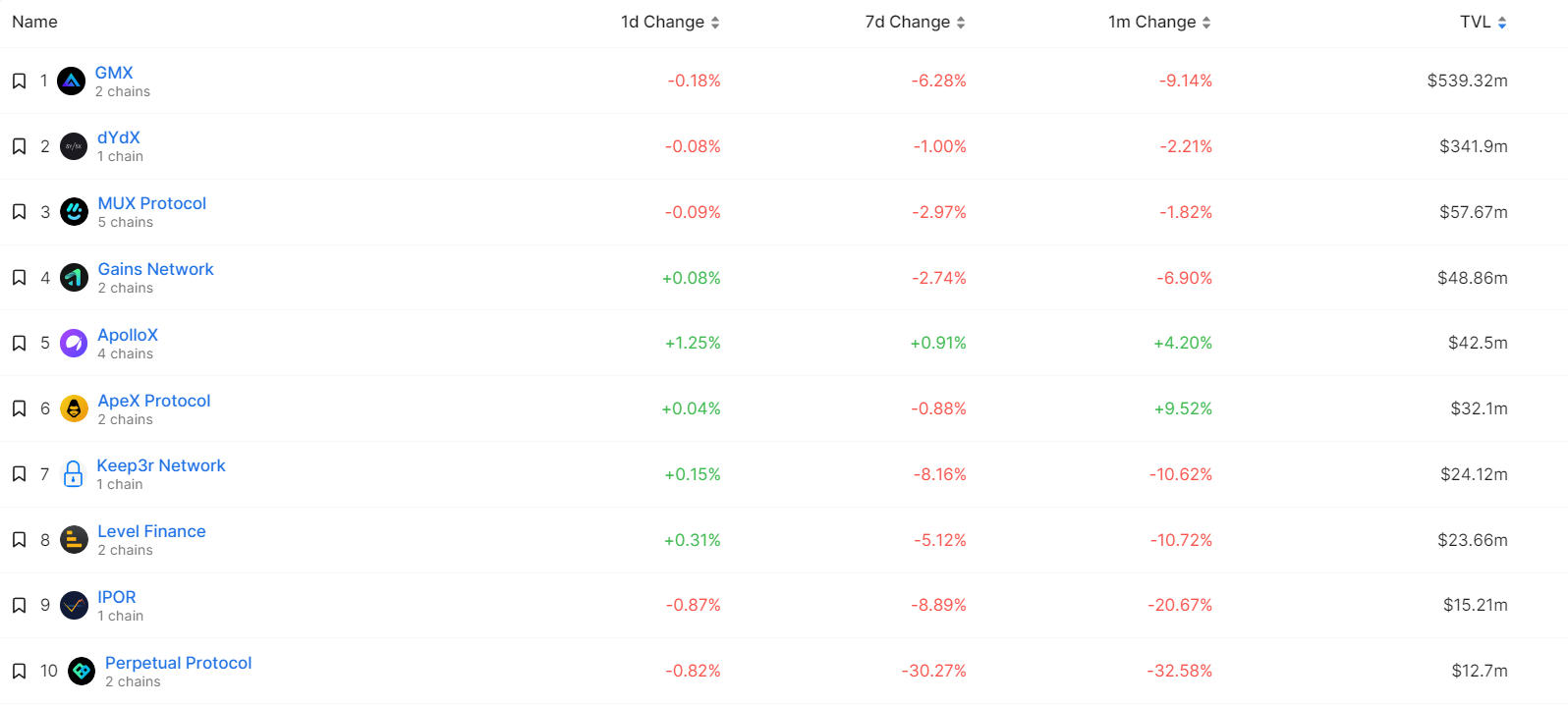
In terms of TVL, the overall TVL of derivative DEX is also declining, with funds gradually flowing out over the past 7 days.
Source: Defillama
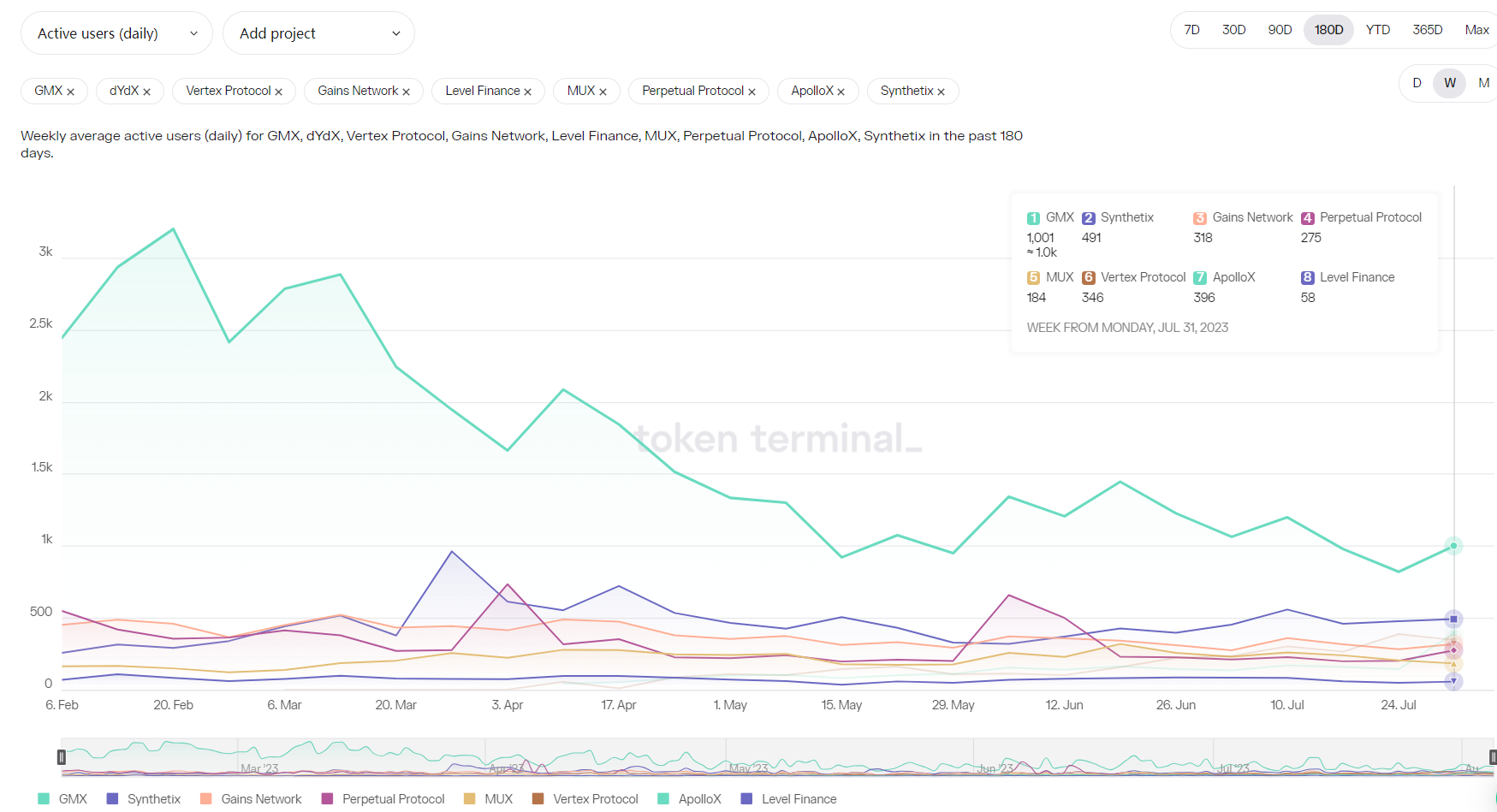
In terms of users, the number of daily active users reached its peak in February and March, and has been relatively low recently. Currently, GMX is still the protocol with the highest number of daily active users, at around 1000. However, during the peak period, the number of daily active users on GMX exceeded 3000, and it has now dropped by nearly 60%. On the other hand, in other token incentive protocols, the trading volume has indeed increased. Kwenta and Vertex have even surpassed GMX in terms of trading volume in the short term, but the number of users has not shown significant growth. Kwenta adopts protocol tokens and OP as incentives, but the number of users has remained around 500. Vertex has token airdrop expectations, with the number of users remaining around 300.
Source: tokenterminal
Overall, the growth of derivative DEX is currently weak. On one hand, there is still a significant gap in user experience compared to CEX, and the fees are also relatively high. Ordinary users tend to use CEX, lacking migration motivation. On the other hand, there is a proliferation of GMX forks within the track, intensifying competition within the industry and dispersing the already limited user base and trading volume.
Weekly Project Progress
GMX V 2 Officially Launched
GMX V 2 officially launched on August 3, 2023. Users can choose to trade using either V 1 or V 2 on the official website. The main modifications in V 2 include:
1) Set up isolation pools (GM pool), go online with multiple trading pairs, and add trading pairs such as SOL, XRP, LTC, DOGE, ARB, etc. Traders can choose the pools they want to trade in, and LP providers can also provide liquidity for specific pools. 2) The new oracle system will provide quotes in each block, achieving faster execution speed and lower slippage. 3) Opening and closing fees have been reduced from the previous 0.1% to 0.05%-0.07%. 4) A series of measures such as funding fees, lending fees, and price impact factors are adopted to maintain balance between long and short positions. 5) The revenue distribution of Protocol V1 is as follows: 30% to GMX stakers, 70% to GLP holders. The revenue distribution of Protocol V2 is as follows: 27% to GMX stakers, 63% to LP providers, 8.8% to the protocol (project party), 1.2% to the oracle (chainlink)
Impact:
More tradable assets, faster execution speed, and lower slippage. The long and short balance mechanism is also more perfect. However, user experience still needs improvement, and transaction fees are high for ordinary users, with limited attractiveness for ordinary users.
Modify Token Economy Model for GNS
Modify the token economy model for GNS to concentrate protocol revenue in GNS tokens, planned to be launched in September 2023. Currently, the distribution of GNS' protocol revenue is as follows:
33.5% distributed to GNS token stakers, 17.2% to DAI stakers (LP providers), 16.33% to the governance fund (protocol wallet), 16.33% to the development fund (founder's wallet), 14.2% allocated to NFT robots, and 2.44% belongs to rebates.
1) 100% of the income from the development fund is allocated to GNS token stakers.
2) NFT will no longer be used, and a portion of its revenue will be distributed to GNS stakers and oracles in a ratio of 80% to 20%. Previously, NFT was used to reduce trading spreads, increase $GNS staking rewards, and run liquidation/limit order bots. However, it was found that most holders only used NFT to increase GNS staking rewards and did not provide liquidation/limit order services. Therefore, NFT is being cancelled.
3) 4.36 million GNS tokens will be minted, with 1 million tokens allocated to the development fund, which will be locked for one year. The development fund can be used for staking to earn staking rewards. Additionally, 3.36 million tokens will be used to redeem NFTs. NFT holders can choose to immediately receive GNS tokens by paying a 25% fee, or wait for complete release after 6 months.
mn mo mp mq mr fp bj" data-selectable-paragraph="">4) After the modification, the income of GNS pledgers will increase from the previous 33.5% to around 60%.
Impact:
In the short term, there will be a boost to GNS tokens. However, there is no new incentive for LP providers, and TVL is currently experiencing a slow outflow, with the size of TVL affecting the platform's available liquidity depth. There is also no new incentive or improvement in user experience for traders, resulting in fewer new daily active users.





