






New Project | Huma: Move the "borrowing" model to the chain


After DeFi Summer, the DeFi world is booming. Transactions, financial management, and loans on the chain have become the daily operations of insiders. As of the time of writing, DeFiLlama has included 214 lending agreements, with a total TVL of 13.8 billion US dollars.
However, unlike traditional financial lending, most on-chain loans are not issued to users without collateral. In the real world, line of credit is a much broader form of lending. Compared with mortgage loans, credit does not require collateral, but is based on credit. But in the DeFi world, because of the characteristics of trustlessness, no permission, and lack of KYC, it is difficult for DeFi developers to restrain borrowers through off-chain behaviors.
Huma, recently noticed by Odaily, is committed to providing users with credit loans based on future cash flow. For users, they do not need to provide tokens as collateral, but can obtain loans by proving their solvency through diversified future potential income such as salary income, pledge income, and DeFi income.
secondary title
Unlicensed line of credit, subject to approval intervention
Building credit loans on the chain has long been a narrow track in the DeFi field. This track is relatively difficult, and there are not many players at present.
In order to maintain a reliable lending model, Huma differentiates the roles of users in multiple ways. Users are divided into two levels: agreement management roles and fund pool roles.
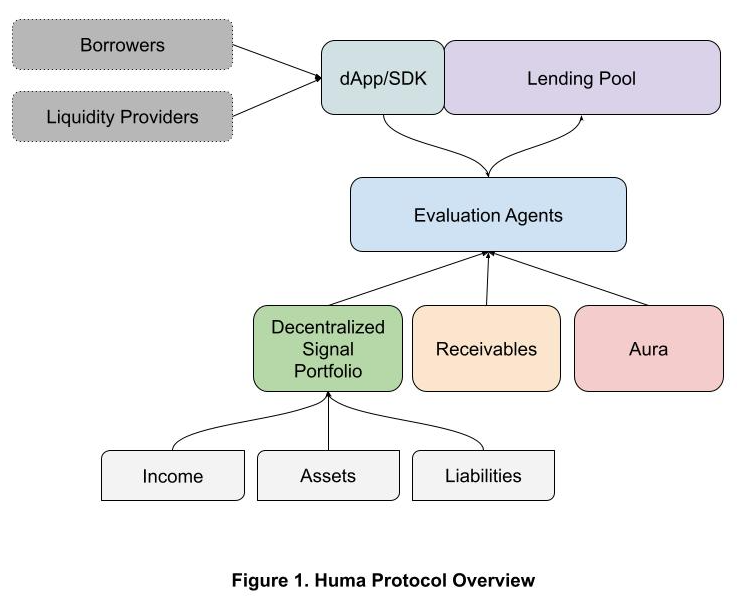
Protocol management roles include protocol owners and suspenders, while fund pool roles are divided into pool owners, evaluation agents (Evaluation Agents, or EAs), liquidity providers, and borrowers.
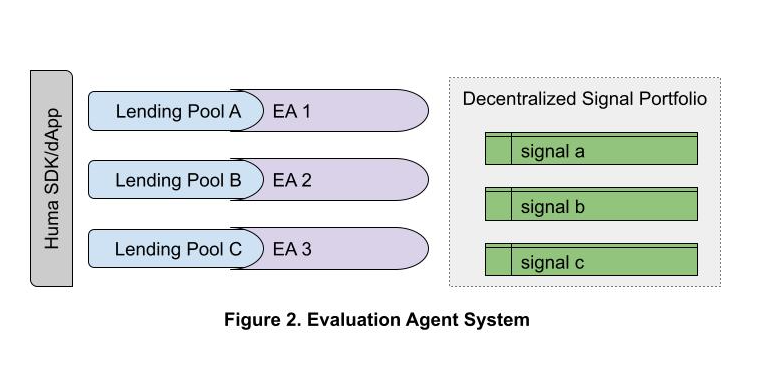
Among them, the existence of the role of EA is crucial. Since Huma uses a credit design, the product needs to review the borrower's qualifications. The EA will evaluate the specific borrowing, and they are responsible for approving or rejecting the borrowing request of the credit pool. There is only one EA per pool. In Huma's plan, most EAs can be automated, but the protocol also allows EAs to have human oversight involved.
Since EA is responsible for approval, how to avoid the moral hazard of EA? Huma has designed an accountability mechanism for this. EAs must contribute capital to the pool of funds they are responsible for. Only after the pool owner and EA have deposited the necessary capital can the pool accept funds from other liquidity providers.
secondary title
On-chain "Sesame Credit" built by DSP
In Huma's mechanics, a concept called "signaling" is crucial. Huma uses signals to judge the basic situation of borrowers and use them to make decisions.
Its signals come from a wide range of sources, including both on-chain and off-chain data.
Data on the chain:
1. Direct payments from the treasury, such as salaries paid by Gnosis SAFE, Circle Business Account, streaming payment applications, etc.;
2. Positions of DeFi protocols, yield farm income, pledge income, game income, NFT royalties, etc.
Off-chain data includes:
1. The balance and turnover of financial apps such as Plaid, Teller, Stripe, Quickbooks, and Recurly;
2. Bill, Stripe, PayPal, Invoice 2 Go, Square, Zoho and other payment applications;
3. Sales of e-commerce companies such as Shopify and Amazon;
4. Credit/debt aggregation data of financial aggregation apps, etc.
By combining multiple signals, Huma designed a decentralized signal portfolio (Decentralized Signal Portfolio, or DSP). This combination provides comprehensive and detailed data on borrowers upon which high-quality automated approval of agreements can be supported.
DSP is not just a fixed set of signals, but an open platform. Any high-quality signal about the borrower's income, assets, and liabilities can be integrated. Huma provides a unified interface for developers, and developers can adapt and develop specific signals to access the DSP platform.
After the developers complete the development of the signal, they need to submit it to HumaDAO for review. Once approved, the signals will be deployed on the DSP with the appropriate open source license.
future outlook
future outlook
Huma has reached cooperation with Circle, Request Network, Superflow, etc. Users can rely on data from these apps to obtain lines of credit.
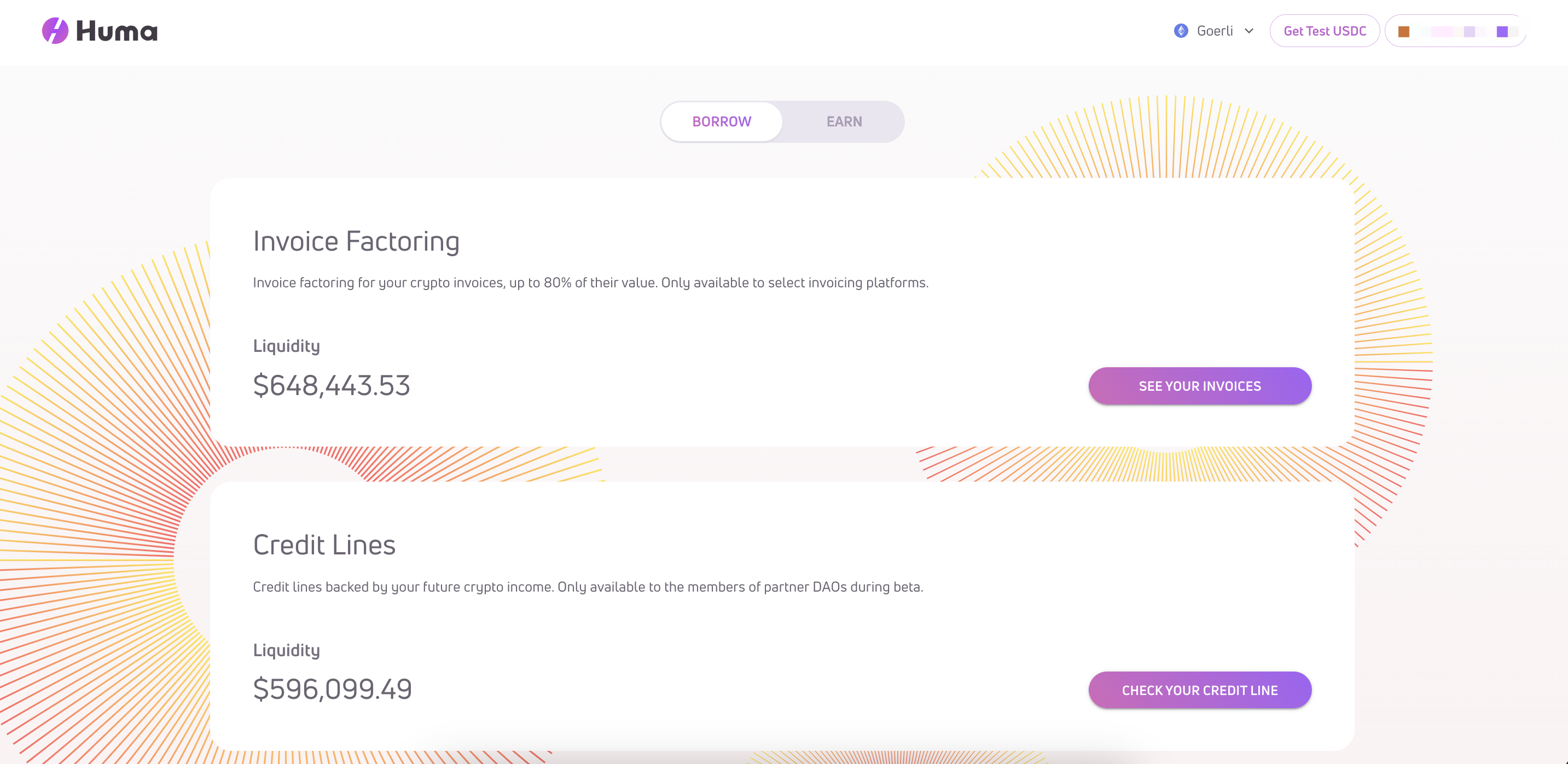
Currently, Huma has launched the Polygon mainnet and the Goerli testnet. Unfortunately, the Polygon network's lending pool is illiquid, with only $1,380, but basic functionality is still available.
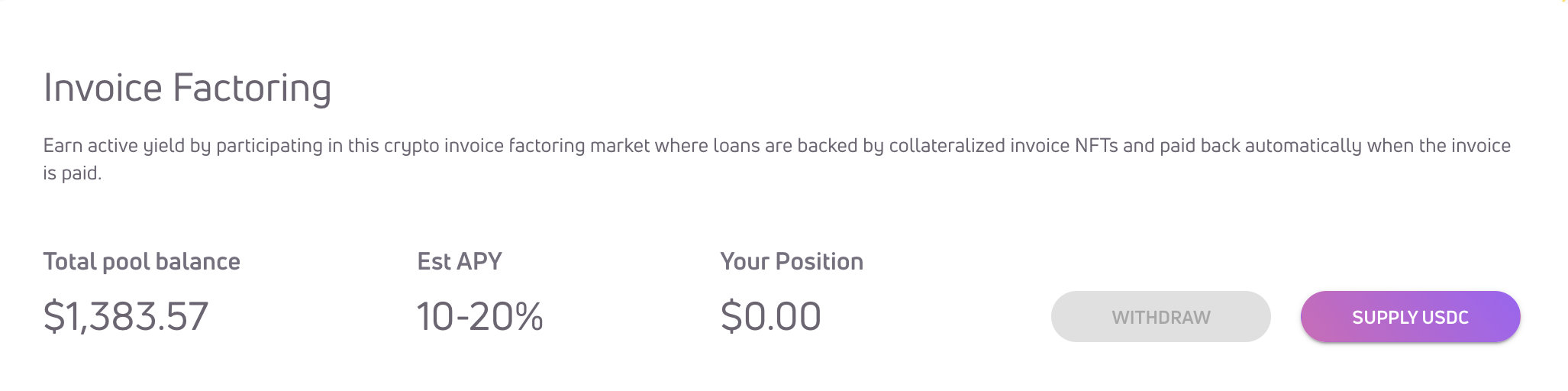
Currently on the Polygon mainnet, Huma has integrated the encrypted payment application Request. Users can obtain credit line through Request's accounts receivable. Christophe Lassuyt, President of the Request Foundation: “This financing use case is the first step towards a decentralized and P2P financing mechanism.”
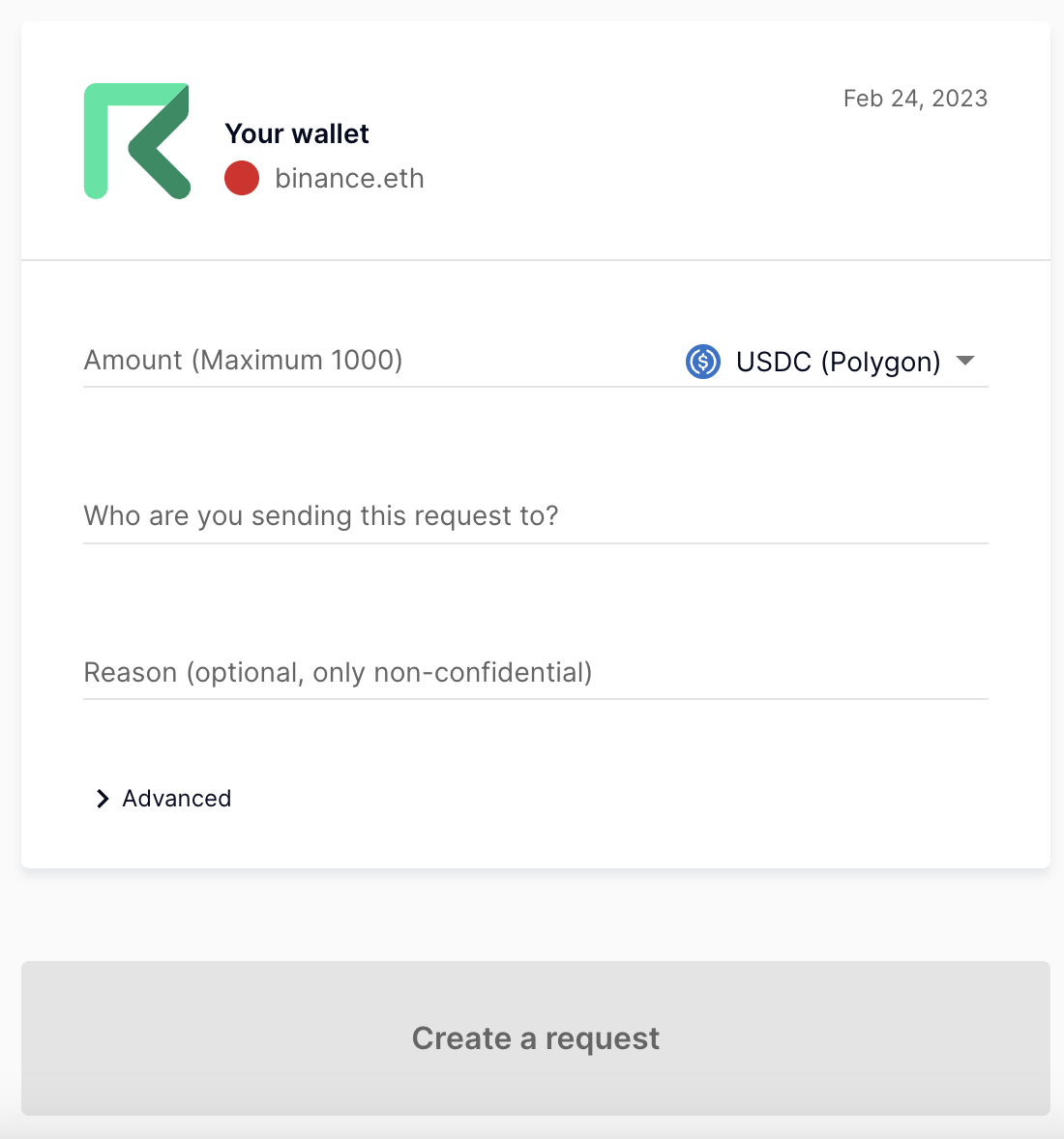
Through the evaluation of DSP system and EA, Huma can create an appropriate credit limit for each wallet. It should be noted that the fund pool owner and EA co-manage the operation and approval of a pool. This also means that the agreement does not directly intervene in the operation of each pool. Huma hopes that, based on the agreement, multiple capital pools and a variety of different products can be built. External developers and enterprises can easily develop and launch new products based on Huma, such as commercial loans, personal loans, Factoring, to many other forms of loan products and more.
The Huma team believes that “equal access to economic opportunity is a fundamental human right. Blockchain-based financial technology enables instant credit markets while increasing the availability and capital efficiency of funds.”
Odaily's [New Projects] column aims to help early Web3 projects gain market exposure opportunities. If you are also a Web3 entrepreneur, please follow the official Twitter @OdailyChina, private message [seeking reports], send your project introduction and contact information, we Will communicate with you as soon as possible.official pushandofficial website。
Odaily's [New Projects] column aims to help early Web3 projects gain market exposure opportunities. If you are also a Web3 entrepreneur, please follow the official Twitter @OdailyChina, private message [seeking reports], send your project introduction and contact information, we Will communicate with you as soon as possible.





