






Forbes: Losing $12 billion in 60 days, Binance FUD may be more serious than imagined


Original title: "Binance Is Bleeding Assets, $ 12 Billion Gone In Less Than 60 Days》
Original title: "
Original post by Javier Paz, Forbes
Compilation of the original text: Mary Liu, Bitui BitpushNews
Binance, the world's largest cryptocurrency exchange, is struggling to preserve assets. Investors have been withdrawing their cryptocurrencies in recent weeks following the collapse of rival FTX, with outflows from Binance accelerating despite reassurances from CEO Changpeng Zhao that the situation has stabilized.
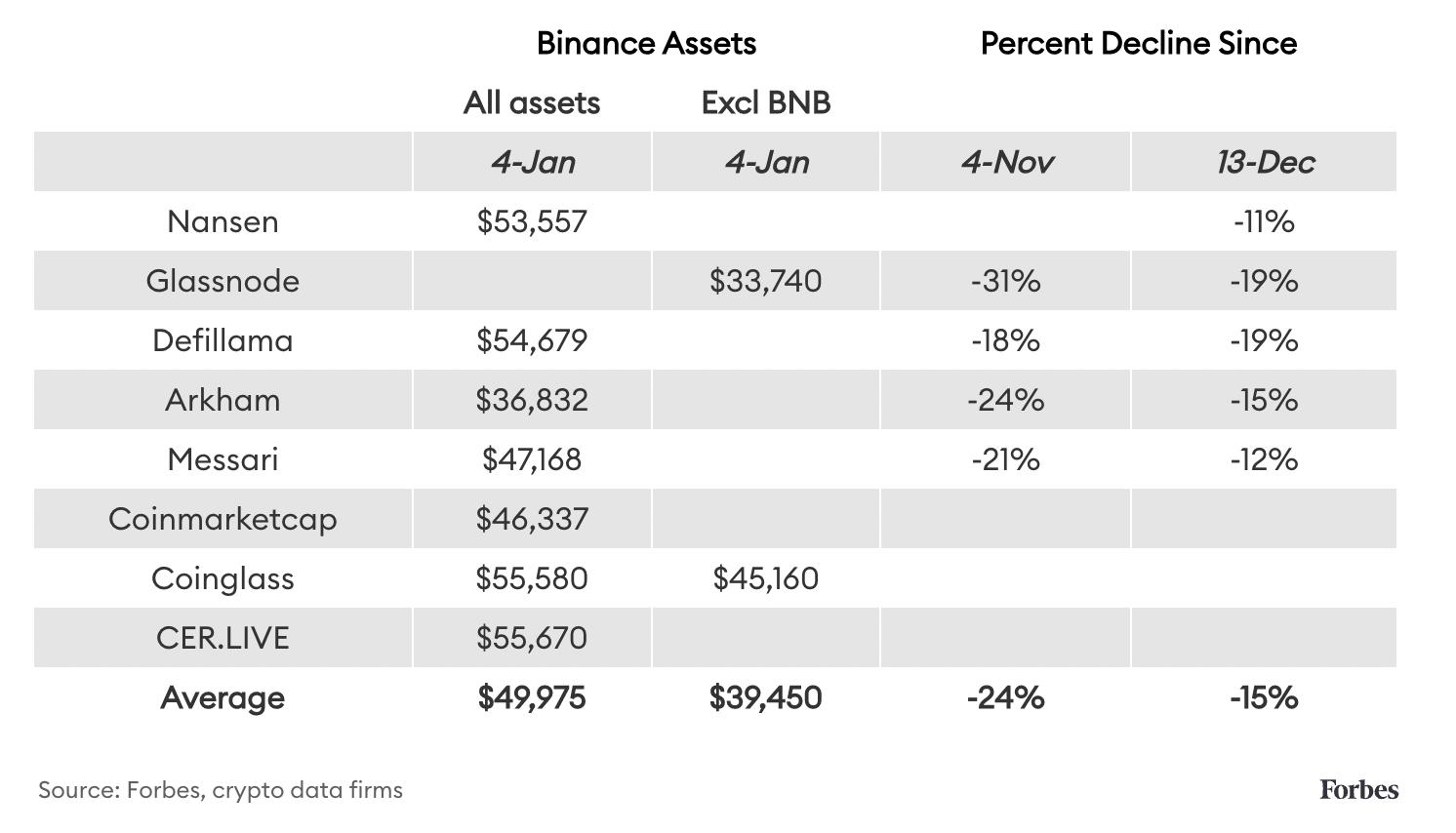
According to data from crypto data firm Defillama, customers made net withdrawals of $360 million in a single day. On December 13, Nansen, an independent encrypted data company, broke the news that the Binance platform had lost $3 billion in assets in the previous week, accounting for 4% of the company's total assets at the time.
In fact, Binance lost 15% of its assets since the same day that Changpeng Zhao (CZ) downplayed the Nansen withdrawal report on Twitter, meaning that in less than two months, Binance has lost 15% of its assets, according to a Forbes investigation. In 2019, nearly a quarter of all crypto assets (approximately $12 billion) left Binance.
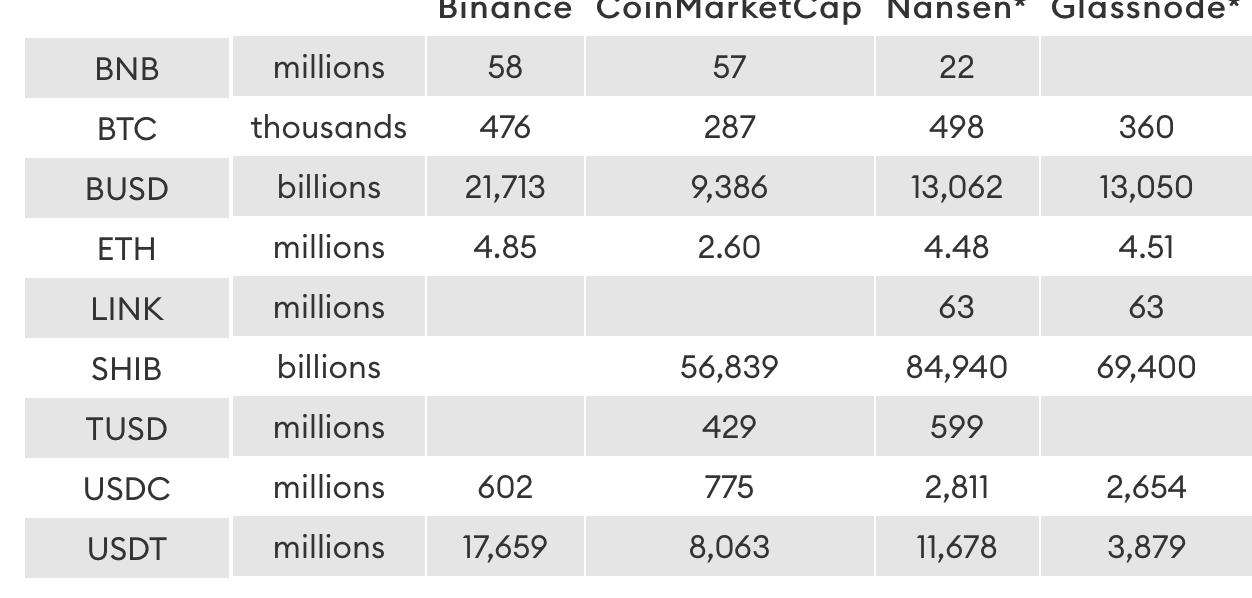
Investors' lack of trust is evident in the performance of BNB and BUSD, both of which bear the exchange's name. BNB has lost 29% of its value in the past two months, and Forbes estimates that Binance has about 29 million tokens left, a 51% decrease from the number disclosed on Nov. 10. At the same time, the volume of the company’s BUSD stablecoin has dropped by 40%.
Binance also appears to be losing trust and influence in more subtle ways. While net assets are down 24% since November, investors in well-known tokens such as MATIC, APE, and gala have slashed their holdings on exchanges by 40-50%.
Changes in assets - Binance (in millions of dollars)
what's in the wallet
The story may also be about the lack of conventions for categorizing assets held within crypto wallets. Crypto data firms have yet to agree on what to include in their asset valuations, as evidenced by the broad estimates ($37 billion to $56 billion) that Binance could declare at the start of the year. Systematically classifying assets is a challenge, especially when there are no standards dictating what is included and whether it is reported (net of tokens generated by transactions or blockchain-bound assets operated by them).
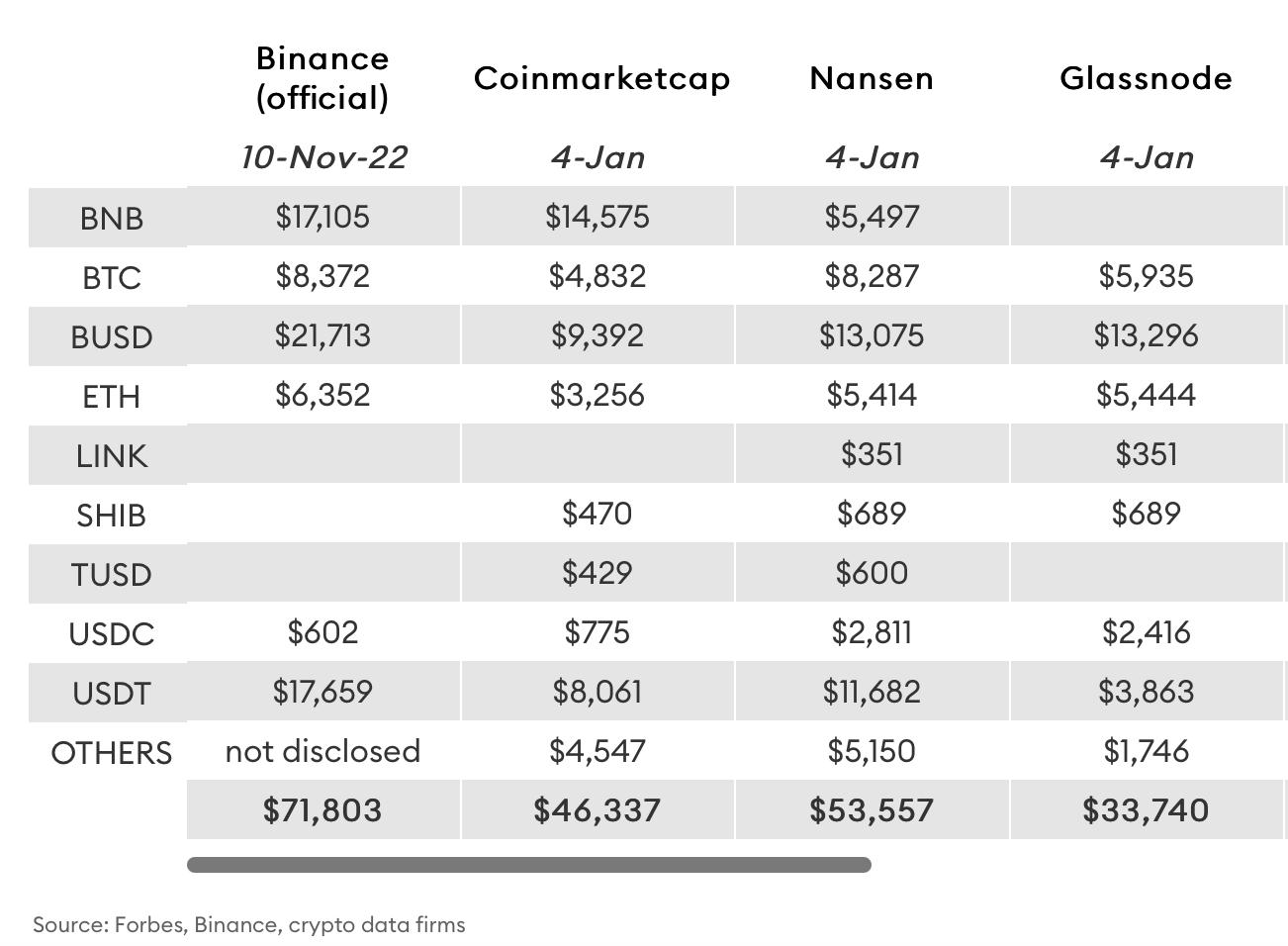
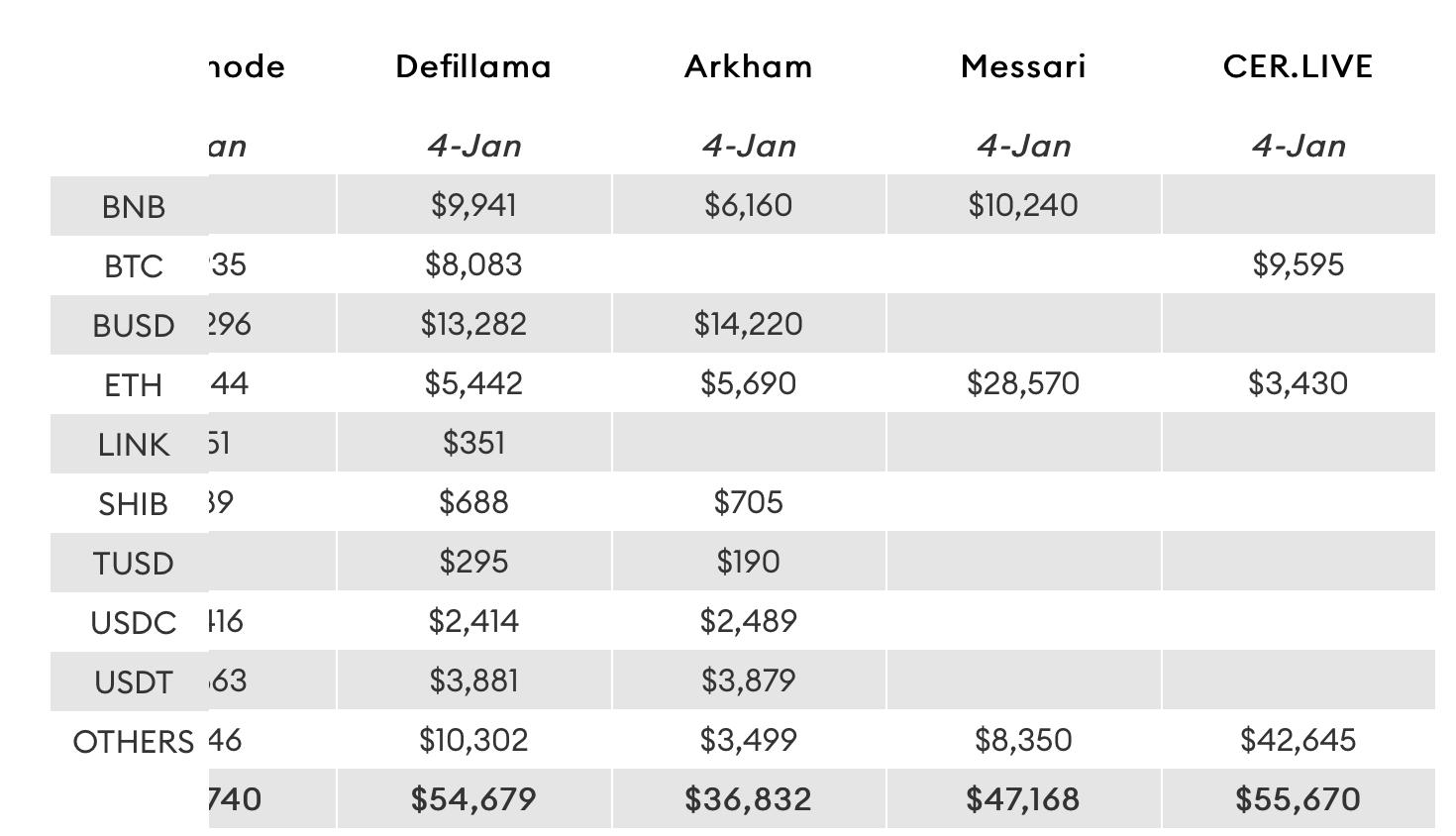
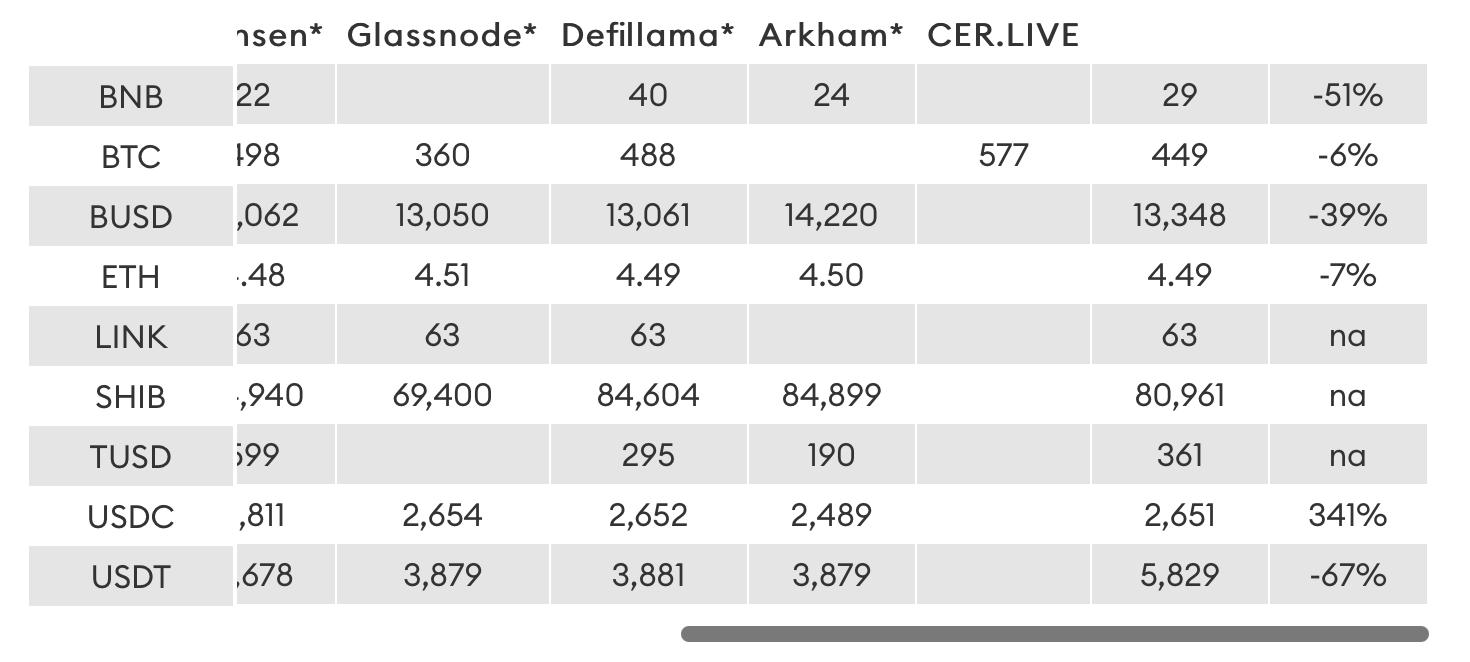
Below is a breakdown of how various data sites quantify the contents of Binance Wallet. We note that amid Binance’s net asset loss, recent weeks have seen sharp increases in two stablecoins — USDC and USDT.
Binance Crypto Wallet (Unit: USD million)
BNB
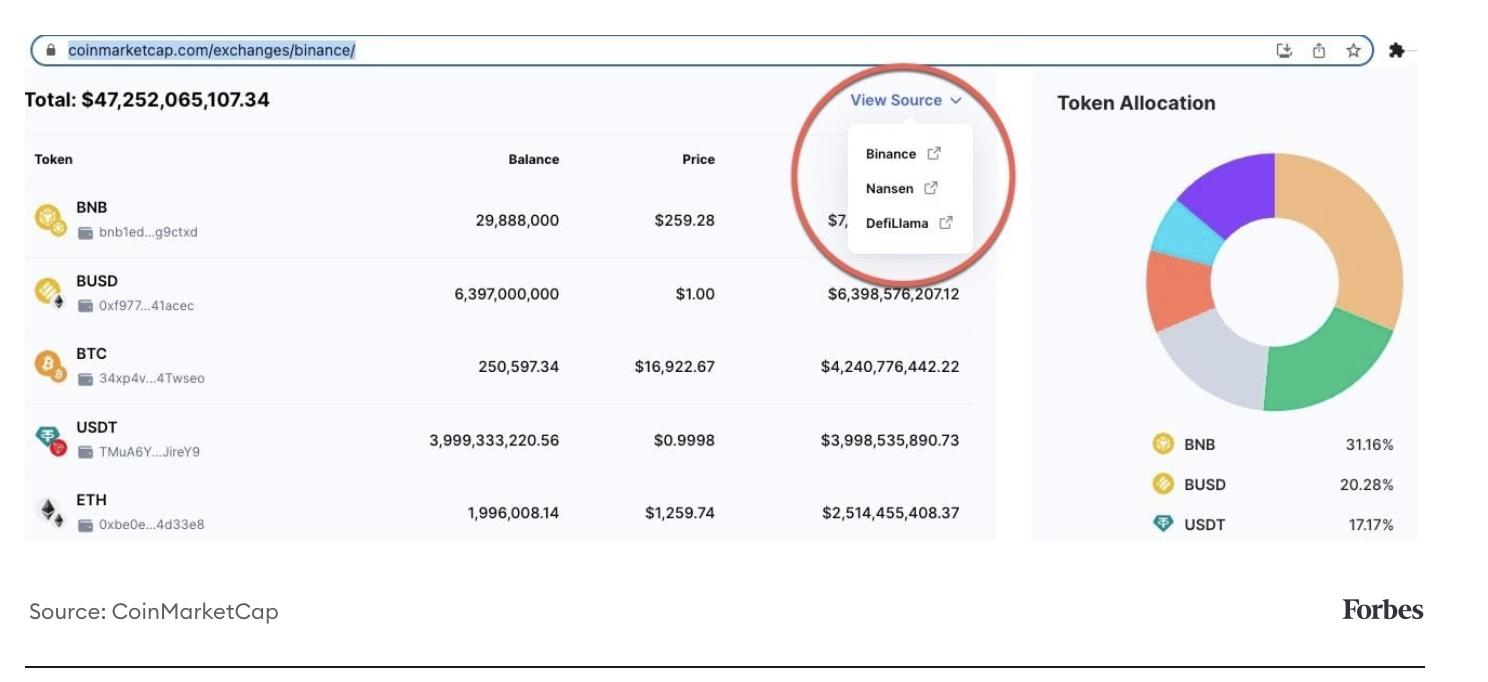
Binance Crypto Wallet - Token Distribution
There is much debate as to whether Binance's BNB, a token whose minting and supply is controlled by the exchange, represents a real asset that can meet external obligations in difficult times. Data firms are divided on how to estimate the value of these assets, if at all.
Binance broke its habit of not disclosing sensitive financial information, releasing a public transparency statement listing some of its crypto assets nearly two months ago. At the time, the company did own $17 billion denominated in BNB, nearly a quarter of its assets.
Fast forward to today, and the price of BNB is $262, a third lower than it was on November 4th. Today, the closest independent observation site to an exchange’s official view of the BNB token on its balance sheet may come from CoinMarketCap (CMC), the world’s largest cryptocurrency website, owned by Binance. But CMC said it supplemented Binance data with data from Nansen and Defillama.
In terms of dollar equivalents, Glassnode puts the value of BNB at zero, while Nansen and Arkham put the amount closer to $6 billion, and Defillama and Messari put it closer to $10 billion. However, the value of Binance’s holdings calculated by Messari is derived from three chains: BNB, ETH, and Tron, suggesting that the nearly $10 billion in the BNB assortment includes many other tokens, not just BNB.
bitcoin
bitcoin
BUSD
Forbes also found huge variances in Binance’s Bitcoin (BTC) holdings, ranging from $4.8 billion (CoinMarkeCap) to $9.6 billion (CER.LIVE), and the number of tokens held from 287,000 BTC to 577, 000 BTC drastic change. This may be due to bad queries from some data companies, not from all Binance wallets. Even so, careful observers are curious to know how CER.LIVE was able to identify $9.6 billion worth of BTC assets in Binance wallets, more than double the amount shown by Glassnode and CoinMarketCap.
From November 4th to January 4th, the number of BUSD tokens dropped by $8,724 (40%). Four data providers (Nansen, Glassnode, Defillama, and Arkham) agreed on the amount of BUSD tokens Binance holds in their wallets. As of January 4, it was about $13.468 billion, which is the average of the four data companies.
On Jan. 4, CoinMarketCap showed a BUSD balance of $9.58 billion, $3.5 billion below the $13.1 billion and $13.2 billion reported by Nansen and Defillama, two outside firms that contributed to CMC's BUSD tally. This number is therefore problematic because to show an average of $9.39 billion, Binance's own data would have to be several billion dollars lower than Nansen and Defillama's estimates. Of course, a lower BUSD token value is a bad thing for Binance.
ETH
Using an average of Ethereum (ETH) data from the four aforementioned data firms, Forbes estimates that Binance owns 4.49 million ETH tokens, which equates to $5.498 billion. Conversely, CoinMarketCap’s much lower valuation of $3.3 billion means that Binance only has 2.58 million ETH tokens — 1.91 million less than the average Forbes calculates. The Messari ETH valuation (equivalent to $28.6 billion) is unique in representing not just ETH holdings, but all tokens held by Binance that run on the Ethereum chain, and the difference is significant. CoinMarketCap implies that Binance holds 2.6 million ETH, compared to 4.48-4.85 million for all other data sources and Binance.
stable currency
stable currency
According to Defillama data, BUSD holdings have been on a steady decline, with significant drops (at least $1 billion) on Nov. 25 and Dec. 14, the latter the day after Changpeng Zhao's calming remarks on Twitter. During the second BUSD crash, the net loss in just one day was as high as $3.46 billion. On Jan. 4, Binance’s USDT and USDC tokens also doubled at the same time, reaching $6.27 billion.
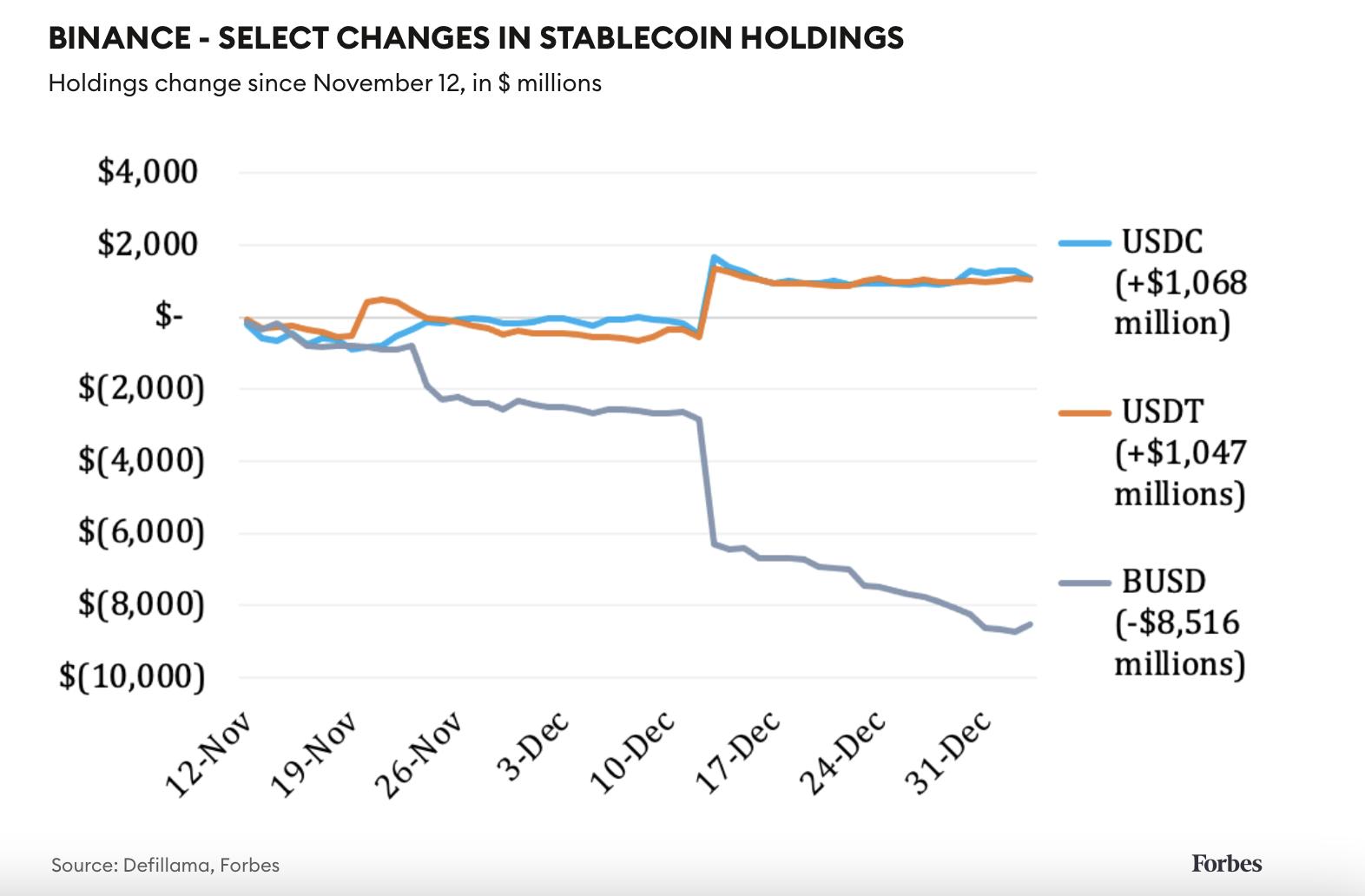
BINANCE - Change in holdings of selected stablecoins (change since November 12th in millions of dollars)
Taken together, these sudden and simultaneous changes suggest that one or more large investors have swapped BUSD for rival stablecoins USDT and USDC.
The backdrop for the massive BUSD sell-off and recovery in USDC and USDT holdings involved a number of cryptocurrency market makers, including Jump Crypto and Wintermute, withdrawing large sums from Binance ahead of Dec. 12. After that day, other giant whales quietly started the same operation.
On Dec. 13, Justin Sun, founder of Tron and "owner" of the Huobi exchange, tweeted how he deposited $200 million to show others that investing in Binance was safe, but did not disclose the subsequent large withdrawals, Arkham Research saw red flags.
In a tweet the next day, Arkham Research concluded: “Over the past 24 hours, this Paxos deposit address has seen over $200 million in BUSD inflows, all from Binance.” It added: “This shows that This entity may be transferring funds from Binance, not to Binance."
On Jan. 6, Coindesk reported that “drama” occurred on Sun’s Huobi exchange after Justin Sun fired 20% of its staff and asked the rest to accept payments in USDC and USDT. Arkham Research investigated Justin Sun's unusual transactions on the ledger and concluded he may have lost a key banking partnership, making it difficult to transfer large sums of money or even pay salaries to foreign employees.
Justin Sun's stablecoin USDD has been down this week, but is trading at 97.6 cents, which is admittedly below the dollar-pegged exchange rate, but still within a level of deviation that has been seen multiple times over the past year. The influx of Sun funds caused problems for CZ, who as usual used Twitter to downplay these flows in order to promote Tron activity on Binance, but later deleted the tweet, presumably because it sparked more talk about The question of whether Binance needs or asks for funds from whale investors.
It’s worth noting that Binance has been operating without a chief financial officer since Wei Zhou’s abrupt departure from the company in June 2021, raising concerns about whether the funding for CZ’s acquisition came from him or other sources. Audit firm Mazars abruptly decided on Dec. 19 to cancel the proof-of-reserve analysis it had been performing for Binance, also due to a lack of key financial personnel. Blockchain records reviewed by Forbes show that Binance Wallet sent $232 million in BUSD tokens to Binance US wallets on Dec. Binance US was able to acquire Voyager assets.
Forbes reached out to Paxos, a firm with U.S. banking and New York Department of Treasury licenses, to ask questions about BUSD activity, but it declined to comment. Instead, it issued a short public response stating that it had "made a strong statement on BUSD on December 13th" and referred us to the latest report and BUSD information on the etherscan website.
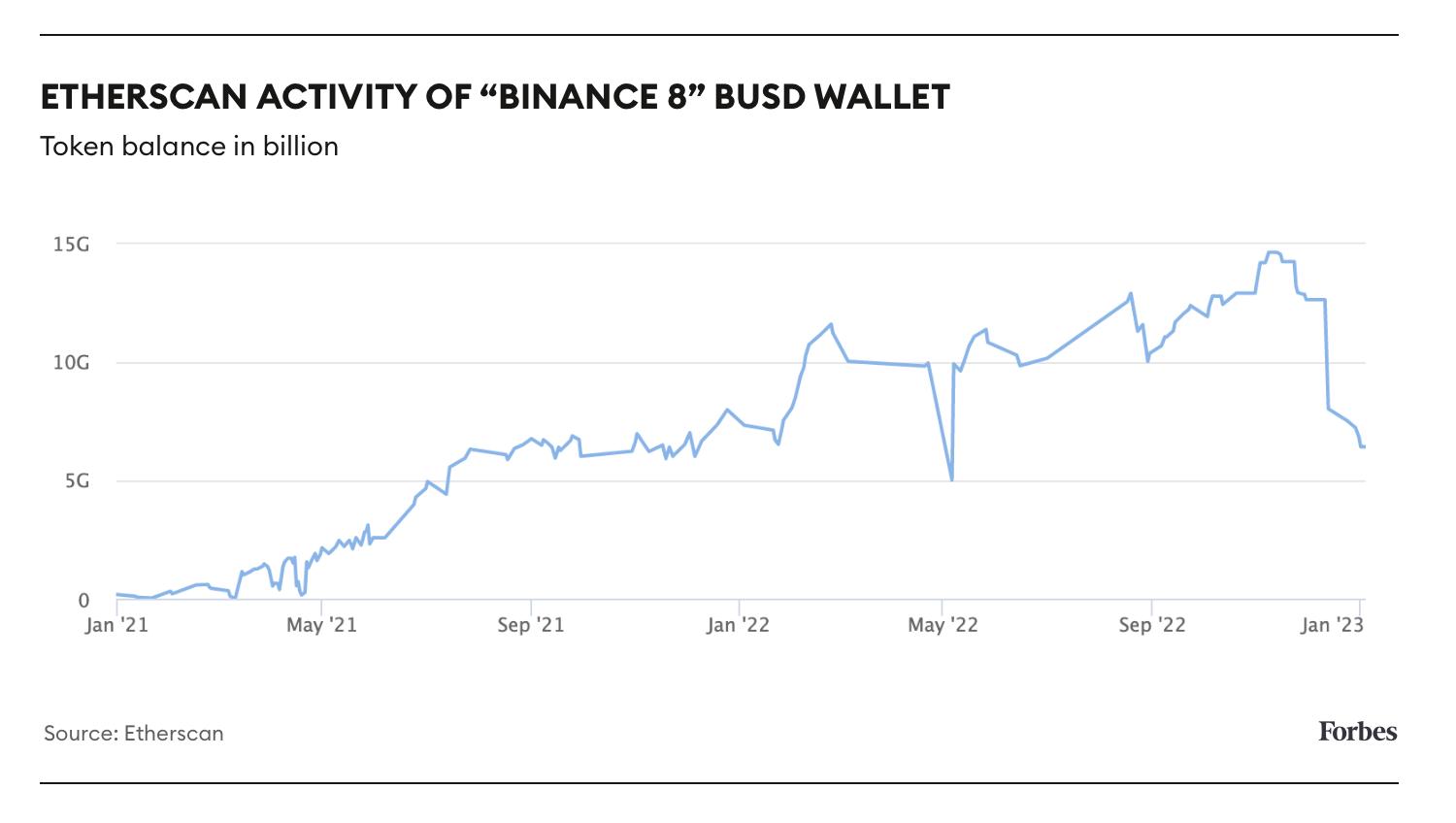
Etherscan identified wallet addresses that may belong to Binance, such as "Binance 8" and "Binance: Binance Peg-Tokens," which hold 38.1% and 32.4% of all issued BUSD, respectively. The Binance 8 wallet, which had $100 million in assets in early 2021 and grew to a whopping $15 billion by mid-November 2022, has depleted nearly $9 billion in BUSD tokens in the past three weeks.
Changes in assets of other peers
It could be argued that Binance is experiencing a drop in assets similar to that of most exchanges, but Defillama data shows that only one of 23 competitors has disclosed proof of funds information in the past 30 days — a low-key exchange called MaskEX - The proportion of assets lost is higher than Binance's 15%.
This situation shows that Binance has trust issues, and if these problems are proved to be well-founded, then its status as the leading crypto exchange will increase the spread of FUD, but this is not necessarily the end of the world for the crypto industry, trading activity will be low Easy to flow to other competitors in the same industry around the world.
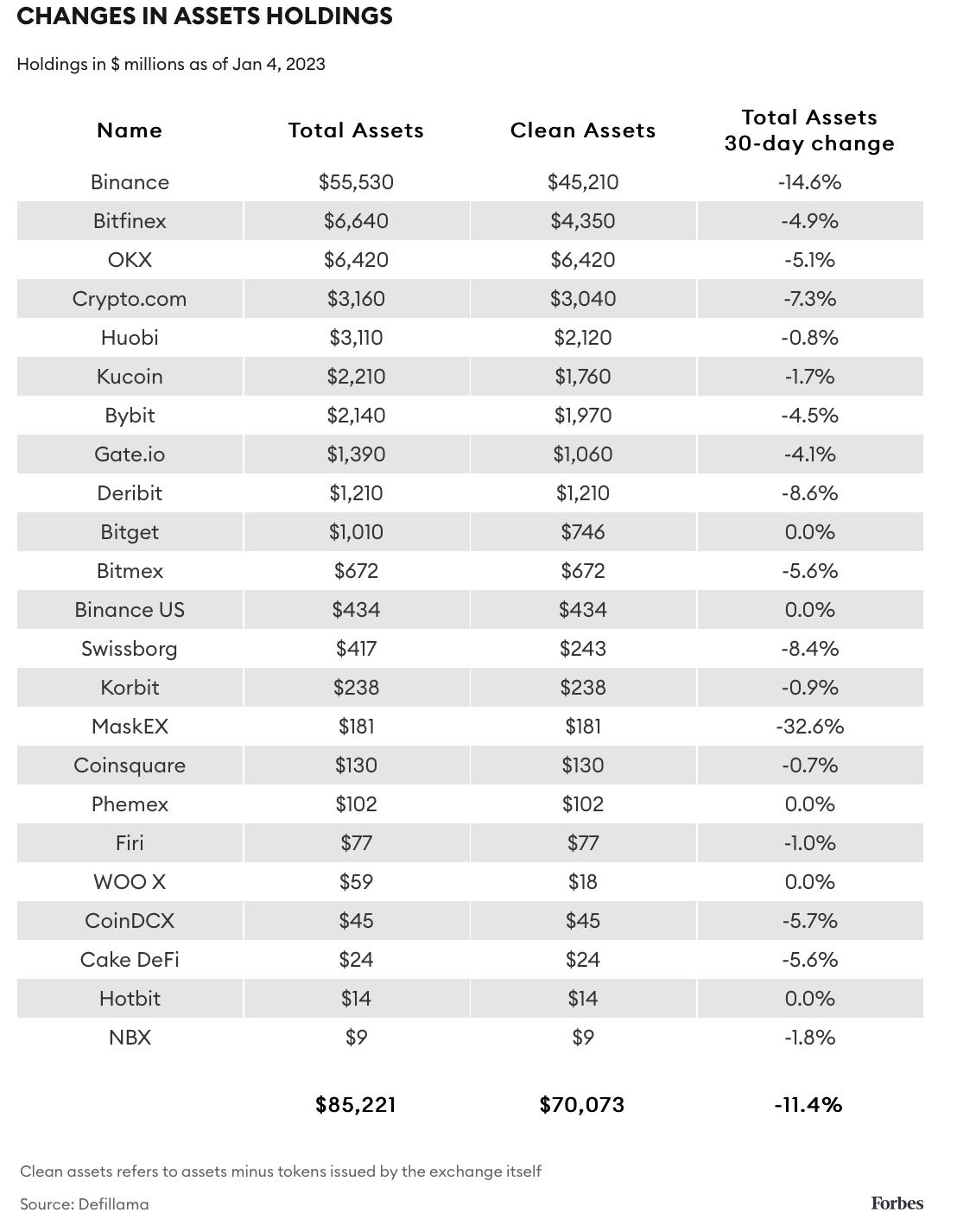
Exchange assets (asset unit: million US dollars)
investor alert





