






Wanzi Interpretation Circle: Defend the Stablecoin That Must Be Contested by Military Strategists, and Point to the New Financial Infrastructure


Author: Jessie
Original Source: Overseas Unicorns
Original Source: Overseas Unicorns
With cz's announcement last night that it will acquire FTX, the most exciting business war in the history of encryption has finally come to an end. HoweverThe fall of FTX does not mean that Binance can sit back and relax. The opacity of reserves, lack of supervision, short-term debt and long-term investment generally in the industry, liquidity panic caused by runs, etc. are deeply hurting users’ wallets and confidence, so as soon as the acquisition news came out, BTC/ETH also continued to fall sharply. cz quickly issued an appeal: "All exchanges should do Merkle-tree proof of reserves, and Binance will soon launch proof of reserves, which is completely transparent."
Binance’s “Leading Self-Regulation” Helps Form New Industry Consensus, and before that, for the stablecoin track, which is particularly critical for sufficient reserves, Circle adopted a "full reserve system", disclosing the audited USDC reserve details and the list of custodians on the official website every month, accepting all investors' requests supervision. This has brought widespread user trust and helped Circle become a leader in the stablecoin track.
Stablecoins can be said to be the largest track in the encryption field, with a current market value of $148.5 billion, accounting for 16.1% of the entire encryption market. There is no doubt that without stable coins, there will be no DeFi Summer, let alone a prosperous Web3 ecosystem.
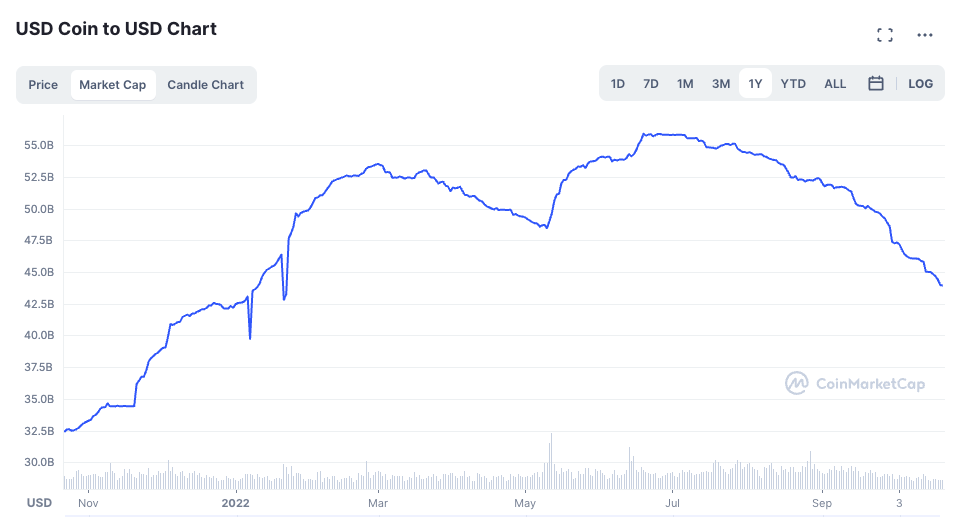
USDC is one of the fastest growing US dollar digital assets in the world, providing an open standard for US dollar payments on the Internet.Since the beginning of 2020, as of December 31, 2021 (the highest market capitalization point), USDC's circulation has grown from $400 million to over $55.9 billion, an increase of more than 139 times. So far in 2020, USDC has supported more than $6.26 trillion in transaction volume on the blockchain network. Especially after the collapse of Terra's algorithmic stablecoin UST this year, USDC has attracted a large number of investors' funds with its advantages of security, transparency, and full reserves.
In addition to the most eye-catching USDC, Circle's business also includes trading and financial services (TTS), equity crowdfunding platform SeedInvest, of which TTS is Circle's largest business, accounting for 56% of Circle's revenue.
According to the Circle team's plan, Circle will be listed at a valuation of $9 billion by the end of this year. Considering the recent market environment and regulatory pressure, we are concerned about whether Circle will be able to go public smoothly or whether its market value will be inverted. Of course, the $9 billion valuation is too expensive for all investors,But we must understand the important position of USDC and other stablecoins in the encryption ecology - to become a bridge for traditional assets to flow into the encryption world, which is also a "battlefield" for the game of interest groups represented by major exchanges .
The following is the table of contents of this article, and it is recommended to read it in combination with the main points.
The following is the table of contents of this article, and it is recommended to read it in combination with the main points.
01 Thesis
02 What is Circle
03 Business model
04 income
05 team
06 Financing and Listing
07 risk
08 Valuation analysis
first level title
01 Thesis
Overall, we remain bullish on the company's growth prospects for the following reasons:
1. The market opportunity facing Circle is huge.The accessible markets include the stable currency market with a market value of 148.5 billion US dollars, the global encrypted payment market of 630 million US dollars, and the equity crowdfunding market of 17.5 billion US dollars. Catalysts for it to increase market penetration include the future issuance of U.S. dollars, the overall recovery of the encryption market, and the game between regulation and the encryption market.
2. Circle has a competitive advantage that is hard to beat.
Circle has multiple avenues for growth.Circle operates USDC, one of the fastest-growing US dollar digital assets in the world, and will continue to issue other fiat currency-backed stablecoins. The penetration rate of its trading and financial services (TTS) and SeedInvest business is also increasing, establishing a strong foundation for USDC Multi-scenario safety mat.
USDC is fully reserved, safe and stable, and compliant, has a strong user trust base.
Circle is poised to become the infrastructure of a new blockchain-based financial system with its TTS.
3. Circle's management team has a strong background and has world-class knowledge in the fields of payment, crypto, and compliance.first level title
02 What is Circle
Founded in 2013, Circle was not initially known for its flagship product, the stablecoin USDC. At the beginning of its establishment,The development of Bitcoin made the team see such an opportunity - based on blockchain technology, to establish a fund transfer product for C-end users, such as converting USD to Bitcoin, and then converting Bitcoin to USD.The Bitcoin transaction channel will greatly reduce the inconvenience of passing through traditional central banks and international remittances, and become a fast channel with no time limit on a global scale.
product
product
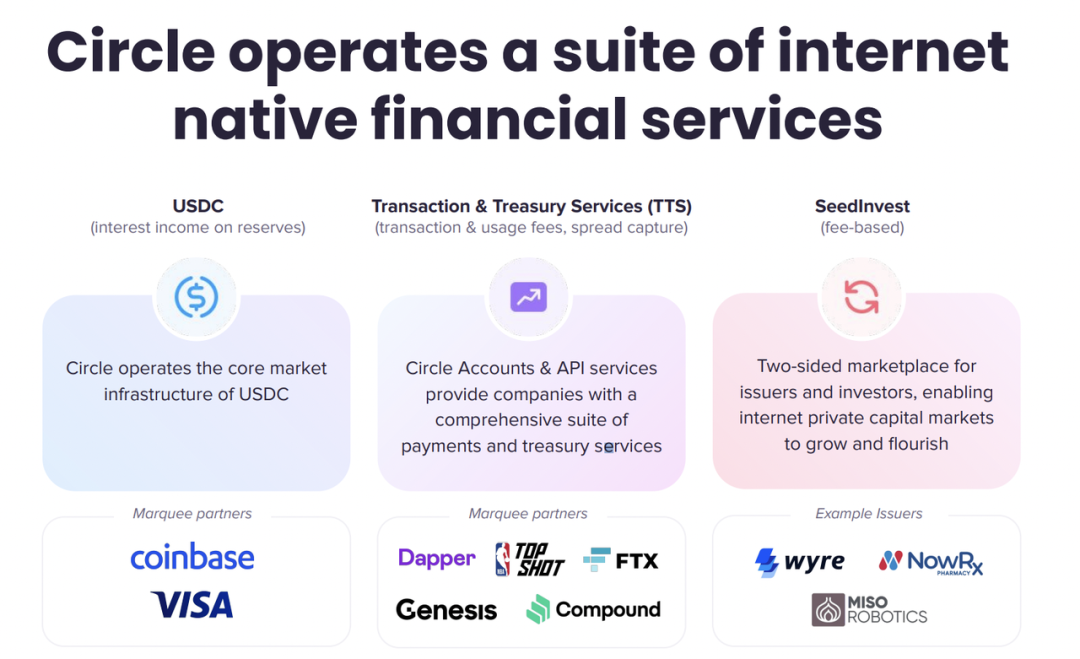
Currently, Circle already offers a range of products to its clients, including the stablecoin USDC and its market infrastructure, Transaction and Treasury Services (TTS) and equity crowdfunding platform SeedInvest.
1. USDC
Launched in September 2018, USDC is the second largest stablecoin in the world by market capitalization and currently the fastest growing US dollar digital currency. As of November 2022, the circulation of USDC is 43 billion US dollars, with 1.6 million holders, the total transaction volume on the chain reaches 3.77 trillion US dollars, and it is supported by 190+ countries. In addition to the U.S. dollar digital currency, Circle also announced the issuance of EUROC in January 2022, which will be backed by euro reserves kept by financial institutions "under U.S. regulation."
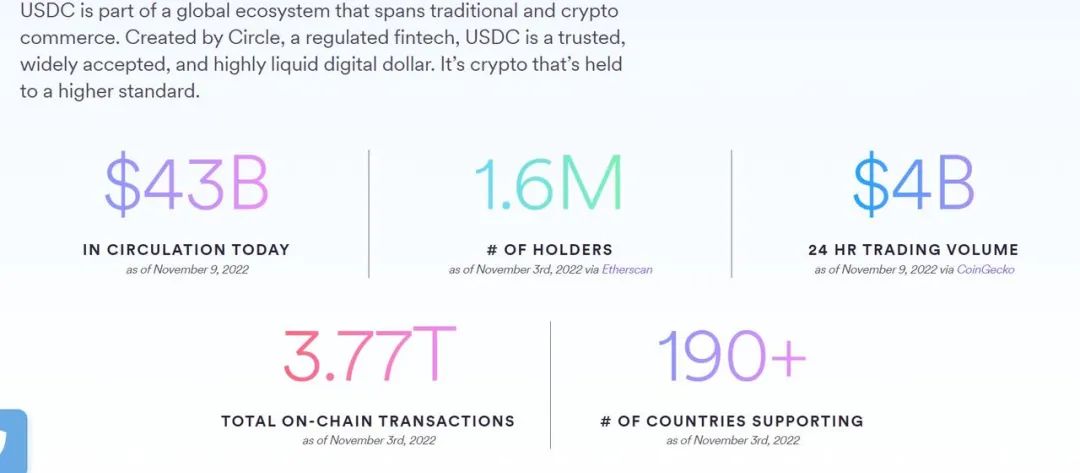
Circle operates USDC's core market infrastructure, including issuance and redemption infrastructure, liquidity management, and management of USD reserves that support USDC circulation.
USDC has the following three advantages:
1) USDC is collateralized by US dollars, fully reserved, low risk, safe and stable
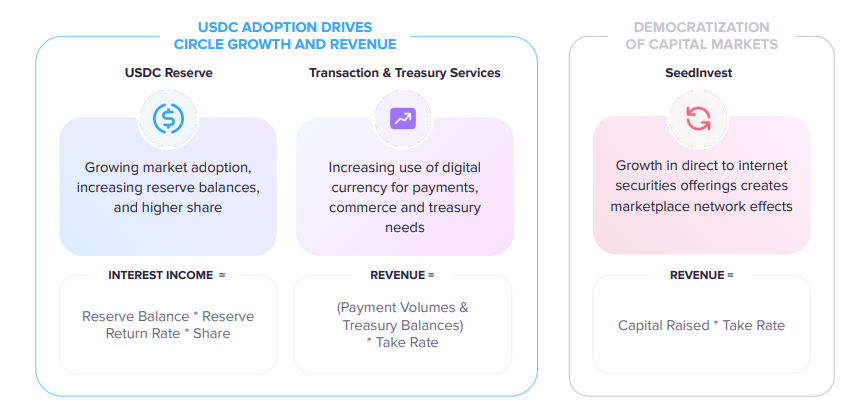
USDC's profit model is essentially a banking business. The company uses USDC's dollar reserves to purchase other more stable investment products to obtain interest income.Its income formula is:Income = Reserves * Yield.

If you want to increase its income, there are two ways:
increase reserves
Seeking Higher Reserve Yields
Higher yields necessarily mean higher risks, and Circle's CFO emphasized that USDC's business model is to "minimize risk", so as to win more trust and bring more reserves.Therefore, USDC is relatively conservative in the choice of reserves, only holding US dollar cash and short-term US government bonds.
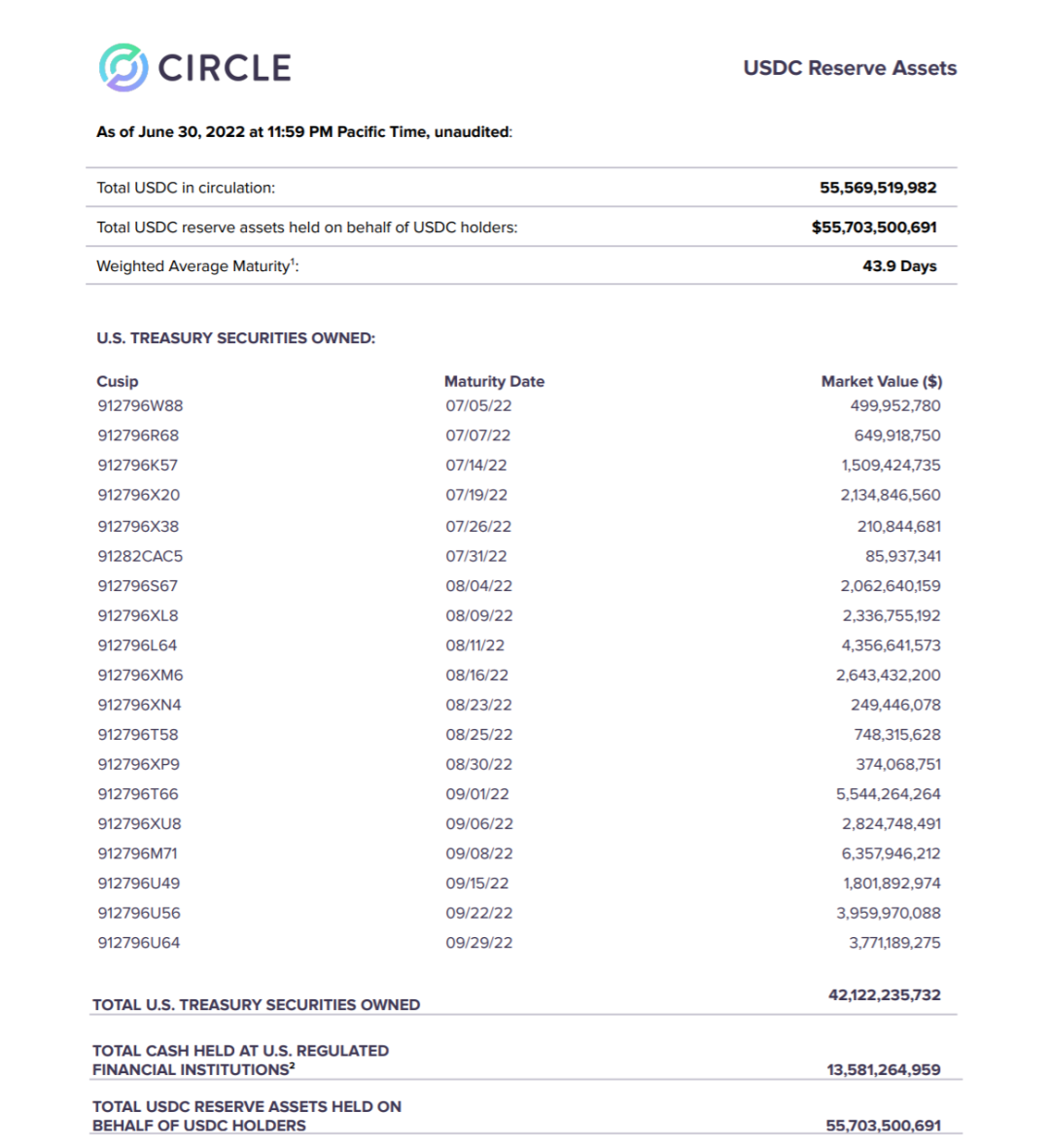
The USDC reserves held by Circle include 80% US Treasury bonds and 20% cash. The US Treasury bond reserves have a maturity of 3 months or less and are kept by Bank of New York Mellon, one of the oldest and largest custodian banks in the United States. Cash Reserve partners include Silvergate, Signature Bank and New York Community Bank, among others.
USDC is a "full reserve" stable currency, which means that USDC's US dollar reserves are separated from other investment businesses. Anyone can redeem the equivalent amount of US dollars with USDC stable currency at any time even in the most extreme market environment . As CFO Jeremy Fox puts it:
USDC reserves are separate from Circle's other businesses and operations. USDC reserves are assets belonging to USDC holders, not Circle, and are all stored in separate accounts. Circle does not allow USDC reserves to be used for any other purpose. Unlike exchanges or other unregulated institutions, we cannot lend them out or use them to pay our bills.
2) Transparent
In order to make USDC reserves more transparent, Circle discloses the details of USDC reserves and the list of custodians on the official website every month, and accepts the supervision of all investors.
3) With the explosion of the DeFi market, USDC is more popular in the DeFi market due to its compliance
With the emergence of more and more emerging DeFi projects, especially income, DEX, and lending products, they will all launch stablecoin liquidity mining activities in order to maintain high liquidity. In the DeFi market, due to compliance and security considerations, most projects prefer to use ETH and USDC to establish a transaction pair fund pool, and USDC with higher compliance has become the first choice for most DeFi users and project parties stablecoins.
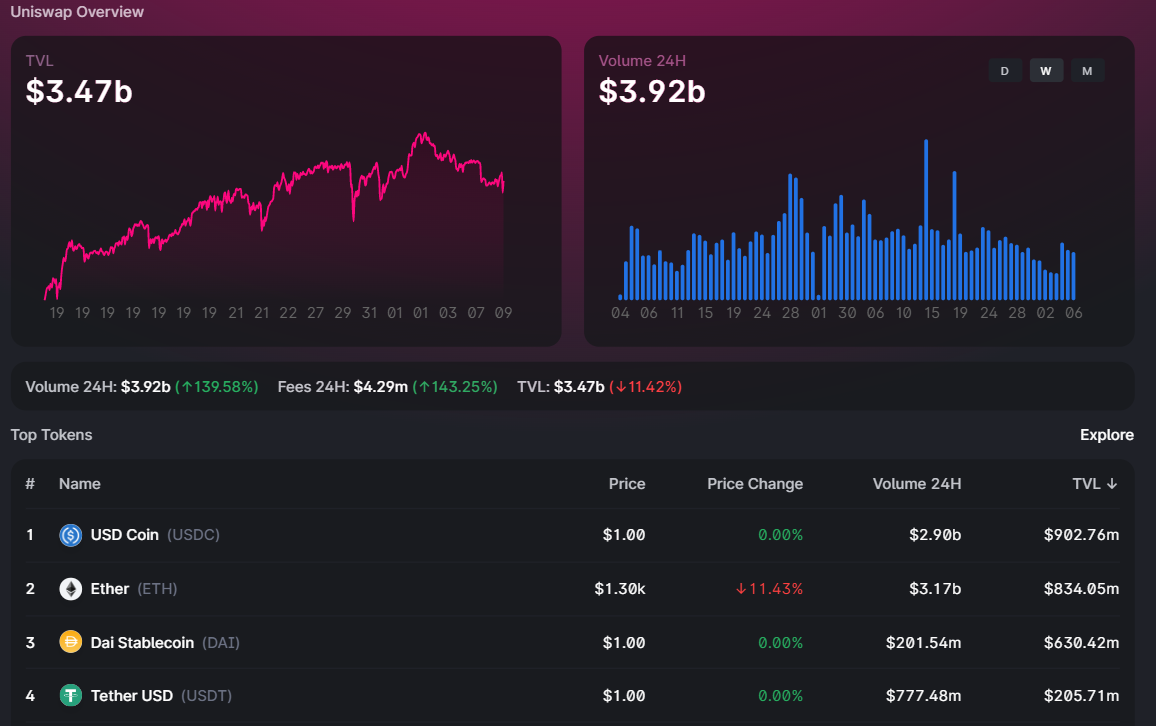
As of November 9, the USDC locked-up volume in the Uniswap fund pool was 903 million US dollars, and the USDT locked-up volume was 205 million US dollars. The former is more than 4 times that of the latter. In terms of daily trading volume, the trading volume of USDC trading pairs reached 2.9 billion U.S. dollars, and the trading volume of USDT trading pairs was 780 million U.S. dollars. The former is four times that of the latter, and it also reflects that Uniswap users tend to use USDC transactions more obvious.
In the Aave fund pool with the highest TVL, the USDC deposit amount is 940 million US dollars, and the loan amount is 470 million US dollars.Both are the assets with the highest data on the platform,The USDT deposit amount is 340 million US dollars, and the loan amount is 310 million US dollars. It can be seen that USDC is far ahead of USDT in terms of deposit amount and loan amount.
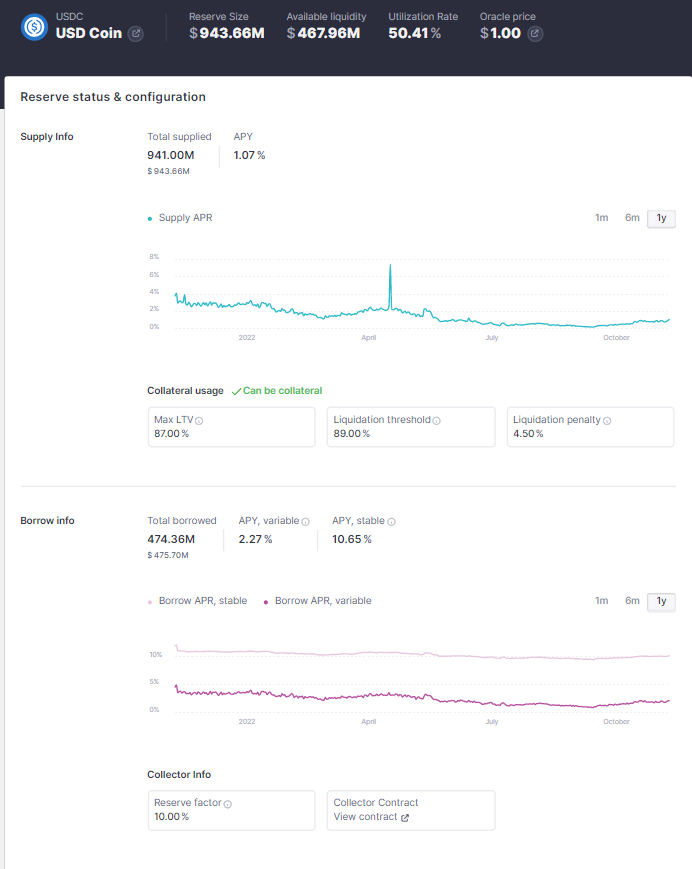
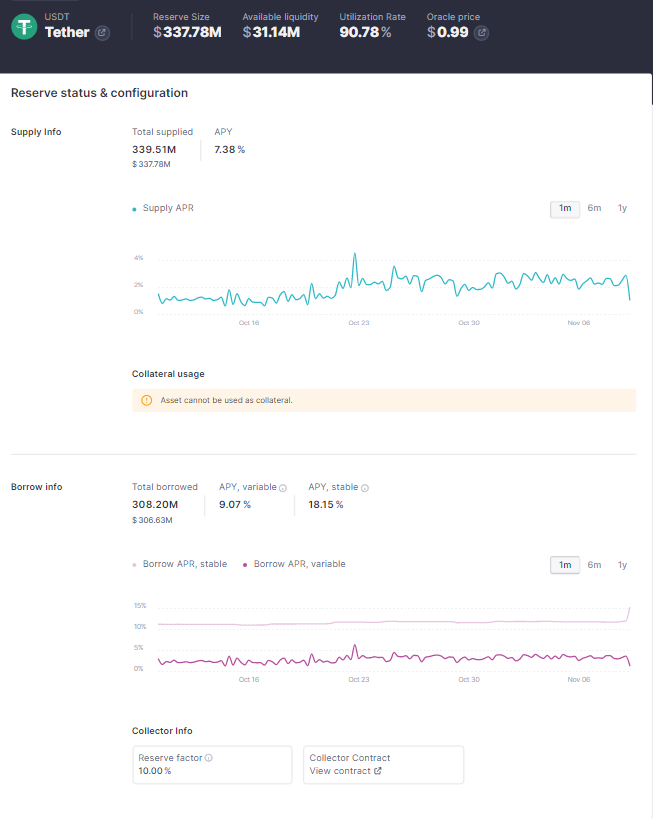
These two data reflect that USDC has become a stable currency asset favored by DeFi users, and plays an irreplaceable role in the trading and lending business of the DeFi ecosystem. A leading position in the DeFi ecosystem.
Currently, USDC has been issued on 9 blockchain networks including Ethereum, Algorand, Solana, Stellar, Avalanche, Tron, Flow, Hedera, and Polygon, and more blockchains will be expanded in the future to further enlarge USDC on-chain Advantages of the DeFi market.
2. TTS (Transaction and Treasury Services, transaction and financial services)
TTS includes transaction services, integration services, treasury services, etc. to form a unified set of services that can be accessed and integrated with Circle accounts by providing customers with the infrastructure to process various transactions.
Clients include banks and financial institutions, cryptocurrency financial firms, Fintech companies, institutional traders, digital content creators, blockchain start-ups such as Dapper Labs, Compound Labs, and FTX, among others.
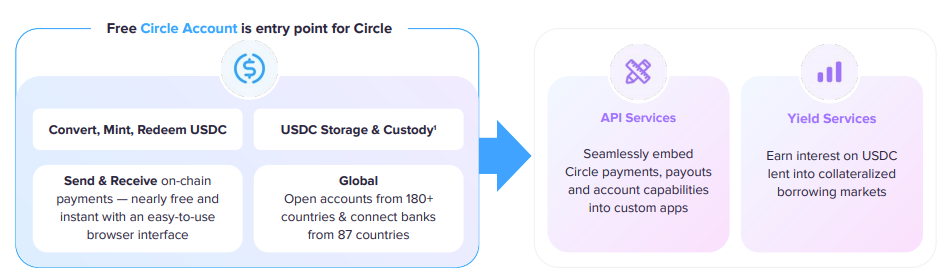
Circle Account
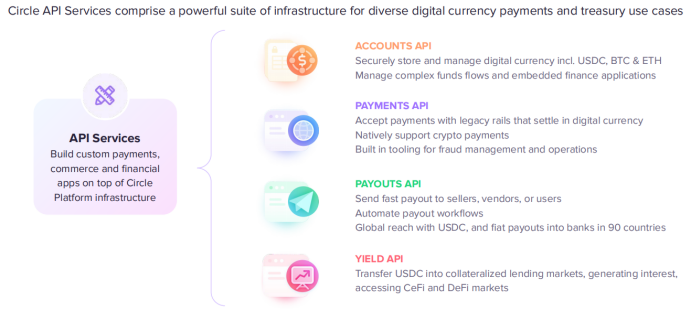
Circle accounts provide a platform to pay and store funds in USDC, and distribute funds into yield products. The Circle account enables businesses to instantly make and receive payments globally to any blockchain-compatible digital wallet, providing an efficient and inexpensive alternative to traditional bank payments, and currently covers banks in more than 90 countries.
Circle Yield
Circle Yield offers short-term interest rate products fully collateralized by Bitcoin and built on USDC. All collateral is held by BitGo.
Note: BitGo is a third-party custodian with more than 400 institutional clients, and its partner is Genesis Global Capital, a full-service digital asset trading company.
Since its official launch in February 2022 as a self-serve product, Circle Yield has grown to approximately $248 million, yielding up to 6.3% annually. Its interest rate comes from the rate of return that Circle Yield obtains from borrowers in the blockchain lending market, and is currently only open to institutional clients.
(** From September 21, 2022, the Fed rate adjustment is 3%-3.25%.)
API service
Use Cases:
Use Cases:
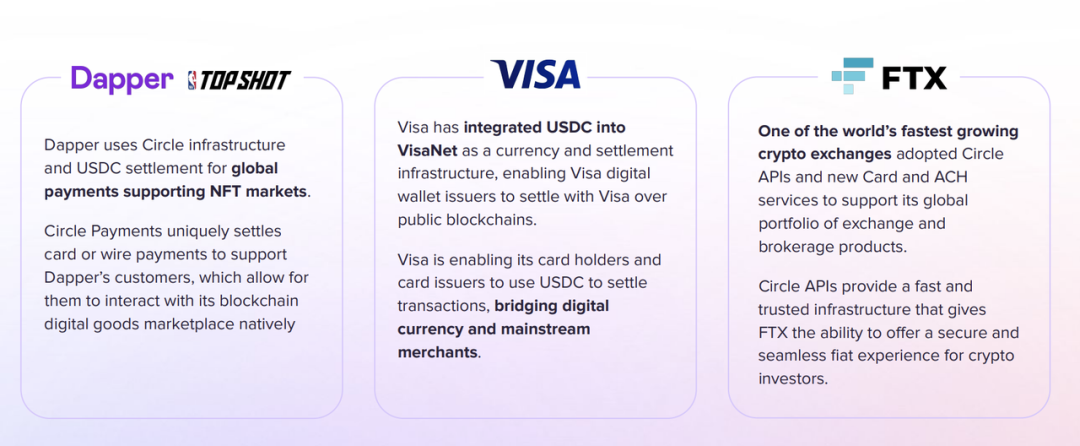
Dapper uses Circle infrastructure and USDC settlement to support global payments in the NFT market;
Visa integrates USDC into VisaNet, enabling its cardholders and card issuers to use USDC for transaction settlement, thereby building a bridge between digital currency and mainstream merchants;
FTX uses Circle APIs to power its global exchange and brokerage portfolio. Circle APIs enable FTX to provide crypto investors with a secure and seamless deposit and withdrawal experience
......
Integration Services
The integration service is to support the application of USDC on the chain, including integration with Circle accounts and Circle API services. By enabling USDC to run on multiple chains, it expands the use of Circle products and infrastructure for a wide range of payment, commerce and financial applications, including higher transaction throughput and lower blockchain network fees.
3. SeedInvest
SeedInvest is one of the largest Internet equity crowdfunding platforms in the United States. It was acquired by Circle in October 2018, with a financing amount of US$5-30 million. So far, Seedinvest has more than 630,000 investors, helped 235 startups raise funds online, and has raised more than $400 million. Several companies in Seedinvest's portfolio have announced plans to go public, including clean energy company Heliogen, valued at $2 billion.
SeedInvest products include end-to-end services required for crowdfunding, due diligence, securities issuance, investor certification, payments and securities custody, as well as a range of innovative tools for start-ups to sell crowdfunding online in a compliant manner product.Regulatory approval will also support investments denominated in cryptoassets, including the use of stablecoins such as USDC, and the issuance and offering of tokenized securities, thereby reducing friction in the equity crowdfunding market.
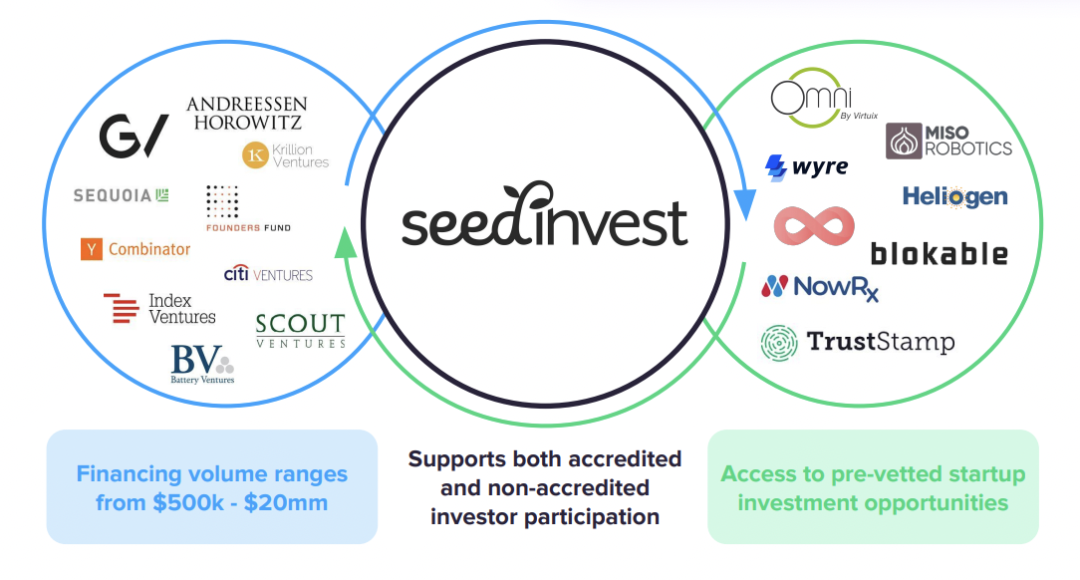
For investors, SeedInvest offers individuals the ability to invest in the primary market, an asset class historically out of reach of most retail investors.secondary title
compete
USDC's competitors include:
traditional payment platform.Competitors include existing bank settlement networks, such as SWIFT and ACH, as well as higher-level payment networks, such as credit card payments, and new digital payments, such as Square and PayPal.
other stablecoins.There are currently hundreds of stablecoins based on different digital assets on the market, includingDozens of U.S. dollar stablecoins, as well as stablecoins backed by other fiat currencies, as well as stablecoins pegged to the U.S. dollar with crypto assets as collateral, and algorithmic stablecoins.The largest U.S. dollar stablecoin by market capitalization is USDT, offered by an affiliate of Hong Kong-based cryptocurrency exchange Bitfinex Ltd. Although it has been difficult to gain the attention of compliant financial institutions and mainstream market participants, USDT is still very popular in Asian markets and exchanges. Other competing USD stablecoins include white-label stablecoins operated by Paxos, including BUSD and HUSD, which are the main stablecoins offered by two cryptocurrency exchanges, Binance and Huobi (now Aboutbi).
CBDC。Some governments are also actively promoting the issuance of central bank digital currencies. However, CBDC still represents the will of the centralized U.S. central bank, and it represents complete obedience to government regulation. In the encryption community that believes in the spirit of "decentralization", CBDC is likely to be difficult to be adopted on a large scale, and it is also difficult Support free and open innovation.
Circle Account products mainly face indirect competition from institutional accounts. For example, cryptocurrency brokerage companies or exchanges such as Coinbase, Binance or Gemini will also open accounts, but these accounts mainly focus on investing and trading encrypted assets, while Circle Account focuses on payment and financial services.
Circle Yield competes indirectly with lending products from companies like BlockFi or BitGo, which offer lending and lending services across a variety of crypto assets. More broadly, there is also competition with traditional financial services companies that offer income products.
The transaction services provided by Circle API face a variety of direct and indirect competition, including customers building their own solutions by integrating disparate banking and processing relationships, storage and wallet infrastructure, and blockchain management software. Some of Circle's direct competitors for its API services include PrimeTrust.
The equity and debt crowdfunding market is growing and highly competitive.Regulators are also continuing to embrace crowdfunding. According to the latest changes to SEC guidelines, the promulgation of crowdfunding regulations (Reg CF) and Regulation A+ (Regulation A+) allows companies to raise funds through the Internet, thus creating more demand and bringing more intense competition.Supervision
Competitors facing TTS business are:
SeedInvest's competitors include:
Supervision
Most states and some territories in the U.S. require a license to engage in certain currency trading services, including trading in digital assets. Circle has obtained licenses to operate as a money transmitter or equivalent in states requiring a license, the District of Columbia and Puerto Rico, including a BitLicense from NYDFS, and is registered with FinCEN as a "Money Services Business."
Outside the United States, the activities of Circle's foreign affiliates are subject to the oversight of financial regulators in the jurisdictions in which they operate and are licensed to provide services in such jurisdictions. Circle currently holds an Electronic Money Institution authorization from the UK Financial Conduct Authority (“FCA”) and a Type F license from the Bermuda Monetary Authority (“BMA”). Circle complies with the rules and regulations applicable to the financial services industry in the United Kingdom and Bermuda, including those relating to money management, corporate governance, anti-money laundering, disclosure, reporting and inspections.
first level title
secondary title
USDC
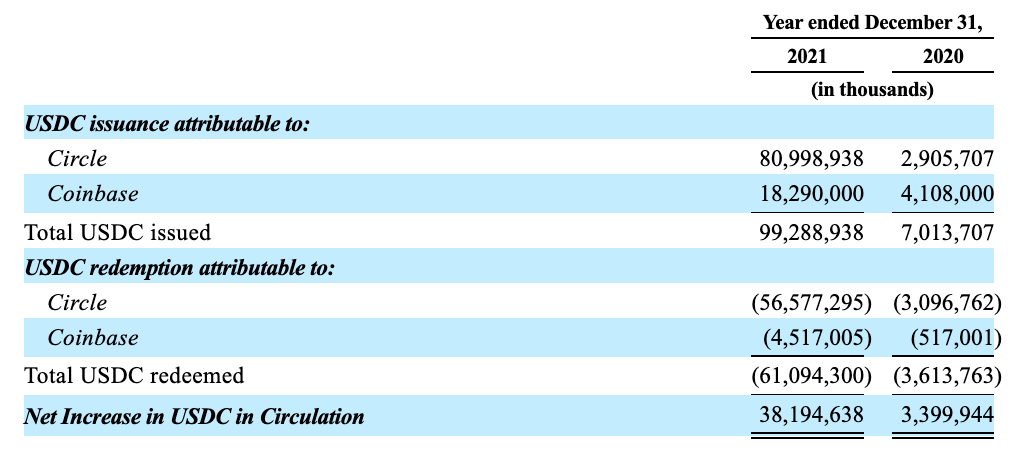
Circle earns interest income from the reserves supporting USDC (mainly USD cash and U.S. bonds), and USDC interest income is mainly the income generated by USDC in circulation and reserves.
secondary title
TTS
Circle Account
Circle Accounts provides businesses and institutions with an integrated account for storing, sending and receiving digital asset payments. Circle accounts are free to customers and provide an important bridge between existing banking, currency and digital asset payments and financial services.
revenue service
Launched in the second quarter of 2021, Circle Yield will bring regular income to investors holding USDC. The rate of return is generated by Circle lending USDC to lenders in the centralized lending market, with an annual rate of return of up to 6.3%.
Circle API Services
The revenue from API services is divided into two parts. A portion is the monthly subscription fee that customers typically pay, which we classify asSubscription-based transaction service revenue.The other part is the fee that customers pay when using the Circle API service to conduct a specific transaction, which we classify asVolume-based transaction service revenue.
secondary title
SeedInvest
SeedInvest MainEarn income through investment bank fees paid by financing parties and transaction processing fees paid by investors.
For most deals, Circle gets 7.5% of the total financing in cash as an investment banking fee. In addition, Circle will also receive an equity stake in the corresponding company, which is equivalent to 5% of the amount of funds raised through the platform. Equity is classified as part of investment banking fees.
Circle also earns a transaction processing fee from investors. For a given investment, Circle charges investors 2% of the investment amount, which covers various administrative costs associated with processing the investment by the investor.
In the near term, we expect investment banking fees to continue to be the main driver of SeedInvest's revenue,first level title
04 income
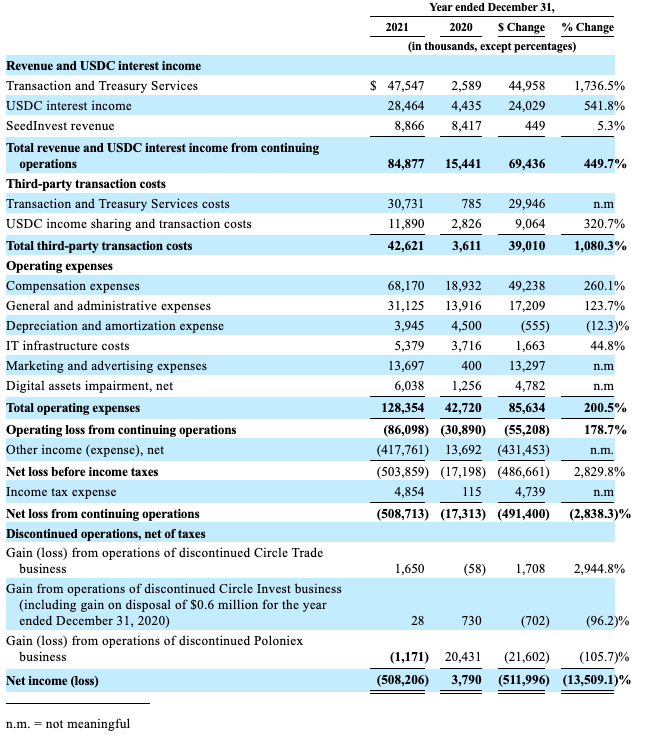
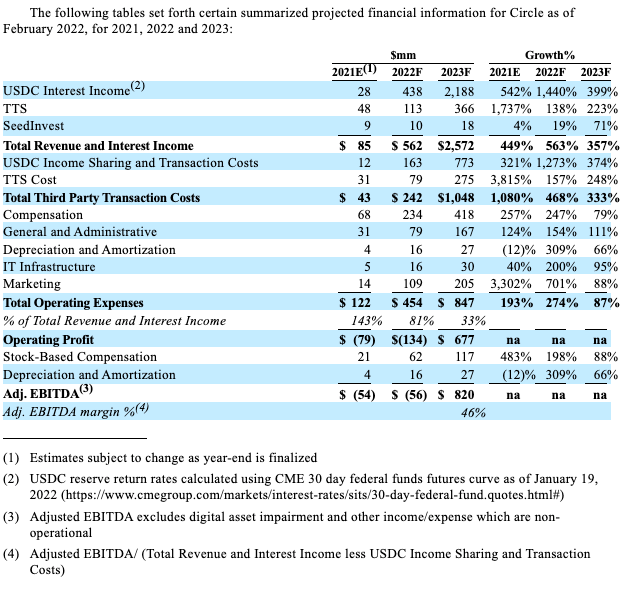
According to the prospectus submitted by Circle to the SEC in May this year: Circle will generate US$84.877 million in revenue in 2021, of which US$47.547 million will come from TTS, US$28.464 million will come from USDC, and US$8.866 million will come from SeedInvest. 1736.5%, 541.8%, 5.3%.
first level title
05 team
Circle's management team is the top team in the stablecoin track, with senior experience in digital currency, Internet technology, Fintech, financial services and compliance.
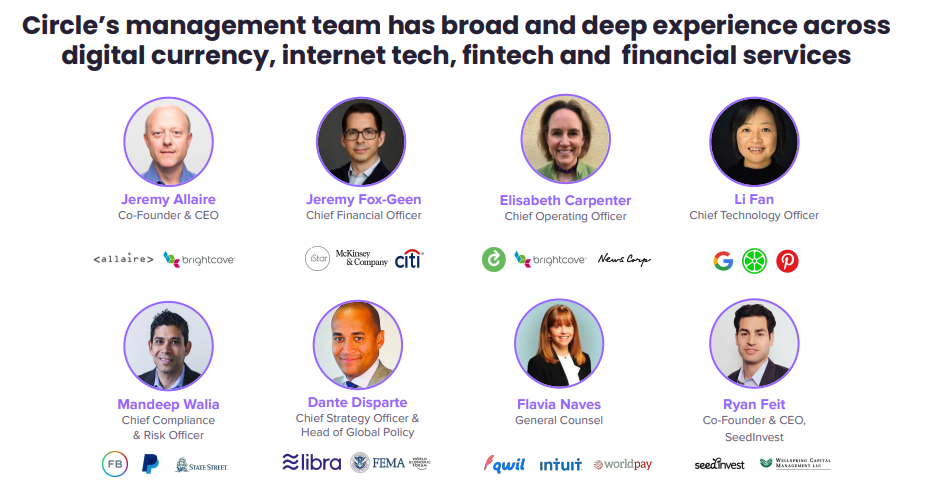
Co-Founder & CEO Jeremy AllaireA serial entrepreneur, he has served as founder and CEO of Brightcove (public), partner at General Catalyst, CTO of Macromedia (acquired by Adobe), and co-founder and CTO of Allaire Corporation (public). In 2013, Circle was born, which was his third all-in venture after creating two consecutive listed companies.
CFO Jeremy Fox-Geen25 years of experience in corporate finance and financial services, with previous executive positions at iStar and Safehold, McKinsey, PwC and Citigroup.
Chief Strategy Officer Dante DisparteDecades of experience working on global financial and risk issues, including serving as Executive Vice President of the Diem Association, responsible for engaging and communicating with governments and financial industry leaders around the world on the issues and opportunities presented by stablecoins and digital currencies .
As of December 31, 2021, Circle had 404 employees worldwide and has successfully transitioned to a "remote-first" work model to attract top talent from all walks of life around the world.
first level title
06 Financing and Listing
As Circle, which enjoys the biggest dividend of the encrypted economy, the traditional Wall Street capital behind it is often criticized as another "scythe" supported by Wall Street.Here's Circle's funding history:
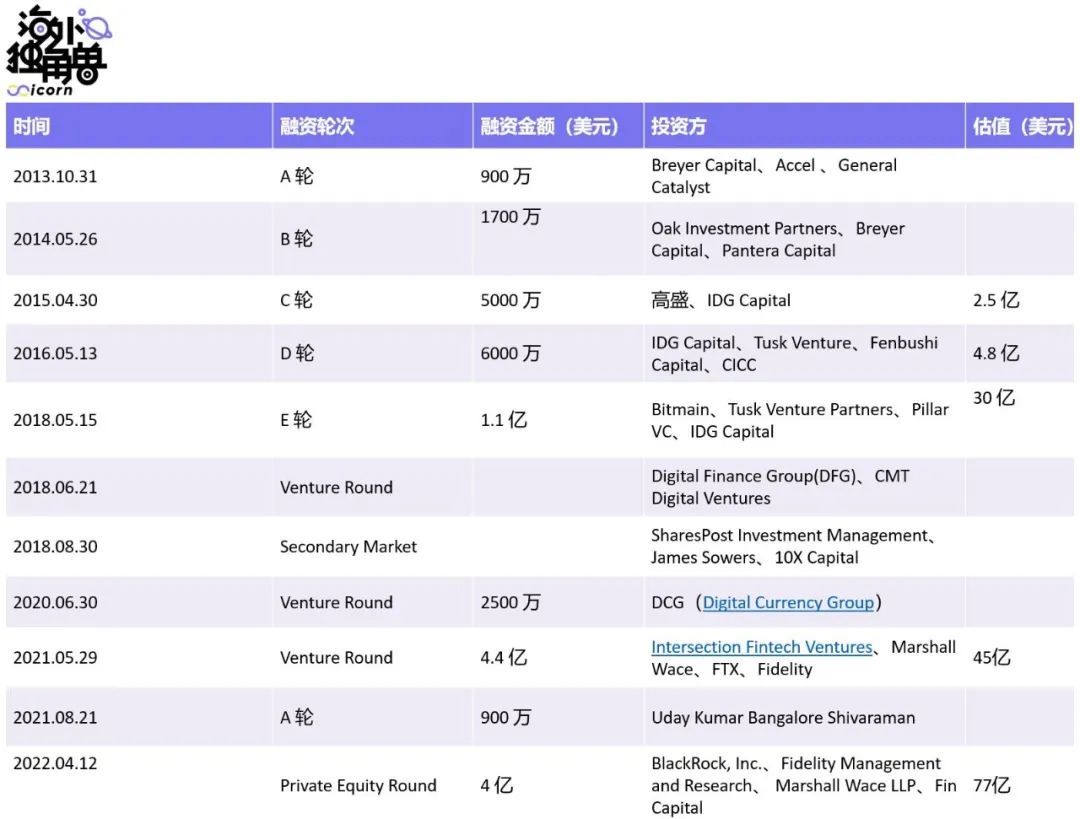
In fact, not only USDC, but due to the fierce competition on the track, a stable currency project requires not only a huge start-up capital as an endorsement, but also a strong market-making ability, so this track has almost always been a feast for institutions.In addition to Circle’s strong capital support, Tether is backed by Bitfinex, and MakerDAO’s DAI is backed by a16z.
Circle is also launching an assault on the secondary market. On February 17, 2022, Circle reached new deal terms with Concord Acquisition Corp, a publicly traded special-purpose acquisition company. The agreement set Circle's enterprise value at $9 billion, up from the $4.5 billion announced in July 2021.
Behind the rising valuation is an improvement in Circle's financial outlook and competitive position. USDC is one of the fastest-growing U.S. dollar digital currencies, and its market share continues to increase. Since the original transaction was announced, USDC issuance has more than doubled, reaching $52.5 billion as of February 16, 2022.
first level title
secondary title
recent decline
We pointed out Circle's unparalleled superiority in compliance earlier, but the other side of the coin has also become Circle's biggest constraint and shadow.
Since the U.S. Department of the Treasury announced sanctions on the currency mixer Tornado Cash in August this year, Circle directly froze the USDC funds in the wallets of relevant users, which caused dissatisfaction in the encryption community and also attracted the attack of Binance delisting USDC.With the end of the battle between Binance and FTX yesterday, the pessimism of the entire encryption industry is further brewing. Together with the entire market, the market value of USDC is also falling.
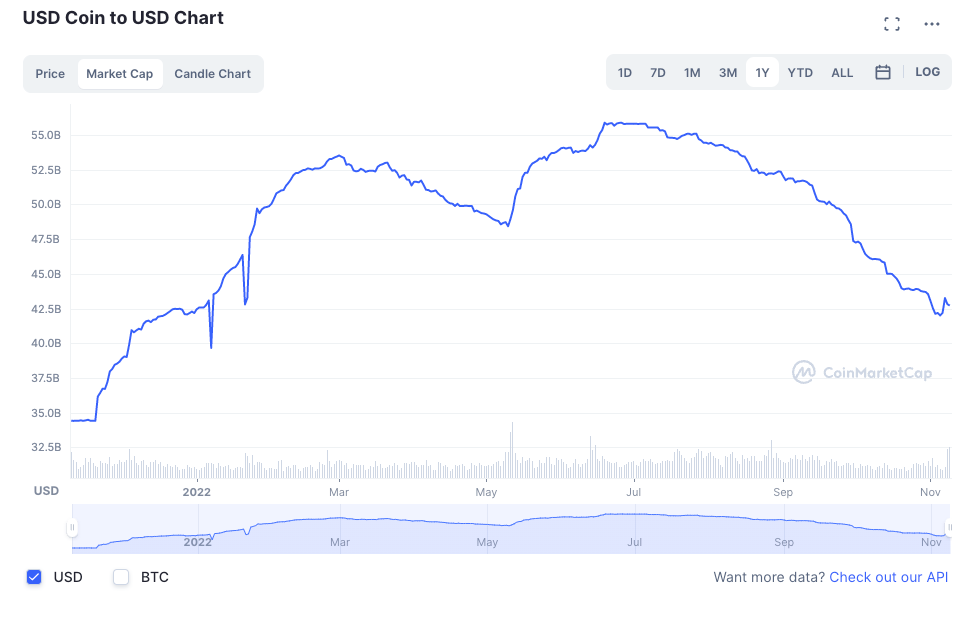
Considering a series of chain reactions, we believe that the recent decline in the market value of USDC is mainly due to the following reasons:
The stability of USDT is proven.Wes Hansen, Director of Trading and Operations at Arca, said: "After the collapse of Terra, there was a strong move to sell USDT and move to premium USDC due to fears that USDT would also fall to $0. However, once the fear of USDT's collapse subsided, investors Start moving to the stablecoin with the best market depth, which is USDT.”
Circle complied with the government's sanctions against Tornado Cash.Messari research analyst Dustin Teander told CoinDesk in an email: “Since the Tornado cash sanctions were announced on Aug. 8, approximately $4 billion in USDC has left the Ethereum ecosystem, while USDC’s market share It's down about 3 percent."
Binance delists USD stablecoins such as USDC.Teander said: "Over the past 7 days, USDC mining pools accounted for more than 50% of swaps, 77% and 63% of fees generated by top Uniswap V3 mining pools." With Endgame, it is planned to gradually reduce the reserves of real-world assets such as USDC to resist censorship.
The market sentiment brought about by the downfall of FTX dropped to freezing point.secondary title
future possibility
Circle stands between the crypto community and regulation,The contradiction is that its profit model and IPO planning are both web2 games, but it must win web3 users, and there is an endogenous contradiction between regulatory will and community preferences.This is a difficult and delicate test of how Circle can mediate in such conflicts.
Based on this, we can make two expectations:
downside scenario
1/ The long global crypto bear market
2/ The contradiction between supervision and encryption has escalated, and the compliant USDC has been resisted and blocked by the industry
3/ With Binance's industry monopoly, users' trust in CEX is broken, and they turn to DEX and encrypted native stablecoins
upside scenario
1/ The global crypto bear market quickly recovered and entered a bull market
2/ Circle continues to maintain its current advantage, ranking among the top five in the stablecoin track
3/ The regulation has been tightened, and the encryption community has succumbed to compliance on a large scale, and USDC has become the first place in the stablecoin track
At present, in order to be listed safely, Circle will be more inclined towards supervision, so its upper limit is likely to become the spokesperson of the US dollar in the field of cryptocurrency.first level title
08 Valuation analysis
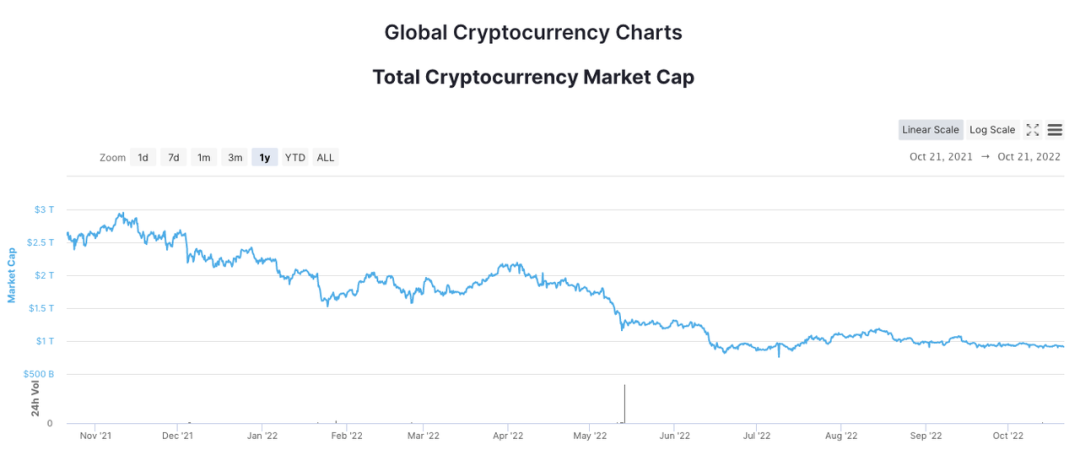
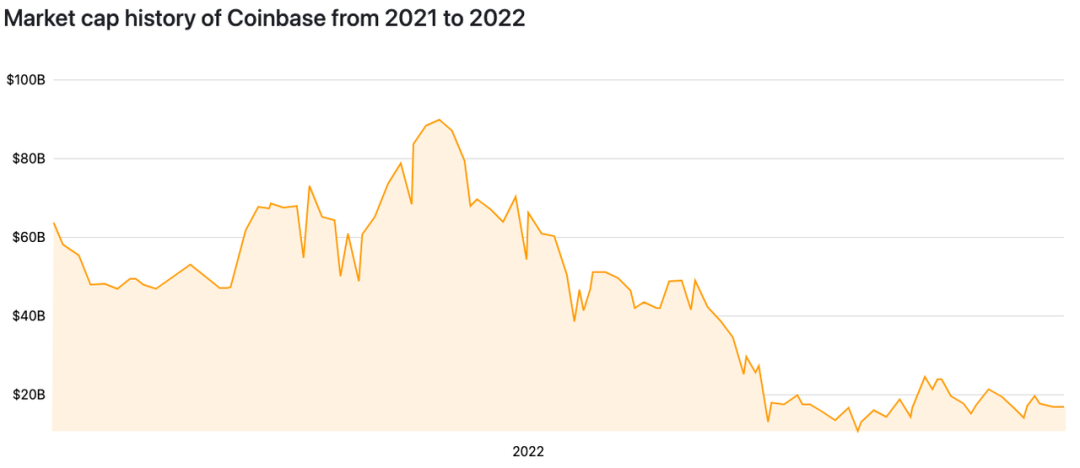
The 9 billion US dollars was announced on February 17 this year. Considering that USDC had experienced explosive growth in 2021 and almost reached the peak value of USDC market value of 53 billion US dollars, there is no doubt that the Circle team at that time had infinitely better prospects for the company's future. expected. But with the lukewarm bear market, we also have to lower our expectations for Circle. The valuation of 9 billion US dollars is obviously full of the prosperity bubble of the last big bull market. When the hustle and bustle clears up, the uncertainty of the future of the industry and the crisis-ridden competition make it difficult for us to be optimistic. We tried to anchor Circle with the market value of the crypto market and the market value of the listed exchange Coinbase.
On February 17, 2022, the total market value of the encrypted market was US$1.9 trillion. As of November 9, the total market value of the encrypted market had fallen to US$920 billion, a drop of 51.6%.
We intercepted the data of Coinbase and Circle in the same time period. Coinbase dropped from US$49.54 billion on February 17 to US$13.31 billion on November 9, a drop of 73.1%.
The market value of USDC dropped from US$52.55 billion on February 17 to US$42.74 billion on November 9, a drop of 18.7%, which was less than the decline in the total market value of cryptocurrencies.
first level title
09 Circle's ambition
The valuation of 9 billion US dollars is of course very expensive. Few players can afford such a price, and this price is more like a "beautiful signboard". The proof of the market is "step by step" in the battleground of "constantly sending legal currency to the encrypted market".
Circle's two core businesses both have significant strategic significance.
First of all, stablecoins have always undertaken the important task of "delivering legal currency to the encrypted market", and our encrypted assets are often held in the form of stablecoins.The exchange can be said to be "the boundary line between the encryption market and the fiat currency market",Stablecoins have become the "battlefield" of every exchange. Almost every major exchange has its own stablecoin project, such as Binance's BUSD, Huobi's HUSD, Coinbase's USDC... .The combination of stablecoins and exchanges, whoever can occupy a larger market share, can continue to collect tolls on the border.
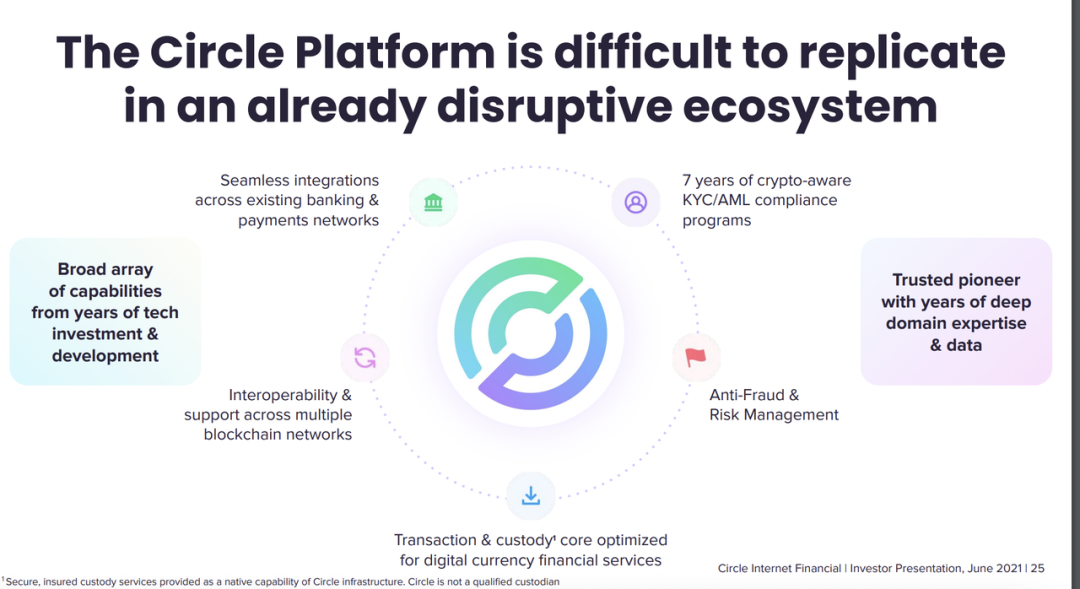
Circle's larger ambitions are reflected in its TTS business, whose years of dedication to rebuilding the world's economic infrastructure will be hard to replicate.Circle has frictionless integration with existing banks and payment networks, has 7 years of experience in KYC/AML compliance, supports the interoperability of multiple blockchain networks and risk management such as anti-fraud...This Everything helps Circle unswervingly achieve its mission - "through the frictionless exchange of financial value to enhance the prosperity of the global economy."
Original link





