






Foresight Ventures: The first stop in the pit, an inventory of the encrypted legal currency deposit and withdrawal business model


introduction
introduction
Buying cryptocurrencies with fiat currency is the first stop for most users entering the Web3 world, whether through a centralized exchange or a Bitcoin ATM. Trading cryptocurrency with fiat currency is called "on ramp", and conversely trading fiat currency with cryptocurrency is called "off ramp". Governments around the world implement strong regulation on the legal currency deposit and withdrawal market. The project party needs to obtain a remittance license (Money Transmitter License or MTL) in each country and verify the identity of the user (Know Your Customer or KYC). The long review period for remittance licenses is the main barrier to entering the fiat currency deposit and withdrawal market, so this market is relatively fragmented, including large-scale centralized exchanges operating in the global market and independent fiat currency deposit and withdrawal projects focusing on regional markets.
first level title
secondary title
1. Legal requirements
text
a. United States
In the United States, deposit and withdrawal projects need to register with the Financial Crimes Enforcement Network (FinCEN) as a "Money Service Business" (Money Service Business), and then apply for a remittance license in each state where it operates. The user identity verification mechanism of the deposit and withdrawal project needs to undergo periodic review by the Financial Crimes Enforcement Network, and the remittance license needs to be reviewed every two years.
There is no complete regulatory framework for cryptocurrencies at the federal level in the United States. Therefore, if cryptocurrencies are defined as "securities" or "commodities" in the future, deposit and withdrawal projects will be subject to additional supervision by the Securities and Exchange Commission (SEC) or the Commodity Futures Commission (CFTC).
text
b. EU and UK
secondary title
2. Business model
text
a. Liquidity Providers and Distributors
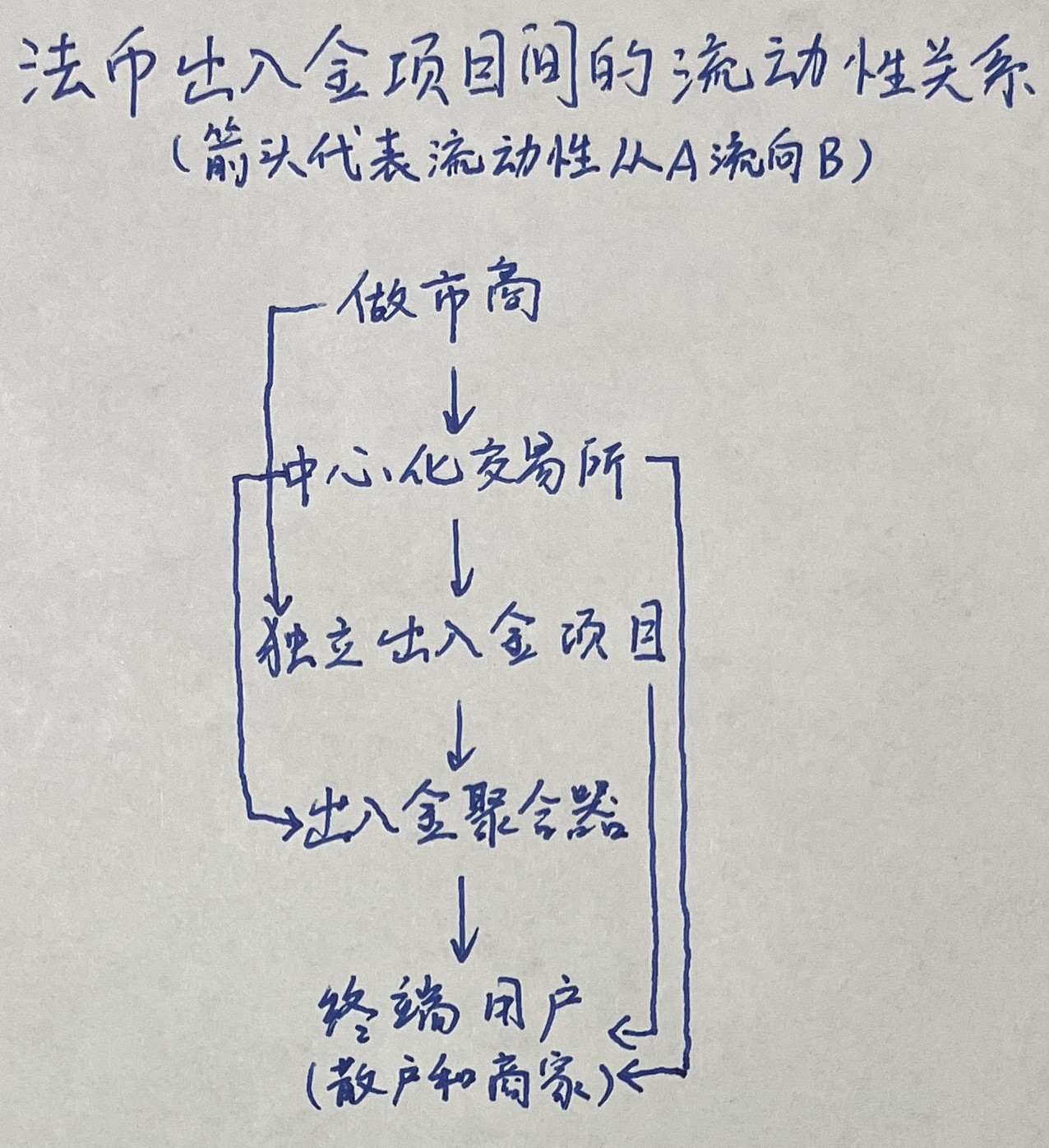
Suppliers and distributors are relative concepts: the same deposit and withdrawal item can be both a supplier of one party and a distributor of the other. For example, a centralized exchange (such as Coinbase) buys cryptocurrency from a market maker at a price of 1600 USD/ETH and then sells the cryptocurrency to an independent deposit and withdrawal project (such as Moonpay) at a price of 1700 USD/ETH to obtain 100 USD/ETH. profit. Therefore, Coinbase is a liquidity distributor for market makers and a liquidity provider for Moonpay. Moonpay can further supply liquidity to downstream deposit and withdrawal aggregators (such as TransitSwap). In general, the upstream and downstream relationship of liquidity supply and distribution is: market maker → centralized exchange → independent deposit and withdrawal project → deposit and withdrawal aggregator, and each party here can directly sell liquidity to end users.
text
b. End users
secondary title
3. User experience
text
a. Identity verification
text
b. Deposit from fiat currency to cryptocurrency
1) Payment method
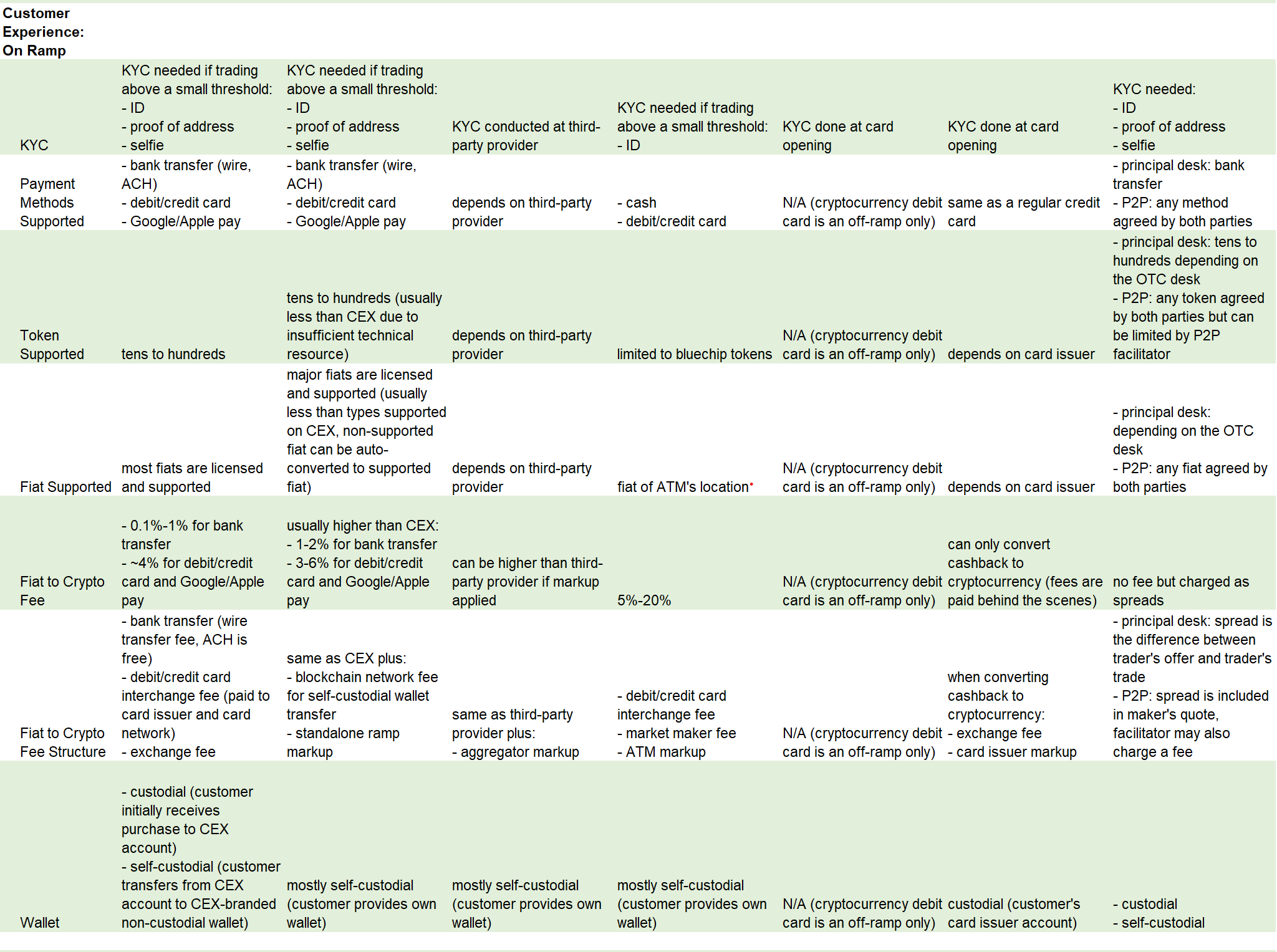
There are four payment methods for deposits: wire transfer, ACH transfer, debit/credit card, and third-party payment (such as Google or Apple). Generally speaking, more convenient payment methods will charge higher rates.
The wire transfer is transferred to the bank account of the deposit project through an interbank communication network such as SWIFT and through multiple intermediary banks. Each intermediary bank may charge a fee. Domestic and international transfers take one to two days respectively.
ACH transfers in the U.S. are similar to wire transfers, except that ACH transfers are generally used for regular recurring payments (such as wages). There are no fees for ACH transfers, but they take longer to complete (up to three days). A similar payment system is SEPA in the European Union.
Purchasing cryptocurrencies with a debit/credit card requires paying a relatively high interbank exchange fee to the debit/credit card issuer (usually a bank) and payment network provider (such as Visa).
Third-party payments for cryptocurrency purchases incur high rates similar to debit/credit cards. The third-party payment merchant will get a rebate from the bound debit/credit card.
2) The types of legal currency and encrypted currency supported by the platform
**The type of legal currency supported by the deposit and withdrawal platform depends on the region where the license is obtained. The types of cryptocurrencies supported depend on whether the deposit and withdrawal platform has sufficient technical and human resources to set up asset transfers across multiple chains. **Simply speaking, large deposit and withdrawal projects (such as centralized exchanges) support more fiat currency and cryptocurrency types than small deposit and withdrawal projects, because the former has more legal and technical resources.
3) Deposit rate structure
In addition to the rates charged by various payment methods, deposit projects may incur three other fees:
Fiat-to-crypto exchange rate fee: A percentage of the transaction amount or the difference implied in the seller's exchange rate.
Distributor Markup: A percentage of the transaction amount or the difference implied in the seller's exchange rate. For example, the independent deposit and withdrawal project will add to the exchange rate provided by the centralized exchange, and the deposit and withdrawal aggregator will add to the exchange rate provided by the independent deposit and withdrawal project. Therefore, the greater the number of intermediaries, the higher the rates.
text
c. Cryptocurrency to Cryptocurrency
text
d. Cryptocurrency to fiat currency withdrawal
1) Withdrawal method
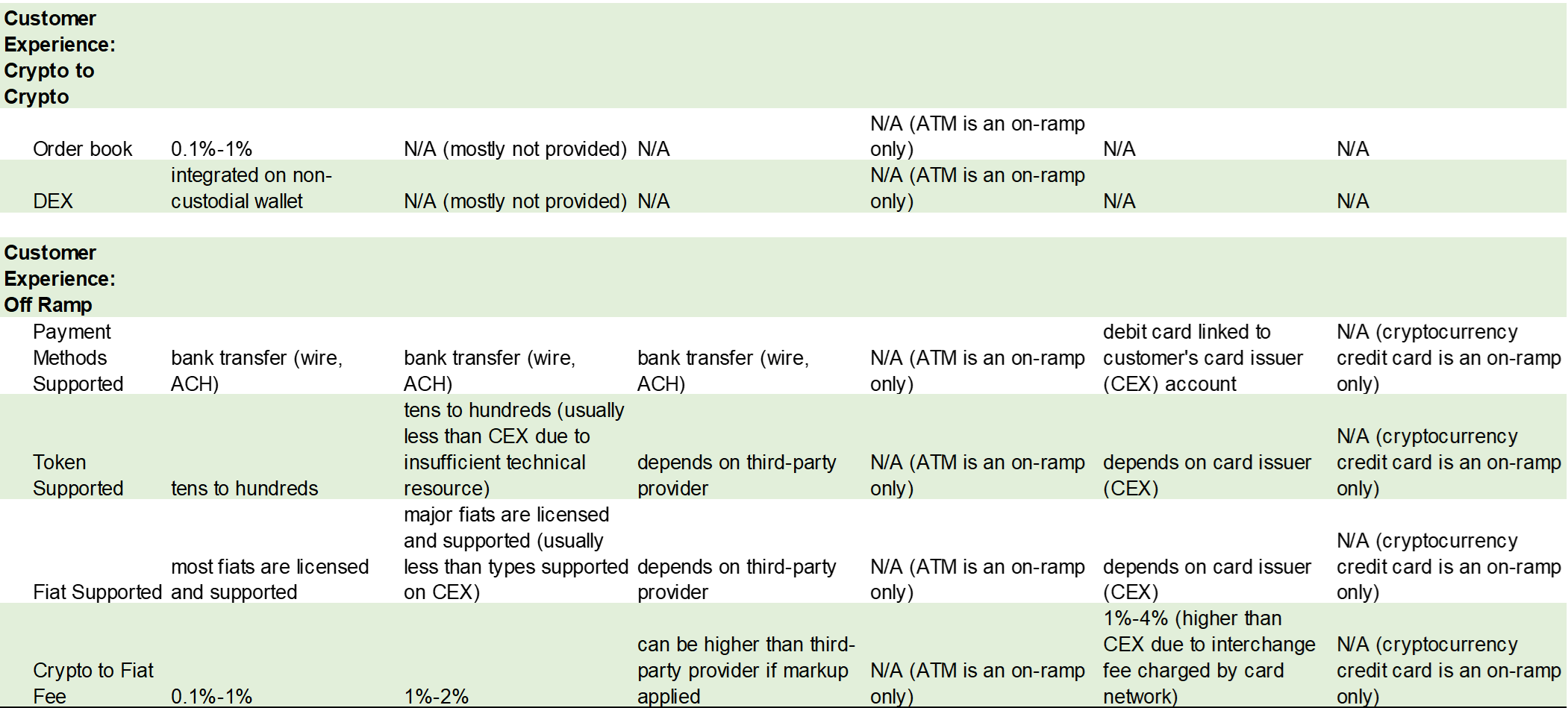
Withdrawal methods are far less than deposit payment methods, only wire transfer or ACH transfer. Users can also use cryptocurrency to pay for fiat-denominated goods and services through the cryptocurrency debit card.
2) The types of legal currency and encrypted currency supported by the platform
Depends on the legal and technical resources of the deposit and withdrawal project.
3) Withdrawal rate structure
first level title
Types of fiat currency deposit and withdrawal items
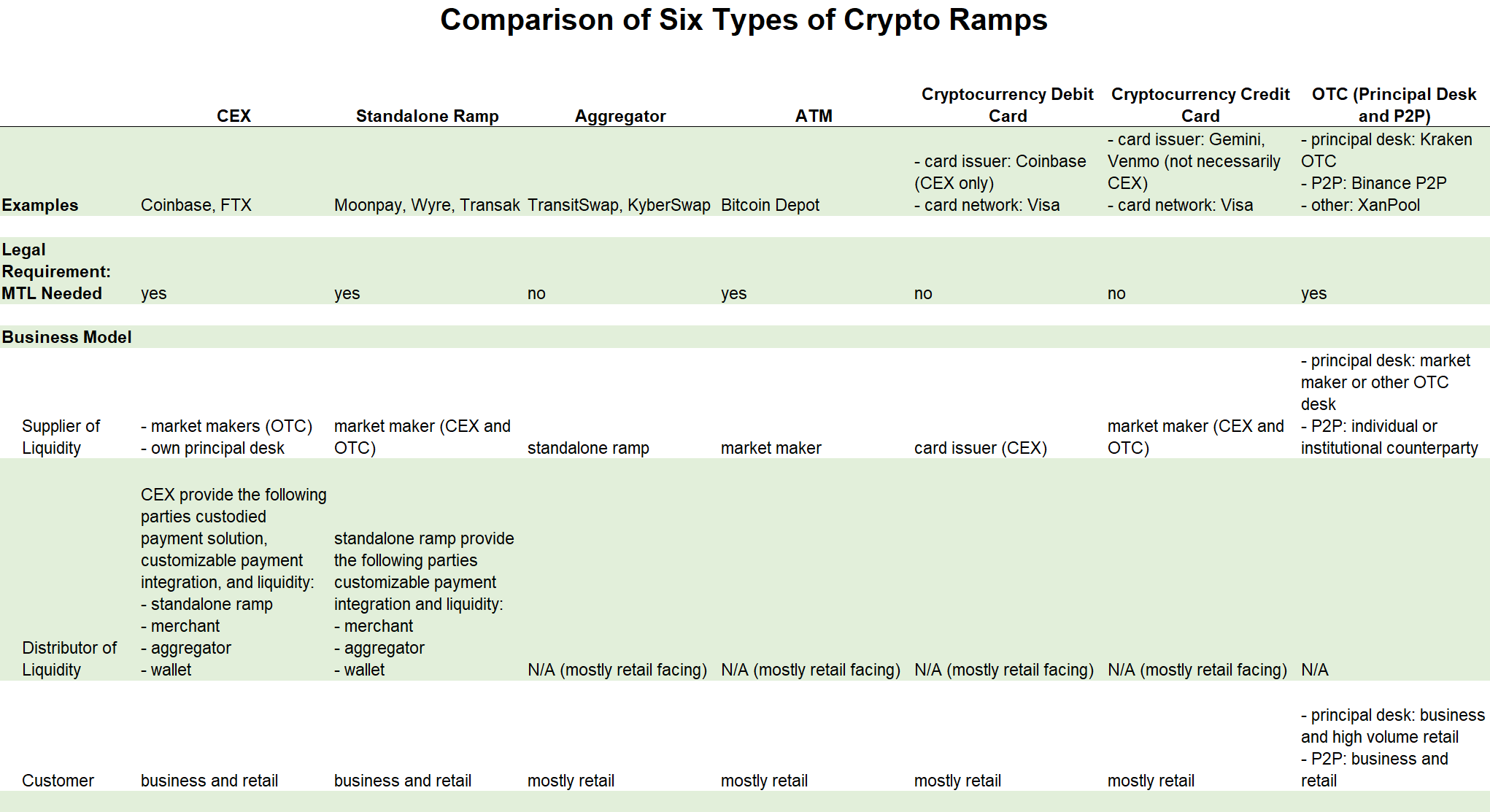
Next, this article will use the framework introduced above (legal requirements, business model, user experience) to sort out seven types of existing deposit and withdrawal projects, including centralized exchanges, independent deposit and withdrawal projects, deposit and withdrawal aggregators, encrypted currency ATMs, Crypto debit cards, crypto credit cards and over-the-counter (OTC).secondary title
1. Centralized exchanges
Centralized exchanges are the most commonly used legal currency deposit and withdrawal platforms. They generally have remittance licenses in most countries around the world, support the most types of legal currency and encrypted currency, and have the lowest rates. Liquidity comes from external market makers or self-trading on centralized exchanges. In addition to directly selling liquidity to retail investors, centralized exchanges also provide over-the-counter transactions for large customers, and supply liquidity to independent deposit and withdrawal projects and deposit and withdrawal aggregators. As a liquidity middleman, centralized exchanges make profits through the difference between buying and selling liquidity and user fee rates. Retail transactions are conducted through custodial wallets, but assets can flow freely to self-custodial wallets. Large customer transactions directly use the self-hosted wallet.
image description
secondary title
2. Independent deposit and withdrawal items
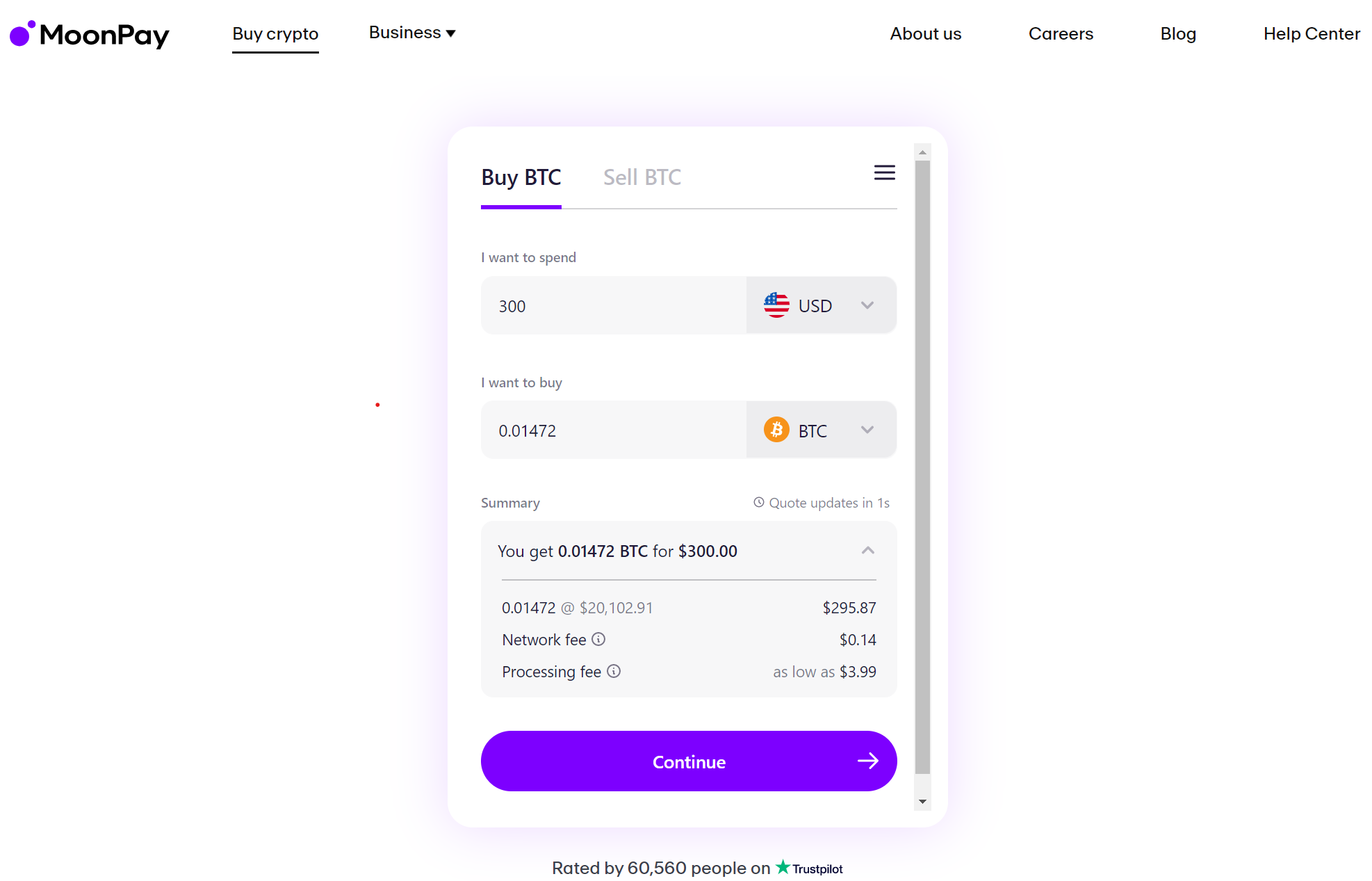
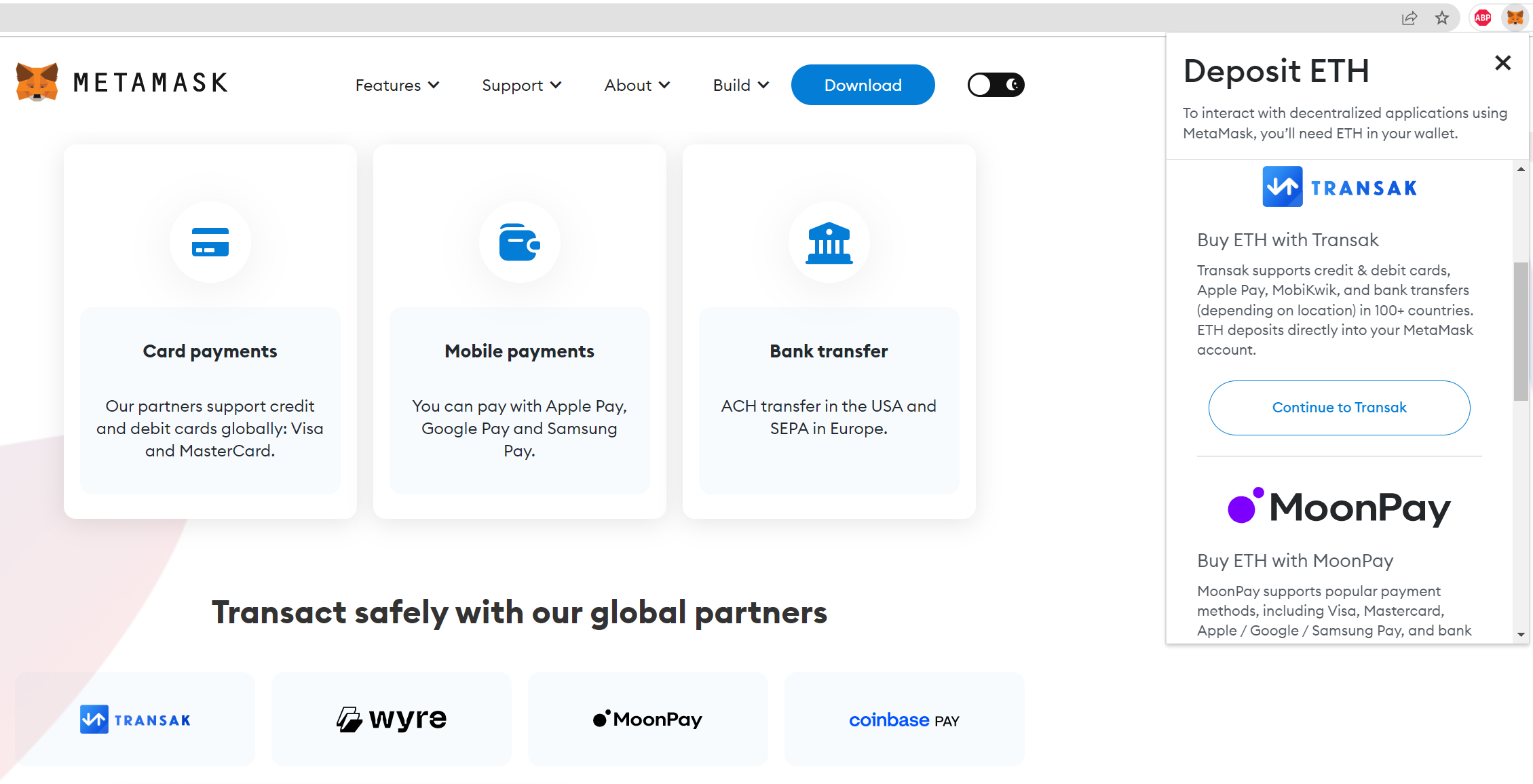
Independent deposit and withdrawal projects (such as Moonpay, Transak, Wyre) operate like small exchanges, but most of them only provide legal currency deposit and withdrawal services, and also need to register for a remittance license in each operating region. Independent access projects are mostly small and have limited legal and technical resources, so they often focus on a certain region and support fewer fiat and cryptocurrency types. Because the liquidity comes from market makers or centralized exchanges, and most customers need to provide self-custodial wallet addresses, the fee rate for independent deposit and withdrawal projects is more than that of centralized exchanges, including distributor bonuses and blockchain network fees two parts. The downstream of the independent deposit and withdrawal project includes deposit and withdrawal aggregators and wallets. These downstream merchants will add another layer of distributor bonus. For example, MetaMask's fiat currency deposit service is an aggregator for independent deposit and withdrawal projects such as Moonpay and Trasak.
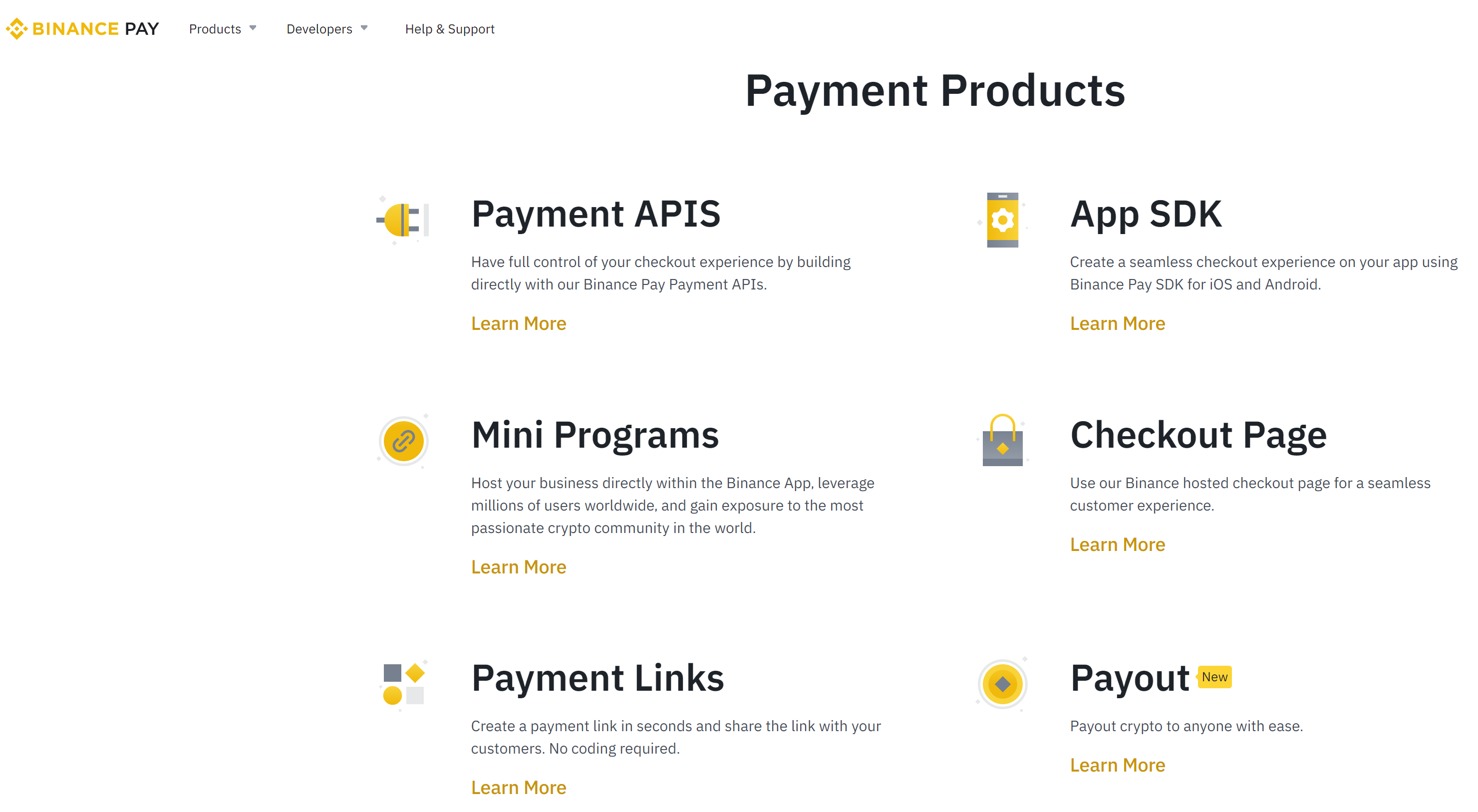
Similar to centralized exchanges, independent deposit and withdrawal projects also provide merchants with payment solutions, including hosted payment interfaces and APIs and SDKs that merchants can use to deploy their own front-ends. Merchants can use either hosted wallets or self-hosted wallets.
Although the independent deposit and withdrawal project is smaller than the centralized exchange and the rate is generally higher, it has several advantages:
For end users, the independent deposit and withdrawal project has a more concise and easy-to-use interface. The independent deposit and withdrawal project does not directly require verification when the user registers and provides hundreds of trading pairs after login like a centralized exchange, but directly marks the amount of fiat currency and the corresponding amount of cryptocurrency on the minimalist interactive page. Although users still need identity verification when trading more than a few hundred dollars or withdrawing funds, the independent deposit and withdrawal project is very friendly to retail investors who are buying cryptocurrency for the first time.
Most independent deposit and withdrawal projects only support self-custodial wallets, so the step of transferring encrypted assets from custodial wallets is omitted, and the privacy is also better.
image description
secondary title
3. Deposit and withdrawal gold aggregator
Deposit and withdrawal aggregators (such as TransitSwap, KyberSwap, and MetaMask’s fiat currency deposit service) guide users to purchase and earn commissions by providing multiple independent deposit and withdrawal projects and quotations from centralized exchanges. The deposit and withdrawal aggregator has three main features:
The deposit and withdrawal aggregator is only a middleman who provides quotations, and all transactions are carried out through third-party suppliers.
A deposit and withdrawal aggregator does not require a remittance license, as users are authenticated through a third-party provider.
image description
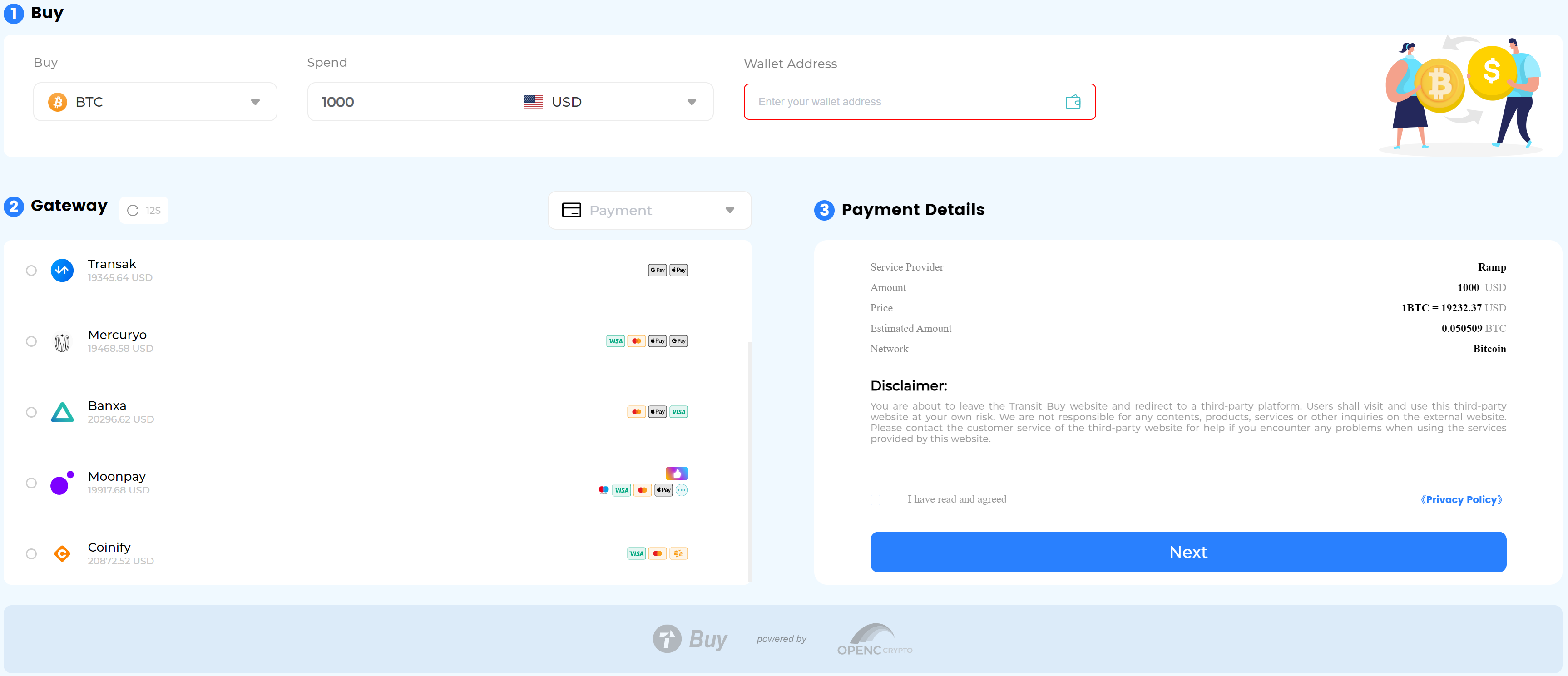
image description
secondary title
4. Cryptocurrency ATMs
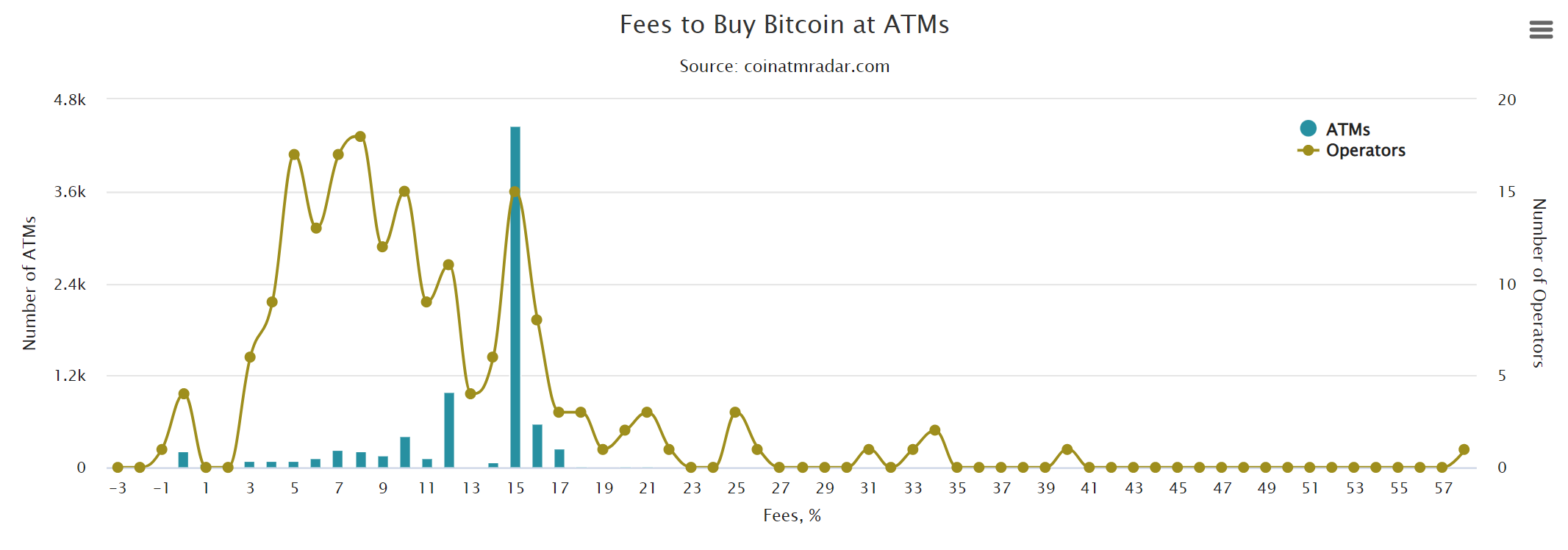
Crypto ATMs such as Bitcoin Depot have high rates (up to 20%) and are often touted as the "dumbest" way to buy crypto. Cryptocurrency ATM merchants buy liquidity from third-party providers and transfer to users’ self-custodial wallets, so a remittance license is required. The biggest advantage of cryptocurrency ATMs is anonymity, as users can buy cryptocurrencies with cash and do not require identity verification up to a certain amount (approximately $250 equivalent). Identity verification also requires only ID (proof of residence and facial recognition are not required). However, crypto ATMs have three main disadvantages:
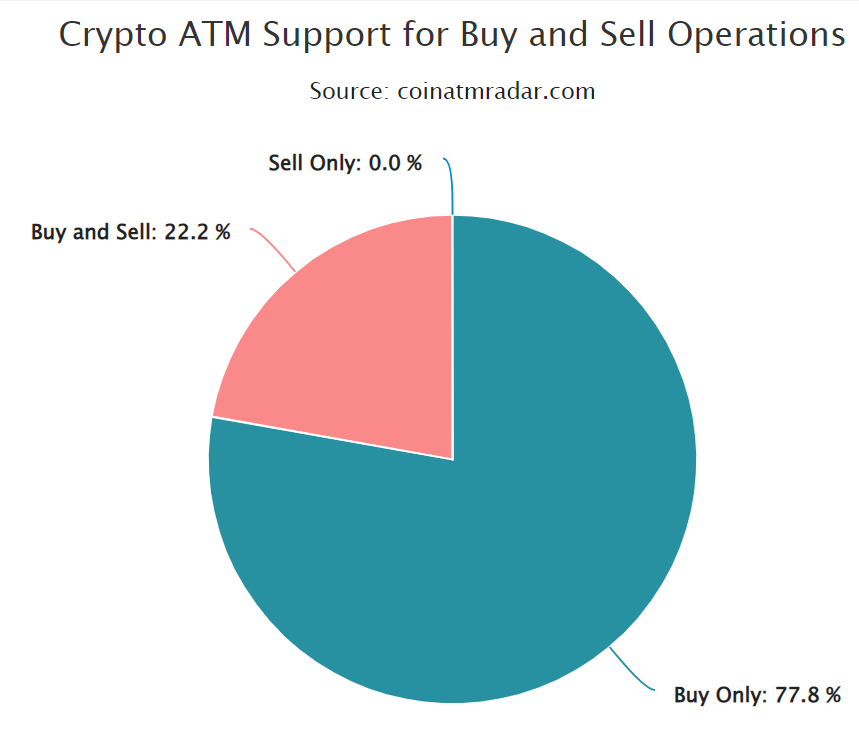
First, 80% of cryptocurrency ATMs do not provide withdrawal and withdrawal services.
Second, crypto ATMs generally only accept cash and occasionally debit/credit cards.
Third, cryptocurrency ATMs only support blue-chip cryptocurrencies (such as BTC, ETH), because most of its users are just starting to explore cryptocurrencies.
Fourth, cryptocurrency ATMs need to charge **super high rates (between 5% and 20%)** to pay for higher operating and maintenance costs, because cryptocurrency ATMs do not have the big banks behind traditional ATMs to share cost.
image description
secondary title
5. Crypto debit card
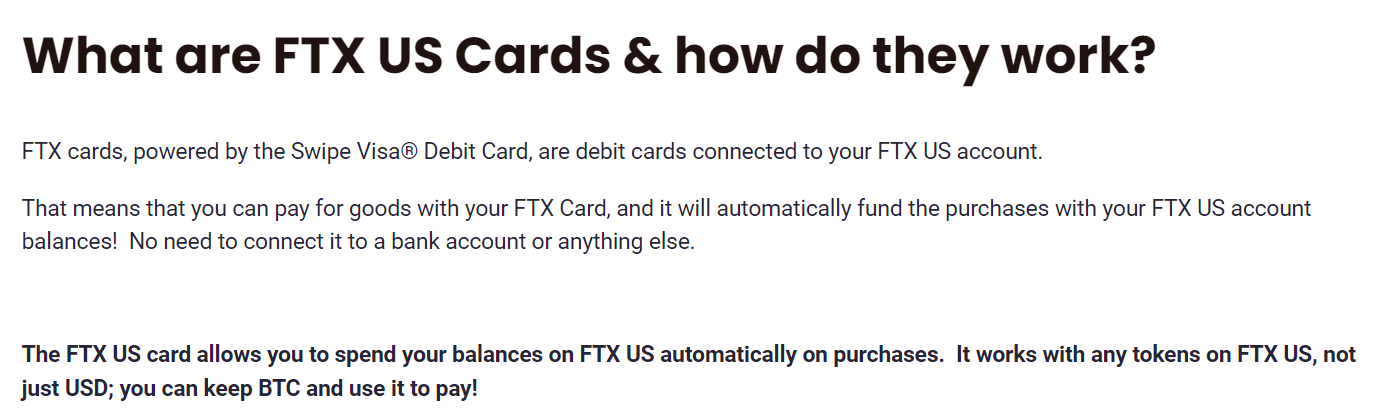
Cryptocurrency debit cards are only offered by centralized exchanges to users who have opened an account. To add background information, the issuance and operation of debit/credit cards involves two parties:
One party is the debit/credit card issuer, which is responsible for escrowing user funds and processing user transfers. In the context of a cryptocurrency debit card, the centralized exchange is the issuer.
The second is the payment network provider (such as Visa), which is responsible for grouping a large number of user transfers into a batch and then coordinating the inter-bank batch transfer through the inter-bank communication system.
image description
secondary title
6. Cryptocurrency credit card
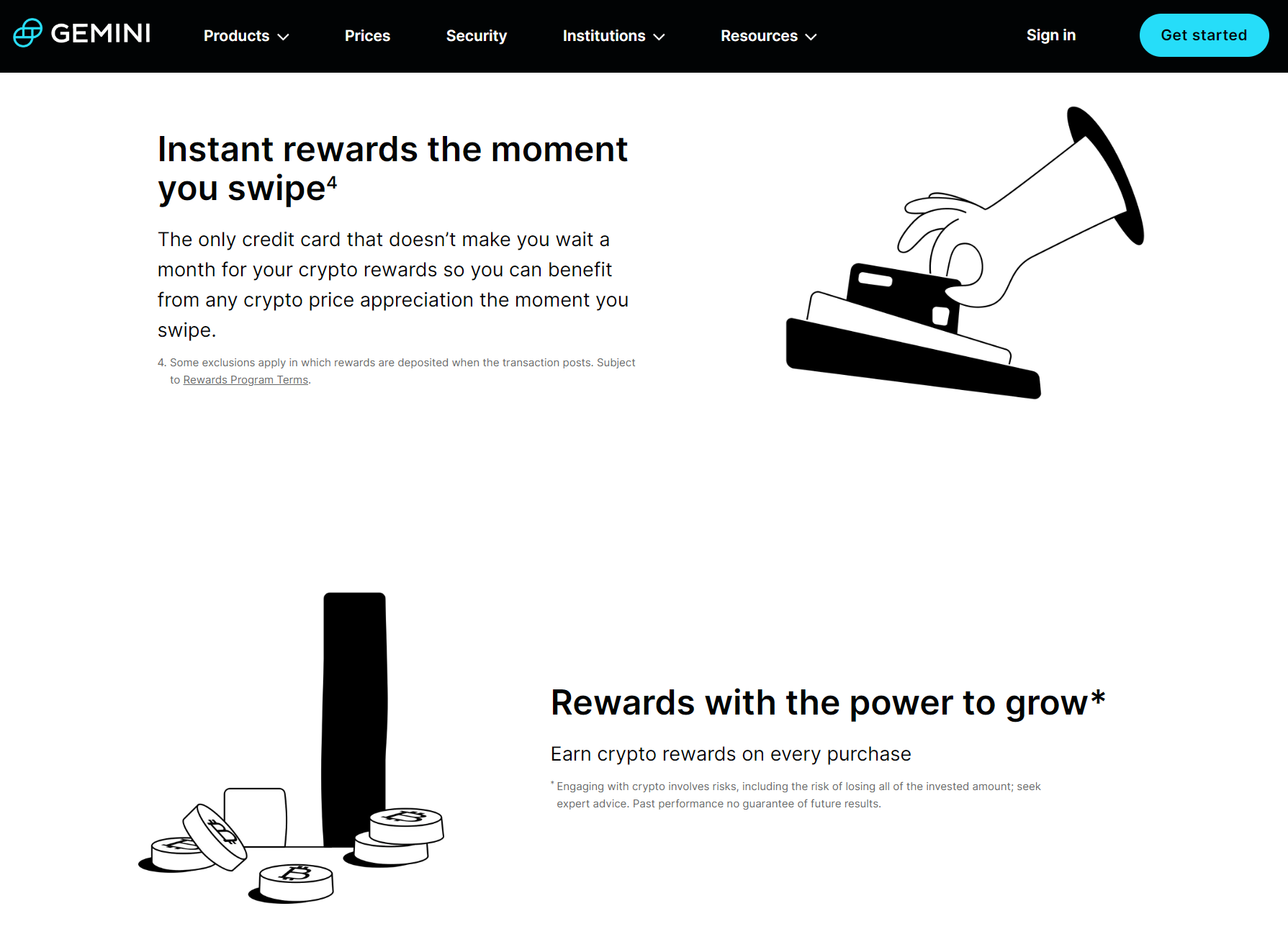
image description
secondary title
7. OTC trading (OTC counter and P2P)
The over-the-counter (OTC) legal currency deposit and withdrawal project allows buyers and sellers to trade directly without intermediaries. There are two modes:
OTC counters, such as Kraken OTC
Peer-to-peer is P2P, such as Binance P2P
In the OTC counter mode, the two parties to the transaction are the customer who needs transaction services and the OTC counter as the counterparty. The following will take principal desk trading as an example to describe the transaction process of the OTC counter. First, the customer who has passed the identity verification applies to the OTC counter for a transaction quotation (the transaction amount needs to be at least 100,000 to 200,000 US dollars). After receiving the customer's funds, the OTC counter will quote to the customer through the automatic quotation system or the online chat room. If the customer accepts the quotation, the OTC counter will trade for the customer at the best price among multiple liquidity providers (including market makers and other OTC counters), and earn the part that is better than the customer's quotation as profit. Therefore, although the OTC counter does not charge additional fees, the transaction fee is already covered in the part lower than the customer's quotation. Almost all mainstream centralized exchanges have their own OTC counters, which mainly serve institutional customers and retail investors with large transactions. There are also non-exchange companies that specialize in OTC counters. The legal currency deposit and withdrawal project of the OTC counter mode has three main advantages:
First, eliminate transaction slippage (slippage). Large trades on illiquid exchanges can cause large price swings and cost traders money: a phenomenon known as "slippage". OTC counters avoid this problem by providing fixed quotations for large transactions, taking risks for customers in exchange for the possibility of earning profits that are better than quotation transactions.
Second, more liquidity. OTC counters can trade at the best price on multiple liquidity platforms.
image description
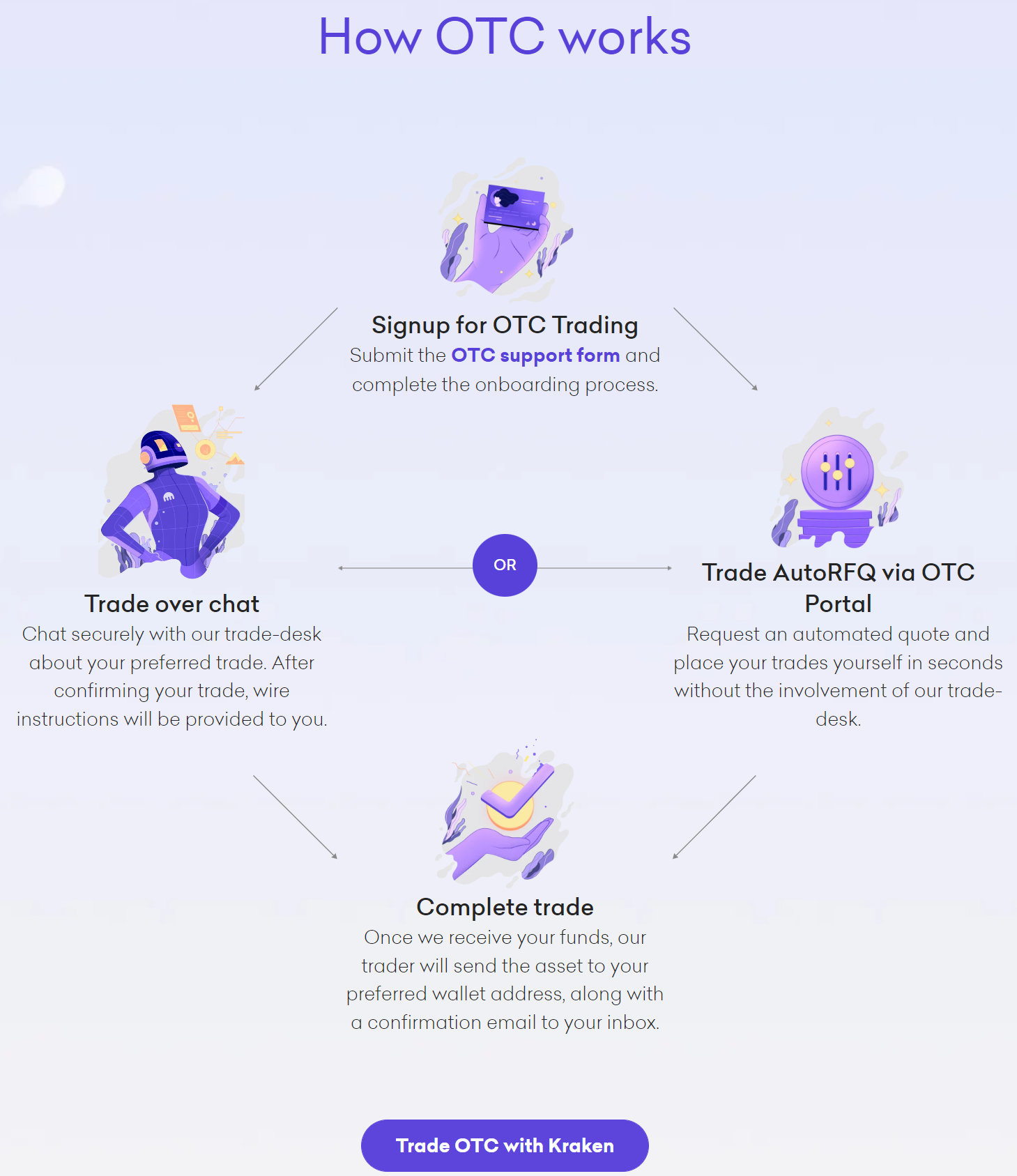
Case: Kraken centralized exchange's OTC counter support system automatic quotation and online chat room quotation
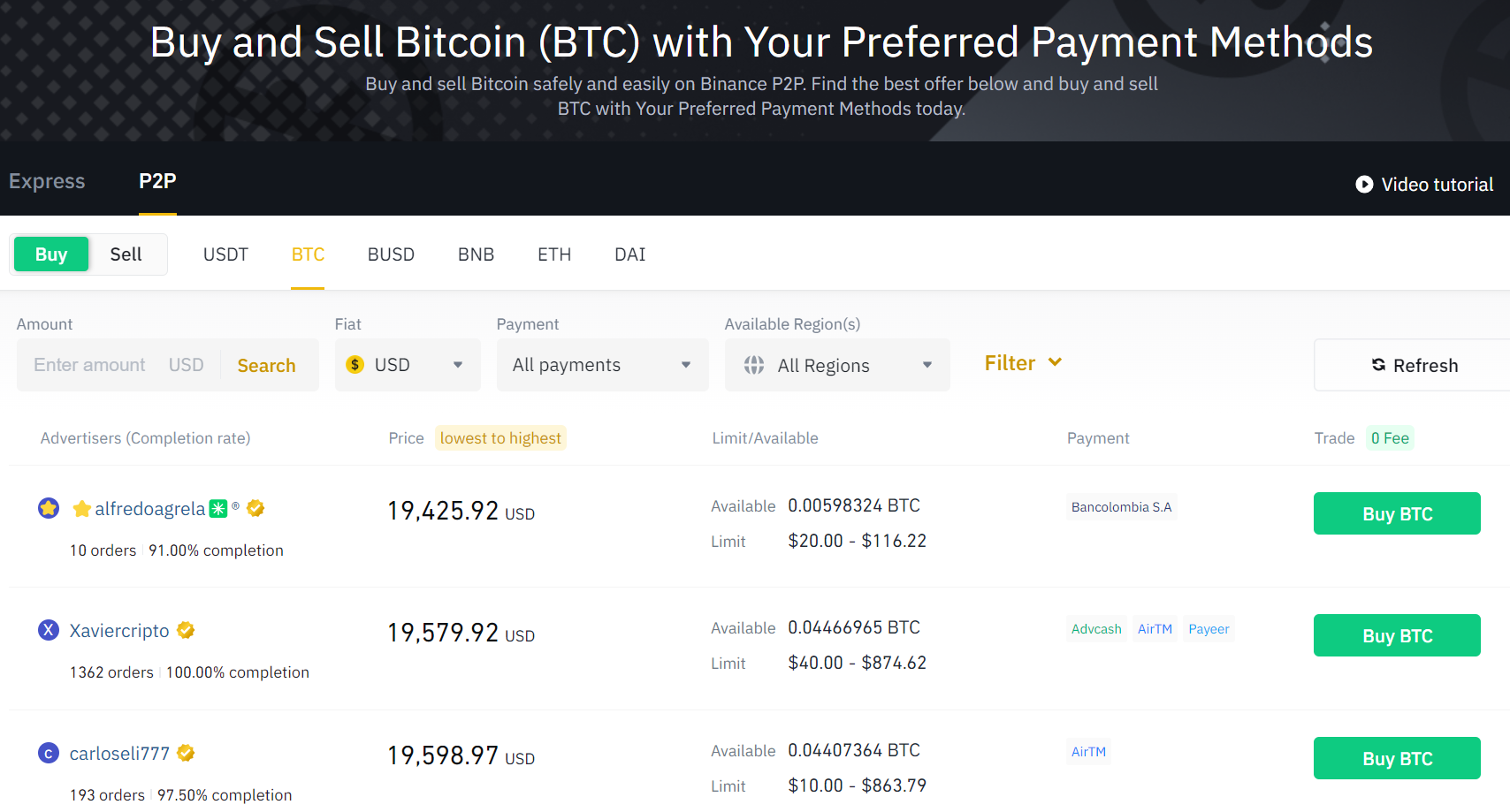
In the P2P mode, buyers and sellers directly conduct fiat currency deposit and withdrawal transactions without the need for OTC counters as counterparties to participate. The simplest example is a private transaction between friends transferring fiat and cryptocurrency to each other. Some platforms (such as Binance P2P) will provide third-party escrow (escrow) to eliminate trust costs to match buyers and sellers, and charge a very low rate. The seller needs to first transfer the sold assets to a third-party escrow account and customize the payment method. The buyer accepts the order and pays by the method requested by the seller. After the seller confirms the payment on the trading platform, the platform will unlock and transfer the sold assets to the buyer. The fiat currency deposit and withdrawal project in the P2P mode has three main advantages:
First, the payment methods are particularly diverse. After buyers and sellers pass the identity verification of the trading platform, they can define any payment method by themselves. Because the transaction is completed under the platform, the payment method is not limited by the types supported by the platform, allowing local niche payment methods and even face-to-face cash transactions.
Second, low trust cost. P2P offers escrow and publishes user credibility scores (such as the percentage of transactions completed on time). It should be noted that the risk of the counterparty delaying or canceling the order still exists.
image description
Summarize
Summarize
This article first expounds the main factors that distinguish deposit and withdrawal projects, including legal requirements, business models and user experience, and then sorts out seven types of deposit and withdrawal projects, including centralized exchanges, independent deposit and withdrawal projects, deposit and withdrawal aggregators, and encrypted currency ATMs , crypto debit cards, crypto credit cards, and over-the-counter transactions.In terms of business model, the legal currency deposit and withdrawal project earns profits by earning the difference in buying and selling liquidity and charging users a fee rate.
In terms of legal requirements, the project party needs to obtain a remittance license in each operating region. This license is not a banking license, so in the event of bankruptcy and liquidation, user assets will not be protected by government insurance.
In terms of business model, the legal currency deposit and withdrawal project earns profits by earning the difference in buying and selling liquidity and charging users a fee rate.
In terms of user experience, if the transaction exceeds a certain amount, the user needs to authenticate. The deposit and withdrawal rates of Fiat include payment method fees, exchange rate fees, distributor bonuses, and blockchain network fees.
first level title
About Foresight Ventures
Foresight Ventures bets on the innovation of cryptocurrency in the next few decades. It manages multiple funds: VC fund, secondary active management fund, multi-strategy FOF, special purpose S fund "Foresight Secondary Fund l", with a total asset management scale of more than 4 One hundred million U.S. dollars. Foresight Ventures adheres to the concept of "Unique, Independent, Aggressive, Long-term" and provides extensive support for projects through strong ecological forces. Its team comes from senior personnel from top financial and technology companies including Sequoia China, CICC, Google, Bitmain, etc.
Website: https://www.foresightventures.com/
Twitter: https://twitter.com/ForesightVen
Medium: https://medium.com/@foresightventures-zh
Substack: https://foresightventures.substack.com
Discord: https://discord.com/invite/maEG3hRdE3
Linktree: https://linktr.ee/foresightventures





