


How the COVID-19 Crypto Relief Fund is Aiding India in the Fight Against the Pandemic


secondary title

Cryptocurrencies and their rise during the pandemic
The outbreak has already had a huge impact on financial markets. In the face of such economic extremes, cryptocurrencies are relatively stable and accessible due to the rapid rise of digitization and the spread of high-speed Internet on all continents. The lack of centralized management positions it as a hedge against inflation, a possibility, and positions it akin to gold in digital form. The value of Bitcoin increased from $7,000 in January 2020 to $17,000 in November 2020. This is partly due to its increased demand whenever the ceiling is approached. Increased demand and limited supply have pushed up its value.
Several reasons that attract people to cryptocurrency are its resistance to fraud, identity theft, almost no transaction fees and instant transactions. Compared to traditional assets whose value can be predicted to a large extent, cryptocurrencies are highly volatile. Therefore, investing in it has become popular, especially in the last year, due to its unpredictability, similar to the stock market, which sometimes leads to a huge increase in its value. And in 2021, it hit an all-time high of $64,000.
The popularity of cryptocurrencies can also be attributed to the fact that the vast majority of India’s middle class lost their jobs due to the country’s repeated lockdowns, leading them to invest in cryptocurrencies to maintain their income. The rise of crypto influencers on social media and the popularity of the topic by big names like Elon Musk have also fueled the hype. Additionally, with the advent of the coronavirus, investors around the world are realizing that relying solely on the cryptocurrency market is especially destabilizing because it relies heavily on companies that have suffered significant losses during the outbreak.
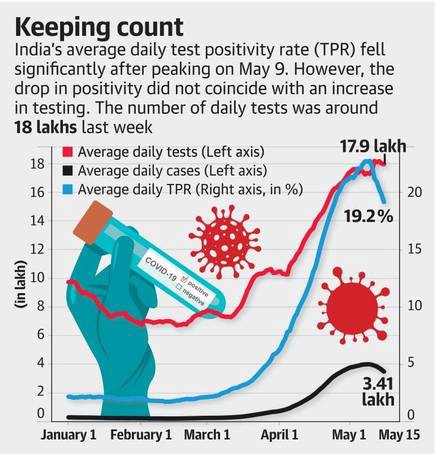
While the first wave of coronavirus hit India slowly and relentlessly, the second wave was sudden, with a resurgence beginning in April 2021 that has had a huge impact on Indian households.
secondary title
COVID-19 Crypto Relief Fund: What is it?

In April, during the second wave of the epidemic, India began to grapple with severe shortages of medical supplies such as oxygen cylinders, medicines and hospital beds. The record number of deaths in a single day is also directly attributable to these shortfalls.
On April 24, Sandeep Nailwal, co-founder of Polygon, tweeted that he would start a COVID-19 Crypto Relief Fund in response to the devastation of the virus to families and the inability of the healthcare sector to provide amenities to all affected , donations to the fund will provide essential health care and necessities to those struggling to finance themselves. Nailwal’s Polygon, a company that connects and builds layer-two solutions based on Ethereum, has provided him with the necessary expertise to run a relief fund that accepts cryptocurrencies as his donations.

Aside from the charitable aspect, some of the key features of the COVID-19 Crypto Relief Fund are its full transparency, compliance, and Nailwal's full responsibility for the distribution of funds. Nailwal set up the fund with the help of volunteers and has done extensive research on bypassing regulatory issues and recovering foreign donations. In addition to Bitcoin, donations accepted in the relief fund are popular cryptocurrencies such as Ripple, Litecoin, Ethereum, etc. Enter the donor's records into Google Forms, and store the donor's basic information if contact is required. The international media coverage has sparked massive donations in support of the campaign, leading Indian regulators to worry about money laundering and a growing cryptocurrency relief fund that cannot be easily converted into the country’s legal currency.
How does it work?

How does it work?
The COVID-19 Crypto Relief Fund set up an address maintained through Ethereum. Cryptocurrency investors from all over the world send donations to this address, which are then liquidated through international cryptocurrency exchanges. In turn, the cryptocurrency exchange converts the funds into fiat currency, which is then returned to the fund.
The foundation’s bank account linked to the exchange is then transferred to a Dubai bank. Bank of Dubai remits funds to local Indian non-profit organizations that meet foundation standards and adhere to guidelines set by the Indian government. These guidelines are in line with government policy regarding nonprofit organizations and their receipt of foreign aid.
secondary title
Legality surrounding cryptocurrencies in India
In May 2021, the Reserve Bank of India issued a circular upholding the Supreme Court judgment in which it was decided that banks and lenders cannot deny services to those who hold cryptocurrencies. Even with the circular, however, the RBI has unofficially asked banks and lenders to cut ties with cryptocurrency traders and exchanges. On top of that, access to foreign aid through cryptocurrencies is also on the watchful eye of regulators.
Currently, the government is looking to pass regulations on cryptocurrencies and implement a central bank digital currency (CBDC) with the backing of the Reserve Bank of India. However, these steps have been strongly opposed by most of the cryptocurrency industry.





