


Understand Layer2 cross-chain middleware "Raydius" in one article


The author of this article is a fan of the Raydius community, reproduced with authorization.
Various applications of DeFi are growing at a geometric exponential rate. There will always be iterations of projects and ideas from different concepts, different scenarios, different groups and positioning in the market. Based on these new use cases, transactions have emerged and the explosive growth of financial activities.
Ethereum, as the underlying public chain carrying a large number of applications, began to appear "overwhelmed". Issues about throughput and high handling fees have become the top problems facing users, but it seems that no suitable outlet has been found so far.
The current difficulties faced by Ethereum urgently need the help of expansion solutions. Although the two-layer network in multiple Layer 2 directions has made some progress, in the context of multiple scenarios and different technologies, Layer 2 projects have begun to move towards the "competition stage."
The choice of Uniswap makes Arbitrium stand out now, but no one can deny the advantages of OptimiOptimistic Rollup and the potential of other Layer2 solutions.
Before the dust settles, there is a question for everyone in the market:How to choose among various expansion solutions? Will Layer2 form an island of expansion?
secondary title
The scalability bottleneck under the DeFi financial revolution
DeFi drives the development of the "financial revolution" on the chain, and users' trading habits have shifted from centralized exchanges toActivities on the chain, with a small fox wallet, you can participate in a series of activities such as liquidity mining, lending, and trading in a decentralized manner.
However, with the continuous development and improvement of various financial infrastructures, manyderived demandThe number of users and demand have soared, and many upper-level applications built on the basis of Ethereum have experienced scalability bottlenecks.
Taking the big market fluctuations on May 19 as an example, from users' ordinary transactions and transfer activities to clearing between DeFi protocols and contract calls, the market concentratedVarious on-chain transaction needs, leading to a sharp increase in the number of Ethereum transactions and congestion of transactions to be confirmed, which has affected the cost of funds and transactions under the severe market fluctuations.
In order to solve the urgent need for scalability bottlenecks, some DeFi protocols are trying to passsecondary title
Layer 2 Expansion Competition
The Ethereum expansion plan is fully rolled out, and multiple solutions are being developed in order to gain a place as soon as possible. Currently, the most commonly used second-tier solutions in the market includeState channels, sidechains, Plasma and Rollup, etc.
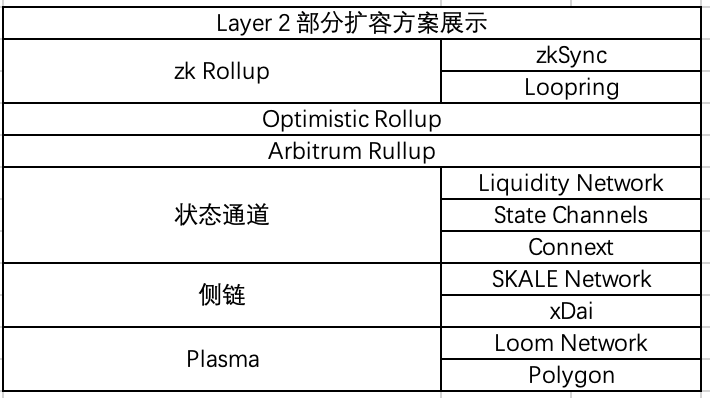
At the same time, the community is concerned about whether the liquidity and assets between DeFi protocols will appear under the multi-chain layer2 deployment architecture.The split has been controversial. In addition, due to different technologies and token economic designs, different expansion solutions are suitable for different usage scenarios, and the migration process involvesIssues such as cost, service, infrastructure, technology, security, etc.It also keeps the market in doubt.
Pain points of existing cross-chain transactions in the market
various protocol standards, each layer 1 chain and layer 2 chain has its own cross-chain design and instructions. For users, learning the cross-chain usage of each project is time-consuming and labor-intensive.
uncontrollable cost, due to different security designs, the cost of each cross-chain transaction is also different, and a single transaction may be as high as $100 and the transaction is scattered.
security issues, cross-chains are usually maintained by separate project teams, with only limited channels to view the current status.
As a new idea to solve cross-chain pain pointssecondary title
Analysis of Raydius
RaydiusIt is a middleware solution created to realize a more connected Layer 2 network (Layer 2) ecosystem.
Raydius is positioned as a middleware product that supports cross-chain transactions while also pooling liquidity for different applications. With Raydius technology, developers can easily connect to extended solutions and applications according to their needs.
The original intention of Raydius was to make blockchain technology more popular, making it easier for all users to complete the required transactions on the blockchain.Enhance the connectivity and tightness of the blockchain ecology.
Just like you who are reading this article, you don’t need to know where this article is hosted on the publishing platform. Whether it’s AWS, Google or a private cloud disk, users should not need to distinguish their own when making transactions. Which chain is USDT on? Currently, this technology can be implemented through a centralized exchange (which is also a middleware solution), while in DeFi, users need to manually transfer assets.
With Raydius, developers can develop scalable, low-cost applications, and with what they thinkAppropriate solutions are connected.
Raydius' vision
The vision of Raydius is to provide developers with a low-cost and high-efficiency environment for developing cross-chain applications; to provide users with a simpler asset and transaction experience.
In terms of core technology, Raydius provides an EVM-compatible blockchain that can more easily support existing DeFi applications on Ethereum. With a two-way bridge to Ethereum and other blockchains, developers are now given a “second chance” to choose which ecosystem they want to be part of.
Raydius brings the blockchain ecosystem closer together and makes it easier for app developers to integrate with these solutions.
Raydius Features and Differentiation Advantages
bridge aggregator
Connect to Layer 2 Network Solutions
Raydius plans to better link assets through a bridge aggregator product. Users now need to switch to different standards when using ETH and USDT, and everyone should enjoy different blockchains and different second-layer chain applications,
Through Raydius' bridge aggregator, users canFree choice of different applications and supported assets as well as optimal rates。
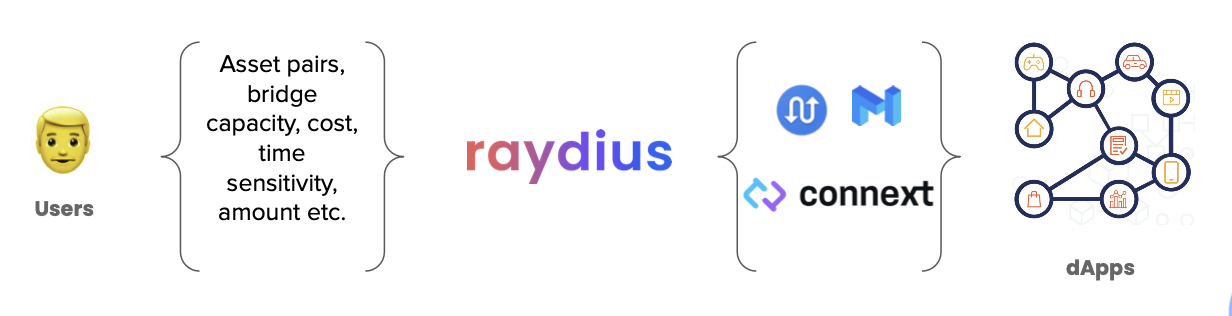
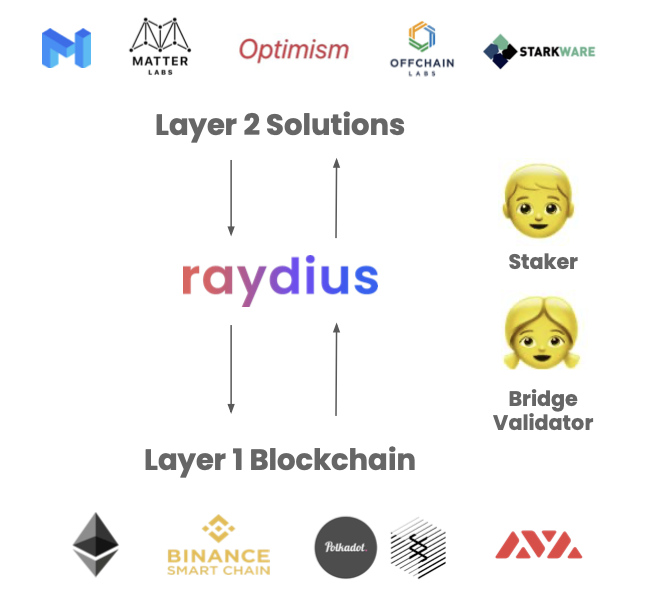
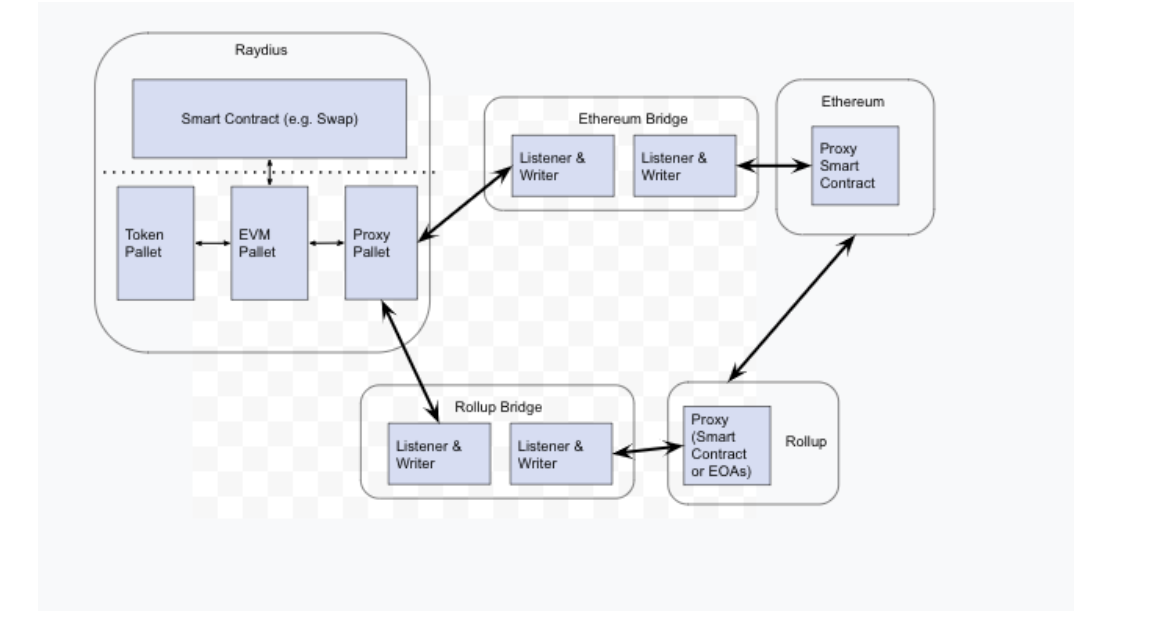
The Raydius program can be used withLayer1 bridges,Service connection with other Layer 1 network and Layer 2 network blockchains through bidirectional bridging
Raydius packages the transaction through the bridge validator and sends it back to Layer1. The node will have a balance requirement to ensure the safety of the bridge funds. They can be on the Raydius chainPledge nodeVerifierVerifier。
Raydius can also interact withOther Sidechains and Rollup Bridges, currently, different Layer2 platforms in the market are subdivided, applications become independent, Raydius can use the same set of validators to complete the bridge with other Layer2, so that these transactions can be done inIntegrate without connecting back to Layer1。
In addition, the Raydius blockchain has also implementedProxy Smart Contract, interacting with other chains under the premise of having validators to ensure the safety of funds.
Perfect Application Programming Interface (API)
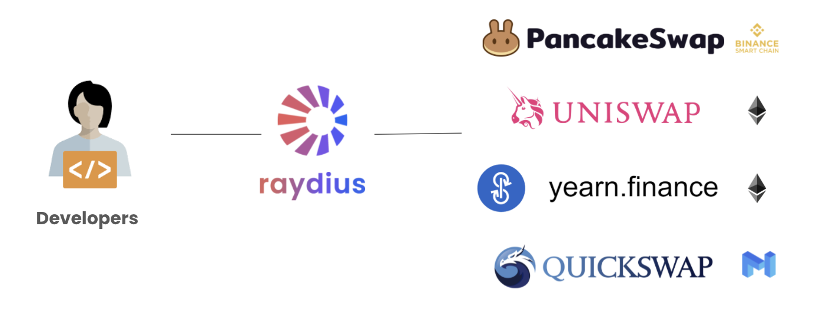
Being able to have a mature liquidity pool is critical for most applications being developed in the market today. AMMs, lending protocols, and liquidity mining tools have become the new infrastructure.
In the Raydius ecosystem, will be committed toDevelop APIs to connect top liquidity products on different blockchains. In the final analysis, users should only pay attention to their own investment return rate, not which blockchain they trade on, or where they perform asset replacement to get the highest APY.
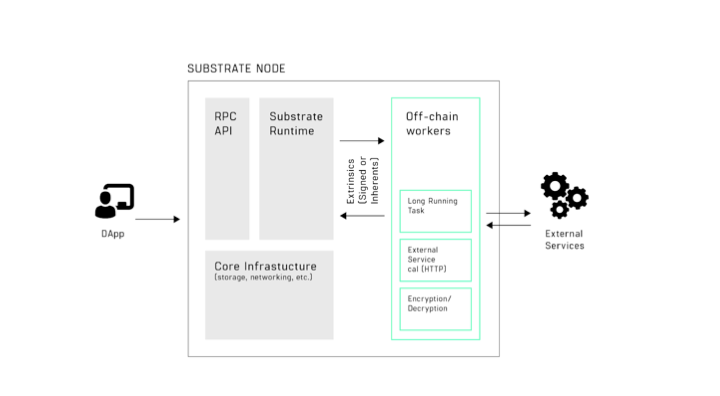
Build EVM compatibility mode based on Substrate
team section
team section
The Raydius team said: The future of the blockchain world will be the coexistence of multiple chains and multiple expansion methods. Providing users with the best cross-chain experience and revenue combination will be the direction of creating value for the new generation of Layer2 and cross-chain projects. Raydius will contribute to cross-chain ecology and more connected expansion solutions from the perspective of users and developers. Raydius has a rich algorithm research foundation in the Layer2 field.
Technical part: three main modules
There are three main pallet technology modules in the Raydius platform, namely token pallet, EVM and proxy pallet, which communicate with the layer 1 blockchain and layer 2 platform.
secondary title
Token Economic Model & Value Capture
Raydius tokens can be used toStaking Rewards, Validator Rewards, Transaction Fees, DAOWait for different scenarios.
Taking staking rewards as an example, Raydius uses PoS consensus and tokens asNative token for staking rewards, the token design ensures network security, as malicious behavior is costly for nodes.
VerifierVerifierThere will also be rewards in the ecology, and since validators need a deposit, collateral collateral is also done through tokens.
For applications built on Raydius and their users, theTransaction fees charged for network usage. Additionally, transaction fees are also charged when connecting to other layer 2 protocols.
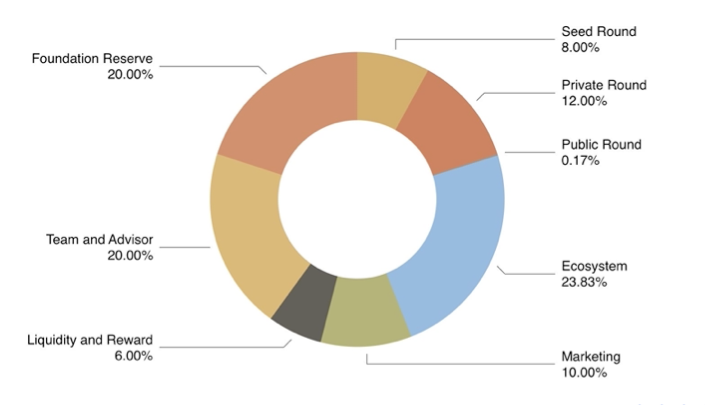
Seed round: 8%
Private placement round: 12%
Public offering: 0.17%
Ecosystem: 23.83%
Market segment: 10%
Fund Reserve: 20%
Team part: 20%
secondary title
development plan
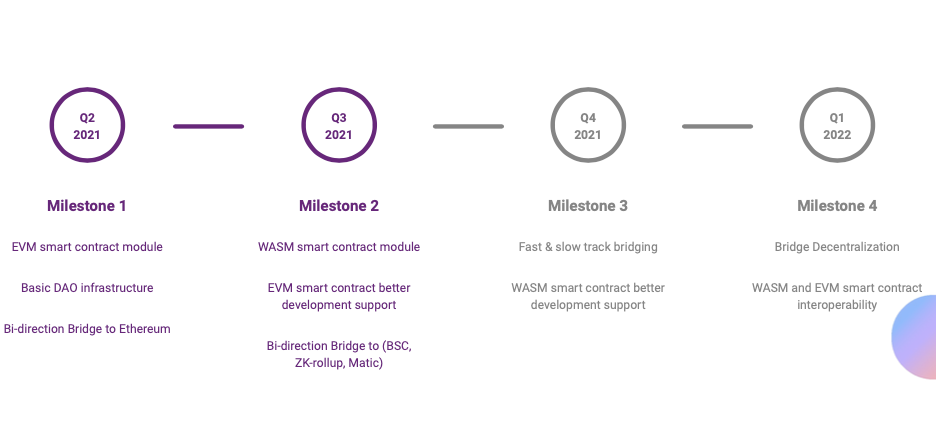
As a bridge aggregator between Layer2 and Layer1, Raydius is actively developing partnerships with current mainstream Layer1 and Layer2 project parties to further improve the Raydius ecosystem.
The testnet to be released by Raydius will be the first to support public chains such as Ethereum, BSC, and Polygon, and will be deployed on Avalanche and Solana in the fastest time.
At present, Raydius has been successfully selected into the first batch of Asian ecological projects of Avalance, and has received investment from Avalance industry fund AVATAR.
Chromia, a high-performance application public chain focusing on Layer 2, is also Raydius' seed investment institution.
Raydius will also soon deploy a Rust-based Solana interface. Meanwhile, Raydius has also signed up for Solana's hackathon.
summary
summary
Ethereum will still be the central application for large-scale value storage, but decentralized applications will have a multi-chain future, and not all cryptocurrency transactions need to occur on Ethereum. With more progress in the development of Rollup, the second-tier blockchain network expansion solution, and other first-tier infrastructure protocols, the future of multi-chain is just around the corner.





